




















![[노동경제학 기출문제해설] 2013년 제2-2문](https://i.ytimg.com/vi/cm4bGm-Ya1E/hqdefault.jpg)









In a monopsony labor market (where one employer faces many workers), a minimum wage can paradoxically increase employment because it eliminates the need for the employer to raise wages for all existing workers when hiring additional workers, thereby reducing the marginal factor cost curve's steepness and making more hiring economically rational.
How Minimum Wages Affect Monopsony Employers: Economics Explained
Added:The standard supply and demand model of a perfectly competitive labor market, where wages and employment are determined by equilibrium.
The basic definition of a monopsony (a market structure with a single buyer) and how it contrasts with a monopoly (a single seller).
The relationship between the Marginal Cost of Labor (MCL) and the labor supply curve, specifically why MCL is steeper than the supply curve for a monopsonist.
The traditional economic theory of minimum wage as a price floor that theoretically creates labor surpluses (unemployment) in competitive markets.
Empirical evidence on minimum wage impacts, such as the seminal Card-Krueger study on fast-food employment.
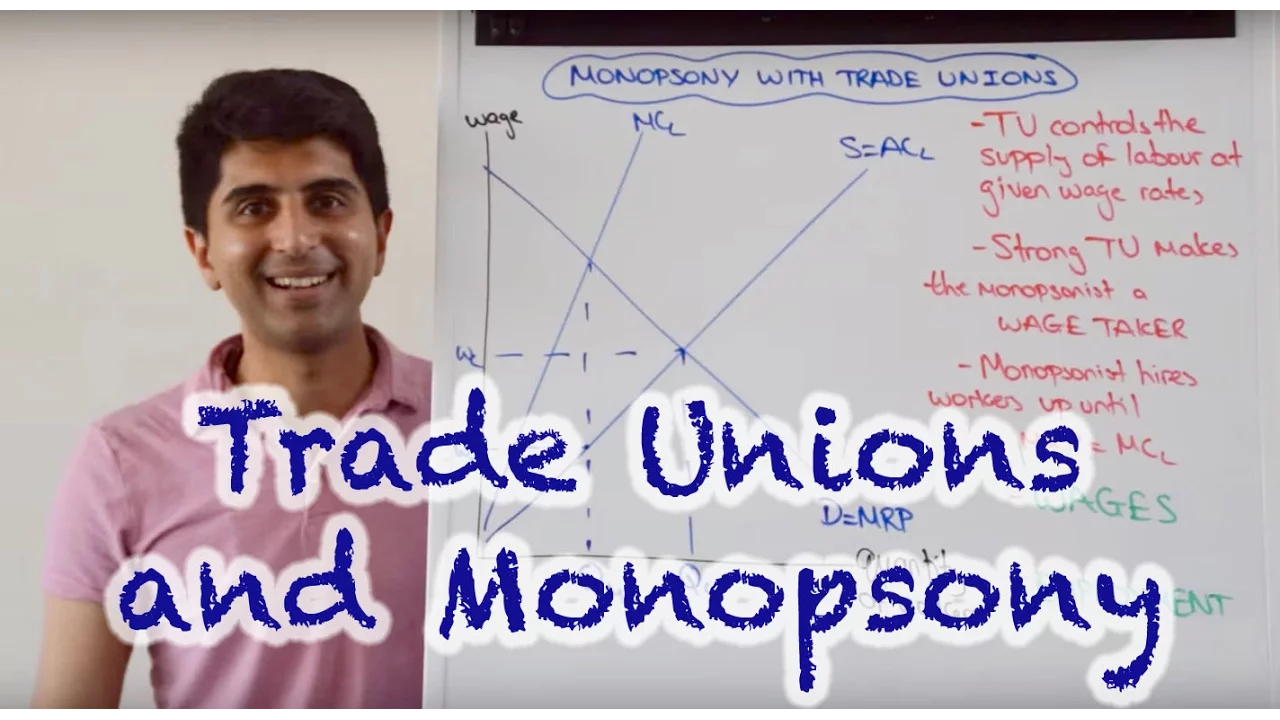
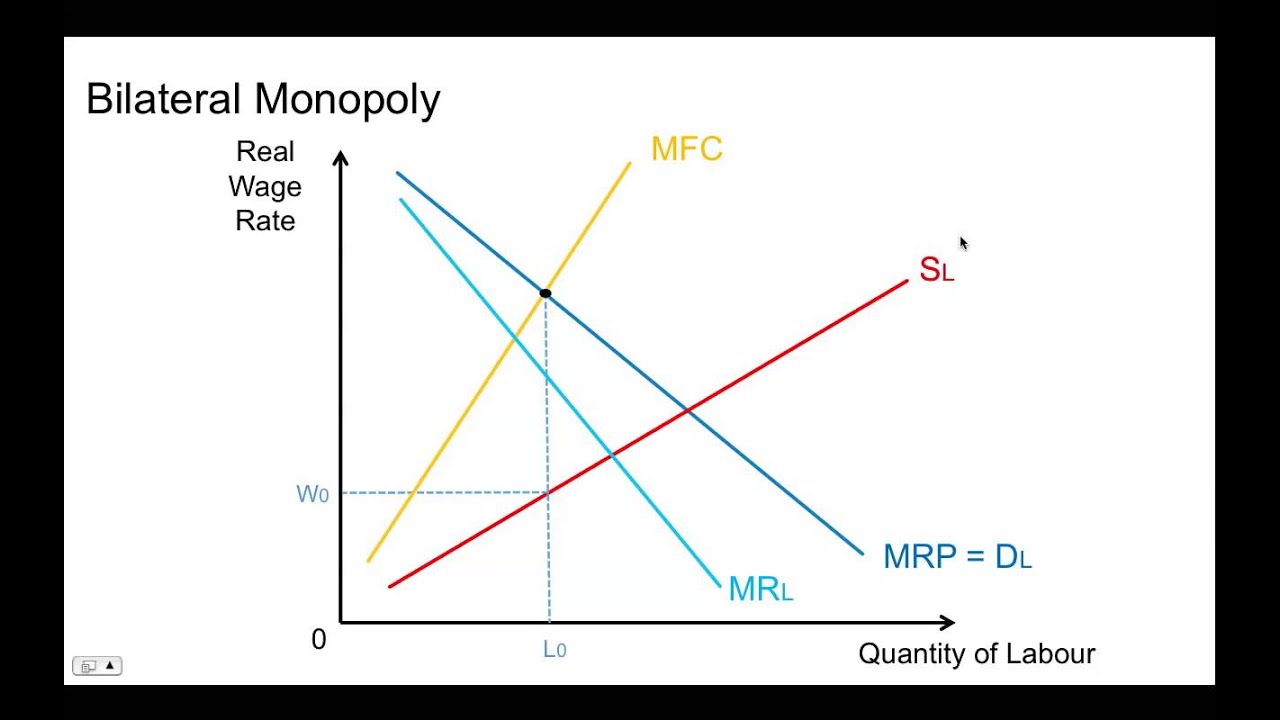
The concept of Bilateral Monopoly, which analyzes the bargaining outcomes when a monopsonist employer faces a monopolist labor union.
Modern applications of monopsony theory, including labor market concentration in tech sectors, the gig economy, and the impact of non-compete clauses.
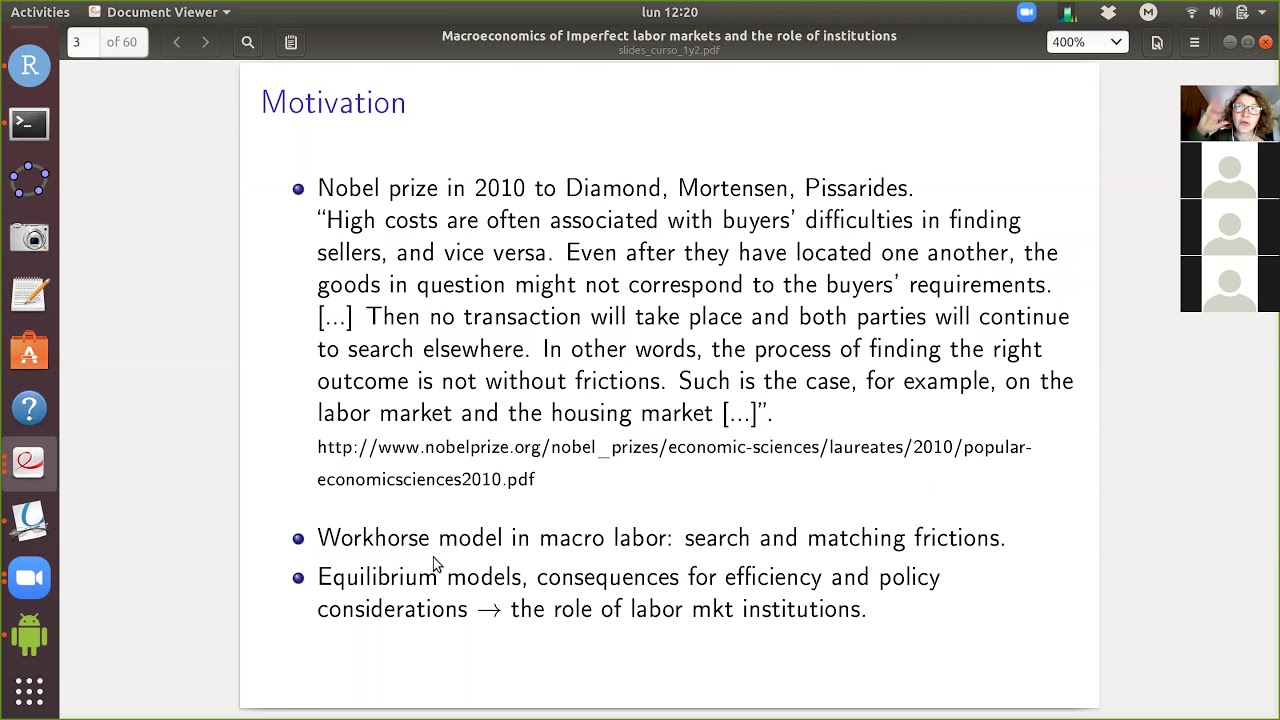
Search and matching models in labor economics (like the Mortensen-Pissarides model) which explain how search frictions give employers natural monopsony power.
32.4K views456likes8:50Original Release: 2019-04-20
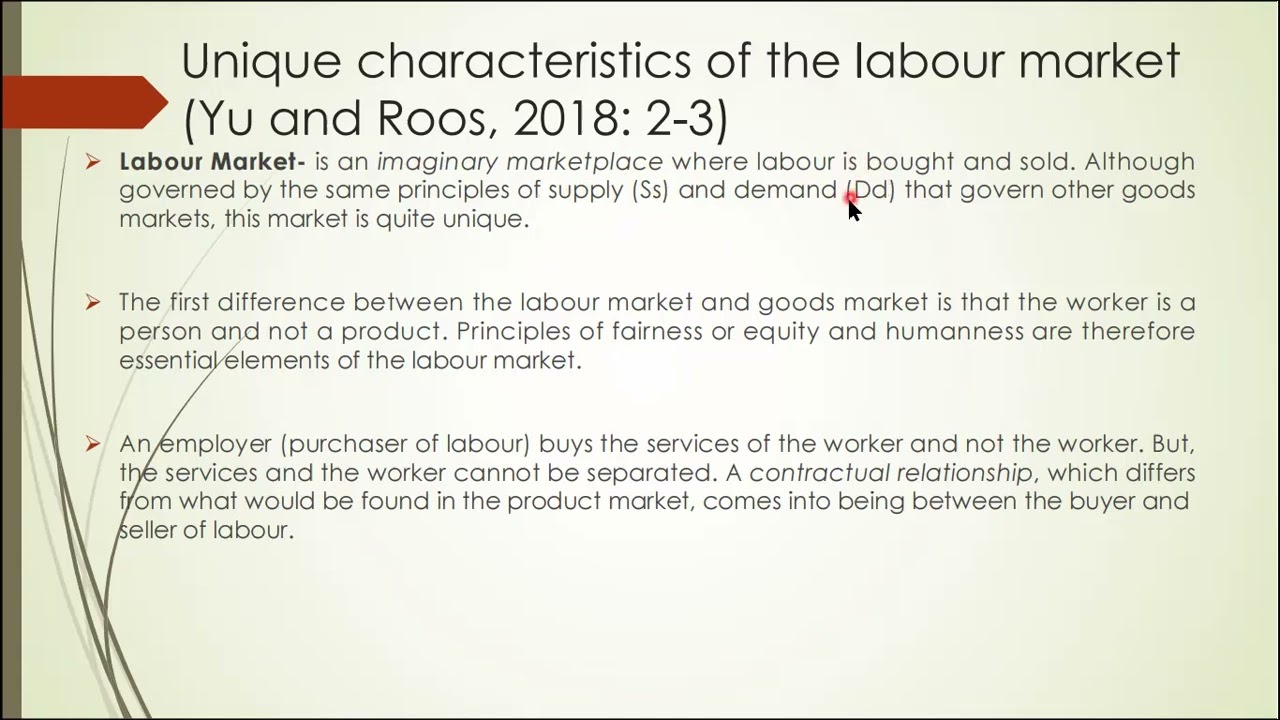
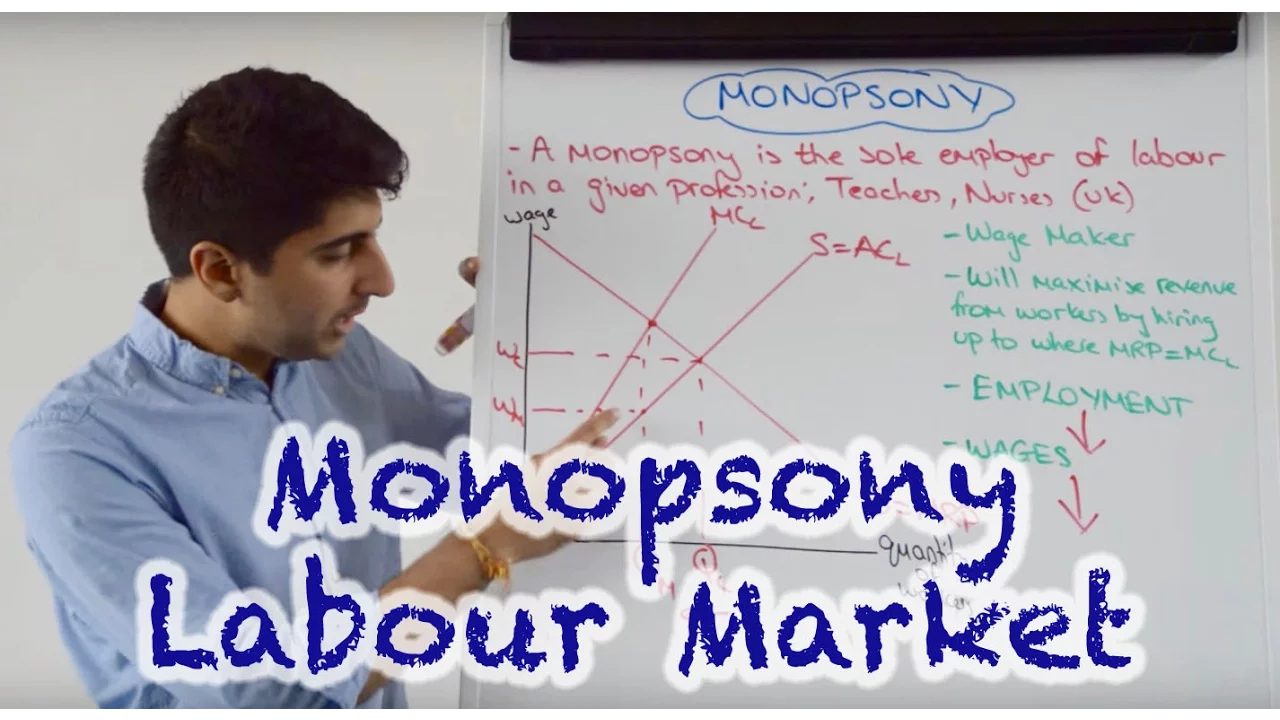
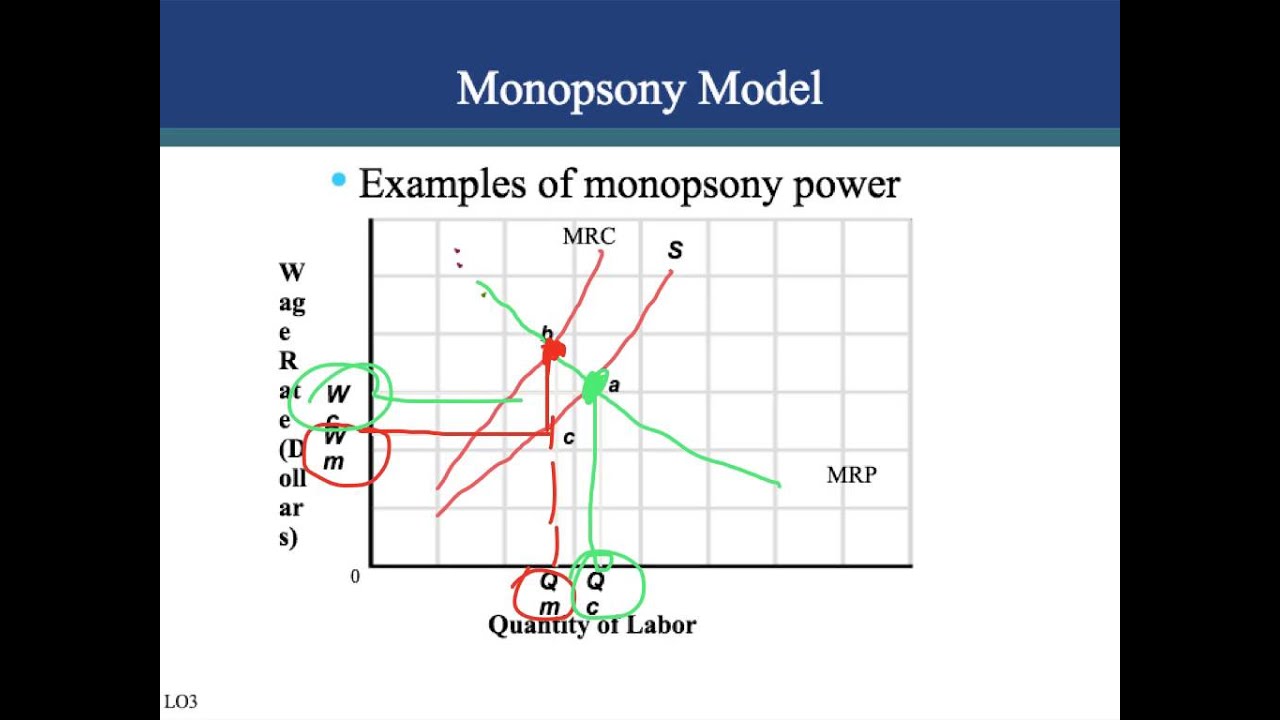
we've already talked about the notion of a monopsony employer in other videos but now we're going to review it a little bit and we're going to introduce a twist and the twist is what happens when they have to deal with a minimum wage and as we'll see it's kind of counter-intuitive so first of all just as a review a monopsony is a situation where you have one buyer and you have many sellers of something and when we're talking about a monopsony employer the buyer is the buyer of labor we're talking about the buyer in the labor factor markets and the seller are the workers the people who would sell their labor for a wage and we have already studied monopsony employers situations before but i will redo it it never hurts to get the practice in the vertical axis you have the wage which is really the price of this factor of labor that we're studying right now and in the horizontal axis you have the quantity of the factor that we care about and this is quantity of labor now we have seen this show many times before you're going to have or you typically have a downward sloping marginal revenue product curve and that describes a situation where every incremental unit of labor you bring on the marginal revenue the incremental revenue you get goes lower and lower and lower because of arguably diminishing returns in some way so this is marginal revenue product of labor you could also a marginal revenue product of capital or of land or other factors and then we could think about the supply of labor well actually really what we're trying to get at is what is the marginal factor cost curve and if this employer were not a monopoly employer if they were just operating in a perfectly competitive labor market the marginal factor cost curve would just be the market wage so it might look something like that but we are dealing with a monopsony employer and so they don't just take the market wage they have you could view it as a supply curve for labor that's specific to them because remember they're the only showing down they are the big employer maybe in this small town and so you have this supply curve this this is supply of labor but this is not the marginal factor cost curve and we've explained this before but that's because as you bring on higher and higher quantities of labor you need to pay more to that incremental person but what typically happens is if you need to pay one person more you need to pay everyone the same wage so as you bring on that incremental labor not only have to pay more for that incremental unit but you have to raise the wage for everyone so the marginal factor cost goes up twice as fast as the supply of labor curve so the marginal factor cost curve it would look might look something might look something like this and then what's rational is a firm would keep bringing on that factor in this case labor would keep hiring folks as long as the incremental revenue that it gets from hiring that in that next unit is higher than the inc than the marginal or the incremental cost and so they will keep bringing people on as long as the mrp is higher than the mfc and so we would get to that point right there and so it'd be rational for this firm to hire this quantity of labor let's call that q sub 1. and then what wage are they paying pause this video and think about that because this is always a little bit tricky well you might be tempted to draw a line here but remember this doesn't describe the actual wage the wage of that quantity is described by the supply of labor so this would be the wage that the firm would pay so now let's introduce our twist let's think about what happens if a minimum wage is employed in this region that for whatever reason the city council says hey that employer needs to be paying more money and let's say they institute a minimum wage at i will do this in a bold color let's say they institute a minimum wage right over here let's call this wage sub m pause the video and think about what would then happen what would the marginal factor cost curve look like and then what would be the rational quantity for the firm to hire all right so now that the the town has instituted a minimum wage and it's higher than the rational wage that the firm would have otherwise paid for labor what it does is it at least at a certain range of quantities it of quantities of labor being employed it essentially makes this monopoly employer have to think a little bit like an employer in a competitive labor market where you just have to accept a wage now this wage isn't being set by some market it's being set by a government so as long as this wage is higher than the supply of labor well then this is going to be or higher than our old supply curve well this is going to be from the firm's point of view the new supply curve so it's going to look something something like this but then when the supply curve when the wages that the supply curve describes go higher than that minimum wage well then it will track that so this is our new supply curve right over here so new new supply curve and we're talking about supply of labor and it's this whole red thing and what would be our new marginal factor cost curve well we said that it has twice the slope but when the slope is just flat here i'm going to do this in a new color so the marginal factor cost curve it's going to track this horizontal line right over here and then all of a sudden when the supply curve starts to go up well then it's going to jump back to the old marginal factor cost curve so it's going to look something like this so m f c i'll call it 2 that's in blue so it tracks the supply curve here when it's horizontal and it is really just analogous to when we just have to accept a wage and then it jumps we have a bit of a discontinuity and then you get up there but what's rational as always is a firm to keep hiring as long as the marginal revenue product is higher than the marginal factor cost so it's going to keep hiring it's it's as long as this yellow line is above the blue line it would keep hiring keep powering all the way until this point right over here so notice what just happened it is now rational to for the firm to hire more people and that is counter-intuitive in everyday thought if i thought i was running some type of a business if i was running a burger joint and all of a sudden if there's a higher minimum wage then it feels like hey i might not have enough money to hire people i might lower the number of people i hired but we just showed at least with some with a very simplified economics model that theoretically when you're dealing with a monopsony employer it actually might get them to hire more people so an interesting question is why did this counterintuitive thing happen and one hand wavy argument but i encourage you to ponder it is to realize that in the old world every time they brought on an incremental person they had to raise the salary of everyone and that's what made the marginal factor cost go up so quickly but now since you have this whole flat part of your supply curve because regardless of how many people you hire in this range right over here you're paying the same amount that incremental person does not increase the wage for everyone else so that is what made it rational for the firm to go and keep hiring now the community the government the city council would have to be very careful about what this minimum wage is because it's very possible that they could overshoot and actually end up in a situation where the firm hires less so for example if they made this the minimum wage right over here let's call that 2 or w 3 well now all of a sudden you would have a marginal factor cost curve that is going like this for at least a good bit we can think about it a little bit later as what happens as you go further and further to the right but then it would only be rational for the firm to hire that much and so then you would have a decrease in employment but if we go back to the original situation another thing that you might be thinking of hey this seems too good to be true it's now rational for the firm to hire more folks and those folks are getting more income surely someone must be losing and it is the case that the firm is now going to lose more of i guess you could say the surplus that it was having in the old world and more of that is now being given to the workers
Up Next

6:45
Monopsony Equilibrium Wage and Employment | Labor Market Analysis
@EconomicsinManyLessons
20.3K views•2014-11-14

5:07
Impact of Yuan in Indo-Russian Trade Amid Sanctions
@WION
261.9K views•2022-07-01

10:27
Keynesian Cross & Multiplier: Fiscal Policy Effects
@khanacademy
218.5K views•2012-04-05

113:18
The Age of Easy Money: Fed & Inflation | Full Documentary
@frontline
21.2M views•2023-03-15
Related Study Plans & Knowledge Roadmaps
Structured learning paths in Economics
economics
Sovereign Debt: Defaults, IMF & Restructuring
01Introduction to Sovereign Debt & Government Bonds
02Debt Sustainability & Credit Ratings
03Anatomy and History of Debt Crises
+ 2 more learning modules
12h5 modules
Explore Roadmap
economics
Market Design: Matching Theory & Gale-Shapley
01Introduction to Market Design and Price-Free Markets
02Two-Sided Matching & The Gale-Shapley Algorithm
03School Choice Systems and Mechanism Design
+ 2 more learning modules
10h5 modules
Explore Roadmap
economics
Impossible Trinity: Forex, Capital & Policy
01Introduction to Monetary Policy and Central Banking
02Exchange Rates and International Capital Flows
03The Mundell-Fleming Model
+ 2 more learning modules
8h5 modules
Explore Roadmap
economics
Healthcare Economics: Market Failures & Systems
01Introduction to Healthcare Markets and Market Failure
02Asymmetric Information and Adverse Selection
03Moral Hazard and Insurance Design
+ 2 more learning modules
12h5 modules
Explore Roadmap