

















![[záznam1] 📺MODERNÍ MĚSTA: PRAXE STAROSTŮ III - INVESTICE a BYDLENÍ](https://i.ytimg.com/vi/wIMUQJDMU9w/maxresdefault.jpg)




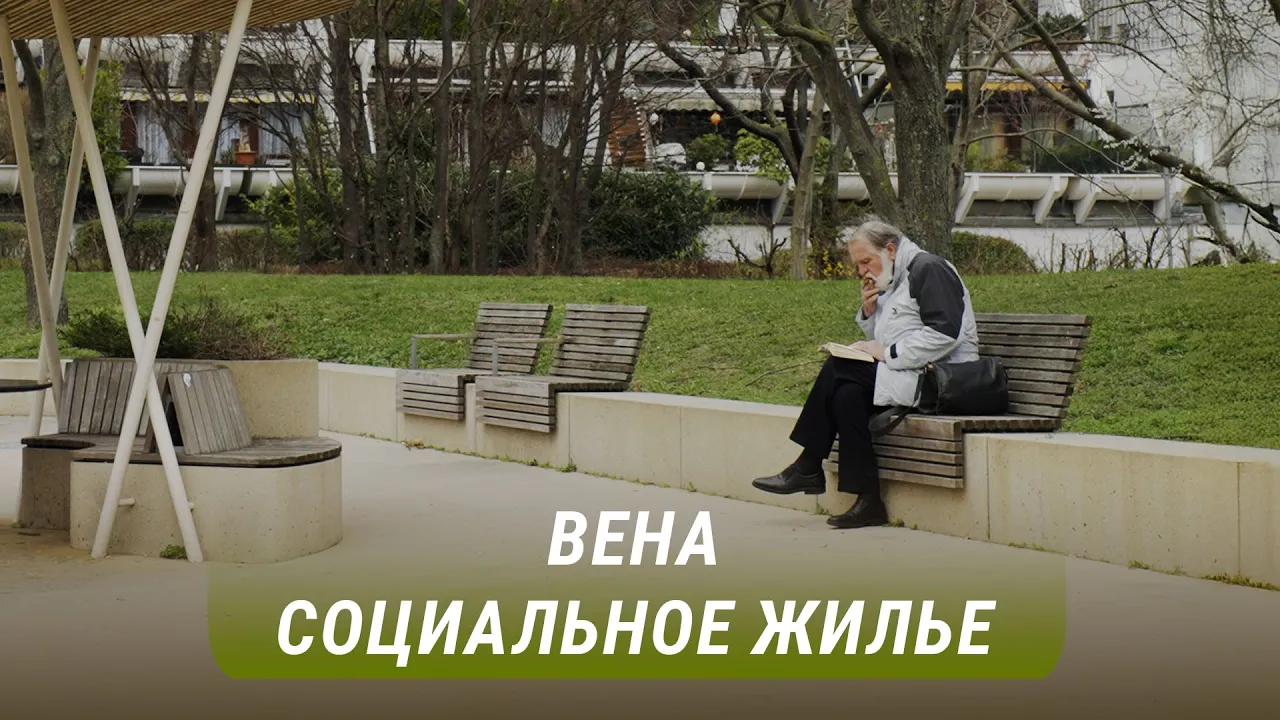


Vienna maintains affordable housing for 62% of its population through a threefold subsidy system: the city sells or leases land at low prices to nonprofit developers, provides subsidized construction loans, and offers renter subsidies; this model combines high-density development with green spaces, developer competitions ensuring quality and innovation, and ongoing maintenance through 'gentle urban renewal' to prevent displacement and maintain community stability.
Vienna's Affordable Housing Model: A Blueprint for Cities
Added:Basic principles of urban planning, including zoning laws, urban density, and municipal land-use policies.
The economic fundamentals of housing markets, specifically the concepts of housing affordability, market-rate development, and gentrification.
An understanding of different social welfare models, particularly how state-subsidized public services differ from purely market-driven systems.
The structural distinction between various housing assistance programs, such as public housing, cooperative housing, and rent-control policies.
Comparative analysis of alternative global affordable housing models, such as Singapore's Housing & Development Board (HDB) framework.
The financial mechanisms and long-term economic sustainability of municipal housing programs, including public bonds, cooperative subsidies, and progressive taxation.
The policy transferability challenges of replicating the 'Vienna Model' in highly decentralized or market-dominated real estate environments.
Advanced concepts in sustainable urban design, such as Transit-Oriented Development (TOD) and social integration strategies within high-density municipal housing.
999.6K views31.3Klikes13:26Original Release: 2021-09-17
Imagine living in a city where you can afford beautiful homes.
A city that combines quality with affordability.
Around the world, this idea of a livable city increasingly seems like a pipe dream.
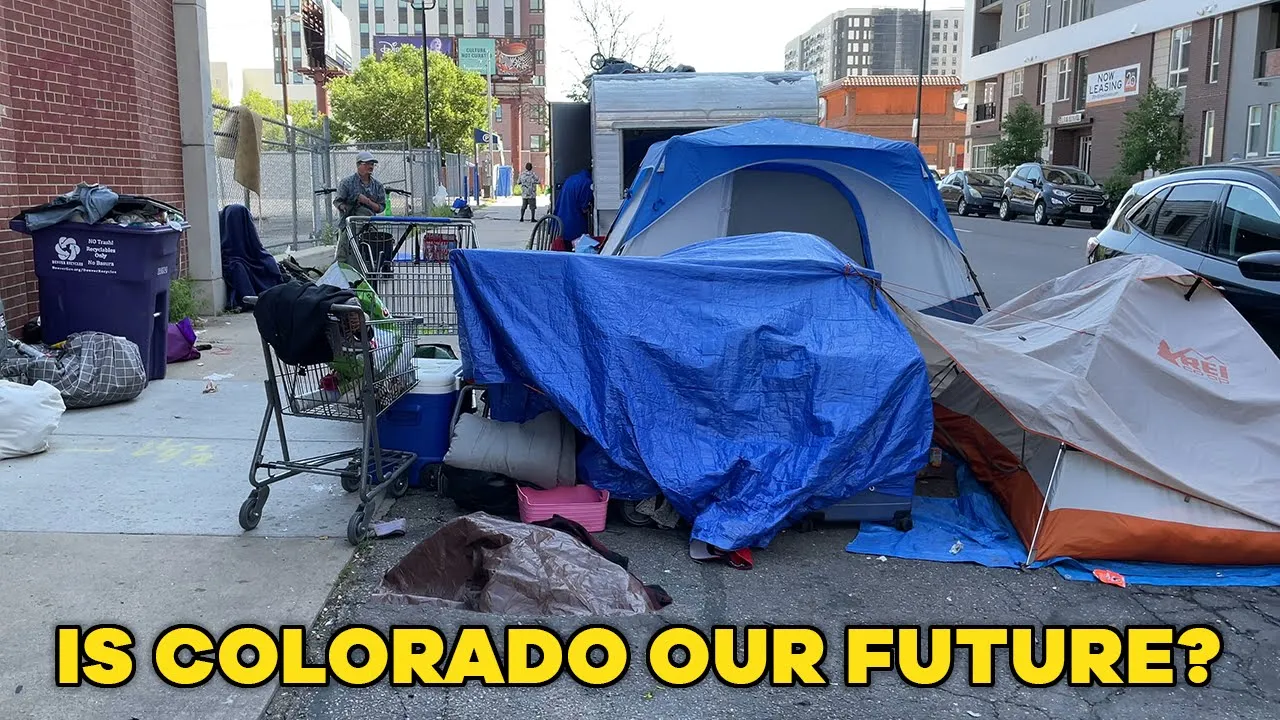
Housing unaffordability is not just a crisis for the United States.
You see it in cities as diverse as Caracas, Moscow, Rio de Janeiro.
The UN estimates that despite the pandemic, over 60% of the world's population will live in cities by 2030.
Urbanization is going to keep growing at a tremendous rate.
And so we're really going to need to look at how do we build in a manner that's livable, it's affordable.
There is somewhere though that seems to be keeping the housing crisis at bay.
The Austrian capital, Vienna, is one of the most affordable major cities in the world.
It also tops the charts for quality of life.
And how they got there, may offer up some tips for cities globally.
This is Aspern Seestadt, in the suburbs of Vienna.
One of the largest new urban developments currently under construction in Europe.
Seestadt is being built on a former airfield and has a man-made swimming lake at its center.
60 to 70% of the apartments built here will be allocated to affordable housing.
Some of which are designed by their occupants.
We all know how tough it is to bring new urban quarters to life, to make them feel like the old parts of the city that have this patina that we all love.
So we introduce a new model of collaborative housing.
Self developed multi-family housing originated in Berlin and Freiburg, sort of emanating from the squatters movements.
These are groups of people and oftentimes families or people who are organized around a certain ideology like the environment or living in solidarity.
They will work to design and build their own multi-family housing.
Collaborative housing is one of the innovative ways subsidized apartments are being built in Vienna.
Now, apart from being something really special of having the opportunity to design your own apartment within a subsidized housing project, what is very important about this project is that they think about so many things.
They will introduce regularly coworking spaces, rooms for seminars, or a big kitchen that can be used by everybody.
But the most important part is that these people that have worked together on designing their own apartments and their own building form a community, a lively community.
So we have found out that they work as a community magnet and they are the ones that will bring life to a new urban quarter.
When it comes to affordability, Seestadt is not an exception.
Vienna is growing rapidly and to meet the demand, every year, it builds at least 7,000 affordable housing units.
About half of all the apartments built in the city.
62% of the Viennese population already live in this type of accommodation.
Public housing blocks, which are apartments that belong entirely to the city of Vienna are just one part of the affordable housing portfolio.
The city has been building them at a steady pace since the 1920s.
Many other countries also tried to make this model work, but few have succeeded.
Public housing summons this vision of cold monstrous towers.
Many were, at the time of their construction following World War II, very utopian projects.
Their planners imagined a kind of modernist egalitarian society which might have succeeded if they were funded and maintained and supported, but they were not.
In the United States, the result is that you have public housing units that lack heating and public housing units that are just not safe for the occupants.
Compounded by the racial composition of public housing residents, this has these deeply troubling implications.
You have both quality of life issues and then general bias and discriminatory attitudes toward their residents.
That mean that people perceive public housing as a threat, unfortunately.
The stigma of public housing has translated into U.S. policy.
And a rule called the Faircloth Amendment currently caps the number of public housing units at the level it was in 1999.
Municipalities need to either sell or demolish existing buildings to build new ones.
And this is all compounded by restrictive zoning laws.
When you have neighborhoods or parts of entire cities that are zoned for single family homes, those neighborhoods are effectively segregated.
By controlling the nature of construction through zoning codes, you limit how much housing can be made anywhere.
That has had the result of not a single U.S. county having enough affordable housing for its current population right now.
In the '90s, Vienna also took a radical decision about its public housing, but the city went in the opposite direction.
Public housing was always well-maintained and high quality, but to maximize its investment, Vienna decided to instead focus on a model offering subsidies to private nonprofit companies to build what they called social housing.
The entire model of subsidized housing in Vienna is very robust and it is very profitable for the corporations that engage in it.
It works on the basis of a threefold subsidy.
Affordable housing stands and falls with land prices.
So the city of Vienna has a very active land policy, buying land or mobilizing historical land reserves, and then either selling it or leasing it to not-for-profit corporations at a very, very low affordable price.
The companies get subsidized loans for construction.
And if the apartments are still too expensive, there are subsidies for renters.
What is special about Vienna is that social housing is a middle-class subsidy.
It is not thought to be only for people that have a weak socio-economic background.
It is thought to be actually for almost everybody.
And as your income increases, as you get older, you aren't pushed out of your social housing.
And what this does is it keeps people in these communities.
That's a very different way of looking at keeping communities intact.
In the '90s, the construction process also changed.
Each company that wants to build social housing needs to submit their design in a developer competition.
One of the most important mechanisms of ensuring sustainability and quality are competitions.
The designs are judged based on the architectural quality of the development, the economic function of the building, so that's how affordably they can build it, the environmental performance of the building, as well as the social mix.
And so this is just ensuring that there's a diversity of unit types, so it's not just singles or couples.
You get families, you have elderly residents.
The competitive aspect of the developer competitions definitely pushes people to be more innovative on a number of fronts.
They're really well designed, high quality buildings, low energy buildings, just wondrous amenities, saunas, kindergartens, clinics, libraries, community spaces.
We almost always have balconies.
And in many cases there are even swimming pools on the rooftops.
Developer competitions are also one of the main factors driving down the costs of construction.
The construction costs in Vienna are about half of what they are in Seattle.
And so you're getting these incredible high quality buildings for really a fraction of what we would pay here in the U.S.
for what I would say are buildings that are not as well done.
Another key element to making this model work is using space wisely.
It would be a waste of money to embark into subsidized housing and then do low density.
Of course, you have to do high density because this results in many, many more apartments to the benefit of many, many more young families.
But density will work well only if you combine it with high quality.
And I'm talking about high architectural quality, I'm talking about high level public transport access, and I'm talking about vast green spaces.
So the way we go about density is to create really vast accessible parks and to concentrate construction at the edges of these parks.
They don't have a significant number of high rises, but there is this broad density.
The core is five to eight stories for kilometers and kilometers in every direction.
Today, Vienna invests in a mix of public and subsidized housing, but just building new apartments isn't enough.
The city is also committed to actively maintaining and retrofitting its stock of over 500,000 affordable flats.
There's this process in Vienna called the gentle urban renewal.
And what this is is the city will go into neighborhoods where gentrification is becoming more mainstream and the effects of it are becoming more visible.
They will upgrade the social housing to ensure that it maintains a similar quality to the new market rate housing.
They will develop amenities to ensure that schools don't become overcrowded.
They'll add a floor or two to the roof of a building.
This could become either market rate or social housing.
What this does is it allows more people to live in the neighborhood.
It subsidizes the cost of the energetic retrofit, because there's also the energetic component as well.
And so they'll rehabilitate the facade of a building.
They'll add ventilation to ensure that these buildings are comfortable, there aren't mold issues, they're healthy.
So the city is really taking an active approach in ensuring that these buildings are comfortable, habitable and also climate-proof.
In the wake of the pandemic, the affordability crisis in cities worldwide has become even more visible.
Rent always eats first, that means that medical care, clothing, even food are costs that renters sacrifice in order to keep a home over their family's head.
During the pandemic, the kind of plight of low-income tenants really expanded because the number of people who are out of work, just ballooned and suddenly households were confronting precarity in their housing for the first time.
Vienna's model isn't a solution that can easily be copy and pasted, but all the cities are paying attention.
It will take more than just changes in policy though.
Attitudes about how and where we live will need to shift too.
In the U.S., there's a lot of desire to live in a detached house, own a single car.
For families like mine where we don't own a car, we have two children, we get around by bike, it's density and ample social housing that really allows for that kind of lifestyle.
There is this generational flip where families like ours and especially those that are younger than us have no shot at affordable housing or market rate housing in a lot of cities.
And I think that we're going to see places really start to look at adding a density and hopefully in a smart way that doesn't bring more cars, more congestion so it's more sustainable in the future.
Vienna is doing things that everyone should be aiming for.
Up Next

8:20
Colmap Photogrammetry Tutorial: From Free Images to 3D Models
@fastphotogrammetry9371
93.2K views•2019-11-04

12:54
Triumph of Orthodoxy Icon: Byzantine Art & History Explained
@BenCallan
2.1K views•2024-08-06
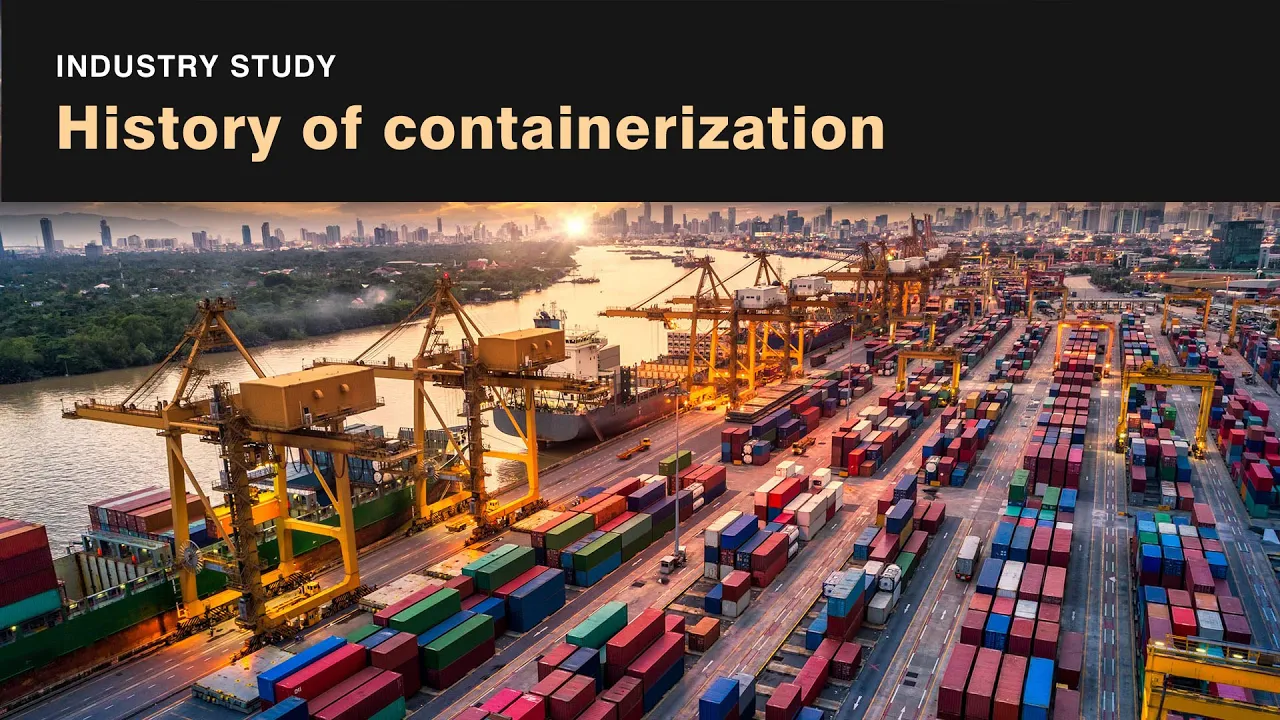
17:42
Containerization History: How Container Shipping Works
@BusinessHistory
36.1K views•2022-12-04

1:42
Game of Thrones Opening Credits: A Cinematic Analysis
@gameofthrones
46.3M views•2011-04-18
Related Study Plans & Knowledge Roadmaps
Structured learning paths in General & Interdisciplinary Studies
general-studies
Elevator Engineering: History, Physics & Cities
01From Hoists to Safety Brakes: The Dawn of Vertical Lift
02Hydraulic vs. Traction: The Engineering Physics of Elevators
03Modern Speed, Safety, and Algorithms
+ 2 more learning modules
12h5 modules
Explore Roadmap
general-studies
Rubber: Material Science, History & Geopolitics
01Origins of Natural Rubber & Mesoamerican History
02The Chemistry of Natural Rubber & Vulcanization
03The Geopolitics of the Rubber Boom & Colonization
+ 2 more learning modules
12h5 modules
Explore Roadmap
general-studies
Containerization: Evolution, Logistics & Trade
01Ancient Trade & Bulk Cargo: Amphorae to Barrels
02The Industrial Revolution & Cardboard Packaging
03The Containerization Revolution: Malcom McLean
+ 2 more learning modules
12h5 modules
Explore Roadmap
general-studies
Textile Tech: Evolution, Labor & Global Impact
01Pre-Industrial Textiles: Handloom & Cottage Industry
02Mechanization: The Spinning Jenny to the Power Loom
03The Factory System & Global Labor Transformation
+ 2 more learning modules
10h5 modules
Explore Roadmap