![Nashville Real Estate Market | WHAT YOU NEED TO KNOW [[featuring lender, Mike Thayer]]](https://i.ytimg.com/vi/RTK3xMtmLd4/maxresdefault.jpg)

![[부동산 가격] 완만한 가짜상승 쎄한 이유 : 내츄럴한 시장 업사이드가 아니라 억지로 공급을 틀어막고 오르는거라 부작용이 심하다 그냥 빌라 허물고 새집 짓는게 가장 정답](https://i.ytimg.com/vi/T3yjLRCFERw/maxresdefault.jpg)

![Private Property and Public Takings [No. 86 LECTURE]](https://i.ytimg.com/vi/_Fegjw1tlno/maxresdefault.jpg)



















The American housing crisis stems primarily from supply constraints caused by restrictive zoning laws, NIMBY opposition, and local government policies that make it difficult to build new housing, rather than from insufficient demand or greedy developers; solving this requires removing unnecessary regulations at the state level, increasing financing for affordable housing, implementing tenant protections, and building more housing across the income spectrum to create a virtuous cycle where increased supply lowers prices and makes housing accessible to more people.
Who Caused the Housing Crisis? | Jerusalem Demsas Explains
Added:The economic principle of supply and demand, specifically how artificial supply constraints affect prices in the real estate market.
The definition and purpose of municipal zoning laws, including the distinction between single-family residential zoning and high-density multi-family zoning.
The basic division of government power, understanding that land-use and housing regulations are primarily controlled at the local (municipal) level rather than the federal level.
Fundamental metrics of housing affordability, such as the housing cost burden (spending more than 30% of income on housing).
The political and sociological dynamics of 'NIMBY' (Not In My Backyard) versus 'YIMBY' (Yes In My Backyard) advocacy groups in local elections.
The economic debates, trade-offs, and empirical studies surrounding the efficacy of rent control and eviction protection policies.
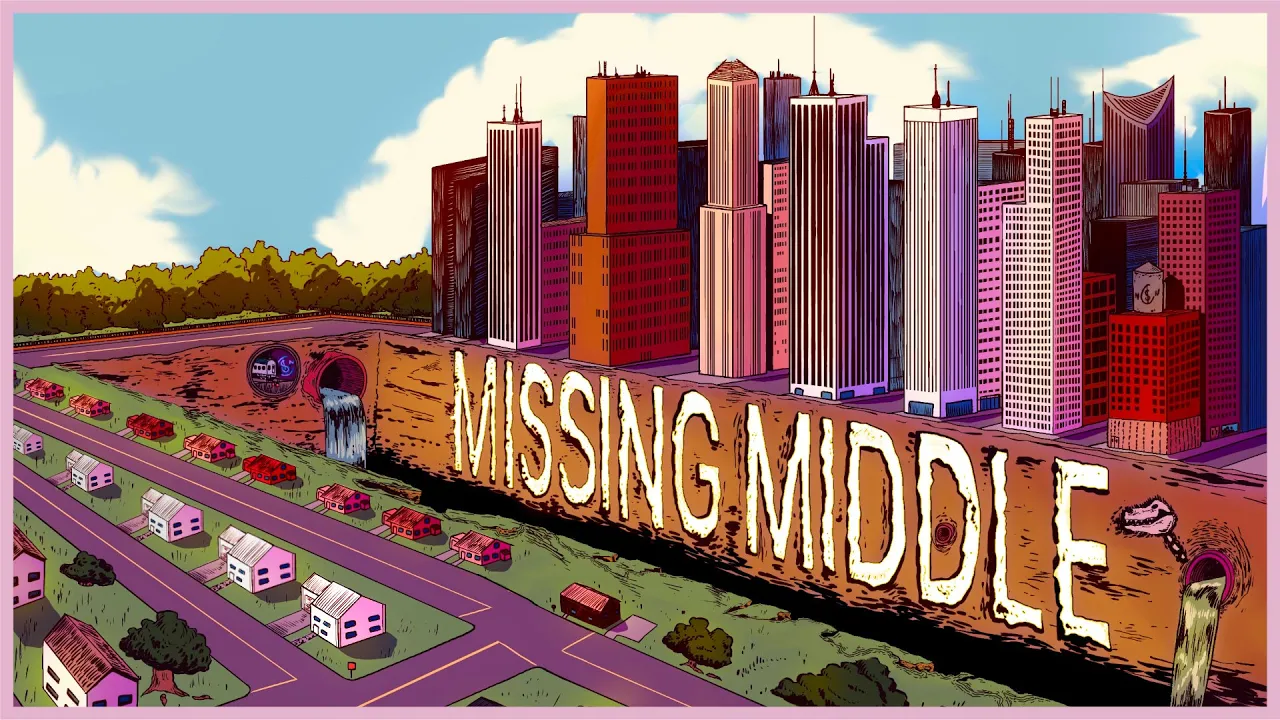
Advanced urban planning models such as Transit-Oriented Development (TOD) and the concept of 'missing middle housing'.
Alternative financing and ownership models for affordable housing, such as Community Land Trusts (CLTs) and social housing frameworks used internationally.
118.1K views4.9Klikes1:28:33Original Release: 2024-09-18
hello and welcome to fact I'm Adam Conover thank you so much for joining me on the show again you know everybody needs a place to live it's a necessity of life but as just about everyone in America knows we are in the middle of a housing crisis housing is simply way too expensive for almost everyone over 3ar of American households cannot afford the median home price and this is no surprise since wages are not keeping Pace with home prices at all the price of homes has risen more than twice as much as wages since just 2000 and this burden like all economic burdens Falls the hardest on poor people of course in La where I live more than 80% of people at or below the poverty line are spending more than half of their income on housing half more than half of every dollar they earn goes to just having a roof over their heads nationally we are between four and seven million homes short of the demand for people just having this basic necessity so why can't we just you know build the homes that people want that people need the homes that people need to live in what is stopping us from fixing the biggest most obvious problem in American society today well on the show today we have an incredible guest who is going to answer that question and tell us how we can actually solve it but before we get into it I just want to remind you if you want to support the show directly you can do so on patreon head to patreon.com adamc Conover five bucks a month gets you every episode of his show adree and a bunch of other wonderful Community features as well I also have a new standup special out it's called unmedicated it's a brand new hour of standup comedy you can watch it at dropout.tv I hope you do I'm so proud of it and I'd love for you to see it if you want to come see me do standup live on the road guess what I am on tour right now coming up soon I'm headed to Baltimore Maryland Portland uh Oregon not Maine that'll be a different time Portland Oregon this time Seattle Denver Austin bavia Illinois San Francisco Toronto Chicago Boston and Providence come see me head to adamc con.net for tickets and tour dates I'd love to see you there and give you a hug after the show and now let's get to this week's episode my guest today is one of the very smartest journalistic voices on the housing crisis her work details how we built the crisis ourselves from our own policies over the course of decades and more importantly how we can fix it her name is Jerusalem Demis she's a writer for the Atlantic the host of the good on paper podcast and the author of the new book on the housing crisis Land Development and democracy I know you're going to love this interview please welcome Jerusalem Demis Jerusalem thank you so much for being on the show and welcome thank you for having me you have a new book out called on the housing crisis I love talking about the housing crisis I feel like people are finally talking about it on a national level first of all uh how bad is it out there what what what is the marker of the severity of the housing crisis for you yeah I mean um it's very very bad I think that it's it's often quite difficult to quantify the problem here I mean we have estimates like four million home shortage that have been floating around you've seen since the pandemic I mean highest home prices um of all time you know in some markets topping a million for the average for the new home that's sold I mean you know housing a a home the average house in US it used to be you know $300,000 $400,000 you could imagine someone getting into that house as like a 25y old a 27y old a 30-y old I mean you're seeing numbers in some States where people are expecting to be permanent renters even if they don't want to be and even as their renters they're seeing their rents rise to astronomical degrees the number of people who are spending more than 30% 40% of their income on rent is higher than it's ever been um so these are the kinds of markers you can see that are that are causing pain but but for me I mean often these sorts of indicators can lag the real world stuff that you see all the time not just as a journalist but as a regular person um I remember my sister she moved to New York to go to college and um when she was done she moved into an apartment and you know she was making a really good salary and particularly when you compare it to people who are really struggling and yet I remember visiting her and going you know this is not a building that's up to code like they had to leave the building multiple times because because of you know mold issues and they had you know a pretty bad landlord um and at the same time I'm like this is what's happening at a part of the market where someone's making a decent salary this is what's happening when someone is gone to college like has a good job when you see that kind of pain Point happening at that level it really just speaks to what's going on Downstream for people who aren't college educated who don't have good careers who haven't been able to access Economic Opportunity in the same way I mean that's when you really know that there's a lot of ways that people are being blocked out of you know Economic Opportunity yeah and it's changed over my lifetime I feel like I mean it's not like rent was super cheap when I got out of college in you know 2004 2005 um I was living in Brooklyn it was still pretty expensive but now you know you go look at apartments and there's like lines out the door to get Apartments people are playing crazy broker fees Etc now that's New York New York's always kind of had a crazy housing market but I also remember around all my friends moved to LA everyone was like oh it's so much cheaper in La couple years later nobody says that it's actually the most expensive housing market in the country if you compare to median income at least that's a stat I read recently might have changed in recent years um but now you're uh what's really interesting is you know I travel as a standup comic and now people are saying it in every single City when I go to like Nashville and Austin people like oh no one can afford to live here anymore now those are boom cities but you know I I've even been to like I don't know Indianapolis places like that people are starting to talk about how unaffordable housing is everywhere and that simply that wasn't really the case like as recently as 15 years ago right totally I mean this is why I think the conversation has become so supercharged the pandemic really did a lot of this so I think that what happened before the pandemic is that a lot of federal policy makers would just sort of say things like yeah okay New York's expensive San Francisco's expensive Seattle's expensive we don't really care those people make a lot of money that's not really a federal issue that's really kind of like these local areas like that's their problem um and then what you saw during the pandemic and uh now we know is that just a small number of people due to remote work largely moving to these secondary and tertiary markets caused a really fast appreciation right and like Idaho is another place I think you're hearing a lot of this pain a place where you'd expect to see a lot of affordable housing I mean Utah these places that people from the western states are moving to and then on the East Coast people who are moving to Florida people who are moving to like Sun Belt states um and Georgia places like that I mean that demand pressure really indicated to people how close they were to experiencing the kind of run up in prices that we're used to seeing in Superstar cities on the coasts and so yeah I totally agree with you it it's so wild I me the most interesting anecdote I heard during the pandemic was graffiti on the walls in Idaho where people were saying go home Californians because they were upset about Rising home prices and so yeah it's definitely become an issue that's beyond all of these normal tradition expensive cities well and it also violates a very traditional notion of what it means to be an American or a middle class American like homeownership was simply one of the things you were granted by having a living at all in our grandparents and parents days and that is I think really sharply felt by people of my generation and younger you know people like I will never be able to own a home some of them don't even say it they're just like you know I mean I I hang with you know friends of mine who are in their early 40s and they're like yeah I'm going to stay in this apartment till I die because I have a good setup here and I like the landlord you know they're not even considering buying a home um and so that's a that's a really big generational shift in America that is like I feel feel like it's giving a lot of people vertigo like it's a little hard to process yeah I mean I'm one of those people who is like relatively agnostic on whether or not people are renters or homeowners like I'm personally am a renter and I think that it's you know if it works for your situation you have a good landlord it's working for because of what you want your life to totally so I mean but I do think what's really um harmful is there are a lot of people who really want to be homeowners and are being locked out of it and you're right that is a real shift in how people expected their lives to go I mean everyone has heard from you know our grandparents generation this idea that you know you're 25 and you own a home I don't know I think I must have been like 22 my dad first asked me when I was going to buy a property and I was like no not anytime soon I don't know what you're talking about and so you know that's that's the kind of thing that people are really used to pushing for for to see their kids as living the good life it's that you've settled down you've been you've bought this house like that means you're going to be safe you're going to have the store of value you're going to have the store of wealth that has been something that is foundational to America for you know at least 100 years yeah I mean I I feeling in my life like my partner and I bought a home a number of years ago but we were only able to do so in Los Angeles because both of us created successful television shows that ran for three or more years and that is what we had to do in order to purchase a small starter townhouse right in Los Angel American Dream now right starter TV show yeah exactly well and also now we can't move because um the prices of everything else have gone up and you know the TV industry isn't doing as well as it was five years ago and you know ACC like but in our cohort we enormously fortunate because we were able to you know even do that much um and so it it really is I don't know it feels like a shocking change but it also feels somewhat mysterious because when you look at prices of other things in America you know the price of TVs has gone down the price of food has gone down the price of lots of other things have gone out certain things Medical Care uh education and then especially housing have gone up up up today we're talking about housing why is it the case that housing has become so unaffordable in America yeah so I think the primary story here and of course there's a lot of things that go into the cost of a house I mean it can be the construction cost of a house it can can be things that are happening on the financing side what's going on with interest rates all of these things play a role but the real large problem here has to do with the supply of housing that exists particularly in the places where people want to live for good jobs so in the post World War II era we had a similar housing shortage right the vets were coming back home um from the war you were you know we hadn't really built since before the Great Depression you had a massive shortage of housing the federal government invests in the national highway system and private developers start building a bunch of homes you build homes everywhere it becomes kind of like the front page of of you know newspapers as all of these new developments these Suburban developments going up and that that's kind of the prosperity that de you know the Baby Boomers got to take advantage of they were able to buy those homes they had a bunch of kids and uh you know now Millennials are adults and are mad at them for various reasons um and so you know the difference now right is you know we um you know we similarly saw a lot of these Suburban areas really develop but what happened is people got upset about that development some for very good reasons people were concerned about conservation or maybe they worried about environmental damage um others for reasons that you know I like to always say people think the last home that should have been built is their own so that became a really animating belief and principle for a lot of people that you know once their home had been built now it was time to Levy a lot of scrutiny onto all new construction right did we make sure that that house was built and you know it was uh you know we could we turn that into a park instead but did they consider all the trees do we make sure it's super affordable all these questions which can be asked in good faith are often not being asked in good faith and so we developed a system in which every you know um new house um might have to come under scrutiny for whether or not it should be developed and that really really raises the cost of development but it also means less things actually are built so you know uh I think our you know often Baby Boomers will complain they'll say well the problem is millennials want these big homes right why can't they go get a starter home but what we know is that starter homes don't actually exist anymore these 1500 square foot homes which used to be the way that people entered in the home ownership ladder and they might trade up later in life they've become illegal in a lot of parts of the country it was only legal to build large single family homes and when you make a house bigger it's going to be more expensive and so developers are often constrained from even following the demand pressure that a lot of Millennials would be happy for a smaller single family home we don't need a big yard you're just starting out in the world you don't need something massive those types of homes are illegal in large parts of the country if you go look up your own City Zoning code you might find that in large swads of your city the smallest home that can be built is on a 5,000 or even 10,000 square foot lot that's so much bigger than what people were buying into when we saw the Boom in the postwar era and so why these regulations exist or for complicated reasons a lot of them have to do I think with um you know an oldtime desire to um maintain separation of different classes people really wanted to have neighborhoods for rich people and neighborhoods for middle class people and for four people separated and the easiest way to do that is to say okay well anyone can live here as long as you can afford you know a million dollar house um which of course means not everyone can live there and um some of the reason has to do with we've developed Notions about the American dream about home ownership about what a home should look like um and we've said that doesn't include a duplex that doesn't include a townhouse that doesn't include smaller homes and you know it's funny because most of our oldest cities are developed on these smaller homes you go to a Pittsburgh or um you know a Lancaster Pennsylvania and you see these homes that were developed before the automobile and they're tons of row houses Philadelphia is like this I mean you even go and see homes in San Francisco a lot of the housing in New York City is not even legal to build today you cannot build those buildings anymore these iconic um you know Brownstones uh these iconic uh you know apartment buildings A lot of them would fail if a developer tried to build that today so I think yeah I think the biggest thing is just this question of when you make every single uh you know when you make it really really hard to develop new housing you're just going to make it more expensive for people yeah so in your view the the primary cause is we have too many people saying hey don't build that house like too many people complaining shutting down development and going further than that and putting zoning laws in place to make sure that the kind of Simply the type of homes they don't prefer aren't built like the you know they'd say I don't want uh a townhouse in my neighborhood that's too many people I'd rather you know only live around other big million doll homes and that's the main driver of the of housing prices so I think nimes which I mean not in my backyard so folks who kind of complain and say no you can't live in my in my neighborhood they they do have a significant impact but often what's more impactful is what the def fault Is Right without any nimes right without any opposition what does your city allow to happen what do your city allowed to be built um as long as a developer is following all the safety rules often it's very little you can develop a large single family home on large plots of land so something that's really expensive but if you want to do anything else you need to go to City Hall you need to ask for special permission you need to ask for an exemption that's already a lot of work that costs a lot of money that means even if you get a yes that new property that new building is going to be more expensive because they've had to factor in lawyer costs they've had to factor in the delays to construction um and then when you factor in that there might be some opposition then it becomes even more expensive for a developer I mean I've been in uh you know local government meetings all around the country where developers will come and they'll say listen we're putting a third of this land for Parkland we're developing trees we're g to give you or we're reserving this for affordable housing reserving this for home ownership opportunities for people in the community I mean developers know needs to like defend like people who are like really rich and who are making houses but you often see them really making an attempt to to meet the needs of the community and still um getting rebuffed or seeing the cost of their units rise and then people complain well developers are only you know making units for for rich people and it's like well why is that happening like why is the market demand for Middle inome Americans not being met and I think a large part of that answer is that local governments have not really cared about the effect of their policies on the larger housing market that's really interesting the local governments haven't cared about the effect of their policies on larger housing market in that they're what they're just catering to the sort of vocal subset of affluent homeowners who probably vote a lot donate a lot and really don't want that apartment building to go in um they're not looking at how it serves the entire population of the city that they live in exactly and I mean at some level it's pretty rational right and often when I make this critique of local government people bristle a bit because they think I'm like insulting the people who work there it's not even about whether or not the people who work in local government are good or not most of the people I've met in local government who work there are extremely hardworking they care a lot about the issue they want to help their Community they would never want to be seen as people who are perpetuating a housing crisis like this but the problem is right and I like to use this example like you know I was in an Arlington um Virginia which is a suburb of Washington DC I was in a you know local uh zoning board meeting that they were having about changing the rules to make it easier to build um uh duplexes in the area this is a very dense part of the country this is a place where a lot of people live it's a fast growing region um and you know people were fighting back against it and what ended up happening what ends up happening is when I was talking to people who are opposed is that they don't see themselves as part of the broader Washington DC housing market all they care about right is what happens in Arlington on my block and that can be very rational right um you know the people the City of Arlington um the people of Arlington the County of Arlington like these are their tasked with caring about the people in their jurisdiction but the effects of their actions go way beyond that right if someone doesn't build a house in San Francisco that actually affects the entire country because if someone who would have moved San Francisco no longer does so where do they stay how does that affect that housing market where who else would have moved into that home when you see the housing chain as as as encompassing an entire country and particularly an entire you know state or region then you can start to see how these small individual decisions to build or to not build go well beyond the jurisdiction of a single local government and it just is not in their perview like it's not possible for a local government to really attack this problem yeah I mean you're talking about Arlington Virginia that's a suburb of DC the people who live there all work for the federal government for the most part um but they work a lot of them work in Washington DC which is not even in the same state and then you know there's another suburb on the other side that's another state Etc in Maryland da d da da da and yes this is like one sort of you know large metropolitan area that's split among three different state or state-like entities in the case of DC same thing in New York with like New Jersey and uh uh you know Manhattan Etc um in in Los in Los Angeles here we've got like the county is cut up into different cities Each of which have their own rules um so I entirely get this problem that uh so in your view is there too much you know political power invested at the local level like when people are saying like my community my city well actually your city shouldn't be in charge of that this needs to be decided by your state or on a larger level because when you're too zoomed in you end up you know creating these these huge imbalances yeah I mean so I reported on a story a couple years ago in Colorado um where I was you know the governor of the state had been really focused on making it easier to build more housing um and at the very local hyper local level in Denver I mean just you know minutes from the government own Mansion right um there were people who had voted for governor Jared polus who was the Democratic governor of Colorado and yet they were pushing back against building this really big development that was going to be partially market rate housing partially uh affordable housing and on a defunct golf course and um I remember um asking people like hey like you're gonna vote you voted for Jared polus you're about to vote in a mayoral election um where the leading candidate the guy who ended up winning was very Pro the development at the golf course Very Pro more housing building more housing and yet they at the very hyper local level despite supporting both of these people right were opposing this this uh new new development and they would oppose making it easier to build more housing and when you think about that I mean often people will just say like people are hypocrites right like that's what's going on here they they they pretend like they want to help the housing crisis but all they really care about is their own selfish interests I think this is like not the correct way to look at it I think the correct way to look at it is when you ask people political questions in specific Arenas you you activate different parts of them when you tell someone hey do you want a new development to exist there someone's like I don't know I feel like changes like a lot like I don't really want to deal with that like I guess I'm like opposed if I'm if I'm going to be saying anything about it right but if you ask someone at the state level like hey do you want the state government to engage in active planning to make sure that housing is Affordable that we need to build more starter homes that we need to make it easier for people to access home ownership they're like yeah I'm on board they'll even vote for to tax themselves in order to build more affordable housing right and so the really fundamental question here is how are we asking people political questions because there's no choice right there's no choice between not building and building right if you or or changing and not changing right if you choose not to build more housing your community is going to change anyway it'll just change for the worse like you'll be priced out your kids will be priced out um homelessness will be on the rise which we've seen in places like Denver people will your city will literally just get worse as a result and so framing it to people in a way that's actually true like where do you want to see this growth happen what's really important to you to protect like of course we want to develop make it impossible for people to ski or to hike in Denver I mean that would be ridiculous we want to have make sure there's Parkland that's valuable to people but do you really care if a park is developed a defunct or defunct Golf Course is developed like probably not you don't really care about that and so your question about this this problem with um you know too much local power it's often a problem of where local governments are not capable of actually providing solution to people the city of Denver can't say hey I've made that the entire state of color will protect Parkland and we're just going to develop here in places where it's already urbanized they can't make you that promise as a voter all they can say is yes or no to this specific house this specific apartment and so that's why so much of the action has been moving to the state level um why you've seen so much legislation I mean not just in Democratic states but Montana where a republican Governor has been really active on this issue um Florida um Texas these are states where that have been growing and have been really concerned about what's going to happen to them and they don't want to turn to California right well living in California I see why you wouldn't want to but California is a good example of exactly what you're talking about because you know we've had uh the state get much more aggressive about forcing cities to follow their own housing goals or the requirements that are put to them by the state the state is making more regulations you must build enough housing to accommodate the number of people who are going going to live in your city and you have richer cities uh like Santa Monica cities like that that are refusing to plan to build the housing they say you to the state of California and then the state says you back and like I I believe what's happening is there are like some extremely large highrises going up in some very wealthy parts of Santa Monica or other cities in California that uh were just automatically approved because the state the city that is refused to uh play ball with the state and like approve a of reasonable to development it's like all right well you now you lost your ability to stop anything and this giant building is going in which is kind of funny you know watching them uh uh get their comeuppance that way but it is really striking that probably the uh the people who are angriest about this those wealthy nimbi homeowners probably voted for the same people who are doing this to them on the state level hey everybody today's episode is brought to you by Alma what can I say life is full of challenges even the best of us can feel bogged down by anxiety relationship issues or the weight of major life Transitions and going it alone like some kind of stoic Cowboy from an old western movie I simply cannot recommend it what I can recommend though is finding someone who truly understands what you're going through to help you through your tough times and if you're thinking about getting some licensed expert help to navigate your own challenges I really recommend giving Alma a try therapy can be an incredibly helpful tool to help you get through your day-to-day but it is so much more effective when you feel like you're who are being genuinely heard and understood getting that help is not just about having any therapist it's about finding the right therapist for you and that is what Alma helps you do you can easily browse the directory and filter to find a caring person who fits your needs with preferences like gender sexuality faith and more Alma is also designed to help you find a therapist who accepts your insurance over 95% of therapists at Alma take insurance including Etna Sigma United Healthcare and others people who find in network care through Alma save an average of 77% on the cost of therapy getting started is effortless you can browse the directory without needing to create an account or share any payment information plus you can book a free 15-minute consultation call with any therapist you're interested in it's a perfect way to see if they're the right fit for you so you can find someone you really click with Alma can help you find the right therapist for you not just anyone so if you want to get started on your therapy Journey visit hello alma.com slfa to get started and schedule a free consultation today that's hello alma.com factually Pop Quiz how much of your personal data do you think is online if you answered none I hate to say it you are extremely wrong the world is online even if you think you're not and that means that all kinds of your data including email addresses phone numbers names of relatives they exist out there on the internet just waiting to be grabbed by anyone looking looking to exploit you and that is why I simply have to recommend delete me a service I personally have been using for years before they ever started advertising on this show and I actually truly believe in it did you know that there are people out there who make a living just off of trading your personal info they're called Data Brokers and they are serving up an all you cany Buffet of names addresses and other personal info to anyone who's willing to cough up the cash if you want to take your name off the menu you really need to check out Delete me their teams of experts diligently hunt down your personal info remove it from the internet and keep it gone keeping you and your loved ones safe from Bad actors as the world gets more wired there has been an uptick in online harassment identity theft and even real life stalking all because of this easily accessible information so why take the risk you your family and your loved ones deserve to feel safe from this kind of invasion of privacy check out delete me not just for your security but for your friends and family too and get this you can get 20% off your delete me plan when you go to join delet me.com Adam and use promo code Adam at checkout that's join delet me.com Adam promo code Adam you know if you listen to factually you know that I take Health seriously when people ask me for advice on diet or exercise or losing weight my first recommendation is always to consult a doctor and that is why I'm very happy to recommend this week's sponsor Mochi Health Mochi offers safe and affordable weight loss programs that also treat the process with intelligence care and respect their programs include visits with board certified doctors and nutrition consultations to ensure that the medication delivered to your door if you choose to get that is the right fit for you you know too often obesity is treated as a personal failing when in reality a lot of people just need a little help to create a solid plan and mochi provides that support by connecting you with real doctors who prescribe science-backed medications like glp1 FS if you decide that's right for you plus you'll work hand inand with registered dietitians to achieve sustainable results whether or not you have insurance Mochi is Affordable accessible and offers the peace of mind that comes with using FDA approved science-backed medications under the guidance of real doctors so if you are ready for a sustainable support of weight loss Journey visit join moi.com and use code factually to receive $40 off that's code factly at join moi.com hey did you guys know that I enjoy cannabis makes me feel good after a long day helps music sound better it makes stupid movies a lot funnier what is not to love well for me my biggest issue is finding products I like that are Dependable consistent and high quality and that is why I was so stoked to find out about via VIA is the online source to get fully legal hemp and cannabis products discreetly shipped to your door in all 50 states their organic flower strains are grown with care in state-of-the-art facilities and rigorously tested to make sure that they're high quality and free of harsh pesticides and nasty chemicals every week they add new strains to keep your options fresh personally I'm into the THC gummies and I love via's options particularly the dreams sleep gummies as mentioned before when I'm feeling overactive at the end of a long day they really help me wind down before bed they've got everything from low to high does THC levels and hey if you're not into THC at all they have THC free gummies with CBD and BG to Mellow you out and take off the edge if you are 21 or over check out the link to Via in the description and use the code factually to receive 15% off after you purchase they ask you where you heard about them and please support our show and tell them we sent you unleash the green and live the American dream with via when you talk about the the two Arenas that people are in right in they people are in many more Arenas than that but in terms of housing you know they're thinking about the larger policy do I want my state to govern they're thinking about their local area I don't like that new building going in it really sounds to me like a war between The Head and the Heart and you know because everyone knows oh yeah the housing crisis is bad we got to do something to fix it but oh I hate that new building in my neighborhood and the Heart seems in many ways more powerful I mean to me this really seems to be a human issue where just in my own neighborhood well like I remember I I used to do Street engagement with a local homelessness Coalition in my neighborhood we would go out and do homelessness uh you know we'd bring water to folks stuff like that um and I was out with one of our like lead volunteers This Woman's incredible she like ran you know homeless housing she like Turned part of her own home into homeless housing for people she's great we're driving around we see a new development she goes GH look at that thing look how ugly that building is that new development they're putting in and I was like the PE we need housing like you know better than anybody that we need this is like 80 units and like yeah sure it's going to go to rich people may like a lot of units are are going to rich people rich people need somewhere to live and then if they live there they won't move and gentrify the poorer neighborhood if they can just live in this is in Silver Lake this this is like already a rich part of Los Angeles or it it was gentrified 10 years ago you know now that's what it is um so like it it's so deep within us this hatred of change whenever anybody sees anything go up they go GH look at that thing it's ugly I don't like it it's too expensive the neighborhood's Chang people are coming in that's so powerful um is that like what drives this that emotion is sometimes it feels to me like it all comes back to that yeah I mean I I think there's two things I want to say to that first is what you described there right is often not known to people when they see developers building something new and it's just going to you know High income yuppies or it's going to extremely wealthy people who can afford homes it doesn't click for them how that affects the housing market right 90% of Americans live in private Market housing at some point your house was new and when it was new it was the new luxury home but eventually it filters down right like I'm now living in a row house that's like a hundred years old and at some point this was like the nice house that everyone wanted to live in and it has now been redeveloped and it's now being rented to me from a homeowner who does not want to sell their house yet and so like that is accessible to me at a rent that is accessible to me not because it was built new for me but because at some point it was built and now it was available given that the markets have shifted and changed a lot and this has been mapped by economists they've looked at the effect of new apartment buildings luxury apartment buildings that are accessible to higher income people and what happens when they're built and we see very clearly when you track the moving chain right like people who moved into that building what do they move out of and then who moves into their unit and you can explicitly see that the person who empties that older unit they make it available they're freeing up space for someone who's lower down the income ladder and so on and so forth and that's why the affordable housing crisis is always most acute for the lowest income people because they're the ones who have been pushed out of every single Housing Opportunity they've tripled up in these bedrooms and finally they're homeless and on the street I mean that is what happens when you don't build enough at the top end of the income ladder and I think the best thing to think of is This rich people are always going to get theirs they're always going to get theirs the question is is everyone else going to get theirs too and when you make it a question of like oh we're only going to build for for poor people like rich people will take that house rather than be on the street you know what I mean like I don't know what people think is going to happen if I mean in New York City we see this so clearly why do you see extremely rich people by any country standards living in tiny shoe box Apartments people making well into the six figures living in homes without carbon monoxide alarms without fire escapes why is that that kind of housing they've taken it over because there hasn't been enough build for them at their appropriate income level and so that I think that logic really isn't clear to people for a very good reason I think it's like kind of a complicated thing to think through and so really proving that has been the economic push and the academic push on this issue for the last decade or so but I think the second part of your question let me just I just want to share an anecdote which is I saw a very good ticktock on this a couple years ago and I wish I could remember who it was someone had done a Tik Tok where they pointed at a new construction building in Downtown Los Angeles and they were like oh look at the gentrification building like this big luxury highrise and someone else followed up and said look you know what we should call these instead we should call them yepy fish bowls this is where we store the yuppies this big expensive luxury building downtown so they don't move to like Cypress Park or another neighborhood that you don't want to be gentrified because they're going to move somewhere right if they don't have some big building with a pool and a gym in it then they're going to go live in a shitty apartment in your neighborhood and then they're going to be like now I need a coffee shop and now I need to like paint the door orange and all that um and so like we do need we got to keep the rich somewhere um and I'm sorry please continue with your point no I think that that's like exactly right I mean this is why gentrification discourse can be so poisonous because um you know people cities want that growth the city that's not growing is dying I mean that's like if anyone's ever lived in a city that's seing population decline it's like a horrible time like people are really upset small businesses are failing it really feels like all the young people are leaving it's not a good place to live in no one likes that so cities want this population growth they want the college graduates to come there they want them to bring their dollars and then when they're here they don't build for them and then they blame them for their housing crisis and then it becomes this massive really toxic conversation where you know who gets left out of that like the really rich homeowners who get to pretend like they're not a part of gentrification um so I think that that's you know really really harmful we we blame the people who get blamed for gentrification is the 30-year-old who's looking for a place to live they're looking for their first house they're looking for an apartment where they can raise a kid whatever and they move to apartment they can afford they get all the blame and may you know they they're they are having an impact and that's real you know who doesn't get blamed is the 60-year-old who has a big house in a big develop and you know and is like on the neighborhood Council of Santa Monica or whatever and has shut down 10 different apartment buildings that that 30-year-old didn't get to move to like that's like EV everyone individually is just trying to find a place to live um and like that pointing the finger at people for their individual housing decisions is like really distract racts us from talking about like the systemic issues and who's really at fault for them yeah and I think this over focus on how the distribution of Housing Works often obscures that there's actually enough room to go around for everyone there is enough space there's enough places to build more housing that can accommodate everyone who wants to live in these cities um we used to do this a lot of our cities now that are claiming there's a massive you know overgrowth like Minneapolis for instance they were bigger 60 70 years ago they were bigger at that point and we're able to accommodate more people with cheaper housing and so we are creating a problem we're pretending like you have to fight over this one cookie but no you can just bake more cookies everyone can have a cookie um but I think on the central problem you're identifying right about like this fear of change this like like uh you know this the sense that growth and change is bad development is bad I mean this is something that really developed as I mentioned kind of in the post-war era I mean America in the mid-century was excited to grow like it was so exciting to see new housing developments come up people would like I mean be on the front page of newspapers people like wow like look at this beautiful new modular building like people were excited about that that was something that was considered positive economic growth was a positive um and I think that one of the things that we really need to get back to is a feeling that that kind of growth can be inclusive of other people like we've learned no one's suggesting that we need to go back to the to the era when no one cared about whether you were creating problems for you know the environment no one suggesting that we shouldn't care about whether um people of color are locked out of the housing market of course not but the question is how do we make people feel good about growth again and I think it's a really a virtuous cycle like when people are frustrated by you know a new construction because construction is annoying it can impede your day your life it can change the skyline there will be some ugly buildings that go up that will definitely happen but when they feel generally that the growth in their city is benefiting them there's good jobs coming in prices are reasonable they don't have to spend you know tens of thousand a year for daycare all of these things rest upon rising cost of housing when homes are really expensive everything is expensive because everyone has to pay higher and higher wages to make up for the fact that home prices are so high and so as a result your daycare is expensive lawyers have to get more money doctors have to make more money nurses have to make more money teachers have to make more money police officers have to make more money everyone has to make more and more money and it's just like this vicious cycle of you're making more money just for it to be eaten up by your landlord to be eaten up by you know a property owner to be eaten up by all these different rent Seekers along the way and that's not actually making anyone else happier yeah it's really interesting that you say that that you should want to live in a city where people are moving to the city you know and the city's becoming more prosperous because I think about la la was you know for a for a hundred years the ultimate boom City you know it was La literally advertised itself across the United States move to LA there'll be an orange tree in your backyard you'll pick it it'll be beautiful it was a fantasy but it was literally a marketing campaign there's a lot of great history done on it um now and that was like a thing that people in La liked about the city right it was a boom City now when I go to places like Austin and Nashville which have the boom City feel Austin especially all the tech money that's come in etc etc people talk about it as something bad that has happened to the city you know I have to leave because all of this new economic activity has come in all these new people are moving in and I can't here anymore um and that really indicates that something has gone very wrong right like that shouldn't be how like more more should be better right yeah I mean I think a few things one is that when we've constrained growth so much when it does happen it's like really choppy right when you have a housing shortage of four million homes I mean letting loose development Means A lot's going to change at once you want there to be kind of slow and steady growth people can kind of feel it it's happening manageably I mean boom towns are great for a short period of time but there's a lot of transaction cost to a bunch of construction happening I get why people are frustrated by parts of it but I always like to say like you know everyone doesn't everyone wants growth until they have it like you know what I mean like you go to cities um you know like Detroit they would beg to have the problems of a city that was growing at the rate of of Los Angeles of San Francisco and there's no I I think people imagine that there's some sort of stasis that you can just get to and then it's like perfectly even like that's all that happens right but it's just not existent what we see in the development of urban economies it's either you're attracting new people you're attracting Talent you're attracting companies or you're losing them um and that's the kind of dynamic you have to understand is that you need to be a city that's kind of pushing and pushing forward um this growth or the alternative is like really really bad and I think the the other thing too is that we shouldn't forget that there's many ways to mitigate the problems of growth right like there are ways that we have not done in many um in many situations to make sure that you know when we make it possible for someone to develop that they're not impacting really key historical or um uh environmental sites that we really really care about so making it clear to people that the things that they love about their city will still remain like no one is suggesting that in DC we pave over the National Mall no one wants to rid the country of Central Park you know what I mean like these are not these are institutions that will remain and also reminding people of the history I mean there's this really great book I remember reading that changed my mind on this a lot I'm not really an architecture person or an art history person and like that at all but um this this history professor at George Washington University his name is suan Osman he wrote this book called The Invention of Brownstone Brooklyn and he talks about how those iconic Brownstones that now were going for you know tens of millions of dollars they were once considered those tacky cookie cutter homes that were destroying the neighborhood aesthetic and the vibe of New York City yeah so I think it's really important to remember that these feelings about aesthetic you know um you know uh privacy that you have about the current house you live in that's not something that's stagnant people will change their minds on that and also what's often more important is do people have shelter to begin with because that's going to be more important to the majority of people than what their house looks like well and it's so it's so frustrating when people say you have these conversations oh there's new construction I don't like it well we do need more housing right you agree okay yes but why is it got to be so ugly like sometimes I'm like who gives a like everything's ugly the world is ugly it's all right to have a couple ugly buildings and you know what 100 years ago they were building ugly buildings too and you know what we knock down the ugly ones we kept the pretty ones it's fine like it's okay like it's not that big it's not that big a deal put up some string lights on the outside if you think it's so ugly you can make it pretty later painted pink I don't care what the you do people need a place to live uh it makes it makes me mad um but I but also like on that like you can have prettier buildings like Developers can spend money making buildings more beautiful if they're not already spending a bunch of money just trying to get the house built to begin with so if you really want there to be really cool architectural um prowess that you're seeing in the uh you know the new development industry then you should want the cost to be lowered in other areas because making the reason why I mean those gentrification buildings you mentioned the kind of like classic new like five over one building that you see in new cities that's just the cheapest way to build housing and if you made it any more expensive you would literally just be pricing more and more people out of it and by the way that's like 5 over one is like a great pattern right for building a building because you've got commercial on the on the ground floor you've got like four floors of housing it's commercial and residential ideally right and that's like good my understanding is if you're if you're trying to build a lot of new buildings that's like uh it creates walkable walkability y y y um I I want to push on some of this a little bit though because I'm sure some of our audience um is like thinking of counterarguments to some of what you're saying I'd like to speak to some of it first of of all the idea that you know we things were better off you know 50 70 years ago um you did allude to the fact that that was the era of racist redlining right you had plenty of local control over housing at that point you know uh you had zoning laws that prevented people of certain races from living in certain areas um so there was plenty of local restriction on housing um and you know I'm of the belief that you know people are people and always have been and so the sort of ie hate new stuff being built or whatever that sort of that lurks within the human heart surely some of that must have existed back then so it like it is it really the case that you know we can look at 70 years ago and say ah the vibe was just better for building and then at some point we all changed our minds and now we are all just more individually prejudicial towards new housing in a way that's hurtful like there's something about the argument that that sounds right but then there's some holes in it when I think about a little more deeply what what do you say yeah no I think it's important to dive into this so I think think a couple of things one is that the same exact I mean um zoning gets invented after the Supreme Court decides in the 1910s that it's illegal to explicitly um say black people can't live here Chinese people can't live here you white people can't live here you have to you're not allowed to do that as a city anymore so zoning gets invented in order to make a facially constitutional way of discriminating based on race so we in so in Atlanta for instance you have um the whites only area just they just changed the name on the app to R1 and now it just looks like a technical thing like oh this is just R1 that's not whites onlyon that's just a different thing that's a coding so zoning is literally built out of exclusion on the basis of race of course various reasons over the course of the 20th century you have um people of color are able to get more wealth so now even if it's expensive you still will see some sort of racial diversity but class has still been able to be discriminated against is legal to say unless you can buy into this property you can't live here now I think a couple of things are different between now and the post-war era first is that in the postwar era um uh you know you're developing out often in places that are green field development you're talking about places that have not been developed residentially or uh before right so you're building out the suburbs for the first time you have the highways being literally built to make it possible for people to live in these new areas so there's just no one there to complain about new building it you're just seeing developments pop up um in areas of this uh of the country where there's no one to nimi so that is what's different and then um economists have this concept called a commuting zone so basically it's this idea that uh you know there's an area a length to which people are willing to actually drive or travel in order to commute to a job you'll probably Drive 30 minutes to your job you know what I mean fine I'll put up with that some people will do an hour but very very few people will go more than two hours so at some point there's just like nowhere further to go because who's going to buy a house two and a half hours away from their job right so what we see is once you build out the suburbs in these kind of large single family home plots um you don't see a lot of Supply uh uh you don't see the prices rising a lot because you can just keep adding more houses further and further out they're cheaper and cheaper because they're further from the urban core and that's fine everyone can get a house it's maybe not ideal for people on various you know um grounds because they would like to be closer they want to have more urbanist that people have critiques of course that we can get into about the way that you know culde saacs or whatever are developed it's not ideal but people can get housing what happens now right you have all this demand pressure and there's nowhere to build out there's no like three hours away that someone's going to live to go to their job in New York City that's just like not real I mean so a few people will but it's just not a real thing that most people are going to do so instead you see crowding in the urban core homes that were you know I think DC is a really great example this uh you know these row houses which were once for families they often get converted so now like three or four yappies can live in each of the rooms in the row house because you have to overcrowd housing that was once for you know a family or for a couple of people is now for six or seven you know college grads who are just trying to find an an expensive place to live that kind of overcrowding and pressure should create more development in the urban core but now you do have people to oppose new development because that development is now not just happening in some field no one cares about it's happening in the parking lot next door to your um you know apartment building it's happening in the um you know old park that used to be a place where you went to school or it's happening in the neighborhood where now an old house has fallen apart it's deteriorated and they're thinking of redeveloping that as a quadplex or a Triplex you know so in many ways we are experiencing something new in this time because we are trying to develop in places that have already communities ideas about what the place should look like and are very different uh so it's really a an issue of the maturity of the American housing market and like our our City development uh that makes a lot of sense to me given the incredibly like rapid change that's happened especially in the United States over the past you 100 years um you know our our economy and our built environment has completely changed in that time that all tracks to me a bigger argument that I want to hear you engage with to the general sort of shape that you laid out you know we've been talking very much about uh a view of the housing market that's very like supply side honestly like here's you know we have we have not enough Supply we even talked about how if we build houses for rich people it'll filter down to uh poor people it sounding very reaganesque to me a little bit and again I I I a lot of it makes totally tracks but I do know folks folks who look at the housing crisis from the opposite end of like let's look at what's happening explicitly to poor people poor people being soaked by landlords um uh etc etc um and you know those folks tend to have a vision that says well hold on the problem isn't Supply the problem is the capitalists the homeowners the people that own the housing um using it as a means to build their personal wealth and to soak those who are poorer um and so what we actually need our tenant protections we need strong rent control we need eviction controls and that if we were to get all those things that would solve the housing crisis that we actually don't need that much build now there's are sort of two separate claims you know a that we need tenant tenant protections um but B you do hear people say that the issue is not supply the issue is these other things it's not that we don't have enough it's that what we do have is under the control of a lot of really greedy people who are using their control to their rest of us um and I'd love to hear you you know that that has a lot of emotional uh uh Power right and it it it makes sense to me a lot of the time when I hear it so I'd love to hear you engage with that a little bit yeah I mean I think there are a couple of things here first is that it is obviously true that there are terrible actors in the housing market who are over a lot of people like there are bad landlords there are people who are building shoddy homes and are not caring about whether or not they're taking health and safety shortcuts I mean all of this is real and people are not making it up if they're experiencing you know a landlord that's raising their rents unreasonably the fact there's obviously rampant rent seeking in the home buying space like right now we're just dealing with the title insurance problem which is which obviously is ridiculous like people taking that much of your money when you're just trying to buy a house so there's it's not the case that people are are wrong to point out these Bad actors but the question is why is it that in housing um the producers of house or or the the owners of housing are able to do such bad things to new uh entrance but in other markets like you mentioned TVs people would love to make sure TVs or cars or whatever are really expensive right like wouldn't they also want to make it really really hard it's not that people who you know own houses are somehow you know worse people the people who own other products right everyone who owns is trying to make a massive profit everyone who's part of the capitalist class there is trying to make a profit what laws allow them to do to you is what's that issue um I am not going to hold my breath for a day where every single person is uh every single rich person somehow really nice and cares and wants to be like you know generous and kind to every poor person who rents for them that's just like not real um and I think people who are waiting for that are like waiting for a fantasy um but also like fundamentally even in a world where there was you know complete rent control every single home is only uh you know $1,000 dollar a month anyone can get it there is literally a supply problem mismatch with the number of people who live and want to live in an area and the number of units that are available to them we've counted it up there are multiple different organizations who are not backed by these kinds of real estate interests these are independent think tanks independent academics who have count this US Census you can just go and look and see how many units there are versus how many jobs are being created and filled in that region so even if you want to see public housing built even if you want to see affordable housing built I talked to affordable housing developers all the time who tell me the exact same thing they have trouble getting new housing built even stuff that's 100% affordable senior housing housing for teachers Workforce Development the same laws the same things that are stopping private Market development are stopping all of these other kinds of development and also I think what's really important here is we have this sense when we hear market rate housing that we're talking about like the 1% when we're talking about market rate housing we're talking about everyone right now 90% of this country is in market rate housing if you are buying from the private market and you're not getting access to public housing you are in market rate housing right now if you've ever lived in an apartment building that was built in The Last 5 Years you benefited from someone allowing luxury housing to exist in your home if you lived to any uh you know big city in or suburb in the last you know 20 years you benefited from this directly and so I think that's one of those things too where we've used this kind of language often it's actually marketing language that developers are using to sell their houses they're trying to make it sound very luxury even though like we can see like they're often not luxury it's just new um you know and and that kind of can confuse people but I think that there's nothing incompatible with wanting tenant protections and wanting it to be easier to build more housing you could have both you made a lot of great points there one is that you know when a new building goes up a lot of you know a new building will go up in my neighborhood and someone will say well how many of the units are affordable housing um and they'll look at they say ah it's 100 units only 15 are affordable housing now the truth is that those affordable housing units those are going to be set at a level where the person I'm talking to is is not going to be able to live in those cuz they actually make too much money to live in that affordable housing that affordable housing is going to be like restricted to like you know F like needy folks right as you say almost everybody is living in the luxury or the market rate housing so if you see market rate housing go up you should say you should look at and say oh good more places that someone like me could live that should hopefully Drive the prices overall down or at least restrict them if there's more then there will be more choices available for people like me but you also it's a really strong point that uh when landlords are screwing people are able to with people and this is a huge problem like I mean we've had Matthew Desmond on the show twice his book evicted I'm sure you've read hopefully many of our audience have have has read as well you know really shows you how much like the you know landlordism is like designed to impoverish people to soak the poor Etc that home that uh housing owners have way way way too much power in our legal system um in our in our and in our housing system over people who rent and that's an incredible cause of am miseration and poverty and death but why do they have that power it's because they are they have control over an exceedingly scarce resource um that people desperately need and so we need more of the resource we need more housing fundamentally and that will make the power that those people have less is that I I talked I'm actually talking to about Desmond next month about my book at in Princeton so like I mean he is someone who understands this like quite intimately like it is very very clear right like when you are the one who is on top of the market like when you show up in a buyer's market I mean the they roll out the red carpet for you right whether it's TVs or whether it's houses if people have tried to rent in the market where the landlord is desperate to rent to you you can feel the power and balance working in your favor many people have never felt this before often people who are lower income they have never felt this because the supply of housing of an affordable housing at the lowest levels is the most acute shortage um and so for those folks right like they rarely get to feel this level of well I'm picking between a bunch of different units that gives me power to say no to a place that doesn't work well that gives me power to leave a bad housing situation that gives me power to demand that within my you know within my tenant contract that I get favorable terms um and can leave if there's a problem that I'm not responsible for uh you know roach batement that I can call my landlord or report them to the city if there's a problem but when does that power and balance shift if a tenant knows there's nowhere for them to go if they know this is the best housing they're going to get if they're afraid of getting evicted if they're afraid of not having their lease renewed if they're afraid of pissing off their landlord by reporting them to the city if they're you know you see us all the time now because even people who are wealthy who will go into Apartments to look at them for the first time they're throwing money to beg for the pleasure of being able to rent an apartment they are willing to overlook safety health um you know aesthetic issues with places and so I think that this question is um you know it's it's completely reasonable and fair I think it's really good that there are people focused on um trying to eradicate the bad the worst actors out of the market but does that solve the fundamental issue for people no what about the meme that you often see and I just want to tackle this one directly because I see it so often especially when people talk about homelessness people will say uh there is enough vacant housing today to house everybody this is like something you see repeated again and again uh is is where does that come from and is that the case yeah whenever someone says this to me I'm like imagining like a horrible fascist dictatorship where we ship homeless people to like empty homes in rural like Arkansas and I'm just like I don't know what people are talking about like yes like you could theoretically Force homeless people to move to places where there are no jobs no community no uh you know no familiarity like you could do that and there are housing units in much of this you know rural parts of the country that are sometimes even falling apart like that's true um but is that relevant to the problem of there's someone who's lost their home and they're from Los Angeles and they would like to stay near their family they would like to eventually be near a good job like yeah like that's not really relevant to the problem we're talking about here um it is theoretically possible that we could solve the housing shortage by building Giant megalopolises in places of the country where there are no jobs but so I think that that's like often a mismatch people are talking about they look at the raw number of vacant housing units that exist in the whole country and they go like clearly we could just put people in them doesn't make sense the other problem is that often those vacancy statistics because that also look like oh well even in Los Angeles or even San Francisco there's a bunch of vacant housing lots of times the census is counting something as vacant because it's in between tenants so even for that month right where the landlord's like reupping the place for it to come to someone else that will count as a vacant unit but it's already been spoken for there's no like there's no one who's like just leaving it empty you know yeah and you also need I I can't remember where I saw this but I saw the argument somewhere that you need a certain vacancy rate in a place in order for people to be able to move from one apartment to another like if every apartment was taken if literally we had a 0% vacancy rate then no one could move because there would always be someone in the other apartment all you could do would be like switch apartments so you need to have what what I mean you might know that you got to have some percentage of open apartments that are sitting vacant otherwise there's no flexibility in the market and saying like oh well we've got 1% of apartments are vacant well that doesn't actually you need that you need you can't just put people in there I think it helps to like think of like literally any other good but you're exactly right like you would have to trade and find a moving chain of trades in order to get into new housing if every single um housing unit was filled what you want is a significantly healthy vacancy rate not so many such that like you have dilapidation there's can be like too much vacancy but you want enough such that there's room for people to move well but I mean when people are you know have a skepticism of the capitalist side of this right people have a skepticism of developers of owners Etc and of policies that are sort of built for those people right you were talking earlier that um you know hey developers have a hard time building anything affordable all that stuff is real at the same time those are the people who get all the attention in our society uh currently and so I do like sympathize with folks who say hey is don't we need to start by worrying about what you know tenants need first trying to keep people in their homes trying to enact rent control things like that um what is the balance between those policies in your view cuz I I I can't argue with someone who says Hey the developers I'm just worried about you know the poor people in my neighborhood who are at risk of getting evicted let's worry about them and not the not the capitalists yeah I mean firstly I think it's it's it's often kind of like think an analytical mistake to treat this as are you giving something to developers or are you taking it away um we need people to produce housing whether that person is producing it because they're an affordable housing nonprofit whether it's a private Market person I I don't really hear these concerns about other Goods which what I find very weird like would someone say we can't be giving uh money to the producers of flu shot vials like I'm just like what do you mean we need flu shot vials if you have some other way of producing them I'm like happy to hear it and we should like figure out a way to make that happen but until then we should get some flu shots out and we shouldn't be hampered by this idea that like somehow you're helping a capitalist at the end of the day every single good that you have and want is being produced by someone and I think it's completely reasonable to want constraints on developers in many ways developers earn their bad name through a lot of corruption at the local level um particularly in local politics where there's often not a lot of attention oh yeah it's endemic here in La developers are one of the largest contributors to City politics and you know I it's at the at the heart of the incredible corruption scandals that have happened in La have been developers just paying off city council people who are now in federal prison as a result it's real yes in Los Angeles it's it's I feel like I hear a new story every year about this but absolutely you know but I think the question is we want to regulate developers we want to say if you're going to build new housing you need to make sure it's healthy safe in the same way that we do clean air clean water you can't violate these standards I think creating standards for the private Market is completely reasonable we also should have I think it's very clear more money put into public inspectors making sure that you don't have uh you know a m like in the Miami condo collapse a situation where people are not actually checking and making sure the private Market is following the rules all of that is fine but I just have a hard time stomaching these sorts of arguments from the people who are already benefiting from the homes that have been built by private developers in years past so I often I don't hear this from homeless people who are excited to get into these gentrification buildings I don't hear this from lower income people who are excited about new development opportunities that they're able to get into I hear this stuff from people who already have access to housing and so I find it very very difficult to believe that this is a really sincerely held belief um especially because tenant protections are compatible with building new Supply the very sorts of people who want to have uh you know access to council if an eviction Court who want to make sure that uh you know rent increases are not happening in some ridiculously unfair fashion should also be fighting and often are fighting I mean in California the biggest Pro Housing Organization California yimi has been Pro every single tenant protection bill um I believe I mean I only looked at this like starting last I lo up until last year um has been Pro all the tant protection bills that came up in the state house and at the same time has been pushing for building new housing these are not fights that have to happen within housing these are compatible arguments and I think that it's um you know often you know developers are making such a big amount of money because every new house they're building is a luxury development if you had developers which were developing you know like a bunch of town town houses or um apartment buildings that were servicing a lot of different people you probably wouldn't see these massive profits they were raking in either but also I'm kind of confused too about how this argument works because people are both angry that the people moving into new developments are rich and they're mad that developers are making money like aren't you happy they're making it off of these rich people like it's kind of a circular argument at some level um so I I don't know I do think the onus is on people to provide an alternative solution here um and I don't think there is one well I also think if you look at the people who is everyone's common enemy which is the sort of rapacious smalltime landlord who owns a couple buildings is like really you know getting people evicted and etc those people are very much against new housing being built because they like the control that they have they're against tenant protections and they're against new housing and so we should be doing stuff that those people don't like we should be doing both of those things right um yes and I think it's it's really remarkable that you often see landlords Property Owners on the same side trying to control like basically like a cartel the supply of new units from coming in and they escape all of this scrutiny um even as they are the most dominant actors in preventing housing from being built and you can see how much power they have in the political system when you know stuff like uh in La when they were starting to lift the uh eviction controls that were put in place during the pandemic there was all this talk about oh the small time this the mom and pop landlord who like can't it's like this person owns a building and does nothing and receives rent right this person is not uh what are their expenses you know what is the they're not running a restaurant you know they just own a house and people pay them to live in the house um but they always receive such Primacy in the political debate because these are the you know people who donate these are the people who uh unfortunately voted higher rates Etc um and you know if we were to foreground the actual needs of you know renters we would build more market rate rental housing and more affordable rental housing um which is what those mom and pop landlords quotation marks don't want to have happen um I I just want to ask you about uh public housing or what some now call social housing uh in the United States um something that we did a lot you know 70 60 years ago um very little being built now is there any role for you know if uh hey we want to regulate the developers we want to make sure that certain kinds of uh buildings are being built is there any role for you know the government uh or public you know semi-public entities in any respect to say hey let's just build a shitload of the kind of housing we actually need um and you know if it's if it's meant to serve the public why not give the public more control over it and do it that way yeah I mean first you can regulate the private Market as much as you want so it doesn't need to be publicly built but I actually think there's a lot of really cool stuff happening in um public development so the Center for Public Enterprise you should actually have Paul Williams on your show if you're if you're doing another housing episode they working on this idea which is happening in a few different places including um in Montgomery County Maryland where I actually grew up where essentially um you can create a revolving fund I'm just going to simplify this but you can create a fund which um the city can then use in order to finance the development of new housing now a private Market developer still builds the housing but all of the units are still owned by the public and there and it's mixed income so you have every single income level in order to make sure that it's financially feasible um and make sure that it conserv everyone and you have desegregation benefits there by making sure everything's mixed income it's publicly owned the rents are reasonable and they look like new buildings you can't even distinguishing them from like new private sector buildings or private Market buildings that are being built and this is a really great new tool I think in particular it really helps with desegregation um wanting to see income integration not wanting communities that are so clearly like oh this is the middle income the poor people the rich people like wanting to see that kind of integration um the this is a really really great tool I know there's been some talk about potentially doing that at the Federal level too I think that's great I think it would be fantastic to see much more of that happen um I don't think I mean Americans are really hostile to the traditional public housing that was built in the post-war era in many ways it was a failure on purpose and that it was trying to segregate and it was not built to actually be um you know sustainable or mixed income um like we have seen in other countries but yeah public housing is something that is a great tool but again the reason why it's a great tool is because it's adding supply to the market like that is the fundamental way that it's that it's benefiting yeah I mean when people talk about you know public housing or the projects and like why that has a bad reputation it's because it's segregated poverty and people buy race largely if you look at the you know classic projects in in New York it's very much like that you walk by these blocks where suddenly it's an entirely different income level um and there's no integration of people at different mixed income levels that's what makes public housing work well but also at the times at which we tried to build mixed income public housing uh rich people fought back uh there's a great HBO miniseries um David Simon miniseries called show me a hero which like dramatizes this have you seen it I love that I love that show it's my favorite thing David Simon has ever done it's so good uh go watch it it's on what whever HBO it's on HBO I'm not g to plug anything because I'm mad at the streamers right now um but it's it shows you like a judge in what was it the 70s 80s um required in Yonkers which is a New York New York City suburb um required that mixed income housing public housing be built and like the white suburb responded like viciously and literally violently um and this was like you know decades after people thought that racism was eradicated in America you know um that uh uh there but this that it was the kind of public housing that would have worked and yet people fought back against it um and it it's become difficult to build but um yeah I I I really believe that can be a tool as well um what I find really interesting is that it seems like our political system is finally starting to take this issue seriously I remember watching the last two presidential elections and thinking housing is the biggest issue where I live it's the biggest like problem that social problem that we have um no one is talking about it no one even you know even when I don't know I remember Bernie and Hillary like went to New York City and barely even talked about housing uh by contrast you know kamla mentioned it in her DNC speech mentioned housing prices and like housing policies um it feels like finally this is starting to come up are you starting to see a thaw there as well and what do you think is driving it yeah I mean the the classic thing has always been housing politics is local housing policy is local and people have said that I think in many ways Federal people have said that as a shield because they didn't want to get involved in it because they knew it was really difficult politics they knew they were going to have to deal with some seriously powerful actors on the other side of this problem and so they've really just put hands off not our problem pandemic happens inflation is probably the number one problem facing the Biden Administration when it comes to why they've been so unpopular inflation has been by far the biggest pain Point um economically that people have faced and they when they were searching for all these different ways to bring down prices um it became really clear which I mean I think regular people everyone knows the biggest price that everyone's paying is their rent or their mortgage that's the biggest cost that you're facing and that was a massive part of what we were seeing in terms of um CPI in terms of inflation over the um over the the pandemic in 2020 2021 2022 you're seeing shelter take top uh Notch uh you know report after report and so um you know so I think that at that point it became really good federal government couldn't put its hands up because they were being blamed politically for this even though they had not really engaged on housing policy at the federal level and so as a result you've seen a lot more attention um from house members from Senators um and now I mean on Democratic National vention stage you saw Barack Obama bring it up you saw kamla harrish bring it up um tonight is the debate and so I mean we'll see how that gets talked about during the debate yeah this is going to come out after the debate but as we're speaking we're speaking a couple hours before it happens yeah and so you know that's that is going to be you know really important to see but I think it's going to be hard for federal actors to ignore this problem when it becomes the most important economic issue that their voters are facing do you think Trump is going to say anything about housing does is there any coherent housing policy on that side unfortunately their their housing policy seems restricted to complaining about immigration so they have this theory that deporting more people will um you know bring down housing costs now is it the case that if you deported enough people I guess you could fund if you deported tens and tens of millions of people like yes you would bring down housing costs eventually because there would just be not enough people there but You' be deporting like you have to deport legal immigrants and legal residents of the United States of America you cannot get lower prices by just reducing the folks who are coming here recently and seeking Asylum um and and and and migrants who have come here recently in recent years the reason for this is is a couple things one is they're the very small fraction of the demand on housing um the people who are we saw this in the pandemic the people who are the biggest fraction of this are American residents they are people who are benefiting from remote work and now moving into other houses that's who was driving the cost increases but also if you just think about it like new migrants to a country are often doubling up tripling up in their kinship networks these are not housing places that are just on the open market like when you stay with a cousin or a friend of a friend in in their basement that's not an area that would have been rented to someone else and it's not increasing um the cost of housing in the way and it's not the reason why we've seen this increase over the last few years um and of course we know that in many ways that immigration has actually been beneficial in reducing inflation on a bunch of levels so I mean that's been their focus I think because they're pretty one note about immigration being a core part of their of their platform or ending immigra being part of their platform um but yeah I mean I don't I don't expect them to have um you know a bunch of supply side policies they roll out well but it it appeals to a certain like core emotional belief that people have because connected to the belief of you know new something new is bad I don't like something new being built a lot of people sort of feel there's too many people around there's too many people there's why is why is there got to be so many and so when someone comes along and says let's get rid of some of the people uh that some people go yeah it sounds right to me let's get rid of something yeah I mean this is why I care so much about this issue is because I think that um liberalism and I mean by that I mean like lower L liberalism like political equality of people openness to other people openness to to people living the lives however the way they want and leaving them alone really rests on whether or not people feel like they have enough of the basic goods and services they need when you achieve scarcity of important things we have scarcity of housing we have scarcity of educational opportunity you become extremely oppositional to other groups that's what you see when it comes to housing and people turn against immigrants they turn against I mean I told you before like the Idaho griffa to go home California you don't have to be an immigrant it's just you're from California and we're Idaho so go away um Outsiders we turn against them um this happens in other markets right like in education why there's so many limited spots at extremely good schools that creates extremely toxic politics often amongst the most liberal members of our country these are college graduates in leftist places sending their kids to these good schools when you create that kind of scarcity when you create that artificial scarcity you are asking for people to turn towards conservative demagogues populist ideas around how only my group is good my group is okay I mean we saw this with women entering the labor force when men feel like the jobs aren't plentiful they become opposed to the idea of women working because it's in their economic interest to try to suppress that demand for labor so in all of these areas you see that scarcity is a tool for conservative and I mean like small SE conservative ideas and liberals should be at the Forefront of trying to make sure there's enough of everything that people don't feel that or all the other things they believe are not possible yeah and this is sort of uh I think we're starting to realize that we can have abundance and take care of each other you know that we don't need to something that I I resist is I feel strongly that you know we need to take care of the least advantaged among us but I don't think we do that by restricting how much of everything we have we do it by having by having more everybody can live well right that's sort of the the thesis that we are operating under um and to do that we need more and we need to make sure that the right people get it so um uh I I agree with you that scarcity leads to grasping leads to exclusion and that we want to push in the other direction so we've been talking for I could talk to you for a thousand years but I know you have you told me you have an important writing deadline to get to I want to make sure that you're able to get to it so let's try to bring it in for a landing here if we actually want to solve the housing crisis what do we do give me your policy prescription if you were on kamla Harris's uh policy T let's just assume that actually you could be on the uh policy team of either of the presidents and they'd listen to you either of the candidates and they'd listen to you and they they'd enact what you want um what would your policy prescription be to solve the housing crisis not just for the rich not just for the developers but for everybody who needs a home yeah I mean the first thing that I would do is get every single um Governor uh to and you know head of state house and state legislature to restrict all um Superfluous regulations when it comes to Housing Development so if it does not relate to health and safety if it's just we want to make it more expensive and needs to be a bigger house those sorts of things get wiped away um I think then at the federal level increasing a bunch of financing for it to be possible possible to make develop affordable housing and then you can easily come in with demand side stuff so when it comes to making vouchers uh cash benefits so all the um you know the private Market's never going to be able to um provide housing for the very very poorest like it can't do that it's just not it's not going to pencil out for private Market developers that's where government support comes in so for people who are at the very bottom of the income ladder they should have vouchers that make it possible for them to meet that Gap so they go in to a rent a place they pay what they can and the rest is covered by the government cash benefit maxing out those kinds of housing voucher for the poorest people um once you have enough affordable housing then you can provide them that kind of voucher Support also then I think um you know I'm now giving you a laundry list of my favorite topics but I think then on top of that it's going to be things like um landlord Registries like every single um business owner right is expected to register with the federal or register with the government States should have a list of all of the homes who they own by what they're being rented at and then it should be possible for State inspectors to be able to make sure that laws are being followed land landlord lobbies property owner lobbies fight constantly against the sort of Registries that can really make sure that they're following the law and that means that they can be tracked that should be just the basic thing that you're I know that yeah that's extremely basic that there is no there is wow you can't do it and many cities they I mean they make arguments about how it's the Privacy rights of tenants I mean it's absurd arguments that are being made um to resist tracking by by state and federal Regulators we track and regulate restaurants we should do it with landlords yes and I mean I would expect that a lot of them are doing it because they're evading taxation they're actually charging at a higher rent they're getting some cash benefit or if they're not they'll be happy to show us their books and they won't be they they won't have any problem they should have a letter in the window that's what the landlord should have when you go look at the apartment there should be a big ass D there so you can be like n you got roach's I'm not paying for this you know like exactly exactly no you're totally right and I think that even getting to that level of inspection requires us to even track what's going on and we don't even do that and when you talk about removing regulations you're not talking about environmental regulations health and safety you're talking about let's keep the neighborhood character nice we don't want like that kind of Regulation right all I mean is that if as local government has said you're allowed to build residential housing here it cannot then say only if you build it for rich people it has to say you can build any kind of residential place if I own a house and I want to split it in half to be a duplex I shouldn't have to ask anyone permission to do that as long as I'm following all the health and safety guidelines that's no one else's business and so I often think I mean I hear what you're saying I know people hear this stuff and they're like this is this like Reagan s is this like supply side deregulation is something that can be liberal or it can be conservative when people in you know the 19 you know when when uh civil rights reformers were saying we don't want there to be regulations that restrict black people from living in uh from going to White School schools was that that was deregulatory that's deregulation so regulations can be good or they can be bad and the question is who is evaluating that and who's getting to take advantage of it that is such a good point and yeah when you have a regulation that says you can't knock down a single family home and build an apartment for 20 people build an apartment complex for 20 people that is a that is it's a classist racist regulation yeah yeah and so those are the regulations that we need to remove um and we need to put in place regulations over landlords that will protect tenants and make tenant make housing prices cheaper uh eviction protections things of that that nature exactly yeah uh what a wonderful prescription do you think any of this is going to happen Jerusalem that it's very easy to come and say I got a lot of people on the show with a lot of Big Ideas how do we actually do it what what can people do to help make this happen yeah I mean the first thing is that I mean if you'd asked me 10 years ago if you asked experts in this field 10 years ago they would have said none of this will happen happen I'm giving you a a view of the world as it is and I'm kind of despairing over the state of things and I don't expect anything to change um organizing at the local and state level has really changed that I mean the shift in places like California Washington State Oregon these are places where you would see extreme nimbyism um extreme power from landlords and homeowners and Property Owners um in places like Colorado in places like uh you know uh Arizona I mean you're seeing change happen and so I think that you know um there's a long way to go a lot of the time you're seeing that a lot of these new state laws are not resulting in a ton of new housing um and that they're still having to coming across a bunch of roadblocks particularly because local government like you mentioned is being incredibly resistant to the to a lot of these regulations um but at the same time I I think that people really really will not stand for this and the reason I know this is that they're willing to move really far in order to get EX affordable home ownership like people who are leaving California you only hear about like you know the billionaires and like the people who are mad about taxes or like wokeism or whatever but most of the people Le in California are middle- class Californians who can't afford a house that's who's leading California um and so if these states decide that they want to be the place that only very very poor and very very rich people can live that's a trajectory they can follow but I think it's extremely politically unpopular I think it creates problems and that's why you're seeing push back at the at the state level and the most important thing you can do as an individual is calling up your state legislature and saying he it is really really important to me that you make building more housing a priority it is really really important to me that you say the state government needs to take more control and monitor whether local governments are actually acting in our best interests or if they're just acting in the interests of exclusionary forces like property owners and landlords and so if you can put pressure on your state government to do that that's the most impactful thing you can do yeah and this is one of the issues where I talk all the time about being involved in local politics this is one of the ones where you can make the biggest difference on the state level but also if you go to your local neighborhood council meeting and you just talk back to the people who are ranting on the microphone about how they don't want the neighborhood to change this is a small scale Community for little BL and you go and you go and say no no no I would like an apartment building to be built please I would like homelessness housing to be built Etc if you use your voice and you know talk back against the cranks it really does make a difference because this is the this is the number one issue that those people are able to exert power on a local level and we need a counterbalance um and so this is the place where folks listen and get involved as much as you can uh Jerusalem your book I want to make sure we talk about goes into all these topics in more depth it's called on the housing crisis it's on now it's out now people can of course get it at our special Bookshop factually pod.com books where else can people find it where can they follow your work yeah uh so thanks for plugging in the book you can read all about um on my work also at the Atlantic where I write um you know every week and I also have a podcast called good on paper where we explore this topic and others and really kind of unpack the popular narratives that may not actually be true so you can come listen to me there um if you have not got enough of my dlet tones on this podcast oh my God that sounds unpack narratives that popular narratives that may not be true that's a a podcast after my own heart that sounds great yes exactly well thank you so much for having me thank you so much for being here Jerusalem it's been a thrill well thank you once again to Jerusalem for coming on the show if you want to pick up a copy of her book head to factual pod.com books you'll be supporting not just this show but your local bookstore when you buy through that special link of course if you want to support the show directly head to patreon.com adamc Conover five bucks a month gets you every episode of this show add free for 15 bucks a month I will read your name at the end of the podcast and put it in the credits of every single one of my video monologues on YouTube this week I want to thank cam Darren K Steven volcano angelene Montoya and Matthew Rymer thank you so much for supporting the show patreon.com Adam coner if you'd like to join them just a reminder again I'm on tour Baltimore Maryland Portland Oregon Seattle Denver Austin bavia Illinois San Francisco Toronto Chicago Illinois uh Boston and Providence Rhode Island please come out I'd love to see you at Adam con.net for all my tickets and tour dates I'd like to thank my producers Sam Rodman and Tony Wilson everybody here at headgum for making the show possible until next time we'll see you on factually thank you so much for listening that was a h G podcast
Up Next
11:22
Pareto Efficiency in Urbanism, Weather, and Housing Affordability
@CityNerd
279.9K views•2023-08-09

5:07
Impact of Yuan in Indo-Russian Trade Amid Sanctions
@WION
261.9K views•2022-07-01
10:33
Behavioral Economics Explained: Rationality, Nudges, and Risk
@crashcourse
1.1M views•2016-03-12

113:18
The Age of Easy Money: Fed & Inflation | Full Documentary
@frontline
21.2M views•2023-03-15
Related Study Plans & Knowledge Roadmaps
Structured learning paths in Economics
economics
Sovereign Debt: Defaults, IMF & Restructuring
01Introduction to Sovereign Debt & Government Bonds
02Debt Sustainability & Credit Ratings
03Anatomy and History of Debt Crises
+ 2 more learning modules
12h5 modules
Explore Roadmap
economics
Market Design: Matching Theory & Gale-Shapley
01Introduction to Market Design and Price-Free Markets
02Two-Sided Matching & The Gale-Shapley Algorithm
03School Choice Systems and Mechanism Design
+ 2 more learning modules
10h5 modules
Explore Roadmap
economics
Impossible Trinity: Forex, Capital & Policy
01Introduction to Monetary Policy and Central Banking
02Exchange Rates and International Capital Flows
03The Mundell-Fleming Model
+ 2 more learning modules
8h5 modules
Explore Roadmap
economics
Healthcare Economics: Market Failures & Systems
01Introduction to Healthcare Markets and Market Failure
02Asymmetric Information and Adverse Selection
03Moral Hazard and Insurance Design
+ 2 more learning modules
12h5 modules
Explore Roadmap