





























Government price controls (ceilings and floors) and subsidies often fail to achieve their intended goals because they distort market signals and create inefficiencies; price ceilings cause shortages and deadweight loss by reducing supply below demand, while price floors create surpluses and inefficiency by reducing demand below supply, and subsidies can discourage innovation and create false market demands rather than addressing underlying market failures.
Price Controls, Subsidies, and Deadweight Loss in Economics
Added:The fundamentals of Supply and Demand, including how market equilibrium is established and how curves shift.
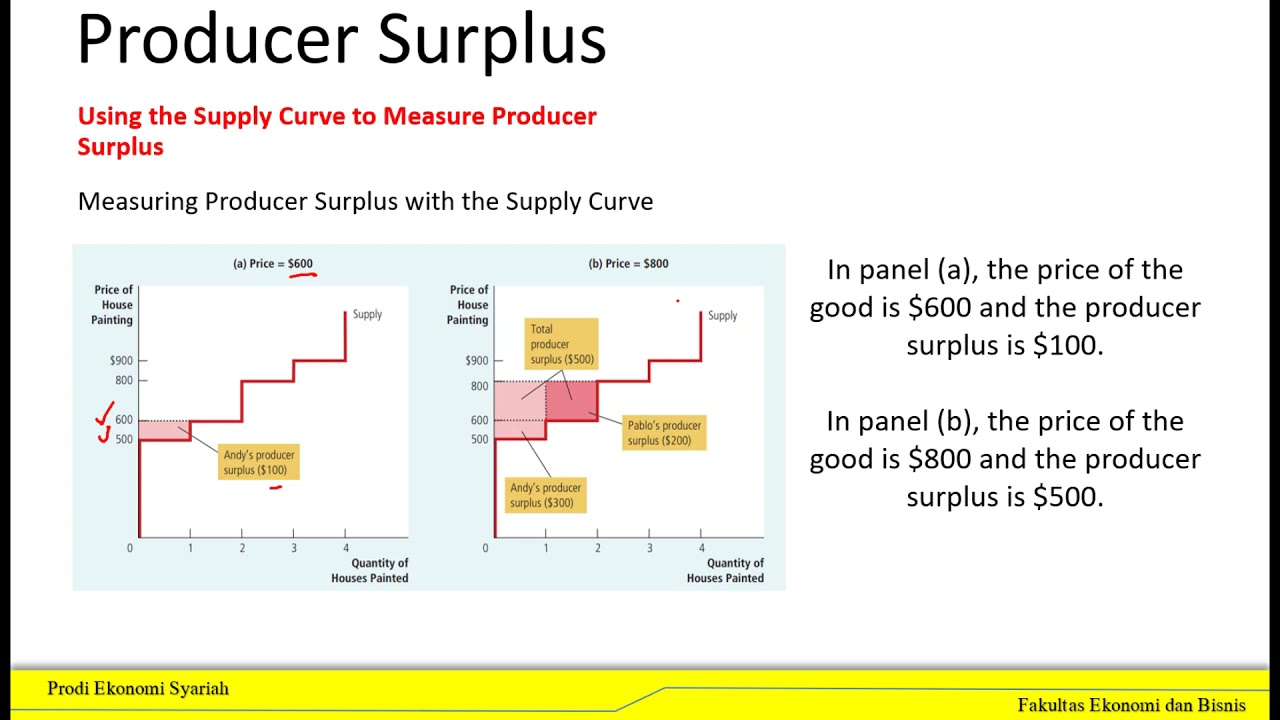
The concepts of Consumer Surplus and Producer Surplus, and how they represent economic welfare in a free market.
The principle of Market Efficiency, specifically how competitive markets maximize total social surplus.
The concept of Price Elasticity of Demand and Supply, which measures how responsive quantities are to price changes.
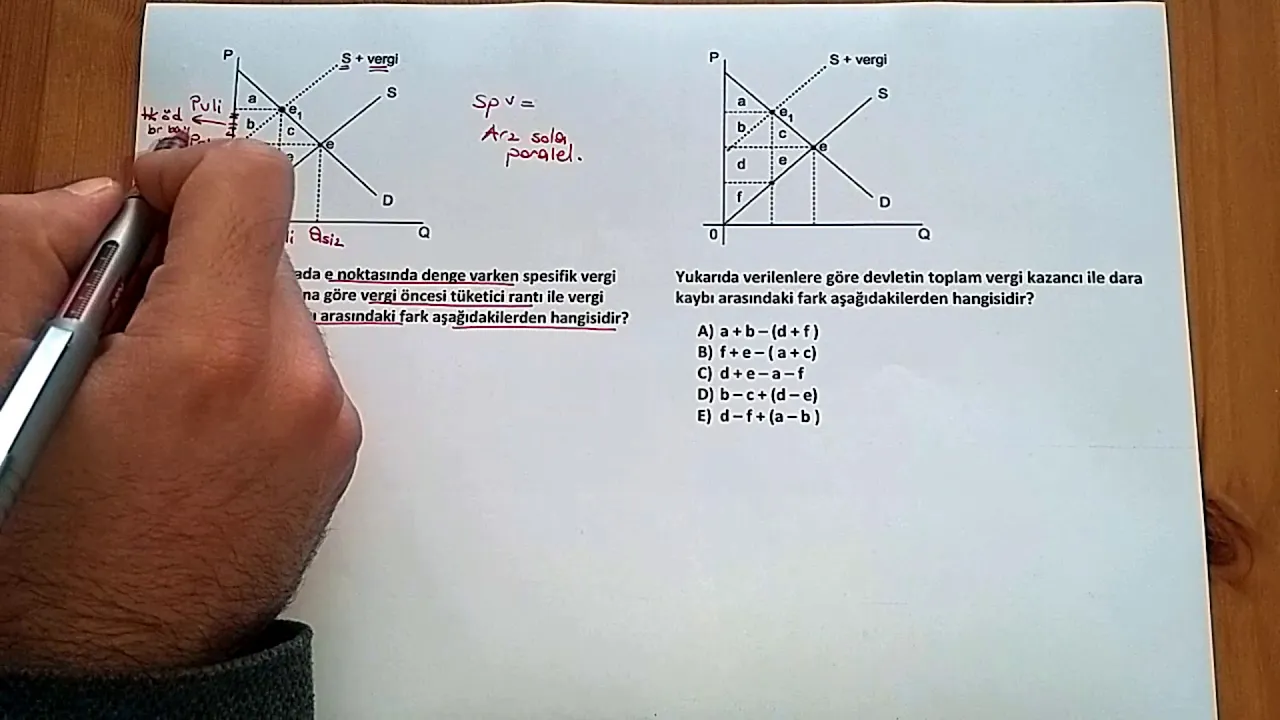
Tax Incidence and Welfare: Examining how excise taxes generate deadweight loss and how the tax burden is split between buyers and sellers.
Market Failures and Externalities: Understanding how Pigouvian taxes and subsidies can correct market inefficiencies (e.g., pollution or education).
International Trade and Protectionism: Applying welfare analysis to trade policies like tariffs, import quotas, and export subsidies.
Real-world Policy Analysis: Studying the empirical microeconomic effects of rent control (price ceilings), minimum wage laws (price floors), and agricultural subsidies.
963.4K views11.9Klikes10:14Original Release: 2016-01-13
Adriene: Welcome to Crash Course Economics. My name is Adriene Hill Jacob: And I’m Jacob Clifford, and today we’re going to talk about good intentions, and how they can go wrong. Price controls can derail markets. And subsidies can distort them.
Adriene: And “deadweight” isn’t just a good description of your ex.
[Theme Music] Jacob: Let’s say Craig becomes president and he caps the prices of all consumer goods.
He argues that the lower price will help everyone -- the poor, the middle class, small businesses, everyone. Maybe a few people might fall for this policy, but not you.
You watch Crash Course Economics, which means you're funny and smart and attractive, and you understand why this is a horrible idea. This example seems far fetched, but it actually happened...not the part of Craig being president. Instead it was President Richard Nixon.
In the early 1970s, Nixon established a 90 day price and wage freeze designed to fight inflation. The general public supported the idea, but economists were skeptical. In fact, Milton Friedman called the freeze “one of those ‘very plausible schemes…with very pleasing commencements, [that] have often shameful and lamentable conclusions’.” Economists call this idea of the government setting prices, price controls. Now, there's two types and we're gonna look at both of them in the Thought Bubble.
Adriene: When the government sets a maximum price for a specific good or service, that’s a price ceiling. Let's say the government forced gas stations to charge a dollar per gallon for gas. This might seem like a good idea, right? Mandated lower gas prices mean we all benefit. Not really. Society is actually made worse off. When the gas prices fall consumers will want to buy more, but producers will no longer find it profitable to sell gas.
The lower price will decrease the amount of gasoline produced, and we've got a shortage.
A price floor is a law that sets a minimum price in a specific market. The idea is to help by keeping the price artificially high and not allowing the price to fall down to equilibrium. Let’s make up an example using corn. Assume the government set a price floor for a bushel of corn at $7 when the actual equilibrium price is $4. The higher price would give farmers an incentive to produce more, but, at that high price, consumers would go buy substitutes -- things like wheat or rice. Instead of cornflakes they'd buy rice krispies. The point is, the farmers wouldn’t necessarily be better off. They could sell corn at the higher price, but they wouldn’t have as many customers.
In terms of actually helping consumers and producers, the vast majority of economists consider price controls counter-productive. But there is one notable exception: minimum wage. The minimum wage is a really complex issue that we’re going to address in a future video.
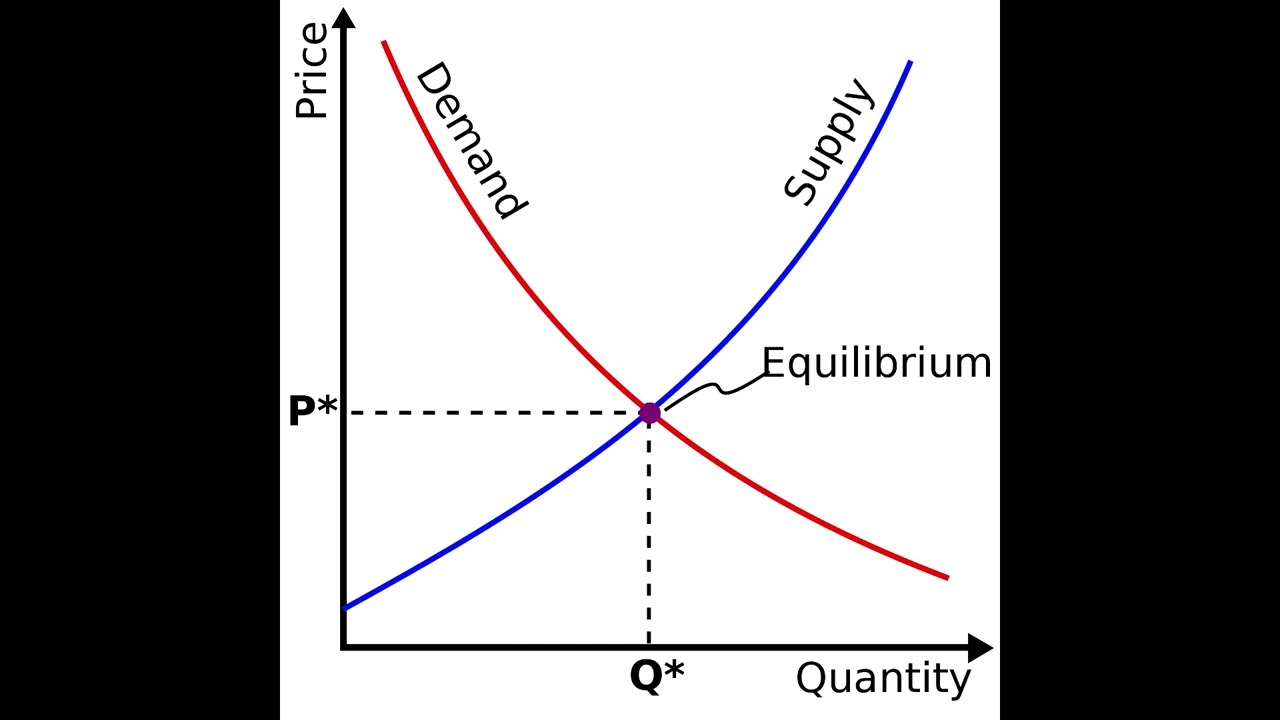
Jacob: Thanks Thought Bubble. Let’s look at both these policies again using the supply and demand graph. Assume the equilibrium price for gas is $3 and the government sets a price ceiling here, at only $1. At that low price, consumers would want to buy more, so the quantity demanded is gonna be here. The producers have less incentive to produce gas so they're going to make less, so the quantity supplied is right here. The end result is that the quantity bought and sold is going to fall resulting in a shortage. The amount of gas society wants is where supply meets demand. Producing any quantity less than that will result in something that economists call deadweight loss. So the quantity produced at the price ceiling is not allocatively efficient. We're not producing enough. The lower the price ceiling, the more the deadweight loss and inefficiency. Keep in mind that the price ceiling only has an effect on the market when it's below the equilibrium price.
Adriene: Many countries still use price ceilings: take Venezuela. In recent years they have been experiencing high inflation, so the government decided to impose price controls on consumer products like basic foods, medicine, and toilet paper. But, the new price is so low relative to the cost of production that farmers and factories can't make money. As a result, they've reduced or halted production of many goods, causing long lines, shortages, and empty shelves.
Rent control is another type of price ceiling. Many cities, including New York and San Francisco, put a cap on monthly rent for some apartments. Again, the idea is to increase affordability for tenants, which enables long-term tenants to stay in their homes when real estate prices rise. Meanwhile, the lower rent discourages renovation and new construction, reducing the quantity supplied. The result is a shortage of apartments with landlords that have few incentives to maintain their buildings or be responsive to their tenant’s needs.
Economists are not at all split on rent control. Pretty much all of them think that price ceilings on rent reduce the quantity and quality of the housing that's available.
Jacob: Now, how about a price floor? Well, look at corn with an equilibrium price of $4 per bushel and a price floor at $7. The higher price will give farmers an incentive to increase the quantity supplied. But, consumers don’t want to pay those higher prices so the quantity demanded's gonna fall. The result is a surplus and deadweight loss, so society's worse off.
Now one argument for a price floor on corn is that if farmers can’t get a high enough price, they'll stop producing. Then we will run out of food and die. Economists (except for Malthus) are not fans of starvation so they recognize that the government needs to get involved sometimes to preserve our food supply. But they don't use price floors.
Let’s talk about agricultural subsidies.
Adriene: A subsidy is a government payment given to individuals or businesses. And they're often designed to offset costs to advance a specific public goal.
Let's say the government subsidizes farmers that produce strawberries. This encourages them to increase supply and the result is more strawberries and a lower price. At first glance, this sounds like a great idea. Prices for consumers fall, farmers get more money, and the market remains at equilibrium. There is no shortage or surplus. Proponents of farm subsidies say they can help provide a stable living to farmers, limit food price inflation, and make sure we grow enough food to feed everyone.
But before you go out and become a lobbyist for farm subsidies, keep in mind that economists don't like them. For one, many farmers these days are not poor. By some estimates they make more than non-farm families. Farmers, economists argue, have the income they need to handle price shocks. Economists also think that subsidies might discourage farmers from innovating and rethinking how they farm because they have guaranteed income from the government.
A survey of economists found that 85% think the United States should eliminate agricultural subsidies.
But what do economists have against farmers?
Jacob: Economists don’t have it in for anybody. Except maybe physicists, because they have unbreakable laws and perfectly controlled experiments. Man I wish economics was a science!
Economists recognize that market prices are set for a reason. If corn prices are down because demand has fallen, then it's inefficient and wasteful to spend money on subsidies.
That said, if there is a drought or other natural disaster affecting farmers then some sort of short-term aid might be needed to keep farmers on their feet. But today, farm subsidies in the US were not about giving a little money to help ma and pa make it through a tough season.
Adriene: In the US, agricultural subsidies have been around since the Great Depression.
They were meant to help prop up farm prices and farmers. The Agricultural Adjustment Act of 1933 paid farmers not to grow crops on some of their land. The government also bought up excess crops. For decades after, farmers of crops like corn, wheat, cotton, and soybeans received government help. In the late 1990s Congress added new farm programs, including what are called direct payments. Basically, the government handed out checks to farmers based on land ownership and historical production levels. Farmers got them regardless of the market price for crops or how much they produced.
According to The Washington Post, “In 2005 alone, when pretax farm profits were at a near-record $72 billion, the federal government handed out more than $25 billion in aid…” That was almost 50% more than it paid to families on welfare. The Washington Post also found the government gave over 1.3 billion dollars to people that didn't farm at all.
In 2014, the government eliminated this system of direct payment subsidies. Farm subsidies still cost the government $20 billion dollars a year, but a large portion goes to helping farmers pay for crop insurance.
But economists don't like this much either. Some argue that any form of government assistance distorts the market, resulting in unintended consequences. For one, it guarantees farmers an income, and perhaps encourages them to take more risks, like planting on less fertile land.
Jacob: So is it ever appropriate for the government to give a subsidy? Well, let’s look at the supply and demand graph again. A market's going to produce the equilibrium quantity and, in most cases, that is exactly the amount society wants. But what if the amount society actually wants is much greater? What if there is something special about this product that buyers and sellers aren’t factoring in? In this case, the amount being produced is less than the amount society wants. The result would be deadweight loss. The inefficiency caused by the underproduction of this product. A subsidy would make society better off and improve efficiency.
Adriene: Let’s look at renewable energy technology. Some economists like government subsidies for research and development in energy. They argue that things like solar panels would be underdeveloped and underproduced without government action and that subsidies reduce deadweight loss.
Other economists point out that businesses already have an incentive to innovate, and that subsidies create false demand. In essence, they argue that there is no deadweight loss, and even if there is, markets will adjust. The takeaway from this debate is that subsidies aren't inherently good or bad, it just depends on the values of society and markets in question.
Just think, because of NASA, we have things like scratch-resistant lenses, memory foam, Moonbase Alpha.
Jacob: So we stand by our claim, markets work. They help us to determine the quantity we should produce and help us to use our resources efficiently. Now, government policies like price ceilings and floors often fail to make all of us better off.
Adriene: Sometimes, markets fail. And that's when the government needs to step in.
Thanks for watching. We’ll see you next week.
Jacob: Crash Course Economics was made with help of all of these nice people. You can support Crash Course at Patreon, where you can help keep Crash Course free for everyone, forever, and get great rewards. Thanks for watching and DFTBA.
Up Next

38:54
Housing Crisis Economics: A Critical Analysis of Breadtube's Misunderstanding
@ShortFatOtaku
268.1K views•2021-06-07

5:07
Impact of Yuan in Indo-Russian Trade Amid Sanctions
@WION
261.9K views•2022-07-01

7:31
Deficits & Debts Explained: Economics of Government Spending
@crashcourse
1.5M views•2015-09-23

113:18
The Age of Easy Money: Fed & Inflation | Full Documentary
@frontline
21.2M views•2023-03-15
Related Study Plans & Knowledge Roadmaps
Structured learning paths in Economics
economics
Sovereign Debt: Defaults, IMF & Restructuring
01Introduction to Sovereign Debt & Government Bonds
02Debt Sustainability & Credit Ratings
03Anatomy and History of Debt Crises
+ 2 more learning modules
12h5 modules
Explore Roadmap
economics
Market Design: Matching Theory & Gale-Shapley
01Introduction to Market Design and Price-Free Markets
02Two-Sided Matching & The Gale-Shapley Algorithm
03School Choice Systems and Mechanism Design
+ 2 more learning modules
10h5 modules
Explore Roadmap
economics
Impossible Trinity: Forex, Capital & Policy
01Introduction to Monetary Policy and Central Banking
02Exchange Rates and International Capital Flows
03The Mundell-Fleming Model
+ 2 more learning modules
8h5 modules
Explore Roadmap
economics
Healthcare Economics: Market Failures & Systems
01Introduction to Healthcare Markets and Market Failure
02Asymmetric Information and Adverse Selection
03Moral Hazard and Insurance Design
+ 2 more learning modules
12h5 modules
Explore Roadmap