





























This course covers the interconnected disciplines of economics, finance, and business strategy, teaching students how to evaluate investments using time value of money concepts like ROI, NPV, and IRR; analyze financial statements including income statements, balance sheets, and cash flow forecasts; understand capital budgeting and portfolio diversification; and grasp macroeconomic principles including the business cycle, fiscal and monetary policy, and ESG considerations for sustainable investing.
Finance & Economics Fundamentals for Business Management
Added:Basic accounting principles, including the fundamental accounting equation (Assets = Liabilities + Equity) and double-entry bookkeeping.
The concept of the Time Value of Money (TVM), including present value, future value, and discounting interest rates.
Introductory microeconomic principles, such as supply and demand dynamics, market structures, and opportunity cost.
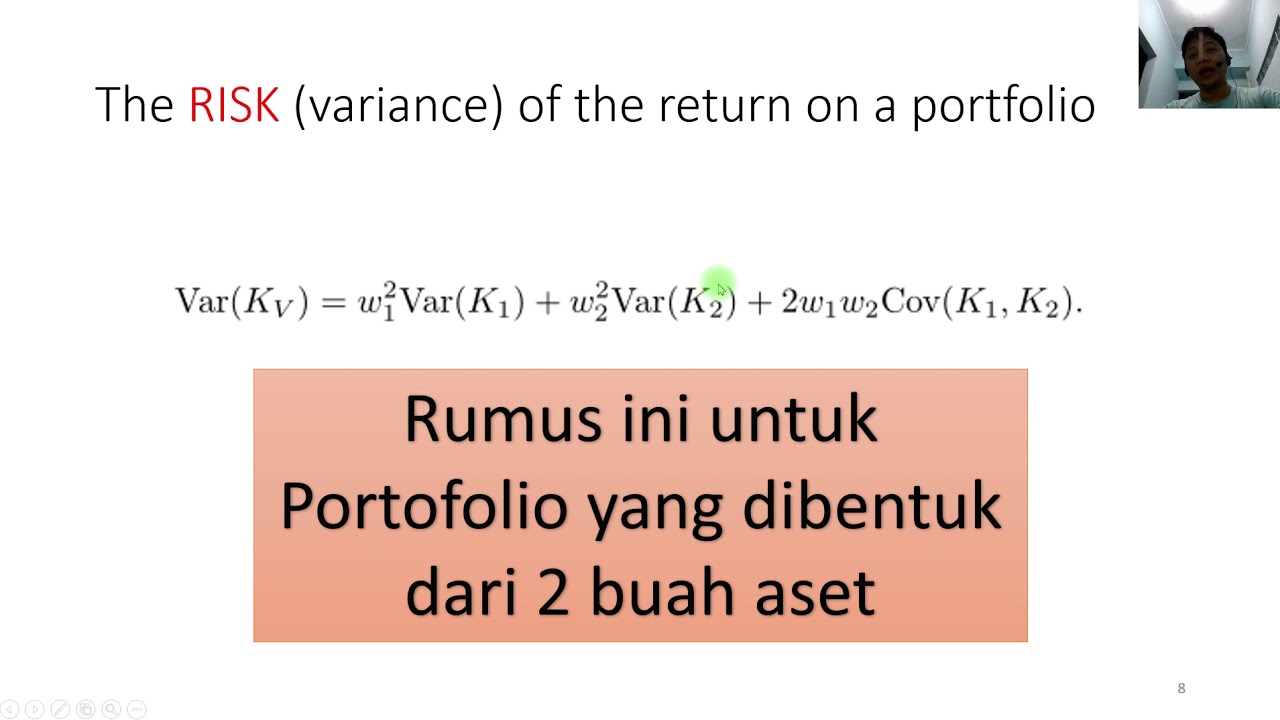
Basic statistical concepts, including mean, variance, standard deviation, and correlation, which are vital for risk analysis.
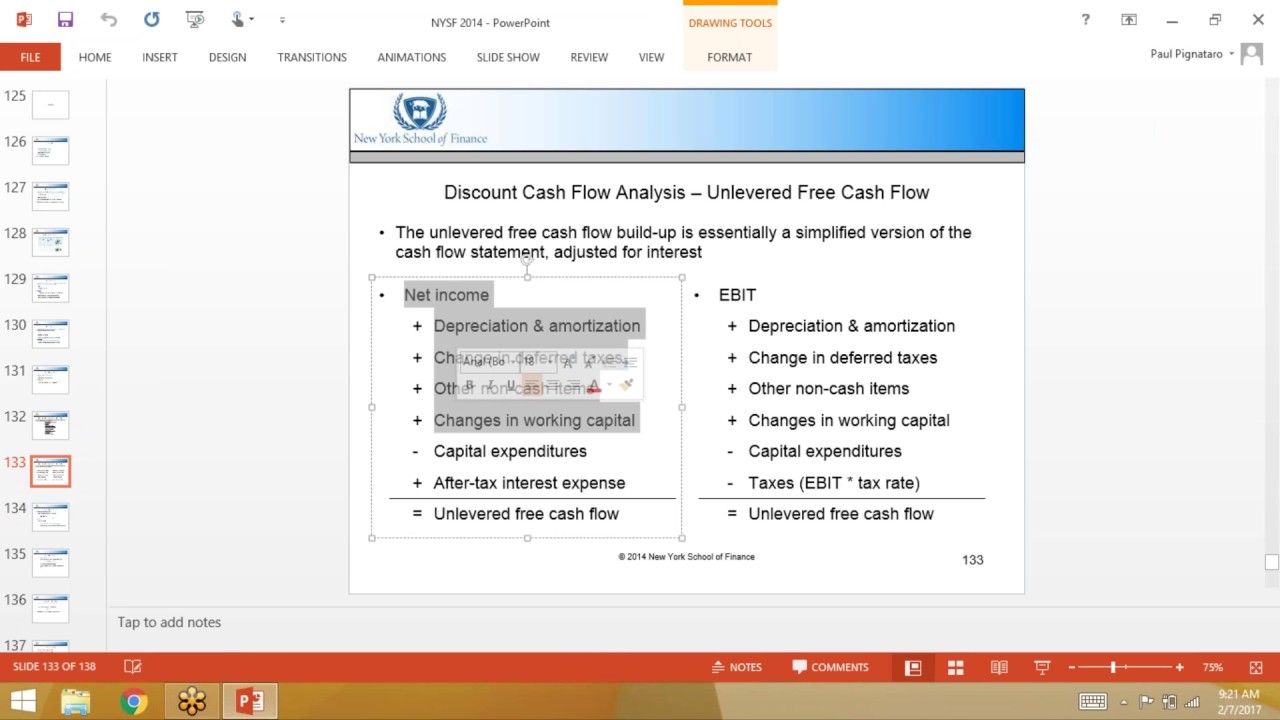
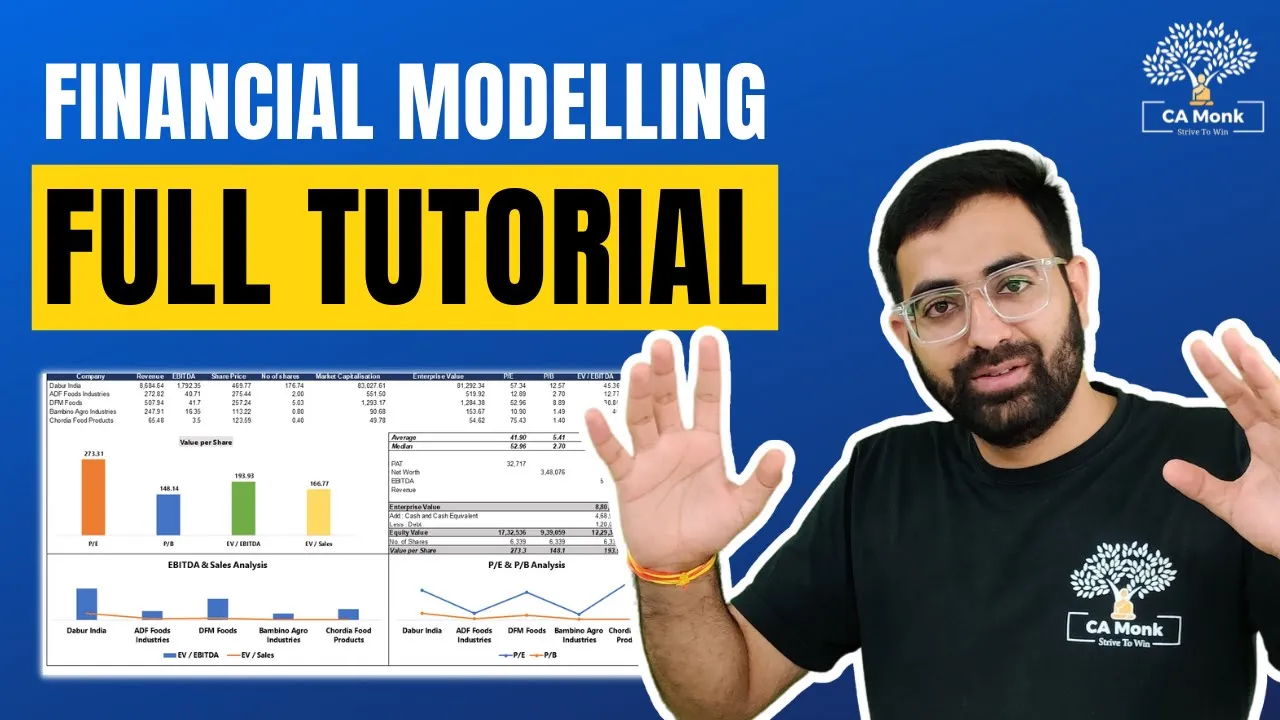
Corporate valuation techniques and financial modeling, including Discounted Cash Flow (DCF) analysis and comparable company analysis.
Advanced portfolio management theories, such as the Capital Asset Pricing Model (CAPM), Modern Portfolio Theory (MPT), and multi-factor models.
Sustainable finance and impact investing, focusing on how to integrate and measure ESG (Environmental, Social, and Governance) metrics in investment portfolios.
Applied macroeconomic forecasting and its impact on corporate strategic planning, specifically analyzing central bank monetary policies and fiscal indicators.
1.9M views47.2Klikes1:38:08Original Release: 2023-09-12
Dive deep into the world of finance and economics with this comprehensive video course.
Whether you want to make smarter investment decisions or you're looking to grasp the intricacies of global economies, this course lays a great foundation.
The course combines theory with practical insights, paving the way for you to navigate the financial realm with confidence.
Sriram originally taught this course in person and now has put together an excellent video course on these important topics.
Hello everyone. My name is Sriram Chundi and I'll be taking you through this course on economics and finance and how they're relevant for businesses.
Throughout this course, we'll be learning a variety of topics, starting with the key concepts for business, capital markets, valuation of stocks, business strategies and financial statements, how to analyze these financial statements, and things like capital budgeting and cash flow.
We'll also discuss things like the business cycle and industry analysis, ESG, macroeconomics, portfolio diversification, and alternative investment types.
Throughout this course, you'll learn a variety of different topics in all three of these disciplines and understand the interconnected nature of economics, finance, and business in this world.
I also have a YouTube channel called Changemakers Media, which you can see in the comments.
I would greatly appreciate it if you guys could subscribe there.
I share stories on how teens are making an impact in the world and how you can go ahead and support them.
Welcome to the first class on economics and finance.
So a thought experiment to start.
Imagine you had a magic box and it outputs a dollar a day or $5 or $20, how much ever you want, and it runs forever.
How much would you pay for this box?
Some people say a million dollars, some people say a billion.
Well, let's look at it from a statistical standpoint.
Instead of a box, let's imagine we have a savings account and it gives you 1.05% interest annually.
How much would you have to put into the savings account to generate a dollar a day?
Well, using Excel, we can identify that the principal or the original amount we'd have to invest is $34,761.
This is a large amount, and fairly so.
This is due to the small interest rate that we're getting on in our savings account.
Let's look at another example.
Imagine you want to buy a house, and the market price is $100,000.
You contribute $20,000 towards this down payment and take out an $80,000 mortgage, which is a loan.
How much would you have to pay to get rid of the mortgage?
Well, if you have an annual contribution of $9,396, you would assume it would take just about 8 or 9 years to pay off the mortgage.
But in reality, it takes 20 years, and this is due to the interest rate of 10% applied on this mortgage.
If you look towards the bottom over the course of our payments, you notice that from 2019 to 2020, our balance or the principal only drops by $1,400ish.
This is because the majority of our $9,000 contribution is going towards paying off interest on the mortgage, and we see this effect persisting throughout the course of our payments.
However, it does diminish as the size of the principal decreases and our interest payments decrease.
So, our key concepts for today's class.
Returnal investment and time value of money, and net present value.
So, would you rather make in a return of $1,000 or 25% on an investment?
You can't really compare.
Apples and Toe origins.
So, what is ROI?
ROI is a tool that allows you to compare the efficiency of one investment to another investment, thus allowing you to compare apples and oranges.
ROI measures the amount of return an investment generates relative to the amount that you invested.
So, this is the formula for return on an investment.
Current value of an investment minus the cost divided by the cost.
So, let's take an example of the house again.
Imagine you purchased it for $100,000 upfront.
And now, the market value of the house is $150,000.
Using the ROI formula, we can deduce that you had a 50% return on investment.
So, why is ROI important?
Because it allows you to compare assets of different classes and express it as a percentage.
It also provides a basic measure as universal to compare an investment's profitability as a basic element in all analysis and decisions for companies and individuals.
But it is limited.
So, let's look at this example.
In investment 1, you invest $1,000 in some real estate and sell it for $1,200 a year later.
So, your ROI is 20%.
In investment 2, you bought $2,000 a stock and sold it for $2,800 three years later.
Using the formula, you have a 40% ROI.
So, according to ROI, the second investment is better.
But when you look at the time considerations, you spend three times as much time to make that 40% ROI as you did for the 20% ROI.
Hence, ROI is not the say all be all measure of the value of an investment.
Okay, now let's look at this time value of money.
Continuous compounding.
So, let's assume you have a savings account and it generates 10% interest per year over 20 years.
Initially, you invest $1 into this account.
Over the course of 20 years, with that 10% interest rate, the value of your account will rise to $6.73.
That's 6.73 times the amount you initially invested.
And this is the power of continuous compounding or compound interest.
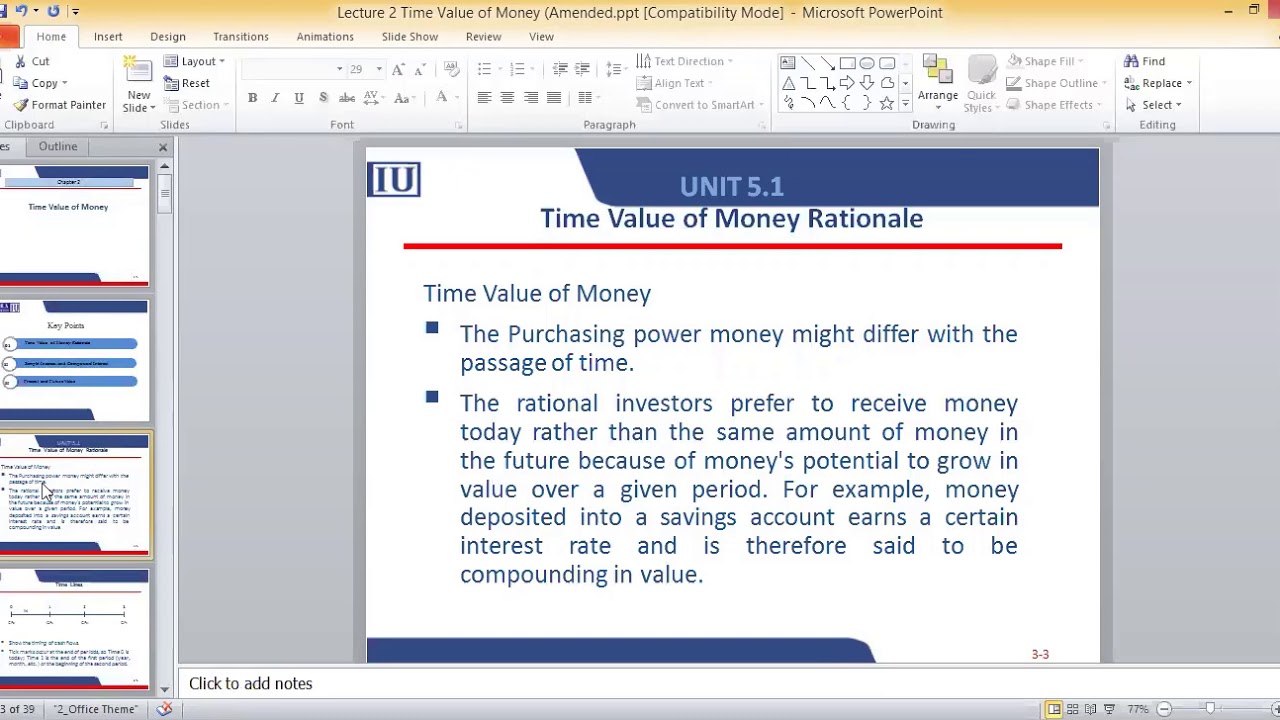
So, time value of money.
This concept says that money is worth more today than in the future because of the potential earning capacity that money has, as seen in the example, and because the power of money decreases due to macroeconomic effects such as inflation.
So, would you prefer $1 today or $1 in 5 years time?
With our previous example, we can deduce that we would like $1 today.
This is because we have the potential cash flows that money can create during this period as well as the avoiding of the potential effects of inflation.
Now we have net present value, the last of our three key concepts for this section of the video.
So, net present value is a pretty straightforward concept.
And it's as the name suggests, the net of all cash inflows and cash outflows to determine the value of an asset.
Cash inflows and cash outflows essentially represent the income and the sunken costs that an investment has taken.
So, how do we calculate the net present value?
But before we can calculate it, we need to understand, net present value is an important tool to determine the value of an investment.
If net present value is greater than zero, that means an investment was a positive investment generating good returns.
Before we can calculate what net present value is, we have to understand something called the discount rate.
Discount rate is the interest rate used to determine the present value of future cash flows in a discounted cash flow analysis.
Essentially it's the interest rate that the Federal Reserve charges on short term loans.
We use it to calculate the value of money in the future due to macroeconomic policies like inflation which decrease the value of future cash flows.
So, once we understand what the discount rate is, we can accurately calculate the net present value.
So, let's assume you purchased a vending machine.
To purchase the vending machine, you had to spend $10,000.
This is reflected in year zero with a minus $10,000 cash flow, which is a negative cost.
In year one, your vending machine returns you $2,000 in profits, and in subsequent years it returns $3,000, $5,000, and $7,000.
So, if you were to add up these numbers, it would give you a $7,000 net present value.
However, accounting for the discount rate, which assumes the loss of money due to increasing interest rates, our net present value is only $4,704.
Although it's less than the $7,000 that we would have received if money didn't lose value, it's still greater than zero, which indicates that the vending machine is indeed a good investment.
Okay, so here we have a Google Sheets laid out with the payments of a mortgage you would make if you were to buy a house.
So, referring to a similar example, let's imagine we're buying a house for $150,000 this time.
So, you have a 20% down payment, which is $30,000, which leaves you with a payment of $120,000, which you're going to be paying off with a loan.
So, let's say your loan principal is $120,000, you have a yearly interest rate of 10%.
This means your yearly payment for a 20-year mortgage would come out to $13,896.
So, as you can see here, over these 20 years, you're going to be paying off this mortgage with your yearly payments.
So, the first, every year you pay off the exact same amount, however, the principal amount decreases.
So, in the first year, you start with $120,000.
After your first payment, you're left with $118,000, and so on and so forth, until you eventually reach zero at the end of your 20-year mortgage period.
However, it's important to note the changes to the principal amount as time progresses.
If you notice, from year zero to year one, our principal only decreased by just shy of $2,000, even though you're making a payment for almost $14,000.
The reason for this is the majority of your payment is going towards paying off the yearly interest rate on your principal, which is 10% of $120,000, which is $12,000.
So, of your $13,896, $12,000 is going towards the interest, and only $1,896 is going towards paying off your principal.
This goes to show you how interest rates can actually end up costing you a lot of money.
So, $120,000 loan ends up costing $277,904 by the end to pay off the principal and the interest.
That means you're paying $157,940 on interest.
Alright, so, what are capital and financial markets?
What is capital finance and who provides it?
And how do businesses and governments obtain financial capital through these markets?
So, the financial market is a place where two or more people come together to exchange goods or services.
They can be physical places, like a grocery store or supermarket, or virtual places, like for example, the Netflix subscription page.
Although this is less obvious of a marketplace, it is still an area where two parties, the individual person subscription and Netflix, come together to exchange goods and services, or in this example, a Netflix subscription, which is a service.
So, the importance of financial markets.
Financial markets are vital for the growth of firms, as well as achieving individual consumers' desires.
Many firms produce goods and services that individuals would not be able to acquire themselves.
As a result, it's important for financial markets to exist, so consumers can have access to these goods.
It's also important for firms.
This is because, unless they're able to trade their goods and services, they won't be able to make returns on what they're producing and grow as a result.
So, now we'll go over the stock and bond markets.
So first of all, what is a stock?
So a stock is a security that represents a portion of ownership in a company.
So people can only purchase stocks from a public or private type of company.
Public companies are companies that trade their stock on a public platform, or anybody can purchase it.
Examples are Amazon, Apple, and Tesla.
If you wanted to right now, you could go and purchase their stock.
Private companies, on the other hand, are held by certain owners, typically the people who started the company.
In certain situations, they may choose to sell their stock, but not on a public platform, only privately to maybe their friends and family.
So what are stocks issued?
Stocks are issued by companies to raise finances for their goals.
These may be expansion, raising money for inventory, and so on.
Stocks are also referred to as equity.
And as many of you have seen in the Shark Tank show, we see the term equity thrown around.
In this example, Kevin offers $400,000 for an $8.2 million valuation.
So the company's total equity, or stock, is worth $8.2 million.
And Kevin's offering $400,000, which represents 4.8% of that total equity, so he would be owning 4.85% of the total stock of that company.
So now what is a bond?
A bond is an instrument that represents a loan made by an investor, which is you and a borrower.
So bonds can be issued by a variety of places, unlike stocks which are only issued by firms.
Bonds can be issued by firms, governments, states, and other government-affiliated organizations.
Bonds have four main features.
Their issue price, which is what you buy it for.
The face value, which includes the price you're buying it for, as well as the interest payments.
The coupon rate, or the interest rate, which is the set of payments you'll be receiving over the course of the bond.
The coupon date, which is when these payments will be made to you.
And the maturity date, which is when a lifetime of the bond is expended and the issue price is returned to you.
So bonds are used typically to fund projects for these organizations.
They only last for a certain period of time, as determined by the maturity rate when the bond is issued, and they either have fixed or variable payments.
Something interesting about bonds is that they're inversely related to interest rates in the market.
This is because as interest rates rise, the lower coupon rate of the bonds become less desirable.
As a result, bond issuers lower their price.
An example of a government-funded project could be developing infrastructure, such as buildings, schools, paving roads, and so on.
If the government doesn't already have enough funds to do this project, they may issue bonds to raise capital and pursue these projects.
So the differences between stocks and bonds.
So typically stocks are more risky.
This is due to the volatility of the stock market, resulting in companies' values appreciating and depreciating.
Additionally, stocks are only issued by firms or companies.
Stocks also give you ownership over a company, and you get paid in the form of dividends and appreciation in the value of the company.
Dividends are when companies may choose to offer you some money that they make from their profits.
And appreciation is when the total value of the company rises.
As a result, when you purchase a stock, for say for example when the company stock is worth $100 and it appreciates to $120, you make money off of that $20 appreciation.
Additionally, stocks give you ownership over a company, and in some situations will give you decision-making power.
So now bonds.
Bonds are seen as less risky because they have fixed payments, which are determined when the bond is purchased, and once they mature, you get your initial payment back.
Bonds are issued also by firms and governments, along with other organizations.
Bonds are in the form of debt, not ownership.
So when you purchase a bond, the person that you purchase the bond from will be making you payments.
Furthermore, bonds don't give you any decision-making power since they're only debt and not ownership.
We can see the risk between bonds and stocks in this example.
So here, the stocks are represented by the dark blue line, whereas the bonds are represented by the light purple.
The stock prices are very volatile as they're swinging up and down cyclically almost, whereas bonds are on a steady, much less volatile growth rate.
This represents how stocks are much more volatile, and when, at certain dates, if you choose to sell a stock, you may make a negative return, whereas if you choose, well, bonds you can't sell.
But once your bond reaches a maturity, you're almost guaranteed to make profits, unless the company or organization that you purchase the bond from defaults or goes bankrupt.
So how do we value stocks on any asset in general?
Well there's two main factors that we have to include when trying to value a stock or bond or any asset for that matter.
The expected cash flows and the risk associated with the value.
As we discussed earlier, cash flows are the total revenues we'll be making, along with the sunken costs of bursting an asset.
And risk.
Risk can be represented with the chance for financial losses or the chance that a company even goes bankrupt and you lose your value.
Okay, so stock valuation.
There is a lot of uncertainty when valuing a stock, and part of this is due to the fact that there's so many different ways to value a stock.
For example, there's the discounted cash flow method, which we'll be looking into next.
There's the constant growth divided by dividend discount method, and there's also techniques called comparables, which we'll also be discussing, such as price to earnings, price to books, and price to sales.
As a result, there's no standard convention to measure a stock, and when people are comparing stocks, it's best to use the most information you have available to you and try and do all these techniques, which is, of course, unviable in the real world though.
So, the discounted cash flow method.
Discounted cash flow method is similar to what we discussed in the previous section, where we take all the expected cash flows for an asset, including the sunken costs and the revenues that it slightly generate in the future, and discount these values, meaning we adjust the value of money in accordance with macroeconomic features like inflation and so on to ensure that the future value of money is converted to the present value of money.
So, what are the pros of this technique?
Theoretically, this is the most sound method if the analyst is confident in their assumptions and forecasts.
Additionally, it's not significantly influenced by temporary market conditions or non-economic factors.
Like if the industry is suffering from a temporary lack of resources, this technique ensures that those factors are overcome when calculating the value.
And this is especially useful when a company you're valuing is in an industry where there's no other competitors or very limited competitors, so that way there's limited or no comparable information.
As a result, you only base your forecasts off the individual company.
The cons of this technique are that it can vary over a wide range of values, because the predictions are based on forecasts which are likely to be inaccurate.
Additionally, it's very time intensive compared to the other evaluation techniques which we'll discuss later.
And additionally, forecasting future performance is very difficult since it requires lots of statistical tools, and again, it is likely to be inaccurate or imprecise.
So valuation frameworks, we'll be looking at comps now.
So what are comps?
Comps are also called comparables or multiples, and it is a valuation technique that is based on comparing companies within an industry.
It involves using metrics such as price to earnings, price to books, and other relevant ratios to that of similar companies in the same industry.
The rationale behind using comps lies in the principle that companies within the same industry tend to have similar financial and operational characteristics due to shared market and economic factors.
By evaluating the valuation of a company against its peers, investors can gain insights into its performance within the industry and whether it's over, under, or fairly valued.
So the two most popular forms of comps are price to earnings ratio and something called enterprise value to EDITDA or EBITDA.
So these are examples of certain types of comps.
We have price to earnings, price to sales, enterprise value to earning before interest, tax, and appreciation, price to cash flow, and price to earnings.
The reason these are better than discounting cash flow in terms of time is that their ratios so they can be calculated very quickly.
All you have to do is go to the financial documents of a company, look at their numbers of their reporting, and calculate them, which allows for swift and easy comparison between companies within the same industry.
Alright, in this section we'll be going over business strategy and any of the financial documents related to it.
So first, what is business strategy?
Well, it's a plan of action or a policy designed to achieve the major or overall aim of a company.
So it's the time to develop a coherent economic strategy and the plans to ensure the future success of the company in both its goals and financial success.
So one key aspect of the business strategy is the mission statement.
The mission statement is the summary of the aims and the values of a company.
The key elements of a mission statement are the purpose, the target audience, an explanation of the business, how the business is unique, and the values that the business has.
And it has to do all of these things in just a couple sentences.
So let's look at a couple examples.
Here we have Microsoft, and their business statement is to empower every person and every organization on the planet to achieve more.
We have Honda, maintaining a global viewpoint, we are dedicated to supplying products of the highest quality yet at a reasonable price for worldwide customer satisfaction.
And Walmart, to save people money so that they can live better.
Across these three statements, there's common features.
One, they're short, two, they're easy to remember, and three, they showcase the core values and missions of these companies.
Okay, so the next part about a company analysis.
There's various tools that companies include to create their business statement.
And one of these principle tools is a SWOT analysis.
A SWOT analysis helps a company position themselves and understand where they are in the marketplace against their competitors.
There are four key elements of SWOT analysis, strengths, weaknesses, opportunities and threats, which thus produce the name SWOT.
So the strengths of a company are its competitive advantage, the assets that it had that are proprietary and products that are performing well.
These are the strengths because they are unique features of a company that other competitions don't have.
The weaknesses of a company are things that they lack that their competitors have, things that their competitors do better and any resource limitations that a company may be experiencing.
So strengths and weaknesses are within the company and its operations.
Then we have opportunities and threats.
Threats are new legislature which threatens a company's operations, any new emerging competition, and changes to consumer attitudes and opinions.
Opportunities are technologies that a company can integrate to improve its processes, emerging press and media which can help a company generate any publicity, and underserved markets that a company can integrate themselves into.
Threats and opportunities are not directly involved in the company and are external and can be affecting the company over time.
So here we have a bit more of a detailed explanation of what strengths and weaknesses are.
So strengths are the internal attributes and resources of a company that propel the company towards success.
It represents the area where your organization outperforms others, evident by both your competitors and your customers.
Weaknesses are the facets that hinder favorable outcomes for your business.
They pinpoint areas that require improvements, shedding light on where your company falls short compared to its competitors.
Opportunities encompass external elements that can be leveraged to your advantage.
These are prevailing market trends that, when capitalized upon using your strengths, can enhance revenue and provide a competitive edge.
Threats denote external factors that jeopardize your organization's success.
These encompass advantages held by competitors.
To mitigate these risks, it's crucial to employers' strengths strategically.
Swat analysis, when used, can help a company understand where it is now in its industry and what the future holds and how the company can progress itself in a beneficial way.
One more tool that a business can use to help it understand the importance of certain products or services it sells is the BCG matrix.
The BCG matrix, otherwise known as the Boston Consulting Group matrix, is a business analysis tool that helps organizations assess their product portfolio's performance and potential.
As you can see on the diagram, there are four different categories, stars, cash cows, question marks and dogs, and you can categorize products depending on their market growth rate and their relative market share.
Stars, these are products with high market shares that are in fast-growing markets.
They have the potential to generate significant profits due to their position in this industry.
So if a company dominates 90% of the market share for a niche that is growing very fast, the product that they're selling is likely to be a star.
Cash cows are products that have high market shares in markets that aren't growing so fast.
While they may not have as much growth potential, they generate steady cash flow, which is often desirable for businesses.
So similar to stars, but they don't have the future potential and instead they're making money right now.
Question marks are products that companies may have low market share in, however the market is likely to expand in the future.
They require consideration as to whether a company should invest in it to develop its market share and potentially create it into a star or to let it go and become a dog.
And dogs are products that have a low market share and a market growth in a market that isn't growing.
They won't generate significant profits for the company and if a company needs to reduce some of its services that it's offering, the dogs are the first to go.
The BCG Matrix can help a company allocate its resources effectively by suggesting strategies for products or services that fall into each specific quadrant.
And the last strategic business tool we'll talk about is Porter's Generic Strategies.
Porter's Generic Strategies are a set of strategic approaches developed by Michael Porter, as the name suggests, to help businesses understand where they stand in the industry and to help them gain a competitive advantage.
So again, there are four quadrants in this diagram.
There's cost leadership, differentiation, cost focus, and differentiation focus.
So cost leadership is a strategy that focuses on becoming the lowest cost producer in an industry.
This is achieved by economies of scale, efficient operations, and cost controls.
This can attract a wide consumer customer base and potentially deter new entrants from the industry.
Then we have differentiation.
Differentiation aims to create a unique or distinctive product unlike others on the market.
And this can be achieved through unique product design, branding, or even customer service.
By offering something that's valuable and unique, companies can often charge premium prices and customers will be willing to pay.
And then as we move to the bottom, there are the focus or niche strategies in the niche market.
These strategies often involve concentrating efforts on a specific market or a specific segment.
This can be done either through cost focus or through differentiation focus, which means becoming the lowest cost leader in a niche and offering a uniquely tailored product in a niche respectively.
By focusing on smaller specialized markets, companies can build stronger relationships with their customers and it's much easier to maintain these relationships.
By choosing one of these generic strategies, businesses can align their operations, marketing efforts, and resource allocations to create a sustainable competitive advantage.
So now we'll be looking at the three main financial statements that all companies need to report or financial documents rather.
So we have the statement of profit or loss, the statement of financial position and the cash flow forecast.
It's important to note that these documents do have different names that they're referred to as I've indicated some of the popular other forms in parentheses.
So if you do go on the internet and you come across an income statement or profit or loss statement, please do know that they're the same thing.
So each of these statements has a different purpose, which we'll be exploring soon.
And when combined together, they provide an in-depth look at the through the lens of finances and performance at how a company is performing and whether its stock is good.
And also keep in mind that all publicly traded companies need to report these three documents to ensure transparency with the public and their investors, whereas private companies don't need to report this.
Also note that in these documents, any negative numbers or losses will be represented with parentheses around them.
In earlier examples, I use the color red.
However, in financial documents, it's important to know all negative numbers are in parentheses.
All right.
So first we have the statement of profit or loss.
The statement of profit or loss is a financial statement that summarizes the revenues, costs, and expenses of a company over a period of time.
So just to start with, all of these financial documents have this opening section.
It will of course include the title, the company, and what type of financial document it is.
And more importantly, the period of time that is coming from.
So in this example, we have the end of the year at whatever year.
Okay.
So the statement of profit or loss is also known as the statement of operations, statement of financial results or income, the earning statement, the expense statement, income statement, and so on.
It's important to compare this profit and loss statement over time to see changes within a company.
So this example, we only have it for one year, but investors typically look at several years and compare it on a horizontal analysis, which we'll look at later, to see the growth of a company over time.
So whenever we're looking at this document, it's important to start from the top.
So we look at the sales revenue, and as we go, we slowly reduce the total sales revenue until we receive the retained profit.
So starting at costs of sales, this includes the cost of manufacturing goods and the costs through which you would have to sell it.
This includes lighting at the store and so on.
This leads you to gross profit.
Then after expenses, you get your profits before interest in tax.
After paying interest, you get profits before tax.
After paying your taxes, you get profit for your period.
So this is essentially all the surplus that a company has left over.
Then you pay your dividends to your shareholders, and this leads the retained profit for the company.
So it's important to note that this is for a profit-making entity.
Even non-profit-making entities do report these statements.
However, in place of profit, they use the term surplus, since they aren't, well, for profit, right?
So the statement of financial position.
This statement's a bit longer, so we'll look at it in two parts, assets and liabilities.
But essentially this statement says, at the end of a financial period, where do you as a company stand?
So the first half, the assets.
So again, looking from the top, we have the name of the company, title of the document, and the period that it's reporting for.
So in this section, we look at the assets, and assets are split into non-current and current assets.
So non-current assets are assets that a company will be holding for a period greater than a year.
This includes things like the factory that it's built on, any of the technical equipment they have, and so on.
Current assets, on the other hand, are assets that a company will hold for less than a period of a year.
This includes things like cash, debtors, and stock.
So when you calculate the total value of non-current assets, you get 800 here, and current assets is a 1100.
So your total assets add up to 1900.
One thing that you may notice is accumulated depreciation, and it's in parentheses, and it's a negative factor.
Although it's beyond the scope of this course, I'll give you a quick look at what depreciation is.
It's an accounting technique used by companies to reduce their overall assets, which can help them in terms of tax breaks and so on.
But yeah, when you add your non-current assets and your current assets, you get your total assets of 1900.
Now liabilities, again, liabilities are split into current liabilities and non-current liabilities.
Current liabilities are liabilities that a company will hold for a period less than a year.
And non-current are liabilities that a company will hold for a period greater than a year.
Things like bank overdraft, which are essentially drawing from a bank account until it gets to a negative point, is a current liability.
Trade predators is when a company is trading with another company, and the person you're trading with allows you to pay later, essentially like an IOU.
And we also have short-term loans, which will be paid back in a period less than a year.
And these add up to your total current liabilities.
Other non-current liabilities are just long-term loans, which you would take out from the bank.
And these add up to your total liabilities.
Your net assets are your total assets minus your total liabilities.
So your total assets are 1900, and your total liabilities are 800.
So 1900 minus 800 gives you 1100, which is your net assets.
And an important calculation to know to see if you've done the financial position correct is to take your assets and equate them to liabilities plus shareholder equity.
If this comes out equal, then you've done it right.
Shareholder equity is essentially the share capital, the value of your shares, and the retained earnings of a company for the period.
So yeah, that's your statement of financial position.
And now we have the cash flow forecast.
The cash flow forecast is for a shorter period of time, and it talks about all the money going in and out of a company for, in this case, three months.
So yeah, it allows advisors to assess the individual inflows and outflows of a company to determine how important certain things in the company are and how expensive they are and how they can be cut down to improve the total net cash flow of a company.
It also allows the company, it also allows for a month by month comparison to see the growing effects of the company's operations.
So as you see here in January, the opening balance is 800.
However, the total cash outflows, which are 306, are greater than the inflows, which are 300.
And as a result, the closing balance decreases by 6, 6 million.
So you have a closing balance of 2 million.
And we see this negative cash flow going over a period of three months, which allows us to see that operating at this state for this company has negative effects and then suggests that some outflows need to be decreased or inflows need to be increased.
Otherwise, companies may need to take out other, incorporate other forms of finances.
So the importance of these forms, these three forms, as I stated earlier, need to be made public for publicly traded companies.
It's important that companies ensure transparency with their investors and with the public so that investors can make informed decisions whether they should invest in the company.
These documents are also important for people within the company to ensure that to create calculations like return on equity or ROE.
And you can only do that by comparing across these documents or cross referencing.
So yeah, even now you can search up a certain publicly traded company and find these financial documents on the internet.
However, you won't be able to do so with private companies.
So now we'll be looking at how to analyze these financial statements that we've just discussed.
So there's three techniques that we can use.
You can use ratios, a horizontal analysis, and a common size technique.
So first we'll go over ratios, which are, in my opinion, the simplest way and the quickest way to analyze.
So there's four types of ratios, profitability ratios, which measure your return on investment, your liquidity ratios, which measure how easily you can move your money around, activity ratios, which are representation of your day to day operations, and leverage ratios, which represent how well you can utilize debt.
So we have profitability ratios.
Profitability ratios are financial indicators used to evaluate a company's ability to generate profits relative to its revenue, assets, and equity.
Key profitability ratios include the gross profit margin, as you can see on screen, which measures profit after deducting production costs or cost of goods sold, and the net profit margin, which assesses overall profit after all expenses.
We also have return on assets and return on equity, which are common ratios that show how efficiently a company generates profits from its assets and shareholder equity, respectively.
These ratios help investors and stakeholders gauge the company's profitability and its effectiveness in turning revenue into earnings.
So as you can see, I have the formulas for each of these profitability ratios listed on screen, and all of this information can obviously be found from three financial documents.
Next we have liquidity ratios.
Liquidity ratios are a financial metrics that assess a company's ability to meet its short-term financial obligations.
They measure the firm's ability to convert assets into cash quickly to recover or cover immediate liabilities.
Common liquidity ratios include the current ratio, which divides the current assets by current liabilities, and the quick ratio, which excludes less liquid assets like inventory.
These ratios provide insights into a company's financial health and its capacity to handle unexpected expenses or downturns.
High liquidity ratios generally indicate better short-term financial stability and flexibility, however they aren't the ultimate analysis technique for liquidity.
Activity ratios are also known as asset utilization ratios, and they analyze how efficiently a company manages to use its assets to generate revenue.
They provide insights into how well a company utilizes its resources and operations.
For example, we have inventory turnover, which measures how quickly inventory is sold and replenished, and things like average collection period.
Activity ratios help businesses optimize their operations, manage working capital, and identify areas where improvements can lead to increased productivity and profitability.
Finally, we have debt leverage ratios.
Debt ratios are financial metrics that evaluate a company's level of debt in relation to its equity or assets.
These ratios offer insights into a company's financial leverage and risk.
Common debt ratios include the debt-to-asset ratio, which measures debt relative to the total assets a company has.
This ratio helps assess the company's ability to handle its debt obligations, and also provides valuable information for investors and creditors regarding the firm's financial stability and its transfer risk.
Alright, so there's nuances to these ratios.
Although these ratios are super simple and easy to calculate, they aren't that useful when you're comparing firms across industries.
So for example, we have Walmart and Honda.
If we take the example of the liquidity ratios with the quick ratio, you can't compare Honda and Walmart.
It's likely that one of the companies will have very different styles of inventory, and the way they process their equipment is very different.
However, these ratios are useful when you're comparing companies within the same industry in the same position.
Alright, so now we can go through a quick simplified version of a consolidated income statement and all these financial documents to calculate two ratios, the gross profit margin and the net profit margin for Tesla.
So I got this data from the Wall Street Journal, and it's just a consolidated income statement of Tesla with all this information here.
So to calculate the gross profit margin, I have the formula right here.
So it's the revenues minus the cost of goods sold divided by the total revenues.
So using Excel, we can use the minus function to take the revenues, which is right here, and subtract it from the cost of goods sold, which is right here.
And this gives us 20,853.
And now we can use the divide function to divide this value by the total revenues, which is the formula right here.
And this gives us the gross profit margin ratio of 0.255, and so on.
And now we can do the same thing with the net profit margin.
But this is much more simple.
This is just the net income divided by revenues.
So we take the divide function, and we look for the net income, which is right here.
And you take this, and you divide it by the revenues, which is right here again.
And using Excel, we can calculate it to be 0.15446.
So this is a super simplified example.
The information on this Excel sheet is very basic.
In reality, when you're calculating some of the other ratios, you're going to need to cross reference these financial documents, because lots of the information is located on the cash flow forecast, some is reporting the income statement, and so on.
So as a result, it becomes a lot more complicated.
But if you have access to all the other files, which you should for publicly traded companies, you'll be able to do these calculations no problem.
The next technique is horizontal analysis or trend analysis.
So horizontal analysis of financial statements involves comparing financial ratios and benchmarks or any item over a number of accounting periods.
This method is also known as trend analysis.
So horizontal analysis allows the assessment of relative changes in different aspects of the financial statements to be seen over time.
So let's look at this example.
One thing to notice when you're reading these statements over time is that the most recent years represented on the left most column and the most and the oldest years on the right most column, which kind of goes against our left to right reading style in English.
So it's important to keep that in mind.
But if we look at the numbers, we see a growth in the sales, a growth in the cost of sales, a growth in profit and so on.
So this can be calculated.
So the change, the numerical change can be calculated and listed in this column.
And the percentage change can be listed here.
The percentage change is calculated by taking the difference and dividing it by the overall amount.
So that's also called the year over year change.
So returning to our consolidated income statement for Tesla that we saw in the previous example, we can see the same changes happening over time.
So the leftmost column is the most recent year, which is 2022, and the rightmost column is 2018.
So this records data for Tesla over the course of five years.
Keep in mind that some of this data happened during the COVID-19 pandemic, which may have skewed results.
So that shows you that it's important to realize that macroeconomic effects like a pandemic or other industrial shocks can affect this data.
But in large, it's not that big of a contribution, at least to Tesla.
So if we look, we see a growth in sales revenue.
So from 21,000, 24,000, 31,000, and then rapid growth from 2020 to 2022, with 20,000 growth and then 30,000 growth.
At the same processes can be seen across various other factors or various other items.
And this goes to show you how this horizontal statement can be used to analyze growth over time, even with Tesla.
The last tool we'll be discussing in this section is common size analysis, which is a financial state.
The last technique we'll be discussing in this section is common size analysis.
Common size financial statements show each line item expressed as a percentage of a base figure within the statement, and it's used for vertical analysis.
So common size financial statements help to analyze and compare a company's performance over several periods.
The common size percentages can subsequently be used to compare those of competitors and determine how a company is performing relative to the rest of the industry.
A common size income statement is an income statement in which each line item is expressed as a percentage of the value of revenue or sales.
A common size balance sheet is a balance sheet that displays both a numeric value and relative percentage for total assets.
So in the following example, we'll be looking over a common size statement for an income statement or balance sheet.
Okay, so here we have a generic example of what one would look like.
As you can see, we have the normal side of a balance sheet or a statement of financial position, except one more column is added that expresses everything as percentages.
In this example, you would think percentages aren't too helpful, and you'd be right.
And that's because the numbers here are very straightforward.
The total assets are 100,000, which makes 100%.
And all these numbers are very straightforward.
However, in a situation where numbers are much more miscellaneous and intricate, these percentages help to clarify and watch more information.
Here this is extremely helpful because it can show us what percent of our assets, for example, our current assets are in which form.
So in this example, for our current assets, the majority is in the form of total cash and inventory, whereas the rest is in the form of prepaid expenses and accounts receivables.
This can suggest that the company may need to invest its total cash into other assets that can generate revenue, and it may have an inventory issue, turning inventory into actual revenue.
And if we look at our non-current assets, the majority of our assets are in our plan, property and equipment, whereas very little is in our goodwill.
This can help us identify what value certain parts of our business bring and what parts aren't as helpful.
So in the non-current example, we see how we have so much value in our equipment, our property, and our plant, whereas the brand name and value, which is goodwill, isn't that strong.
This can also help us identify which parts of our liabilities are the greatest and which parts are the weakest, and how we can take future steps to address these and prevent any other issues from rising.
This same thing can be seen for other forms of statements like the income statement, which I mentioned earlier, but it's essentially the same thing just in another financial statement.
All right.
So let's say you have the opportunity to install solar panels on your house.
The solar panel company says it's going to cost you $10,000 to install solar panels.
But they say in the long run, you're going to be able to save money.
Should you make the investment?
Well, in this class, we're going to be in this section, we're going to be talking about capital budgeting.
So what is capital budgeting?
Why do we do it?
And how is it done?
And with these tools, we can answer whether we should make the investment for the solar panels.
So first, what is capital budgeting?
Capital budgeting is the process of evaluating and selecting long term investment projects like solar panels that involve significant financial outlays.
It's a decision making processes for businesses and individuals to determine which projects are worth pursuing based on their potential to generate returns or benefits over an extended period.
Capital budgeting helps organizations and individuals allocate their financial resources effectively, maximizing the value of investments and minimizing the risk of making poor choices.
It's a systematic approach that considers not only the immediate costs and returns, but also the long term impact on financial performance and overall strategic goals of an individual or business.
Okay, so first of all, why do companies even make investments in fixed assets?
Well, investments can increase capacity, they can overcome some regulations, they are innovative, which can give companies a unique advantage.
And there's so many other reasons.
But why is capital budgeting important for valuation?
Capital budgeting is important for several reasons, but I'll give you three main reasons.
First of all, it helps the resource allocation.
There's limited financial resources and capital budgeting can help ensure companies focus on the most promising investments.
It also helps for long term planning.
This is because it allows companies to plan for the future by considering the effects of their investment using tools that we'll discuss later, over an extended period and manage risk while maximizing returns.
And it also considers the time value of money, again, which we'll discuss further.
But capital budgeting considers the time value of money, recognizing that a dollar today is worth more than a dollar in the future.
This also ensures that cash flow predictions are properly discounted.
Okay, so how do companies pay for investments?
They pay for it in three ways using cash flow, debt, and equity.
So before we continue, there's two more concepts you need to understand before we're able to discuss capital budgeting and how to actually consider it.
Internal Rate of Return, or IRR for short, and Cost of Capital.
The Internal Rate of Return, or IRR, is a finance term that helps us assess how lucrative an investment or project could be.
IRR is the annual growth that an investment is expected to make.
If the IRR is higher than what you could earn from a safe investment, like a bank deposit or investing in some safe stocks, then the project might be worth the risk.
In short, IRR helps us decide if a business idea is a good investment.
So the steps of capital budgeting.
First, a project proposal is developed.
This involves either individuals or businesses looking at an opportunity to make an investment and thinking it's a good idea.
Then management reviews and prioritizes projects based on their economic viability.
So after looking at the potential cash flow projections, management will either decide if an investment is positive or negative for the company and thus decide to prioritize or ignore it.
Then funds are allocated on these projects to ensure the development and the results are tracked to see if the projections are accurate.
If projections are inaccurate, funds are either removed, reduced, or increased.
After the investment is completed, companies can reflect on the process and decide whether future similar investments should be made.
So Capital Cash Flows.
The value of an initial investment is equal to the cost of the new asset plus the installation's cost associated with the new asset minus the after-tax proceeds from selling the old asset.
Keep in mind the after-tax proceeds from selling an old asset is equal to the sale price minus the tax on capital gain, which is a bit advanced from this course.
But all you need to understand is that that is considered when calculating the price of the initial investment.
So capital budgeting results in changes in working capital.
If a current asset increases in value, it's a use of working capital.
If current liabilities increase, it's a source of working capital.
That means current assets are cash, or inventory, which are uses of capital, and liabilities are things like loans, which are sources of working capital.
An increase in networking capital means it's a source of cash for the company, and a decrease is a use of cash.
So capital budgeting are the three main methods that we use to decide whether we should invest our payback period, which we'll discuss next, net present value, which we've discussed earlier, and IRR, which we've all just discussed.
So payback period, it's a very basic concept, and it essentially discusses how long it takes for a company to recoup its investments on a fixed asset.
So in this example, we have a Ford factory.
Initially it costs $5,000 to invest in this Ford factory.
However, as the years go on, it generates positive cash flows.
So payback period essentially looks at how long it takes for the company to generate, to receive a net positive cash flow.
And as you can see, initially the cash flows, the cumulative cash flow is negative until year four, when it finally breaks positive.
Okay, so now let's return back to our example.
Our solar panel costs $10,000.
Should we make the investment?
So using capital budgeting techniques, we can predict the cash flows.
So the cash flows over the years are $2,000, $2,500, $3,500, $4,000, and $4,500, with an initial cost of $10,000.
Should we install these panels?
Well, if you look at the cost of capital, which is 12%, that means any other investment we could invest in would generate $1,200 in net present value.
If our investment on the solar panels is greater than our other cost of capital, then it's a good investment.
So using discounting our cash flows, we can find a value.
We find that the value of the solar panels, the net present value of the solar panels is $1,219, which is greater than the value of, which is greater than our cost of capital.
So here we can see how we calculate our net present value and how it shifts based on our discount rate and our cash flows.
So this Excel function is set up so that the discount rate is called percent, which is our cost of capital, and our cash flows are accounted for.
And you can do this by typing equals NPV, selecting the discount, comma, and selecting our cash flows, which yields the same number here and here.
So if we wanted to adjust our factors to see how it would be in different scenarios, we can change these numbers and see how it would work.
So if our discount rate was instead of 12%, 20%, you can see how our net present value has decreased.
This suggests that other investments which have higher, which are better cost of capital could have been a better investment than investing in these solar panels.
However, if we decrease our cost of capital to something like 5%, we see the net present value increases even greater.
This shows how different costs of capital can affect the net present value of our investment by comparing alternative investments.
Additionally, we can look at how cash flow affects the net present value.
If our initial cash flow is 20,000 instead of 10,000, thus essentially making the cost was double, our net present value decreases significantly.
This shows how the price of investment can also affect the value.
And that increasing our cash flows significantly increases our net present value.
Alright, in this section, we'll be talking about macroeconomics.
So first of all, what is macroeconomics?
Macroeconomics is a branch of economics that studies the overall behavior of an economy focusing on large scale factors like economic growth, inflation, unemployment, and national income.
It examines how policies and events impact the economy as a whole rather than individuals such as individual businesses or individual markets.
Some of the key factors in macroeconomics are the size of the economy, economic growth, government policy, fiscal policy, monetary policy, inflation, and international trade.
Most of these which we'll touch upon.
So one thing that we should understand is the business cycle.
The business cycle is very intertwined with economics.
Everything is cyclical.
So the business cycle, also known as the economic cycle, is the recurring pattern of fluctuations and an economy's overall activity over time.
It can be divided into four main phases, as you guys can see in this diagram.
In this example, it starts with the trough or the lowest point.
So the trough is the lowest point in the business cycle.
At this point, economic activity is at its lowest and economic conditions are the worst.
However, at this point, the economy sets the stage for a potential turnaround as it moves into the expansion stage.
Some of the features of this stage is monetary and fiscal policy employed by the central banks and government, which we'll touch upon later, starting to rise in economic growth, an increase in employment and manufacturing from this trough, and a gradual shift towards increases in profits.
Next we have the expansion phase.
During this phase, economic activity such as production, employment, and consumer spending is on the rise, as set by the trough.
Businesses are expanding and there's a general sense of optimism and an increase in consumer confidence throughout the economy.
Growth is driven by an increase in consumer demand, investment, and also by monetary and fiscal policy.
As you can see, the effects of fiscal and monetary policy are starting to benefit, however, the governments and central banks are drawing back on their intervention.
Economic growth is also still positive, however, it's not as rapid as it was during the trough.
At this stage, companies are still hiring and manufacturing activity is ongoing and margins of companies also start to increase.
Then we reach the peak.
The peak is the highest point of economic activity in the business cycle.
At this stage, growth begins to slow and even starts to decrease, and the economy reaches a state of maximum output.
However, signs of potential inflationary pressures may begin to emerge.
At this point, fiscal and monetary policies employed by central banks and governments may go in the opposite direction to prevent too much growth, which is inflation.
Additionally, economic growth stagnates and employers have trouble finding workers and wages increase in value.
This is an effect of inflation.
Additionally, earnings start to disappoint workers against high expectations due to economic growth.
This leads into a recession or a contraction.
So following the peak, the economy enters this contractionary phase.
Economic indicators like GDP, employment, and consumer spending, which we touched upon earlier, start to decline.
Businesses cut down on production, start laying off employees, and this may result in a decrease in consumer confidence.
This phase is commonly referred to as a recession, but this term varies depending on the severity and duration of this period.
Business cycle is driven by various factors, including shifts in consumer and investor sentiments, increased technology, and changes to monetary and fiscal policies.
However, it is continuous and it always happens.
However, one thing to note is that in this graph, we see the business cycle as reaching the trough again, right?
But one thing to notice is that the economy is constantly growing, so it's on an upward trend.
However, these cycles go throughout the upward trend, if that makes sense.
If you look closely here, the trough in the original early cycle is a bit lower than the trough after we reached the recession.
This shows that the economy is growing, however, while it's growing, it is experiencing cycles.
Okay, so the key factors of the macro-economy that we'll be touching upon.
GDP, or gross domestic product, unemployment slash unemployment, inflation, and interest rates, which we've already discussed.
So first, what is GDP?
GDP, or the gross domestic product of a company, represents the total cost of goods being sold in that country or in that nation in a period, typically one year.
So GDP is calculated as consumer spending, which is C, investments made, which is I, government spending, which is G, and the difference between exports and imports, which is represented as X minus M.
Okay, something to note about industries and the business cycles.
Certain industries and companies are divided into categories called cyclical or defensive categories.
Cyclical industries are industries which face the repercussions of the business cycle.
During certain times, they will be in an upward boom, and during certain times, they may not be able to operate at all.
Examples of this include the hotel industry, resorts, dining, and any other excessive industries that are created by consumer wants.
Defensive industries, on the other hand, are things that aren't too heavily affected by the business cycle.
This is because they're necessary for human operation.
Things like this include health services, utilities, health technology, and so on.
However, some industries are in between cyclical and defensive.
For example, consumer services are somewhat cyclical and somewhat defensive.
For example, things like accommodation are cyclical and defensive to some extent.
Some houses in certain areas, which may be seen as luxury, may be cyclical when it comes to renting or on Airbnb.
However, basic accommodation is defensive since humans need it at all times.
So first, unemployment.
So unemployment is split into three categories, cyclical, structural, and frictional.
So what is cyclical unemployment?
Cyclical unemployment results from fluctuations in the overall economy.
When the economy enters a recession or a downturn, demand for goods and services decreases, causing businesses to scale back production.
As a result, they lay off workers leading to cyclical unemployment.
Consider the construction industry.
During an economic boom, there's a high demand for new homes and infrastructural projects.
Construction companies hire more workers to meet this growing demand.
However, when a recession hits, the demand for new projects drops, causing these companies to cut back on their workforce, resulting in cyclical unemployment for construction workers.
Similarly, in the tourism sector, when the economy is thriving, people have more disposable income to travel and explore.
This leads to increased demand for flights, hotels, entertainment like movies, and so on.
Yet, in an economic downturn, people tighten their budgets, leading to reduced travel and low demand for these tourism-related services.
And as a result, there are losses in jobs in this industry.
In both examples, cyclical unemployment is closely tied to the fluctuations in the business cycle which we saw earlier.
As the economy contracts and expands, industries that heavily rely on consumer spending and investments can experience shifts in employment levels due to the changes in demand.
Next we have structural unemployment.
Structural unemployment arises from a mismatch between the skills and qualifications of job seekers and the requirements of available jobs.
This mismatch is often caused by changes in the economy, such as due to technology or shifts in consumer preferences, making certain skills obsolete or less in demand.
For instance, let's consider the decline of the typewriter industry with the advent of computers.
Skill typists, who were very proficient at using the typewriter, might have found themselves structurally unemployed as the demand for their specific skillset, efficient use of the typewriter, dwindled due to technological advancements.
This is because computers were much more efficient, much more accessible, and people could do the same job that typewriters could do at home by themselves.
Another example could be seen in the decline of manufacturing jobs in certain regions.
As manufacturing processes became more automated, companies may require fewer workers on the factory floor.
This can lead to structural unemployment as individuals with specific skills to manual assembly or machine operations face challenges of finding relevant employment.
In the modern context, rapid advancements in artificial intelligence and automation could potentially lead to structural employment for certain administrative roles which do work that AI can easily replace.
These include tasks like data entry or customer service, which AI, even at its current state, can likely handle, rendering these traditional jobs unnecessary.
Structural unemployment underscores the importance of continuous skill development and adaptation to changing job markets.
Individuals need to retain and acquire new skills to remain competitive in an evolving landscape and minimize the impact of structural shifts in the economy.
Lastly, we have frictional unemployment.
Frictional unemployment is likely the type of unemployment that most people will experience.
It occurs when individuals are transitioning between jobs or entering the workforce for the first time.
It's a natural and unavoidable aspect of a dynamic job market, where people are constantly seeking better, higher-paying jobs with better benefits, while employers are looking for better and better candidates.
Imagine a recent college graduate entering the job market.
They might experience frictional unemployment as they search for their first full-time position.
During this time, they're looking for a job that aligns with their skills, interests, career goals, pay, and maybe it's even close to their house.
This process of searching and applying and interviewing and negotiating tasks takes time and can result in temporary unemployment, which we refer to as frictional unemployment.
Another example is when someone voluntarily leaves a job to pursue a new opportunity.
They may experience frictional unemployment during the gap between leaving one job and starting their next job.
This gap is often necessary to handle the logistics of transitioning, such as relocating or completing necessary paperwork.
Frictional unemployment, while inevitable, can be reduced through effective job search strategies, networking, and the use of online job platforms.
It's important to note that frictional unemployment is generally considered to be a healthy aspect of a dynamic job market, as it reflects the individual's ability to move and their flexibility in pursuing opportunities that best fit their skill sets and aspirations.
So, inflation.
When we're calculating GDP, as we learned earlier, the value of money changes over time.
Money in the future is not worth the same as it is right now.
As a result, GDP numbers without being deflated could show consistent growth, whereas in reality, the real GDP, which is what we refer to GDP with the time value of money taken into account, could be decreasing.
As a result, to calculate the real GDP of a country, we take the nominal GDP, which is what would be reported, and we take away the impact of inflation.
Okay, so who is really playing a role in the macroeconomy?
So, the two main players that control it are the governments and central banks, which implement and develop policies.
And as a result, companies and consumers are impacted by these changes and need to react.
So, governments implement fiscal policy, whereas banks implement monetary policy.
So, first, what is monetary policy?
Monetary policy involves a bank's management of a country's money supply and interest rates to influence economic activity.
By adjusting interest rates and employing tools like open market operations, central banks can control inflation, encourage borrowing, and spending during slow economic periods using expansionary monetary policy, or cool down an overheating economy using a contractionary monetary policy.
Expansionary monetary policy is when central banks reduce interest rates to make borrowing money easier for consumers.
This is because the interest they would have to pay on a loan reduces, taking the loan much more appealing.
Contractionary monetary policy, on the other hand, is when central banks increase interest rates to make borrowing more expensive, causing borrowers to pay more interest on their loans, decreasing the appeal of these loans.
An interesting example of monetary policy in action is Japan's use of interest rates to stimulate the economy.
Typically, in a country that is using expansionary monetary policy, interest rates could be lowered from 3% to 2%, for example, to encourage borrowing.
Japan, however, decided to take an unconventional approach.
The Bank of Japan set an interest rate of negative 0.1.
This is extremely unique and a choice made by Japan's government to meet their specific needs.
This was their attempt to overcome deflation, which was a big issue in Japan.
By making interest rates negative, it makes it more economical to borrow and spend money than just holding on to it.
As a result, people kept taking on loans because it was generating that money, and as a result, they started spending more, which stimulated Japan's economy.
Now fiscal policy.
Fiscal policy involves how governments use taxes and spending to influence the country's economy.
By adjusting tax rates and government spending levels, governments aim to stimulate the economic growth during downturns, using expansionary fiscal policy, or control inflation during periods of high growth, using contractionary fiscal policy.
So expansionary fiscal policy, similar to expansionary monetary policy, is when governments spend more money to increase the circulation of money within the circular flow of income, which creates jobs and more.
Contractory fiscal policy is when governments increase interest rates to decrease the disposable income of people to reduce their spendings.
An example of how governments can spend their money is through investments in military, investments in infrastructure, or investments in social programs, which stimulate the economy, and can be called injections.
The ways they can influence tax rates are through increases or decreases in corporate tax, and increases or decreases in individual tax, like income rates.
Fiscal policy, as we mentioned earlier, can be expansionary to promote spending, or contractionary to reduce spending.
As you can assume, monetary policy, which is influenced by the central bank, is much more fast-acting than fiscal policy.
Controlling interest rates is much faster than starting infrastructural projects, which can take years to see the effects of.
Because interest rates can directly affect money circulation, they affect much faster.
Whereas things like infrastructural projects, their benefits come from increased employment and injections into the economy in the form of available buildings where companies can relocate.
This often takes time for companies to find these locations to relocate, and additionally, employment doesn't immediately increase the economy.
In this section, we'll be going over ESG, or environment, social, and governance for short.
ESG has become a topic of much concern in recent years especially, but has existed for hundreds of years and even beyond that.
ESG is the social mission of a company, and integrating social aspects and objectives within a company's goals.
However, there is an increasing demand for ESG in the investing process from investors and stakeholders alike.
However, there is so much skepticism regarding the role of ESG and responsible investing.
And the idea that focusing on ESG means compromising returns.
However, this isn't the case.
In this section, we'll be going over what ESG is, why it's so important, and how investors should take into consideration ESG not only advance social goals, but to ensure that their portfolios are profitable.
Alright, so first, what is ESG?
ESG, which stands for Environmental, Social, and Governments, is a comprehensive framework that evaluates a company's performance and practices in three key areas.
The environmental aspect focuses on how a company interacts with the planet, from how it goes about carbon emissions, to managing resources, to addressing waste and pollution.
The social aspect revolves around relationships, including how a company treats its employees, fosters diversity and inclusion, and engages with local communities through initiatives and philanthropy, and CSR.
Finally, the governance aspect examines a company's internal structure, ethics, and accountability.
This encompasses everything, from the composition of the board of directors, to ensuring transparency, integrity, and adherence to regulations.
ESG is more than just a trend.
It's a strategic approach that considers the broader impact of business activities on the environment, society, and ethical practices.
So the origin of ESG.
Although ESG has become much more well-known with people outside the investing landscape in recent years, it's existed for so long.
The origins of ESG can be traced back to the mid-20th century, when discussions about corporate social responsibility started to take shape.
However, it wasn't until the 1960s and 70s, fueled by social movements advocating for civil rights, that awareness of corporate impacts began to grow.
This era saw the emergence of ethical investing, where investors excluded industries that conflicted with their own moral values.
Global crises, including environmental disasters and financial meltdowns, further highlighted the urgent need for responsible business practices.
In 2006, the United Nations took a significant step by launching the Principles for Responsible Investment, or PRI for short, signaling a formal commitment to integrating ESG considerations into investment decisions today.
These historical milestones collectively paved the way for development and widespread adoption of ESG framework that we recognize today.
Okay, so the importance of ESG.
The significance of ESG lies in its ability to guide businesses towards long-term sustainability and success.
By integrating environmental, social, and governance factors, companies not only reduce their environmental footprint, companies not only reduce their environmental footprint, but also foster innovation and adapt to changing landscapes.
ESG practices aren't just about doing good, they're about managing risks effectively.
Identifying potential environmental and social vulnerabilities can shield a company from future disruptions.
Moreover, a robust ESG strategy enhances a company's reputation, building credibility and trust with stakeholders.
This is especially crucial in an era where consumers and investors expect more than just financial returns.
Beyond reputation, ESG practices ensure regulatory compliance as standards evolve, demonstrating a commitment to ethical conduct and transparency.
In essence, ESG is more than just a buzzword.
It's a strategic imperative that not only ensures businesses thrive, but also contribute positively to the world around them.
So let's look at it in the modern investing lens.
ESG has transformed the investment landscape by introducing a responsible approach to decision making.
Investors now factor ESG considerations when crafting their portfolios and align their investments with ethical and sustainable values.
It's not just about these values though, it's about potential financial benefits.
ESG integration offers the promise of improved risk-adjusted returns, as companies with strong ESG practices often demonstrate resilience when faced with uncertainty.
ESG-aligned companies also appeal to investors with a long-term outlook, as they prioritize sustainability in both environmental and self-sustainability and are better equipped to weather market fluctuations.
Notably, research indicates that companies excelling in ESG can even outperform their peers financially.
Beyond profit, ESG opens doors to impact investing, where investors actively contribute to positive societal and environmental changes through their investment choices.
The integration of ESG factors signal a fundamental shift in how investors perceive value, emphasizing both financial returns and contributions to a more sustainable world.
This is especially important in a modern world.
With factors like social media, ESG has become even more important, and companies that fail to adopt ESG are placed under much more scrutiny as we'll see in future examples, compared to companies who do adopt ESG.
The impact on stakeholders ESG doesn't just affect a company's internal practices, it extends to its relationship with stakeholders.
Employees, for instance, are more engaged and satisfied when they work for a company that prioritizes their well-being and supports a positive workplace culture through ESG practices.
Customers too are drawn to brands that align with their own values, and ESG provides that connection.
Companies with strong ESG values tend to attract and retain socially conscious customers, thus strengthening brand loyalty.
Beyond employees and customers, ESG initiatives have a positive ripple effect on their local communities, contributing to societal well-being and forging deeper community connections.
Investors and other stakeholders also expect transparency and ethical conduct, making ESG an essential aspect of building trust.
Ultimately, effective ESG practices manage not only a company's reputation, but also its relationship with the broader ecosystem that it operates within.
The global impact of ESG As we said before, ESG is not limited to companies and not just communities either, and it has a significant effect on global outreach.
By prioritizing environmental sustainability, ESG practices align with global objectives, such as mitigating climate change and conserving biodiversity.
On the social front, ESG initiatives address pressing challenges like poverty and inequality, contributing to a broader global development.
The collaborative nature of ESG becomes evident through partnerships between companies, governments, and organizations across borders, all working together to address shared challenges.
ESG encourages companies to innovate sustainably, develop solutions that can drive positive impacts on a global scale, and innovate more.
So, as a financial investor, how do you assess a business's ESG?
Now that we've established that ESG is important, how do we go about measuring it?
Assessing a company's ESG performance involves evaluating its practices across environmental, social, and governance dimensions.
ESG rating agencies play a pivotal role, providing scores based on established criteria that measure companies' alignment with ESG practices.
In some sectors, specific ESG standards are in place, setting expectations for how companies should operate sustainably.
As you can see on screen, there is something called the MSCI ESG rating, which is one of the ESG rating agencies.
Additionally, transparency is key, as companies share their ESG data through reports disclosing their efforts and impacts.
A critical aspect is materiality, which means focusing on the ESG factors most relevant to a company and its industry.
This ensures that efforts are targeted where they matter most.
ESG assessments serve as a dynamic tool for companies not just to measure their current performance, but to identify areas for growth and enhancement.
So, how can businesses incorporate ESG?
Incorporating ESG into business operations requires a nuanced and comprehensive approach.
It starts with strong leadership commitment, with top management actively championing ESG principles.
It can't just be an afterthought, it needs to be integrated into the core business strategy, along with the business principles and the business plan, which we discussed earlier.
Stakeholder engagement is critical.
Making employees, customers, and partners ensure that ESG initiatives align with their needs and concerns.
To measure progress, establish clear ESG metrics and targets, or maybe consult ESG agencies.
This helps hold companies accountable for their efforts.
Additionally, awareness is key, so employees understand the significance of ESG and their role and its implementation.
Innovation thrives when ESG goals are aligned, so companies should encourage research and development that supports sustainability.
So ESG vs non-ESG stocks.
Although we've clearly established that ESG does have benefits, how does it really help in reality?
Theory isn't always right.
So let's look at in reality.
The choice between ESG and non-ESG stocks has had significant implications for investors.
ESG-aligned companies tend to demonstrate better risk management and resilience against market turbulence, as we mentioned earlier.
Research indicates that over the long term, ESG stocks can potentially outperform their non-ESG counterparts, driven by sustainable practices and responsible strategies.
Moreover, as the demand for ethical and sustainable investments grow, especially in the modern world, ESG stocks could experience increased investor interest.
ESG-aligned companies may also face fewer regulatory hurdles and reputational risks, making them more potentially stable choices.
For example, they may not be affected by laws governing carbon taxes, and they may not have fit quotas which most companies that are non-ESG focused may fail to meet.
Beyond just financial gains, investing in ESG stocks also aligns with broader trends in responsible investing and sustainable consumer behavior.
So let's look at a mock situation and compare two companies, one which follows ESG practices and one that doesn't.
The company that produces renewable energy has a strong track record of reducing carbon emissions and promoting clear energy.
As a result, they have experienced steady growth driven by an increased demand for renewable energy sources and favorable regulatory policies which may reduce tax or provide subsidies.
Additionally, they'll experience positive media, which can also help boost the company.
On the other hand, a company which relies on fossil fuels will experience criticism for their environmental impact and negative media due to their contributions to climate change.
As a result, their stock is likely to be volatile due to fluctuating oil prices in a dynamic market, changing that market dynamics, and growing concerns about environmental sustainability.
As a result, in this situation, it's clear that the prior case is better when they use renewable energy.
Additionally, let's look at a second example, but this time focusing on the social and governance aspects.
In a diverse workplace, a company that promotes a gender and ethnic diversity and a workforce that represents a wide range of backgrounds is more likely to succeed than one that doesn't have these same practices.
This is because employees are likely to be more motivated in the workplace and media is likely to show companies that focus on diversity in a positive light, whereas companies that don't focus are likely to face criticism.
However, this is a nuanced approach.
We need to look at reality, and in some cases, companies that don't have ESG principles in the moment may outperform those which do.
However, in the long run, it's important to note that as the world becomes increasingly focused on social objectives, ESG will grow in importance, and as a result, non-ESG companies that may be in a better position now may not be in that same position in the future.
So in this section, we'll just go over how to construct a portfolio and diversification, and the types of management, and the basics of how you construct a portfolio.
So first of all, what is diversification?
Diversification is essentially the process of purchasing assets from different asset classes to expand the number and type of securities in your portfolio.
So if we look at this diagram, we can see here that on the x-axis, there's a number of securities, and on the y-axis, there's a standard deviation of your portfolio's return.
The height represents the total risk, and as you can see, as the number of securities in your portfolio increases, the amount of unsystematic risk decreases, where a systematic risk persists, and we'll get to that in a bit.
Essentially by purchasing more securities, you're going with the concept of not putting all your eggs in one basket.
And since you're spreading your risk over the portfolio by choosing companies in different sectors and industries, you're able to avoid your portfolio crashing if one of these things fails.
Empirical evidence suggests that all it takes is about 30 to 40 different securities to achieve a fully diversified portfolio.
Okay, so what are the types of risk?
Well, there's systematic and unsystematic risk.
Systematic risk is a market risk, which is non-diversable, which means you can get rid of it if you diversify, and it stems from market-wide risks.
Unsystematic risks, on the other hand, are company or industry-specific risks that are inherent to a specific investment.
Systematic risks are non-diversifiable, which means that they cannot get rid of.
This is a risk that remains after efforts have been taken to diversify a portfolio.
Systematic risk incorporates things like interest rate changes, inflation, recessions, and wars, among other major changes.
Shifts in these things can affect the entire market and cannot be mitigated by changing positions within a portfolio of equities, because it affects every single equity.
For example, the global financial crisis is a great example of systematic risk.
Anyone who invested in the market in 2008 saw the values of their investment change drastically from this economic event.
The Great Recession affected asset classes in different ways, as riskier securities, typically those that were leveraged more, were sold off in large quantities, whereas simpler assets like treasury bonds became more valuable.
Unsystematic risk is a company or industry-specific risk that is inherent with each investment, and other systematic risks can be reduced by diversifying, as we've seen in this diagram.
Systematic risks include things like inflation risk, interest rate risk, exchange rate risk, and things like pandemics and war.
Net risks are things like business risk, financial risk, default risk, and liquidity risk, which are specific to certain companies.
So how do you measure your portfolio's performance?
Well, the best way to do so is using benchmarks.
A benchmark is a standard tool or measure that you can use to analyze the risk of a gear and portfolio.
Individual funds and investment portfolios will typically have an established benchmark that you can already use for standard analysis to check your level of risk.
Time-weighted vs. dollar-weighted returns Time-weighted returns are determined without regard to any subsequent cash flows from the investor.
It measures the performance of the investment over a certain period of time, not the returns of the investor.
Returns quoted by mutual funds and other investment managers are time-weighted because the portfolio manager doesn't have any control over future cash flows of investor dollars.
In contrast, a dollar-weighted return considers subsequent contributions to and withdraws from an investment.
For example, it considers timings and sales of purchases.
A dollar-weighted approach focuses on the returns of the investor over a period of time, and this will usually differ from the time-weighted return.
So how do you measure portfolio risk?
Well, to measure risk, we need to identify what risk is.
As we mentioned earlier, risk is the chance that a stock might fail, or the risk of volatility.
So to measure risk, we would measure the chance that the performance of your portfolio as a whole would differ from the returns of the market or the benchmark portfolio.
And the best way to calculate risk is using a standard deviation, which gives you returns over a given period.
Standard deviation is the measure of dispersion of a set of data from its mean.
It measures the absolute variability of a distribution.
In essence, the greater the standard deviation, the greater the deviation from the mean.
And this is the formula to calculate standard deviation.
If any of you have taken statistics before, you'd be able to understand it.
But if not, it's not necessary that you understand how to calculate standard deviation to actually employ it.
You can use any online calculator to actually figure it out.
So here is a standard deviation belt curve.
Essentially the areas within the curve are more or the higher likely opportunities.
So in this general area, 68.27% of opportunities will follow this.
But as we go to the extremes, more and more situations will fall under the blanket.
However, the rate at which it does so is diminishing.
So active versus passive management.
Passive investment strategies seek to replicate the constituents, weights, and therefore the risk and returns of a specific benchmark of index securities.
It's a by-and-hold strategy that does not seek to pick winners and losers among the securities, but rather just hold them and see how things play out.
The benefits of passive management include low fees, enhanced tax efficiency that stems from low portfolio turnover, and a limited portfolio management infrastructure, essentially meaning it's easier to manage yourself.
The most popular use of vehicles for passive investment include index mutual funds and ETFs, or exchange traded funds.
Active management, on the other hand, is based on the belief that risk-adjusted returns above the benchmark can be achieved through security selection, market timing, and sector rotations by highly skilled professional portfolio managers.
Actually meaning you pick and choose stocks based on how you think they're going to do.
Actively managed portfolios generally result in significant portfolio turnover as the manager reacts to market and temporary trends, either observed or forecasted.
This high turnover combined with the costs to staff our portfolio and management team requires the manager to charge significantly higher fees than they would charge for a passively managed portfolio, and generally results in poor tax efficiency as frequent buying and selling of securities may result in something called a capital gains tax, which is essentially the tax you pay when you sell stocks.
This capital gains tax is greater when you sell a stock within a period of less than a year, and it's less when you sell a stock that you've held for greater than a year.
In the past, the S&P 500 has had significantly more success than actively traded portfolios.
This has been occurring for the past 20 years, and you could replicate the index yourself.
For example, you could buy all 500 stocks in the S&P 500 in the same proportion that they are in the S&P 500 index.
But the issue with that is that you would have to constantly monitor the investments and buy and sell at the weights of these companies on the index.
Some large institutional investors like pension funds do this, but it's more impractical for day to day investors like you and me.
Especially when you look at just the S&P 500, when you look at things like the Russell 2000, it becomes even more impractical.
For us, there are two options, index mutual funds and index ETFs, which are similar to mutual funds but trade continuously over the course of a day, like a stock.
But in reality, it's not best to stick to either passive or active investment, or rather to do a hybrid form of management where you incorporate both aspects, some index and some active stocks.
Let's look at Yale.
Yale with their fixed income had an internal team to buy securities and bought a number of fixed assets and active assets to generate revenues.
If you've looked at the news recently or in the past, you may have seen how active managers are outpacing things like the S&P 500.
For example, Peter Lynch racked up a 29% return at Maglum fund from 1977 to 1990, including dividends, and he outpaced the S&P 500 by more than 13% a year during that time.
However, his investing style was very lucrative during that period.
And although some people may have praised him, we can introduce that to some extent luck was an important factor in his success.
Although he did buy high quality companies that traded at a reasonable price, he wasn't able to do this for a consistent period of time, unlike what you would be able to do with investing in the S&P 500 for a longer period of time.
So although certain stock pickers are able to beat funds like the S&P 500, it's a mistake to assume that this success will persist into the future.
As a result, it's important to diversify your portfolio by also including stocks that are passive that you don't need to manage as much, and active funds as well.
Now in this short section, after we've discussed all these financial investments, I want to talk to you about alternative investments.
Throughout this course, we've talked about stocks, bonds, business strategy, the economy, financial documents, and so on.
But there's so many different ways of investing beyond the traditional stocks and bonds that many people are limited to think are the only viable investment opportunities.
As you will go about investing as a businessperson and as an individual, you'll come by opportunities to invest in non-conventional investments.
Examples of these include real estate, equipment leasing, hedge funds, and in recent years things like cryptocurrencies and NFTs.
It's important to realize these are viable investment opportunities, although they aren't as commonly used as stocks and bonds, although some can argue they are, they are alternative investments that can generate yields and profits if invested in appropriately.
So this section is just to talk to you a little bit about what are these alternative investments and some of the characteristics of these alternative investments.
So we've had the general investments like equity, private equity, and things like venture capital.
Private equity being shares you've bought in a company, and venture capital being capital raised from venture capitalists who are people who are wealthy enough to invest in companies.
But alternative investments like real estate include purchasing land or purchasing property.
Equipment leasing can be when you lease equipment as a business, which can help you generate revenue when you aren't using equipment, hedge funds, which are a little bit more complicated, but they're similar to investing in a group of stocks, commodities or precious metals.
Yes, you can invest in things like lithium or aluminum, cryptocurrencies and collectibles.
So things like Bitcoin, Ethereum, and so on, and NFTs.
So what are some of the characteristics of these alternative investments?
Well, if you look at real estate, for example, they're not very liquid.
So illiquidity, which does increase risk.
However, this varies from investment to investment.
Additionally, they are sold by financial advisors or broker dealers, mostly to accredited investors.
As a result, they aren't as easy to come by or as easy to invest in like stocks and bonds are.
Additionally, they're to either public or private assets, but they're rarely publicly traded like stocks are on the stock market.
Yeah, something to note is that these investments are high risk, high reward.
So they are likely to skyrocket in price like we've seen with the cryptocurrency rises, but they're also likely to fall and cause you to lose a lot of money.
So when you're investing in alternative investments, especially those with which you're not very well versed, make sure you make an informed decision and go about investing in a safe and ethical way so you don't miss out.
All right, everyone, that's a wrap on this course.
And just to summarize, we'll go through everything that we've learned.
So we've learned about the time value of money, how a mortgage can rack up compound interest, things like how to identify if an investment is a good investment, the importance of capital markets at ESG, all relevant in business.
We've also learned things like the business cycle, fiscal and monetary policy, and looked at case studies like Japan to understand the basics of economics.
For finance, we've looked at the various financial documents, how to diversify your portfolio, how to mitigate risk and things, and the basics of statistics.
Throughout this course, you realize that all of these three disciplines are highly interconnected, and you can study one without understanding the basics of some of the others.
I'd like to say congratulations to all of you who have made it this far, and this knowledge will serve you well as you go into the future and explore these concepts in further depth.
I'd like to remind you one more time that I do have a YouTube channel called changemakers media, which you'll see in the comment section.
I post videos on teenagers who are making an impact in their local and international communities.
I would greatly appreciate it if you guys could go down there and subscribe to show your support for these teenagers, and encourage these changemakers to continue impacting the world.
That's it for me, everybody, thank you so much, I'll see you in the future, bye bye.
Up Next
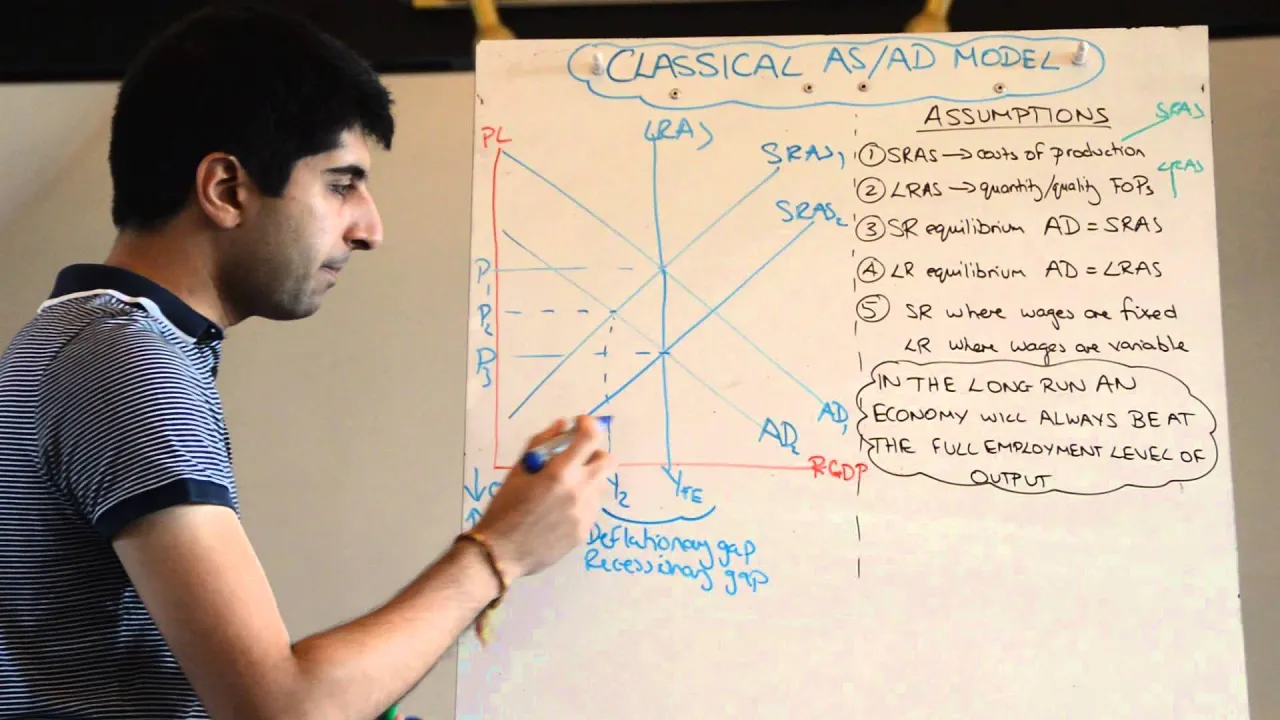
14:19
Classical AS/AD Model: Short Run & Long Run Explained
@EconplusDal
460.9K views•2015-02-28

5:07
Impact of Yuan in Indo-Russian Trade Amid Sanctions
@WION
261.9K views•2022-07-01
10:33
Behavioral Economics Explained: Rationality, Nudges, and Risk
@crashcourse
1.1M views•2016-03-12

113:18
The Age of Easy Money: Fed & Inflation | Full Documentary
@frontline
21.2M views•2023-03-15
Related Study Plans & Knowledge Roadmaps
Structured learning paths in Economics
economics
Sovereign Debt: Defaults, IMF & Restructuring
01Introduction to Sovereign Debt & Government Bonds
02Debt Sustainability & Credit Ratings
03Anatomy and History of Debt Crises
+ 2 more learning modules
12h5 modules
Explore Roadmap
economics
Market Design: Matching Theory & Gale-Shapley
01Introduction to Market Design and Price-Free Markets
02Two-Sided Matching & The Gale-Shapley Algorithm
03School Choice Systems and Mechanism Design
+ 2 more learning modules
10h5 modules
Explore Roadmap
economics
Impossible Trinity: Forex, Capital & Policy
01Introduction to Monetary Policy and Central Banking
02Exchange Rates and International Capital Flows
03The Mundell-Fleming Model
+ 2 more learning modules
8h5 modules
Explore Roadmap
economics
Healthcare Economics: Market Failures & Systems
01Introduction to Healthcare Markets and Market Failure
02Asymmetric Information and Adverse Selection
03Moral Hazard and Insurance Design
+ 2 more learning modules
12h5 modules
Explore Roadmap