




















![[반전주의] '이란이 억울하다?' 호르무즈 봉쇄로 전 세계 기름줄을 끊어버린 진짜 범인은?](https://i.ytimg.com/vi/Bk6rTKCDTX0/maxresdefault.jpg)







Political risk indicators are tools used to assess the likelihood that political decisions or social events in a country will negatively impact foreign investments. These indicators range from composite country risk ratings (like those from Moody's, S&P, and Fitch) to component-based analyses (such as those from The Economist Intelligence Unit and the International Country Risk Guide). Key factors evaluated include government stability, corruption levels, ethnic tensions, law and order, and economic conditions. Research shows these indices are highly correlated with each other and with per capita income, though they remain subjective and cannot fully capture unique country-specific risks. Investors use these ratings to determine appropriate risk premiums for investments in different countries, recognizing that political risk cannot be diversified away and must be compensated through higher expected returns.
Political Risk Indicators and Analysis | GW School of Business Lecture
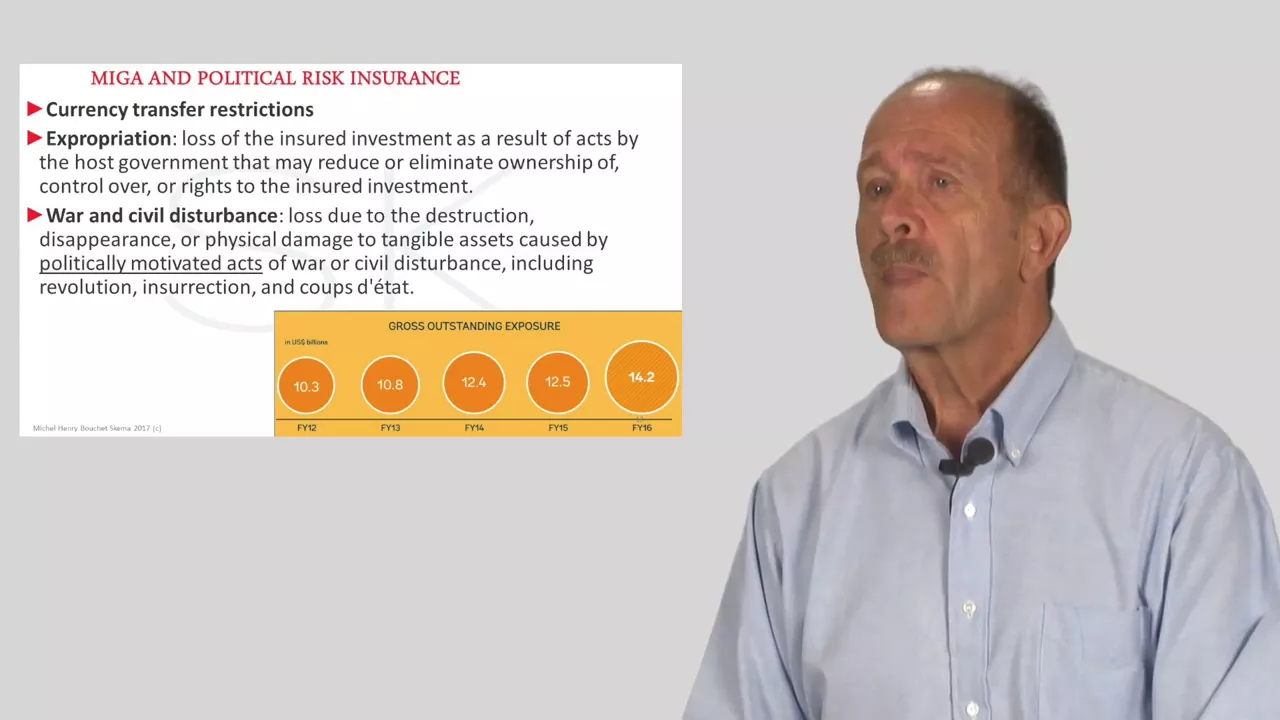
Added:good morning I'd like to thank the Center for International Business education and research here at George Washington University for bringing us a lecture from dr. Reid clique dr. clique is an associate professor of international business and international affairs here at George Washington University he received his MBA and PhD degrees in economics and international business from the University of Chicago professor click is an expert on international finance and risk management he's published one of the leading textbooks in the area of international corporate risk the theory and practice of international financial management his research focuses on the topic of today political and financial risk especially the linkage is among and creation of money price changes exchange rates and firm value professor click is a consultant to many international organizations and firms talking about the very topic we're going to hear today so we are very lucky to have him here please join me in welcoming professor click well thank you professor riddle for that overly flattering introduction I'm pleased to be here and talk to you today for a little bit about political risk indicators and analysis I know that you've had some discussion in your class up to this point about that and so I have some comments on what the general nature of the profession is in the area and at the end I'll have time to take some of your questions and so hopefully we can have a little bit more of a discussion going as well by way of introduction I present what I think is a roughly typical approach to thinking about political risk this is from a recent publication by an old hand in the field the term political risk by itself refers to the possibility that political decisions or political or social events in a country will affect the business climate in such a way that investors will lose money or not make as much money as they expected when the investment was made that sentence captures an asymmetry if you think about the nature of business you think about possible wins and losses gains and losses this focuses almost exclusively on possible losses well in contrast country risk is of larger scale incorporating economic and financial characteristics of the system along with the political and social in the same effort to forecast situations in which foreign investors will find problems in specific national environments and so country risk is big and incorporates a lot more than political risk the second sentence here actually captures another feature of the debate in this area the mentioning of foreign investors basically points out that there might be some liability of foreign us in the sense that any of these political actions might end up disproportionately affecting the foreign investors rather than all investors in the country and so we'll mention that a couple of times but I'm giving a sense of what's going on and I think that if you start with that definition and then go to the main working framework that I think most people in the area have discussed a simple statement that country risk is basically the summation of one component for a political risk and one component for economic and financial risk this component for economic and financial risk is very quantitative in fact there's not necessarily an asymmetry here most of the work in the area of Finance has been about exchange rate risk right well there's a risk that the foreign currency will depreciate right well there's a risk that the foreign currency will appreciate right so if you've got losses with a depreciation and you have gains with an appreciation and you might rightly think that the there is symmetry between the two right the quantitative elements can expand well beyond this if you worried about interest at risk if you're worried about inflation risk these are all variables that can be measured and then I think there are other quantitative variables if you start to worry about those risks in general but you might be able to look at what the quantity of international reserves at the central bank is you might have some sense of how exports and imports might be affected in case of an exchange rate change or in case there would be limitations on the ability to convert from one currency to another this is a fascinating area but not the topic of discussion for today instead well my people my chief purpose is to advertise the fact that we have the entire course is about this right you can take my international business finance class next year and learn all about that the topic for today is on the political risk this is a more difficult area to investigate because the the quantitative analysis is restrained by data availability problems and so in contrast to something like foreign exchange risks you've got an exchange rate you measure not only the exchange rate changes but also the effect on your company well what about expropriation well there there is data on expropriation but for a particular country in a particular year for a particular industry for a particular firm you're basically down to nothing I think that the notion of expropriation the government basically takes away your assets is long established and people spend a lot of time thinking about this but the availability of data is limited such that what you're really worried about is the probability of expropriation and if no expropriation ever happens then it looks like it's never a risk and we know that that's not true and so the main outline for my talk is to consider these three types of ratings first the composite country risk rating essentially the country risk right political risk and all of the financial and economic risks but without a disaggregation into components secondly this component risk rating analysis aggregated into country risk so that will start with smaller building blocks and then add them up at the end and finally some well some institutions and agencies that think about political risk ratings only and possibly to their detriment because the political risk is related to the economic and financial risk and so for the first category I basically start with where a lot of the activity is these days this is a useful starting point because most people recognize something about rating agencies we're basically talking about bond ratings or even if a bond doesn't exist it's the country rating or a sovereign rating typically for a country that's international sorry that's interested in borrowing internationally so that they would seek a rating to convey to potential bond buyers the level of risk associated with buying a bond from that country Moody's Standard & Poor's and Fitch all have rating scales with twenty to twenty-five notches and you kind of see them listed here a country like the United States is routinely rated triple-a by all of these but some of our neighbors are not and most of the developing countries are not and so the distance between a triple-a rating and say a triple B rating is an indication of the risk associated with a particular bond now because this is basically geared around financial instruments we're concerned mostly with the probabilities of default again this is an area where the absence of a default doesn't really mean that there was never no risk of this before and we know that countries do default and so an entire industry has grown up kind of thinking about the nature of defaults if I as an American buy a bond issued a foreign country what's the probability that I won't get my money back technically this is also net of recoveries after all we know they may not pay me now but maybe in five years they'll find some money and settle for pennies on the dollar something like that this is a growing industry I think almost all of the advances in the analytics in the industry have come very recently you can imagine that as more countries are opening up to global capital flows there's been an increased need for countries to be rated now that seems like a very narrow question and so to put some more general applications into this I want to point out that these agencies consider an awful lot of information just to arrive at one particular rating and in the field most of the lingo centers around ability and willingness and although I don't think anybody's directly mapped these the the notion about ability is does the country have the ability to repay and so it's tied somehow to their wealth or somehow to their income somehow to their gross national product and so if you have an ability to pay it looks like the probability of default is much lower I think more directly if you have a very high quantity of international reserves in the central bank then it looks like you have an ability to pay the debt on time and and without problems but that was not sufficient as a way to start forecasting defaults or adequately explaining past defaults so most of the industry has also considered not only the ability to repay but the willingness to repay is the country willing to repay and that this is a more political component I think about the analysis of the ability to pay the debt as an economic and financial concern but I think about the willingness to pay as a political concern does the government have the strength to pay is the government facing some opposition in the distribution of resources and so all of these agencies have quantitative models and they don't really release these models they have quantitative models to process data on it say international reserves or the amount of debt that's outstanding but that they've viewed this as not completely adequate and so they use some judgment and they may incorporate other variables about fractionalization of the the political scene into these kinds of models but they've expanded this to include judgment as well so when they release a rating they don't tell you exactly what went into this they'll tell you the kinds of things that go into this but I guess as some level of well because some level of judgment is required they're not going to tell you what all the components are well they explicitly consider some elements of political risk both quantitatively and qualitatively these are now widely used by not only bond markets but also stock markets individual investors companies thinking of making new investments and the insurance industry which we'll talk a little bit more about toward the end of this talk if you look at the recent stuff there are ratings for about 70 countries that's really quite a lot but they're really only available since about the year 2000 some countries like the United States have been rated for decades but most of the countries that you would be interested in say for your class and on managing and developing countries sorry you would really be restricted to a recent period probably starting in the year 2000 the good news is that these ratings are usually free and you can either see these on the internet or you can go to Gelman library or something in order to look up even some of the reports they'll give you a country report and talk about the characteristics that went into the rating even if they don't show you the quantitative model used to establish all ratings these ratings then become a benchmark for any other ratings that they would do in the country a typical scenario would be where a company in one of these countries would then be interested in issuing a bond possibly available to domestic borrowers some possibly available just to international borrowers but they would seek a rating for their corporate bond issue as a way to signal what the industry thinks the level of risk associated with that is and so if you compare the corporate bond to the country or the sovereign bond the prevailing wisdom is that the government in any country is probably the least risky borrower and that companies there would probably not have higher bond ratings than the government because the level of credit risk is just generally higher if there's a currency crisis then it's less likely that private firms would be able to serve their debt compared to the government obviously the government relying on the power of taxation in order to raise its it's it's money to repay some of these loans so in the lingo here the sovereign country rating serves as a feeling for all of the non sovereign ratings and then one final note is that the industry has become quite sophisticated in distinguishing the currency risk you can have two bonds issued by say the same government or even the same firm if one is in dollars and one is in local currency they obviously have different levels of risk if they're identical on all other regards the only difference is this currency risk but the prevailing thought here is if you're borrowing if you're in a foreign country and you're borrowing dollars it's probably harder to service that and so you would have a lower credit rating on a dollar denominated bond then you would on a local currency bond so if you're in the Philippines and you're considering borrowing compare operations and pesos versus the operations and dollars bond denominated about dollars is probably riskier the same is true for the government as well and so there's some effort to make the distinction between the currency of denomination of these bonds well these have become much more useful in a broad perspective it sounds again like the notion of a bond is a very specific financial instrument and all we're worried about is default but in in a capital market equilibrium bonds and the rate of return on bonds have to be related to equities and the rate of return on equities and it has to be related to any financial intermediation through bank loans and it has to be related to a general level of profitability from any kind of investment and so by considering this kind of hierarchy we can actually learn a lot by looking at the bonds and making inferences about what happens to the rate of return on any investment and ultimately no matter what business you're in you care about the rate of return on this investment so one thing you can do is consider the interest rate spread between two bonds as some measure of the risk premium for doing business in a particular country and so what I have in mind here is if you start with the easy thing suppose you have a choice between making an investment in the United States and making an investment in the Philippines and you notice that the rate of return on a bond issued by the US government is a 4% and the rate of return issued by a bond sorry issued by the rate of return on a bond issued by the Philippine government is nine percent that difference 9 minus 4 is 5 and that could be interpreted as a risk premium exclusively for political risk if both bonds are denominated dollars if they both have the same term structure then the only thing that's different is who's borrowing right one is the government of the Philippines and then if you have differences in the currency so that the dollar bond might be compared to a peso bond well that would tell you something about the combination of the sovereign risk and the currency risk right but if you're going to the Philippines you might be dealing in pesos anyway and that might be a relevant comparison to well that again is not the exact topic for today but you have a sense of how we would be able to arrive at a risk premium associated with this country risk and that probably in embodies a lot of different elements but you'll notice that those interest rates which are generally observable right I mean you can open the Financial Times or The Wall Street Journal and then figure out what the rate of return on a u.s. dollar bond is issued by the US government and then a similar bond issued by the Philippine government those interest rates are widely available and so it conveys information those interest rates are actually determined in market transactions in what's typically thought of as an efficient market so the sense is that the market sets these interest rates they set it partly in regard to what the credit rating agencies have labeled the level of credit risk right so we're using the information from the credit rating agencies in markets to establish this interest rate well this raises the question then if we're relying on the markets to set the interest rate and then we try to figure out the cost of political risk or the cost of Country Risk as the interest rate difference then we ought to be able to just focus on the interest rate and not worry about what the credit rating is right okay and so there is now even among these rating agencies a move toward these market-based ratings I think that to give you a little bit more background the issue became a lot more important after the Asian financial crisis in 1996 and 1997 just because the credit rating agencies seem not to understand the currency crisis until it was all over then there were studies suggesting that well the way the credit rating agencies behaved was generally to deny that there was a problem until the problem was obvious and then once the problem was obvious to cut the ratings way too much so that they would then come back up when the market actually more appropriately discounted any of the bonds on those for those sovereigns and so this is a term that you'll hear quite a lot if you pursue anything with regard to political risk this notion of market-based ratings now that's not the only single country index I think those are widely used but the institutional investor magazine has actually been working on this for a very long time you see this referred to in many studies because the database is relatively large this is a slightly different approach instead of having a model and you feed in model and then tweak it with some judgment at the end you just survey a bunch of banks and these banks are widely presumed to have their own models because they're engaged in bank lending to these countries and so the composite score is based on some unspecified weights but weights determined by the level of sophistication of the bank's model and the amount of exposure that a bank has to foreign lending and so it's basically just a scale of creditworthiness right and we don't know people say that they use political indicators economic indicators we don't actually know what they use so we're compiling things more based on the serve these are available for free you basically can find the issues in gentleman library once again this is a fairly well-known magazine and I think that the initial motivation to do this was to have some forum where bankers could actually discuss these credit risk issues subsequently now you'll see that these actually date back to 1979 during the 1980s many but many sovereigns defaulted on their bank loans and what was known as essentially the LDC debt crisis and after 1979 after 1983 1984 banks actually had to in the United States ramp up their analytical divisions in order to investigate this and so the institutional investor was a pretty good place to start well again presumably the banks were conferring and exchanging some information and that the interest rates on bank loans were set according to the creditworthiness index much like if you went to a bank and asked for a loan and they would consult your credit score before deciding whether to give you a loan and then secondly setting the interest rate on the loan and so there is some sense that the usefulness is there although we don't have public information on what all of these bank interest rates are so there's not much more that we can do with that and then the industry kept growing and most of the things listed on this slide came after 1979 not necessarily all of them but approached this issue of country risk a little bit differently instead of wanting some general level of risk indication for a country as a whole build a country risk indicator based on a bunch of different building blocks and so euro money is also a magazine and so this is available free and Gellman library decided to begin constructing its index of country risk using a series of components I think it's about eight actually but since I'm focusing here on political risk I know for sure that 25% of the final index is actually this political risk component the remaining 75 being just economic and financial indicators The Economist Intelligence Unit this is the Economist magazine that you might be familiar with the Economist Intelligence Unit has a specific division for a country risk service and a publication known as risk ratings review their country risk is 22% political risk with the remainder basically economic and financial risk the business environment risk Intelligence Corporation has a profit opportunity recommendation that is one-third political risk and the International country risk guide which I'll spend a little bit more time on is 50 percent political risk now the advantage of all of these is that you can separate out the political risk indicator and look at that and try to figure out what information is contained in that and so the Euro money political risk component is again a survey there's nothing controversial about this it's a survey of country experts brokers banking officers and and the like on a 25 point scale but it's specifically referred to as the risk of impaired payment for goods or services loans trade related finance and dividends or repatriation of capital very finance oriented and so it might be a very narrow interpretation of political risk suggesting that political risk itself is poorly defined and people just don't agree on what the main definition should be these ratings are actually available back to 1988 sorry 1997 although complete country indices are available back to 1988 and that again one advantage of this along the institutional investor index is that it covers almost every country in the world and so if you're doing something on the cross section you get a lot further here and then paying attention to Moody's and Standard & Poor's well that is a survey of political risk here The Economist Intelligence Unit actually approaches things a little bit differently they have country experts and if you read their stuff carefully they have people they have several people covering the same country but any individual person covers several countries so there's some logic to this and so on average they really only have about one person who is an expert on one country but that might be enough right and they ask all of their experts to fill out a questionnaire that includes some questions on well not only economic and financial stuff I mean they do have a database of this but also political stability and political effectiveness now I'm gonna shift back and forth here political stability involves questions to the expert like basically one expert on war social unrest orderly political transfer politically motivated violence and international disputes the questions on political effectiveness are on change in government and pro-business orientation combined institutional effectiveness bureaucracy transparency or fairness corruption and crime now those are much more in line with things that we would think about as political risk variables than simply asking a bunch of you know country experts what the probability of you know not getting your money back is right and so these are somehow combined into a 100 point scale for each individual country these are available monthly and so one one advantage of this is that they're available at with greater frequency than most of the alternatives and so there's a monthly survey for approximately 100 countries and they sell not only the total country risk rating they sell the political risk rating but they sell the ratings for all ten of those variables and so if you want to say change the weights or you want to focus on just two or three of those as most appropriate for your own investment then they're more than happy to sell you the database and I would characterize this is not really expensive but it means probably several thousand dollars and specifically you will not find this at Gelman library and so there is some available information but not the systematic approach to all of these indicators okay and I guess on a side note I think this is really taking off it hasn't been available for a long time but I think partly because of their reputation in the area they've been doing country risk analysis for a very long time this is simply a new form and a new database and so I think it's actually taking off fairly rapidly now there are alternatives barry is this business environment risk intelligence a private company and this seems to be expensive actually I was digging around to try to find anything and and most libraries don't have anything from Barry and then when you look at their website they don't really discuss pricing information which I interpret to be a signal that it's expensive right this is largely geared for foreign lending by banks and I think that that's not always well understood but again the company basically served the needs of banks engaged in foreign lending the political risk index is based on ten variables and that these are harder for me to read right so fortunately you have these in front of you but you see words here about fractionalization of society fractionalization by lang your religion some kind of coercive measures that may be required for the government to retain power some measures of social mentality attitudes toward foreigners or nationalism of social conditions the strength of forces for a radical government I think what they're thinking I was sort of a possibility of some major change dependence on foreign power for some kind of weight dependence on and/or importance to a major hostile power I guess either support or hostile the negative influences of regional political forces societal conflict as measured by strikes demonstrations street violence and even instability as possibly measured by guerrilla wars and assassinations and we're getting clearly into the realm of political science I know plenty of people in this field who are political scientists and collect data on political assassinations and try to interpret the level of political risk based on that other people use more widely developed measures sage simply of urbanization to indicate some level of social unrest because prior research has generally suggested that the more urban an area the more unrest there is okay and so this is the pendant upon again a survey there are 100 experts that are surveyed and the results although it's not a simple adding up but let's just say ultimately the results are presented on a 100-point scale these are done three times per year for 50 countries and once per year for 50 other countries and so you don't have necessarily the same consistency with data availability but you know you've got a fair number of countries and remember this is what eyerly referred to as a sort of profit opportunity recommendation the other parts of this Oh country risk or a profit opportunity recommendation include an operations risk index and a remittance and repatriation factor each of those also worth one-third and when you look at the factors that go into these you kind of think that you know there are a lot of things there that are based on political risk also right and so it would be something like the risk of a change in labor unionization right well that could conceivably be construed as something about political risk and remittance and repatriation factors are basically more in line with the finance financial and economic approaches well what is the risk you know even politically that capital controls or currency controls will be imposed well and so I think this might adequately be explained as an almost exclusive political risk approach although they've got different definitions within there all right and then the last one that I actually am much more familiar with although this is available for purchase and it's not well it's not for free and Galman library it's also not terribly expensive and so I think a lot of people pursuing research in this area are using this database I know that other institutions around Washington DC use this database as well and the fascinating part of this is that it's basically back to a mechanical approach there are 12 variables and the weights are explicit in the construction of the political risk index they measure government stability socio-economic conditions investment profile internal conflict and external conflict and each one of these is weighted at 12% corruption military and politics religious tensions law and order and ethnic tensions and democratic accountability are all weighted at 6% and then the quality of the bureaucracy has a 4 percent weight I think these are again the kinds of variables that people would think of as a political risk component other variables would be in the category of economic and financial risk and so some of these can be measured there are often surveys of corruption for example there are a lot of different organizations looking at corruption some of these have to be subjectively scaled some how well these twelve variables are basically assessed by the IC ERG staff and so they rely on full-time staff and some stringers to provide information these are also presented ultimately the political risk index is presented on a 100-point scale and this has a long history dating back to 1984 for approximately a hundred and fifty countries and so I think one of the advantages again is this long time series available and this is actually also available monthly the the change is the month to month are not dramatic but because they've got a staff working on this there's a monthly indicator of each one of those variables and if you want the subcomponents you can actually buy those as well now to make a few comments about all of those indices where the country risk is built from the building blocks I'll make some general statements about trying to figure out what the importance of the information is like what exactly do these contain well in the field of Finance people want to know if any of these variables say the political risk variables are priced right because part of the debate is even this debate about how much we should be worrying about political risk and so with regard to stock market performance does political risk contribute to the overall risk of the stock market or even a US company operating in a foreign country with say a separate class of shares that be issued tied to the operations in that foreign country would that kind of stock be priced according to some political risk variables well I think the debate is ongoing but most people have now concluded that political risk cannot be diversified so most of these variables are priced somehow so in much the same way that we already talked about a risk premium associated with the bond people are finding a risk premium associated with stocks and then from the managerial standpoint this tells you something about your cost of capital of operating in that country if there's a risk premium on the bonds and a risk premium on the stocks then there's got to be a risk premium for your assets in general and so this will tell you once again approximately how much additional profitability it would be required on an investment in one of these risky countries so if you've got a choice between putting your plants in the US or the Philippines right you're gonna consider a lot of different variables some inputs may be cheaper in the Philippines but there will be additional risks presumably so what you want to know exactly how much additional profitability what's the rate of return on my assets got to be and there is actually more research on the rate of return for these kinds of assets and whether the assets in riskier countries have a higher rate of return and the general answer I think is yes as you should not be surprised right I think that even without you know rigorous debate about whether political risk can be diversified you would basically be tempted to make sure there was a higher rate of return on the Philippines in order to compensate for the risk of doing business on the Philippines as opposed to doing business in the United States okay and so many people have used these indices and I would say that you can use these in proprietary ways if you're interested in say the value of oil reserves right you don't have to value the entire company you just value the oil reserves and so you'd be interested in answering a question like how much of a discount should I apply to an oil reserve that I'm thinking about purchasing because it's in a riskier country right you can think about a nice story contrasting the US and Russia right the US is much safer than Russia but a lot of the oil that both countries have is actually right next to each other right outside of Alaska and so you can ask an interesting question about well how much would this oil field be worth if it were on the other side of the line right if it were in the United States or how much of a discount should I apply the oil is the same it just happens to be in a different jurisdiction and so I know people who are working on that too and finally I've got a couple of indicators here about political risk ratings only and I actually this is not a wide area but some firms are trying to carve out their own niche specializing in political risk as opposed to all economic and financial risk as essentially being pretty well developed already this crg the control risks group has a Country Risk forecast and then I'll also mention something about the overseas Private Investment Corporation this is an independent agency of the US government but I'm using it as some broadly representative insurance agent right OPEC sells insurance on US capital invested abroad but there are private suppliers of this insurance and there are even some alternatives the World Bank has an arm MIGA that does effectively the same thing and so if you're thinking about one of the ways that you can actually manage the kind of political risk that you're worried about you can buy political risk insurance okay now with this crg group to control risk group there is a rating I would characterize this as just a general rating it's got a five-point scale and so you have a sense of whether it's risky or not very Sukie there are 20 analysts at crg with backgrounds in history economics regional studies and political science and they effectively I guess independently and then collectively decide what of those five buckets a particular country would be in and they consider political risk security risk and travel risk political risk being political stability economic stability and campaign issues security risk being violent and terrorist groups crime border conflict and war the travel risk being crime possibility strikes terrorism and war conditions but again it's relying on analysts to put each one of these in the appropriate bucket and then some combination of the three forming the overall country risk forecast OPEC is engaged in an assessment of political risk exclusively because it sells insurance on this and they haven't got complete information but this is public available information on their website they don't have complete pricing details but they tell you things about the cost of insurance to insure against the in convertibility of the currency right well that's again mostly an economic thing right but if you can't convert your Philippine pesos back into US dollars it's like you've lost your money and this is twenty to forty five basis points and so one basis point is 1/100 of a percent and so you would tell them how much you're expecting to convert and then they would sell you the insurance on that amount to convert they also sell the insurance on expropriation and nationalization these extreme outcomes they're also fairly adept at figuring out well okay we're ensuring not only the assets right you can sure the assets so it's the value of the factory but also some of the future stream of profits right because we know that you're there to make an investment that has an income stream over time this is in the range of 35 to 85 basis points and the insurance on political violence which would be war damage or civil strife or civil strife damage isn't a range of 30 to 85 basis points and that these are the three main categories if you can fit your political risk concerns into one of these three categories you can assure against it there are also more general insurances available if you just want to sure insure against interruption of business right well somebody will sell you insurance possibly OPEC is just not one of their predefined categories the risk premia here also depends on what industry you're in manufacturing versus oil and gas versus other extractive industries even service industry is and there a couple of others there as well and this as an independent government agency is effectively trying to set what might be a market premium but admits that they wouldn't even be doing this if the market for this kind of insurance existed and was completely efficient already over time it makes sense that other insurers will be willing to insure against political risk and so you have more attention once again to these market-based ratings and analysis on the whole I'd say there is some indication of what the cost of expropriation would be because you see what they're quoting for a particular insurance policy right but we don't know that that's perfectly priced right and so you may want to I guess first compare shop around a little and then secondly you'll notice that I focused on on what's available here they don't tell you what the price is by country right and it's partly because as an independent agency of the US government they're basically interested in guaranteeing us capital invested abroad but they also don't want to get into the business of discriminating across countries so although they don't say this the US government maintains a country risk assessment system of which they are apart and so my guess is that although they don't they don't tell you exactly how this is this the risk premium is the insurance premium for risk is determined it's probably grounded in the interagency country risk assessment system so now that private insurers are available they have a little bit more competition they have a little bit more sense that you need to set the price not only according to the characteristics of the industry but also the characteristics of the country right and then they also need to figure out well okay if I if I sell the insurance policy at a below market rate then I got to figure out what the risk to me really is what the risk of the US government is and they have to report that separately but really only to Congress and in an aggregate and so it they're effectively running an insurance business and I think that that means they're competing against other insurance businesses but they don't have the same profit orientation that other insurance businesses have okay and then this is my last slide as a set of concluding comments I've presented the indicators and I guess I want to conclude by saying that these are basically highly correlated this should not surprise you everybody claims they're measuring about the same thing they'll have their own niche right we have an index of corruption right and so then you go out and you measure the cost of corruption or we have an index forecasting the change in government something like that where we have index it simply estimates the probability that you're not going to get your money if you send an invoice and one payment within 90 days right but because they're estimating generally the same thing country and political risk they are positively correlated they're not perfectly correlated but you would be interested in using all available information if you were engaged in a new investment abroad secondly then I don't offer a lot of proof here but the political risk ratings are typically highly correlated with the economic and financial ratings with the Euro money index and this shouldn't surprise you because it's probably the overstatement right with the with the Euro money index we already said that their definition of political risk was basically anything that might include capital controls and currency controls or just I'm feeling like I'm not willing to repay you right and so that would effectively be a lot like all the economic and political variables the correlation between the political index and the economic and financial index across countries is 0.9 they're effectively measuring the same thing this has been an interesting debate right because if you got two indices one called a political risk index and one called the economic and financial risk index and they're highly correlated there's a question of you know exactly how much information is in say the political risk index that isn't available in the other thing well people have investigated this actually and not not recently I mean this has been over the last decade or so and it found that generally these indices are all highly correlated with per capita income if you're a rich country you have a high credit rating you've got a very low probability of default you've got low political risk if you're a low per capita income country you got all the problems associated with say being a low per capita income country and so you've got a lot more political risk in a lot less economic and financial stability and so there have been studies that suggest things like the amount of additional information provided by any of these indices that would not be captured by simply looking at the per capita income level in a country it's probably minimal it's you know in a typical regression format where you're trying to dissect the influence of one thing and another per capita income easily explains the majority of all variation in these indices and so it's rather difficult to disentangle the various effects or even to decide which one of these measures is best but the search goes on people are perpetually interested in political risk and insuring against it or getting a leg up on the competition by adequately forecasting them okay so that's all I have for my prepared remarks and there's still time for some questions at either one of the microphones okay you're first do any of the indices they spoke about take into account that political risk could be greater for an investor originating in one country as opposed to the other or are they all from a a Western investor point of view yes this is an excellent question these are mostly from the Western standpoint and if you think about euro money versus some of the others euro money actually has a more European perspective and wouldn't necessarily apply to an American making an investment in that country the main theory behind this though is that capital markets should be integrated globally and so if you start with the proposition that the movement of capital really doesn't depend on where the capital comes from it only depends on where the capital goes right then there is a broad applicability of all of these however it is true that if you think that part of the risk is this liability of foreignness that I started with that locals may not encounter at all then an important distinction really should be made between you know the outside capital versus the inside capital or outside investors trying to run an operation versus the insiders beyond that I guess there there are investigations mostly on the level of case studies that may suggest say why people from one country wouldn't face the same level of risk as people from another country going into a third country but none of these indicators that I've talked about today consider that I think a couple of the producers of these would be willing to sell you consulting services for this but I also am not convinced that they would have anything really intelligent to say but sorry but I think it's something for you to think about when you decide how to structure an investment for example right if you go in with a local partner that may change the risk completely right and so anything you can do to mitigate the risk means that what you're doing is not considering a countrywide level of risk that your firm specific level of risk that's a great question it's a subject of great debate okay how about this side how do these risk rating organizations account for information that might be highly protected with within a developing country that's a good question most of these agencies rely on publicly available information now the rating agencies are able to use any information provided by the government as long as they conform to say industry standards to protect that information and verify the credibility of that information and the fact that experts are making judgments in a lot of cases means that they might have some you know proprietary or insight information or something some information that's highly protected but by and large they're just exercising their judgment on that particular issue and how it might fit into political risk they wouldn't have restrictions on this they may even relish the fact that they have inside information but I guess you know if the central bank isn't willing to tell you the amount of international reserves then you probably have to work around it right if they tell you confidentially then you probably can't just plug it into your model but you might be able to exercise the judgment that would effectively put it into the model as if you could put something like that thank you thank you okay my question is actually related to the previous one it's been noted that political risk analysis is a lot more subjective and consequently more vulnerable to bias especially since much of its gathered you know on site by individuals who have their own political views are you aware of any mechanisms that are currently in place to counteract that effect or if you could make any suggestions of those that should be introduced to kind of diminish some of the subjectivity yeah okay Wow in many ways you sound like me like subjectivity is evil right because we want hard facts most of these indices try to take subjective judgment and quantify it that's effectively what we're doing when we ask an expert well you know what's going on in the region how do you think this is going to affect corruption or something right and so there are mechanisms to deal with no general surveys or surveys of experts and all of that much of the recent quantitative approach to this has tried to figure out you know I'm something like corruption what exactly are we measuring right and so trying to put more quantitative emphasis in an area where people have some judgement but I don't think you'll ever solve the problem of having some level of subjectivity I think what people are interested in say in the insurance industry is does this level of subjectivity tell me anything about my possible losses if I've made insurance policies against expropriation right and if it does then it's valued even if it can't be quantified and I think that a lot of other I mean this was focused on any indices that are basically summaries of a lot of other things but a lot of political risk Consulting doesn't even offer a quantitative approach and so I think that if you're willing to acknowledge that the subjective really just means judgment you got to find people with good judgment to advise you on something like any business decision then I think there are plenty of alternatives I don't have any big solution for removing biases but I'm not an expert on that actually Wow great questions though okay how about this side how effective are these risk forecasts for companies looking to invest in developing countries particularly with some of the component risk factors such as corruption often go undocumented in many of these developing countries okay so the notion here is forecasting and I'm gonna seize on first most of these purport to be forward-looking for sure so when I was talking about the the bond ratings this is like a 20 year horizon something like the ICR G Index has different horizons but basically it's thinking about a long-run horizon some you know ten-year context although they also offer some judgment of what the short-run risk is versus a longer run risk so something for the next three now the notion of many of the facts being undocumented is in many ways just back to the question of judgment and trying to exert some level of judgment based on partial information knowing what you know from being in a particular location how accurate that is is very difficult to study right because it probably means what kind of what you're saying is the forecast is undocumented right like you asked me about corruption but who's going to document that and who's going to do it systematically over a long period of time in a lot of different countries well we have some indices that try to get at something like that and they're forward-looking but I'll go back to even the Asian financial crisis that was not well predicted most of the extreme events that you would see covered in the press are not well predicted to begin with and so an expropriation or something you might have a sense right you might begin to require a higher rate of return on your investments you may curtail additional investment but ultimately the decision to expropriate is probably not a subject of great public policy discussion in the years leading up to the expropriation right it's usually enacted you know in the middle of the night and announced with marshals the next morning right now that's a bit of an extreme but I think that partly because the quantitative element is not pervasive it's hard to figure out what the accuracy or reliability of enemy's forecast is I think that the best that we can do is simply acknowledge that using all available information now I have a good sense of what kind of discount I want to apply to a particular foreign project for a variety of reasons that's good too because I haven't said anything about forecasting she stole your question okay and I'm wondering about a recent trend where you see particularly US companies and firms and Western companies show a hesitant to invest in countries where there is high political risk and instability but then you see other countries such as China very willing and openly investing in countries you know recently especially in Africa and I'm wondering is China using a different scale and different factors and is the u.s. missing out on these investment opportunities or the u.s. being wiser and its choices I don't know it's actually a really good question you're right now the framework would suggest that if Americans have some disadvantage particular some disadvantage going into Africa that the Chinese don't have then yeah they should be using a different scale or evaluating the projects a little bit differently and I can tell you now this is not a statement about China or Africa or anybody else but there has been a lot of discussion lately about the nature of investment and where the capital comes from if a particular country is really good at dealing with corruption already for example then it'll be more willing to go into a country where it has to deal with corruption than a than a company from a country where we're not where they may not be dealing with corruption but people have actually tried to estimate this even empirically right you got a measure of corruption from one country a measure of corruption from another country in a measure of corruption in this third country what's more likely and it seems that a general trend is it's more likely for the capital comp to come to this corrupt country from another corrupt country rather than from a clean country and so maybe maybe that makes sense actually that what matters is not the absolute level of corruption here but the difference between the two and so you can get those kinds of results from these existing databases even though I didn't present it like that thank you that's a great question these are all great questions I'm sort of in the same vein back in the 1970s in China dung shopping started initiating economic autonomous regions so my question is what type of government or economic policies do you think China should continue to implement in order to allow their economy to grow have a positive effect on the global economy while also trying to maintain a level political risk okay I'm not an expert on China I have colleagues who are and so I've never worked in China I what I know is essentially that it's not a complete free-market system and that some of the reforms would appropriately in my eyes lead them toward a more free-market system where prices and exchange rates are determined by market forces and supply and demand beyond that I don't have any great wisdom in that specific country I'm sorry thank you okay I apologize in advance this is kind of a long-winded question mmm it seems as if all of the indices used take a developed nations point of view this could because most investment comes from these areas and that most indices that are used are created by organizations with heavy influence from developed nations however do you think it is necessary to create an index with which investors can understand the country within its own context using factors such as a government investment into infrastructure transparent transparency of the nation's educational system and investment from the nation into other developed nations as a foreign investors money that is invested into this nation or even its business could become an integral part of the future of that developing nation okay this is again this is a good question you're exactly right the starting point was essentially that these indices are predominantly from a Western perspective and I think they do incorporate the kind of variables that you've talked about the the notion behind this index is that there's some kind of cross country study right you're comparing the risk in one country against another although many of these exist over time as well and what we want to do is try to figure out well what exactly did this investment in infrastructure do for the economic and political environment in this kind and then we'll adjust our rating accordingly I actually don't see a well I I don't see a problem with the existing indices from that perspective but I also would admit that if there are country specific concerns that don't seem to show up quantitatively then you got to try to take account of subjectively or qualitatively and that if there's still some piece that's unexplained then you should investigate it so it might be some of the exact variables that you've mentioned it is that about what you have in mind I mean I twisted your question around essentially fit my own perspective well it just seemed that many of the factors that are used you know in the different indices they you know they are very similar and they create a kind of a level playing field for which you can analyze different nations within the world as a whole but it also seems that every nation has their own specific contacts with you know with then they can operate within and just because you know it seems like from a Western nation or developed nation that you can look at those different factors if you look within the country itself and maybe you know it's possibility isn't potential that you can greatly you know maybe better assess the possibility for investment and its viability in the long term yeah I actually I think you're onto something you know from my previous studies any of these indices that look at say government spending you know high government spending is evil right because it means the government's bloated and all of that but you know if they're investing in the infrastructure in that particular context high government spending is probably a good thing right and so by trying to compare high government spending in one country to a high government spending in another country you might actually be capturing the exact wrong thing you want to evaluate it within this particular context that I I think you're right I think that maybe part of the motivation for these firms to begin selling all the separate components so that you can you can analyze these and manipulate them as you'd like and I guess again your general proposition is right all the same variables in a different location may have lately different outcomes and I appreciate that I don't think any of these address that but it's again from the perspective that capital is capital and what we care about is what the rate of return is that kind of stuff it's actually it's a great question thank you very much okay it regards to any rapidly developing country whether it be China Mexico Brazil or whatever they're all operating and expanding rapidly in a culture of corruption but at the same time there are a little bit at least at the same time the developed countries are trying to through these indices and through research trying to exert their influence on them to try and have them straight interact out in the way now my question is do you think that that influence or that exertion or that pressure on those rapidly expanding developing countries could lead to a possible fall out or bottomed out or a potential crash and if so what would the ramifications of that be yeah I think that you could have some extreme pushback right that if if the person investing the capital tries to control too much so that you know multilateral agencies are trying to get you to root out corruption on all that there could be a backlash I think the only thing to protect yourself against that is to not invest there in the first place and so that's one of the goals of the u.s. in the sent in this new Millennium Challenge corporation we want you to clean up your act and as you're cleaning up your act we'll do certain things to get more capital in but I think a likely outcome which deserves a lot of attention is that they'll simply clean up their act or if they don't clean up their act everything will explode you'll never get your money back in most of these you just have to figure out the probabilities of those two scenarios and anything in between I do think that the optimism of investing in a developing country has now been mitigated somewhat by a lot of these kinds of concerns from a purely investment standpoint I think we know they're gonna be but they're gonna be problems there could be severe backlash from all of us and so it's on a technical level well how far do you think we'll get in reforming the corruption right we may not get all the way and then we might have to stop right because we know that if we go the one next step we lose everything and so it goes far as we can it's kind of just a practical approach to all of this but yeah you know nevertheless we want to we want to abide by the law as much as possible and if that means that we just don't want to get involved in a particularly corrupt area we'll let some other country deal with it okay well each of the indices wait well each of the embassy rates the political factors and risks how would you recommend that a potential investor use this information along with other social factors in ongoing reforms being instituted by local government and foreign NGOs like how would they use it in addition again this is like the big yeah the big picture question right to me it's a little answer because all I care about is what kind of risk premium I would need to satisfy for operating there right and how would I use this information well if I notice that having a local partner would reduce the risk then I just do a cost-benefit trade off like having a local partner it may cost me something right but if the local partner brings something to the investment then I'd restructure the investment in order to account for a local partner thereby reduce the overall risk of the whole thing I think that this is kind of at the level of analyzing the particular investment that you want if what you're worried about is corruption we focus that on that topic quite a bit then you'd want to figure out a way to make sure you're not subject to as much demand for bribes or something part of that could be going in with a local partner or alternatively trying to figure out you know adjusting for this cost just price it in right if I'm gonna be shaking down a lot then just make sure I build that in to the required expenditures as part of the investment something like that but I guess I've made the mistake of keeping this at a general level the notion being you're comparing an investment opportunity here to one in different country and I want to consider the level of political risk anything you can do to alter that level of risk beyond what I've talked about right beyond the level of a countrywide risk then you'll you'll basically be ma'am managing exercising your managerial discretion appropriately was that all okay well actually we're pretty much out of time thank you very much [Applause]
Up Next
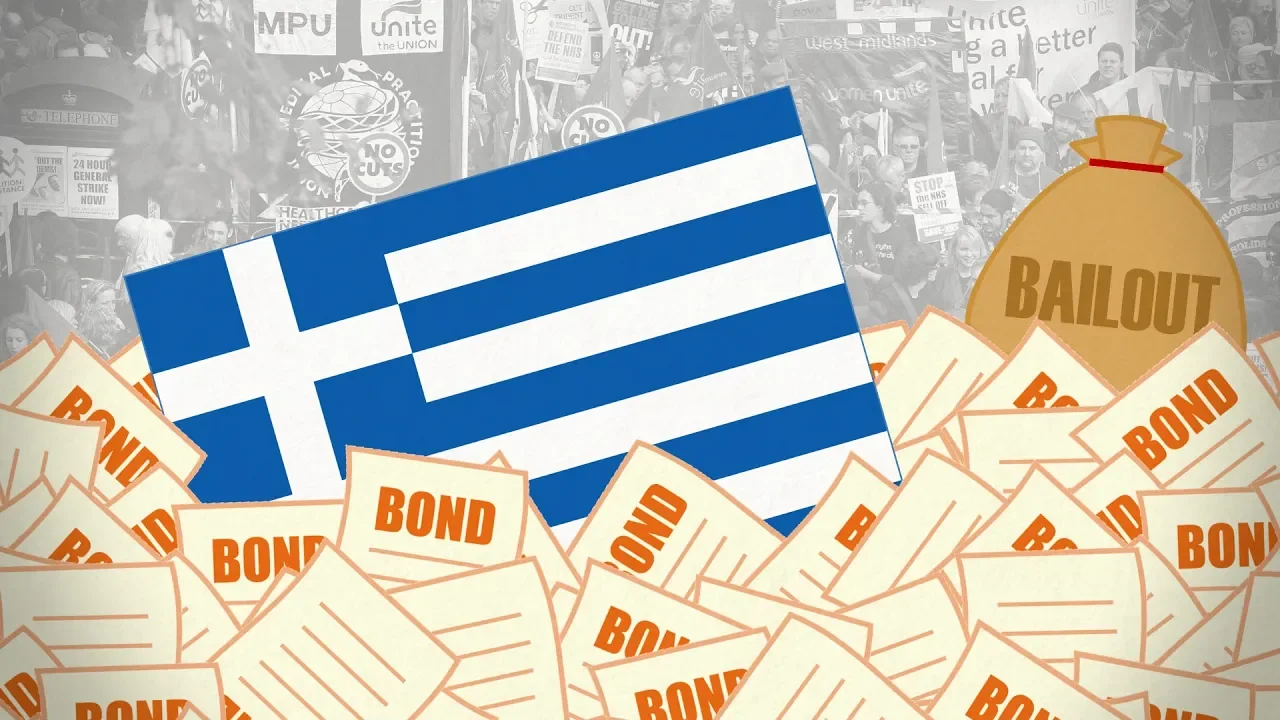
The Greek Debt Crisis Explained: Causes, Bailouts, and Aftermath
@ThePlainBagel
2.7M views•2019-08-23

Triumph of Orthodoxy Icon: Byzantine Art & History Explained
@BenCallan
2.1K views•2024-08-06

FastAPI vs Flask vs Django: Choosing the Right Python Web Framework
@TechWithTim
302.5K views•2024-05-26

Game of Thrones Opening Credits: A Cinematic Analysis
@gameofthrones
46.3M views•2011-04-18
Related Study Plans & Knowledge Roadmaps
Structured learning paths in General & Interdisciplinary Studies