


























A compounding machine is an investment that combines high profitability, durable competitive advantages (moats), organic growth potential, and the ability to return cash to shareholders, making it an optimal long-term investment. These companies are rare but can significantly outperform diversified portfolios over time. The key characteristics include: (1) high operating margins (Moody's has 55% in credit ratings), (2) concentrated industries with little competition (credit ratings are dominated by Moody's and S&P Global with ~40% market share each), (3) subscription-based recurring revenue models, (4) strong pricing power (Moody's can raise prices 3-4% annually), and (5) high customer retention rates (Moody's Analytics has 90% retention). Historical evidence from investors like Benjamin Graham, Warren Buffett, and Terry Smith shows that most gains come from holding a few compounding machines long-term rather than many mediocre investments.
Moody's Stock Analysis and Portfolio Addition | Compounding Machines
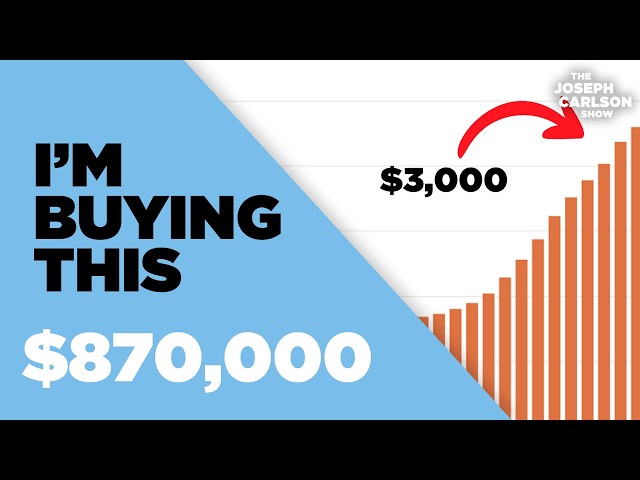
Added:welcome back everyone on today's episode of the Joseph Carlson show I finally added another company to the portfolio the business I decided to add to my roster of companies is Moody's I started with a $5,000 position Moody's is the companionship doop with S&P Global in global credit ratings but they do much more than that around 50% of Moody's revenue is a highly profitable subscription business called Moody's Analytics so in today's episode we'll be going over Moody's why I added this company to my portfolio why is it a compounding machine and what do the valuation and future free cash flow expectations look like we'll be going over all of it in this episode now we also have a lot of other news to get to importantly we had news that Boeing has run into more trouble we know Boeing had trouble with two 747 Maxes crashing within 6 months of each other now only a few years later a section of the plane as big as a door fell off during the flight so they're flying with a huge section of the plane missing and the problem even continues where it doesn't seem like it's a one-off with just that plane of course they did inspections on other Boeing planes and they found that there's more loose Parts on the max 9 Jets so what is going on here we have Boeing planes that are literally falling apart mid-flight will also be addressing an important question from Wall Street bets is it insider trading if I bought Boeing puts while I'm inside the wrecked airplane we'll be looking at the answer of this question later now at Honda CES Honda teased a couple New Concept cars one of them is called the space Hub the other's called The Saloon we'll be looking at these new e Concepts so obviously we have a lot to get to in this episode let's go ahead and Jump Right In now first of all we'll start off with my new addition to the portfolio what I'm looking for when I'm looking for new Investments is I'm looking for companies that can add to my portfolio without making my portfolio worse and that is difficult to do we know the type of companies that I own I own companies that are exceedingly high quality many of them are the best companies in the world companies like Microsoft and Apple are heavily weighted in my portfolio much more than the S&P 500 or even the QQQ I've invested in companies like Costco for a number of years that have done exceptionally well provided a lot of alpha because of the qualities of these companies these are in a category of their own so every time I'm doing analysis on different companies that are potentially additions to my portfolio the problem I keep coming back to is they're simply worse than what I already own it's very difficult to find a company of this caliber ones like S&P Global MasterCard and into it the globally Diversified High Returns on Capital assets that have incredible reach incredible Moes they're incredibly profitable it's simply difficult to beat these companies that I already have the big thing I want to avoid is adding companies that are worse than what I already own this is a term that Peter Lynch called diversification it's when you add new additional Holdings to your portfolio that are lower quality than what you already own or companies can do this as well if a company acquires another company that's worse than what it already has that is diversification diversification would lower the overall quality of my portfolio and as you know I'm trying to do the exact opposite I want to increase the overall quality of my portfolio so over the past couple of months I've been studying the characteristics of what makes really good companies what makes them above the fold I have a list of companies that I all think are very high quality many of them I own some of them I don't but I'm constantly reviewing a watch list of potential companies that I may want to add in the future overall what I'm looking for are not just good companies they're genuine compounding machines now different people can define a compounding machine their own way by my definition a compounding machine is the ultimate investment it is almost the perfect investment it's what you could imagine in your mind as being the optimal investment imagine investing in a business that's super profitable faces little competition has a long durable Runway of uninterrupted organic growth can return nearly all of its cash flows back to the owners and it's perpetually undervalued Val that is overall the perfect investment that is a compounding machine and the truth is there's less of them than you think Compounders are rare but finding them can make a world of difference to your portfolio one single compounding machine can make up for numerous failed bets you can lose money on companies left and right and if you own a compounding machine and you hold it longterm that can overall reshape your portfolio into a winning strategy we've seen this with great investors all throughout history we can go back as far as Benjamin Graham Benjamin Graham is considered the father of value investing he taught Warren Buffett he wrote The Holy Bible of value investing which is the intelligent investor now out of Benjamin's strategy which he outlines in the intelligent investor he says to buy cheap companies to buy undervalued companies to buy companies that are below Book value but an observation over Benjamin Graham's life shows that the majority of his gains in fact the huge majority came from a single compounding machine that company's Geico so despite his teachings he had most of his growth from this compounding machine Phil Fischer was another older investor that made this observation very early he wrote about highquality companies he acknowledged that in order to have astounding gains you need to hold compounding machines in your portfolio longterm Warren Buffett was another investor talked about as a value investor but if you really looked at the Holdings it made a difference to his portfolio it was the qualities of the company and Buffett stressing that overall a wonderful company a compounding machine is what drives good results over time he's held many of them in his portfolio Sees Candy Geico American Express Coca-Cola Apple to name a few we move on to more modern younger investors Terry Smith the highquality investor that's also outperformed has outperformed largely due to a couple compounding machines in Microsoft and dominoes Chuck aey has seen Alpha through holding MasterCard and moodies you can study all these great investors over time and look at where their gains really came from they mostly came came from a few astounding companies that held these characteristics so I view it as my opportunity as an investor to identify these compounding machines today get them in my portfolio and hold them longterm and that brings me back to today with my decision to buy Moody's I believe Moody's is a genuine compounding machine I do not believe this company lowers the overall quality of my portfolio in fact I believe adding it to my portfolio as an additional holding increases the overall quality moat and earnings potential of my portfolio so let's go ahead and take a look at some of the characteristics of Moody's to First understand Moody's the company's basically broken up into two halves each part making up 50% of the revenue the first half of it is called Moody's investor Services that's what they call Moody's as you understand it Moody's is a credit rating agency which means that they rate the credit worthiness of many companies in fact thousands of them across the globe the credit rating business is an incredibly concentrated industry that fa is very little competition you have S&P Global that has around 40% of the market Moody's that has around 40% of the market and then the only real big third player is fit with around a 15% market share this has been the same market share for over a decade these companies have kept their market share despite many attempts from the government to try to increase competition through various acts various means the truth is that it's very difficult to uproot Moody's S&P Global and Fitch as the market share leader in the credit rating agency market the reason being is because it's incredibly difficult to disrupt a language protocol effect everyone in the market and every company knows the language of S&P Global and moodies they've been the standard for such a long period of time that introducing a new standard is very difficult and in most cases very unlikely this concentrated industry dominated by a couple of companies creates this effect where they have incredible economics first of all a lot of this is described as transactional meaning that Moody will transact and rate a company's debt once but that's not where it ends Moody continues to rate their debt on an ongoing basis this is more of subscription Revenue it's recurring Revenue they have 48% of this in corporate finance around 14% in structured Finance 19% in financial institutions and 17% in public project infrastructure and finance they rate all forms of debt all across the globe and this company is not in just the US it is a global standard being a globally understood and used standard makes it even more difficult to disrupt than if it were a smaller Regional standard now Moody's on their investor presentation makes this look astoundingly dull they have a couple charts and graphs it doesn't really tell you a whole lot about the company except for some of the basic information but I'll be fooled by the boring presentation there's nothing boring about being insanely profitable and the investor Services portion of Moody's this credit rating portion is insanely profitable they have adjusted operating margins of 55% in 2023 that's off of Revenue of $2.7 billion so this half of the company has incredibly High margins now along with this part of the business being highly profitable with very high margins very little capex to run this portion of the business you also have organic growth this means a lot of growth without a lot of Acquisitions you have economic expansion which is around 2 to 3% you have the additional value proposition which is a euphemism for raising prices around 3 to 4% per year then you have the developing Capital markets which they grow into to around 1 to 2% per year all of this combined and you get a fast growing organic double- digigit Revenue growth now this is where some confusion comes into play so I want to highlight something here again the reason that Moody's has such a substantial mode the reason it's so difficult to compete with him is because they are a common language for credit ratings they are embedded in the global economies every single company uses them and that creates trust brand recognition and a normaly which is very difficult to disrupt but the other portion of this is the price increases that Moody's able to enact over a long period of time if we want to find the compounding machine the perfect investment that has little competition which Moody's does has a long durable Runway of uninterrupted organic growth which Moody's does we also need the company to be able to have uninterrupted price increases so how does Moody's accomplish this well Moody's is kind enough to give us an example of their pricing power and what creates so much value with their credit rating business they say for example if a company just a random company in the market wants to issue a 5-year $500 million corporate bond that's something that's routine it's common for companies to do this if the bond is rated by Moody's the interest rate would be 5.55% if the bond is not rated by Moody's it'll have a higher interest rate around 6.2% the annual interest payments not rated would be 31,000 the annual interest payments rated would be 27,000 so by saving a little bit of money by not getting your bonds rated by Moody's it actually costs you over $16 million in extra interest by not getting it rated and this is the reason that every company gets their bonds rated by Moody's and S&P Global having access to the credit markets is incredibly important getting the lowest interest rate is incredibly important and companies save an extraordinary amount of money by getting their debt rated by Moody and S&P Global when they try to go to third-party unknown companies outside of Moody's S&P Global their interest payments on that debt always ends up higher because most corporations are not willing to invest in debt that is unrated by Moody and S&P Global so right here we lay out an illustration of the immense pricing power this portion of the business continues to have as their Network effect grows as this global standard of credit rating grows throughout all of planet Earth this value proposition becomes bigger and bigger Moody's investor services this entire credit rating portion of the business is a fantastic business business and that is part of the reason why I also invested in S&P Global these companies each share this wonderful doop where they have virtually Global control over credit issuance this is a wide Mo deeply concentrated industry that faces little competition so for about half of Moody's business you have an excellent business that meets all of the qualifications of a compounding machine now Moody could have just ended things there they could have ran their investor service business and done credit ratings but they realized that they had a unique Advantage with the amount of data that they were gathering in 2007 is when Moody decided to release a new product this new subsidiary is called Moody's Analytics now because Moody's investor Services grew so big and it had so much proprietary data they thought that they could repackage this data they could gain additional insights and they could create an analytics platform a software platform with all of this key data and they could sell that to other companies that is the basis of Moody's Analytics it's decision-making tools and insights based off of all of the proprietary data that Moody already had now over the years since 2007 they've bolstered their offering by acquiring a series of smaller companies to add additional insights and analytics like other companies have so now they have a huge breath of data to be able to offer companies to help them make decisions now a couple key things i' would highlight about Moody's Analytics this is different than if a company just buys another company Moody's Corporation creating their Moody's Analytics is an entirely different situation where they're leveraging an existing part part of their business where they already own a ton of proprietary data and they use that data to Aid in this new analytics platform so they're leveraging an existing part of their business to benefit another part of their business this is one of the few cases where you actually have Synergy where you create both emote High margins and a great product for other companies and the more I learned about Moody's Analytics the more I really like this aspect of their business a lot of people just focus on the credit rating business but I think Moody's Analytics is actually really good they highlight here the unique moat that Moody's Analytics has over other analytic platforms it's extensive uniquely curated proprietary data meaning they know things about companies that other companies do not know so they can leverage that knowledge another aspect I like about this business is you know how much I like subscription businesses I love having that reoccurring income that's on repeat either every month or every single year Moody's has this with their analytics platform the retention rate is above 90% a 90% retention rate is really good that's in the same realm as Costco and Amazon Prime in terms of retention so that's in the elite category of retention rates the analytics portion of the company does not have as high of margins as the credit rating business but it does still have incredibly impressive margins with 33.6% operating margins and then one incredibly impressive statistic that they highlight is that this portion of the business Moody's Analytics is so predictable has such a high retention rate that they have so much pricing power with it that it's grown by 63 quarters in a row 63 consecutive quarters of growth so this is a high margin continually growing sticky business their customer base is incredibly diverse across different organizations you have insurance companies commercial Banks real estate entities Professional Services educational institutions asset managers government entities so on and so forth all in all they have over 15,000 customers with that 90% retention rate and around 70% of the Fortune 100 is currently using Moody's Analytics so to summarize Moody's you have part of the company roughly half of it that's Moody's investor Services a very wide mode concentrated industry of credit rating businesses where it's a language for companies to use creditworthiness this portion of the company has very high margins and organic Revenue growth the other half of the company is Moody's Analytics this is a fast growing highly profitable subscription business with over 90% retention so combined overall you have two very attractive business businesses under the name Moody's so that's what the company looks like from a qualitative perspective let's go ahead and take a look at some of the actual details here with their finances for this we're going to be using qual trim this is a website that's included as part of the patreon membership you can try this out for free with a link in the description below but let's go ahead and take a look at the revenue here Moody's Revenue grows around 7 to 12% per year and it's done so for a very long period of time it's seen a recent slowdown over the past year or so because interest rates rapidly increased causing a lot of companies to stop issuing debt but that is looked at as a temporary phenomenon eventually companies will raise debt in line with their historical average that debt needs to be rated which will cause Moody's Revenue to go back up and the Moody's Analytics platform also continues to grow at a steady 7 to 10% rate per year if we look at this on an annual basis the future estimates for Moody's are that they can grow Revenue around 9 to 10% per year for the next few years so anals are expecting very similar growth to what we've seen over it history now let's go ahead and take a look at how this Revenue translates in the margins the profitability of this business their gross margins hovers right around 70% I expect that to remain mostly the same the operating margins have been anywhere from 34% to 45% their operating margin should continue around 45% in the future and they should increase over time as the credit rating business recovers this company translates around 30% of its revenues or more into profits that is an insanely profitable company Moody's achieves this High margins by having an incredibly efficient business they have low expenses their capex last year was $283 million with over $5.5 billion in Revenue so this is a company that really has a small proportion of their revenue go to capex now if we bring up the balance sheet of Moody's this also looks fine they do have more debt than cash which I always have a preference for companies having a low amount of debt Moody does have some debt but it is very low compared to their EA or their cash flows they could pay off their net debt within 2 years which means that in and of themselves they're very creditworthy company now that we've looked a little bit about what the company does about the financials I want to take a look at the valuation of the company this is a cause of concern for a lot of investors in companies like Moody's they rarely trade for cheap right now Moody's trades at a 33 Ford PE ratio which I know right off the bat is going to cause a lot of you to believe this company's overpriced or that it's priced for perfection I don't believe that's the case the PE Ratio is only one metric that should be used in conjunction with the rest of the company's expectations so we have the PE Ratio if we look at the free cash flow yield the company's trading at around 25% here's what Moody's free cash flow looks like over its long-term history this is since 1988 so we can see that there is moderate growth and then it pulls back at certain times and continues growing now the free cash flows hit a peak in 2020 of 2 billion 2021 it went down a little bit and and then in 2022 as interest rates went up as companies became very conservative the free cash flow plummeted along with the credit rating business but again this is a onetime event and we can already see the credit markets recovering if we break this down into quarterly you can see the recovery over the past couple of quarters if we look at last year once Moody's reports its next quarter we'll have the final quarter for last year and it's going to be around $1.8 billion in free cash flow so the orange bar in 2023 should be right around there $ 1.8 billion I believe on 2024 this company will earn over $2 billion in free cash flow so this year I believe they're going to earn another additional incremental $200 million in free cash flow putting it at or above its all-time high with a current market cap of $68 billion and an expected $2 billion of free cash flow in 2024 that puts the current free cash flow yield of Moody's today based on this year's free cash cash flow at roughly 3% so the company's trading at a 3% free cash flow yield at a current 3% free cash flow yield I think there's going to be people that say that Moody's isn't worth the time or that it's too expensive and I think that's fine if you believe that but when I look at history again looking at all the great investors and what really led to their returns whether it was Benjamin Graham Phil fiser Warren Buffett Terry Smith they had these great returns by owning a few great companies and owning them for a long long period of time Moody is one of these corporations that's always seemed more expensive than it actually is it's always a company that isn't looked at as exciting or one that's flashy enough for investors to hold so this company has been perpetually undervalued for a long period of time so I'm happy to have it as part of the portfolio and I plan on starting with this $5,000 position and adding to it all throughout the year eventually I want to grow it into a 50 or $60,000 position as it's going to take a while to get there but this is just the start now moving on I'm sure you've all heard the news of the Boeing plane that had a door or what at least looks like a door fall off the plane early in the flight but it was during the actual flight there's video that people took showing an entire section of the plane missing they're in the middle of the sky and they have this huge section missing now luckily for Boeing and the passengers there was nobody sitting at that seat that's a miracle that no one happened to be sitting sitting there very lucky for the passengers very lucky for Boeing if someone was sitting there they could have been sucked out of a plane and Fallen to their death which is one of the most frightening things to conceive of now of course after this they ran a little investigation trying to see if everything was bolted on correctly in these planes Boeing shares fell quite a bit after it was discovered that Alaska Air and United Airlines had said they have discovered loose Parts on these 737 Max now they actually did the right decision here last time that Boeing had a problem where one of their planes crashed they kept flying the planes they inspected the one that crashed and said oh no we have no real issue here that's a problem with other planes they completely swept it under the rug they tried to ignore it but in this case at least they're grounding the other potential planes that may have this issue they've grounded 170 of these planes so they're not flying right now if you're a passenger on an airplane you're not flying on the same model of the one that's had this problem I think ultimately what we see here is a problem with Boeing's C culture a problem that I saw a long time ago when I was investigating the mcast system reading all the reports of it reading firsthand from the engineers and pilots and what they had to say around it it Illustrated that Boeing had a massive problem with their culture pushing profits over safety cutting corners only doing the minimum of what The Regulators would require and that led to devastating consequences and I believe that that same culture hasn't been entirely changed if the CEO is going to make any substantial change here to Boeing it's not going to be to fix these planes in and of themselves it's going to be to change the entire culture of Boeing focus on going far above and beyond what The Regulators require because the more this type of stuff happens the more it endangers passengers and gives Boeing a reputational black eye now there was an interesting question posed by one of the Brilliant Minds at Wall Street bets we know that that's one of the best places to get financial advice you go to Wall Street bets and they will try to make money on anything he poses the question is it insider trading if I bought Boeing puts while I'm inside direct plane purely hypothetical of course imagine sitting on an airplane when suddenly the door blows out now while everyone else is screaming and grasping for air you instead turn your noise cancelling headphones on to ignore the crying baby next to you you cly open your Robin Hood account or whatever broker you prefer and you load up on Boeing puts there's no way the market could have ever priced that in it is literally just happening would that be considered insider trading I mean you're literally inside the wreck of an airplane on the other hand one could argue that you're outside of the airplane given that the door just blew off now this hypothetical as crazy as it sounds could have actually happened anyone could have brought out their phones and they could have bet against Boeing while on that flight during the wrecked plane and this is entirely legal now I'm not a lawyer I'm not a judge so I can't say for certainty but from everything that I know there is nothing to legally preclude you from betting against a company because you see something firsthand happen negatively with that company even if it's information that other peoples don't have quite yet the only rules for insider trading are really if you're an executive or you have an Insider position at the company you know the financials you know what the next quarterly reports going to be you know when future products are going to be released but having first hand knowledge of a company because you are experiencing something with it whether that's a plane that's wrecking that gives you no legal limitation from making a bet based on those experiences so to answer this Wall Street bets post here as far as I'm concerned I don't see anything illegal about this now moving on we have some news coming out of the EV category Honda went to CS in Vegas and they released some New Concept cars one of them called the space Hub and the other called The Saloon this is what the saloon looks like now obviously this design is catching a lot of attention because it looks pretty interesting this is a uniquely designed car specifically the back part of it you have kind of this mouth part of the back where it opens up and that actually looks like it's going to be an LCD or some type of display the front of the vehicle has the same type of feature but instead of being tilted upwards it's tilted downwards it has two lights closer to the windshield and then it has the front open part with the Honda Logo and it looks again like some type of display like a TV or an iPad where you can actually see particles moving around as the display changes the actual prototype of the car on stage also looks pretty cool it's all blacked out it's glossy it has huge rims and it looks very sleek the other EV concept they showed off was called the space Hub and it looks more like a big Transportation vehicle more like a futuristic fan the vehicle looks bigger more blocky a bit more spacious it looks like it has a huge viewing range it's almost all glass all viewing on the top of the vehicle and it looks overall very futuristic which fits into their space Hub theme now they haven't released the stats on these vehicles they're still in their concept mode but we do know that they're going for autonomous driving capabilities they say that the steering yolk is able to tracked into the dashboard for each vehicle so they're building these with the intention of them being autonomously driving the Next Generation ad system is being developed based on Honda's human Centric safety approach it'll feature Advanced AI sensing recognition driver monitoring Technologies to achieve a more humanlike natural and high Precision risk predictions making it possible to offer the automated driving features people can feel safe and confident in using okay so that's some big claims from Honda they're creating two new futuristic vehicles that they believe they can have self-driving safely in a human Centric way they're going to deploy it in Japan first and then the rest of the world later even though Honda is a huge company with enormous resources I remain skeptical at their ability to create an EV that is truly autonomous so we'll have to wait and see that's all for this episode if you want more content you can check out my other YouTube channel the Joseph Carlson after hour show or you can join the patreon and see exclusive episodes that's all for now see you in the next one
Up Next

Paul Singer: The Investor Who Redefined Financial Warfare
@megalomedia
233.4K views•2025-08-25
Retention Habits of Top DTC Ecommerce Brands Revealed
@SendItPodcast
44K views•2026-03-03

Decoy Effect: How Pricing Psychology Influences Consumer Spending
@bobinvestsUS
90K views•2026-01-05

The Planned Obsolescence of Light Bulbs and Tech
@veritasium
25.3M views•2021-03-26
Related Study Plans & Knowledge Roadmaps
Structured learning paths in Business