






















Mental fatigue occurs when prolonged cognitive effort disrupts efficient communication between brain regions, particularly affecting dopamine levels which are crucial for motivation and working memory; understanding this neuroscience allows us to combat fatigue through proper nutrition, regular breaks, conscious cost-benefit analysis, and stress management techniques to maintain cognitive resilience and avoid burnout.
The Neuroscience of Mental Fatigue and Motivation
Added:Basic neuroanatomy, specifically the roles of the prefrontal cortex (executive function), anterior cingulate cortex (effort evaluation), and basal ganglia (reward processing).
The role of key neuromodulators in the brain, particularly dopamine (driving reward and motivation) and adenosine (signaling sleep pressure and cellular fatigue).
The core concepts of cognitive load theory and how executive functions utilize metabolic resources like glucose and oxygen.
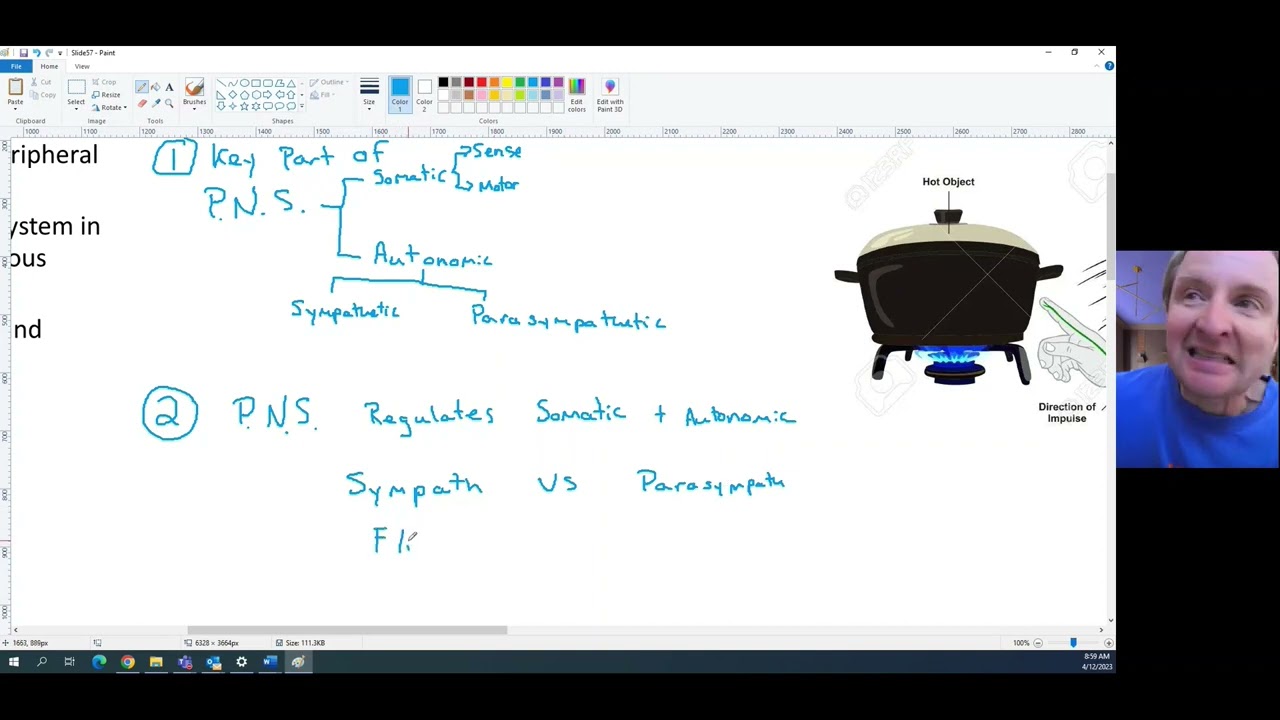
The fundamentals of the human stress response, including the autonomic nervous system's sympathetic (fight-or-flight) and parasympathetic (rest-and-digest) divisions.
The neuroeconomics of effort discounting, focusing on how the brain mathematically computes the cost-benefit ratio of physical and cognitive tasks.
Clinical boundaries of exhaustion, including the neurobiology of burnout syndrome, chronic fatigue syndrome (ME/CFS), and major depressive disorder.
Applied neuroergonomics, exploring how workflow design, scheduled breaks (such as ultradian rhythms), and environmental stimuli can optimize cognitive endurance in the workplace.
Advanced behavioral and pharmacological strategies to regulate neuromodulatory systems, including targeted cognitive behavioral therapy (CBT) and the mechanism of central nervous system stimulants.
37.7K views1.4Klikes25:20Original Release: 2024-06-17
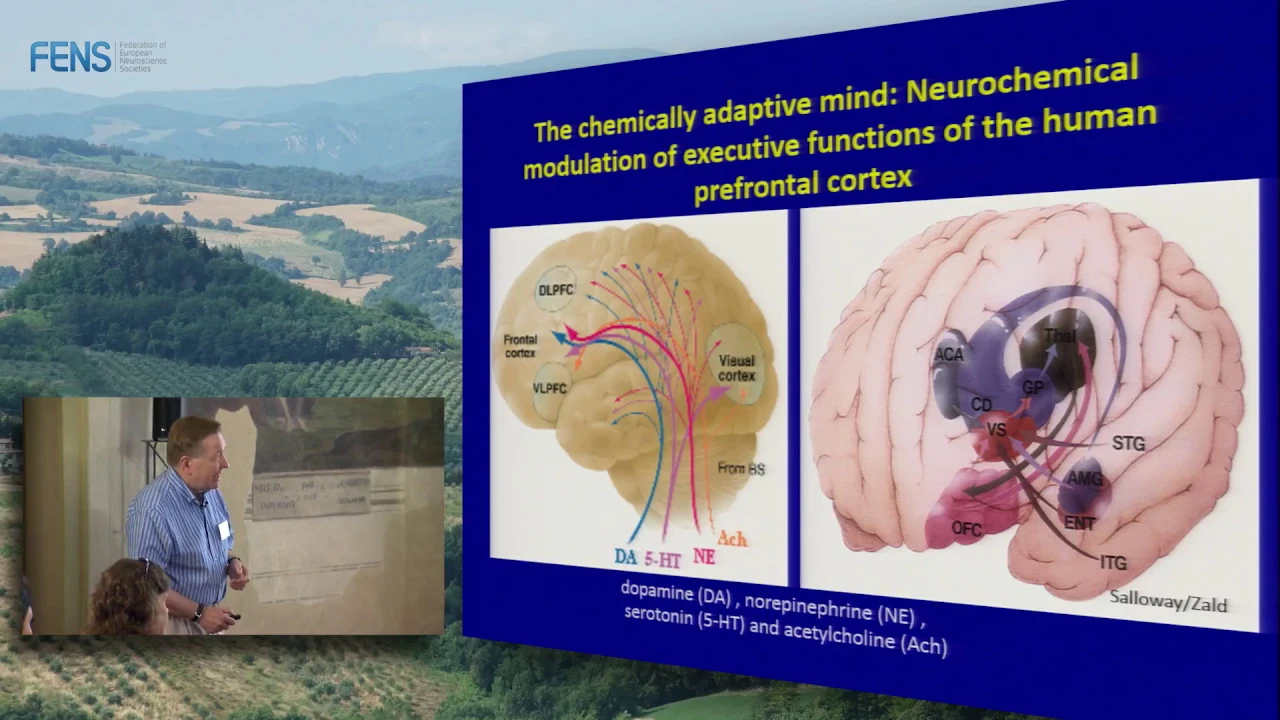
when we're overwhelmed it's like our brain stops working exhaustion sets in and burnout is right around the corner to reignite our motivation we need to understand what causes the brain to get fatigued in the first place say you're studying for an exam you start out first thing in the morning with a fresh mind making flashcards trying to memorize them but around the 2hour mark you find it harder and harder to focus pulling the information out of your brain starts to feel like pulling teeth 3 hours in and and time seems to be grinding forward out of snail's pace your motivation to continue studying is low along with this difficulty maintaining attention and low motivation you feel tiredness in your body your eyes droop your posture is terrible and your stomach is growed this is mental fatigue and we've all experienced it but what is going on in the brain when that happens now your brain is a vast highly interconnected and complex network of about 86 billion neurons and an even greater number of non-neuronal cells these cells are connected in intricate patterns that vary widely across different regions of the brain accordingly different areas of the brain have different functions for example the dorsal lateral prefrontal cortex is important for careful reasoning and planning while the ventromedial and orbital frontal cortex are important for evaluating options as well as experiencing and regulating emotions now you'll notice that I'm using phrases like brain area X is involved in or important for function y rather than saying that brain area X causes function y That's because no brain area acts alone when it comes to planning and reasoning the dorsal lateral prefrontal cortex is working with areas deep in the brain like the anterior singulate the striatum and the hippocampus as well as other cortical areas like the parietal cortex so this means that for the brain to do anything there has to be efficient communication AC across the various regions think of the brain like a huge band where brain regions are individual musicians and where mental functions are the songs played by the band if one band member isn't playing his part if he's delayed too fast or just playing a different tune Al together the song is not going to sound good if all the band members are playing at different tempos or maybe some are taking a break While others are playing there won't really be a song to speak of similarly if if the brain regions involved in a given mental function are out of sync with each other it will be much harder for the brain to carry out that function now one of the most interesting findings from the Neuroscience of mental fatigue is that when we've been working on a task for a very long time it seems that this synchronization begins to break down for example fmri scans have shown that mental fatigue is correlated with lower Global connectivity higher path length and reduced small worldness in other words the connectivity among brain regions that's required for us to do any kind of mentally demanding task deteriorates brain regions don't communicate with each other as efficiently and the Brain regions that typically show a very high degree of connectivity seem to reduce that communication so to quickly summarize what I've discussed so far efficient communication across brain regions is crucial for optimal cognitive function plus mental fatigue is associated with reduced efficiency in this kind of communication as we'll see later on understanding these mechanisms is helpful for developing strategies to combat fatigue and enhance cognitive resilience still none of this answers why the brain exhibits this pattern in response to prolonged effort to answer that we have to think about what makes us feel mentally drained so as a quick aside while I have a full list of references in the description of this video I want to emphasize that I'm relying pretty heavily on a 2022 review by Albert kooch published in the journal brain and cognition okay so let's get back to what makes us feel mentally fatigued in the first place like we saw earlier with the studying example as we spend more and more time on a mentally demanding task we get more and more fatigued and less and less motivated to pay attention yet if you think about it it seems kind of weird wouldn't you expect that if the brain engages in the same task for a long period of time then the task would seem easier not harder after all neurons are constantly forming new connections so wouldn't the neural Pathways associated with the task get more efficient over time indeed that is what happens over the course of days and weeks of deliberate practice but why doesn't it happen over the course of hours of continuous practice muscles provide a helpful analogy for answering that question you can only run or lift weights for so long before your muscles get severely fatigued and eventually they simply give out entirely this is due to the depletion of energy stores the accumulation of metabolic byproducts and the inability of muscle fibers to sustain prolonged contraction and performance but let those muscles rest for a couple days and they're not only healing but they actually become stronger as a result something similar is happening in the brain during mental exercise it's not that brain cells are breaking down in exactly the same way as muscle cells but it does seem that an important contributing factor to mental fatigue is the depletion of a critical neurotransmitter molecule dopamine optimal dopamine levels have been shown to lead to better cognitive performance and importantly to high levels of motivation dopamine tends to make us feel good but its more direct function is to activate brain regions like the striatum and the prefrontal cortex and to help coordinate their function these brain regions are critically important for working memory the type of memory that we use to keep information at the front of our minds now it seems that the strium and cortex work together to gate information in and out of working memory when dopamine levels drop too low these cortico strial Pathways that allow for working memory seem to stop working as efficiently but dopamine is also involved in learning especially learning from positive or negative feedback so if dopamine levels drop too low our ability to learn from feedback also declines interestingly it's also been shown that too much dop doine has a similar effect on cognition leading to the idea that there is a range of optimal dopamine levels outside of which cognitive control and motivation begins to break down now dopamine like all neurotransmitters needs to be resynthesized in other words we don't have an infinite store of dopamine at any given time the brain has to convert the amino acid El tyrosine into dopamine to replenish its stores additionally it seems that dopamine levels are generally replenished during sleep so this is one reason that taking a break from cognitively demanding activities especially if you sleep during that break can reduce mental fatigue and partially reignite motivation now an interesting and related hypothesis that has yet to be definitively proven in humans is that serotonin may also play a role in mental fatigue animal Studies have shown that when serotonin levels are much higher than dopamine levels animals tend to get lethargic and task performance seems to drop so it may be that the balance of dopamine and serotonin levels are more important than the absolute levels of either one now one interesting aside is that dopamine is actually a chemical precursor to yet another neurotransmitter norepinephrine norrine plays a direct role in keeping the cortex active and awake but on the other hand serotonin is the chemical precursor to a hormone called melatonin and you might know that melatonin is critical in the brain's circadian Rhythm higher melatonin levels make us feel sleepy and lethargic so as dopamine levels rise the general tendency is for norepinephrine levels to rise as well conversely as serotonin levels rise the general tendency is for melatonin to rise intriguing as this hypothesis may be I want to emphasize that it is still a hypothesis and it hasn't been proven in humans on an even more basic level some mental fatigue as well as physical fatigue comes from low blood sugar if you're running out of calories the cells of your body including neurons cannot function properly and you begin to feel weak and tired beyond that the feeling of hunger is distracting right and it can even be painful Evolution has programmed into us an aversion to hunger so that we don't starve to death or pass out and get eaten by a lion this is why you might feel especially awful during that study session if you haven't eaten all day your brain is doing doing a cost benefit analysis the cost of the effort involved in continuing to engage in mentally demanding tasks is higher than the predicted benefit of getting a good grade or more precisely due to your brain's low dopamine and glucose levels the cost right now is higher than the predicted benefit in other words the value of continuing to study right now is negative because the predicted reward is less than the current cost if you take a break get some sunlight a snack and remind yourself that you only have a few days left to study maybe even take a quick nap perhaps that cost benefit analysis shifts and the value of studying goes up this implies that your brain has some mechanism for doing this kind of calculation but what exactly is that mechanism okay before we get to that this is a lot of information so let's just do a quick summary before we get to that question all right mental fatigue and dopamine prolonged mental tasks deplete dopamine which reduces motivation and cognitive efficiency both very low and very high dopamine levels impair cognitive control serotonin High serotonin relative to dopamine can lead to lethargy and the balance between these neurotransmitters is crucial for maintaining energy and alertness we talked about how hunger right low blood sugar and hunger distract and weaken cognitive performance so this highlights the need for adequate nutrition while you're doing these kind of mentally demanding tasks okay now back to cost benefit analysis in the brain four brain regions appear to be especially important for this the ventral medial prefrontal cortex or vmpfc the ventral strium the anterior insula and the dorsal anterior singulate cortex let's look at each of these in turn in the Neuroscience of decisionmaking the vmpfc and ventral strium tend to get a lot of attention if I were to show you an apple and a banana which would you choose say you go for the Apple if I was scanning your brain during that decision I would be able to predict at above chance levels which option you go for based on the activity of the vmpfc and the vental stum so in other words these regions activate more in response to the option you end up choosing in general these two regions are activated whenever we think about what we value in the same vein they're also extremely important for the experience of pleasure as well as the ability to learn from positive experiences and perhaps unsurprisingly these regions depend on dopamine for their proper functioning so when you're considering the decision of whether to keep studying or to take a break the vmpfc and the ventral strium will likely represent the value of each option by how much they activate as you consider the options so if these regions represent the reward value of a given option what region represents the potential cost the answer to this question ultimately seems to be the anterior insula but there's a bit more to it than that so the anterior insula is involved in processing aversive stimuli and it's sensitive to the potential negative outcomes of decisions it's activated when we consider risks losses or other costs associated with our choices in general though this region appears to be crucial for interception our experience of the internal sensations of our bodies as well as the feeling component of emotions now the anterior insula in other words allows us to feel the feelings associated with desire and Dread Pleasure and Pain motivation and fatigue yet the insula is informed about potential costs of a given Behavior by at least two other brain regions first the amygdala sends projections to the ins this connection is vital for the integration of salient sensory information particularly threatening or negative information the amygdala's role in processing important sensory stimuli allows it to relay the emotional significance of stimuli to the insula which then integrates this information into conscious experience of our emotions and bodily States next the per aqueductal gray this area is involved in pain modulation and automatic defensive behaviors like running from a predator but it also sends projections to the insula this connection helps the insula receive information about potential threats pain and physical discomfort so the insula receives signals from the amydala and the peria aqueductal gray which allows it to represent the potential cost of a given Behavior or option when we're making a decision now on the other hand the dorsal anterior singulate cortex or DAC is not so much about representing the raw value or cost of option but it serves an integrating function instead so returning to the question of whether to keep studying your brain is unconsciously processing the options in doing so it has to make predictions about the magnitude and likelihood of reward such as how much you might improve your grade if you continue to study right but also about the magnitude and likelihood of risks such as the possibility of I don't know missing out on a party because you're stuck in the library the ACC appears to contain sets of neurons that compute these variables and they aid in the decision of which option you should choose So based primarily on studies in monkeys it seems that certain populations of neurons in the ACC increase or decrease their activity in accordance with either the magnitude of a reward the likelihood of a reward the magnitude of punishment or the likelihood of punishment but in other words one population of neurons is calculating how much you might improve your grade a second population is calculating How likely you are to actually improve it a third is calculating how bad it would be to miss out on that party and a fourth population is calculating How likely you are to miss the party the frontmost portion of the ACC known as the rostal ACC is where these individual calculations come together into a final evaluation this overall evaluation is essentially your decision the rostral ACC allows us to compute the overall value of very complex and context Laden choices interestingly the rostal ACC is right next to the bmfc and some scientists actually group these two structures together because of their similar functions and locations now it's important to note that this kind of value calculation which takes the likelihood and magnitude of risks uh and rewards into account is crucial for motivation Studies have shown that lesions to the ACC often result in deficits of motivation these can be mild or severe depending on the extent of the damage so the person can be either less likely to carry out motivated behaviors in the mild cases or they can feel as though they completely lack the ability to do anything but that which is required to survive in the the most severe cases of damage so even your decision to get out of bed this morning RI to some degree on the ACC now perhaps the most interesting thing about the ACC is that it seems to be a kind of interface between the cortex and subcortical regions of the brain after all the ACC by itself is unable to actually cause the body to take action now this raises a question how does all of this cost benefit analysis actually feed into our Behavior it seems that the ACC communicates with the dorsal lateral prefrontal cortex which essentially allows the brain to hatch a plan for Behavior after that the PFC sends these signals to the motor areas of the brain located just behind it which effectively converts the abstract plan into concrete patterns of action to be taken by the body in order to accomplish the goal it's ultimately the motor cortex aided by the basil ganglia which causes us to take action all right great right but how does all of this fit together when it comes to mental fatigue it all comes down to that cost benefit analysis if the benefits of continuing to study are evaluated as higher than the costs then you'll feel motivated to continue if the costs outweigh the benefits you'll feel mentally fatigued and want to stop now it's important to remember that the benefits are not confined to better grades or other extrinsic rewards like you know impressing your teacher instead the benefits can also include intrinsic Rewards rewards like the enjoyment you get from learning about this particular subject for its own sake similarly if you don't really care about the subject the benefits will seem lower and you'll get mentally fatigued more quickly so mental fatigue is a kind of emotional state that arises when the costs of a given Behavior seem to outweigh the benefits all of this calculation comes together in the ACC which then feeds a decision about what to do into your frontal cortex and you feel fatigue in your body thanks to your insular cortex's representation of this mental state okay at the beginning of this video I said that by understanding the Neuroscience of fatigue you could reignite your motivation reduce mental fatigue and ultimately avoid burnout so let's now look at how to take advantage of everything we've discovered in this video first stay well fed and well rested early on we saw that our energy level has a lot to do with mental fatigue low blood sugar means that your neurons aren't getting enough energy and it makes you more distractable so the first step to avoiding unnecessary mental fatigue is to eat enough calories for the activities you're engaging in the precise number of calories and the type of food you should eat and how often you should eat throughout the day right these will all be determined by your specific lifestyle and the amount of exercise you do and and even just your biology but in general avoiding junk food with a lot of sugar or otherwise you know empty calories is a good rule so for me I keep a bowl of peanut packets on my desk so I always have access to a protein dense low sugar snack when I start to get tired or lose focus but hydration is also super important personally I drink about 2 lers of water in the first seven hours of the day which I have found helps me feel more energized okay but it's not just calories and water because sleep is a major motivation booster and it helps to prevent unnecessary mental fatigue lack of sleep is associated with higher levels of mental fatigue so sleep is crucial for a few relevant brain processes we've already discussed for example adequate sleep helps brain networks work efficiently partly by clearing out metabolic waste products during enr sleep and also consolid ating neuroplastic changes to the relevant Pathways during REM sleep additionally sleep seems to be important for restoring levels of the neurotransmitters U like dopamine right which tend to get depleted throughout the day as we've seen dopamine is crucial for circuits that are involved in motivation and preventing the feeling of mental fatigue okay so second regular breaks one way I took breaks uh in college was using the Pomodoro Technique so that's 25 minutes of focused work followed by a 5 minute break or you can take longer breaks after say you know 90 minutes of work it's important that during these breaks you don't do something that involves a lot of attention so instead of like watching videos on your phone try taking a walk or meditating okay third carefully consider all the costs and benefits as we saw our brins are almost constantly evaluating and analyzing the potential costs and benefits of a given action if the cost appears to be higher than the benefit we'll quit doing what we're doing at least temporarily now this may explain why it can be helpful to remember your purpose your why why are you doing what you're doing what is the ultimate driving purpose for your behavior what goals are you pursuing and how does this Behavior contribute to them what are you giving up by engaging in this behavior is it worth it to give that up now here it's important to think longterm but to also be compassionate toward yourself sometimes the most important thing is not to force ourselves to keep working at a task but instead to take time to replenish our energy enjoy other aspects of life and then return with a fresh mind other times it'll be important to push through to give up other potentially valuable experiences and to remember that you will eventually give yourself some Breathing Room by consciously bringing all the costs and benefits to mind you you'll give your brain a better chance at making a truly rational decision rather than acting on the immediate feeling of the moment okay fourth reduce unnecessary stress it's important to not add more to your plate than necessary mental fatigue is a natural result of doing a cognitively demanding task for an extended period of time but the time it takes to become fatigued is shorter when we're stressed of course you cannot avoid stress entirely but sometimes we work against ourselves by not engaging in healthy practices that would reduce our Baseline stress level exercise is a great example right people often think that exercise is all about long-term health or even vanity but the truth is that regular exercise has been shown to reduce stress and improve mood it does this partly by helping to optimize the functioning of the dopamine system as well as other neurotransmitter systems it also naturally reduces stress because it provides an outlet for the pent up energy delivered to our muscles by adrenaline and the stress hormone cortisol another example is meditation meditation is often overlooked because it seems boring or pointless or woo woo you know but meditation provides a quiet Refuge from the stressors of daily life when practiced on a daily basis meditation has been shown to improve emotion regulation and to reduce stress it's a period of time in our day that is dedicated to doing well nothing right just as it's important to rest your muscles after a long run it's beneficial to periodically let go of all your concerns so you can deal with them more efficiently later on okay but I have to break it to you even if you do all this mental fatigue is not only likely it's guaranteed if you work long and hard enough on something you'll eventually feel fatigued what these strategies can help with is avoiding the extreme form of fatigue that turns into burnout now burnout is a state of chronic physical and emotional exhaustion which is often accompanied by feelings of cynicism Detachment and a sense of ineffectiveness or a lack of accomplishment it typically results from prolong stress or overwork especially in a demanding environment and it can significantly impact your mental and even your physical health so what happens if you do get burned out what if you're already burned out maybe you faced a recent disappointment or a serious failure or even a loss what then how can you bounce back when things seem hopeless for that I highly recommend checking out my video on the Neuroscience of resilience
Up Next

49:19
Moral Constraint and Choice: Neuroethics Frontiers with Fiery Cushman.
@penncenterforneurosciences9801
1.3K views•2016-10-12

21:55
Deciphering Neural Circuits Controlling Anorexia in Mice | Richard Palmiter
@AllenInstitute
2.3K views•2011-10-10
16:07
How Loneliness Reshapes the Brain: Neuroscience Explained
@senseofmindshow
2.5K views•2021-06-25

13:03
How Exercise Benefits Your Brain: Science Explained
@TED
11.4M views•2018-03-21
Related Study Plans & Knowledge Roadmaps
Structured learning paths in Neuroscience
neuroscience
Appetite Regulation: Brain Circuits & Hormones
01Foundations of Endocrinology and Brain Anatomy
02Introduction to Energy Homeostasis
03Peripheral Signals: Leptin, Ghrelin, and Insulin
+ 2 more learning modules
14h5 modules
Explore Roadmap
neuroscience
Neuroeconomics: Value, Risk & Brain Mechanisms
01Foundations of Neuroscience and Brain Anatomy
02Introduction to Neuroeconomics and Subjective Value
03Dopaminergic Prediction Errors & Reinforcement Learning
+ 3 more learning modules
18h6 modules
Explore Roadmap
neuroscience
Spatial Navigation: Cells, Grids & Brain Maps
01Foundations of Brain Anatomy and Memory
02Place Cells and Head-Direction Cells
03Grid Cells: The Brain's Coordinate System
+ 2 more learning modules
12h5 modules
Explore Roadmap
neuroscience
BCIs: Neural Decoding & Prosthetic Control
01Neuroscience Foundations: How the Brain Signals Intent
02Signal Acquisition: Recording the Brain's Activity
03Neural Decoding: Translating Brain Waves into Data
+ 2 more learning modules
25h5 modules
Explore Roadmap