


![Physiologie animal en Arabe, Transport membranaire [Actif et Passif].](https://i.ytimg.com/vi_webp/Rd5WCnrSbgs/maxresdefault.webp)

![[#물질의 구성# 제2강 원자와 이온/중2-1]오투](https://i.ytimg.com/vi/tNMSq8mF7FY/sddefault.jpg)





![[eSVT] Le potentiel d'action et la transmission synaptique](https://i.ytimg.com/vi_webp/20hXrKt8I-c/maxresdefault.webp)






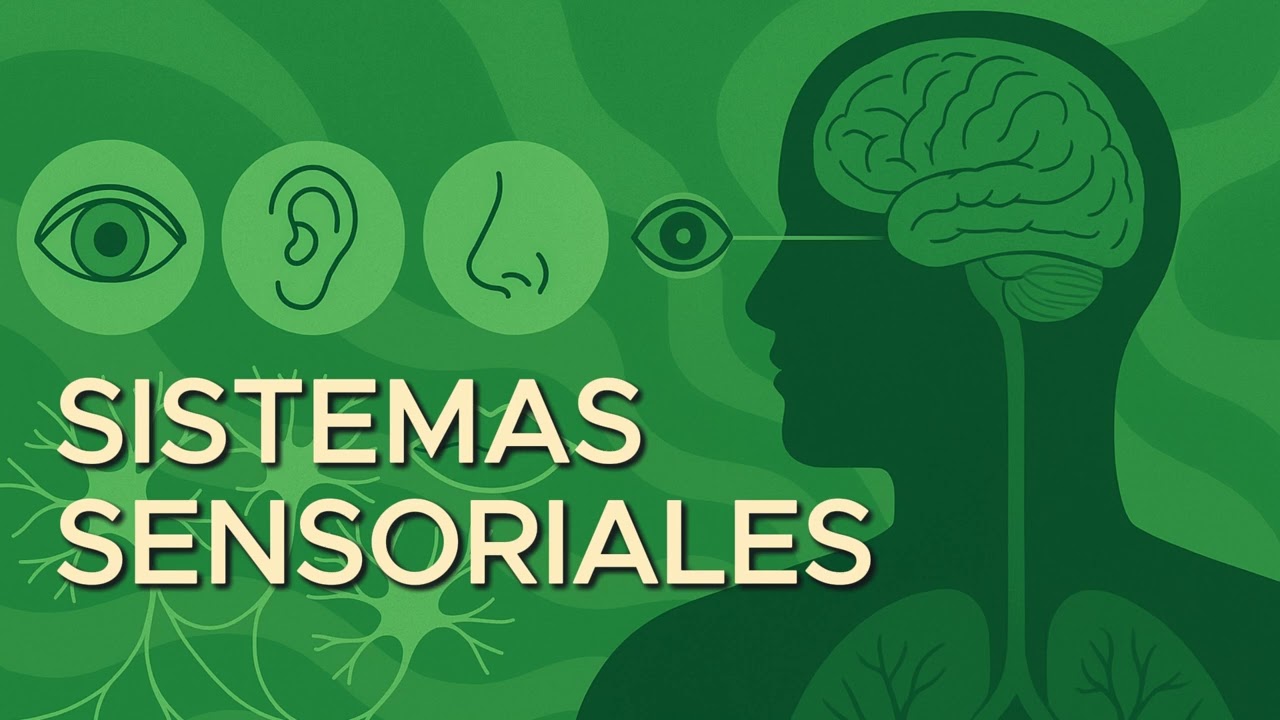

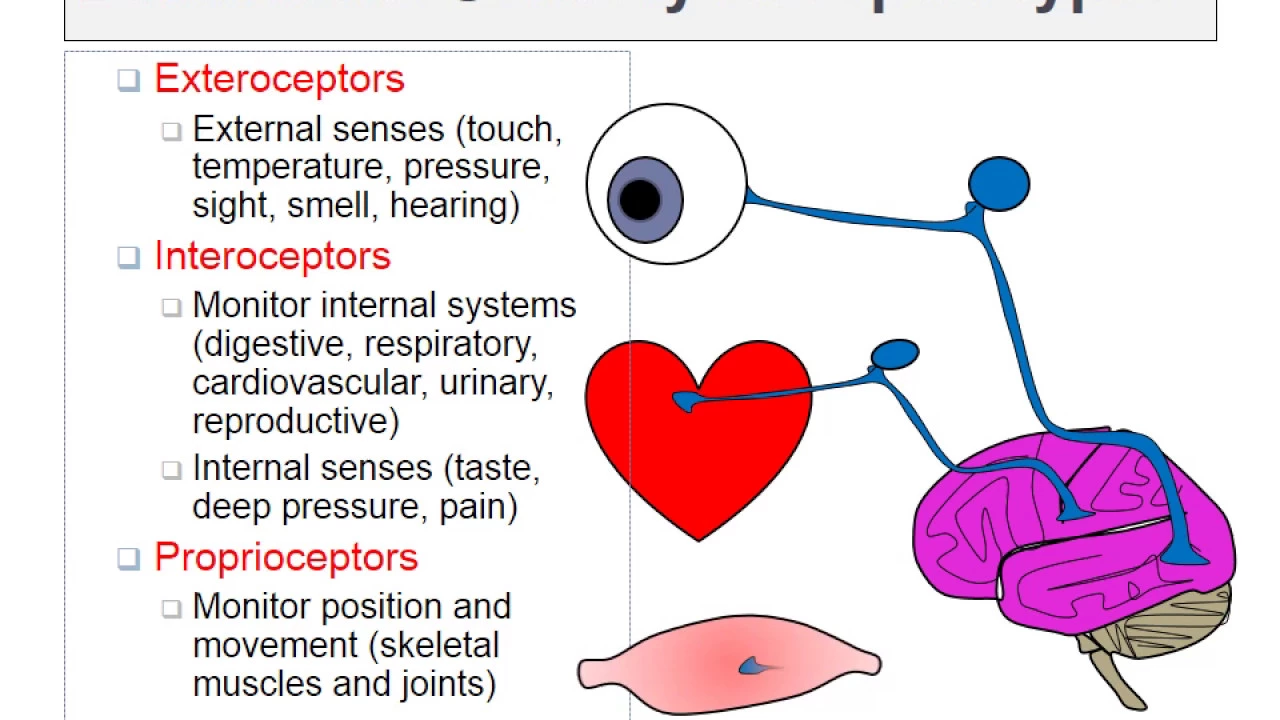

The nervous system, composed of specialized neurons, enables rapid communication throughout the body through electrochemical signaling; it is organized into the central nervous system (brain and spinal cord) and peripheral nervous system, which further divides into somatic (voluntary movements) and autonomic (involuntary functions) systems, with the autonomic system containing sympathetic (fight-or-flight response) and parasympathetic (rest-and-digest) divisions that work together to maintain homeostasis.
Nervous System Anatomy & Physiology Explained | Action Potential & Neurons | Crash Course Biology #26
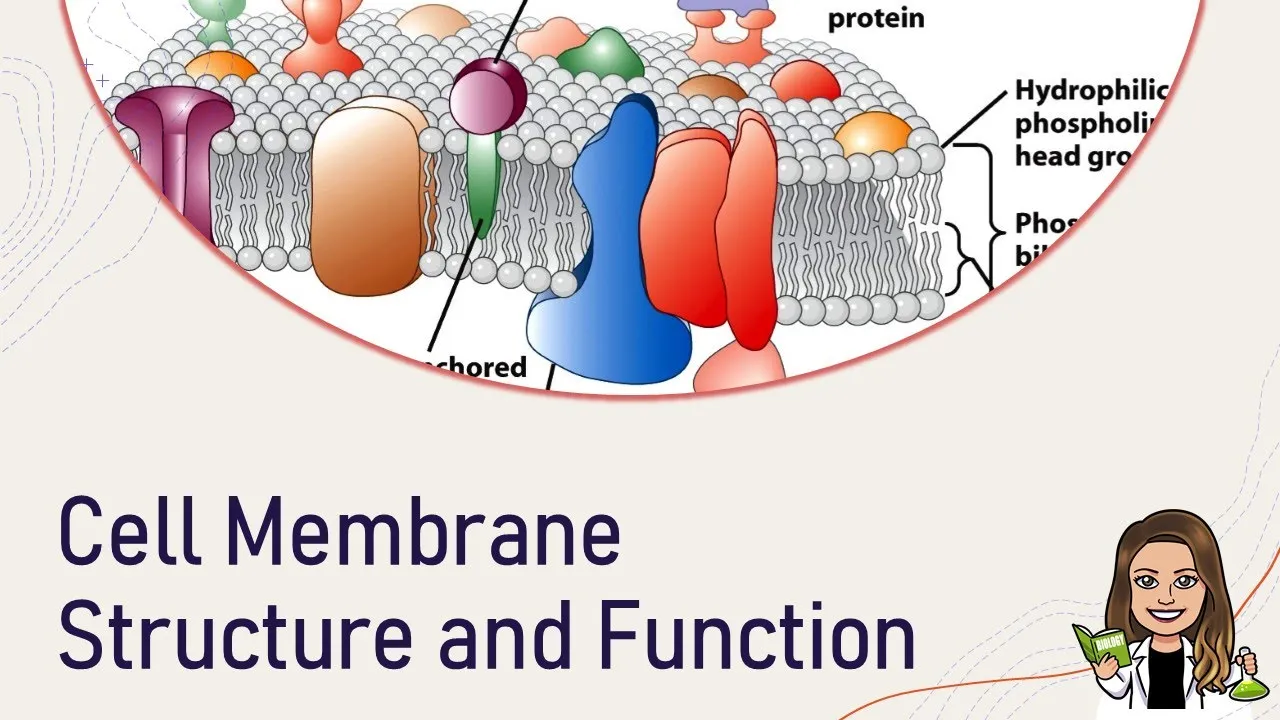
Added:Basic cell anatomy, specifically the structure and function of the cell membrane, phospholipid bilayer, and membrane proteins.
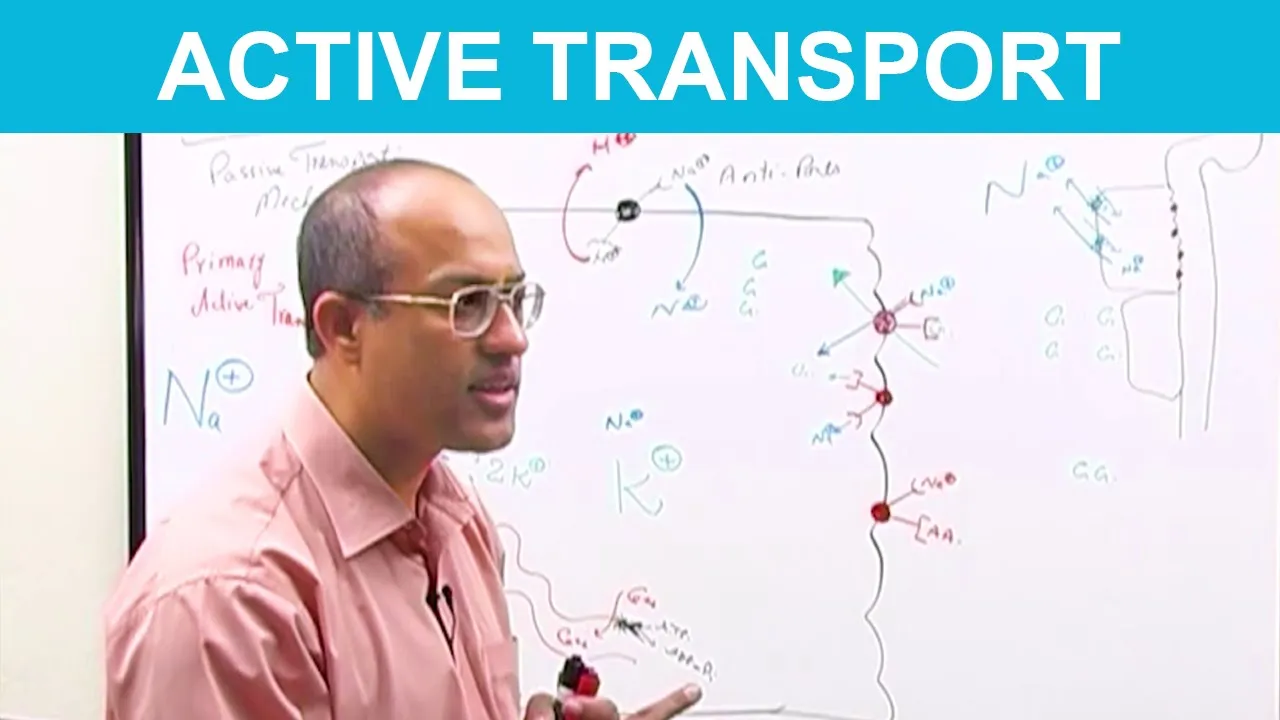
The concepts of passive diffusion, active transport, and electrochemical gradients (how ions move across membranes).
Fundamental chemical concepts regarding ions, specifically sodium (Na+), potassium (K+), and calcium (Ca2+), and how electric charge works in biological systems.
The general hierarchy of biological organization, from cells to tissues, organs, and organ systems.
Synaptic transmission, including how electrical action potentials trigger the release of chemical neurotransmitters across the synaptic cleft.
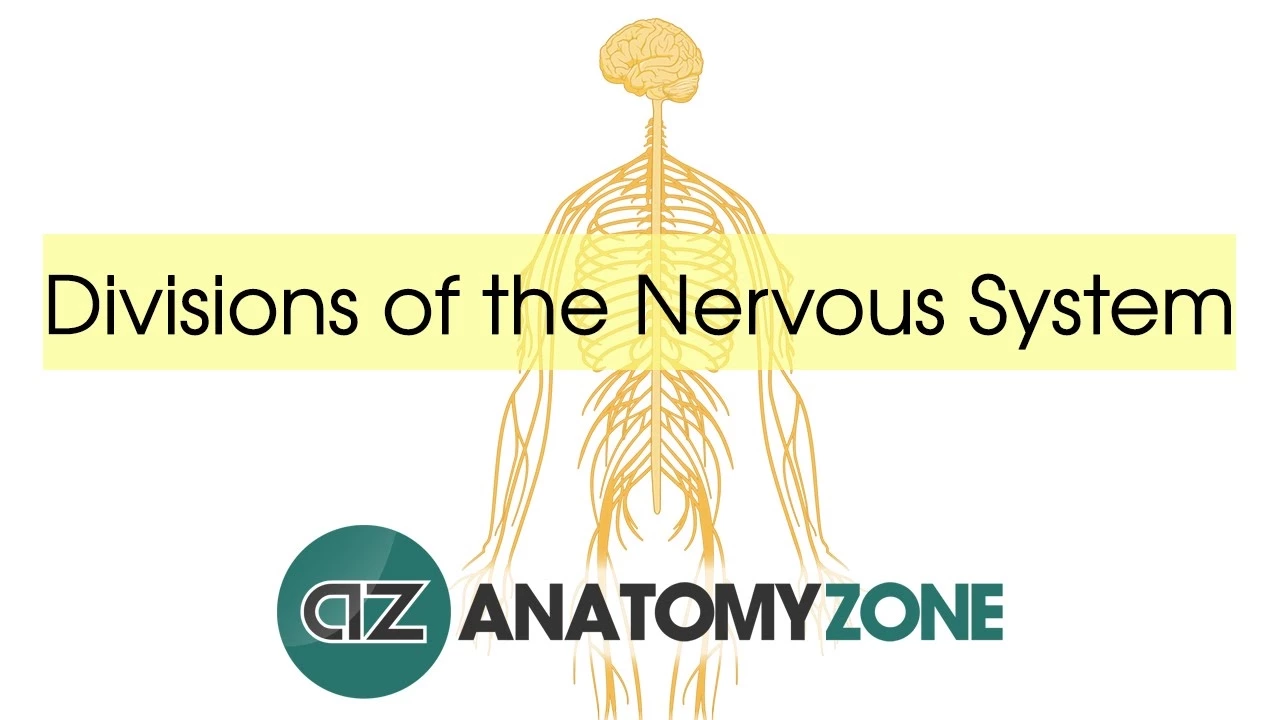
The detailed anatomy and functional divisions of the central nervous system (brain regions) and the peripheral nervous system (somatic vs. autonomic).
The physiological mechanisms of sensory transduction—how environmental stimuli (light, sound, pressure) are converted into neural signals.
Neurological pathology and pharmacology, exploring how neurotoxins, anesthetics, and diseases (like Multiple Sclerosis) disrupt action potentials and nerve signaling.
2.8M views27.3Klikes12:04Original Release: 2012-07-23
I'm going to be totally honest with you: I don't really spend a lot of time thinking about my bodily functions.
For the most part. Maybe sometimes.
But in the next few episodes, I'm going to be talking about all of the organ systems that make our lives possible, even occasionally pleasant!
And to start it all off, I'm going straight to mission control: the Nervous System!
Pretty much every animal, except for some really simple ones, have nervous systems, which is great, because it's what lets things do things like: have behaviors.
It makes you the sentient, living thing that you are.
The whole set-up here: your brain, your nerves, your spinal cord, everything is made up of specialized cells that you don't find anywhere else in the body.
Most of those are neurons, which, you've seen them before, they look kind of like a tree with roots, a trunk and branches.
Neurons bundle together to form nerves, pathways that transmit electrochemical signals from one part of your body to another.
So, when you bite into a piece of pizza- I love it when there's pizza in the video... The receptor neurons in my taste buds recognize I'm eating something salty and fatty and awesome.
And they carry that information along a nerve pathway to my brain.
And then my brain can be like "Yeah! Pizza!"
and then it can respond by sending back information through different nerve pathways that say: "You should eat more of that pizza!"
And despite what my brain is telling me, I'm going to try to not eat any more of that pizza.
You wouldn't think that it's terribly complicated to know that pizza tastes good and to tell someone to eat more pizza.
But it turns out that our brains and our nervous systems are crazy complicated.
Your nervous system basically has a big old bureaucracy of neurons, and it's divided into two main departments: the central nervous system and the peripheral nervous system.
Central and peripheral.
The central nervous system, basically your brain and your spinal cord, is responsible for analyzing and interpreting all those data that your peripheral nervous system, all of the nerves outside of your brain and spine, collects and sends its way.
Once the central nervous system makes a decision about data, it sends a signal back through to the peripheral nervous system saying "Do THIS thing!"
Which the peripheral nervous system then does.
Both of these systems contain two different types of neurons: afferent and efferent.
Afferent and efferent are biological terms, and they're horribly confusing, and I apologize on behalf of the entire institution of biology for them.
Afferent systems carry things to a central point, and efferent systems carry things away from a central point.
So afferent neurons carry information to the brain and spinal cord for analysis.
In the peripheral nervous system, afferent neurons are called sensory neurons, and they're activated by external stimuli like the complex and glorious flavor of pizza and then they convert those data into a signal for the central system to process.
The central nervous system has afferent neurons too, and there they bring information into special parts of the brain, like the part of the brain that goes, "Mmmmmm, salty!"
Efferent neurons carry information out of the center.
In the peripheral nervous system, they're called motor neurons because many of them carry information from the brain or spinal cord to muscles to make us move, but they also go to pretty much every other organ in your body, thus making them, like, work and do stuff to keep you alive.
In the central system, efferent neurons carry information from special parts of the brain to other parts of the brain or spinal cord.
Of course if it ended there, it would be way too simple and no good bureaucracy just has two departments.
So the peripheral nervous system is actually made up of two different systems with two very different jobs: the somatic nervous system and the autonomic nervous system.
The somatic system controls all the stuff you think about doing like all the information coming through your senses, and the movement of your body when you want it to make movements.
But here's something interesting: Since we're totally in love with our brains as sort of the center of all being, of ourselves, we think that all the information about everything going on in our bodies goes to our brains for some kind of decision.
Not so!
Sometimes, like when we touch a hot stove, the afferent neurons carry the signal "HOT!"
to the central nervous system, but that information doesn't even ever get to the brain the spinal cord actually makes that decision before it gets to the brain, sends a message directly back to the muscle saying, "Get your hand off the freakin stove, *******!"
This bit of fancy nerve-work lets the spinal cord make decisions rather than the brain, it's called the reflex loop.
So, the other branch of the peripheral nervous system, the autonomic system, carries signals from the central nervous system that drive all of the things your body does without thinking about them: your heartbeat, your digestion, breathing, saliva production, all your organ functions.
But we're not done yet here.
We need to go deeper.
The autonomic nervous system has two divisions of its own: the sympathetic and parasympathetic.
And the jobs that these two perform aren't just different they're completely opposite, and frankly, they're always vying for control of the body in some kind of nervous system cage match.
The sympathetic division is responsible for, like, freaking out.
You've probably heard this talked about as the fight-or-flight response.
In other words, stress.
But stress isn't all bad: it's what saves our lives when we're being chased by saber toothed tigers, right?
The sympathetic system prepares our body for action by increasing the heart rate and blood pressure, enhancing our sense of smell, dilating the pupils, activating our adrenal cortex to make adrenaline, shutting down blood supply to our digestive and reproductive systems so there will be more blood available for our lungs and muscles when we have to, like, RUN!
Even though you're not in a constant state of panic at least, I hope not, I kind of am that system is running all the time, every day.
But right next to it is the parasympathetic division, working hard to make sure we take it nice and easy.
It dials down heart rate and blood pressure, constricts our lungs, makes our nose run, increases blood flow to our reproductive junk, our mouths produce saliva, encourage us to poop and pee.
It's basically what we have to thank for taking a nap, sitting in front of the TV, going to the bathroom and getting it on.
So, consider yourself lucky you've got both the stress response and the chill-the-heck out response, working side-by-side because together they create a balance, or a homeostasis.
Now, that's what the nervous system does.
Next we have to talk about how it does it.
The neurons that make up our nervous systems make it possible for our bodies to have their very own little electric systems.
So to understand how they work you have to understand their anatomy.
Like I said before, a typical neuron has branches like a tree.
These are called dendrites, and they receive information from other neurons.
Neurons also have a single axon the trunk of the tree which is branched at the end and transmits signals to other neurons.
The axon is also covered in fatty material called myelin, which acts as insulation.
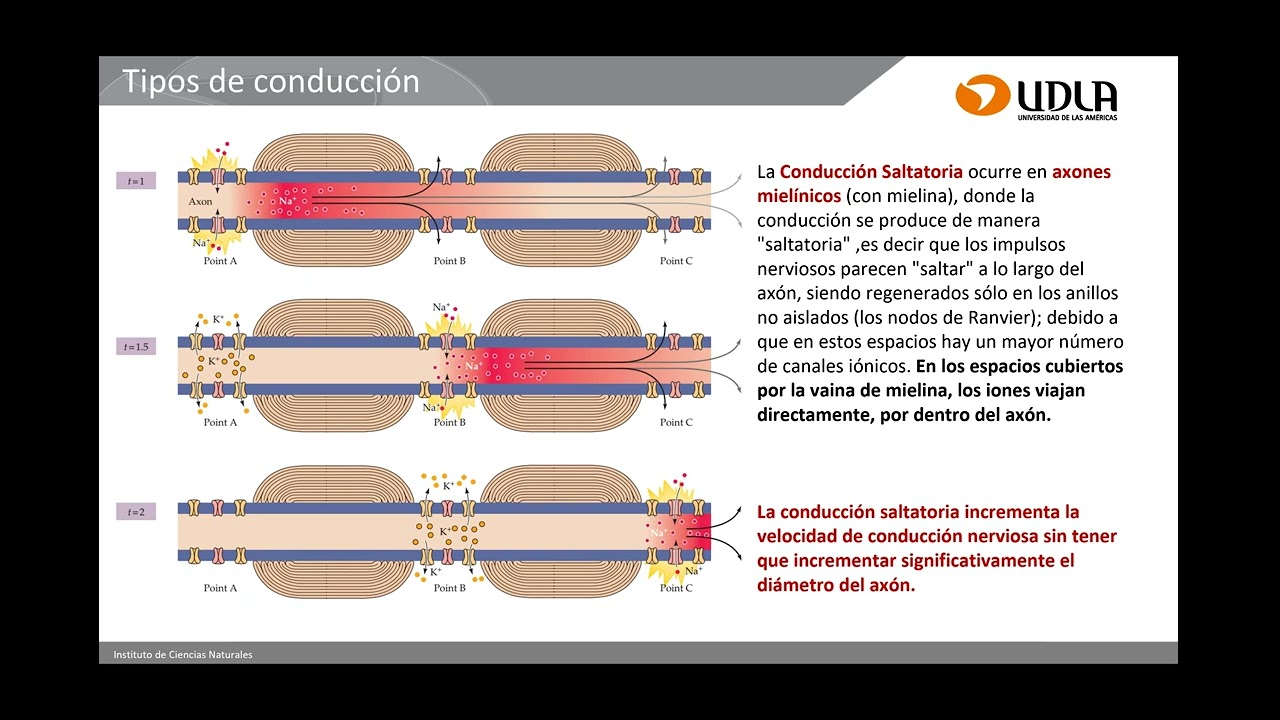
But the myelin sheath isn't continuous, there are these little bits of exposed neuron along the axon, which have the sweetest names in this whole episode they're called the Nodes of Ranvier.
Which seems like an excellent working title for the 8th Harry Potter novel.
Harry Potter and the Nodes of Ranvier.
Anyway, these nodes allow signals to hop from node to node, which lets the signal travel down a nerve faster.
This node-hopping, by the way, has a name.
It's called saltatory conduction.
Conduction because it's electrical conduction and saltatory because saltatory means leaping.
Finally, the place where an axon's branches come in contact with the next cell's dendrite is called a synapse, and that's where neurotransmitters pass information from one neuron to the next.
Now, think back to, or just go watch the episode we did on cell membranes, where we talked about how materials travel down concentration gradients.
Well, in much the same way, all neurons in your body have a membrane potential, a difference in voltage, or electrical charge, between the inside and the outside of the membrane.
You might also remember that this buildup of voltage is handled in part by a sexy little protein called the sodium-potassium pump.
Basically, the pump creates a voltage differential, like charging a battery, by moving 3 positively charged sodium ions out for every 2 potassium ions it lets in, creating a net negative charge inside the cell relative to the outside.
When a neuron is inactive, this is called its resting potential, and its voltage is about -70 millivolts.
But in addition to the pumps, neurons also have ion channels.
These are proteins that straddle the membrane, but they're a lot simpler and don't need ATP to power them.
Each cell can have more than 300 different kinds of ion channels, each tailored to accept a specific ion.
Now, don't zone out here, because all of this stuff has got to come into play when a neuron becomes active.
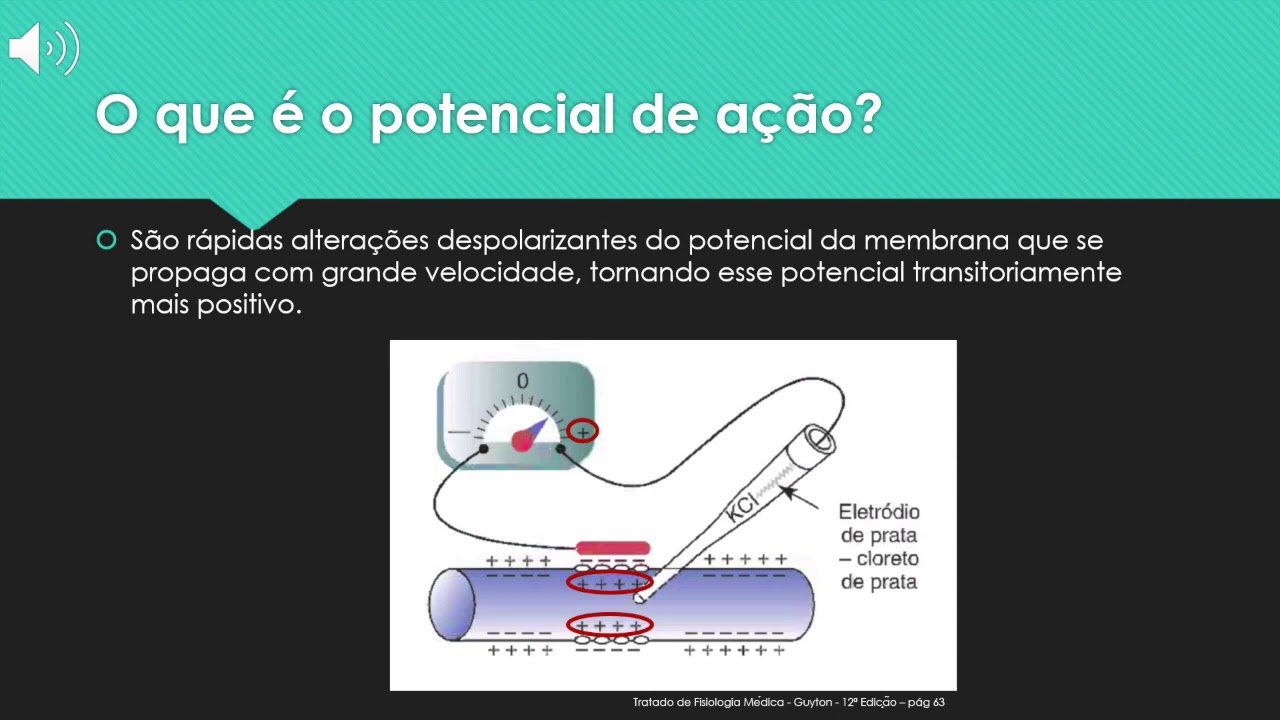
This happens when an input or stimulus creates a change in the neuron that eventually reaches the axon, creating what's called an action potential a brief event where the electrical potential of a cell rapidly rises and falls.
When action potential begins, like when a molecule of sugar touches one of my sweet tastebuds, some ion channels open and let those positive sodium ions rush in, so that the inside starts to become less negative.
With enough stimulus, the internal charge of the neuron reaches a certain threshold, which triggers more sodium channels to respond and open the flood gates to let even more ions in.
That's happening on one tiny little area of the neuron.
But this change in voltage creeps over to the next bunch of sodium channels, which are also sensitive to voltage, and so they open.
That exchange triggers the next batch, and the next batch, and so on down the line.
So this signal of changing voltage travels down the neuron's membrane like a wave.
But remember, the myelin sheath insulates most of the neuron, and just leaves those little nodes exposed, so instead of being a steady wave, the wave jumps from node to node, speeding up the travel time of action potential down a neuron: That's your saltatory conduction at work!
When the wave reaches the end of the neuron, it triggers the release of neurotransmitters from the neuron through exocytosis, and those neurotransmitters then float across the synapse to the next neuron where they trigger another action potential over there.
Now, by this time, so many sodium ions have gotten inside the first neuron that the difference between the outside and the inside is actually reversed: The inside is positive and the outside negative.
And it seems like neurons hate that more than pretty much anything else, so it fixes itself.
The sodium channels close and potassium channels open up.
The positive potassium ions rush down both the concentration and electrochemical gradients to get the heck out of the cell.
That brings the charge inside the cell back down to negative on the inside, and positive on the outside.
Notice, though, that now the sodium is on the inside of the cell and the potassium is on the outside they're in the opposite places of where they started.
So, the sodium-potassium pumps get back to work and burn some ATP to pump the sodium back out and the potassium back in, and phew!
Things are now back at the resting potential again.
So, that, my friends, is how action potential allows neurons to communicate signals down a whole chain of neurons from the outer reaches of the peripheral nervous system, all the way up the spinal cord and to the brain, and then back out agian.
So, let's zoom out, and look at the broad view here.
I'm gonna take a bite of this pizza.
All my tastebuds have neurons in them.
Each of my taste buds contains between 50-100 specialized taste receptor neurons.
Chemicals from this beautiful pizza dissolve in the saliva and then stimulate the dendrites on the afferent neurons.
This generates a bunch of action potentials that travel from the afferent neurons in my tongue all the way to my brain, which is like, "My goodness, I think that's pizza!
Let's have another bite!"
The brain then sends messages through the efferent nerve pathways to do all sorts of things: 1. Chew, which involves constricting the muscles in my jaw over and over again.
2. Lower my head down to catch another bite, which involves moving all kinds of neck muscles.
3. Swallowing, which involves constricting the muscles in my throat and esophagus.
4. Opening my mouth again to receive another bite.
That signal is also going to my jaw.
And that's not even to mention what's going to go on with the digestion of this bad boy, driven by the autonomic nervous system.
But digestion is still a couple episodes from now.
Hopefully there will be more pizza.
Thank you for watching this episode of Crash Course, and for giving me an excuse to eat more pizza.
If you want to review what we learned in this episode, check out the table of contents.
Thanks to everyone who put this together.
If you have questions for us: Facebook, Twitter, or the comments below.
We'll see you next time.
Up Next

5:10
Adult Neurogenesis Explained by Alfredo Quiñones-Hinojosa
@iBiologyTechniques
5.4K views•2013-11-13
50:12
Bacterial Communication: Quorum Sensing and Biofilm Formation Explained
@JHUAAP
12.6K views•2011-06-28

11:04
Population Genetics: Darwin Meets Mendel | HHMI BioInteractive
@crashcourse
1.8M views•2012-05-28
7:08
Bacteriophages: Earth's Deadliest Killers and Future Antibiotics
@kurzgesagt
34.6M views•2018-05-13
Related Study Plans & Knowledge Roadmaps
Structured learning paths in Biology
biology
RNAi: Biogenesis, RISC & Gene Silencing
01Molecular Biology Foundations: DNA to Protein
02Introduction to RNA Interference (RNAi)
03Molecular Biogenesis of miRNA and siRNA
+ 2 more learning modules
10h5 modules
Explore Roadmap
biology
Mycorrhizae: Signaling, Biophysics & Ecology
01Foundations of Mycorrhizal Symbiosis
02Molecular Signaling and Root Colonization
03Biophysics and Bioenergetics of Nutrient Exchange
+ 1 more learning modules
11h4 modules
Explore Roadmap
biology
Circadian Clocks: TTFL, SCN & Periphery
01Foundations of Molecular Biology & Gene Expression
02Introduction to Chronobiology and Actograms
03The Core TTFL: Molecular Architecture of the Clock
+ 3 more learning modules
14h6 modules
Explore Roadmap
biology
Population Genetics: Math, Drift & Selection
01Genetic & Probability Foundations
02The Hardy-Weinberg Principle and Baseline Models
03Mathematical Modeling of Natural Selection
+ 3 more learning modules
18h6 modules
Explore Roadmap