The insula, a brain region that acts as a built-in alarm for financial loss, triggers intense anxiety that can blind individuals to actual odds and lead to irrational, impulsive decisions; understanding this neural mechanism allows people to recognize the physical discomfort of the insula alarm, interrupt automatic flight reactions, synthesize objective data over emotion, and maintain long-term perspective to make more rational financial decisions.
How Your Brain's Loss Alarm Drives Financial Decisions | Neuroeconomics and Behavioral Finance
Added:Deep Dive
Basic Neuroanatomy: Familiarity with the brain's emotional and executive centers, specifically the amygdala and prefrontal cortex, and how they interact.
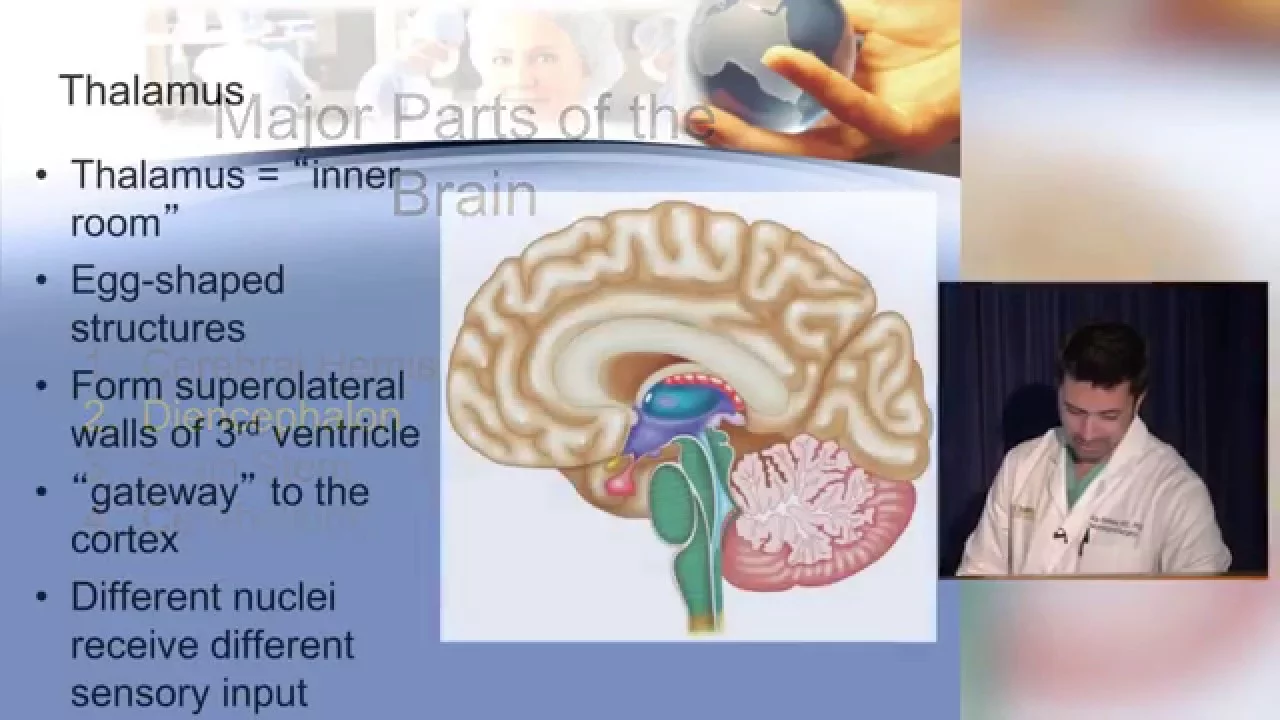
Neuroanatomy Basics: A Simplified Guide for Medical Students
1.2M
The brain is organized into major regions including the cerebral hemispheres (83% of brain mass) divided into frontal, parietal, temporal, and occipital lobes by anatomical sulci; the diencephalon containing the thalamus (sensory relay center) and hypothalamus (autonomic control); the brainstem (midbrain, pons, medulla) controlling reflexive functions and cranial nerves; and the cerebellum coordinating movement. The cerebral cortex contains primary sensory and motor areas with somatotopic organization (homunculus), association areas for higher-order processing, and Broca's area for speech production. Deep gray matter structures like the basal ganglia regulate movement, while white matter tracts connect different brain regions.
Click to watch →

2. Neuroanatomy
1.1M
The human brain contains approximately 100 billion neurons and operates on only 20 watts of power, making it remarkably energy-efficient. A neuron consists of a cell body with a nucleus, dendrites for receiving signals, and an axon for transmitting signals, often surrounded by a myelin sheath that speeds signal transmission. The brain comprises four major components: the brain stem (containing relays connecting spinal cord to higher brain regions, controlling breathing and consciousness), the cerebellum (involved in motor coordination), subcortical structures (thalamus, hippocampus, amygdala), and white matter (bundles of connecting axons). The brain stem is essential for survival—without it, one cannot live, though much of the cortex can be lost. The cerebellum's role extends beyond motor control, with evidence suggesting involvement in cognition, though patients lacking it can still function normally.
Click to watch →
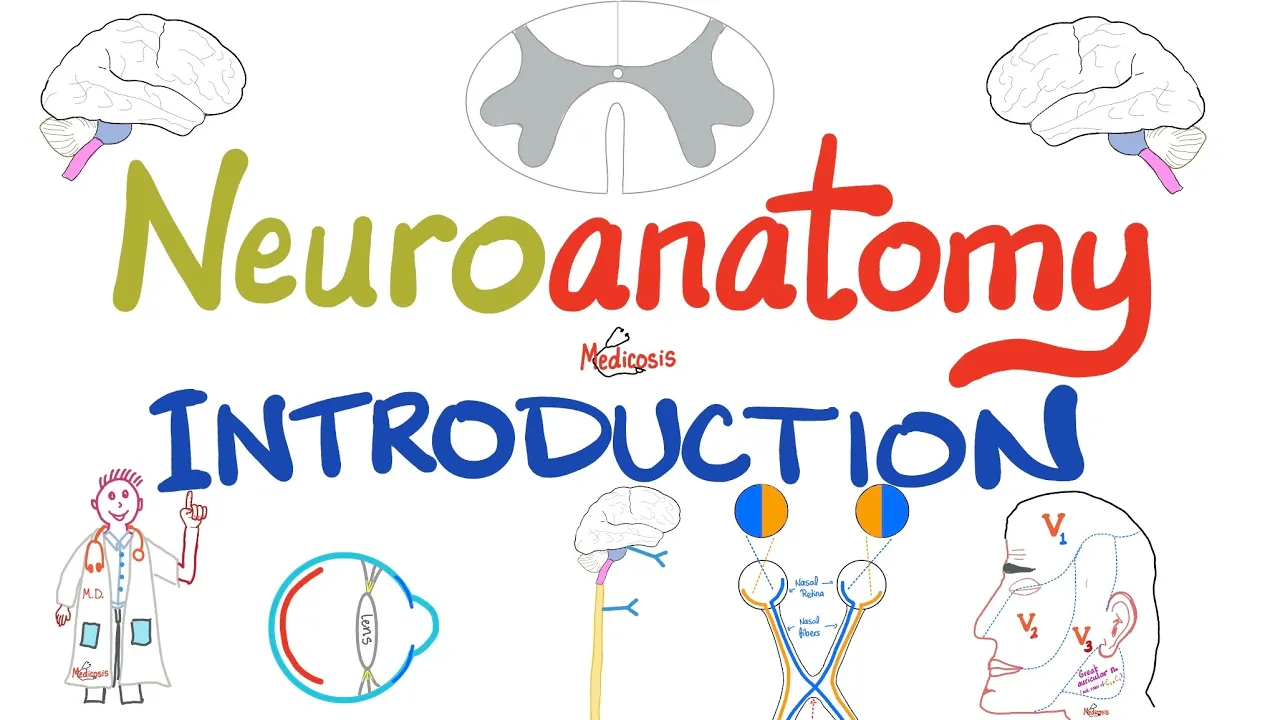
Introduction to Neuroanatomy - Learn the Basics - Neuroanatomy Playlist
377.9K
This comprehensive section establishes the foundational framework for understanding neuroanatomy. The central nervous system consists only of the brain and spinal cord, while the peripheral nervous system encompasses all other nerves including cranial and spinal nerves. Motor nerves are efferent (carrying signals away from the brain to effectors), while sensory nerves are afferent (carrying signals toward the brain). The brain is located upstairs while the spinal cord is downstairs, with the brainstem connecting them. The autonomic nervous system controls involuntary functions and includes sympathetic, parasympathetic, and enteric components. Myelinated fibers appear white while unmyelinated appear gray, creating white matter (outside in spinal cord, inside in brain) and gray matter (inside in spinal cord, outside in brain). The structural unit is the neuron (soma and axon), while the functional unit is the reflex arc.
Click to watch →

◄╣ Neuroanatomy ♦ 1 Topography of the Nervous System ╠► YouTubevia torchbrowser com
106K
Neuroanatomy is a branch of medical education focusing on nervous system structure and organization. The nervous system is defined as an information system that processes stimuli from both external and internal sources, generating appropriate responses through neurons. Neurons are the functional units, consisting of a cell body (soma) containing the nucleus with nucleolus, dendrites for receiving signals, and an axon for transmitting signals. Nissl granules are characteristic structures in the cell body consisting of rough endoplasmic reticulum with ribosomes for protein synthesis. Nerve fibers form when axons of multiple neurons bundle together. Synaptic transmission involves chemical neurotransmitters released from presynaptic neurons binding to receptors on postsynaptic neurons. Gray matter consists of neuronal cell bodies and appears gray due to Nissl granules and lack of myelin. White matter consists of myelinated axons and appears white due to lipid-rich myelin sheaths formed by glial cells (Schwann cells in PNS, oligodendrocytes in CNS). The spinal cord gray matter is organized into dorsal horns (sensory) and ventral horns (motor). Neurons are classified by process number: pseudounipolar (sensory), bipolar (retina), and multipolar (cerebral cortex). Each cerebral hemisphere is divided into four lobes: frontal (movement, speech, personality), parietal (sensory processing, spatial orientation), temporal (auditory processing, memory), and occipital (visual processing). The two hemispheres communicate through the corpus callosum.
Click to watch →

A PRISÃO DA QUAL NEM O EXODIA ESCAPA! | Duelo de Memes
10.9K
The human brain contains four main lobes: the frontal lobe (involved in decision-making and personality), parietal lobe (processing sensory information), occipital lobe (responsible for visual processing), and temporal lobe (handling auditory processing and memory). This basic neuroanatomy knowledge helps explain how different brain regions contribute to overall cognitive function and behavior.
Click to watch →
Deep Dive
Prospect Theory and Loss Aversion: Understanding Daniel Kahneman and Amos Tversky's work on how individuals perceive losses and gains asymmetrically.

ถอดรหัสกลโกงของสมอง หนังสือในตำนานที่อ่านยากที่สุด #สรุปหนังสือ | Mission To The Moon EP.2259
62.1K
Prospect Theory challenges traditional Utility Theory by showing people evaluate gains and losses asymmetrically. Loss Aversion means losing $100 feels worse than gaining $100 feels good, with losses psychologically about twice as powerful. Diminishing Sensitivity Principle shows subjective value decreases as absolute amounts increase: losing $100 from $200 feels worse than losing $100 from $1,000. These principles explain why people avoid risks even with positive expected value and why identical outcomes produce different emotional responses based on context and history.
Click to watch →

Rápido e Devagar, de Daniel Kahneman | Resumo Arata Academy 33
68K
Prospect Theory, developed by Daniel Kahneman and cited in his Nobel Prize, explains that decisions depend on reference points rather than absolute values. Loss aversion describes how the pain of losing something is psychologically about twice as powerful as the pleasure of gaining the same amount. In experiments where Option 1 offered 80% chance of $100 (expected value $82) and Option 2 offered 100% chance of $80 (expected value $80), most people chose Option 2 despite its lower expected value. This reveals humans are not purely rational and are influenced by emotions and risk aversion. The reference point effect shows how subjective satisfaction depends on relative change rather than absolute value.
Click to watch →

The ULTIMATE Guide to Risk Management
98.4K
Prospect theory, developed by psychologists Daniel Kahneman and Amos Tversky and later earning Kahneman the Nobel Prize in economics, mathematically demonstrates how humans tend to become risk-averse in gains and risk-seeking in losses, challenging the assumption of rational decision-making in classic economic theory. That happens because we are fundamentally loss averse - a loss feels worse than an equivalent gain feels good. This can be visually understood with the S-shaped value function in prospect theory. The negative value obtained from a loss is greater than the positive value obtained from an equivalent gain. This shows why you want to stay in the trade when you are losing (afraid of realizing the loss) and why you want to close the trade as soon as it becomes profitable (afraid of losing what you already conquered). In other words, prospect theory shows that human beings are predictably irrational unlike classic economics which assumes we always seek to maximize utility.
Click to watch →

【完全攻略】心優しい人|無意識でこの言葉を使います|5つの口ぐせを徹底解説【心理学】
116.1K
Nobel Prize winner Daniel Kahneman's 1979 Prospect Theory reveals that humans feel losses more intensely than gains. We value potential losses twice as much as equivalent gains. This explains why people prefer risky 'jet coaster' experiences over safe 'commuter train' experiences. In relationships, being consistently warm and reliable makes you like a 'commuter train' (useful but boring), while being unpredictable makes you like a 'jet coaster' (risky but exciting). People value what they might lose more than what they already have.
Click to watch →

개미는 절대 돈벌기 힘들다...하루 평균 47명의 파산!
107.6K
Prospect Theory, developed by Nobel Prize-winning psychologist Daniel Kahneman, reveals that humans are risk-averse when facing gains but risk-seeking when facing losses. In experiments, most people choose certain gains over probabilistic gains with the same expected value, but when facing losses, they prefer probabilistic losses over certain losses. This demonstrates that humans are approximately twice as sensitive to losses as they are to gains.
Click to watch →
Deep Dive
Fundamentals of Behavioral Finance: Awareness of cognitive biases and how psychological factors deviate from traditional, rational economic models.

Los 7 Sesgos Cognitivos que te arruinan al invertir
1.6K
Behavioral finance studies how investors and markets behave in different situations, challenging traditional assumptions that investors are rational, self-controlled, and process information correctly. The market is described as an irrational, manic-depressive entity that is emotional, euphoric, and short-term oriented. Traditional finance assumes investors think with their heads, stick to plans, and process information well. Behavioral finance establishes that investors are normal people who make mistakes, lack self-control, and are highly biased. The motivation to change habits naturally decays over time, explaining why even people who know what they should do often fail to follow through.
Click to watch →

Behavioral Finance Fundamentals: Decision-Making Biases
11.8K
Modern finance assumes investors are rational, have perfect self-control, are not confused by cognitive errors, are risk-averse, and never experience regret. In contrast, behavioral finance assumes investors are normal rather than rational, have limits to self-control, and are influenced by biases and cognitive errors. This fundamental difference explains why behavioral finance provides a more realistic model of investor behavior.
Click to watch →

La finance comportementale
268
Behavioral finance emerged in the 1980s to introduce psychology into finance. The core difference from classical finance lies in rationality and price efficiency. Classical finance assumes rational investors and market correction through arbitrage, while behavioral finance acknowledges irrational investors and herding behaviors. Prospect theory (Kahneman & Tversky, 1996) reveals loss aversion: people need 2-3 times more gains to compensate for losses. Richard Thaler identified three psychological influences: cognitive limitations, self-control problems, and social preferences. Mental accounting compartmentalizes decisions, while the endowment effect assigns different values to identical objects based on ownership.
Click to watch →

Lecture 55
189
Behavioral Finance is defined as the aspect of finance that uses scientific models to explain how people make financial decisions in the real world, rather than relying solely on theoretical models. Shefrin identified three major themes: Heuristics (rules of thumb based on experience), Framing (how decisions are presented affects outcomes), and Market Inefficiencies (outcomes contradicting rational behavior). Unlike standard finance which assumes investors are rational, markets are efficient, and managers pursue shareholder wealth maximization, behavioral finance assumes investors are normal (rational or irrational), markets have inefficiencies, investors use behavioral portfolio theory, and managers suffer from biases causing wealth erosion.
Click to watch →

09. Prof B Kamaiah (University of Hyderabad)
176
Behavioral finance represents a revolution by challenging mainstream assumptions: investors are normal (not rational), have self-control limits, and make cognitive errors. It integrates sociology (social influence), psychology (cognitive processes), and finance. Two theoretical strands underlie the discipline: Prospect Theory (Kahneman, 1979) with two-phase decision processes, and Heuristic Theory using rule-of-thumb judgments. Four building blocks include heuristic simplification, emotions, social influence, and self-deception. Major cognitive biases include overconfidence, confirmation bias, availability bias, loss aversion, disposition effect, familiarity bias, mental accounting, herding behavior, and anchoring bias.
Click to watch →
Deep Dive
Introduction to Neuroeconomics: Understanding how neuroscience, psychology, and economics converge to study human decision-making.

Почему мы принимаем странные решения?
427.9K
Neuroeconomics is an interdisciplinary field combining neuroscience, psychology, and economics to understand how the brain makes decisions. The brain contains approximately 100 billion neurons with tens of thousands of connections, making it the most complex system known. Decision-making involves evaluating options through specialized brain regions: dopamine-rich areas assess expected pleasure, while the amygdala evaluates negative consequences. The orbitofrontal cortex integrates these signals to produce decisions. Humans are approximately three times more sensitive to losses than gains, a phenomenon called loss aversion that drives many seemingly irrational choices. This sensitivity likely evolved to help ancestors preserve resources rather than constantly seek new ones.
Click to watch →
How does your brain decide what to buy? | INNER COSMOS WITH DAVID EAGLEMAN
5.6K
The brain is not a single unified program but a society of competing networks that battle to control decisions. These rival networks have opposing opinions and compete to steer decisions. Traditional economics assumed Homo economicus—a rational decision-maker who maximizes gain and minimizes loss. However, neuroeconomics reveals real humans are irrational: they care about immediate gratification, ignore consequences, are swayed by emotions, behave inconsistently, and are easily influenced by branding. This field studies how the brain actually makes decisions rather than how it should make decisions.
Click to watch →
Neuroeconomics - Jan Engelmann
10.9K
Neuroeconomics is an interdisciplinary field that combines neuroscience, economics, psychology, and cognitive science to study how the brain processes decisions, revealing that the ventromedial prefrontal cortex and ventral striatum are key brain regions involved in evaluating choice options and that losses matter more to people than equivalent gains, a phenomenon known as loss aversion.
Click to watch →

Василий Ключарёв. Нейроэкономика: мозг принимает решения?
13.5K
Neuroeconomics is an interdisciplinary field that studies how biological systems make decisions by combining neuroscience, economics, and psychology. The brain uses a diffusion decision model where neurons accumulate evidence over time until reaching a threshold to make a choice, with alternative solutions being suppressed. This mechanism operates across different levels, from individual decisions like face recognition to collective decisions like honeybee swarm navigation. Social influence is mediated by error signals in the anterior cingulate cortex, which generate signals when our behavior differs from social norms, motivating us to conform to group opinions.
Click to watch →

Harvard Psychiatrist: The #1 Reason You’re Sad, Single, and Lonely (FIX THIS)
807.8K
Neuroeconomics research shows that our brains systematically distort probabilities - we think things will be twice as bad as they actually are and half as good as they actually are. This explains why people often choose guaranteed smaller rewards over probabilistically larger ones. Understanding this helps us make better decisions by recognizing our brain's systematic biases.
Click to watch →
Prerequisite Knowledge
- Concept 01Basic Neuroanatomy: Familiarity with the brain's emotional and executive centers, specifically the amygdala and prefrontal cortex, and how they interact.
- Concept 02Prospect Theory and Loss Aversion: Understanding Daniel Kahneman and Amos Tversky's work on how individuals perceive losses and gains asymmetrically.
- Concept 03Fundamentals of Behavioral Finance: Awareness of cognitive biases and how psychological factors deviate from traditional, rational economic models.
- Concept 04Introduction to Neuroeconomics: Understanding how neuroscience, psychology, and economics converge to study human decision-making.
Subsequent Learning
- Step 01Algorithmic De-biasing in Investing: How to implement systemic, rule-based trading protocols to override emotional and neurobiological impulses.
- Step 02Neuromarketing and Consumer Psychology: Studying how businesses use neuroscientific insights to trigger consumers' loss aversion and buying behaviors.
- Step 03Neurochemistry of Risk: Exploring the roles of neurotransmitters like dopamine and serotonin in regulating financial risk tolerance and reward-seeking behavior.
- Step 04Intertemporal Choice and Delay Discounting: Investigating how the brain calculates the trade-offs between immediate gratification and long-term financial stability.
Loss Alarm
Neural Bias
Override
Long-Term
Loss Alarm
0:00Playing Section
- 1
Brain's built-in alarm for financial loss is active.
- 2
Insula triggers anxiety and distorts decision-making.
Ecological Rationality and the Somatic Marker Hypothesis
While behavioral finance often frames the insula's 'loss alarm' as a source of irrational bias, the theory of ecological rationality (championed by Gerd Gigerenzer) and the Somatic Marker Hypothesis (by Antonio Damasio) offer a strong counterpoint. This perspective argues that emotional warning systems are not design flaws to be bypassed, but highly adaptive evolutionary tools essential for survival. In real-world environments characterized by deep uncertainty—where future probabilities cannot be mathematically calculated—strict reliance on 'risk-blind' models can lead to catastrophic ruin. What behavioral finance labels as 'irrational' loss aversion is often a highly rational strategy to avoid total loss. Furthermore, neurological research shows that emotional signals (somatic markers) are indispensable for sound decision-making; individuals who lack these emotional inputs due to brain damage actually make highly disadvantageous choices. Therefore, trying to suppress the brain's natural alarms can impair, rather than improve, financial decision-making.
Deep Dive
Algorithmic De-biasing in Investing: How to implement systemic, rule-based trading protocols to override emotional and neurobiological impulses.

PACT Conference Laura Huang & Andrew Yang
447
Algorithms used for investment decisions are created by humans operating within existing societal structures. If the current venture capital industry is 93% male, the algorithms they create will reflect these biases. Blindly following such algorithms without human oversight can perpetuate systemic biases rather than remedying them, as the underlying criteria and inputs may still reflect historical inequalities.
Click to watch →

Investor Interview With Shane Kelley - Wolverine Angels
117
Algorithmic bias stems from two primary sources: team composition bias (when algorithms are primarily programmed by individuals from specific demographic groups like white males from Silicon Valley) and data selection bias (when training data sets are drawn from historically limited sources). To mitigate these biases, organizations should assemble diverse teams of 20-30 people including investors, entrepreneurs, corporate executives, and individuals outside the industry to perform sensitivity analysis across different groups. Additionally, investors can reduce bias in their processes by expanding their networks beyond existing circles, bringing diverse perspectives onto their teams, and deploying capital into companies that actively work to mitigate bias within the data ecosystem.
Click to watch →

Bias^2 Seminar: Ziad Obermeyer, UC Berkeley
935
A playbook for addressing algorithmic bias involves three steps: (1) Inventory all algorithms being used, defined broadly as data given to decision makers to influence decisions; (2) Compare what the algorithm should be doing versus what it actually is doing, which reveals bias and provides evaluation criteria; (3) Either fix the algorithm through retraining or delete it if it cannot be fixed. This framework has been developed through work with health systems, insurers, and regulators, and is being synthesized into a practical guide for industry and policymakers.
Click to watch →

Angel Broking ARQ Prime - Introduction & Features | Angel Broking
40.2K
The Arc algorithm tests millions of combinations of investment rules to find the most powerful combination for beating the markets. This systematic approach overcomes human bias, which leads to poor results in the markets.
Click to watch →
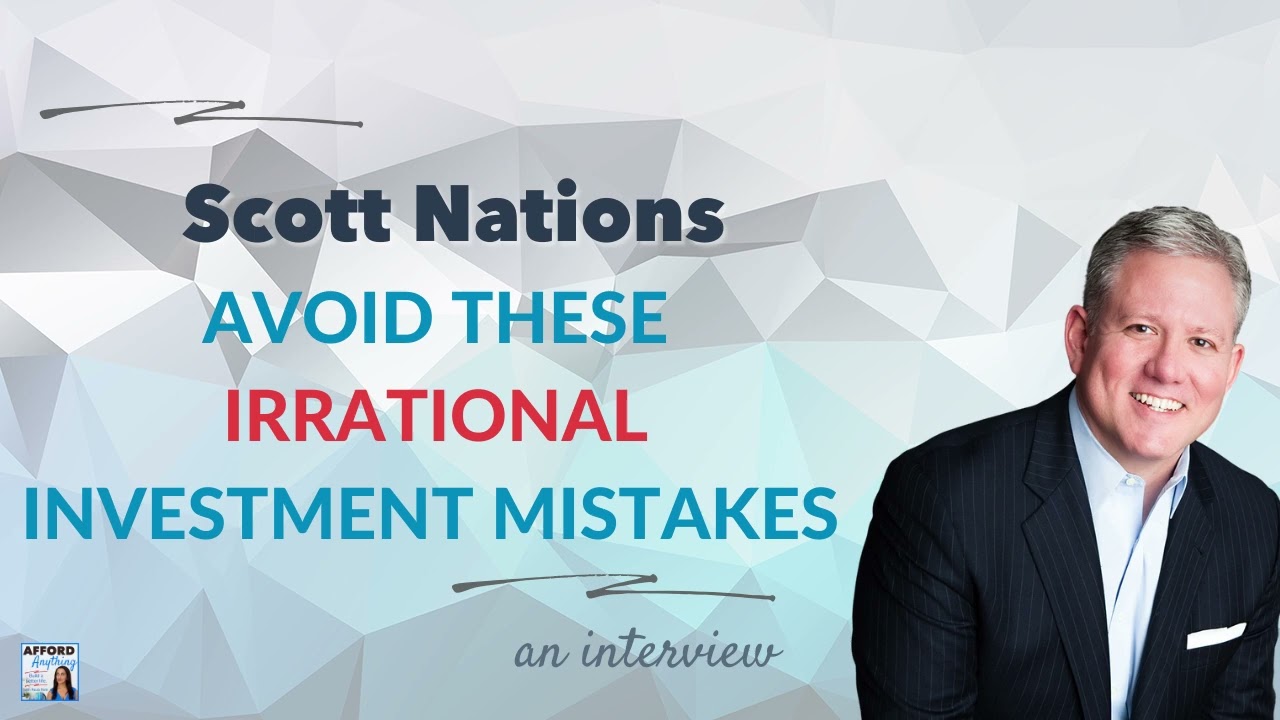
Feeling Anxious About Your Investments?, with Scott Nations
2.2K
Professional investment firms exist specifically to exploit investor overreaction to short-term news. Algorithms know about human biases and take advantage of them by taking the opposite side of trades. These algorithms typically hold positions for only minutes or days, capitalizing on the fact that human investors will overreact to transient information that doesn't affect long-term fundamentals. The lesson is that markets are not purely efficient but reflect ongoing human psychological patterns.
Click to watch →
Deep Dive
Neuromarketing and Consumer Psychology: Studying how businesses use neuroscientific insights to trigger consumers' loss aversion and buying behaviors.

Hacking Brain: el arte de la ingeniería social
14.2K
Neuromarketing and consumer psychology are fields dedicated to studying how to manipulate human decision-making for commercial purposes. These disciplines analyze how to exploit cognitive vulnerabilities to make people purchase products they don't need. The same techniques used by churches to gain followers are used by multi-level marketing schemes. Understanding these manipulation techniques helps recognize when we are being exploited for commercial gain rather than making informed decisions.
Click to watch →

Programa Consumo Cuidado, Salud Mental
107
Neuromarketing exploits human psychology by using personalized data to create artificial needs and trigger dopamine responses, creating a cycle of consumption that generates anxiety and stress rather than genuine happiness; individuals can counter this by developing critical thinking skills, setting time limits on technology use, and recognizing that true wellbeing comes from internal reflection rather than external consumption.
Click to watch →

MODA SUSTENTÁVEL - Um Documentário Sobre o Consumo Consciente | Diane Nunes
105.7K
Neuromarketing applies neuroscience knowledge to understand consumer behavior. The speaker explains that this field studies how the brain responds to marketing stimuli, including how certain approaches (like complimenting customers or recognizing their profile) can trigger dopamine release, creating feelings of happiness and satisfaction that encourage purchasing. This scientific approach to marketing makes consumers more susceptible to buying.
Click to watch →

Professor Griff - Tik Tok, Chinese Manufacturers, and the Dirty Secrets of Luxury Brands
21.5K
Neuromarketing maps brain activity while participants are exposed to marketing stimuli, linking brands to celebrity endorsements. This technique stimulates consumers to want to be like the artists wearing products, creating neurological pathways that control purchasing behavior. Luxury brands target poor people who want to look rich, not the wealthy who don't show their wealth. This creates a dynamic where people spend money on knockoffs to appear wealthy, driven by the desire to project an image they cannot genuinely achieve.
Click to watch →

10 Estratégias para Vender Mais com Neuromarketing
14.9K
Neuromarketing applies neuroscience and psychology to understand consumer behavior. Research reveals that 95% of daily decisions are made unconsciously, and 85% of purchasing decisions are emotional rather than rational. Consumers often rationalize their choices after the fact. Neuromarketing helps businesses verify advertising effectiveness, guide format choices, understand consumer behavior scientifically, and improve all marketing aspects including product development, pricing, promotion, and sensory elements. It reveals that people often cannot articulate what they truly want, making scientific study essential for understanding real consumer needs.
Click to watch →
Deep Dive
Neurochemistry of Risk: Exploring the roles of neurotransmitters like dopamine and serotonin in regulating financial risk tolerance and reward-seeking behavior.

10 POWERFUL Stories of Addiction (& Recovery) | Rich Roll Podcast
1.5M
Addiction involves the brain's dopamine system, which maintains balance (homeostasis). When pleasurable activities occur, dopamine spikes, causing the brain to adapt by down-regulating receptors, creating withdrawal symptoms when use stops. Approximately 50-60% of addiction risk is genetic, related to impulse control and emotional dysregulation. Other risk factors include co-occurring psychiatric disorders, childhood trauma, parental condonation of substance use, poverty, and unemployment. However, the major overlooked risk factor is access - having access to addictive substances increases both the likelihood of trying them and becoming addicted. Every addiction can be understood as gambling addiction - the compulsive pursuit of uncertain outcomes despite negative consequences. Whether gambling, substance use, or behavioral addictions, the underlying mechanism is identical: seeking dopamine hits to escape internal discomfort. Adolescents from puberty through early 20s experience unmatched brain plasticity, making them uniquely vulnerable to substances that disrupt brain development.
Click to watch →

Cum l-am descoperit pe Dumnezeu, deși sunt om de știință. Povestea profesorului Constantin Dulcan
194.4K
Positive thoughts and emotions release beneficial neurochemicals: oxytocin (the molecule of peace and understanding), dopamine (the molecule of pleasure), serotonin (the molecule of understanding), and endorphins. These substances constitute the biochemical foundation of well-being and happiness. Negative thoughts and emotions release harmful neurochemicals: excess cortisol blocks neurogenesis (the creation of new neurons), reduces immunity, and triggers adrenaline and noradrenaline release. Harvard research shows that people who experience extreme stress followed by heart attacks or strokes often had intense emotional stressors in the hours before the event. The professor distinguishes between eustress (positive stress) and distress (negative stress). Eustress, such as moderate exercise, tones and strengthens the body and mind, while distress can cause vasoconstriction and increase the risk of heart attacks.
Click to watch →

Amor ¿En el cerebro?
549.1K
This section details the neurochemical substances involved in romantic relationships. Dopamine generates excitement and emotion, oxytocin generates attachment, vasopressin relates to jealousy and sexual processes, endorphins generate addiction, endocannabinoids change perception and induce sleep, noradrenaline stimulates, serotonin creates obsession, nitric oxide enables learning, and growth factors connect neurons. Dopamine is the specific neurotransmitter that generates the 'magic' of love and makes people codependent. Dopamine generates high-frequency trains that synchronize neurons, which the brain values as happiness.
Click to watch →

Envinadas Ft. Edelmira Cardenas – Inseguridades Y Mitos Del Sexo🍷 T. Wine – Ep. 16
215.8K
More than 75% of women do not experience orgasm through vaginal penetration alone because the clitoris, with over 10,000 nerve endings, is the primary organ for female orgasm. Orgasm should be viewed as a potential reward rather than a mandatory goal of sexual activity. The romantic neurochemicals (dopamine, oxytocin, and adrenaline) cannot be maintained at high levels indefinitely—the brain naturally reduces their production after approximately 18 months to prevent irrationality and health problems. Sexual pleasure and satisfaction can actually improve after age 50 because older adults typically have more self-knowledge, greater confidence, and better understanding of their own bodies and preferences.
Click to watch →

ATIVE a área no Cérebro de um Homem Que faz ele viciar em você
180.4K
Romantic attraction is driven by three key neurotransmitters: serotonin (creates attachment and inseparability), oxytocin (forms emotional bonds and relaxation), and dopamine (provides pleasure and excitement). To create strong romantic connections, one should naturally increase these chemicals through physical affection (20-second hugs, massages), outdoor activities, exercise, meditation, and creating unique positive experiences, while avoiding stress-inducing behaviors that release cortisol.
Click to watch →
Deep Dive
Intertemporal Choice and Delay Discounting: Investigating how the brain calculates the trade-offs between immediate gratification and long-term financial stability.

L4_2_Intertemporal Choice
981
Intertemporal choice involves decisions between smaller sooner rewards and larger later rewards, and is characterized by hyperbolic discounting rather than exponential discounting, which allows for preference reversals as time passes. Neural research reveals two distinct brain systems: 'beta' regions (ventral striatum, medial prefrontal cortex, posterior cingulate cortex) that encode immediate rewards and subjective value, and 'delta' regions (dorsolateral and ventrolateral prefrontal cortex) that support cognitive control for choosing delayed rewards. These neural systems show individual differences in discounting behavior, with patient individuals having flatter discounting functions and impatient individuals having steeper functions, yet the same brain regions track subjective value across all participants.
Click to watch →
A beginners guide to Bayesian Cognitive Modelling
4.1K
Hyperbolic discounting models how people value future rewards less than immediate ones. The model includes: (1) A discount rate parameter determining how rapidly future value decreases, (2) A hyperbolic function computing subjective values, (3) A comparison mechanism, (4) A psychometric function mapping value differences to choice probabilities. The model explains why people might prefer smaller-sooner rewards over larger-later ones. Bayesian inference updates prior beliefs about the discount rate using choice data, producing posterior distributions that quantify uncertainty in individual discounting tendencies.
Click to watch →
Ioannis Evangelidis - Data Colada Seminar Series (11 March 2022)
336
In intertemporal choice studies comparing immediate versus delayed rewards, adding constant delays to both options produced the rapidly diminishing sensitivity pattern. Participants chose the immediate $100 over $110 in one week (80% chose immediate), but preference dropped to 10% in the condition with one-year delays. However, there was no significant difference between the one-year and three-year delay conditions. This indicates people are highly sensitive to waiting versus not waiting but largely insensitive to additional waiting time once waiting is required.
Click to watch →

Fractionating the Prospective Brain
280
Delay discounting measures how much people devalue rewards based on delay. In choice tasks like choosing between $20 now versus $40 in 90 days, individuals show enormous individual differences in their discount rates—some would accept $21 in 60 days over $20 today, while others would reject $200 in 2 months. These laboratory-measured discount rates correlate with real-world behaviors (e.g., spending patterns), demonstrating that delay discounting captures meaningful individual differences in impulsivity and patience.
Click to watch →

1 - intro to temporal discounting
9K
Temporal choice, or intertemporal decision-making, involves selecting between options with different values occurring at different times. The fundamental trade-off is between immediate smaller rewards versus delayed larger rewards. The basic economic model assigns constant values to rewards regardless of timing, suggesting people should always prefer larger delayed rewards. However, this model has critical limitations: people reject unreasonable delays even for tiny gains (e.g., refusing 50-year waits for £1 extra), and the subjective value of rewards fluctuates dramatically based on circumstances—something worth £100 now may be worthless tomorrow if circumstances change. These limitations reveal that human temporal decision-making cannot be fully captured by simple constant-value models, requiring more sophisticated approaches that account for changing preferences and survival-based valuations.
Click to watch →
Loss Alarm
Neural Bias
Override
Long-Term
Loss Alarm
0:00- 1
Brain's built-in alarm for financial loss is active.
- 2
Insula triggers anxiety and distorts decision-making.
Ecological Rationality and the Somatic Marker Hypothesis
While behavioral finance often frames the insula's 'loss alarm' as a source of irrational bias, the theory of ecological rationality (championed by Gerd Gigerenzer) and the Somatic Marker Hypothesis (by Antonio Damasio) offer a strong counterpoint. This perspective argues that emotional warning systems are not design flaws to be bypassed, but highly adaptive evolutionary tools essential for survival. In real-world environments characterized by deep uncertainty—where future probabilities cannot be mathematically calculated—strict reliance on 'risk-blind' models can lead to catastrophic ruin. What behavioral finance labels as 'irrational' loss aversion is often a highly rational strategy to avoid total loss. Furthermore, neurological research shows that emotional signals (somatic markers) are indispensable for sound decision-making; individuals who lack these emotional inputs due to brain damage actually make highly disadvantageous choices. Therefore, trying to suppress the brain's natural alarms can impair, rather than improve, financial decision-making.
Basic Neuroanatomy: Familiarity with the brain's emotional and executive centers, specifically the amygdala and prefrontal cortex, and how they interact.
Prospect Theory and Loss Aversion: Understanding Daniel Kahneman and Amos Tversky's work on how individuals perceive losses and gains asymmetrically.
Fundamentals of Behavioral Finance: Awareness of cognitive biases and how psychological factors deviate from traditional, rational economic models.
Introduction to Neuroeconomics: Understanding how neuroscience, psychology, and economics converge to study human decision-making.
Algorithmic De-biasing in Investing: How to implement systemic, rule-based trading protocols to override emotional and neurobiological impulses.
Neuromarketing and Consumer Psychology: Studying how businesses use neuroscientific insights to trigger consumers' loss aversion and buying behaviors.
Neurochemistry of Risk: Exploring the roles of neurotransmitters like dopamine and serotonin in regulating financial risk tolerance and reward-seeking behavior.
Intertemporal Choice and Delay Discounting: Investigating how the brain calculates the trade-offs between immediate gratification and long-term financial stability.
192 views6likes0:46@mindtalk-01Original Release: 2026-04-11
Your brain has a built-in alarm for financial loss, and it's currently sabotaging your decisions. This is the insula. Research by Dr. Camelia Cunanan shows this neural circuit triggers intense anxiety when losses loom, often blinding you to the actual odds. Her 2005 fMRI study found [music] that heightened insula activation directly predicts impulsive loss averse traits.
To override it, use the Risk Blind protocol. Recognize the physical discomfort. Interrupt the automatic flight reaction. Synthesize [music] objective data over emotion. Keep perspective on the long-term horizon.
This [music] is the design of your brain. Understand the system to change your decisions. Subscribe and follow for the behavioral finance [music] breakdown.
Up Next

62:12
Dopaminergic Control of Cellular State and Action Selection: Bernardo Sabatini (Harvard Medical School)
@virtualdopamine2486
2.1K views•2021-07-01

21:55
Deciphering Neural Circuits Controlling Anorexia in Mice | Richard Palmiter
@AllenInstitute
2.3K views•2011-10-10

4:10
Vagus Nerve (CN X): Anatomy, Nuclei & Functions Explained
@Alilamedicalmedia
305.2K views•2022-10-31
13:03
How Exercise Benefits Your Brain: Science Explained
@TED
11.4M views•2018-03-21
Related Study Plans & Knowledge Roadmaps
Structured learning paths in Neuroscience
neuroscience
Appetite Regulation: Brain Circuits & Hormones
01Foundations of Endocrinology and Brain Anatomy
02Introduction to Energy Homeostasis
03Peripheral Signals: Leptin, Ghrelin, and Insulin
+ 2 more learning modules
14h5 modules
Explore Roadmap
neuroscience
Neuroeconomics: Value, Risk & Brain Mechanisms
01Foundations of Neuroscience and Brain Anatomy
02Introduction to Neuroeconomics and Subjective Value
03Dopaminergic Prediction Errors & Reinforcement Learning
+ 3 more learning modules
18h6 modules
Explore Roadmap
neuroscience
Spatial Navigation: Cells, Grids & Brain Maps
01Foundations of Brain Anatomy and Memory
02Place Cells and Head-Direction Cells
03Grid Cells: The Brain's Coordinate System
+ 2 more learning modules
12h5 modules
Explore Roadmap
neuroscience
BCIs: Neural Decoding & Prosthetic Control
01Neuroscience Foundations: How the Brain Signals Intent
02Signal Acquisition: Recording the Brain's Activity
03Neural Decoding: Translating Brain Waves into Data
+ 2 more learning modules
25h5 modules
Explore Roadmap