Evolutionary Altruism (Kin, Reciprocity & Orgs)
Learning Goal: Analyze the evolutionary psychological theories of altruism and cooperation, and evaluate how kin selection and reciprocal altruism shape modern human social networks and organizational collaboration.
- Prerequisites: Basic understanding of natural selection and cognitive evolution.
- Estimated Total Study Time: 14 hours
Module 1: Foundations of Evolutionary Psychology & The Altruism Puzzle
This module establishes the baseline principles of evolutionary psychology. You will examine the core "altruism paradox" first identified by Charles Darwin: if natural selection favors traits that increase an individual's own reproductive and survival fitness, how can self-sacrificing or cooperative behaviors evolve? We explore how specialized cognitive adaptations developed to solve recurrent survival challenges in ancestral environments.
Recommended Videos
This comprehensive lecture provides a solid academic foundation. Dr. Diana Fleischman details the core paradigm of evolutionary psychology, arguing that the human mind consists of specialized cognitive adaptations designed to solve the recurrent ancestral problems of survival and reproduction. This lecture is critical for framing the biological baseline of all cooperative human behaviors studied later in the course.

This talk directly addresses the central historical and biological puzzle of altruism. Oren Harman details how selfless behavior initially posed an existential challenge to Charles Darwin’s theory of natural selection. It outlines the historical trajectory of how biologists resolved this paradox, offering an essential transition from classical Darwinism to modern evolutionary genetics.
This concise introductory video outlines how the human brain evolved over millions of years to meet specific environmental pressures. It helps bridge the gap between pure biology and psychological science, demonstrating how modern emotional and cognitive defaults are deeply rooted in ancestral survival strategies.
Knowledge Checkpoint
- Explain the classical "altruism paradox" and why it initially seemed to contradict Charles Darwin's theory of natural selection.
- Define what a cognitive adaptation is in the context of evolutionary psychology.
- Distinguish between proximate explanations (how a behavior works psychologically) and ultimate explanations (why the behavior evolved) for cooperation.
Module 2: Kin Selection and Inclusive Fitness
This module focuses on the mathematical and genetic solutions to the altruism paradox: W.D. Hamilton's theory of inclusive fitness and kin selection. You will master Hamilton’s Rule () to analyze how genetic relatedness drives self-sacrificing behaviors in social animals, from eusocial insects to human families.
Recommended Videos

This visual simulation brings the mathematics of biological altruism to life. It demonstrates Hamilton's Rule () through evolutionary modeling, showing how genes that program an organism to sacrifice itself for family members can mathematically proliferate in a population. This video is indispensable for visual and quantitative learners trying to grasp inclusive fitness.
This video breaks down the intense scientific debate between kin selection theory and group selection theory. It highlights how the apparent contradiction of self-sacrifice is resolved when the gene, rather than the individual organism, is viewed as the fundamental unit of selection.

In this segment of his legendary Stanford lecture, Dr. Robert Sapolsky breaks down the mathematics of behavioral evolution. He explains genetic relatedness coefficients (identical twins share 100%, full siblings 50%, half-siblings 25%) and references J.B.S. Haldane's famous quote about laying down his life for "two brothers or eight cousins."
Richard Dawkins discusses W.D. Hamilton's revolutionary 1964 papers on kin selection. Dawkins highlights how Hamilton’s formulation redefined evolutionary biology, laying the groundwork for the "selfish gene" model where organisms act as vehicles for genetic propagation.
Knowledge Checkpoint
- State Hamilton's Rule mathematically and define each variable (, , and ).
- Calculate the coefficient of relatedness () between yourself and a full sibling, a half-sibling, a cousin, and an aunt.
- Explain how "the selfish gene" theory resolves the puzzle of sterile worker castes in eusocial insects (e.g., ants or honeybees).
Module 3: Reciprocal Altruism and Game Theory
How does cooperation evolve among individuals who are completely unrelated? This module addresses Robert Trivers' theory of reciprocal altruism and maps it to game theory, using the classic Prisoner's Dilemma to model how stable strategies like "tit-for-tat" emerge. You will also examine the emotional and cognitive adaptations (e.g., trust, guilt, moralistic anger) that evolved to sustain cooperation and detect cheaters.
Recommended Videos

This high-production deep dive is the definitive guide to game theory, the Prisoner's Dilemma, and the evolution of cooperation. It demonstrates how rational self-interest leads to suboptimal outcomes in single encounters, but reveals how iterative interactions naturally select for strategies that are nice, forgiving, retaliatory, and clear (like Tit-for-Tat).
This academic segment specifically reviews Robert Trivers’ evolutionary biology framework of reciprocal altruism. Dr. Josh Redstone outlines how a gene for altruism can be selected for if it discriminately benefits those who are highly likely to return the favor, laying the foundation for human moral emotions.

This segment presents a clear biological case study of reciprocal altruism in nature. It explains how vampire bats share blood meals with unrelated roost-mates who failed to feed, on the expectation that the favor will be returned in the future. This provides concrete evidence of Trivers’ theories in non-human animals.
In this concise clip, psychologist Paul Bloom outlines the evolutionary mechanism of reciprocal altruism. He highlights how ongoing contact transforms competitive dynamics into cooperative alliances, serving as a biological explanation for human kindness.
Knowledge Checkpoint
- Explain why the Nash Equilibrium in a single-round Prisoner's Dilemma is mutual defection, and how this changes in an iterated (repeated) Prisoner's Dilemma.
- What are the four core characteristics of the highly successful "Tit-for-Tat" game theory strategy?
- According to Robert Trivers, what evolutionary purpose do moral emotions like guilt, gratitude, and moralistic anger serve in reciprocal networks?
Module 4: Human Social Networks, Reputation, and Tribalism
Cooperation cannot scale to large populations on simple face-to-face reciprocity alone. This module investigates how human social groups scale, exploring Dunbar's number and the cognitive limitations of our neocortex. We will analyze how indirect reciprocity—mediated by gossip, reputation monitoring, and social punishment—polices cheaters and enables larger-scale cooperative networks. We also look at the darker side of this adaptation: in-group bias and tribalism.
Recommended Videos
This discussion explores how human cooperation functions optimally in groups below Dunbar’s number (~150 people) due to natural transparency, gossip, and reputational stakes. It analyzes what breaks down structurally, legally, and psychologically when modern technological societies scale far past these ancestral cognitive limits.

This interview with evolutionary psychologist Frank McAndrew explores gossip as an adaptive, prosocial mechanism. Rather than a modern pathology, gossip evolved in ancestral tribes to monitor reputations, deter free-riders, verify trustworthiness, and map alliances within the social network.

This segment details Robin Dunbar's research linking primate brain anatomy (specifically the neocortex) to social group size limits. It details the structures of hunter-gatherer bands and why 150 remains the cognitive limit for maintaining stable, personalized relationships where everyone knows how everyone else fits in.
Neuroscientist David Eagleman details the neurological and evolutionary origins of in-group/out-group dynamics. He explains how our ancestral past primed the human brain to rapidly categorize people into "us" (allies to trust) and "them" (potential threats to suspect).
Knowledge Checkpoint
- Define Dunbar's number and identify its anatomical basis according to the social brain hypothesis.
- Describe how indirect reciprocity differs from direct reciprocity, and explain the role reputation plays in it.
- How does gossip act as an evolutionary policing mechanism against free-riders and social cheaters?
- Explain the neural and evolutionary origins of in-group/out-group bias.
Module 5: Evolutionary Psychology in Modern Organizations
This final module applies evolutionary principles to the modern workplace. Organizations are artificial constructs that frequently clash with our evolved tribal psychology. We will evaluate how leaders can design high-collaboration corporate cultures by understanding human nature, leveraging "fictive kinship" (using sibling-like emotional markers to drive non-kin loyalty), establishing small-team scales, and cultivating psychological safety.
Recommended Videos
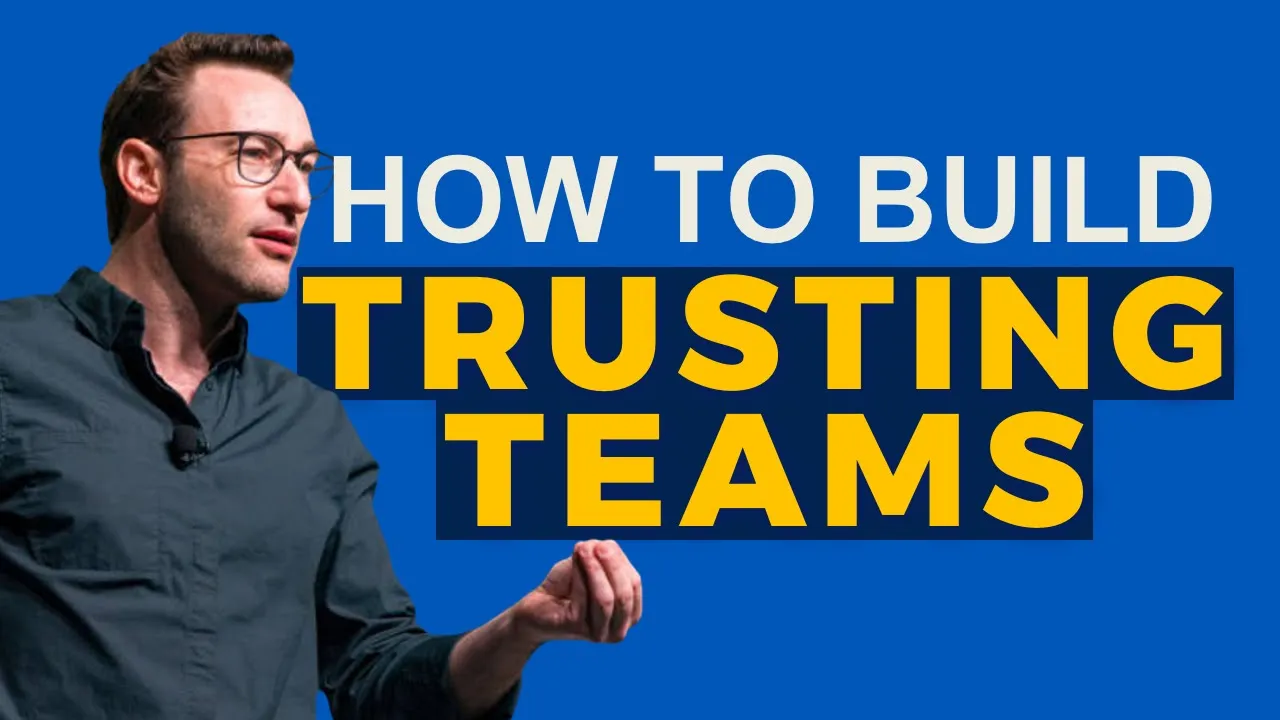
Simon Sinek analyzes the parameters of high-performing teams, drawing parallels to how ancestral bands survived. He argues that trust and collaboration are not soft skills but evolutionary responses to an environment of shared danger. When leaders build a "circle of safety" inside the organization, team members naturally cooperate rather than compete.

Richard Dawkins introduces the critical concept of fictive kinship. He explains how human institutions (like militaries, religions, and organizations) trigger ancient, family-oriented cooperation mechanisms in unrelated individuals by employing familial language (e.g., "brothers-in-arms") and rituals.
This extended presentation details how our Paleolithic biology dictates trust, authenticity, and leadership in modern business settings. Sinek details how leaders must align organizational systems with our evolved social instincts to foster genuine, non-forced collaboration.

Steven Pinker complements Dawkins’ views on fictive kinship. He explains how large, non-related human networks must actively manipulate our evolved kinship psychology to generate deep, family-level solidarity, warning of the strategic ways institutions use language like "sisterhood" and "brotherhood."
Knowledge Checkpoint
- Define "fictive kinship" and explain how organizations exploit kinship markers to drive loyalty.
- How does scaling past Dunbar’s number affect corporate bureaucracy and trust, and how can decentralized, small-team designs mitigate this?
- Contrast a low-trust organizational culture with a high-trust, evolutionarily aligned "circle of safety."
Course Map
The diagram below illustrates the conceptual progression of the curriculum. Mastery of foundational evolutionary frameworks (M1) is required to understand genetic mechanisms (M2). Genetic dynamics then scale up to direct behavioral game theory (M3), which expands to social network dynamics (M4), and finally culminates in the structural design of modern human organizations (M5).
Key People Index
| Person | Key Context & Evolutionary Contributions |
|---|---|
| Charles Darwin | Naturalist who pioneered the theory of natural selection and recognized the evolutionary puzzle of altruism, particularly in eusocial insects. |
| W.D. Hamilton | Evolutionary biologist who formulated the theory of inclusive fitness and Hamilton's Rule (), mathematically proving kin selection. |
| Robert Trivers | Evolutionary biologist who developed the theory of reciprocal altruism, explaining how cooperation among non-kin evolved alongside human moral emotions. |
| Robin Dunbar | Anthropologist and evolutionary psychologist who proposed the social brain hypothesis and established "Dunbar's number" (~150) as our cognitive group limit. |
| Richard Dawkins | Evolutionary biologist and author who popularized the gene-centered view of evolution ("The Selfish Gene") and analyzed fictive kinship. |
| Simon Sinek | Organizational theorist who applies evolutionary concepts of safety, tribe, and trust to leadership and business structures. |
Final Self-Assessment
Complete this comprehensive self-assessment to verify your mastery of the curriculum concepts.
- Explain why altruism is considered an "evolutionary puzzle" from a strict Darwinian perspective.
- Successfully state and mathematically apply Hamilton's Rule to determine whether an altruistic act will be favored by natural selection.
- Define the coefficient of relatedness () and trace its genetic values across standard family relationships.
- Explain how game theory, particularly the iterated Prisoner's Dilemma, models the real-world evolution of mutual cooperation.
- Identify the essential characteristics of the "Tit-for-Tat" strategy and why it outperforms purely selfish strategies in repeated interactions.
- Articulate Robert Trivers' framework on how modern moral emotions (e.g., guilt, anger, trust) evolved to sustain reciprocal cooperation.
- Describe the evolutionary relationship between the size of the primate neocortex and the social brain hypothesis.
- Explain how gossip, reputation tracking, and moralistic punishment act as social defenses against free-riders in groups larger than 150.
- Define "fictive kinship" and identify at least three ways modern organizations (militaries, corporations, cults) leverage it to build non-genetic loyalty.
- Outline an organizational strategy to restructure a large, bureaucratic company of 2,000 employees into evolutionarily optimal, high-cooperation units.