








![[틀어놓고 주무세요] 초등학생 수준으로 이기적 유전자 이해하기ㅣ이기적 유전자 총정리ㅣ닥터딩요](https://i.ytimg.com/vi/KQQlCnbSCR4/maxresdefault.jpg)




![Биология поведения человека. Лекция #2: Эволюция поведения I [Роберт Сапольски, 2025]](https://i.ytimg.com/vi/MjOci0Hza_4/maxresdefault.jpg)



![[강연] 유전자의 눈으로 본 진화: 해밀턴의 포괄 적합도 이론 _ by 전중환 ㅣ 2022 가을 카오스강연 '진화' 4강](https://i.ytimg.com/vi/KcCziNoxMNU/maxresdefault.jpg)


Hamilton's rule (rb > c) determines when altruistic behaviors evolve: the benefit to recipients multiplied by relatedness (r) must exceed the cost to the altruist; this rule explains how genes can promote cooperation among relatives by ensuring that the genetic benefits of helping family members outweigh the individual costs, with relatedness representing the probability that shared genes are identical by descent rather than just coincidentally matching.
Hamilton's Rule Explained: Kin Selection & Altruism Simulation
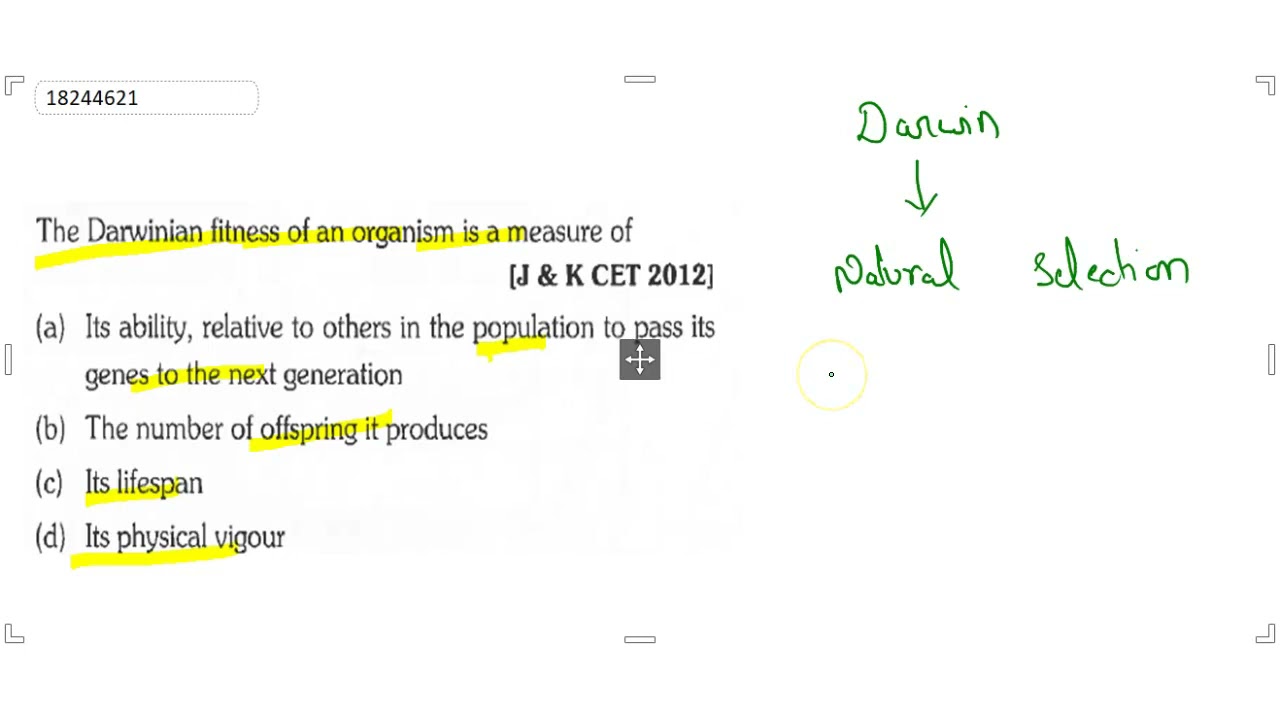
Added:Fundamental principles of Darwinian natural selection and the concept of evolutionary fitness.
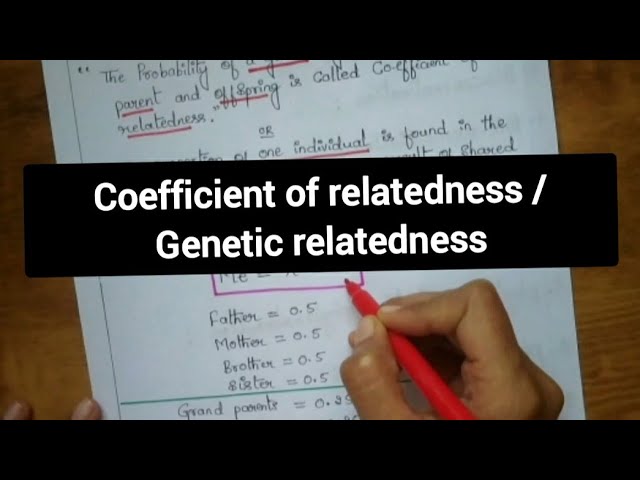
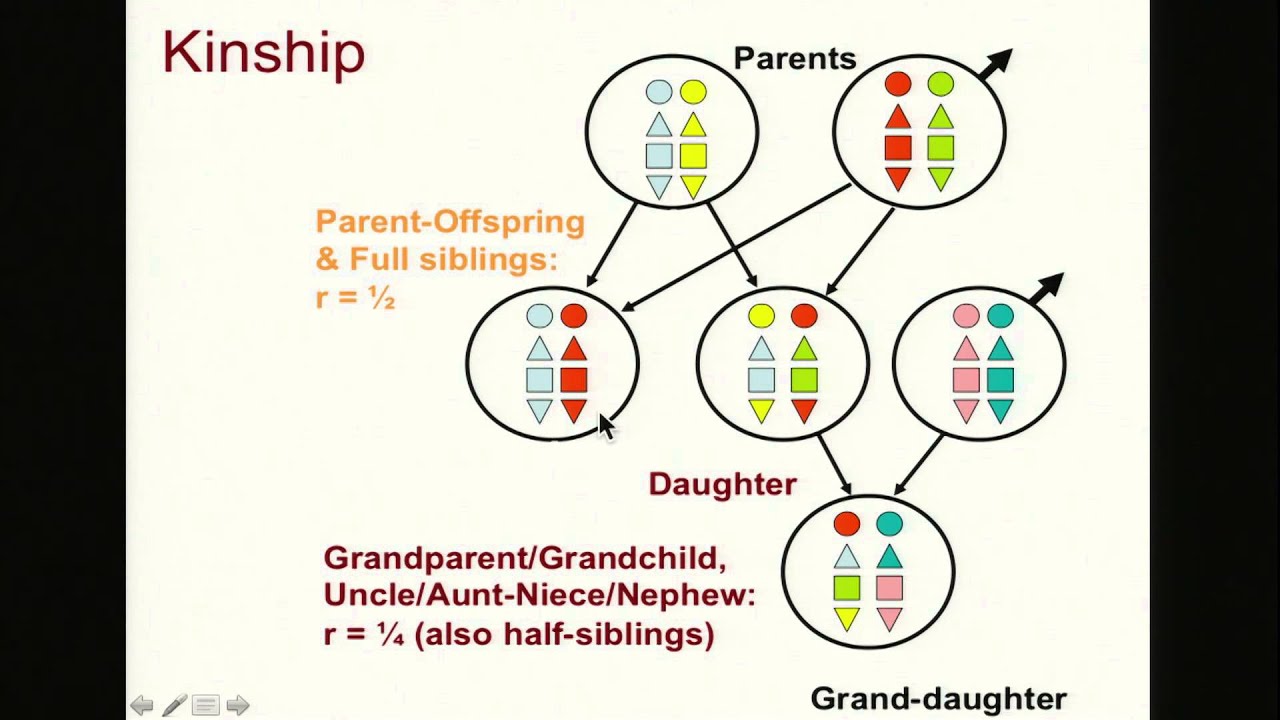
Basic genetics and the concept of coefficient of relatedness (r), representing the probability that shared genes are identical by descent.
The biological definition of altruism, where an individual's behavior benefits another at a personal cost to survival or reproduction.
The gene-centric view of evolution, popularized by Richard Dawkins' 'Selfish Gene' concept.
Eusociality and haplodiploidy, particularly how extreme kin selection operates in social insects like ants, bees, and wasps.
Reciprocal altruism and evolutionary game theory (e.g., the Prisoner's Dilemma) to explain cooperation among non-relatives.
The 'Greenbeard Effect' as a mechanism for directing altruistic behavior toward carriers of a specific gene.
The ongoing scientific debate between kin selection theory and multilevel/group selection theory in explaining complex social behaviors.
6.4M views186.1Klikes20:49Original Release: 2021-08-28
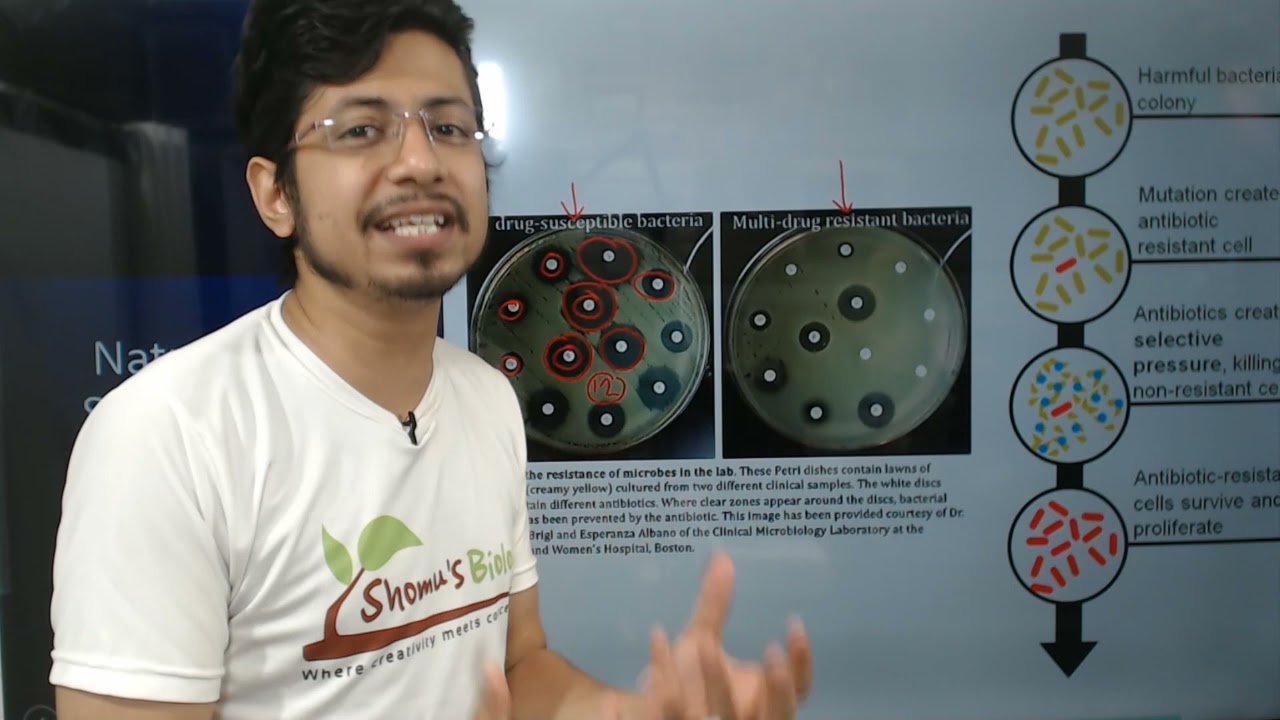
this video is about genes that gamble the basic idea of natural selection is that if a gene does an above average job at helping its host creatures survive and reproduce it'll tend to become more common as creatures compete with each other over the generations this tendency to survive and reproduce is called fitness and you'll often hear natural selection summarized as survival of the fittest but one day a clever newly mutated gene realized another strategy was possible if copies of the gene exist in multiple different creatures the gene can do better by causing the creatures to help each other rather than mercilessly competing with each other this concept is known as inclusive fitness the only problem is the copies of a gene are hidden inside the creatures and they can't see each other so if the copies of the gene want to help each other they have to gamble sometimes helping the competing genes by accident so the question is how can a gene strategize around inclusive fitness without the whole plan backfiring [Music] the condition for making inclusive fitness gambling work is called hamilton's rule and that's what we're going to build to it's a pretty simple looking inequality and if you've learned about hamilton's rule before you might be wondering why the heck this video is so long well it turns out that the simplicity of hamilton's rule is a bit deceptive or at least it deceived me at first so this video is going to go slowly starting with the general requirement for gambling to be beneficial and then applying that idea to simulations of increasingly complex biological systems as we build something will go wrong and when it does you might not realize it you might be deceived just like i was it'll get fixed before the end of the video but consider it a challenge to follow closely enough to see what's going wrong before i tell you about it so let's start by playing a game it costs 1 coin to play then you can roll a die if it comes up 6 you win 7 coins otherwise you get nothing [Music] let's let this blob play for a bit while we try to predict what will happen okay so there are six possible outcomes and we can summarize each with an equation where the payout minus the cost equals the net gain if the die lands on a number from one to five the payout is zero and the cost is one leading to a net gain of negative one in each case or a loss of one if you prefer to say it that way if the die lands on a six though the payout is seven so the net gain for that case is six on a fair die these six possible results are all equally likely so we can combine the equations together and divide everything by six to get the average payout cost and net gain one way to read this equation is to say you have a one in six chance to win the benefit of seven coins and it costs one coin to play so you expect to win one sixth of the coin per time you play the coins only come in whole numbers but the average is a fraction an average predicted result like this has a special name it's called an expected value and since the expected value here is positive the blob should gain money over time by continuing to play it looks like the blob is actually doing way better than 1 6th of a coin on average that's good for the blob but not so good for our prediction it's only been a few rolls though so maybe the blob is just getting lucky if our prediction is good it should start to look more accurate with a larger number of rolls so let's enlist some more blobs to see if that happens well it's starting to get pretty close it can sometimes take surprisingly long for random events to even out which is my favorite excuse whenever i'm getting my butt kicked in a board game we can use variables to write this out in a way that will apply to a broader set of situations the benefit of winning times the probability of winning minus the cost to play is the expected value of a gambling game if the expected value is positive it's usually a good idea to gamble and when the expected value is negative like in every single casino game for example you should expect to lose money you might notice that this looks basically the same as hamilton's rule already so let's try applying it to a biology simulation to see how it works we'll start with the same basic structure from the video on green beard altruism each day blobs will go out to the forest to eat some fruit some of the trees have predators in them though and if the blobs are unlucky enough to visit a tree with a predator in it they'll get eaten but if they don't get eaten they'll head to one of the homes and reproduce creating a puddle of three new identical blobs in their place and yes a group of blob siblings is officially called a puddle and after the blobs reproduce the cycle repeats also when it's time to go home there might not be enough homes to go around in which case some randomly determined blobs won't get to go home and reproduce in case you've seen that green beard video i want to highlight the key difference here this time the siblings always stick together in their puddle when they go out to a tree there's no altruism yet but let's make this a bit bigger and let it run for a while to understand how the simulation works in this baseline case [Music] all right it turns out that the blobs thrive in this environment and the limiting factor ends up being the supply of houses the blobs should really figure out a way to build more housing but comments like that belong in the economic series okay now let's add the ability to be altruistic again this will be pretty similar to what we saw in the green beard video when the blobs go to a tree with a predator in it one of them will notice the predator and it'll have two options for how to react the first option is to just run away leaving the other blobs to die we'll call this the cowardly behavior the second option will be to make a bunch of noise to warn the other blobs but in the process attract the predator's attention and end up getting eaten because these blobs are sacrificing themselves to help others we'll call this the altruistic behavior the behavior will be controlled by a gene which has two versions or alleles the cowardly allele will be blue and the altruism allele will be orange the blobs can't actually see the genes but we're going to use these colors to graph the frequency of each allele over time i mentioned this in basically every video but i can't say enough how in real life the cause of behaviors is very complex it's only partly genetic and the genetic part itself is a lot more complicated than this model we're using here where just one gene controls this one kind of behavior we're just using a simple model to explore one small piece of the very large picture of behavior but with that said let's run this simulation we'll start with equal numbers of each allele before we hit go though what do you think will happen will one allele take over if so which one try using that expected value idea we talked about earlier and keep in mind that the puddles stay together when they go to find food this graph shows the frequencies of each allele over time stacked on top of each other at the beginning it's half and half but over time the orange altruism allele drove the other allele to extinction let's see if we can make sense of why the altruism allele did so well just like before we'll look at the benefit of the behavior times the probability of getting the benefit minus the cost of the behavior to get the expected value but instead of coins we're worried about copies of the altruism allele the blob that notices the predator could have survived but instead sacrifices itself destroying one copy of the altruism allele so the cost of the altruistic behavior is one and the benefit is that two sibling blobs live when otherwise they would have died and since they're genetically identical there's a 100 percent chance that the siblings have the altruism allele so the probability p of getting the benefit is one and the expected value is a gain of one copy of the altruism allele it's kind of weird to look at this and see a gain when one of the blobs dies but we're comparing the effect of the altruistic behavior to the effect of the other option which is just running away and leaving both siblings to die a predator attacking is always bad but it's less bad for the altruism allele because there are two survivors instead of one so that all seems to make sense but we should do more runs to check that we didn't just fool ourselves with one unluckily unlikely simulation it does happen in science you've got to try to prove yourself wrong this graph summarizes all 30 runs each thin black line is one run and the thick black line is the average so yeah the orange altruism allele takes over the population pretty consistently in hindsight that's not too surprising there's only one possible outcome of the altruistic behavior and it's positive for the allele so it's not even really a gamble now let's make it more interesting by adding sexual reproduction to mix up the alleles and add uncertainty now when creatures go home at the end of the day two creatures will go to each home and when they produce their puddle of three offspring together each offspring will get a copy of one of the parents alleles with each parent having an equal chance of passing to each offspring if you've learned about genetics before you might have learned about creatures that have two alleles for each gene in their genome instead of just one and in that case each offspring gets one allele from each parent the word for that is diploid that's how humans and most other animals work but some organisms do have just one copy the word for that is haploid and at least for now we're gonna stick with that okay for this simulation let's make our prediction together just like in the previous simulation sounding the alarm will cost a blob its life and cost the altruism allele one of its copies and the benefit is still two since two blobs will be saved but it's no longer certain that the siblings will also carry the altruism allele the sexual reproduction is mixing up the alleles so p is no longer equal to one like it was with asexual reproduction at the other extreme if p were all the way down to zero both siblings would definitely not share the allele and the expected net value to the allele would be negative one but realistically it'll be somewhere in between so to figure out the value of p here let's bring back the sacrificer blob and focus on just one sibling we're already in a situation where the blob who notices the predator has the altruism allele so we know that at least one of the parents also had the allele that's where the sacrificer's allele came from the sibling could have gotten its allele from that same parent or the other parent each possibility is equally likely each happening 50 of the time when both siblings get the allele from the same parent we have a special name for it the two alleles are identical by descent in this case the sibling definitely has the altruism allele so let's put that 50 chance into the value for p but we're not done yet in the other possibility where the sibling got its allele from the other parent it could be either kind of allele since the mating is random the chance that the other parent also had the altruism allele is the same as the frequency of the altruism allele in the whole population but that number is going to change over time so unfortunately this p won't have just one value if you're new to calculating probabilities this might feel like a bit much don't worry it can take some time and practice for that kind of thing to sink in but to summarize this there are two ways for the sibling to also have the altruism allele it can be identical by descent or it can be from the other parent and just happen to be the altruism allele because there are copies floating around in the population the fact that p depends on the frequency of the altruism allele is a little bit icky but we can still say some things about the starting case and the best case and the worst case first we're going to start the simulation with 50 of each allele so the probability p will start at 75 or 0.75 if we plug that into the expected value equation we get 0.5 that's positive so we should expect the altruism allele to do well at the beginning increasing its frequency causing p to go up more as time goes on again raising the expected value and so on and so on leading to total domination which is the best case and even in the worst case the frequency of the altruism allele can't go any lower than zero so p can never go below 0.5 meaning the expected value of the behavior can't go below zero it's technically possible for the altruism allele to go extinct anyway but there can literally never be a negative expected value for the behavior so it would be very surprising so my money is on the altruism allele taking over again what do you think if you think there's a flaw in this reasoning now would be your chance to point it out a hindsight explanation isn't worth as many points as a prediction but why am i saying this my prediction is obviously logical and flawless and i'd never make a mistake let alone put it on youtube do well that's got to be a fluke so again let's run it a bunch of times and look at the average result to wash away that bad luck all right you caught me there's something wrong with that previous analysis and don't worry i've checked the code it's the prediction that's wrong not just the simulation i know i said hindsight explanations aren't worth as much but if i'm being honest it's what i had to do and there's nothing wrong with understanding something in hindsight as long as you test that understanding in new situations to make sure it holds up anyway take a minute to see if you can figure out the flaw you might have noticed that the only difference between our calculation and hamilton's rule is that hamilton's rule uses this letter r instead of p if you're like me you originally assumed that r and p are just different labels for the same thing r stands for relatedness and it's not the probability that another creature shares the allele in question that's p r is the probability that another creature's allele is identical by descent and if it's not obvious to you how that makes everything fall into place you're not alone but we'll get there this is a competitive environment where the total population size is capped by the number of available homes an allele succeeds in a competitive environment when its frequency increases over time when it becomes a greater and greater fraction of the alleles in a population alleles can only make progress at the expense of other alleles so to make a good prediction we'd have to consider that competition more carefully instead of just focusing on the number of copies of the altruism allele if the population starts out half and half we can increase the frequency of the orange alleles by adding a group of alleles that's more than half orange it's okay if we add some blue ones too as long as more than half are orange and if the population gets to a point where say 90 percent of the alleles are orange then adding more than half orange won't be good enough we'd have to add a group that's more than 90 orange ideally 100 of the alleles we add would be orange but unfortunately we don't have a way to guarantee that but as long as the fraction of orange alleles we add is more than the current frequency of orange alleles the frequency will go up so this is the true task of the altruistic behavior on average of the alleles it saves the fraction that are orange needs to be greater than the current frequency of orange orange being the altruism allele it's possible to write this down in a little bit more detail and do some algebra and then hamilton's rule pops out we're not gonna do that right now but it happens in a way i didn't expect when i tried it so it might be an interesting puzzle if you're curious about it but at least for me it's more intuitive to examine our misguided expected value calculation from before the key difference is this second part of our expression for p it deals with saved alleles that are not identical by descent this group of alleles has the same makeup as those in the broader population so you can help this group as much as you want but on average that won't affect the frequency our original calculation only ignored the cowardly alleles so it had a lopsided view the remaining part of t deals with the siblings whose alleles are identical by descent and this group since it's 100 altruism alleles will have an effect on the frequency if you add them to the pool and this is actually just the same thing as r that appears in hamilton's rule for siblings r is one half like we worked out before when we thought about where the alleles could go and each kind of relationship has its own value and you can calculate r for any given situation by tracing where the alleles might go but we're not going to get into that right now so hamilton's rule includes the effect on alleles that are identical by descent which affects the frequency and it includes the cost to the altruism allele which also affects the frequency but it ignores the group that's not identical by descent because that won't affect the frequency it still feels a little bit magical to me that it looks like a plane expected value condition but it neatly ignores everything that's neutral with respect to the current frequencies if we look back at the most recent simulation we see that b times r minus c is exactly zero so now it makes sense that the alleles were evenly matched but we should also test a situation that does satisfy hamilton's rule just a small change should do it so let's reduce the depth chance for a creature who sounds the alarm from 100 to 95 percent totally gonna work right okay we do see the altruism allele increase in frequency on average the average didn't quite make it to 100 in the 400 days that let the sims run but we can see that it's well on its way in some of the runs the altruism allele did have a pretty rough start so we can see how it's possible for an allele to go extinct despite satisfying hamilton's rule but at least for this set of 30 runs even the unluckiest run was able to recover so there is a lot more we could do but this video is pretty long already and frankly i think we could both use a break for now but to give you an idea here are some other things we could explore in the future we could check hamilton's rule in different situations and with different values of relatedness we could talk more about the concept of relatedness in general we could check whether an allele definitely fails if it doesn't satisfy hamilton's rule we could see what happens when there are more than two competing alleles we could look at a diploid genetic structure just to make sure hamilton's rule still holds up there and we could actually do that more rigorous derivation i mentioned earlier and we'll probably do some of that in future videos but the next main installment in the altruism series will be about situations that hamilton's rule can't explain hamilton's rule only applies to systems where the organisms are relatives and altruism goes in one direction in many situations though especially in humans cooperation goes two ways or even happens in a complex web and is often not between close relatives so that'll be a fun thing to explore as always thanks for watching do
Up Next
28:50
Evolution and Gene-Centric Natural Selection Explained
@veritasium
6.8M views•2025-10-31
50:12
Bacterial Communication: Quorum Sensing and Biofilm Formation Explained
@JHUAAP
12.6K views•2011-06-28

5:35
Enteric Nervous System Explained: The Gut's Brain | Neurobiology Lecture
@alumniu6029
438 views•2018-09-12
7:08
Bacteriophages: Earth's Deadliest Killers and Future Antibiotics
@kurzgesagt
34.6M views•2018-05-13
Related Study Plans & Knowledge Roadmaps
Structured learning paths in Biology
biology
RNAi: Biogenesis, RISC & Gene Silencing
01Molecular Biology Foundations: DNA to Protein
02Introduction to RNA Interference (RNAi)
03Molecular Biogenesis of miRNA and siRNA
+ 2 more learning modules
10h5 modules
Explore Roadmap
biology
Mycorrhizae: Signaling, Biophysics & Ecology
01Foundations of Mycorrhizal Symbiosis
02Molecular Signaling and Root Colonization
03Biophysics and Bioenergetics of Nutrient Exchange
+ 1 more learning modules
11h4 modules
Explore Roadmap
biology
Circadian Clocks: TTFL, SCN & Periphery
01Foundations of Molecular Biology & Gene Expression
02Introduction to Chronobiology and Actograms
03The Core TTFL: Molecular Architecture of the Clock
+ 3 more learning modules
14h6 modules
Explore Roadmap
biology
Population Genetics: Math, Drift & Selection
01Genetic & Probability Foundations
02The Hardy-Weinberg Principle and Baseline Models
03Mathematical Modeling of Natural Selection
+ 3 more learning modules
18h6 modules
Explore Roadmap