



![인간, 유전자 폭정에 저항하다 [이기적 유전자] 2부 | 전중환 교수 | 알릴레오 북's 49회](https://i.ytimg.com/vi/6mQF03_ocPU/maxresdefault.jpg)









![Robert Wright & Jonathan Haidt [The Wright Show]](https://i.ytimg.com/vi/f_H1ANfbuEk/hqdefault.jpg)

Kindness and altruism can evolve through natural selection via two primary mechanisms: kin selection (helping genetically related individuals) and reciprocal altruism (helping those with whom we have ongoing interactions), but human morality extends beyond these evolutionary constraints because we've evolved brains capable of impartial thinking that allows us to value all human lives equally, regardless of genetic relation or proximity.
Evolution Explains Kindness, Even When It Kills Us | Paul Bloom
Added:The basic principles of Natural Selection, specifically how traits that increase reproductive success are passed down through generations.
The concept of Kin Selection (Hamilton's Rule), which explains why organisms might sacrifice themselves for genetic relatives.
The theory of Reciprocal Altruism (Trivers), which details how cooperation can evolve among unrelated individuals based on mutual benefit.
An introductory understanding of Evolutionary Psychology, particularly how human behavioral traits can be viewed as adaptive mechanisms.
Paul Bloom's critique of empathy ('Against Empathy') and the distinction between emotional empathy and rational compassion.
Game Theory models of cooperation, such as the Prisoner's Dilemma and Evolutionary Stable Strategies (ESS).
The scientific debate surrounding Group Selection versus Individual/Gene-centric Selection theories of cooperation.
The philosophical and practical implications of 'Effective Altruism' and how we allocate resources to help strangers globally.
213K views3.5Klikes4:23Original Release: 2022-06-30
There's an incorrect view of evolution which is that evolution would drive animals to be selfish, to be uncaring, to be unloving towards others.
And any sort of kindness you see, either in the animal kingdom or for humans, is a mystery from an evolutionary standpoint- but that's just wrong.
We now know that there's all sorts of ways in which kindness can evolve through natural selection.
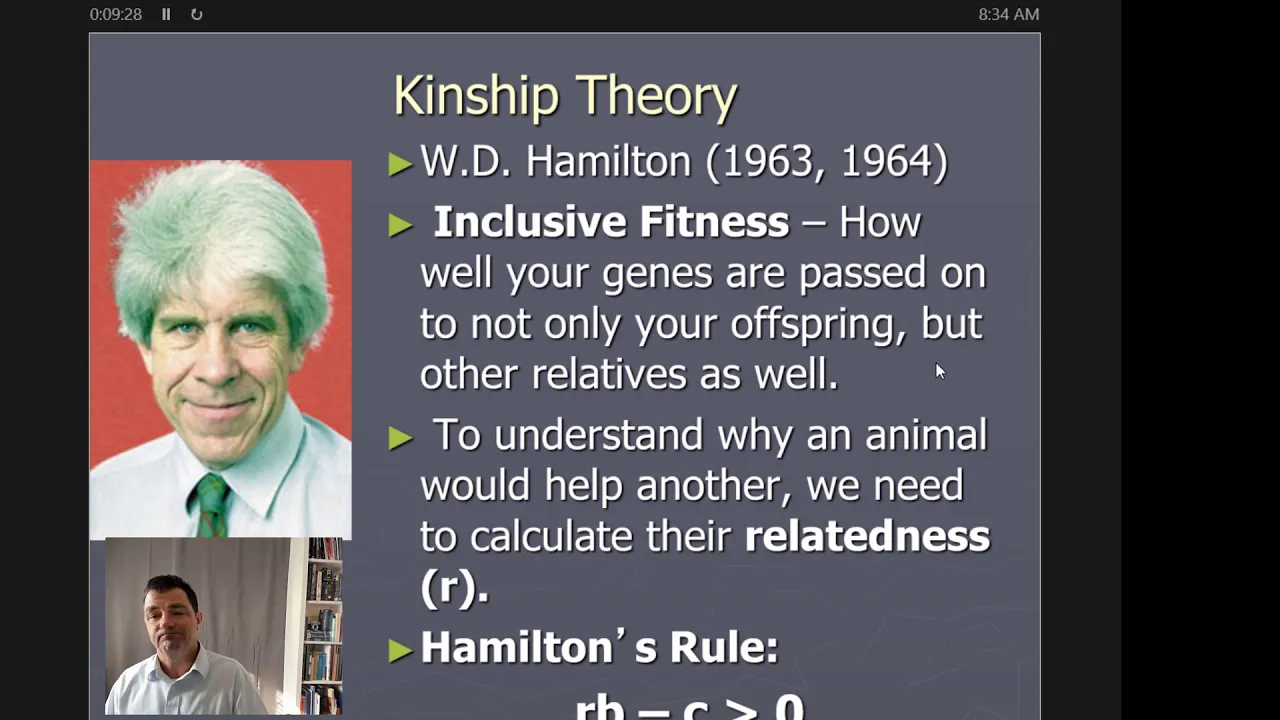
One way is 'kin selection,' basically to the extent other creatures share your genes, it is beneficial for you to help them, to share food with them, to save them if they're in trouble.
In any sort of community where everybody's sort of closely related, it's to an animal's benefit to be kind.
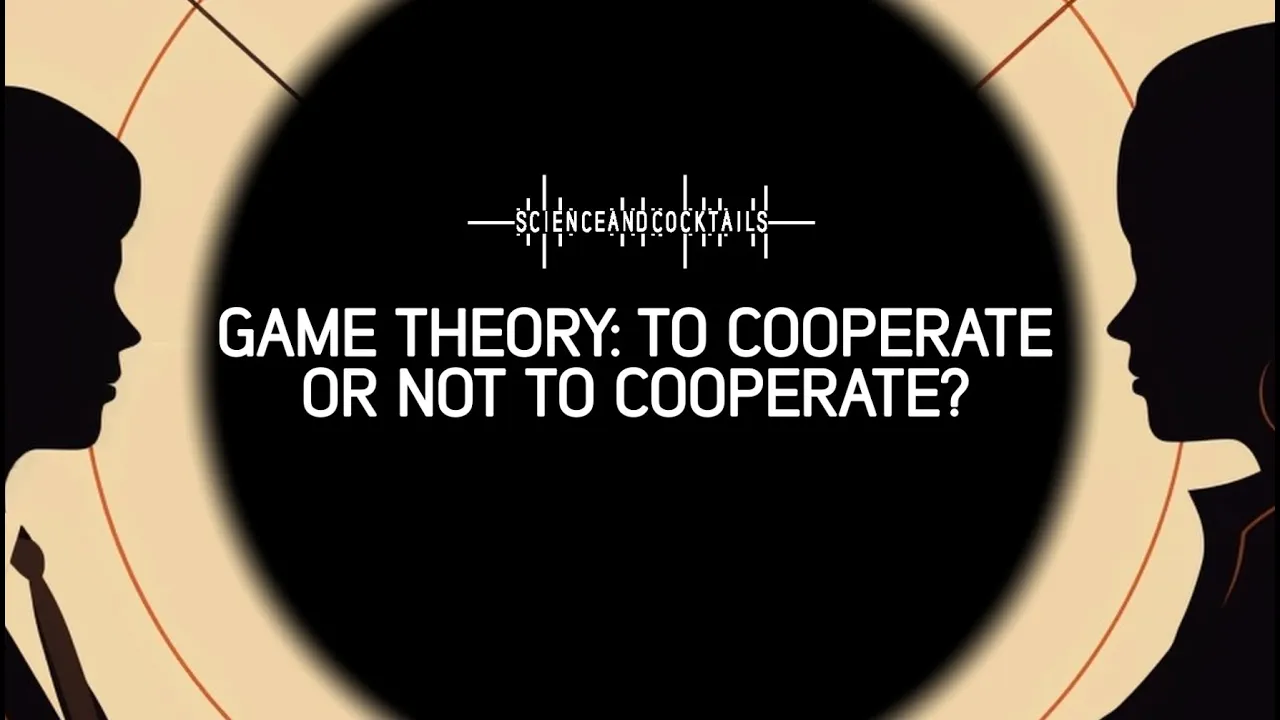
A second mechanism is called 'reciprocal altruism.'
What this means is that if you're in constant contact with somebody else, it can evolve a sort of practical kindness where you help them and they help you in return.
And so long as that deal goes back and forth, from a cold-blooded, genetic standpoint, is the sort of thing that could sustain and survive.
So, it's no mystery for a Darwinian, how we could have a sort of circle of kindness that contains those in our family, and slightly greater, those we are in constant interaction with.
But our kindness is bigger than that.
Stand on a city street, look confused.
If you pick the right city, some people come up to you and say, "Are you lost?"
"Can I give you a hand?"
We help strangers.
We take care of strangers.
We worry about people, not merely in our community but in places thousands of miles away.
Many people, many of you give your resources, your money, your time to help people you aren't related to, maybe who aren't in your community but people who need help.
There's one puzzle that often comes up which I think is less of a puzzle than people think it is.
And this concerns cases where people say risk their life for a stranger, even sacrificed their life for a stranger.
People say, "Oh, that's not Darwinian.
That's not evolutionary because we should want to reproduce our own genes.
And why would you destroy your own body to help that body of a stranger who doesn't share your same genes?"
But I think the thing to keep in mind is, what we've evolved isn't behaviors, simple behaviors, single behaviors that we choose are not the product of evolution.
What we've evolved is brains, brains that think certain ways and have certain inclinations.
We've evolved the capacity to think of things that evolution could have never anticipated, we're in a world of middle-size objects like trees and rocks, but we could think of sub-atomic particles or galaxies.
Similarly, we've evolved a morality that's close in, it's narrow, that's small.
But we're smart enough to have come to the principle of impartiality- some version of the 'golden rule.'
Some notion that, from the standpoint of the Universe, one person's life is just as valuable as another.
From a gut level, an injustice done to me is so much worse than an injustice for people I've never heard of.
But when I think about it, I can appreciate that at the level of principles, there's no difference.
The injustice done far away is just as severe injustice as if it were done to me.
It makes us realize that selfishness and parochialness and racism and sexism and all sorts of biases like that are not inevitable.
We have the capacity to override them.
And I think this is the lesson we learn, when we see one person being kind to another.
When we see tremendous examples of extraordinary altruism throughout the world it teaches us that this is not beyond our biological capacity, and armed with this mode of impartial thinking, we've transformed our moral universe.
Up Next

41:28
Evolutionary Psychology of Gossip, Aggression & Creepiness
@TheDissenterRL
697 views•2022-03-28

68:32
Cognitive Skills for Differentiated Instruction | Teacher PD
@BrainWareLearning
631 views•2017-12-17

14:51
How Biology Shapes Loneliness: Expert Coping Strategies
@bigthink
63K views•2012-04-24

6:40
The Nocebo Effect: How Beliefs Can Cause Real Harm
@CGPGrey
10.4M views•2013-12-23
Related Study Plans & Knowledge Roadmaps
Structured learning paths in Psychology
psychology
Neuroscience of Creativity: Networks & Training
01Foundations of Creative Cognition
02The Cognitive Neuroscience of Insight & Fixation
03The Triple Network Model of Creativity
+ 1 more learning modules
15h4 modules
Explore Roadmap
psychology
Imposter Syndrome: Etiology & CBT Framework
01Defining the Imposter Phenomenon
02Socio-Developmental Etiologies
03CBT Fundamentals & Thought Distortions
+ 2 more learning modules
15h5 modules
Explore Roadmap
psychology
Adult ADHD: Executive Dysfunction & Scaffolding
01Neurobiology of the ADHD Brain
02The Core Triad of Executive Deficits
03Executive Dysfunction and Emotional Regulation
+ 2 more learning modules
12h5 modules
Explore Roadmap
psychology
Loneliness: Evolution, Neurobiology & CBT
01Evolutionary Origins of Human Connection and Loneliness
02The Neurobiology and Physiology of Chronic Loneliness
03Maladaptive Social Cognition: The Psychological Loop
+ 2 more learning modules
12h5 modules
Explore Roadmap