![Биология поведения человека. Лекция #3. Эволюция поведения, II [Роберт Сапольски, 2010]](https://i.ytimg.com/vi/zFu5NyK_eCI/maxresdefault.jpg)











![😱혈연/지연 우선시 하는 나라에서 일어나는 일들? [위어드] 라이브 북토크](https://i.ytimg.com/vi/j63CBEcYH-A/maxresdefault.jpg)





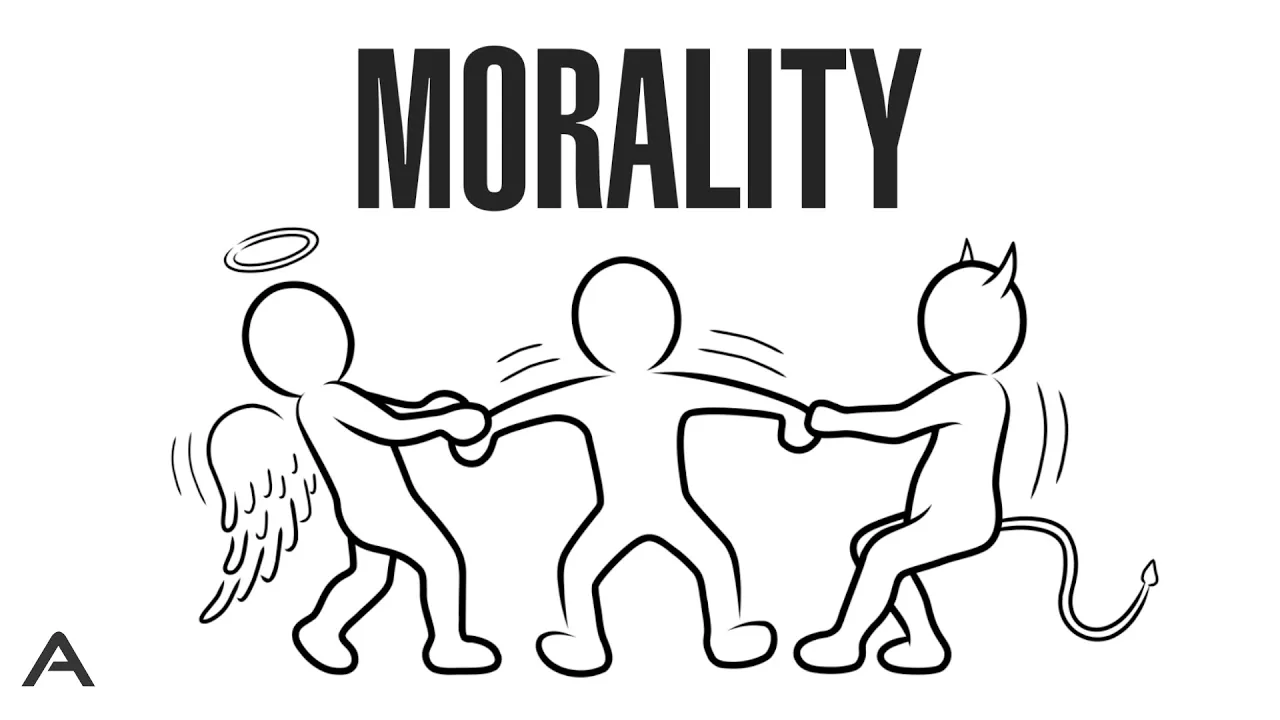






The claim that morality has evolved can be interpreted in three distinct ways: (1) Some components of moral psychology have evolved (uncontroversial but offers little philosophical payoff), (2) Normative cognition (the capacity to grasp norms and make normative judgments) has evolved (empirically supported but limited philosophical payoff), and (3) Moral cognition specifically has evolved (potentially offers significant philosophical payoff but lacks empirical support according to the authors). The first two formulations are well-supported empirically but provide minimal philosophical insight, while the third formulation, though philosophically valuable, remains unsupported by current evidence.
The Evolution of Morality: Three Views Explained
Added:Basic evolutionary principles, specifically natural selection, kin selection, and reciprocal altruism.
The distinction between descriptive morality (how humans actually behave) and normative ethics (how humans ought to behave).
Foundational concepts in cognitive psychology, including the difference between instinctual behaviors and deliberate cognitive processing.
An understanding of social group dynamics in early hominids and the survival value of cooperation.
Jonathan Haidt's Moral Foundations Theory, which maps evolutionary moral intuitions to cultural and political differences.
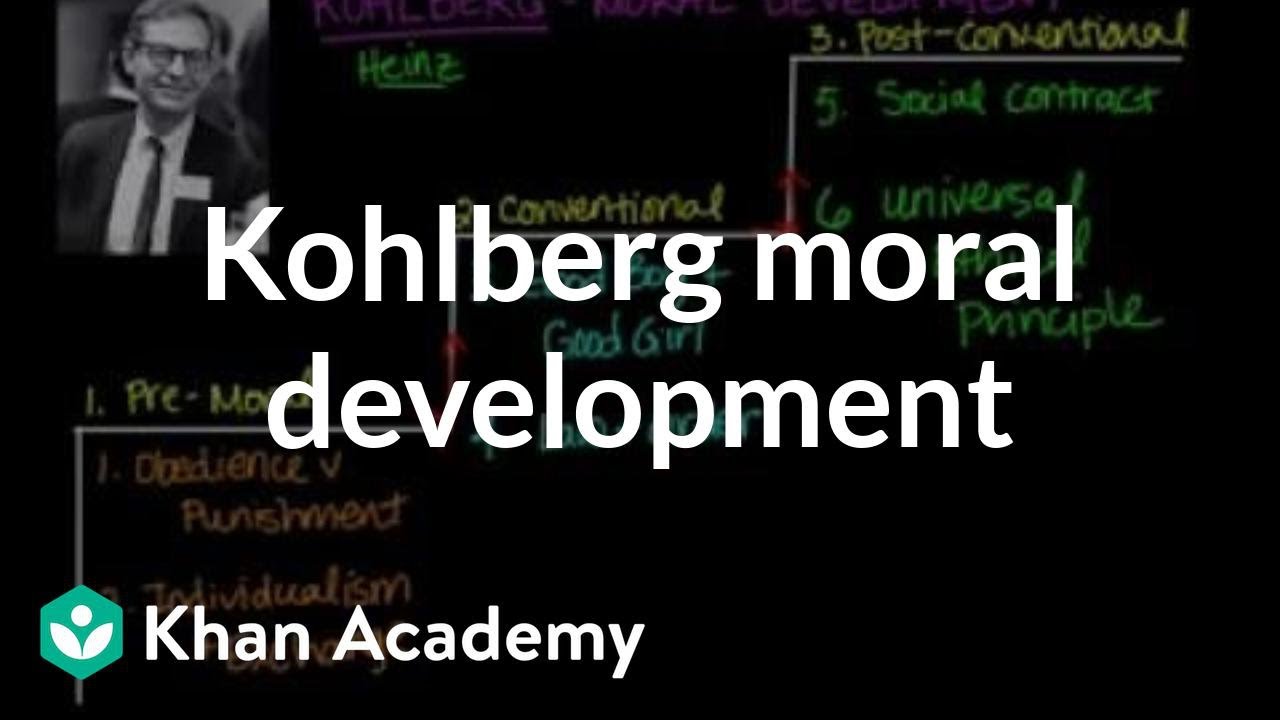
Lawrence Kohlberg's stages of moral development, focusing on how moral reasoning changes throughout an individual's lifespan.
Neuroethics and the biological basis of moral decision-making, exploring brain regions like the prefrontal cortex in moral dilemmas.
The application of evolutionary ethics to artificial intelligence, specifically the challenges of programming human-like moral cognition into machines.
233 views7likes1:12:18Original Release: 2020-05-14
okay hi everybody and welcome back to moral psychology with me dr. Josh redstone and today we're going to be diving into our first lecture from your textbook and we're going to be looking at chapter 1 the evolution of morality by Edward ma cherie and Ron Malan alright so this chapter deals with several versions of the claim made by evolutionary psychologists and philosophers alike that morality is the product of evolution or that morality has evolved so let's get right into it now to quote from this first chapter on page 3 of your textbook many thinkers concur on the provocative claim that morality is an evolved part of human nature much like the tendency to weave Nets is an evolved part of spiders nature and the authors of this chapter break these ways down in order to I guess more easily evaluate the different versions of this claim the motivations behind their project are to do with the fact that a lot of moral philosophers in the in the moral philosophy literature have recently tried to justify the existence of specific norms by appealing to the fact if it is indeed a fact that morality has evolved so perhaps those specific norms have evolved themselves that's one way to look at that at this but of course the claim that morality has evolved has also been treated with skepticism by some philosophers as well now whichever way you look at it obviously this claim morality has evolved is a very very general statement and there are a number of different ways in which this can be understood and the office of this chapter of the textbook massery and Malin write that this claim can be for related in three different ways or perhaps more but in any case they treat these three different formulations as the subject of their assessments in this chapter two of the ways of interpreting the claim that morality has evolved they will argue in this chapter are probably empirically supported but they don't actually offer very much of a philosophical payoff so it's uncontroversial as we'll see when it comes to the two first formulations of the claim that morality has evolved that morality has in fact involved and evolves in one way or another that's not controversial shouldn't come as a surprise to anybody but if you're a moral philosopher looking for a big philosophical payoff from this fact you're going to be a little disappointed the third formulation of this claim the author suggests offers the greatest philosophical payoff or the greatest prospects for a philosophical payoff but unlike the first two formulations is not well empirically supported the three versions of this claim or three formulations of this claim that the authors look at in this chapter are firstly some components of moral psychology have evolved so that's the first formulation of this claim this is pretty uncontroversial and we'll see why shortly but it's difficult to demonstrate which particular components of moral psychology are the products of evolution and if they are whether they are adaptations or evolutionary accidents or spandrels or something like that so that's the first formulation of this claim the second formulation of this claim reads that normative cognition that is the capacity to grasp norms and to make normative judgments has evolved so we're talking about a specific kind of cognition that humans are capable of doing and that is what is has evolved excuse me perhaps normative cognition has evolved as an evolutionary adaptation again or perhaps it's an evolutionary accident or perhaps it it's possible because of a number of other components that were evolved to do something else in any case like the first claim this is empirically supported but offers little philosophical payoff according to the authors and finally the third formulation of the claim that morality has evolved is the claim that moral cognition which is a special sort of normative cognition has evolved this would be really interesting for moral philosophers and indeed for other types of thinkers like evolutionary psychologists if it were the case but the authors of this chapter are going to argue that the evidence for this third view that is that specific specifically moral kind of cognition has evolved is actually unsupported all right so that's it for the sort of summary of the three different formulations of this claim that morality has evolved so why don't we break down the first one a little bit and see what the authors think about this claim why it's empirically supported but why on the other hand it offers little in the way of philosophical payoffs right so when it comes to this first claim that components of moral psychology have evolved well that's pretty uncontroversial right mastery in Mallen it's not controversial at all to suppose that some elements for moral psychology are the products of evolution for example emotions are arguably something that have evolved in human beings and probably in other non-human animals as well and this is something that's been noted since the time of Darwin Darwin himself wrote a very interesting book called the expression of the emotions in man and animals which dealt with what what emotions are for evolutionarily speaking in different sorts of animals and of course in human beings moral cognition probably also depends on a number of other kinds of cognition if you want to put it that way like many aspects of social cog social cognition so remembering the faces of conspecifics of in-group members and out-group members remembering who's a cheater and who follows the rules these kinds of things mind-reading is a big one working out what people are thinking what people believe or what people think about what you're thinking all of these are involved in some way or another as we'll see as this course unfolds in our mortal psychology and it's very uncontroversial to say that these capacities evolved but what is difficult to do is show that a specific component of our moral psychology has evolved so this ultimately is the reason why we get little philosophical payoff from from this very general version of this claim that some components of moral psychology have evolved ultimately it's because it's difficult to tell which ones and the example or before we get to the example rather the reason why it's difficult to work out which components of moral psychology might be the products of evolution has to do with the difficulty in establishing which of our moral psychological traits are good candidates for actually being evolved traits so I'll talk a little bit about something called a homologue here that'll help clarify this the authors of this chapter of the textbook discuss this as well so what is a homologue well a homologue is an evolutionary trait that exists in I suppose you could call them two ancestor species that have evolved from a common ancestor so the eye of a chimpanzee and the eye of a human being are homologs because they have both descended from the eyes of the common ancestor of humans and chimpanzees likewise our hands are homologs with bats wings even though they look very different the structure of the bones and our hands and stuff the way it's all ended up being now with our cool fingers and opposable thumbs that allow us to do cool stuff like you know create tools or rock on the guitar [Music] or something like that Arkel modulus with the features of a bat swing because if you go far back enough in evolutionary history there is a common ancestor trait from which both human hands and bat swings and lots of other mammalian appendages evolved from so that's our that's what a homologue is and it's supposed by some that some of our human moral traits might be homologs or homologous to moral traits in the great apes for example but before we can establish whether this is the case of course we have to try and be sure that the moral traits we're talking about here have indeed evolved that is we need to make sure they're not sociological or culturally developed or cultural or sociological in origin as opposed to evolutionary in origin so friends Duvall's work is a pretty good illustration of this that's why the authors of the textbook decided to talk about some studies that he's done with great apes and with monkeys now de Waal actually argues that the human sense of fairness is homogeneous - similar psychological systems or our sense of fairness is underwritten by psychological systems that have homologs in other primates and some of his experiments with brown capuchin monkeys he claims shows evidence for this precursor to our sense of fairness system in brown capuchin monkeys I'll show you a picture of brown capuchin here right here nice so the brown capuchin or sometimes known as the tufted Capuchin is a new world monkey which means it lives in the Americas specifically it lives in South America they're very social animals and they're also very intelligent men Brosnan and de Waal have conducted a number of different experiments with these Brown Capuchin and in these experiments they're trained to exchange tokens for rewards so they'll get a token which is like a little coin and they have to learn how to exchange it for a reward which will be some kind of food then these two different Capucines are placed in two different cages and they're given different rewards depending on the experimental condition so the the one capuchin will receive either the same or a different reward for exchanging a token or for not exchanging a token and the experimenters will measure the rate at which the reward is rejected by one of the cabouchins so for example refusing to exchange their token for a reward or throwing their reward or something like that right so the different conditions that we find in this experiment are as follows in the first condition each Capuchin gets a piece of cucumber when they exchange their coin so both Capucines get the same reward and it's just a slice of boring old cucumber in the second condition one capuchin receives a piece of cucumber for their token the other Capuchin receives a piece of a great nice delicious grape which the Capuchin value more highly than the piece of cucumber and in the third condition one Capuchin gets a piece of cucumber for exchanging their coin and the other Capuchin receives a piece of grape without having to exchange for cornea and that's the sort of I guess we could call it the unfairness condition so what happens well the results are pretty interesting in the first condition not much of anything happens the capuchin need to get the same reward and they don't reject it typically so it seems as if I suppose the Capucines feel that this is perhaps a fair a fair sort of scenario in the second condition female capital Capucines will reject the piece of cucumber at a high rate if the second capuchin receives a piece of grape so if we have two Capucines and one has to exchange a coin for a cucumber and the other has to exchange their coin very great the Capuchin that receives the cucumber will become upset and reject the cucumber the rejection rate of the cucumber is even higher in the third condition where one Capuchin receives a piece of grape without having to exchange their coin again this is like the most unfair of these conditions right so that's pretty interesting and Brosnan and Duval use these results to argue that there may be some sort of evolutionary homologue within brown capuchin z' for a norm that governs the fair distribution of windfall gains uh norm that we human beings are supposed to have otherwise this wouldn't be hamana hamana admitted that homologous right so um fair distribution of windfall gains well firstly just to clarify what is a windfall game well a windfall gain is a sudden sudden increase in resources or something like that like winning the lottery the name actually comes from if you're walking through an orchard say an apple orchard and all the fruits are up high on the trees and you can't reach them but all of a sudden a great wind blows through and all of the apples fall off the trees now all of a sudden you have all of the apples that's a windfall game when you suddenly find yourself with a surplus of resources we're supposed to have a norm at least this is what Brosnan and wal have in mind we're supposed to have a norm that governs the fair distribution of these resources so say I win the lottery perhaps I have a norm that says it would be fair that I share those winnings with my friends and family or something like that right well perhaps the behavior of the capuchin monkeys in this experiment suggests that there is a homologue to this sort of norm in capuchin z' but the authors of this textbook mastery in Mallen excuse me the authors of the chapter in this textbook are very skeptical of this now they don't deny they're not denying that our sense of fairness might be something that has evolved they're just not sure that the results of Brosnan and Duval's experiments actually show that such a norm that is a norm for the fair distribution of windfall gains actually exists in Capucines nor that if such a norm does exist that it has evolved and the reason here is fairly straightforward I mean they point out for example that Brosnan and Duvall only observed this effect in female capetians they did not observe it in male Capucines which is interesting because if it is an evolved trait we should see it in both genders not just female captions so that's strange moreover when humans play games like The Dictator game which are sort of game theoretic scenarios where resources have to be distributed by a dictator to a number of subjects males and females both will reject low offers suggesting that while in humans both males and females get upset when windfall gains are not evenly distributed unlike the capuchin z' in Duvall's and Bronson's experiment where only the females became upset so if this really is a homologue of a human norm we should see it in male and female Capuchin z' and we don't at least not in these experiments and furthermore as Henrick points out in a 2004 paper humans behave very differently on the whole than female capetians typically when humans are offered an unfair deal we'll reject the offer if the rejection can hurt the one who offered the deal but when rejection doesn't hurt the person who offered you the unfair deal humans will tend to accept it unlike the capuchin Zim conditions 2 & 3 of Brosnan and Duvall's experiment also there's quite a bit of cultural variation in terms of what people expect the beneficiaries of windfall gains to do at least with respect to the fair distribution of those games Americans for example who have been surveyed say that the fair distribution of windfall gains requires that those gains are divided equally right so perhaps if I win the lottery I should give an equal share to all of my friends and family or something however the michig when gay people who live in South America have a different norm they seem to expect the beneficiaries of windfall gains just to keep them for themselves so if I have an unusually good foraging trip thanks to the wind or other favorable conditions perhaps you know it's perfectly fair if I decide to keep those gains for myself it's not expected that I share it equally amongst my compatriots right now cross-cultural variation does not mean that a trait has not evolved however we need to keep in mind as the authors of this chapter point out that the common ancestor of both Capitan's and humans lived probably around 30 million years ago that's a long time ago and if our fairness norms are that ancient that is if there are fairness norms in humans and in Capucines and these norms have evolved from this common ancestor who also had fairness norms they should be species-typical we shouldn't see such cultural variation or variation within or between genders whether we're talking about humans or non-human animals here so in this case at least the authors of the textbook suggests that cultural variation actually suggests that our sense of fairness is determined by culture specific norms and not by norms that are really evolved traits so browsing and of all just to wrap it up are interested in whether there are these homologous moral traits in humans and other great apes and monkeys in this case they've been looking at norms about fairness specifically fair distribution of windfall gains but as the authors of this chapter have shown before searching for these homologs or at least before we can be sure that candidate homologue is particularly well a particularly interesting candidate for a component of moral cognition we have to be sure that there aren't any good reasons for doubting whether that trait has evolved and in this case the authors have shown they claim that there are good reasons to suspect that we don't have the reasons we need to to be sure we cannot be sure that this supposed homologue is actually a homologue it is actually a trait that has evolved so the first interpretation of this claim morality has evolved it's very uncomfortable we we know the components of morality have probably evolved such as our emotional systems or something like that but when it comes to specific components of our moral psychology like norms which govern you know fairness storms like the one that governs the fair distribution of windfall gains and further whether those norms are sub served by some sort of you know norm system in the mind that's specific to that component our of our moral psychology this is all very difficult to establish so how about the second formulation of the claim which is that normative cognition has evolved let's check that out right now so researchers who pursue the possibility that normative cognition as a specific kind of cognition is something that has evolved treat it as though it is an adaptation so I better explain precisely what an adaptation is and I'd have Haitians are products of natural selection and adaptations increase Fitness and what Fitness means here is not who's the biggest and strongest and fastest or something like that Fitness in evolutionary biology refers to how many copies of your genes are out there in the gene pool if you are a fitter individual that basically means that you're better at getting copies of your genes out there into the gene pool so that's what adaptations are they're the products of natural selection they increase Fitness so on and so forth Norm's specifically since we're talking about normative cognition when we talked a little bit about norms previously anything that's normative has that ought or ought not a kind of element to it the authors of this chapters talk about norms specifically as attitudes towards types of actions emotions thoughts or other traits and they always involve this kind of deontic content or rule-based content such as should should not nod so on and so forth so that's what habitations are and that is what norms are so moving forward norms the authors of this chapter state are probably underwritten by a fairly complex cognitive architecture now a cognitive architecture is kind of like the architecture of the mind you can think of it that way here we're not so much talking about the kind of cognitive architecture we talk about it and say like a computational modeling class right we're not talking about akhtar or soar or anything like that we're talking about the actual nuts and bolts of them of the human mind when we're talking about cognitive architecture here now why are these complex well just to take an example I mean think for example of the range of emotions you might feel when you Holden or more violate a norm or when you observe somebody upholding or violating a norm there's quite a range of emotions that might go into your reaction there whether it's you or whether it's someone else we're talking about who's upholding or violating the norm so this could get quite complex suggesting that norms are Unruh underwritten by a very complex architecture themselves a very complex cognitive architecture now stitch in sri pada in a 2006 publication have argued that normative cognition is observed by at least two distinct cognitive systems so whatever our complex cognitive architecture is like here these two think there must be at least two components to it and that is a an acquisition mechanism on the one hand which allows us to acquire these norms and an implementation mechanism which is what enables us to uphold norms so on and so forth so with an akan acquisition mechanism I could learn for example the norms that are prevalent in my culture the implementation mechanism would store representations of these norms perhaps it might produce desires and individuals to comply with those norms or it might elicit motivations to punish norm violators so stitch insert pada don't think that norms themselves are innate but they do think that the mental machinery for understanding norms for acquiring them and implementing them might be an eight but the norms themselves are actually something that's learned so let's get back to this core claim that normative cognition is an adaptation what exactly does that mean well we've talked about what norms are specifically and we've talked about what adaptations are specifically but what does it mean to say that something has evolved well there's actually two different versions of the claim ex has evolved that the authors of this chapter discussed here one is a weaker claim and one is a stronger claim the weaker claim is just that a trait is evolved if it has a phylogenetic history all right so if we can trace it back in the fossil record or by looking at genetics to determine common ancestry or whatever this is the weaker claim just to say that it has a phylogenetic history the second claim is to claim that it is actually an adaptation that is it's the product of natural selection so that's the stronger claim so when we're asking about whether normative cognition has evolved what we're asking is is it an adaptation right is it something that is evolved to increase fitness or is it a byproduct of another adaptation or is it an evolutionary accident what's going on we don't know there's a few different ways to break this down if we take the first way and we consider normative cognition and adaptation then we need to identify its evolutionary function so we need to try to understand what drove its selection whatever trait we're talking about why was it selected for in our evolutionary past all right so when it comes to all of these questions mastery and Milon consider a couple different lines of evidence one is sociological and one is psychological so we're going to start with the sociological lines of evidence after coffee now norms if we look at norms and we look at the human society we cannot find a human society without norms when we look back in the historical record all the way back to the dawn of history we cannot find a society without norms norms are culturally universal or societally universal all human societies have or have had norms and there are a few different kinds of norms too there are informal norms and formal norms smaller societies to be regulated by informal norms and larger ones are regulated by a combination of formal and informal norms so informal norms might be those that are enforced by informal mechanisms so for example gossip might be an informal mechanism for regulating norms you know if you dump something done something wrong and people are gossiping about you and word gets out well that's not very pleasant to be at the center of that kind of gossip right so you don't want to be gossiped about so you don't violate those norms and that's precisely because there's an informal means of regulating that kind of norm violation right but there's also more formal kinds of norm enforcement and here I'm thinking of like the immoral police we see these in for example these kinds of organizations in Saudi Arabia or Iran that are there to actually make sure people are not just breaking the law but that they're also adhering to the moral standards that they ought to be adhering to right so the authors of this textbook take it as evidence take the the antiquity of norms and the universality of norms as evidence that normative cognition is something that's evolved I mean when a trait is ancient and universal at the same time that's evidence or rather let me start over if a trait is is ancient or universal at the same time that's either because on the one hand it's easily acquired through learning either individual or social so beliefs like the Sun rises every day that's an easy belief to acquire just from your surroundings we don't need any in a cognitive machinery to learn to learn that fact because we're just surrounded by in setting Suns for our entire lives right or on the other hand it's ancient and universal because there's an evolved developmental system that helps to ensure its development so think here of language right universal grammar poverty of the stimulus Noam Chomsky you know all of that stuff if you know language the the stimuli we rely on the learn language are impoverished children learn language faster than they ought to be able to if they were learning it just by the stimuli the linguistic stimuli that are there in their environment so they must have caught some kind of innate mechanism that enables them to learn natural language and that's universal grammar as Noam Chomsky calls it perhaps there's an analogous cognitive system thats observes normative cognition that's another way to understand this claim now um the authors don't really see how normative cognition could be acquired solely via social learning so they think that it's probably underwritten by this evolved normative cognition system but when it comes to other psychological evidence things get a little bit more fuzzy for example leda cosmides and john tooby have put forward by now very famous argument that people are more adept at reasoning about deontic conditionals than domain-general conditionals Deonte conditionals are conditionals involving rules so you know if you're under 19 do not drink alcohol right that's a deontic conditional where something like modus tollens or modus ponens is a not a deontic conditional I have another video that explains these arguments which I'll link around here somewhere just so that you can brush up on your modus modus tollens for example and modus ponens so when people do domain general versions of what's called the Waze and selection task where we have to validate a rule by turning over certain cards people are actually very bad at doing this when it comes to domain general things like modus tollens but they're very good at it by reasoning about when they reason about deontic conditionals even though the only thing that's changed is the content of the test and not the actual logical rule that they have to validate when they do this test the textbook is a little bit dry here as I've indicated in my slides so I'm going to find some examples of this so that rather than reading through all of the dry examples in this part of the textbook you can actually try this yourself so I'll have the ways and selection task up here and I'll have a domain general version and deontic version and you can see how well you do at each one you may be surprised at how good or bad you are at this kind of reasoning in any case cause medicine to be argue based on results of studies that employ these kinds of tasks that we have an evolved mental mechanism called a mod a module that deals with Deonte conditionals and with cheater detection in fact they call this the cheater detection module and this is all related to something called the modularity of mind hypothesis and the massive the massive modularity hypothesis specifically which is something we'll encounter again as we proceed through the textbook and as we encounter more specifically evolutionarily psychological lines of thinking so here we have this candidate for an evolved trait normative cognition and it has a certain functional specificity to it its cognition specifically for reasoning about norms implementing upholding norms punishing norm violators and that kind of thing this trait develops early according to the author's children's show similar performant performance on selection tasks like the ones I'm going to link to you as adults do and well all of this say that the authors think these are pretty compelling lines of evidence suggesting that normative cognition has evolved and that it is in fact an adaptation again the philosophical payoff from this though is quite small it's really not that uncontroversial to say that normative cognition is something that has evolved but it's it's difficult to know what specific components of it have evolved or whether normative cognition may just be another type of cognition that's maybe just a little bit more specialized in any case I'll leave it there with with respect to this one and we'll move on to claim number three or formulation of the claim morality has evolved number three and that is that moral normativity specific kind of normative cognition has evolved so let's start that now all right so those that argue for this third interpretation of the claim that morality has involved they're talking about a specific kind of normative cognition and that is of course moral cognition or morality so basically the the project of these researchers is to argue for the evolution of the specific kind of normative cognition now keep in mind before we get into this but there are many many many kinds of normative judgments not all of them are moral judgments and it's not immediately clear what kinds of judgments are moral and what kinds are not so I've got a list of possible moral judgments in the slide so we've got you shouldn't wear socks with sandals you should always wear your seat belt that's another one you ought not to listen to polka music sounds like a pretty good norm you mustn't hit other people and you ought not to smoke cigarettes so these are all norms they're all normative judgments which ones are moral well it's not exactly very straightforward you shouldn't wear socks with sandals for example I would argue certainly not a moral norm this is something that we could call a conventional norm it's just convention perhaps not to wear socks with sandals although I suppose it depends on who you ask you are you should always wear your seat belt well this one strikes me as a Prudential norm that is to say it's simply a good idea to wear your seat belt you are violating the law by not wearing your seat belt but are you committing a moral wrong by not bearing a seatbelt that's not immediately clear and I think what is immediately clear is that it's just wise to wear one seat belt so let's call that one a Prudential norm what about you ought not to listen to polka music I have no idea I guess it depends perhaps there are those who see polka as the work of the devil similar to how some people used to feel that rock and roll or heavy metal were evil music or how some people don't like rap music because of the all of the sick rhymes about crimes and and things I don't really know what rappers rap about anyway you must have hit other people definitely a moral norm okay I think we can all agree that that is patently obvious what about you ought not to smoke cigarettes hmm that could be Prudential or it could be moral I guess similar to you should always wear a seatbelt some people think it is simply prudent not to smoke right smoking is bad for your health smoking causes all kinds of diseases so it's just prudent not to take up smoking but would argue that this is also a moral norm for example if if a doctor's job is to alleviate pain and suffering and prevent death promote a healthy lifestyle then perhaps it's it's a moral norm that their doctor ought to recommend to their patients that is you ought not to smoke cigarettes moral as well as Prudential then again there are also certain religions that prohibit smoking for example smoking is seen as something that is or ought to be prohibited in Islam for example and there I would see that as probably both a Prudential and a moral norm so all of this is to say it's not immediately clear what norms are moral and what norms are conventional or Prudential or other varieties of norms or other kinds of norms right so we need some kind of criteria to establish what a moral norm is we needs criteria to distinguish moral norms from non moral norms and in his 2006 book richard joyce provides seven kinds of characteristics or properties that he thinks distinguishes moral norms from non moral norms so in Joyce's view moral norms firstly are ways of expressing cognitive attitudes like approval or contempt and beliefs as well as attitudes secondly moral norms are deliberative considerations irrespective of the interests of those whom they are expressed so they're not meant to be advice they're meant to be rules they're meant to be deontic where advice is perhaps just a bit more Prudential right moral norms purport to be inescapable whereas other kinds of norms do not so moral norms are supposed to govern what's right and wrong and we're just supposed to be good and not do wrong things so in that way moral norms are supposed to be inescapable they purport to transcend human conventions so norms are not just conventional they are supposed to hold regardless of convention right they govern interpersonal relations they're supposed to combat rampant individualism you know my white my right to waive your hat to waive oh oh boy I'm all mixed up my right to weigh if my hand stops at your face as the saying goes right moral norms also implying notions of justice and desert moral desert so that is reward and punishment for your good or bad deeds and they apply a moral conscience feelings of guilt or shame or other moral emotions that are supposed to regulate your moral conduct so all of these things for Richard Joyce characterize moral norms and these are what separate moral norms from other kinds of norms now this is not meant to be a list of necessary and sufficient conditions that's not the kind of project Joyce's undertaking here rather this is a lot more like a cluster concept so as long as to quote Joyce from his book as long as a kind of value system satisfies enough of the above then it counts as a moral system what enough of the above is I'm not entirely certain of and so this is kind of a fuzzy I'm like it's a cluster concept cluster concepts tend to be a little bit more fuzzy than you know those concepts we understand the unassessably wealthy and Mallen of this of this chapter don't doubt that is some kind of account on which moral norm until it on which moral normativity is something that has evolved but they're skeptical of whether they can say for certain whether something that's described as richly as Joyce has described moral norms can be a product of evolution so let's move on from that from now and look at morality specifically as an evolved trait remember there are a couple of different ways we can think of normativity as having evolved or moral normativity specifically one way is just to say that it has a phylogenetic history right and the other way is to say that moral normativity is actually an adaptation that is it has evolved to fulfill a specific function now Joyce thinks that this capacity for making moral judgments is a human adaptation and he thinks that it's evolved to motivate us to act in pro-social ways pro-social just means in ways that benefit others in our group and not just ourselves so well well instead of saying good ways will say pro-social ways because we're talking about an evolutionary account and morality here this is opposed to behaving in antisocial ways or perhaps just in egoistic ways we can also use language here by the way to signal our intent to act in pro-social ways to other members are of our community that's something that happens a lot nowadays on the Internet in any case Joyce also thinks that these reliable pro-social behaviors and ways of signaling one's intentions to act in pro-social ways were selected for because pro-social behaviors and this kind of signaling were actually reciprocated by other members of our community and and that's why they were selected for mastery and Mallen are a little bit skeptical of this they actually don't think that our ability to grasp distinctively moral norms nor our capacity to make moral judgments are things that have evolved they use the analogy of claim chess okay the ability to play chess has not evolved right the ability to play chess depends on a number of evolved traits certainly visual recognition of the pieces and of the chess board and of the configurations of the board memorization in this case of the rules of the game these are all traits that have arguably evolved but the capacity to play chess has not evolved it is something that is learned so let's break down these different lines of argument with respect to the the prospect of morality being an evolved trait or having having evolved thinkers like Joyce point out that there are these models that are very plausible that can predict the selection of morality so that's one one piece of evidence that motivates the argument that moral cognition or morality is an evolved trait and of course the universality and an anus of our capacity to grasp these moral arms and to make moral judgments is evidence that morality is an evolved trait so there are a couple different lines of evidence there let's look at reciprocal altruism actually because we reciprocal altruism is very interesting to consider here reciprocal altruism is an idea that's been put forward by Robert rivers and basically reciprocal altruism is defined like this where an individual has a gene G for an altruistic trait T and it's favored by natural selection if key benefits discriminate discriminative Anna discriminative ly recipients who are likely to reciprocate in the future so let's say that we have an individual who has a gene G for sharing food now that gene will favored by natural selection if the bearer of G shares food with individuals who are likely to reciprocate in the future in a way that increases the fitness of the bearer G so that's reciprocal altruism and this is in the text if you need to go back and look this out it's also in my slides if you want to get a little bit more familiar with it now there are also three conditions that need to obtain for reciprocal altruism to work the two for the two individuals that are involved in the transaction for example the cost of being altruistic that is behaving in a sort of self-sacrificing benefit others at a cost to myself kind of way must be lower then the benefit received from the reciprocate er and secondly the benefit must be withheld from cheaters so people that break the rules take advantage violate norms and the individuals have to interact repeatedly otherwise how can anything be reciprocated down the road if I only interact with you once and never again write reciprocal altruism couldn't work if if social interaction wasn't like this so onto the reasons to be skeptical all right so what are some reasons to be skeptical of this at least this particular account of morality as an evolved trait well mastery and bow on point out that there are cases where we benefit individuals with whom we have no further interaction right so in these pairwise sort of altruistic interactions on reciprocal altruism anyway we're supposed to do this because down the road it will be reciprocated but people do things like tickling well on holidays to people they'll never see again so the author's feel that this is kind of a reason to be skeptical although I would counter by saying well reciprocal by our altruistic behavior may not be kated all of the time but if we're primed to behave this way then we're kind of already acting the way we need to before well not before but we're already acting in the Nate in the way we need to be in order for people who with whom we do interact on a regular or semi regular basis to reciprocate in the future that said a counterpoint to that would be that well how did that behavior get selected for in the first place if it's not being reciprocated and it's not increasing the fitness of the person who does the first altruistic act that later gets reciprocated by a con specific anyway um it isn't clear that reciprocal altruism can explain altruism or can explain morality in the kinds of societies humans have lived in over the years especially since because there's evidence to suggest that at least for the past fifty thousand years or so so we're talking pre-agricultural revolution we've lived in societies that weren't really all that small societies could have ranged from a few hundred individuals up to several thousand individuals and this doesn't necessarily mean that we were living in cities fifty thousand years ago on even today for example Australian Aboriginal communities which are actually quite small and made up of perhaps a dozen or so members are kind of strung together into these larger like meta societies I guess if you want to call them and the point here is that in a society with a few hundred or a few thousand members well that's this idea is going to be too large for us to remember who reciprocate sand who is a cheater and that's important when it comes to behaving altruistic aliy right we're not going to continually continuously behave altruistically towards a cheater but if society is so big that we can't keep track of who respects the rules and who doesn't it's difficult for reciprocal altruism to work a couple of further problems are that triggers this model assumes that these kinds of interactions are pairwise but this need not always be the case in fact quite a lot of human social interactions occur between more than two people right so reciprocal altruism doesn't cope with that very well reciprocal altruism is also supposed to explain evolutionary altruism that is why would I make sacrifices it's supposed to explain why I would make sacrifices to benefit those that are genetically related to me but a lot of moral norms don't have anything at all to do with altruism either pro-social kinds of altruism or evolutionary altruism things like food taboos right it's hard to see how they fit within this whole idea of altruism we also punish norm violators but reciprocal altruism doesn't really talk about this reciprocal altruism just says that we should stop interacting with Cheers but of course that's usually not what happens in large societies usually cheaters and norm violators are punished for violating norms and for taking advantage of other people and reciprocal altruism doesn't really have much to say about that so the first claim that there are plausible models which will predict the selection of morality or moral traits isn't really very well-supported at least when it comes to this reciprocal altruism stuff for the second claim that the universality and an anus of our capacity to grasp moral norms and make moral judgments is evidence that morality is evolved trait well we'll see how that one fares now so the authors of the textbook here asked whether these moral norms or whether any moral norms are truly universal this would mean that not just every human culture has norms that's uncontroversial but that specific the clean moral norms in the sense that for example Joyce is talking about our in fact universe now the authors pointed out that this is often just bluntly asserted by researchers in this area without actually being given substantive evidence which is pretty problematic for that claim so thinkers like Joyce mastery and Mallen claim do not do a very good job of distinguishing between norms in general and and moral norms they think massery Mallen that is think that in a lot of cases thinkers like this are simply pointing to the existence of norms that appear to be normal rather than showing why these norms in fact count as moral norms and in a rigorous way so the authors of this chapter are not convinced that a lot of these thinkers who say that you know look at how universal these norms are therefore they must be 1/8 therefore morality has evolved mastery Mallen think that a lot of the people who make this claim are not doing the work they need to know to do to show that those norms they're talking about are in fact moral norms so an example which you can find on page 31 of your text in chapter 1 is that in the 6th century the Catholic Church used to prohibit people from being buried with their wealth being buried with wealth or hoarding wealth elsewhere was kind of like a pagan thing to do I suppose and the Catholic Church prohibited this and said moreover that at least some of their wealth up to about a third of the deceased person actually should be donated to the church now is this a moral norm well maybe it sounds like it could be a moral norm but then again it could also be a conventional norm right perhaps it's just convention at the time that the church thought that this is the way things ought to be done and they it might have seemed normal because the church on authority on moral matters at the time said that this is the way you ought to do things but what we need to do really to know for certain is establish that this norm possesses the kinds of properties of moral norms that distinguish those norms from just regular non moral norms right rather than doing this kind of work mastery and Malin claimed most people are just identifying norms in ancient cultures that are kind of similar superficially to modern norms which these figures are you or or think of or view themselves as moral norms what researchers should be doing on the other hand according to mastering and Millan is establishing that the norm in question is a moral norm within the culture we're in the culture within which that norm holds so we would need to going back to this previous possible moral norm candidate we'd have to establish whether that this norm of not burying yourself with your wealth and donating a third of your wealth to the church when you die we would have to see whether that functions as a moral norm in sixth century European Christendom right but a lot of people don't do that they simply say here's a norm that sounds moral that's a moral norm look how universal these kinds of norms are therefore they are innate therefore they must have evolved so on and so forth another line of argument that's kind of related to this concerns the so-called moral and conventional distinction and I've already talked a lot about moral norms here and we've mentioned conventional arms to moral norms are supposed to hold independently of Authority right we do the right thing because it's the right thing not because someone tells us to they're also supposed to be universal they're supposed to be justified by things like appeal to the harm that violating them does to other or to people's rights and the violations of these norms are held to be serious conventional dorms on the other hand depend on Authority there locally applicable and they're justified with an appeal to convention and usually the violations of conventional norms are held to be less serious right so a conventional norm again might be something like don't wear socks with sandals don't eat with your elbows on the table something like that right these are just conventions not actually moral norms now some thinkers claim that across human cultures we can observe that children are able to distinguish between moral norms and conventional norms at a young age so some people take this as evidence that the capacity to make these kinds of moral judgments is innate since we're able to distinguish between moral norms and non moral norms at a young age and of course if this capacity is innate then it must have been all right well the evidence isn't actually that clear here according to the authors of this chapter children for example are not as good at doing this as a lot of thinkers have presumed indeed sometimes when we study this kind of thing children making distinctions between conventional norms like don't eat with your elbows on the table and moral norms like don't hit other people they fail to distinguish between these as two different kinds of norms until they reach puberty so that's pretty interesting if you compare that with our linguistic abilities which are agreed by many cognitive scientists to be innate that is the cognitive and perceptual machinery that allows us to learn natural languages is the speed that we do all of that occurs much earlier I mean granted children are not the most sophisticated speakers but generally they start speaking by around two years of age and you could have a simple conversation with with a four year old a five year old so on and so forth right but up until not being able to distinguish Marlon up until puberty well that suggests quite a different developmental trajectory and perhaps I suspect the authors of this chapter would argue that this is not as strong of evidence of these abilities being innate as some thinkers suppose so what about other kinds of developmental evidence well remember when we talked about reasoning about deontic conditionals people are better at reasoning about deontic conditionals than domain-general conditionals like modus tollens or modus ponens might this imply that moral cognition is innate and therefore has evolved well again naturally and Madeline are skeptical about this this shows that normative cognition has evolved but it's unclear whether this counts as evidence for a specific kind of a normative cognition having evolved ie moral cognition alright we can also consider other interesting cases this is not really talked about in the textbook so I won't really go into too much detail here but there's of course the question of empathy right empathy seems to be an innate capacity and it is argued by some to be important when it comes to moral cognition let me see if I can find an example ah so I have here an entire book about empathy and morality this is by Heidi Mae bomb actually the supervisor of my master's thesis and in this book there are a lot of collections edited together about empathise role in regulating our moral behavior and of course certain certain certain individuals such as Psychopaths or narcissists who lack and a--they often behave in ways that the rest of us consider to be morally and unacceptable right so empathy could be an innate capacity and those who lack up you're deficient in empathy seem to behave in morally so perhaps empathy is important for understanding right and wrong then again it could also be the case that empathy actually hinders moral reasoning in some cases I think for example if I feel bad for a person who's begging for money on the street who is perhaps in very poor health has issues with substance abuse they asked me for some change perhaps I feel bad for them so I give them some money but what happens if they do not spend that money on food what if instead they use that money to purchase drugs and those drugs could result in a fate fatal overdose well in that case my empathy has led me to do the wrong thing so see if you can come up with some other examples of empathy working or not working well when it comes to our moral cognition let me know in the comments section all right so to tie this all together it's not clear when it comes to the third formulation of this claim that moral norms are indeed present in every culture I think they probably are but the authors of the textbook feel that thinkers that argue that haven't done the work they need to do to definitively show that that is the case there are also shortcomings in the research on the development of children's capacities for reasoning about the moral conventional distinction and other developmental lines of evidence certainly do support the idea that normative cognition has evolved but not necessarily that moral cognition has evolved so here moral cognition might be like chess it's something we can do as a result of other evolved traits but it is not itself evolved so to sum it all up did morality evolve well in one respect yes it did traits that are important for morality probably have evolved but this is difficult to establish at least it's difficult to establish which particular traits our have evolved and that was the point of considering Brosnan and Duvall's work with capuchin monkeys and the question of whether there is a homologue for our sense of fairness in the brown capuchin it's difficult to establish that those kinds of things are there so while that claim is uncontroversial the payoff is kind of low and it's difficult to establish what specific kinds of things are actually evolved traits in another respect morality is a kind of normative cognition and normative cognition has evolved so yeah there's some evidence that morality has evolved but again the payoff is quite low no one here is suggesting that or at least no one who advocates this line of reasoning is suggesting that morality itself has evolved just that it has evolved but as a as a kind of a more general type of cognition reasoning about norms which has evolved and in the third respect it's not quite conclusive whether morality has evolved that is whether moral cognition proper has evolved we can't really rule out whether this is socio-cultural or not at this stage and unfortunately this is the one that would really offer the most philosophical payoff for a lot of folks who are interested in this kind of thing right so what are some of the implications of all of this for moral philosophy well the idea that morality is something that has evolved features heavily in some philosophical arguments that attempt to justify specific moral norms or also in skeptical arguments about morality now the authors don't think the first two formulations yield the philosophical payoffs that philosophers really want that is the first two formulations of this this claim that morality has evolved if they're probably both true but we don't get the payoff we want the final formulation might offer a significant philosophical payoff though but it's not empirically well supported according to the authors of this and with that said that about does it for my walkthrough of this chapter now I know that was very dense I hope that my my lecture today has helped draw your attention to what I think are particularly important strands within this chapter and again I'll also make available some ways and selection task activity for you to do so that you can see how good you are about reasoning about deontic conditionals versus domain-general conditionals so that might be fun of course if any of you have any questions do let me know in the comment section or send me an e-mail or you can also now ask your questions in the discussion forums on scene learn I've created a little thread there on the on those forums where you can ask me particular questions you can also ask your other classmates questions to talk about things amongst yourself Oh also office hours yes on Thursday I will be holding office hours I've already made an announcement about this and it's possible that this video will be uploaded well I'm going to try to upload it before the office hours but chances are by the time you watch this you may have already missed the first round of office hours I don't know that I'm going to regularly hold them on Thursday however that's what I'll be doing for this week just to kind of see who shows up and what kind of questions they have for next time we'll be looking at chapter two multi-system moral psychology this is a really fun chapter we'll also encounter some neuroscience in this chapter in addition to psychology and philosophy so that will be a lot of fun oh my goodness what we're also going to be encountering Trombly problems again for those of you who answered on the previous video answered in the comments section what you would do in those trolly scenarios thank you very much it's very interesting to see a variety of responses and I think in this next lecture we're going to learn a lot about why some people make the judgments that they make in these different trolley scenarios so that'll be a lot of fun so that's it for now again any questions email me let me know in the discussion board on C you learn let me know in the comment section I hope you're all staying safe and healthy out there and I'll see you guys next time bye for now
Up Next

7:57
Postmodernism in Literature | NPTEL Course Introduction
@postmodernisminliterature-2658
41.5K views•2017-11-27

164:01
John of Damascus on Holy Images: A Theological Defense
@BannedBooks
139 views•2026-04-25

68:32
Should We Destroy the Machines? Big Tech Surveillance Critique
@TheStoriesWeTell303
167.9K views•2025-11-30
4:57
The Myth of Sisyphus: A Greek Legend of Eternal Punishment
@TEDEd
8.6M views•2018-11-13
Related Study Plans & Knowledge Roadmaps
Structured learning paths in Philosophy
philosophy
Frankfurt School: Critical Theory & Culture
01Foundations of the Frankfurt School and Critical Theory
02Horkheimer & Adorno: The Critique of Instrumental Reason
03The Culture Industry and Mass Deception
+ 2 more learning modules
12h5 modules
Explore Roadmap
philosophy
Philosophy of Language: From Frege to Austin
01The Linguistic Turn: An Introduction to Language in Philosophy
02Gottlob Frege: Sense and Reference
03Early Wittgenstein: The Picture Theory of Meaning
+ 3 more learning modules
15h6 modules
Explore Roadmap
philosophy
Feminist Epistemology: Standpoint & Injustice
01Introduction to Epistemology and Feminist Critiques
02Sandra Harding and Standpoint Theory
03Donna Haraway and Situated Knowledges
+ 2 more learning modules
12h5 modules
Explore Roadmap
philosophy
Environmental Philosophy: Ethics & Deep Ecology
01Foundations of Environmental Ethics & Anthropocentrism
02Biocentric Individualism and Animal Liberation
03Ecocentric Holism and Deep Ecology
+ 1 more learning modules
10h4 modules
Explore Roadmap