






![The Effect of Globalization on CULTURE [AP World History Review—Unit 9 Topic 6]](https://i.ytimg.com/vi_webp/f7T55UixV-o/maxresdefault.webp)







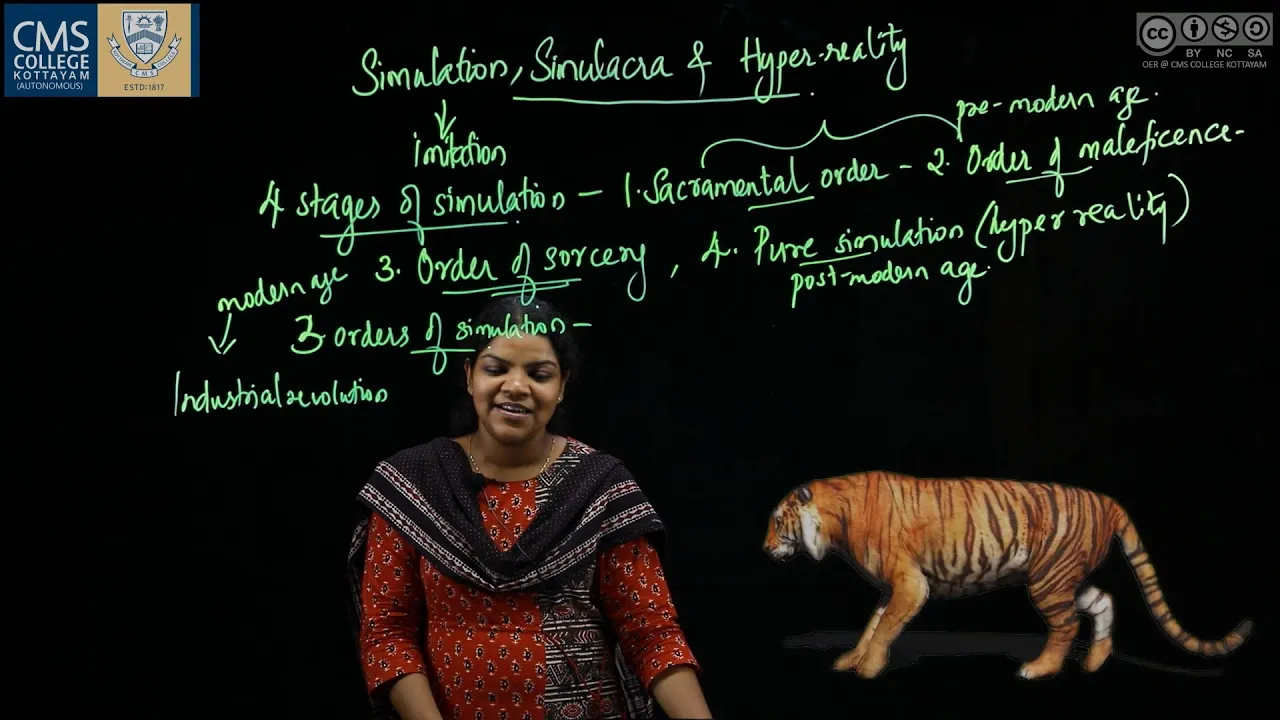




Postmodernism is a complex intellectual movement that challenges traditional distinctions between high and low art, original and copy, and reality and simulation, where everything becomes a text and grand narratives are rejected in favor of fragmented, contested realities.
Postmodernism in Literature | NPTEL Course Introduction
Added:Understanding of Literary Modernism and how it differs from Postmodernism in terms of narrative structure, tone, and worldview.
Basic knowledge of mid-to-late 20th-century historical events, including World War II, the Cold War, and the rise of consumer culture.
Familiarity with introductory literary theory and semiotics, particularly the relationship between language, signifiers, and reality.
Awareness of traditional narrative conventions such as linear plot structures, cohesive character development, and the role of the omniscient narrator.
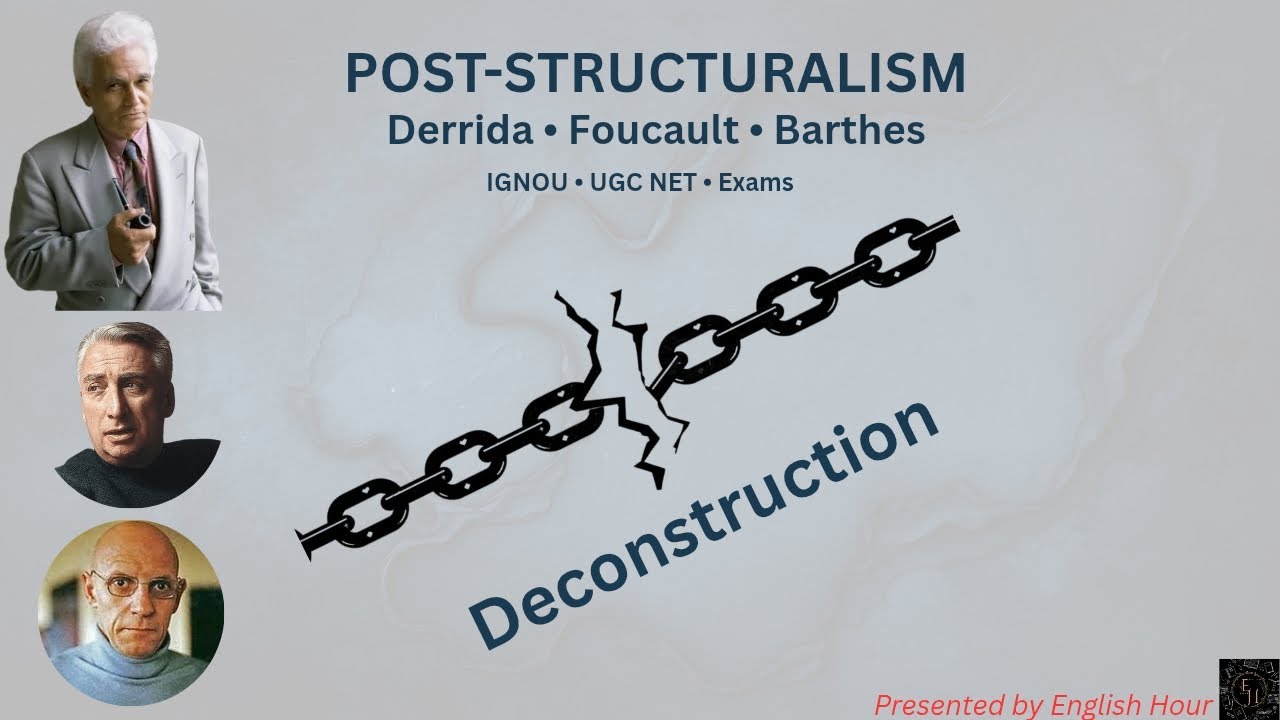
Advanced study of Poststructuralism and Deconstruction, focusing on the philosophies of Jacques Derrida, Michel Foucault, and Roland Barthes.
Exploration of Jean Baudrillard's concepts of hyperreality and simulacra, and how they apply to media studies and contemporary fiction.
Close reading and analysis of landmark postmodern literary texts by authors such as Thomas Pynchon, Italo Calvino, Don DeLillo, and Toni Morrison.
Investigation of 'Metamodernism' or 'Post-postmodernism' to understand how contemporary 21st-century literature moves beyond postmodern irony.
41.5K views616likes7:57Original Release: 2017-11-27
hello everyone thank you for your interest in this nptel course entitled post modernism in literature i am dr merin simi raj i teach in the department of humanities and social sciences at iit madras this nptel course entitled post modernism in literature is designed as an eight week course its pitched at the postgraduate level this is primarily intended ah as a course for students who are specializing in english literary studies but i presume this course will also be useful for those who have a general interest in literature culture and media in the contemporary as well so what is post modernism post modernism as you all must be familiar with its a term which is increasingly being used to define the diverse and complex characteristics of the twentieth century in fact one can even say that this is perhaps the most often used term to talk about various aspects in the twentieth century including art architecture culture or political ideologies the various economic tendencies and even lifestyles and the general predicament of life in the twentieth century incidentally this is also one of the most ambiguous terms of the twentieth century resisting all attempts to define and even classify or categorize not surprisingly a number of intellectual trajectories a number of intellectual tendencies could also be mapped in connection with this event with this moment and that this movement known as post modernism so if i were to give you a set of these two items over here our digital painting by andy warhol and a text or a series of readings ah about william shakespeare which would be postmodern in the very typical postmodern way there is absolutely no distinction between high and low art no chronologically andy warhols ah digital ah painting fits the exact postmodern tract its impossible to say that shakespeares work is superior to andy warhols digital painting so in that sense we also begin to look at a way in which the hierarchies and ah distinctions between high and low art beginning to break down and also the ideas of truth meaning coherence these are highly contested in the postmodern age and ah an image in the t shirt or maybe the reproduction of a painting by raja ravi varma in one of the calendars it would all be seen as copies of copies and the endless circulation of copies post modernism challenges the distinctions between the original and the copy and even leading to a process of an absolute difficulty in meaning making process and also if you are familiar with some of the contemporary movies ah such as inception or a matrix they engage with hyper reality which is a very postmodern phenomenon its rooted in philosophy but the manifestations are there in popular culture everywhere around us so if you are ah one of those people who are trying to understand how is hyper reality different from reality and realism perhaps this course will give you are an overview of a ah number of readings a number of intellectual trajectories to go through and also in the postmodern efface everything is a text there is absolutely no space for the predominance of grand narratives we have moved away from the modernist sense of celebrating grand narratives there is no idea of reality realities are much contested notions we only have copies we only have certain simulations available so in that sense when you say that everything is a text a shopping mall or an advertisement poster a bumper sticker ah a gravity on the wall shakespeares attacks and movies of the contemporary everything becomes a text a scene through this postmodern lens we cannot have a prioritization of one over the other we cannot have a privileging of a one side over the other this gets really interesting now and if you want to identify postmodern texts how would you do that this course will also tell you about certain trajectory certain dominant characteristics and certain theoretical frameworks to analyze a typically postmodern texts so if a particular text is post modern how do i know what are the various overlaps what are the various characteristics which make a particular text more postmodern than the others and in that sense we also deal with this question whether there is a single post modernism or whether there are post modernisms we look at the a singular phenomenon from various angles we critique it we we try to understand whether post modernism is actually there or whether it is already a past phenomena we try to negotiate with a series of these questions through a discussion of a number of text so in this course do we have a roadmap to go ahead whether you are looking for a step by step guide a step by step process to understand post modernism or whether you are trying to engage with post modernism in a very post modernist way through a series of ah texts and series of a discourses coming in and out from various sources this course will perhaps not the train for you if there are ideological theoretical and conceptual frameworks used to access post modernism we try to simplify it and make it easily accessible for you so if there is a genealogy that i can trace maybe that is something that this course will ah offered to you our genealogy that could be traced from perhaps the earlier periods onwards till the postmodern times ah there is a historical continuity that we would try to built in so that we also get to know that post modernism its not a phenomenon that emerged out of the blue but it also is rooted in particular aspects in particular intellectual trends and also in particular historical events ideas and ideologies we try to trace this tradition in a in a very systematic and an ineffective way through a reading of ah text context sites and a number of critics available so this course accordingly is an attempt perhaps to unpack the idea of post modernism through a range of ah text and text in a text as we have already noted it could be anything so the design of the course is in such a way that we try to access post modernism through three major rules firstly we engage with particular theories the seminal theories seminal works which have been important in the defining and in the framing of for what we now understand is post modernism secondly we look at the major intellectual and artistic trends of the twentieth century which could also be labeled as post modernist in nature and thirdly we undertake a reading of particular texts particular sites in order to be able to appreciate how exactly post modernism manifested in a nutshell this course offers to unpack simplify and also explain post modernism to you in the process we also hope to be able to enable you to critically engage and negotiate with the various facets of post modernism so here is this course for you post modernism in literature thank you for your interest and we hope you shall have a very fruitful and engaging ah learning journey throughout this course thank you
Up Next
41:54
Baudrillard's Simulacra and Simulation Explained: Part 1
@AltShiftZZZ
71.1K views•2019-08-26

164:01
John of Damascus on Holy Images: A Theological Defense
@BannedBooks
139 views•2026-04-25

68:32
Should We Destroy the Machines? Big Tech Surveillance Critique
@TheStoriesWeTell303
167.9K views•2025-11-30
4:57
The Myth of Sisyphus: A Greek Legend of Eternal Punishment
@TEDEd
8.6M views•2018-11-13
Related Study Plans & Knowledge Roadmaps
Structured learning paths in Philosophy
philosophy
Frankfurt School: Critical Theory & Culture
01Foundations of the Frankfurt School and Critical Theory
02Horkheimer & Adorno: The Critique of Instrumental Reason
03The Culture Industry and Mass Deception
+ 2 more learning modules
12h5 modules
Explore Roadmap
philosophy
Philosophy of Language: From Frege to Austin
01The Linguistic Turn: An Introduction to Language in Philosophy
02Gottlob Frege: Sense and Reference
03Early Wittgenstein: The Picture Theory of Meaning
+ 3 more learning modules
15h6 modules
Explore Roadmap
philosophy
Feminist Epistemology: Standpoint & Injustice
01Introduction to Epistemology and Feminist Critiques
02Sandra Harding and Standpoint Theory
03Donna Haraway and Situated Knowledges
+ 2 more learning modules
12h5 modules
Explore Roadmap
philosophy
Environmental Philosophy: Ethics & Deep Ecology
01Foundations of Environmental Ethics & Anthropocentrism
02Biocentric Individualism and Animal Liberation
03Ecocentric Holism and Deep Ecology
+ 1 more learning modules
10h4 modules
Explore Roadmap