






![Evolutionary Psychology and #MeToo | Robert Wright & Diana Fleischman [The Wright Show]](https://i.ytimg.com/vi/vBiBYQ_8gKw/hqdefault.jpg)



![인간, 유전자 폭정에 저항하다 [이기적 유전자] 2부 | 전중환 교수 | 알릴레오 북's 49회](https://i.ytimg.com/vi/6mQF03_ocPU/maxresdefault.jpg)





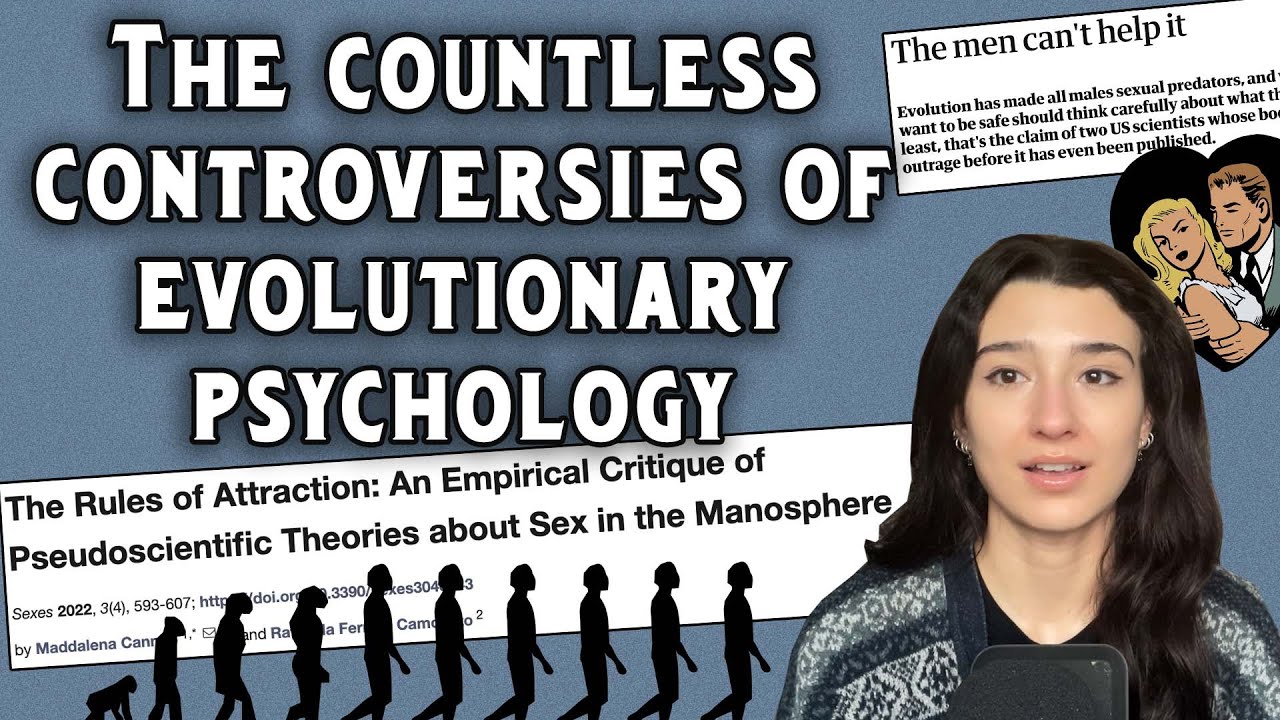



Evolutionary psychology is a scientific approach that views the human mind as composed of specialized cognitive adaptations evolved to solve recurrent problems faced by our ancestors throughout evolutionary history, such as finding food, avoiding predators, selecting mates, and avoiding disease; this lens generates testable hypotheses about psychological mechanisms by examining how similar adaptations appear across species and how different psychological traits might have evolved for specific adaptive functions, though this approach faces criticisms regarding cultural bias, sample representativeness, and the challenge of distinguishing between genuine adaptations, byproducts of other evolutionary processes, and random noise in human psychology.
Evolutionary Psychology Explained by Diana Fleischman, PhD
Added:hi everybody that's all true so my name is Diana Fleischman I'm American but I have learned how to say aluminium fairly recently and I'm going to tell you a little bit about evolutionary psychology I just think that there's so many misconceptions about it and there's a lot of really bad press so a lot of the worst people in evolutionary psychology get a lot of media coverage and so I'm going to tell you a little bit about how we do our science and how we generate hypotheses and and that kind of thing so there's going to be some biology some basic stuff like that and then I'm gonna get straight into some of the more interesting things so that you can really dissect the things that you hear about and think about evolutionary psychology in a more a critical way so there's been a lot of thought about whether or not we you can apply evolution to human behavior ever since Darwin and Darwin said in the distant future psychology will be based on a new foundation that of the necessary acquirement of each mental power and capacity by gradation and evolutionary psychologists since the 1990s since we've been calling ourselves teenis since sociobiology which is how it basically started have been talking about how in the future there will no longer be evolutionary psychology and non evolutionary psychology at some point all psychology is going to be evolutionary psychology because at some point there's going to be this merging of fields between biology ethology which is a study of animal behavior in psychology and those things are all going to be as real Wilson who's a entomologist would say conciliate that is that they're all going to end up merging together and that's one big strength of evolutionary psychology is that it actually takes a lot of other animals and certainly people cross culturally as models for human behavior so just start off with we're going to talk a little bit about how to think about the human mind so evolutionary psychologists there's a bit of a computer metaphor that often happens with evolutionary psychology where they talk about adaptations that have evolved to solve certain problems these are mental adaptations so a variety of animals will have different adaptations for example there are these lizards and the Galapagos Islands and they have to filter the salt out of their system so they have the sort of crown of salt they have they filter it out through their heads and there's all these amazing adaptations that a nonhuman animals have and what evolutionary psychology said is that there are similar adaptations in the human mind that we have specific programs potentially that have evolved to solve specific ed-up to add up the problems that we have were currently faced over evolutionary history so sort of seeing the mind as a collection of apps or a collection of potential programs that solve these various things that's one way of looking at it and people have been critical of this particular comparison they said that this is a little bit like you know back you know when they were the the biggest technology was something like a mill people were comparing human minds to mills and fountains and various things like that when it was a computer that became the the analogy du jour but I think the computer analogy still holds really well and so that's one way of think about evolutionary psychology is that the human mind is made up of suite of adaptations but another way is that evolutionary psychologist is a lens with which to view human psychology it's a lens with which to generate hypotheses to jet to test hypotheses and to look at various things so I'm gonna break down how evolutionary psychologists see the human mind and how they use this as a lens but first I think we have to go through some of the basics of evolution and certainly people don't learn that much about evolution I think in schools here certainly where I grew up as an I'll just said I grew up in a conservative kind of town and evolution wasn't taught in schools there's actually a warning sticker on the inside of our biology textbooks that there was evolution inside of those books they actually didn't cover those topics at all and I became really crazy about evolution partly I think because I was very rebellious and it seemed like it was forbidden knowledge it must be very interesting so where I grew up they certainly didn't teach evolution at all in school but here I'm sure they do to some extent so I will go through some of the basics because it's generally not covered not in medical school and certainly not psychology programs almost at all so what is evolution well evolution is this process by which species change and species emerge and speciation happens different organisms develop and one of the basic building blocks of evolution well the basic building blocks of evolution are first there's variation so this is a very simple model of an evolutionary process there's variation there are these you're pink and green circles and then over time if they were to multiply themselves you would see inheritance so over time you see that they multiply and they multiply and then the pink ones stay pink in the next generation and the green ones stay green in the next generation and then there's some kind of process by which one of them is selected over another one so the green ones are favored over the pink ones of the pink ones are favored over the green ones and then you see that in the process of selection so in this particular case the pink ones I don't know they ran in front of a bus or something and the green ones are the ones that you see finally and that is what is going to end up taking over and in the final generation and that's what you're going to see become species-typical is this what they call a phenotype which is this green circular form so that's kind of the basics of evolution what you need in order for evolution to happen is you need variation inheritance and selection so nothing important to talk about when it comes to evolutionary explanations is that people get confused about what's called proximate and ultimate causes of behavior so if I say why are men taller than women there's a variety of ways that you could look at that particular question so one you could just say men have longer bones than women do well that's one explanation for why men get bigger than women I heard recently some feminist scholars say that it's because men are fed better that is not true at all and the other explanation would be a more ultimate explanation which is there has been selection pressure for men to get bigger over time so let's just talk about like one particular adaptive problem and this is called the ten virgins for wise that he's an ethologist he studied animal behavior and he talked about different levels of explanation so why does a mother breastfeed a crying baby that is a question that you could ask and ten virgins four wise one would be to shut it up obviously that's the approximate explanation I would like the baby to stop crying so I'm gonna breastfeed it that's to shut it up that's the simplest kind of most straightforward explanation right then the developmental explanation was that over time the woman has learned how to breastfeed the baby when the baby's crying in order to stop it crying so this is kind of a behaviorist learning explanation she has learned that this is not just stimulus so there's aversive stimulus of the baby crying stops when she puts her teeth in the baby's mouth and that is a good explanation as any then there's a phylogenetic explanation which is that humans are mammals and all mammals lactate even the weird ones like echidnas and platypuses they have like a weird sweat spot where they lactate they don't really have proper nipples and so that's another reason why is it a kewpie this this phylogenetic explanation right that we've evolved from species but then there's also going to be a functional or ultimate explanation which is what evolutionary psychologists tend to think about which is this explanation of she's providing her offspring calories and nutrients helping her offspring survive and there's also a reason why the baby is crying the baby is crying because if you are happy when mommy feeds you and you're upset when mommy doesn't feed you then Mama's gonna learn how to feed you so the mom is training the baby the baby's training the mother and they're reciprocally learning from each other in this evolutionary inspired kind of way so there are four different meanings of the word why when applied to behavior in these levels of explanation and evolutionary psychologists tend to think about this kind of what we call ultimate level explanation doesn't mean it's the best one but it just means that it's a functional level of explanation that we are considering so there's proximate and ultimate answers to various different questions so why are men taller than women on average I covered one already men have bigger bones you could say men are fed more you could say that there's a variety of reasons but the ultimate explanation would be that in all species in which males compete for females the male's end up being larger than the females and the dimorphism which is the differences in the sexes tends to be greater the more the males actually have to fight physically for the females and so males in our species are about 50% bigger than than women are which means that there was some degree of polygamy right that men sometimes had more than one made because in perfectly monogamous species what you see is the male and the female are the exact same size and in species where their sex role reversal were the females for whatever reason compete for the males because some kind of resource allocation has happened then the females tend to be bigger than the males so it's the competing sex that tends to get bigger why do people grow calluses we grow calluses because something rubbed against your skin but why would you grow calluses why would your skin do that well for the adaptive kind of ultimate explanation is it so that you don't injure yourself at a site of repeated abrasion why do people like to eat pizza well pizza is good but you might also say that people like to eat pizza because it has fat and carbohydrates and these especially things like fat were very rare in our ancestral environment and so that's why pizza is especially tasty because it's got fat and sugar which are both comparatively rare as well as salt and then why do people get jealous you could say that people are socialized to become jealous or you could say that if all other things being equal a woman or a man basically had no emotional qualms whatever about their partner frolicking around with whomever those people tended to have worse reproductive outcomes than people who had a problem with their partner frolicking around with whomever and so that's what you would call the kind of ultimate explanation so the engine of evolution is actually this what's called differential reproductive success so the key to natural selection is differential reproductive success because of heritable variants so everybody has ancestors all of you are the product of billions of years of evolution each of you have evolved because you have an unbroken chain of ancestors who all managed to find a mate in you guys are all the ends of success story of some kind whatever way that happened and in every species you also see that every species existing today so all of us have ancestors unbroken to the beginning of life itself and this differential reproductive success is the engine of evolution so Genghis Khan I like to talk about he is 16 million different descendants half of a percent of all men in the world are descendants of Genghis Khan and Genghis Khan is not the ancestor of so many men because he mastered the art of sensual massage he is the ancestor of very many million men because he killed lots of men and had sex with lots of women and that was his particular route to reproductive success your mileage may vary there are other ways of doing it obviously there are nice much nicer than that so there are three different possible outcomes of the evolutionary process and adaptations are the ones that we tend to talk about in evolutionary psychology the most so there are adaptations there are byproducts and there are noise there is noise and adaptations actually are what evolves to solve a particular adaptive problem my products are the byproducts of that I'll go into a particular example and then noise is just you know random variation and as evolutionary psychologists we try and think about the human mind what is what exactly so what is an adaptation what is a by-product and what is noise so I'll start off with like a physiological example and then I'll kind of move on to psychological examples because people tend to have an easier time grappling with these kind of physiological examples so let's talk about the umbilical cord the umbilical cord does lots of neat things the umbilical cord actually transfers nutrients from the mother to the fetus it also transfers stem cells that connects the two of them and then it breaks off after the baby is born so this is a new baby with the umbilical cord still intact so the umbilical cord is an adaptation it has a variety of functions it it does that transfer of nutrients thing and then it also transfers things like stem cells and antibodies as well so that's all important things that the umbilical cord does well what is a byproduct that the umbilical cord well that's your navel everybody's got a belly button unless you had some kind of strange birth situation like a virgin birth and all of us have navels and the navel is really not very good for much you can't store food in it you can't attract mates with it I mean I guess you could get it pierced and that might be quite cute and there's not really much that you can do with your navel it just happens to be a byproduct of the process of having an umbilical cord and then no longer having an umbilical cord anymore so the navel and the Billy button is a really good example of a byproduct and it's also a good example of a byproduct because you see a lot of variation in it so in some particular characteristics an adaptation tends to be something that's kind of species-typical and we'll talk about some caveats to that but when an adaptation you generally see it as species-typical and it's not necessarily something that develops at birth so that's a very good indication that something might be an adaptation if it develops you know in the absence of any learning but we know that women tend to develop breasts and men tend to develop beards even in the absence of learning how to grow breasts or beards right so even though those things are not there at Birth we know that this typical species-level adaptation that we all have for whatever reason don't get me into white beards evolved it's actually very contentious issue so this is the navel and that's a byproduct so what's noise well noise is all of the different varieties of navels that there are available so there are in ease and there are out ease I don't know if you guys have different words for them here that we knew in the United States but these are all like noisy manifestations of this by-product and you can also talk about noise in different ways right if somebody has a stroke and they lose a specific faculty that's not an adaptation that's and that's an accident that happened to them if someone's missing a finger that's also noise so these are all things that can happen and they're not species-typical they don't solve an adaptive problem those are all what you would might call noise so those are the three products of evolution but adaptations are the primary product and there are a lot of different ways that we think about what is it by product and what is an adaptation in evolutionary psychology so one example just to keep you guys awake I'll just throw in some random sex stuff every once in a while is or homicide so one example was homicide a homicide there's this this these two camps about whether or not it's an adaptation or not so David buss who was my mentor who I studied with he thinks that murder is an adaptation that we actually evolved to murder people or to engage in homicide in certain situations and --mess by talking to people and asking them have you ever had a homicidal fantasy and the vast majority of men over 90% and even a huge majority of women something like 80% have at some point in time fantasized about killing somebody else and usually that was somebody who was like an inter sexual rival somebody who was trying to what if it bus would call make poach right trying to take your mate that's usually the kind of person that you fantasize about killing and there's a variety of reasons why people don't kill each other but in some more ancestral societies hunter-gatherer societies that might be more like our ancestral past even something like 20% of men can die from being killed by other men there are some hunter-gatherer groups like the Yanomami we're not actually really considered a man until you've killed somebody and in humans that are in you know more Western societies we tend to not do this for a variety of reasons and there's another camp of people Martin Daley and Margo Wilson who were out of Canada at McMaster and they said that homicide was a byproduct that we have mechanisms with which to punish people we get angry with other people we want to punish them physically and then occasionally we accidentally kill them so this is this idea that there's a byproduct and an adaptation reason for homicide so two different camps of evolutionary psychologists disagreeing about whether or not homicide or engaging in homicide is actually an adaptation another one is woman's orgasm so this is a an emoji that some people wanted to introduce and it's called orgasm face it's a Hegel which i think is Japanese of course the Japanese have a word for orgasm face and that's basically what this this guy is oh no I knew that was gonna happen okay so that is there's there's two different so obviously men have to have orgasms in order to reproduce but women don't and then most species females don't have orgasms so why do females of our species have orgasms well there's a by-product hypothesis and there is an adaptation hypothesis some of the adaptation hypotheses say that women are more likely to get pregnant if they have an orgasm or a woman who has an orgasm with a certain man it's more likely to have sex with him in the future it's sort of a way of signaling this is a good guy to keep having sex with whereas there's an also a by-product hypothesis which is that women have orgasms simply because there's a portion of fetal development in which we are androgynous right in which we're mixed male and female and where we have the beginnings of ovaries and testes altogether and why do men have nipples for the very same reason right men's nipples are not very useful men's nipples are a holdover they're a byproduct of that androgynous phase of when we were in fetal development and so people say the same thing about for example the clitoris it's a holdover from this period of time and the fact that women some women then adjust have fun with their clitoris --is really is neither here nor there it doesn't really help them read and that women who can't have orgasms and cannot have orgasms reproduce at similar rates so these are the kind of adaptation asti's by-product hypotheses about for example female orgasm so these shows you that there's a really plethora there's no like one evolutionary psychology hypothesis about any given issue there's usually two competing camps two competing hypotheses or very many competing hypotheses about where the origin if something is whether they say that it's an adaptation a byproduct or noise so these are examples of kind of natural selection well mostly well there's another form of selection that happens so natural selection is whether or not you survive or not is necessary for reproducing it's pretty hard to reproduce after you're dead but there's also something called sexual selection and sexual selection was a really big contentious issue in the Victorian era because Charles Darwin didn't know how to talk about it he said the sight of a feather in a peacocks tail whenever I gaze at it makes me sick because he didn't know how to explain it here you have this huge train of feathers and actually it is very bad for the peacock they have some difficulty running away from predators and it's a huge burden on them so why have they developed it and why do peacocks and not peahens develop it and that was the theory of sexual selection which came about which was why these various characteristics developed usually in the male of the species to advertise to the female of species and this picture shows some other variations on this this is a turkey and they have a snood so they have this like a wrinkly bit of skin that comes over their faces and apparently Lady turkeys find that very erotic that scrotal looking thing on their face and so the female turkeys have over time selected males to have this particular characteristic there's also been obviously some human intervention as well and this is a cockerel and he's also got this colorful plumage which humans have built upon with artificial selection but the original selectors were actually females and that was one reason why it was difficult for Victorians to appreciate sexual selection which was basically that females have this power to drive males to have often completely ridiculous ornaments or completely strange different behaviors and the females have actually driven this so one female develops an appetite for this then the male's become more attractive so she also passes on her preference and if that preference is associated with health and vigor in the male then that is also going to get passed on to her offspring her preference and then he's going to have these ornaments and you can see this in birds of paradise so these are birds of paradise and I don't know if you've seen them there's this one that he kind of looks like a huge UFO he's got like this kind of turquoise I'm going to - like a he does this dance and then he's kind of massive yellow beep and they all do these really strange dances for the females and they have these very unusual characteristics and these birds are really well-known because they have some of the most extravagant morphology with which to impress females for whatever reason because they've been isolated on this particular Island or because the females developed certain kind of color vision so obviously the most popular example of sexual selection is the Peacocks tail but males also develop these various forms of different plumage and behavior in a variety of different species and you also see things like in lyrebirds these birds in Australia they're able to make noises of all different kinds of birds including you know they can make car alarm noises they can make chainsaw noises they repeat all these noises they hear because the female is actually really attracted to the male's repertoire the more different sounds he can make the more attractive she considers that and this has been also one of the selection pressures in penises I told you I was going to keep you awake these are all different strange animal penises this is a damselfly plant penis don't ask me how it works and these are also different kinds of non-human animal penises and they have various different functions so one of their functions is obviously to please the female but another function that they have is to potentially displace male semen or to displace another males males of other species do horrible things like they put a copulatory plug in the female or they put some toxins in her so she can't live long enough to mate with other males there's all kinds of really bizarre things that happen with sexual selection and then you also see sexual selection manifest in non-human primates so these are polygamists mating systems so this is one male has multiple female partners but he usually scares away the other males with brawn for example so what you see with gorillas is that they just beat up other males but they tend they actually have very small testicles and a very small penis because they don't compete with other males with their penis they compete with other males with their brawn but in multi-male multi-female groups well you see is these larger more complex penises you see and that's dude a female selection the females are choosing different more complex penises because they have a choice of many males the male hasn't already been chosen for them by beating up all the other possible suitors that they might have had so this is a combination of two things what you might call mate choice which is the female choosing the male for a specific reason but also for intrasexual competition and intrasexual competition that's within sex competition is what you see here so these are two elephant seal males and elephant seal males get really big and they develop these like this huge blubber and they also have these kind of fangs and they really hurt each other in this kind of competition and these two males are competing with one another something like only 1% or half of a percent of all of the male's of the elephant seals will actually get to mate because they do this competition and one male usually will have a harem that is the whole beach the whole all the females the biggest male who weighs tons actually will beat up all the other males and the other males are all kind of scattered around being in cells you know not really knowing what to do with themselves and I went to an away go Beach and I actually saw them in person and they have interestingly they actually have a penis bone and the guy told us that the elephant seals really ignore people they're actually pretty safe to be around even when they're doing this kind of thing but one time two males rushed at each other and one of the males was actually on top of a female copulating with her another male rushed him and broke his penis bone and that was a very effective strategy I don't think he intended to do that but he'd put that other male basically totally out of commission for the rest of the mating season so speaking of sexual selection there's an idea that the human mind is also the product of sexual selection so you know you have this huge ornamental peacocks tail why can humans do so many things with our minds why are we so good at things like making art making music making conversation creativity poetry why do we have sex in so many positions why do we wear such colorful clothes all the things that humans do and one idea is that this is the result of sexual selection that the human mind has actually an ornament it's a signal an honest signal of health and vigor and this is a quote from the mating mind the human mind and the Peacocks tail may serve similar biological functions the Peacocks tail is the classics example of sexual selection through mate choice it evolved because P hens preferred larger more colorful tails peacocks would survive better with shorter lighter and drabber tails but the sexual choices of P hens have made peacocks evolve big bright plumage that takes energy to grow and time to preen and makes it harder to escape from predators such as Tigers the human minds most impressive abilities are like the Peacocks tail they are courtship tools evolved to attract and entertain sexual partners by shifting our attention from a survival centered view of evolution to a courtship centered view we can understand more of the richness of human art morality language and creativity so this is this argument that actually what makes us human what makes us special is actually the result of often mutual mate choice right males and females choosing one another and also females developing high intelligence with which to select the most intelligent males so one idea that these characteristics that are very unusual and elaborate get driven to fixation something like intelligence in a much shorter period of time potentially because the females are exercising very strong choice on these particular characteristics so these are some of the building blocks of biological evolution now before I talked about adaptations and adaptations can be used for survival or reproduction right but adaptations are not always species-typical and this is something that's very interesting for humans because you might notice when you look around you that we all look really different and we all have very different kinds of personalities and why might that be why is it that we have such different morphology and psychology each of us and one idea is something which is called frequency dependent selection so frequency dependent selection is that there are a bunch of different strategies that can coexist together and each of those strategies has a place in the whole kind of marketplace of different strategies so frequency dependent selection requires that the payoff of each strategy decreases as its frequency increases I'll give you a human example here in a second after I finished talking about the fish but they're these bluegill sunfish and they have these heritable differences and there's two different kinds of morphs of the male right so the male has got sort of a harem of females and he they're all laying their eggs and he's fertilizing them and he's keeping other males away because he wants to make sure that all those eggs are gonna be his babies right and then there's two other morphs of males that can come in and they can compete with that big brawny alpha bluegill sunfish right and there's one who looks like a female so he sneaks in and they have a name for this it's very technical it's called a sneaky [ __ ] and they come in and so one of them kind of looks like a female he comes in and he can fertilize the eggs and the big brawny male thinks oh another female in my harem this is brilliant and then there's a little tiny male the little smallest one here and he's actually the the ESF he comes in and actually fertilizes the eggs without the other male noticing so there are three different meal strategies that all coexist together and these are heritable individual differences so sneaky [ __ ] dads are likely to have sneaky [ __ ] sons and they tend to have normal you know female offspring so there's genes that can be expressed differently in males and females and there are big sex differences in this particular species right there's basically only one morph of the female and there are three different morphs of the male and this is one possible explanation for something like psychopathy so people who are Psychopaths they have very little remorse they have sort of a drive to exploit people they then to not feel guilty and they also most the psychopaths are actually men it's very rare for women to be Psychopaths and there's this estimate that about 1% of the population is psychopaths and this actually potentially has increased because nowadays there are these groups and cities and a psychopath can go from one place impregnate a bunch of women and possibly go to another place and being a psychopath is heritable but it's also a frequency dependent strategy right if you have too many psychopaths in the population then people are going to be very wary of them and then they're going to actually be selected out so there's this low frequency but consistent frequency that you could have in a population and that's one idea about why there are differences in personality right they're always going to be a mix of extroverts and introverts aggressive people and passive people and if you have any too much of one particular kind they're going to have worse reproductive success for that reason so talking a little bit about evolutionary psychology what actually did our mind evolved to do what actual environment that our mind evolved in this is kind of a complicated question so one idea is that there's this thing called the environment of evolutionary adaptiveness so this is cosmides in 2b and they're these big founders of evolutionary psychology they wrote a lot of the initial stuff and I actually have one of their readings on your reading list for this lecture and they said it is certain that our ancestors like other old-world monkeys nursed had two sexes chose mates had color vision calibrated to the spectral properties of sunlight lived in a biotic environment with predatory cats venomous snakes and spiders were predated on bled when wounded were incapacitated from injuries were vulnerable to a large variety of parasites and pathogens and had deleterious recessive rendering them subject to inbreeding depression if they made it with siblings basically for monkeys just like us if they had sex with their close relatives then they were gonna have offspring that were less fit than if they engaged in out breeding that is if they had they bred with less related others so what this is essentially saying is that we have adaptations that are really old so for example the adaptation that says be scared of those that are bigger than you and get out of their way that's probably older than fish that's probably as old as insects right that's that's very many many millions of years old but adaptations for example for lying when we speak to each other we're trying to find loopholes in our social environment where we can break rules but we condemn people who break the rules also those kinds of adaptations are probably newer and I'm going to talk about discussed as well which seems to be human specific and it's probably a relatively newer adaptation so you can't say that all adaptations evolved for this particular environment which is called the Pleistocene the Pleistocene was this period of time in which we lived in small hunter-gatherer groups on the African savannah so we have adaptations that are super old and we had adaptations that are much newer and each adaptation that we have psychologically is for an environment that is somewhat different depending on the age of that adaptive problem and the age of the faculties we had to solve it with so this is called yeah the evolution environment of evolutionary adaptiveness and one interesting problem with evolutionary psychology is that now the environment is very different than it was and people really differ about how much they think that matters so our adaptations might actually not be working exactly like they're supposed to and this is an idea which is called mismatch which is that are in our modern skulls there's this kind of Stone Age brain and you can definitely see the effects of that with certain kinds of things so we did not evolve to around food like cheeseburgers and and donuts we didn't evolve around cars we didn't evolve in large and calm societies for example we didn't evolve using currency all these things are relatively new and for this reason we actually don't have adaptations that deal very well with these things things like alcohol and high-fat high-sugar foods because for example sugar and fat were very scarce in our ancestral environment we tend to overindulge in these things and we are more afraid of things like snakes and spiders than we are of things like cheeseburgers and high blood pressure and we like to read stories about these particular things you know you're not going to see a horror movie about a nurse who doesn't wash your hands before engaging in surgery right because we don't actually have adaptations to be afraid of these things we have adaptations instead to be afraid of more ancestral conditions things like people who might want to kill us or hurt us in our families rather than things like a car that goes through a red light or a malfunctioning traffic light if we had evolved for millions of years in our current society we would find other things scary because we would have evolved psychological adaptations to deal with these things because those people who had adaptations for example to be really petrified at the sight of a cheeseburger would probably live much longer and have more offspring than those who did not that's a bad example people who have cheeseburgers eat cheeseburgers probably reproduce at a much higher rate than people who don't but you get my drift so this is this idea called Mis map this is the way that the environment of evolutionary adaptiveness differs and this is also something that you might see and we would call something called fake Fitness so there's a reason why we find video games so compelling is because they were designed to really get our juices flowing about solving particular easy to solve or not easy to solve problems but problems that are just beyond the reach of our faculties to get us kind of in a flow state and when you win in a video game you get a feeling that you are high in status and you're doing a great job in life the same thing with pornography right you might laugh at your dog growling in the mirror it is on reflection and yet we can get aroused at two-dimensional images of people we will never meet so we're not really that much better than a dog in that sense okay so it's 40 minutes in we're gonna get into a hypothesis in raishin stuff I'm gonna give you guys a 5-minute break now okay so now we're going to talk a little bit about how evolutionary psychologists generate hypotheses and this is in response to there's a lot of criticism of evolutionary psychology from you know people like biologists and geneticists and some cassette all just as well actually we get it kind of on all sides this criticism so I'm going to talk a little bit about how we develop hypotheses so one thing that's very interesting about our evolved psychology and about being human generally is if you're physicists and you talk to somebody about physics they don't tell you we know how your research is wrong and how your grandmother knew what you're telling them and things like that because people are unfamiliar with how things like quarks work but everybody has some insight into their own minds and actually what I would say is that we're too close to our own minds to actually know what's going on inside them in some sense we don't understand them and I think that some of the you know most productive people in evolutionary psychology and in psychology generally have been you know on the autism Asperger's spectrum because for them things that we understand kind of intuitively the mind-reading that we have intuitively it seems more exotic and in need of explanation and I have found this and also if you think about human behavior the way you would think about any kind of non-human animal behavior then you would also have this experience where if you're looking at you know human interaction like there's a David Attenborough documentary playing in the background and you're looking at human interaction in this particular way then it makes the familiar exotic enough you can actually dissect it and disentangle it and think about people's interactions so William James said ask for the Y of any instinctive human act why do we smile when please do not scowl why are we unable to talk to a crowd as we talk to a single friend why does a particular maiden turn or what so upside down the common man can only say of course we smile of course our heart palpitates at the side of the crowd of course we love the maiden that beautiful soul clad in that perfect form so palpably and flagrantly made for all eternity to be loved so this common man idea is that for these you know sort of neurotypical people but even people who are just not looking at human behavior in this alternative way everything just seems really obvious and effortless and that's exactly what you would expect you don't want you know evolution doesn't want us thinking about our own behavior and our own adaptations and our own psychology in this kind of meta way because it would really interfere with things and that's why evolutionary psychology is not as easy to do is just merely introspecting because we're really unaware of a lot of what we do and part of that is also how we communicate to other people there's this sort of analogy which is with the press secretary of the mind your conscious mind is what conveys your motivations and your desires to other people if you were running a government and you were going to assassinate somebody or start an illegal war you wouldn't tell your press secretary and in the same way you are often not aware of your worst motivations because you don't want to tell those to other people so these things yeah where am I reminded David busted this study of asking people about their homicidal motivations and I was talking to this guy about the homicidal motivation study I said have you ever had a fantasy about killing somebody no of course not never have such a fantasy and then about 15 minutes later in the conversation he said yeah when I was a teenager I used to do bare-knuckle boxing it's like you did bare-knuckle boxing and you never thought about killing any of the people that you were bare-knuckle boxing with I found that difficult to believe so there's two ways of generating hypotheses they're these top-down Theory driven way of generating up where there's this bottom-up way of generating hypotheses and these are the two ways that evolutionary psychologists look at things so I'm just going to talk about these what we call adaptive problems these are recurrent problems that we've experienced in our environment and actually thinking about how do they work right so there's different kinds of adaptive problems and if we're thinking about the human mind we're thinking about what were the kinds of problems that we had to solve all the time that would have been very important for survival and reproduction so one of these is the must solve kinds of problems so there's must solve problems versus beneficial problems if you're going to live in an environment any environment you have to be able to solve the problem of finding nutritious food if you're going to have descendants you have to solve the problem of finding a mate right and you also have to avoid things like lethal infection but things that are beneficial are things like avoiding meat infidelity and things like detecting the compatibility of a mates immune system and this was some research that was done where women actually smelled men's t-shirts and they found that women were more attracted to the smell of men who were slightly different than they were on a gene a set of jeans that has to do with the signature of the immune system so the reason that we have sex at all is actually so that we can create new combinations of organisms that are less susceptible to infection as if we were all clones then if one of us got a flu and died all of us would get a flu and die right because we would all have the same genetic signature on our immune systems so one thing that you want to do if you're going to sexually reproduce and maybe some of you will consider it is that you would like to find somebody with an e in system that's somewhat different than yours so you can make a new immune signature there's also problem frequency so you think about how often these problems might have been around in the ancestral environment and there are different ideas about what our ancestral environment was like as I said and how old some of these adaptations were or are so there's a high impact high frequency add up to problems so that's like finding a food and finding mates right these things are really important and they influence you a lot whether or not you manage to solve these particular problems with your psychological machinery there's also high impact low frequency adaptive problems which are things like avoiding kidnapping or avoiding homicide there are some groups in the world where there's very little warfare between groups and there's very little kidnapping and then there are groups like the AMA and Venezuela and Brazil and there's a very good authority that I would suggest which is called we're a portuguese woman at 14 she gets separated and gets kidnapped by them and she ends up having I think three or four different husbands because she's kidnapped and taken from group to group and for these women in these particular societies in kidnapped and taken to new groups and homicide is incredibly common so that's a very high impact but potentially low-frequency problem it could be that there would be a skip and generations you know between when anybody where there was any warfare but there's pretty good evidence that warfare is part of our evolutionary history and we have adaptations that might be well I I'm going to use designed a shorthand but evolved in order to help us deal with these problems and there's also low impact high frequency at after problems like avoiding active parasites and that's what I'm going to talk about also a little bit later which are things like extra parasites are things like ticks and leeches and bed bugs and something like a bed bug is pretty gross they also have a horrible mating strategy which I will not tell you about they're just like horrible in every way but they they kind of do this breakfast lunch and dinner they bite you three times but they actually don't really communicate a lot of disease they take some blood out of you and they obviously cause skin lesions that diseases can get into whereas things like ticks and mosquitoes can actually give you diseases and I see all of you kind of holding your skin we'll talk about that later so what would you postulate you know is in the human mind is what we would call as evolutionary psychologists design features so let's say you found this robot on Mars and you were trying to figure out without actually examining it directly just from a distance what does this robot have to have as its design in order for it to have survived and exist where you see it currently so you know that if it's moving it has to have some way of getting energy you know it has to have some way of avoiding getting sand in its gears you know that it has to be able to withstand the solar radiation the temperatures that are on that particular planet and in the same way we know that we have lived through this kind of environment and that we have design features but evolutionary psychologists call it that we have in our minds to solve these particular problems and because evolutionary psychologists there's no like gene for jealousy there's no gene for disgust what we have to do is we postulate there's there's very specific design features and then we test for evidence of those particular design features and I know it sounds a bit like creationists t to talk about design features but really that's how you see all animals is that they seem to be designed for their environment so we also call human psychology design features so there's design features in evolutionary psychology so if a psychological adaptation exists to deal with a problem what Hughes could it reliably use to solve that problem right so what cues can you use so for example one of my colleagues she works on incest we would like to avoid having sex with our brothers and sisters for the most part and unless we're like you know Egyptian royalty or something and in which case that's all the more the merrier and so in terms of incest we want to avoid that so how do we avoid that well we avoid that through a variety of cues that we can use one of those for example is that if we see a child nursing at our mother's breast then we will develop a sexual aversion to that child or if you grow up for a long time with someone else and you know them from when you're a very young child you probably won't be sexually attracted to them and this was found out the hard way on Israeli kibbutz's they raised all these children together thinking that they would all get married together but actually in the psychology the evolved psychology of these children they were all siblings and they didn't want to marry each other when they grew up I think it's in the Philippines that they also have a similar kind of situation where a little girl will actually go and live with her future husband's family from a very young age from like five or six and they are raised together and those marriages tend to produce very few offspring because if you know somebody from when you're six years old you have cues which is called the Westermarck effect that you are siblings and you are not sexually attracted to people who you've lived with for a long time during childhood so that's a reliable cue right that we would have experienced throughout our evolutionary history how might the inputs the program be processed so for example will you the inputs come in in a normal way or are they going to be somehow inflated so one example is that almost all animals mammals actually are afraid of snakes because snakes are often poisonous and even cattle who live on an island that has no snakes at all they will shy away from a hose even though they've never seen a snake before so if you were to call it roughly a snake detection program or a snake detection module that's going to be much more sensitive than it actually needs to be or actually it needs to be sensitive so it's a little bit like a smoke detector if there's two kinds of mistakes a smoke detector can make right one of them is to go off when there is no fire that's the better mistake and the smoke detector not going off when there is a fire right in the same way it's better for you to think there's a snake when there is none than you for you to ignore a possibility of snake when there is so that's the kind of things that you might see with inputs we see the same thing with men and sexual attention there's this thing called sexual / perception bias for men they perceive women's smiles you know whatever the baristas doing as sexual interest even if it's not because men actually inflate what they think is sexual interest a woman who's just being friendly might seem sexually interested to a man because the mistake of thinking a woman was sexually interested when she wasn't is less costly than the mistake of thinking a woman is not sexually interested when she is what behavioral outputs might you expect so we'll talk more about that when we talk about disgust and how am i learning our culture modulate the expression of the psychological adaptation would you expect it more or less depending on the environment or the culture in which people are living so I'm going to talk about an example which is something that I work on which is discussed and discussed is really important so there's a variety of pathogens that can get to you and I will only leave the slide up very briefly because I know it's early which is there variety of kinds of pathogens so there's microparasites micro path pathogens and thinking about you know like a lion or a tiger chasing you pathogens are like that but they're tiny they're like little tiny Tigers and they're trying to get inside you and make a home in you and raise their families in you and they really would like to do that and you would really prefer that they didn't and they would also like to manipulate your behavior so that you can pass on more of them so micro parasites are things like bacteria and protozoa and viruses which get into you and they're microscopic and then there's macro parasites which are things like Hellmuth's which are things like worms and arthropods things like ticks that want to eat from the outside so these are all pathogens that we see and speaking of Concilium we see these we see mechanisms to avoid these behavioral mechanisms in many different non-human animals but disgust seems to be uniquely human so just briefly I'll say that you know we have this immune system that has this incredible complexity it's just amazing at actually targeting pathogens once they get inside of us but the immune system is actually it's really costly to fight off infection once it gets inside of us if you even get a vaccine it can increase your metabolic demands by something like 20% so it can actually be really difficult to have the energy to fight off infection all other things being equal and also considering the kind of environment where you wouldn't necessarily had all the calories you wanted both the pathogen and the defense can cause damage so when people die of tuberculosis they're actually dying because of the immune systems response is killing the lung tissue rather than the actual pathogen itself pathogens can induce behavioural change so for example rabies can cause delirium and can make animals aggressive because it wants to pass itself on so it changes the behavior of the organism and the pathogen has certain desires for your behavior that you don't have for your own behavior pathogens can make you more susceptible to other pathogens and also as my former adviser always likes to say it's bad to be dead when you're dead you can't find mates you can't find food you can't take care of your offspring being dead is really not optimal for most of the things you want to do as an organism so what's ideal actually if you're trying to avoid these pathogens is to avoid disease actually before it gets inside of you if there's a way for you to actually screen the environment and avoid contexts in which there's disease and this is one of the big endeavors of evolutionary psychology and you see these behaviors in non-human animals so for example in these birds amazing thing about baby birds which I would really wish for small children to learn is their poo actually comes in this like little membrane it actually comes in its own nappy and the mother can just pick it up like this and chuck it out like a piece of chewing gum how great is that babies take note and so this is the way that the mother keeps the nest clean she also lined finessed with different kinds of plants that can keep infectious diseases from getting inside and there are some animals like chimps and orangutans who just make a new nest every night so that pathogens can't actually infect them in the nest that they are sleeping and over and over again and then there's also grooming behavior and we'll spend a lot of their time grooming all day every day they groom thousands of times they shake their heads and they swap their tails to avoid things like ectoparasites getting on their skin and taking their blood and transmitting disease so these are behaviors that animals engage in to avoid disease so these are just more that I'm not going to go into into a huge amount of detail just a couple of interesting ones even sheep don't you know eat where they poo like they know to selectively forage away from that there's grooming and preening birds will line nests with different plants that are toxic to different parasites and then you also if you've ever watched mice copulating and who hasn't you see that after they copulate they spend a lot of time cleaning themselves they clean their genitals and then they usually have another go but they will clean themselves over and over again because they're interacting with another and they want to make sure that any parasites or pathogens don't have a lot of time to get inside their mucus membranes you also see in as an aside in cannibalism for example in hamsters if a hamster has one sick offspring she'll kill it and eat it so that it doesn't infect the rest of them so these are all disease avoidance behaviors that non-human animals have but I'll tell you one last one this is an ting this is so cool when an s' gets scared in their response they actually spray formic acid and formic acid is anti pathogenic so if a bird feels like she needs a good clean should actually go and stir up an ant's nest and actually wait for the ants to spray formic acid on her because it's gonna get rid of her parasites and then this last one is cleaner fish these are fish cleaning each other these are these little guys they have this sort of like uniform they have this stripe and so fish come over to them and they allow themselves to be clean they even open them open their mouths and they never eat the cleaner fish even though they could and the cleaner fish they have this kind of arrangement and there's a there's a whole lot of actually very interesting fish psychology that goes into this where if there's other fish watching the cleaner fish do a better job so that they'll get more client fish coming on i'm not actually kidding about that it's really amazing so all of these behaviors are actually to prevent pathogens and parasites from infesting the animals but with us we have this thing called disgust and it's what people have called the core of the behavioral immune system so we have a regular immune system that fights off pathogens once they get inside of us but you can call discuss the behavioural immune system because it keeps things from getting inside of us in the first place and disgust is considered to be uniquely human and you can consider disgust and adaptation to avoid pathogens and this is a somewhat complicated story but this is a one of the core ideas is that disgust actually helps us avoid disease they're similar elicits errs have discussed across societies so for example if I asked you what you guys consider disgusting and I asked you know people in India or Nigeria or China what's disgusting people tend to say very similar things you know sick people vomit menstrual blood I could go on but you guys get the idea so there's very similar disgust solicitors across society although what foods we eat are very very different across different societies and there's also a cross culturally recognizable facial expression of disgust we're the only species that communicates to each other that something gross is happening and you don't see this in chimps if you've ever spent any time with chimps you'll know that chimps do not have a disgust response the same way that we do and so why are we communicating to each other that things are disgusting and why are we avoiding these things why do we have this you know social and contagious cognition so one idea is that there's this disease avoidance program so first you detect cues of potential disease and I'll show you guys an example of that in a moment so cues of potential disease or things like vomit and feces and dead bodies things like that which disgust us that triggers an emotional and cognitive response you know you don't see a dead body and think that you would like to cuddle it or you don't see vomit on the street and let go and examine it carefully unless you're like some weird disgust researcher who needs a picture for her files and then that facilitates the avoidance of pathogens it facilitates us avoiding these pathogens and keeping them far enough away from us that they can't get inside and then we don't have to invest in the energy costs and actually take the risk of potentially being infected so this is an adaptation established nary psychology kind of hypothesis that has some different ramifications so this is idea that disgust evolved to prevent disease so there was a study done with 40,000 participants through I think a BBC website and what they did is they showed people different pictures that varied in their disease risk and this is all actually just food coloring but so this picture they showed people and they said how disgusted would you be to stick your finger in this and unless you're a smurf this is not very disgusting and they said how disgusted would you be to stick your finger in this maybe a little bit more so it looks a little bit more like a potential you know disease product and then finally how disgusted would you be to stick your finger in that right and people were more disgusted the more it looked like a potential human product and so that is one indication that potentially disgust evolved to prevent the risk of disease but one problem with disgust is that there might be mismatch there might be various things going on that might prevent it from having the relevant outputs so what you might expect is that in very pathogen rich environments like places where people get sick a lot you might expect people to be more disgust sensitive and because it's important for them to avoid disease so they've done studies cross-culturally about disgust and they find that childhood illness predicts preference for healthy faces so how attractive you find healthy versus unhealthy faces is predicted by how ill you were as a child so this is what evolutionary psychologists would call like a cost-benefit analysis or trade-offs so what you might do is if you had a mechanism to detect disease the mechanism might say if you live in a pathogen rich environment then calibrate this particular adaptation to be more sensitive so for example if you lived on an island full of snakes that were venomous you might be actually more sensitive to possibly seeing a snake your snake detection hardware might be more sensitive in the developed world people who are more sensitive about contagion report fewer recent infections if you ask people would you drink after a friend's water bottle those people report fewer infections but it doesn't seem like disease prevalence in a country predicts disgust sensitivity people are not more disgust sensitive in places like India and Bangladesh and Nigeria than they are in places like Wales which it might not be what you expect and in a rural Bangladeshi sample disgust sensitivity does not correlate with self-reported health so one idea and if any of you have ever read something like Guns Germs and Steel is that we actually live in a much more pathogen rich environment then we probably evolved in we as there's many many more pathogens in somewhere with a very large population density and that's only been for the last 10,000 years so one possibility is that we just don't have the ability to calibrate to this very high prevalence of disease another possibility is that people really differ and how robust their immune systems are and it's difficult to measure so you would expect that people who are more immunologically robust would actually be less sensitive disgust because disgust has you know various costs if you're very disgust sensitive you might avoid interacting with people who could be helpful to you you might avoid interacting with possible mates you might avoid eating food that could be nutritious but you know it has a bit of fuzz on it you're not sure right so people who are very disgust sensitive there's a certain cost to that and you wouldn't expect people to be disgust sensitive all the time so one thing I'll talk about is a recent kind of area of research and how we develop this evolutionary psychology hypothesis around it so one problem that is not actually very prevalent in the modern environment but that was incredibly prevalent ancestrally and you know throughout mammals and and birds and even insects is that there are parasites and as I said parasites really would like to make a home in you they would like to eat you and this is a I think this you're both ticks and that's a mosquito so these are animals that want to to harm you and well they don't want to harm you just for the sake of it they want to harm you because they they want to eat your blood basically and what we hypothesized was that if you feel disgust sensitivity that is probably a good indication of the presence of ectoparasites so ectoparasites which are like flies and ticks and lice have been a high frequency and varying high and low impact problem right if you're just having your blood sucked a little bit then that's actually not a huge problem but if they're spreading disease to you or if they're causing lesions in your skin that disease can get into then that is a problem so we would expect that if you see humans around that they might have some kind of psychological adaptations to deal with this particular problem so what we did is we hypothesize that there might be a design feature of ectoparasites which would be if you see disgusting things you might actually increase your skin sensitivity and you know we weren't actually sure if this is possible one problem with adaptation ISM is that you have to kind of use what you got right it would be great if we were telepathic telepathy would come in really handy you would know if your partner was thinking about somebody else you would know if your kid was thinking about running into the street we don't have the machinery to develop telepathy unfortunately and so even though that would be very adaptively relevant we don't have it so we thought that insofar as skin can become more or less sensitive we might expect it to become more sensitive in the presence of discussed stimuli so if you see a dead carcass for example that's a pretty good indication that there are things like flies and ticks and lice around which might want to suck your blood and so the hypothesized pathways that you would see a disgust queue that would increase your skin sensitivity in some way shape or form and then that would reduce your exercise ectoparasites because it would cause you to be more likely to experience feeling them on your skin and that's more likely to pick them off for example and that's I wouldn't be telling you about it if this was what we found we did find that so we had participants come into the lab and we did a variety of different studies on this they either looked at disgusting stimuli or they look at fear inducing stimuli or they looked at neutral stimuli and then we measured how sensitive their skin was with what's called a monofilament so this is actually a very small nylon filament that's used to test diabetics it's used to see actually how good your circulation is how good your nerve endings are in a particular area and so what we did is we looked to see how sensitive people's skin was once we had disgusted them and we found that their skin sensitivity this is an increase in skin sensitivity was really increased after they were exposed to disgusting stimuli and we did other horrible things to our participants like we had them watch a aquarium full of maggots for some period of time the people in the neutral condition had to look at a nail on the wall I think for a full minute and so we had a variety of different conditions but again this is this an interesting idea about possible constraints so we had two different ways that we measured skin sensitivity this is a point-to-point discrimination so this is actually testing to see how far away are close together you can discriminate two points so for example if there are only a centimeter apart on your back or half a centimeter apart you might actually perceive them as one point versus two versus the monofilament we actually didn't find an increase in skin sensitivity because you can't do anything about how close together your nerve endings are but you can do something about how sensitive your nerve endings are to pressure and that's potentially moderated by some immune cells I have an immunological or an enologist colleague who has an idea about how this might work the same way that you feel itchy when you have inflammation there might be low level inflammation that happens when you're disgusted that actually mediate this process of your skin becoming more sensitive so this is an adaptation asterid I'm where we're saying actually you we have an adaptation that discussed is this input and the relative of behavioral output is skin sensitivity and potentially picking off active parasites so that's a kind of way that talked about hypothesis generation in evolutionary psychologists and I'm happy to talk I didn't get into stuff like sex differences or anything but I'm happy to do that in the QA what I'm going to move on to now is some other criticisms of evolutionary psychology that are very common and talk a little bit about what I think about them whether they're founded or unfounded so this is a mob coming for the evolutionary psychologists there's criticisms of evolutionary psychology one of them is falsifiability people say that evolutionary psychology is unfalsifiable unfortunately it is not unfalsifiable because recently I have had my dissertation work something I worked on for a long time not replicated in a large-scale study and I'm here to tell the tale about how that all happened so my PhD research basically was I was looking at a hormone called progesterone I don't have time to go super into the details but the idea was that when women have higher progesterone which happens in the latter half of their menstrual cycle they're going to be more vulnerable to disease so women are more likely to get infections at this time of a month than they are at the beginning a half of the month and some other studies have shown that people who are recently been sick are more attentive to cues of disease like they're more attentive to people who have potential disfigurements and if somebody says I'm very likely to get sick I'm somebody who gets flus and colds often those people are also more likely to have stigma or be averse to people who might be exhibiting disease cues right and I can go into that more a bit later if you would like to in the Q&A and how much is this disease is this vulnerability it looks like about 15% so women are about 15% more prone to infection literally than they are follicular Lily very easy word to say but during the first half of the menstrual cycle so what I predicted was that women would be more discuss sensitive so if discussed sensitivity it's not always good to have it at 10 because it's very costly it costs a lot of attention so you might expect your disgust sensitivity to be calibrated to how immunologically sensitive you are right you might expect that if you're more vulnerable to disease you might be more disgust sensitive to be more likely to avoid disease and what I said is that you would a see increased progesterone would lead to decreased inflammatory immunity and then you would see increased disgust and disease avoidance to compensate for that potential vulnerability and I found a correlation here this is just a token graph between disgust sensitivity and progesterone in about 70 women in my dissertation but what I did in my dissertation was I showed women photographs of disgusting things and they rated those disgusting things as how how disgusting they were and we found a correlation between progesterone but these other people came along and they did not find the same effect so they actually measured 375 women repeated they did a much better study that I did and they did not find the same effect but they asked women questions they said imagine stepping in dog poo imagine seeing some moldy leftovers in your refrigerator and what these people out of Glasgow found was that women were not more sensitive disgust and so one idea is that my hypothesis is wrong that's always a possibility right it could just be that this was not a reliable enough cue of potential vulnerability to disease that I just got a false positive that's a perfectly reasonable hypothesis it could be that the disgust sensitivity increase is really depending on how its measured so if I ask women to imagine stepping in dog poo everybody's gonna think of something different some of you were in imagine stepping in dog poo barefoot some of you were in imagine stepping in dog poo in a in steel toe boots some of you are gonna imagine stepping in dog poo in the rain some of you are going to imagine stepping in dog poo on a sunny beautiful day and so all of you gonna have different ideas about what that means whereas there's less room for interpretation with a photograph so potentially it has had to do with how disgust is measured or it could be the progesterone actually isn't the driving factor and so what we're doing now is actually doing a repeat of that study looking at this but actually evolutionary psychology hypotheses are falsifiable it very well may be that three years of my life have been falsified so I'm here to tell you very personally that evolutionary psychology is falsifiable and we have certainly found that for women it seems like at least with verbal measures of disgust we don't find the same effect that I found in my dissertation research I'm sure that Volker is going to talk about this later so I won't actually steal his thunder but there's been a bunch of evolutionary psychology hypotheses that have been falsified so the premise that evolution influences human psychology itself has not been falsified and I don't think it can be otherwise you'd have to falsify evolution itself but certainly these middle level kind of hypotheses have been so one of them is kin altruism and homosexuality one idea is that men who are gay are better at taking care of their nieces and nephews and that's how homosexuality evolved so each of my nieces and nephews says 25% of my genes if I don't have any of my own kids because I'm gay but I help my brother or sister have tons more kids than those same genes for homosexuality can get passed on but pretty sure we'll talk about that the dual mating strategy hypothesis of women's sexuality there's this idea that's been knocking around for a long time and actually may well have been very recently falsified that women prefer more high testosterone kind of alpha males when they're ovulating because they want to get pregnant with those males and then they want to like leave another man in footing the bill right and what they've actually found is that the rates of cuckoldry the rates of non-paternity men who actually are taking care of kids that they think are theirs but are not it's actually pretty low like 1% across societies so this actually might not have been a big enough driving force it might not have been a driving force for women to have sex outside their main peer bond so this one idea was that women they have desires for different kinds of men depending on whether or not they're fertile and they use sex for different reasons across the menstrual cycle this may or may not be the case this is one idea that is potentially falsified it seemed that women have some more sexual fantasies at ovulation when they can get pregnant but it actually doesn't seem like they prefer men who have super different characteristics in larger studies that they've done and there's also this looser male hypothesis of sexual assault which is that men engage in sexual assault when they don't have the resources or the means with which to actually woo a mate and this has actually been pretty well disconfirmed men who report being more sexually aggressive of women actually also report having more consensual sex partners as well whereas in other species there are other species for example where males rape or have sexual assault female or have forced sex with females when they have no beans with which to woo her for example in scorpion flies they'll give the female a nice fly she eats the fly he populates but if you actually starve the males you don't give them any food they will actually force sex on the females so that's this hypothesis but that was totally disconfirmed in humans so these are all hypotheses that have been falsified and just showing you that evolutionary psychology is in fact falsifiable the next criticism is that evolutionary psychology uses weird samples and this is a criticism of psychology generally and what do we mean by weird samples we mean Western educated industrialized rich democracies we are weird right all of us here super weird and the reason that we're weird is that we only account for about 12 percent of the global population most people are not like us most people live in somewhat different kinds of societies they are more likely to live with their extended families they live in poorer environment they live in more pathogen rich environments they live in within the extended kin networks things like that so this is this idea that actually we're very unusual and measuring just 12% of human societies is not a very good way of figuring out what the human general psychology is and what they've actually found is that two major journals of evolutionary psychology eighty-one percent of the samples were weird and as people here who are familiar with psychology no undergraduates are the any pigs the white lab rats the zebrafish of the psychology world they are used actually if something is true in undergraduates we will think for many decades that it's true of everyone and but ninety six percent and ninety percent of samples of social psychology and developmental psychology respectively were weird so actually evolutionary psychologists I'm not saying that we're doing a great job but are somewhat more likely to use samples in places like Africa Southeast Asia places that are not Western educated industrialized rich democracies another criticism of evolutionary psychology is that we have a conservative bias we think that men and women are different because really ideally we want to go back to the 1950s we want to go back to women wearing those like weird cone bras and like those big skirts and people having tons of kids and barbecues and really we're just saying that psychology is this way because ideally we really want to go back to the olden days and so actually we're not reporting true findings we're reporting things as we wish they were so we're essentially reactionaries we want all women to be pregnant and barefoot in kitchens making pumpkin pie or whatever women made back then and serving their husband and iSAGEN and tonic when he comes home so this is this idea that there's a conservative bias among evolutionary psychologists and that's why we say human nature is the way that it is and there was a study done back in 2007 looking at graduate students in different areas of psychology so they divided it up into adaptation esteem use evolutionary psychology versus non adaptation as' so it was like 160 was the sample about 30 evolutionary psychologists and they measured three different kinds of aspects of you know progressivism or liberalism and what they found was that evolutionary psychologists and social psychologists didn't differ on what they call political compassion and wealth redistribution so evolutionary psychologists and other psychologists were similarly likely to say that they were in favor of a progressive tax they were similarly likely to say that they were in favor of environmental regulations but actually evolutionary psychologists was somewhat more likely to say that they were in favor of gay marriage at this time in 2007 the United States so evolutionary psychologists don't have this conservative bent that I think they're often depicted as having even though I mean there's obviously individual people like myself who were prominent that might make you think otherwise but most evolutionary psychologists I know I have a very left-leaning bias as most psychologists to you generally oh so Alex parapsychology I think is as a lens with which to view human behavior and to generate and test hypotheses so it's a way of looking at human behavior as a set of adaptations evolutionary psychology aims to be conciliate all G which is the study of animal behavior so one reason why evolutionary psychology has somewhat easier time generating hypothesis sieze is you know literally I had a colleague who had a paper that she did where half of her subjects were fish and half of her subjects were human women because what she was looking at was our females of the species more attracted to males who are getting female attention because male mate value is not totally obvious and she found that in fish and she found that in women so you can actually look at behavior across a large group of species that's a mate copying paper that she did you can ask me if you want um a DAP tations are constrained by available cognitive and physiological capacities right people's skin can become sensitive more in one way but not another as I said if we could be telepathic you know if evolution had shaped our telepathy we'd be really good at telling what our partners were doing or what our children were doing but I don't think we'd be very good at for example channeling the spirits of dead relatives I don't know how much they would have to tell us so if evolutionary psychology is is true then it means that we're constrained by our available cognitive and physiological resources evolutionary hypotheses are falsifiable as I have been unfortunate enough to possibly find out an evolutionary psychology like other psychological fields should make some significant improvements right there's still a lot of posting of false positives there is a new stride now which is pre-registration where you tell a journal these are the predictions I'm going to make these are the kinds of tests that I'm going to do so that you can't just keep doing statistical tests on the data until they show you what they want what you want to see right you can't do what's called pee hacking which some of you might know about and also we should make improvements in testing people around the world that's expensive to do it's not as easy to do is asking the people who are taking your human sexuality class to fill out a survey but it is something that people should strive to do collaborating with people around the world to see actually if these particular human characteristics are really cross-cultural there's been a whole bunch of studies now showing that people in western or you know weird cultures actually do things a bit differently in certain kinds of economic games probably because we live in such an unusual environment relative to the other 88% of the world mmm thank you so much others opening up to questions [Applause] you haven't spoken about evolution at all the cleaner fish I do there's sort of kind of niche construction stuff there's a very interesting case of a honey bird and now I think Volker might know where this honey bird lives but the honey bird gives a certain kind of cull and then there's a symbiotic relationship where the human goes collects the honey and then breaks open the comb for the birds to eat the larvae so there are kinds of symbiote C's like that people also talk about this with lactose tolerance and cattle but insofar as more complicated coevolution that's not really my area of expertise yeah oh so women more focused on masculine intelligence or masculine beauty how he stumped me twice it's like amazing so women there are differences between men and women and how much they care about these things so there was a large study done of 37 cultures and they had men and women rate how important they find 14 different characteristics so things like physical attractiveness ambition earning potential not intelligence per se but things that go with that right and for women and men they actually had very similar make choice on a couple of their first options so everybody wanted somebody with a kind personality and everybody wanted somebody who was generally healthy but women actually had a much higher preference for a man who is ambitious had good earning potential and men had a much higher preference for physical attractiveness and the idea there is that man's resource provisioning is important to a woman because she is actually the higher investing sex it takes nine months plus three months of breastfeeding for her to have a child and each of her shots at reproduction she gets about six in hunter-gatherer societies is very precious whereas a man as I've talked about Genghis Khan could literally have thousands of children because it can take as little as fifteen minutes for him to produce a child so this is huge disparity and how long it takes for a man and a woman to produce a child and so what a woman wants is somebody to help shoulder that burden and that's what that preference for ambition intelligence and earning potential comes in is that she needs somebody potentially to help provision her and this is a common evolutionary psychology hypothesis whereas beauty and actually this is something that's come under fire as well there's this idea that women who have a smaller waist to hip ratio are more fertile and now there's some wobble about whether or not that's actually true but certainly cues of beauty and physical attractiveness generally are correlated with youth and fertility and so that's why men have preferences through these characteristics because a man who was more attracted to an 80 year old and an 18 year old would have had probably less reproductive success than a man who was attracted to an 18 year old over an eight year old so cues of youth are considered attractive so this is where you see sex differences in inmate choice and if you just saw somebody's make choice like if you just saw what they prioritize you could predict whether or not they were a man or a woman about 90% of the time knowing nothing else about them so these are actually vary across culture is very predictive and you know one of the falsified hypotheses I'll go on to say is that you know my former adviser he was curious about whether or not men and women would prefer a partner men would prefer a woman who had fewer sexual partners and this really differs a lot cross culturally in China for example back in the early you know 2000s late 1990s both partners would prefer somebody who had no previous sexual partners or maybe one whereas in Scandinavia and other places they thought it was pretty weird if you hadn't had very many sexual partners so they actually preferred somebody who had more sexual partners so it wasn't like a cross-cultural preference for somebody with a fewer number of sexual partners as he thought it might be so that was falsified yeah not only have we already created environments that we haven't evolved to existing but there are our ability to create new environments that we don't have the annotations for will outrun our ability to evolve those adaptations so not only is it already bad but that it's gonna get worse so I guess my question is what is the endgame the mismatch I people have talked recently about how there are these developers in Silicon Valley who don't let their own children use iPads or whatever other paths there are or phones or anything like that and I certainly have found that there's an iPhone thing now that tells you what your screen time screen time is and I am uniformly horrified at the amount of time I spend on my screen so this is this thing where you know it I am I'm more interested in the person that's sitting right in front of me or am I more interested in 30,000 people on Twitter right and that's a huge difference like you're just one person sorry and so it can become really yeah this is huge disequilibrium and I'll just plug something I wrote a few months back I wrote a piece about sex robots where I talked about this kind of fake fitness it's called uncanny vulvas you can look it up and it's basically about how there are all this fake Fitness going around so if you're playing a video game you're getting cues from your environment that you're succeeding wildly at what it is you're doing to the exclusion of actually developing human connections or talking to real people and I do think that that's gonna happen more and more and I think that there's going to be more and more of a market for people to control themselves in this way I wish I don't know if everybody knows where the Skinner box is but I wish that I could just be put in a skinner box and that like I would be randomly shocked while I was on Twitter like I would sign up for that in a heartbeat and I've just downloaded Twitter on my phone and all of you who follow me will see how silly I have been recently so it's just it's it's it's very difficult and there's this huge dopamine rush because you are getting this cue that people are very interested in you in every like is a cue of you know status and popularity and I don't know what the end game is but I do think evolutionary psychology has a lot to tell us about why that can be so compelling what we find is that actually there is a lot of interest out there in terms of sexual abuse that people are attracted and apparently majority of sexual abuse that takes place is among people who know each other when their sibling or parent and children you know I just wonder kind of what your view is on that incest is still rarer than you know if you put like a bunch of unrelated people who were adults in a house together they would have a lot more sex than family to have sex to with each other obviously there's a huge difference there one thing that I would say is that the official records often don't make a distinction between step parents and stepchildren and biological parents and and biological children so if a man adopts his wife's daughter when she's 13 and he's 40 and then he starts having sex with her at 16 that's actually not incest that's essentially familial relations another thing I'll say is that sometimes these mechanisms don't come into play so there's a famous couple case of a couple in Germany where they were both adopted away they met as adults and then they started a sexual relationship together and that's sometimes called genetic sexual attraction where if you actually don't have the cues that you're related to somebody even if you know consciously that you're related to them those mechanisms incest avoidance mechanisms wouldn't come into play so these mechanisms don't always work perfectly obviously and then there's also we're much more incest avoidant than we kind of need to be so acute if you have one off baby with your brother or sister it actually doesn't have that high rate of birth defects you see royal families obviously thrive for a long time like Egyptian royal families and in Russia where people who are somewhat related are having children and then the recessive alleles it takes quite a while for anything terrible to happen so we find it disgusting but not so disgusting that we don't sometimes engage in it when other factors say that it could be beneficial so it's not a perfect but mechanism but I would say yeah if you put a bunch of adults who were raised together in a house together to have a lot less sex than adults who haven't been raised together I love Westermarck yeah comment on how evolutionary psychology can inform ethics and law well just do that in 30 seconds I gave a talk called the evolution of morality it's on YouTube and I talked a little bit about this so I'm a utilitarian I'm mostly vegan and most people are not and I think that there's a lot of mechanisms so for example there's this thing called a moral circle it's very easy to have empathy and compassion and care for those people in your immediate family it's more difficult for people outside your immediate circle and I was at this conference once where we did an exercise where we kind of make eye contact with the stranger and first you made eye contact with a stranger and they said this is somebody you know and love pretend this is someone you know and love obviously we're in America because this would have never worked in this country and then you circle around you make eye contact with a new person and like this is a person on the other side of the world who wants to live a good life that you could potentially help you make eye contact with them and then there's another person you might circle and make eye contact with it this is a future person and this person would like to exist and if we maintain you know civilization the way that it is this person can exist and they'll live a very happy life and I found this exercise much more compelling than all of the arguments that I had read previously about the importance of future generations or even the importance of helping alleviate global poverty and it was because it just got into my I kind of evolved mechanisms and I and I felt the feeling emotionally so John hight has this idea that there's this elephant and the writer and our emotions actually lead our rationality not the other way around and so we make these post hoc rationalizations and I think what's really important is for us to use our reason to think about actually what's moral what's not moral what essentially non-human animals or people are deserving of better lives or flourishing but then we can try and hack our systems with things that we know will be evolutionary relevant like this eye contact exercise that we made or I think that some things that people do in for example people work together in uniform if everybody's in uniform you have a good cue that you're all part of one group right so even if you look very different you have different skin colors you have different hair textures everything like that if everybody's in uniform it's much easier to imagine yourselves as a kin group and these are all things that have been leveraged to help cooperation and law there's a guy named I'll put it up on later I think it's Owen Jones but I know there's another big Owen Jones but he does a lot of law work and he talks about this evolutionary psychology in the law so for example women I will go on about it women tend to if they kill their babies at all they tend to kill their babies before they're six months of age and there are some hunter-gatherer societies where women will kill three or four infants before they actually keep one in a very similar way that you might see in in non-human animals because they didn't seem viable or because there was a drought or because times were bad or because there was some kind of war going on and in law what you see is that there's lower penalties for women who kill their babies before a certain time then after a certain time it's almost as if they're acknowledging that there is actually a natural inclination to do this and I'm not sure but that's one instance I think where that comes into play yeah that's also a big question so it's almost impossible for people to prove things one way or another there is this research done for example on spatial cognition that says that there are sex differences men are better at rotating objects in space the idea is that this was helpful for men to navigate and they've actually shown this in five month old babies that male babies are somewhat better than this than female babies and people still say that it's a socialized characteristic even if you show it at five months of age so it's quite difficult to demonstrate this to anyone's satisfaction it seems to me that people are much more willing to accept a notion like the patriarchy or toxic masculinity than they are to accept for example that women are coy and act ambivalent about sex because all mammal females act coy and ambivalent about sex not because women are socialized to be coy and ambivalent about sex so I think it's a more parsimonious explanation that we're like all other mammals rather than that every culture on earth has socialized women in a very similar way but I digress I would basically just say that it's really you know people have different views on that I tend to think that a conciliate explanation something that fits in with what we know about the animal literature or fits in with an adaptation of hypothesis is more likely to be true obviously there has to be evidence for that and there is definitely researcher bias that was part of the reason why this study was done about whether or not evolutionary psychologists have a conservative bent because people were saying you guys are just making up what you want to hear and actually evolutionary psychologists you know they're presenting their findings not because it's what they wish for they it's not like we thought to ourselves would maybe great if there were sex differences in women were crap at reading Maps or whatever or men were really much worse at reading facial expressions we didn't think that to ourselves these these findings emerged you know out of a real cause and so yeah that's I think about hi there I was really interested to hear about the available system perhaps whether anti-psychiatry is under the remit of evolutionary psychology and how excited you are by being able to change oh the the microbiome stuff yeah yeah I still don't know how much the microbiome is gonna make a difference there's only a few people working on that and I'm quite excited about it just I like microbes and I actually went to a whole conference about this this topic recently where they took people you know swabs of people's mouths we definitely know that you know if if someone obese has gastric bypass surgery and we see after they have gastric bypass surgery those people who are successful in in maintaining a lower body mass we see different bacteria and their gut there was a study of a woman who had a fecal transplant which is where you get feces from somebody else I won't go into the details but she got that from her daughter and then she had been slim all her life and she ended up overweight so there's these ideas now that potentially bacteria are affecting our moods and our personalities and that is a really interesting example of you know the symbiosis but there's also potentially adversarial interactions so there might be bacteria and your gut you eat a lot of sugar those bacteria reproduce a lot and we don't know that maybe those bacteria have a means with which they can make you crave sugar so that they can maintain their populations maybe they can manipulate your behavior or maybe you know I'm a big fan of fasting I think fasting actually takes some control back your person away from your microbiome but yeah this all stuff is very speculative at the moment but yeah I'm super excited about it [Music] okay so tackle your first question first okay I'm just trying to like put a little mental note about the second question back here so first question is that isn't that suggests cultural differences yes absolutely so my advisor thought that there was a cross-cultural preference for a low number of sexual partners he found huge variability and then he determined that actually it's very likely to be not culturally I mean it's culturally determined right it's not a you know human Universal and there forth on an adaptation in human psychology but things like men preferring more physically attractive women and women preferring more ambitious men you see that you know almost everywhere that it was studied I don't think we saw any differences between those so if something is cross culturally true universally true then the implication is that it if it's something as a human Universal that it is also simply something that evolved rather than is culturally conditioned and culture and evolution work together right culture also undergirds things we tell women how wonderful it is that they take care of their babies and we celebrate maternal love not because women otherwise would throw their babies and vinz but because we want to encourage the existing psychological infrastructure women don't take care of their babies because culture tells them to they take care of their babies because there were more mammals and all mammals take care of their babies so it actually just as a support system you know kind of built-in braces in my view in terms of kind of living with the planet and in the environment and things like that we evolved in order to out-compete one another there really are no adaptations for us to cooperate in order to maintain an environment for everyone to live in if there was a way you know they call this a tragedy of the Commons if there's a way for you to exploit some resource to the detriment of others but to the benefit of your kin then you're likely to do that and you're also likely to condemn the other people who do the same as you did right because you don't want other people to break rules you want to be able to break rules and get the benefits yourself and so there have to be cultural and societal structures in place to make the cost worse than the benefit that's why we don't run around killing each other right if you've seen the movie the purge that's terrible but it kind of shows that there are costs and benefits that society imposes and those work together with your evolved mechanisms and so I don't think that we live in sync because we have these desires for comfort and pleasure that actually supersede any ability that we have to cooperate to maintain something like the environment you you
Up Next
Evolution Explains Kindness, Even When It Kills Us | Paul Bloom
@bigthink
213K views•2022-06-30

Cognitive Skills for Differentiated Instruction | Teacher PD
@BrainWareLearning
631 views•2017-12-17

Deb Dana on Polyvagal Theory for Treating Trauma
@TheWeekendUniversity
212.4K views•2020-11-28

The Nocebo Effect: How Beliefs Can Cause Real Harm
@CGPGrey
10.4M views•2013-12-23
Related Study Plans & Knowledge Roadmaps
Structured learning paths in Psychology