





















Religious belief is not a biological adaptation but rather a byproduct of cognitive faculties that evolved for other purposes, such as theory of mind (the ability to impute invisible minds to others), which enables humans to conceptualize disembodied souls and spirits; religious practices employ four key components—counterintuitive beliefs, existential problem-solving, shared ceremonial avowal, and costly commitments—to create group solidarity, often manipulating human psychology through techniques like fictive kinship, communal meals, and synchronized rituals that exploit perceptual and cognitive quirks to overcome our natural resistance to submerging individual interests for group benefit.
Steven Pinker: The Cognitive Psychology of Religious Belief
Added:Basic concepts of Evolutionary Psychology, particularly the distinction between evolutionary adaptations and cognitive byproducts (spandrels).
The developmental psychology concept of 'Theory of Mind' (ToM), which is the ability to attribute mental states and agency to others.
An introductory understanding of the Cognitive Science of Religion (CSR) as an interdisciplinary field.
The evolutionary concept of 'Costly Signaling Theory' and its role in demonstrating commitment within groups.
The academic debate between adaptationist models (religion as an evolutionary benefit) and byproduct models of religious belief.
Advanced topics in Cultural Evolution and Memetics, exploring how religious concepts survive and propagate over generations.
Neurotheology, which examines the neurological underpinnings and brain activity associated with spiritual and religious experiences.
The application of cognitive theories of ritual and costly commitment to understand secular group behaviors, political polarization, and modern subcultures.
223.6K views2.4Klikes41:33Original Release: 2014-01-15
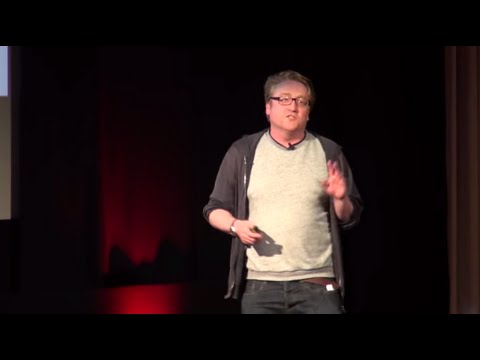
in any case what I hope to talk about was actually not so much the uh kind of the population genetics or epidemiology of ideas that uh are certainly one component of transmission of religious belief but the content of religious belief and in particular um I wanted to expand on the key idea in Richard's first presentation which is that uh religious belief is not likely to be a biological adaptation itself but rather a byproduct of cognitive faculties that evolved for uh other purposes uh religion is uh a complex uh set of behaviors and beliefs and the any Theory uh trying to explain it in psychological terms will also be complex precisely because it is not one thing it's very unlikely that we have a god module in the brain but rather there are a number of different uh ways of thinking and feeling that are brought together in somewhat different combinations and different cultures to comprise what we think of as religion uh in my commentary on uh Wednesday I um made mention of one key component of religious belief that recurs in in many cultures and that is the belief in um uh disembodied Spirits uh Souls ghosts Gods Saints and so on uh which following a number of cognitive psychologists I suggest is made possible by a fundamental human cognitive ability one that psychologists call theory of mind or intuitive psychology Dan Dennett called it the intentional stance that is the ability to impute uh invisible Minds to other people as a way of explaining their behavior uh from which it's a short step to uh conceptualize Minds that are uh detached from their bodies namely souls and Spirits this is part of a more General uh phenomenon in religious belief that Pascal buer and Scott Tran call attention to that most religious Concepts consist of mundane Concepts ones that we uh traffic in in everyday thought and and discourse but with one uh amendation one property struck out uh but the rest of the concept being inherited intact in the case of uh a soul it is a our intuitive psychology that is uh engaged we think of souls uh without being taught not as human agents who can be bribed or persuaded uh who need evidence to gain knowledge the one thing that's crossed out is that ordinarily minds are attached to bodies you just cross that bit out and you get souls gods and spirits but all the rest of our intuitive psychology uh comes along for the ride you don't have to tell people that a uh Saint um for example will be pleased if you give it something that it wants that's something that people supp apply for free uh and indeed even if religious Dogma does not explicitly mention uh typical trait of a human mind uh experiments have shown that the followers will fill it fill it in themselves uh an amulet an idol a uh an object with Supernatural Powers uh will obey our intuitive physics but with uh one quality uh crossed out and replaced by another namely that it can cure a disease or can listen to uh one's speech uh now people uh who uh believe in these uh uh special objects don't consider them to be part of their mundane experience uh it's not as if people holding religious beliefs are literally duded and think that the laws of the uh the universe really are abreg um uh routinely uh which is why there is always a sense of specialness and mystery and awe and wonder surrounding uh religious Concepts um according to uh Scott atran whose book uh in Gods We Trust is a very interesting psychological analysis of religion an ability to entertain counterintuitive beliefs is only one of four recurring components of uh religious belief and practice another one is that once one is told of these Special A inspiring uh entities uh one tends to link them to existential uh problems that all human Minds can uh can face such as the certainty that we're going to die the uh high probability that various tragedies will befall us such as illness defeat uh betrayal and that it's a natural connection for people with very strong desires to have some control over these uh existential issues in their in their life to appeal to this Mysterious World of Wonders the disembodied Souls objects with magical powers uh a third component is that um because these counterintuitive concepts with the promise of solving or addressing existential dilemmas can't be falsified or um uh verified the only way to reinforce a belief in them is by a shared avowal uh in ceremonial circumstances of those beliefs you can't do an experiment but you can get together with other people and uh affirm one's faith in it simultaneously and this third component of uh religion is um ceremony ways in which the a group of people um share a common belief and also reinforce their solidarity as a group through uh a number of psychological techniques now this Richard alluded to explanations of religion in terms of group selection namely that groups with particular beliefs might be more formidable in battle than those without such beliefs and uh therefore like minded groups will proliferate at the expense of ones without religious belief uh Richard was skeptical of that kind of explanation as am I as uh is atran uh who points out that uh group solidarity uh in fact benefits individuals to the extent that um defectors uh cheaters can be controlled that the uh a group of people acting together and this for reasons explained uh very lucidly in Richard's book The Selfish Gene can enjoy a number of benefits of cooperation but are always vulnerable to those who would seek to um uh enjoy the advantages of group membership without contributing to the common welfare and uh policing possible cheaters and defectors is the fundamental problem in uh uh group living among non-relatives uh so uh religious systems often uh exploit our emotional and cognitive faculties in order to uh weed out defectors to make sure that people who are enjoying the group benefits pay their cost and one of them is uh public costly commitment uh that is to become a respected member of the group you have to prove that you're willing to contribute to the to the common will by um publicly making some sacrifice that is genuinely costly and genuinely hard to fake uh sacrificing your uh an best animals your best crops uh as in the story of the finding of of uh Isaac your your uh son uh in real Jewish tradition uh you hand over your newborn son and say go ahead uh cut off a piece of his genitals uh only people who are pretty serious about being a member of the group will are be willing to make such a sacrifice and those kinds of blood sacrifices are a ubiquitous element of uh religion as a commitment device finally the um ceremony um uh ceremonial aspect um uses a number of perceptual and cognitive um quirks of humans in order to help submerge the interests of the individual uh to the group and indeed the uh use of these various tricks uh again reinforcing uh one of Richard's arguments is not evidence that uh humans naturally uh submerge themselves to the group for the benefit of the group but on the contrary the fact that so many different tricks and techniques must be used to get people to commit to the group suggests that it actually runs against our psychology and which is why all of these methods of subterfuge must be uh called in a number of them actually were were um summarized by an anthropologist named Alan Fisk who uh points out that the kind of solidarity that uh is felt within a family uh for again for reasons that uh Richard explained in the selfish Gene basic Bally that family members share genes so genes that Foster kin solidarity will be helping copies of themselves when they uh cause a person to AE a blood relative that non-relatives aspire to this degree of solidarity it does not in fact come naturally to non-relatives but they have to be manipulated into treating other members of the sect or Clan or tribe as if they were members of the family and one of the techniques is to appeal to people's kinship Psychology by likening the group to a kind of family and indeed terms like Brethren Brotherhood uh Our Father are common in uh religious in treaties uh and the idea is to create the illusion that a group of people who are not in fact uh related by descent group of people who are not in fact uh related by descent uh are um fictive kin is what they term that answer anthropologists often use another technique um is um uh commensal celebrations sacramental meals uh as a way of fostering an illusion that people are as as we say one flesh there is a uh widespread conceptual Quirk of humans uh sometimes called psychological essentialism that we feel that living things gain their powers by being made out of some kind of stuff uh or Essence some uh material that makes up their constitution and gives them their powers uh and uh this can be seen in in very young children it can also be seen in educated uh adults who really do believe in the old adage you are what you eat one of my favorite experiments was from the psychologist Paul Rosen who um described a number of hyp fictitious tribes to University of Pennsylvania undergraduates and each one of these tribes hunted both Turtles and wild boar but what he manipulated is that in the experiment is that some of the subjects were told that the this hypothetical tribe uh hunts Turtles for their shells and hunts boar for uh for their meat the other was given uh the opposite description that the tribe hunted boar for their I believe for their tusks and Turtles for their meat then he asked them after the story in which these these little cues were embedded um to uh Des characterize the members of this tribe along a number of personality traits and he found that those who uh were to whom the tribe was described as hunting boar for their meat described the tribe as Fierce and uh tough and uh bellicose uh and those who were uh given a description of the tribe that hunted Turtles for their meat described them as you good Swimmers at home in the water and so on uh ivy league students uh I don't know if it's been replicated at Harvard but I have no doubt that it would work uh the uh the the punchline is that um the widespread practice of cementing uh solidarity in belief and in uh other uh human commitments is very often accompanied by uh sacramental meals the idea being we all eat the same stuff we're all made of the same stuff and yet uh a third uh uh technique is um ritualistic repetitive motions uh bowing simultaneously towards Mecca uh standing up uh and sitting down at the same time um engaging in uh simultaneous coordinated postures and this I suspect exploits a property of human perception which Psych ol ologists call the Gestalt law of common fate namely when objects move in a parallel trajectory they are seen as being grouped into a larger object an example being um when when when uh you see a flock of geese flying south in a V formation um one can see it either as individual birds or it sometimes really looks like a Flying V as if the um tightly coordinated motion gives the illusion of uh it being one large object instead of a collection of small ones now that's not why the geese do it uh but it might be why the congregation does it that if one sees uh several hundred bodies moving together uh one feels as if one is part of a larger superorganism which is that much more uh formidable and uh and impressive uh the um this brings me to to a final Point again the fact that these tricks have to be used uh I have to emphasize because I think it's easy to confuse two positions one is that people are uh by engaging in these rituals are naturally um uh susceptible to a group psychology and therefore the uh behavior is uh evidence that people naturally submerge their interest to those of the group with an idea that I the uh opposite idea which I think is a better fit to the phenomena namely that people don't naturally submit submerge their interest to the group uh and which is exactly why these ceremonies and rituals and simultaneous public avows and uh uh costly sacrifices are necessary we don't need uh complicated rituals uh to or costly sacrifices to induce us to breathe or to eat or to have sex uh people are don't need much inducement to do those but they do need an inducement to uh avow these counterintuitive beliefs and to uh meld their minds with those of the rest of the uh Community the final point is that um again returning to a one of the major themes of uh Richard's earlier writings that in in in um technical uh evolutionary biology human religion is not the only example of animals uh making a paradoxically uh uh self-sacrificing um kinds of behavior that biologists often will see in uh snails in uh birds and in all kinds of creatures um behavior that would seem to go against the uh Fitness of the individual and uh I think one of Richard's most interesting contributions to technical evolutionary biology is that this Paradox can often be resolved not by asking not what good is it for the uh snail to sacrifice itself to the birds uh but rather could the snail be uh being manipulated by some organism other organism and so the snail's sat self-sacrificial Behavior Uh may not be to the benefit of the snail but to the benefit of say the parasite inside the snail that is pulling the strings and pushing the buttons of the snail's nervous system to get the snail to do something that in fact runs against the snail's interests but that is compatible with the parasites interests and in the solving the puzzle of uh self-sacrificing behavior in the context of religion the question the right way of framing the question in the spirit of of Richard's theory of of manipulation is not what good does it do the individual who's prostrating himself in front of the Gods but what good does it do the religious leader to be able to manipulate the flock to sacrifice themselves for the benefit of the group and indirectly for the benefit of the leader of the group and uh another uh widespread constituent of religious practice is uh first of all the the fact that there are religious leaders shamans and Priests and uh and so on but that they also um cleverly uh abase themselves in front of an even higher power this hypothetical uh disembodied spirit this world of Wonders to which they have privileged access and in fact sometimes it's rather convenient to invoke a an invisible higher authority in order to um get what you want in situations of uh conflicting interests such as uh bargaining and threats so just to take an analogy um you go and um into a uh car dealer you want to negotiate the best price for the car and you say uh can you sell me this car for $20,000 and the car salesman says I would love to do that but you know it's really not in my power let me go check with my boss and see if he'll let me do that and then they go out smoke a cigarette come back and say uh well Jo would really like to but my boss says that I can't do it and you know I like your face and you're a worthy customer but it's just beyond my power uh so I can only sell it to you for I can't go a penny less than 22,000 uh as much as I would like to so that dynamic of sacrificing control in deference to some higher authority especially one to whom you have exclusive access is actually a rather uh clever uh negotiating technique uh and likewise a leader who says the guy upstairs uh won't let me do this has asked me to pass on this command to all of you and so on uh might be taking advantage of a feature of our psychology in um uh in in pursuing uh his own goals possibly at the expense of the goals of the followers so I'll I'll end up on that note with uh a note of of how religious leaders can sometimes deliberately um abase themselves to a hypothetical higher authority uh with a joke uh and religion of course has been a fertile source for uh uh jokes and humor uh this one is um uh set in a a synagogue on yum for the holiest day of the year and uh at the climax of The the ceremony the rabbi and the caner are uh standing in front of the opened Ark in front of the uh Torah uh the caner falls to his knees looks Skyward and says Lord I am nothing and the rabbi falls to his knees and says Lord I am nothing the congregation is overcome with emotion and the janitor at the back of the room falls to his knees and says Lord I am nothing and the Rabbi says to the caner look who thinks he nothing when Steve you say things like the idea of fictive kin or all the other various things you talked about the idea is to create the illusion the idea is to manipulate the people whatever it might be we could recognize various levels of purposefulness in which that's going on um you seem to be coming down on the side of it being powerful individuals priests political leaders shamans Etc who manipulate other people by using religion and that certainly makes a very persuasive case I could very easily imagine that happening but not the only way in which uh a some sort of purposeful agent could be manipulating Us in the case of the snail manipulated by its parasite to get eaten by a bird um needless to say the parasite is not intentionally manipulating the snail natural selection has favored those parasite genes those worm genes which successfully exert phenotypic effect on snail phenotypes in such a way as to improve the survival of worm genotypes in just the same way as we normally expect genes manipulate their own phenotypes in order to propagate themselves so this is a a non-conscious non-intentional um direct product of natural selection of genes the second kind of uh pseudo purposeful entity that could be be manipulating us is the parasitic ideas themselves it may not be a shaman or a priest or a king who is manipulating people by exploiting religion and exploiting people's psychological impulse to religion it may not be that that priests are deliberately uh emulating the cynical car salesman going to ask his boss whether he can give a good deal um it may be that the ideas themselves are faved in a world of other ideas in a in an ecosystem of other ideas that certain kinds of ideas flourish as replicating entities in their own right and it only superficially looks as though the manipulation is being deliberately done by the human agents or finally as I say it is the human agents themselves which are doing the manipulation um and even within that uh we might subdivide into those cases where the human agents are sort of doing the manipulation but on the one hand they might really in a fully cynical way like the car salesman know exactly what they're doing and probably don't believe in the higher power themselves but they know that the higher power is very valuable to them politically Bally and so they're going to pretend to believe in it and they're going to make use of it that's the cynical end of the Continuum the other end of the Continuum the priests and shamans May sincerely believe in it uh and yet still at some level may be um exploiting it in ways that they at least half know is to their own self-interest and I could imagine a Continuum between those so I suppose what I've done is is erect a rather complicated set of contina um within within a Continuum where um we go from Gene selection meme selection group selection if you agree with it uh and then we go to uh human manipulation which varies within itself from the extremely cynical to the only only slightly cynical and I I would welcome from Steve um some further discussion of of of where he thinks the truth lies along that continuum I agree it's an extremely interesting uh issue and and one that the empirical anthropologists who study religion uh ought to uh put to an empirical test in terms of the degree to which uh religious leaders worldwide uh including in in uh tribal societies um are sincere in their beliefs or are are cynical in them and it may be that there is uh that they they may be sincere uh at the level of their own intentionality uh but cynical at the level of evolutionary intentionality namely that sincerity can be a very good way to trick people uh the um uh I think it was grocho Mark said um the uh most important um trait to get ahead is sincerity if you can fake that then you've got it made and uh for reasons actually again I'll go back to the self-esteem but in the preface to the self-esteem by Robert triers they proba probably the one of the most uh important prefaces in the history of uh publishing uh Bob triers outlined his in a I think two sentences the theory of self-deception Which social psychologists have uh put to such good use namely that the uh in a evolutionary arms race in which there is an advantage to deceiving and an advantage to detecting deception the best deceiver will be the one who in a sense believes his own lies uh the better not to give away the Awful Truth through uh self-contradiction or a nervous tick or sweating and so on uh and this is I think well well known in um human negotiation as uh documented by social psychologists and it might be a reason that uh at least in their own minds many of the leaders are are are not in fact cynical but they believe it themselves and it wouldn't work nearly as well if they were cynical because that that cynicism would itself be detectable but also um again this is I don't mean to suggest these as as um answers because they're really more hypotheses that it would be interesting to uh to test um it may even be true that this uh kind of um groupwise uh self-deception can arise even if there isn't any one leader who benefit and I think we both agree that the religious situation that we're most familiar with the the abrahamic religions with the uh single all powerful deity and the the and um uh uh political SL religious hierarchy is not uh Universal in religious beliefs that you there are also pantheistic beliefs and and uh cases in which there isn't necessarily a religious Authority some Pope or high priest but there still might be a dynamic in which all the members of the group it's in the interests of all the members of the group for some belief to be held by all the other members of the group um as in um in a public goods or prisoners dilemma situation the everyone can benefit if everyone makes some sacrifice to the group uh but many people would lose if some subset of people failed to contribute but got the benefits I mean and this is most dramatic in the case of of War if uh the entire uh platoon or Brigade has solidarity and they all fight together um then uh they can in many cases um uh succeed over an enemy but each member has to worry that if some of the others start to defect he would be a sucker for staying in too long and which is of course why defection in a military context is so instantly and severely punished because the whole Coalition can unravel uh if a few members start to because then and every everyone else is a Sitting Duck or is a sucker for going along and so in cases where there is an advantage to the individuals of the group um acting together of everyone simultaneously agreeing to sacrifice for the good of the group which then redounds to the group good of the individuals each person might see it in his interest to have this belief uh in the form ability and and um uh solidarity of the group be uh avowed by everyone else and if there is there is a coordination problem to which religious ceremonies might be a kind of solution namely to um set up the situation in which your uh your your brethren as they say uh are unlikely to defect and as part of the bargain you allow yourself to be manipulated so that you're not temped a defect uh but as long as the this um in a sense it's a manipulation of every everyone agreeing to manipulate everyone else and themselves simultaneously can be a way of uh enjoying the benefits to the individual of group membership and protecting it against the danger of of unraveling even if it isn't one Superior Authority who by enforcing these myths and rituals uh benefits at the expense of the group members I I mean I I think um Axel Rod's book uh which sort of started out a lot of this thinking the sort of thing you're talking about he has a chapter on how to um set up so Societies or set up groups in such a way as to maximize cooperation and uh once again and that's sort of what you're talking about now you you're setting up a military organization um in such a way as to maximize so every indiv individual can maximize their benefit but organization um in such a way as to maximize so every indiv individual can maximize their benefit but uh again I'm curious uh to wonder how well wonder the extent to which in this case generals um did sit down together and actually say well how should we organize our structure in order to um maximize Axel rodian cooperation um obviously they never read Axel Rod but I mean um in in in in some sense do the does the high command um tailor the institutions in order to achieve the results that you're talking about or do they in some sense emerge uh by um not not a not a simply darwinian process but some sort of uh quasi darwini and I think we we need probably research on that very question and on the matter of of religion it does seem to me vitally important to know whether religious people are being manipulated by leaders or are being manipulated by memes because that's a first step towards combating the Menace which is religion um turning to Dr doose um I'm trying to work out why I found it difficult to follow quite what he was I think it was because at several points crucially I could have done with a for example um I mean we we we heard that um evidentialist views that all beliefs should be based on evidence uh will lead ultimately to what he called an intolerable skepticism and clearly he didn't have time to spell out the epistemological reasoning and I'm certainly not asking him to do so but it would be quite nice to hear an example of what just just one example of what intolerable skepticism might look like when what how would we recognize in intolerable skepticism if we saw it um so perhaps in in in a moment he he might respond to that um he then went on to discuss ways in which beliefs might be rationally held in the absence of evidence and he invoked the idea of parity which which I understood to be something like this that um we accept certain perceptual beliefs uh as the fundamental evidential data which we just accept and we can't prove that that they're valid if we we see something and we just believe it's true um and uh by and by analogy with that it may be that some of the experiences is which Mystics and other religious people report as I have experienced God and this experience is just as real to me as my experience of uh this microphone or this book so by an an argument of parity I should accept the experience of God as just as valid as the um experience of my own eyes um Dr doose himself was not wholly convinced by that and he went on to talk about um the reason why you accept your primary perceptual data is rather more um that they all hang together they make sense in the context of each other and I could warm to that that seemed to me to be a a a rather promising approach and I suppose if you wanted to apply that in a positive way to religion you would say that in um highly evolved religious systems the various experiences that people within one religion within one religious tradition report hang together in some sort of mutual coherence but that set me thinking about the reason why scientific beliefs are uh I think so much more persuasive than either religious beliefs or than simple perceptual beliefs um everybody knows that visual Illusions and other sensory sensory Illusions are remarkably persuasive so actually we don't necessarily trust our sense organs our sense organs quite often do mislead us how do we know they they mislead us well we know from again hanging together scientific data which are um a whole Corpus of experimental data of theory of observational data all of which hang together in the same kind of way as I think he was implying for uh for religions if we ask how do we know that the continents drift about in plate tectonics how do we know that DNA is a double helix nobody has seen these things this this is not direct perceptual information what this is is um evidence put together by the entire International scientific Community where the measurements that are used to in substantiation of theories and hypotheses are sense data you need eyes to read the uh the gauges of your instrument you need um eyes to read the fingerprint patterns of of magnetic stripes on the sea floor which indicate that the sea Flor is spreading or not eyes but magnetometers and then eyes read the gauges on the magnetometers so certainly sense data um lie at the bottom of all scientific um observation and experiment but in a very mundane ordinary sort of way the important evidence comes not from direct sensory perception but from hypotheses tested from measurements exhaustively made uh from uh computations made upon them from a consensus which emerges from as I said the entire scientific Community there are notorious cases where um perception simp simple perceptual beliefs to use his phrase are actually disconcertingly disproved by scientific evidence um I mentioned visual Illusions but the uh the the weirdness of quantum mechanics for example um which is flat contrary to uh perceptual beliefs and deeply disconcerting to anybody who relies on perceptual beliefs and intuitive uh beliefs nevertheless the uh experimental evidence in favor of quantum mechanics is overwhelmingly strong and um perhaps I better hand over to Dr doose on that um yeah well we're not going to be able to settle these but just to quickly remark um um I'm on the Intolerable skepticism um um skating over some crucial assumptions but the basic idea is um if you're an I mean view it this way you want to know um imag imagine yourself faced with a skeptic and you want to know um you ask the skeptic you know what do I need to convince you he says well for your belie for this belief you need to give me evidence for it um and you eventually will want to know well which propositions will you accept as evidence without my providing evidence for them and if he says absolutely none um I want evidence for every single one of them and also won't allow circular reasoning um it looks like you won't have anything to begin with in your argumentation I mean the way to put it is if all our beliefs are treated as guilty until proven innocent you won't be able to prove any of them innocent because you have nothing to begin with um thus we try to treat at some of them as innocent until proven guilty um and it looks like the best way to do that is to take certain P simple perceptual beliefs as being among those who get that special status um you are absolutely right um our simple perceptual beliefs go wrong we find this out um and we um correct them right um that's because the um rationality that's conferred on them in this non-evidential way is defeasible can be and what happens is um and this is one of the things um science does for us is tells us when we're going wrong but see the difference is if you treat your beliefs generally as innocent until proven guilty then there is the possibility of proving some guilty and we do that right but if you treat them all as guilty until proven innocent there's no doing anything that's why um um this approach to epistemology takes reasoning as giving some initial status to the beliefs we naturally form and sees reasoning is just trying to adjudicate among them um and that means um even if theistic beliefs have this status right there is still the possibility and um that they get proven guilty um and that may happen well then what is the difference between I mean why privilege theistic beliefs rather than the literally billions of beliefs which
Up Next

6:04
Bilingual Advantage in Cognitive Psychology Explained
@ustavceskehojazykaateoriek585
424 views•2020-11-27

68:32
Cognitive Skills for Differentiated Instruction | Teacher PD
@BrainWareLearning
631 views•2017-12-17

9:55
Thinking, Fast and Slow: Daniel Kahneman Animated Book Summary
@FightMediocrity
2.3M views•2015-06-05

6:40
The Nocebo Effect: How Beliefs Can Cause Real Harm
@CGPGrey
10.4M views•2013-12-23
Related Study Plans & Knowledge Roadmaps
Structured learning paths in Psychology
psychology
Neuroscience of Creativity: Networks & Training
01Foundations of Creative Cognition
02The Cognitive Neuroscience of Insight & Fixation
03The Triple Network Model of Creativity
+ 1 more learning modules
15h4 modules
Explore Roadmap
psychology
Imposter Syndrome: Etiology & CBT Framework
01Defining the Imposter Phenomenon
02Socio-Developmental Etiologies
03CBT Fundamentals & Thought Distortions
+ 2 more learning modules
15h5 modules
Explore Roadmap
psychology
Adult ADHD: Executive Dysfunction & Scaffolding
01Neurobiology of the ADHD Brain
02The Core Triad of Executive Deficits
03Executive Dysfunction and Emotional Regulation
+ 2 more learning modules
12h5 modules
Explore Roadmap
psychology
Loneliness: Evolution, Neurobiology & CBT
01Evolutionary Origins of Human Connection and Loneliness
02The Neurobiology and Physiology of Chronic Loneliness
03Maladaptive Social Cognition: The Psychological Loop
+ 2 more learning modules
12h5 modules
Explore Roadmap