Moral Reasoning: Developmental vs Intuitionist
Learning Goal: Compare the cognitive-developmental and social-intuitionist models of moral reasoning, and evaluate how intuitive moral foundations influence political, ethical, and cultural conflicts.
- Prerequisites: None (Introductory psychology or basic sociology recommended).
- Estimated Total Study Time: 8 Hours
Module 1: The Rationalist Roots: Cognitive-Developmental Theory
This module explores the historic rationalist paradigm of moral psychology. You will study how cognitive-developmental theorists, specifically Jean Piaget and Lawrence Kohlberg, asserted that moral development is a conscious, logical process that progresses through structured, sequential stages. Through the lens of the famous "Heinz Dilemma," you will analyze how children and adults construct moral reasoning based on justice, rights, and rules.
Recommended Videos
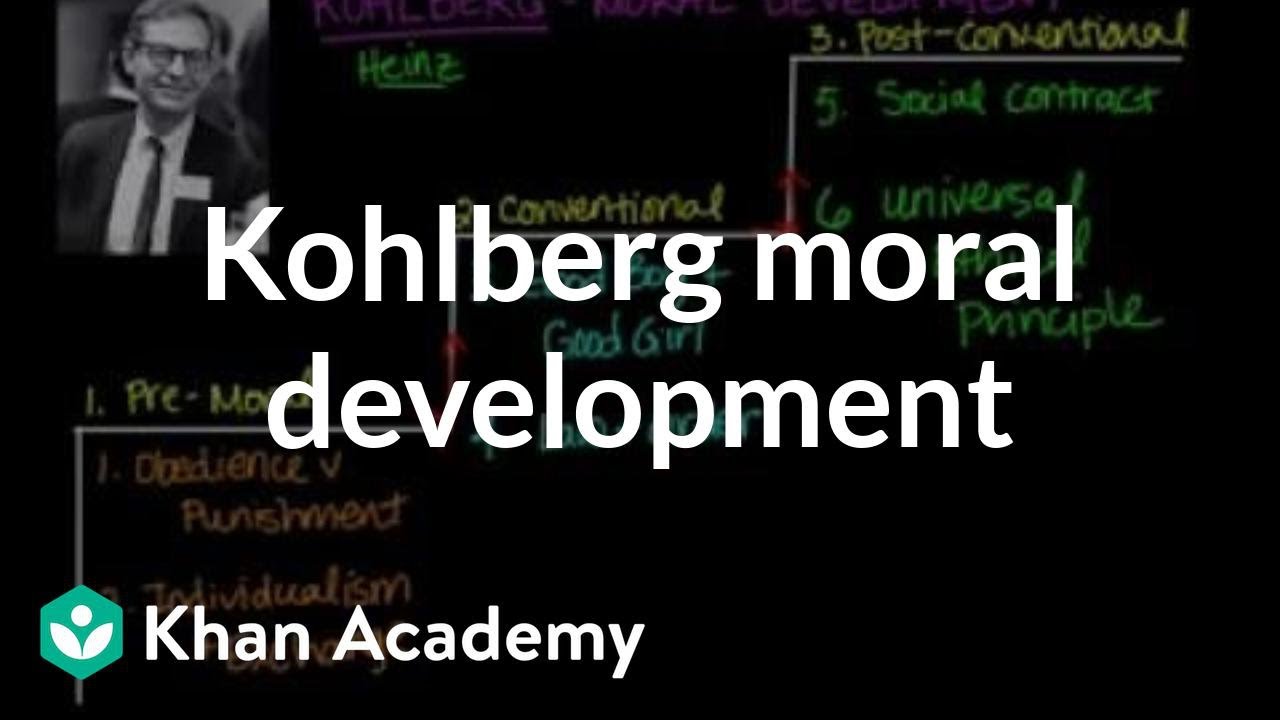
Why this video: This video provides a systematic, highly structured breakdown of Kohlberg’s three levels of moral development (Pre-conventional, Conventional, and Post-conventional) and their respective six stages. It serves as an essential academic baseline, explaining exactly how moral reasoning shifts from egoistic self-interest to societal conformity, and finally to abstract ethical principles.
- Knowledge Checkpoint:
- Identify the primary differences between the Pre-conventional, Conventional, and Post-conventional levels of morality.
- Explain how a person in Stage 1 (obedience and punishment) differs in their reasoning from someone in Stage 6 (universal ethical principles).
- Describe the cognitive shift required to move from rule-following (Stage 4) to social-contract logic (Stage 5).
Why this video: This video offers a clear, highly visual summary of Kohlberg's framework, using direct examples to cement how each stage functions. It is an excellent resource for reviewing the theory's structural mechanics and preparing for practical application scenarios.
- Knowledge Checkpoint:
- Detail the logic of "individualism and exchange" (Stage 2) in everyday decision-making.
- Give a real-world example of how "good boy/good girl" orientation (Stage 3) dictates teenage social behavior.

Why this video: This video directly targets the foundational thought experiment of rationalist moral psychology: the Heinz Dilemma. It demonstrates how Kohlberg analyzed how people justify their answers (the structure of reasoning), rather than whether they simply answered "yes" or "no" to Heinz stealing the drug.
- Knowledge Checkpoint:
- Explain the Heinz Dilemma in your own words, outlining the conflict between property law and the value of human life.
- Contrast how a conventional-level thinker and a post-conventional-level thinker would justify Heinz's decision to steal.
Module 2: The Intuitive Shift: The Social-Intuitionist Model
This module introduces Jonathan Haidt's groundbreaking challenge to the rationalist model. You will examine the Social-Intuitionist Model, which flips the traditional paradigm by arguing that moral judgments are driven primarily by rapid, automatic emotional reactions ("intuitions"), with conscious reasoning occurring after the fact to justify those gut feelings. This is illustrated through Haidt's famous metaphor of the Elephant and the Rider.
(Note on review corrections: Irrelevant cartoon videos about elephants have been filtered out of this curriculum to maintain academic rigor).
Recommended Videos

Why this video: This video directly addresses the gap identified in earlier curricula by presenting a clear, targeted explanation of Jonathan Haidt’s "Elephant and Rider" metaphor. It demonstrates how the automatic, emotional mind (the Elephant) makes rapid moral determinations, while the conscious, logical mind (the Rider) acts primarily as a press secretary, constructing rationalizations for choices the Elephant has already made.
- Knowledge Checkpoint:
- Define the roles of the "Elephant" and the "Rider" within Haidt’s social-intuitionist framework.
- Explain why attempts to persuade others using logic alone (appealing only to the Rider) so frequently fail in moral debates.
- Describe the concept of "moral humility" and how it emerges from recognizing our own intuitive biases.

Why this video: In this video, Haidt explicitly details what he terms the "rationalist delusion"—the false belief that human beings are capable of unbiased, logical moral discovery. He explains how moral reasoning behaves more like a defense attorney protecting a client (our self-esteem and social standing) than a objective scientist seeking truth.
- Knowledge Checkpoint:
- Explain why reasoning in moral psychology is compared to a defense lawyer rather than a scientist.
- Define the "rationalist delusion" and identify its primary critiques of classical Piaget/Kohlberg developmental models.

Why this video: This concise summary introduces the core themes of Haidt’s seminal book, The Righteous Mind, quickly recapping how automatic emotional processes precede and direct conscious thought.
- Knowledge Checkpoint:
- Articulate the basic thesis of The Righteous Mind regarding how moral divisions arise.
- Contrast how rationalism and social-intuitionism differ in their timelines of moral decision-making.
Module 3: Anatomy of Morality: Moral Foundations Theory
How are our automatic moral intuitions actually structured? This module deconstructs Jonathan Haidt and Jesse Graham's Moral Foundations Theory. You will explore the evolutionary origins of human morality, comparing our moral psychology to "taste receptors." We will individually break down the six primary foundations: Care/Harm, Fairness/Cheating, Loyalty/Betrayal, Authority/Subversion, Sanctity/Degradation, and Liberty/Oppression.
Recommended Videos
Why this video: This video provides a clean, systematic definition of the moral foundations. It covers the core evolutionary purpose behind the foundations, showing how they served as psychological adaptations allowing our ancestors to solve key survival challenges.
- Knowledge Checkpoint:
- List the primary moral foundations and state the core concern of each.
- Differentiate between the "individualizing" foundations and the "binding" foundations.

Why this video: Haidt introduces the "taste buds" analogy of human morality in this video. Just as humans evolved chemical taste receptors (sweet, sour, salty, bitter, umami) to guide our nutritional choices, we evolved psychological moral foundations to guide our social survival.
- Knowledge Checkpoint:
- Explain how the "moral taste buds" analogy helps us understand diverse cultural and ethical values.
- Discuss why certain cultures or groups might have more sensitive "receptors" for some foundations over others.

Why this video: This deep-dive video connects the psychological structures of morality to their evolutionary roots, detailing ancestral survival mechanisms like reciprocal altruism, coalition building, and in-group/out-group dynamics.
- Knowledge Checkpoint:
- Explain how "reciprocal altruism" laid the evolutionary groundwork for the Fairness/Cheating foundation.
- Describe the evolutionary survival advantage of the Loyalty/Betrayal and Authority/Subversion foundations in tribal environments.
Module 4: Political and Cultural Polarization
With the six moral foundations established, this module applies them directly to modern politics and culture. You will evaluate how different political ideologies (liberals, conservatives, and libertarians) prioritize different combinations of moral foundations. This structural divergence explains why political debates often feel like shouting matches across a linguistic and ethical void.
Recommended Videos

Why this video: This is Jonathan Haidt's definitive TED talk on the moral configurations of political groups. He presents empirical data showing that self-identified liberals rely heavily on the Care and Fairness foundations while rejecting the binding ones, whereas conservatives utilize all foundations relatively equally. This difference explains the fundamental divide in how each group defines a "good" society.
- Knowledge Checkpoint:
- Map the typical moral profile of a modern American liberal, identifying which foundations are heavily emphasized and which are minimized.
- Map the typical moral profile of a modern American conservative, explaining the concept of a "broad-spectrum" moral matrix.
- Describe how this difference in foundation prioritization leads to opposing views on social welfare and national security.

Why this video: This video highlights the neurological and evolutionary realities behind polarization. It explores how our brains' ancient threat-response systems interact with political narratives, turning moral differences into perceptions of physical danger.
- Knowledge Checkpoint:
- Explain how a threat-based mindset (evolved to avoid predators) influences modern partisan politics.
- Describe how political groups weaponize moral foundations to frame their opponents as moral threats rather than mere political competitors.

Why this video: This lecture analyzes the psychological personality traits (Big Five) that underpin political leanings. It argues that liberals (high in Openness) and conservatives (high in Conscientiousness/Orderliness) play necessary, complementary roles in societal health.
- Knowledge Checkpoint:
- Connect the personality trait of "Openness to Experience" to the liberal moral emphasis on progress and care.
- Connect the personality trait of "Conscientiousness" (particularly orderliness) to the conservative moral emphasis on sanctity, authority, and preservation.
- Explain why a functional society requires a dynamic tension between liberal and conservative moral frameworks.
Module 5: Bridging Divides: Moral Reframing and Conflict Resolution
The final module transitions from diagnosis to treatment. Knowing that our political opponents operate inside different moral matrices, how can we communicate effectively? You will study moral reframing—the practice of translating an argument from your own moral framework into the distinct moral framework of your audience to reduce defensiveness and increase persuasion.
Recommended Videos
Why this video: This highly engaging, concise video introduces the core research on moral reframing conducted by sociologists Matthew Feinberg and Robb Willer. It illustrates how arguments (e.g., environmental protection or military spending) must be framed in terms of the recipient's values to be persuasive.
- Knowledge Checkpoint:
- Define the term "moral reframing" as used in social persuasion.
- Give an example of how you would frame environmental conservation to appeal specifically to the Sanctity/Purity foundation rather than the Care/Harm foundation.
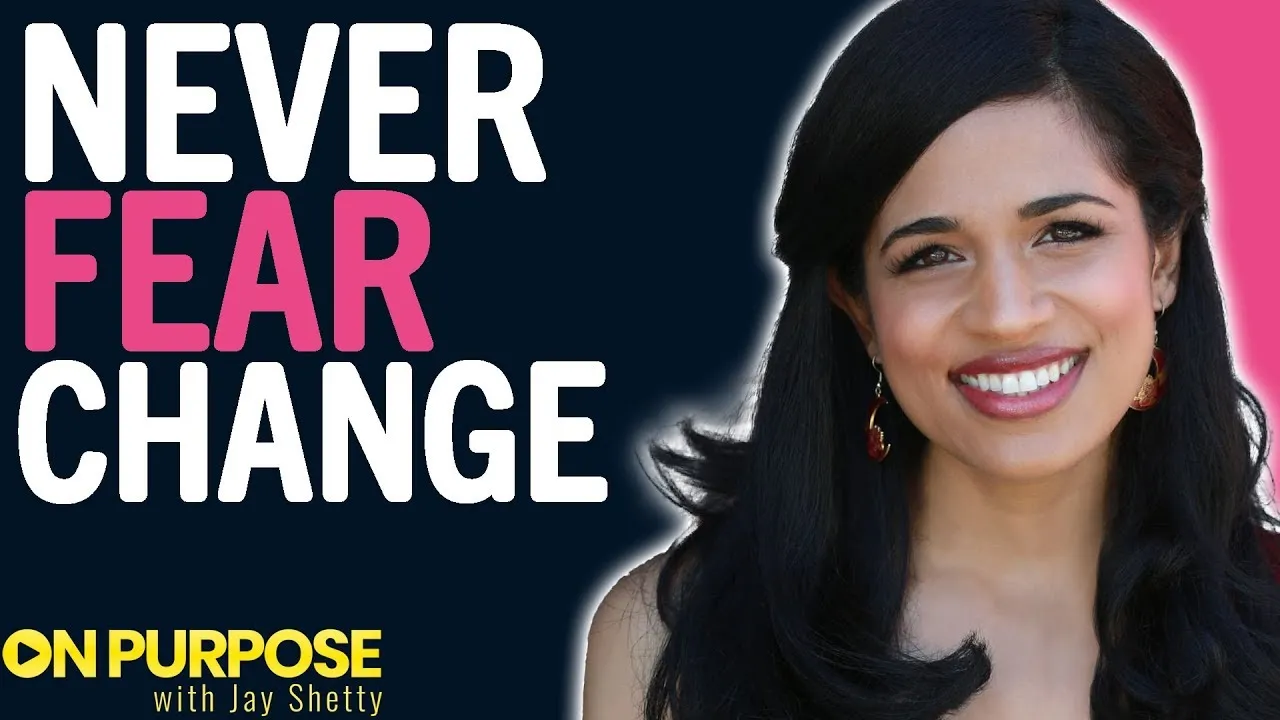
Why this video: Cognitive scientist Maya Shankar gives clear, real-world examples of moral reframing in action. She explains how presenting arguments in ways that validate (rather than threaten) an individual's pre-existing identity can bypass the "defense attorney" Rider.
- Knowledge Checkpoint:
- Describe how "identity threat" shuts down political dialogue.
- Explain how moral reframing preserves an interlocutor’s sense of moral identity while gently shifting their policy positions.

Why this video: This clip connects moral reframing to negotiation and mediation. It emphasizes starting discussions from points of shared belief to establish a baseline of mutual trust before addressing disagreements.
- Knowledge Checkpoint:
- How does beginning with shared moral foundations alter the neurological state of a negotiation partner?
- Identify one practical step you can take to discover an opponent's core moral foundation during a live dispute.
Advanced / Deep-Dive Resource (Low-View Academic Lecture)
To address the gap in advanced mechanics highlighted in the review feedback, students seeking a comprehensive academic overview should consult the following lecture.
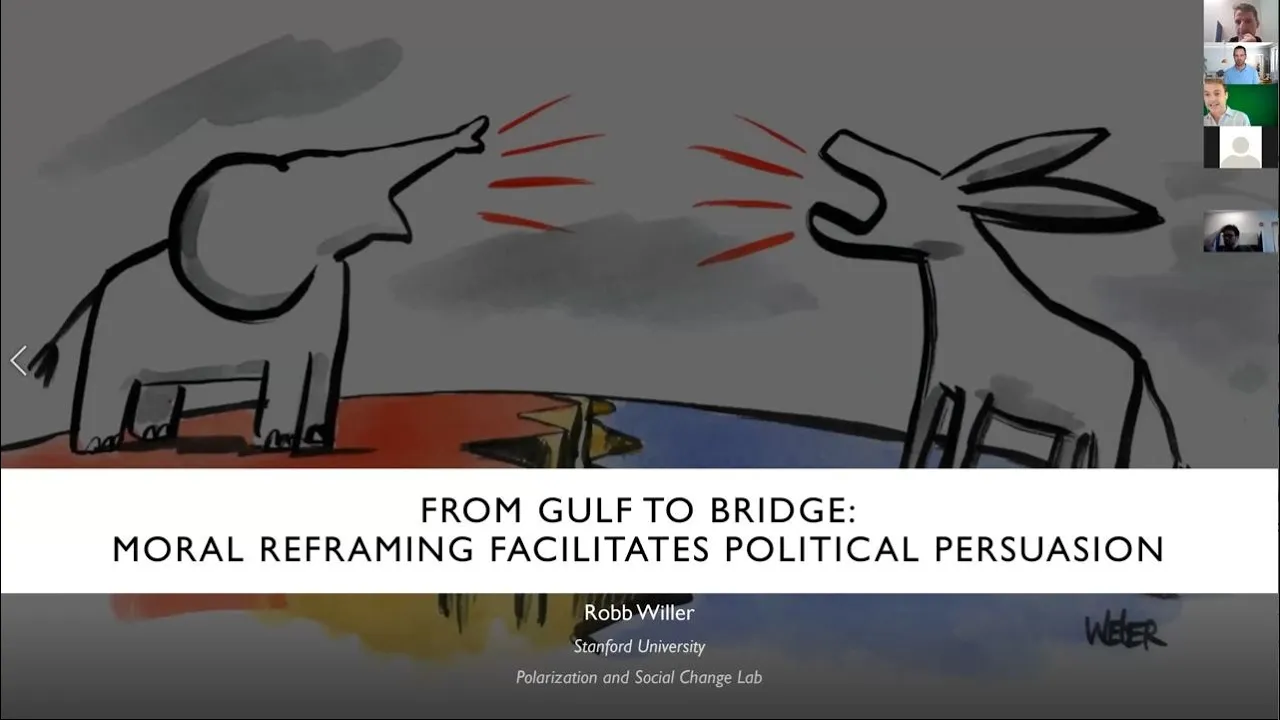
- Why this video is valuable: While this is a low-view video, it features Stanford sociologist Robb Willer presenting his actual peer-reviewed research on political persuasion. It is highly recommended for academic-track students who want to study the exact experimental setups, survey data, and cognitive mechanics behind moral reframing.
Course Map
Key People Index
- Lawrence Kohlberg (1927–1987): American psychologist known for his theory of stages of moral development. Strongly influenced by Piaget, he asserted that moral reasoning is a product of cognitive development, moving systematically toward universal justice.
- Jonathan Haidt (1963–Present): Social psychologist and Professor of Ethical Leadership at NYU Stern. He pioneered Moral Foundations Theory and the Social-Intuitionist Model of moral psychology, challenging traditional rationalist assumptions.
- Jean Piaget (1896–1980): Swiss psychologist who laid the groundwork for constructivist theories of development, demonstrating that children build active mental models of morality through social play.
- Matthew Feinberg & Robb Willer: Leading contemporary sociologists (at Toronto and Stanford, respectively) who empirically proved the efficacy of "moral reframing" as a political persuasion tool.
Final Self-Assessment
Test your synthesis of the course material by completing the following checklist:
- Explain how Kohlberg's Heinz Dilemma assesses the structure of moral reasoning rather than the moral choice itself.
- Differentiate between Kohlberg's post-conventional level and Haidt's social-intuitionist paradigm.
- Diagram the "Elephant and Rider" model and identify which part of human psychology corresponds to each.
- Define the term "rationalist delusion" and outline why Haidt compares moral reasoning to a "press secretary."
- Name all six moral foundations and identify the evolutionary adaptation linked to each.
- Identify which moral foundations are typically "individualizing" and which are "binding."
- Compare the distinct moral configurations of typical American liberals, conservatives, and libertarians.
- Explain how the personality traits "Openness" and "Conscientiousness" correlate to political leanings and moral focus.
- Write out a practical example of how you would reframe a progressive policy (like universal healthcare) using conservative moral foundations (like Loyalty or Purity).
- Explain how the "damaged admission" or "starting with agreement" technique helps bypass defensive moral posturing in conflict resolution.