




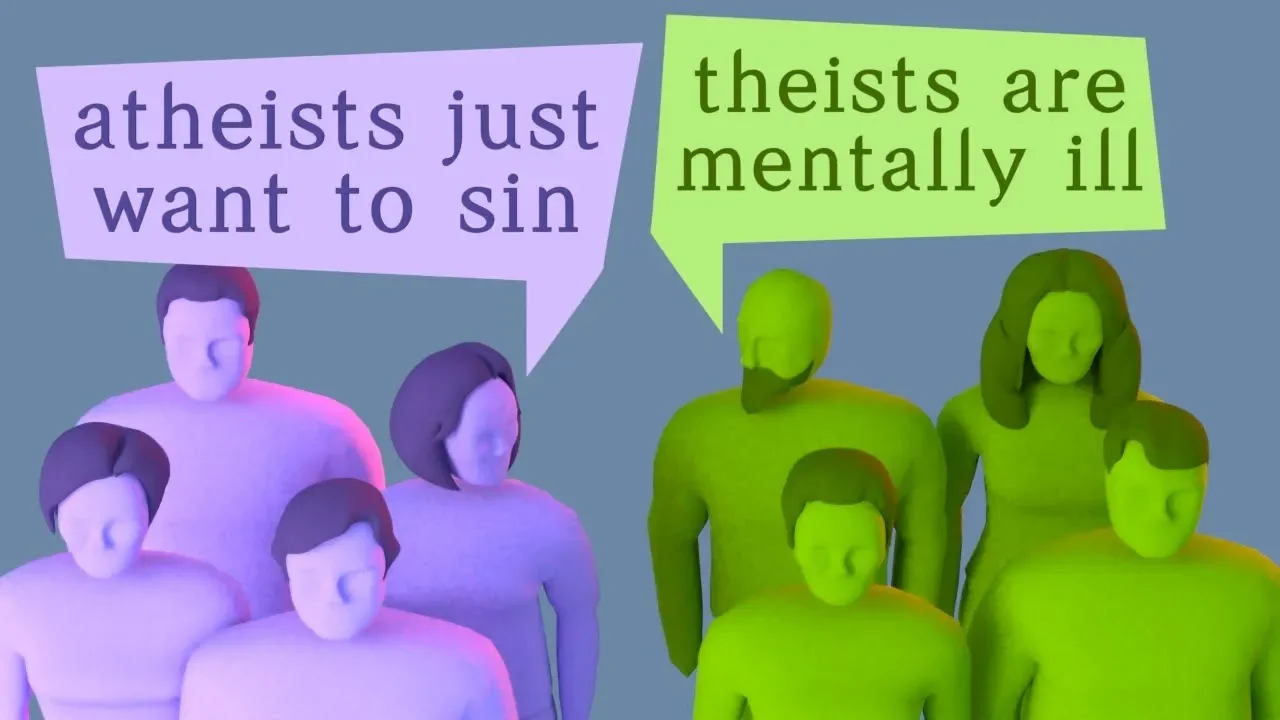














Psychologist Jonathan Haidt explains that human morality is built on five innate foundations—harm/care, fairness/reciprocity, ingroup/loyalty, authority/respect, and purity/sanctity—that shape our political views. Liberals primarily rely on the first two foundations (harm and fairness), while conservatives draw from all five, creating fundamental differences in how each group perceives morality and justice.
The Moral Roots of Liberals and Conservatives | Jonathan Haidt
Added:Understanding the basic spectrum of political ideologies, specifically the fundamental distinctions between modern liberalism and conservatism.
Familiarity with the concept of evolutionary psychology, particularly how natural selection shaped human social behaviors, cooperation, and tribalism.
An introduction to moral philosophy and ethics, including the distinction between rationalist approaches to morality and emotional/intuitive approaches.
Basic knowledge of the social intuitionist model in psychology, which posits that moral judgments are often driven by quick, intuitive feelings rather than conscious reasoning.
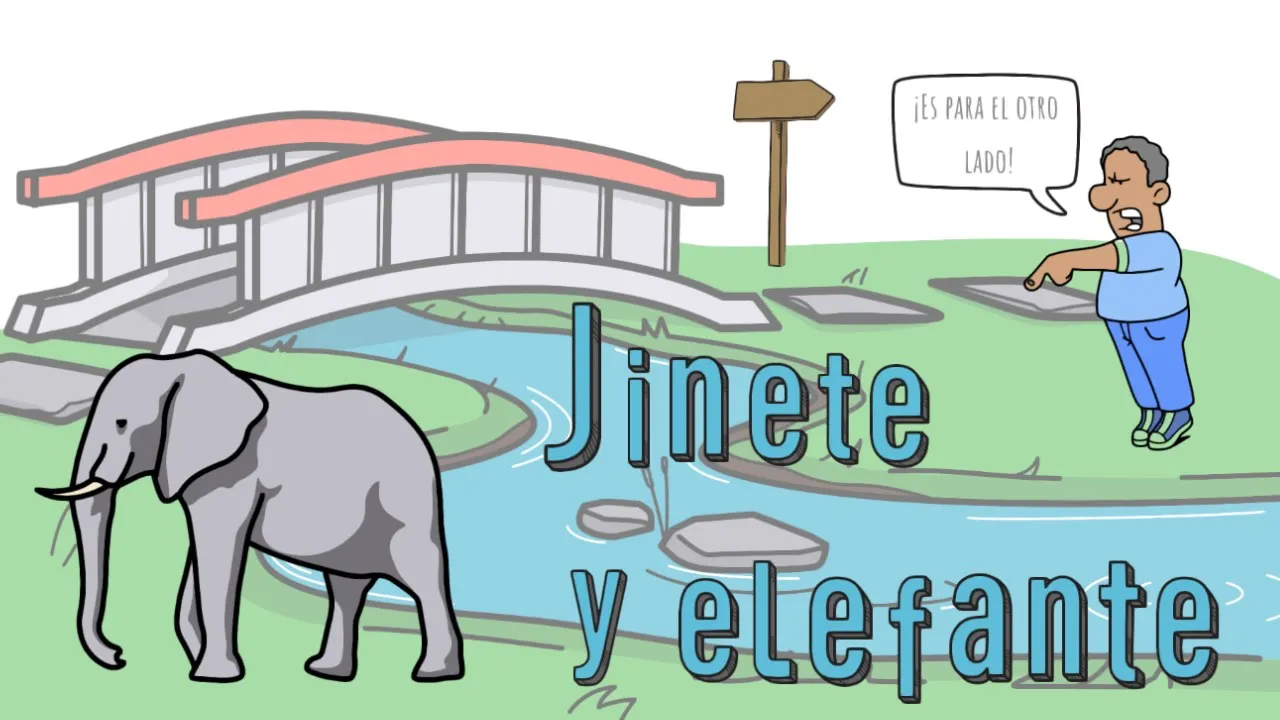
Deepening understanding through Jonathan Haidt's 'The Righteous Mind', which introduces the sixth moral foundation (Liberty/Oppression) and the 'rider and elephant' metaphor.
Exploring the practical application of Moral Reframing—how to communicate political and social policies by framing them within the moral foundations of the opposing side.
Investigating cross-cultural psychology and the distinction between WEIRD (Western, Educated, Industrialized, Rich, Democratic) societies and non-WEIRD societies regarding moral matrices.
Analyzing the role of moral foundations in affective polarization, political tribalism, and contemporary culture wars, along with strategies for depolarization.
2.8M views63.3Klikes18:40Original Release: 2012-12-31
[Music] [Applause] suppose the two American friends are traveling together in Italy they go to see Michelangelo's David and when they finally come face to face with the Statue they both freeze dead in their tracks the first guy we'll call him Adam is transfixed by the beauty of the perfect human form second guy we'll call him bill is transfixed by embarrassment it's staring at the thing there in the in the center so here's my question for you which one of these two guys was more likely to have voted for George Bush which for Al Gore I don't need to show a hands because we all have the same political stereotypes we all know that it's uh that it's bill um and in this case The Stereotype corresponds to a reality it really is a fact that Liberals are much higher than conservatives on a major personality trait called openness to experience people who are high on openness to experience just crave novelty variety diversity new ideas travel people low on it like things that are familiar that are that are uh safe and dependable if you know about this trait you can understand a lot of puzzles about human behavior you can understand why artists are so different from accountants uh you can actually predict uh what kinds of books they like to read what kinds of places they like to travel to and what kinds of food they like to eat once you understand this trait you can understand why anybody would eat at Applebees but not anybody that you [Applause] know this trait also tells us a lot about politics the the main researcher of this trait Robert McCrae says that open individuals have an affinity for Liberal Progressive left-wing political views they like a society which is open and changing whereas closed individuals prefer conservative traditional right-wing views this tra also tells us a lot about the kinds of groups people join so here's a description of a group I found on the web what kinds of people would join a global Community welcoming people from every discipline and culture who seek a deeper understanding of the world and who hope to turn that understanding into a better future for us all this is from some guy named Ted well let's see now if openness predicts who becomes liberal and openness predicts who becomes a tedster then might we predict that most teders are liberal let's find out I'm going to ask you to raise your hand uh whether you are liberal left of center on social issues we're talking about primarily or conserv I'll give a third option CU I know there a number of Libertarians in the audience so right now please raise your hand down in the simal cast rooms too let's let everybody see who's here please raise your hand if you would say that you are liberal or left of center please raise your hand high right now okay please raise your hand if you'd say you're libertarian okay about a two dozen and please raise your hand if you'd say you a right of Center or conservative 1 two 3 four five about eight or 10 okay this is a bit of a problem because if our goal is to understand the world to seek a deeper understanding of the world our general lack of moral diversity here is going to make it harder because when people all share values when people all share morals they become a team and once you engage the psychology of teams it shuts down open-minded thinking um we when the liberal team loses as it did in 2004 and as it almost did in 2000 we Comfort ourselves we try to explain why half of America voted uh for the other team uh we think they must be blinded by religion uh or by simple [Music] stupidity so okay so if you think if you think that half of America votes Republican because they are blind in this way then my message to you is that you're trapped in a moral Matrix in a particular moral Matrix and by the Matrix I mean literally The Matrix like the movie The Matrix um but I'm here today to give you a choice you can either take the blue pill and stick to your comforting delusions or you can take the red pill learn some moral psychology and step outside the moral Matrix now because I [Applause] know okay I assume that answers my question I was going to ask you which one you pick but no need you're all High openness to experience and besides it looks like it might even taste good and you're all epicures so anyway let's go with the red pill let's take let's study some moral psychology and see where it takes us let's start at the beginning what is morality and where does it come from the worst idea in all of psychology is the idea that the mind is a blank slated at Birth developmental psychology has shown that kids come into the world already knowing so much about the physical and social worlds and programmed to make it uh really easy for them to learn certain things and hard to learn others the best definition of innateness I've ever seen this just clarifies so many things for me it's from the brain scientist Gary Marcus he says the initial organization of the brain does not depend that much on experience nature provides a first draft which experience then revises built-in doesn't mean unmalleable it means organized in advance of experience okay so what's on the first draft of the moral mind to find out um my my colleague Craig Joseph and I read through the literature on anthropology on cultural variation IM morality and also on evolutionary psychology looking for matches what are the sorts of things that people talk about across disciplines that you find across cultures and even across species we found five five V matches which we call the found the five foundations of morality the first one is harm care we're all mammals here we all have a lot of neural and hormonal programming that makes us really bond with others care for others feel compassion for others especially the weak and vulnerable gives us very strong feelings about those who cause harm this moral Foundation underlies about 70% of the moral statements I've heard here at Ted the second Foundation is fairness reciprocity uh there's actually ambiguous evidence as to whether you find reciprocity in other animals but the evidence for people could not be clearer this Norman Rockwell painting is called the Golden Rule and we heard about this from Karen Armstrong of course is the foundation of so many uh religions that second Foundation underlies the other 30% of the moral statements I've heard uh here at Ted third Foundation is ingroup loyalty you do find groups of uh in the animal kingdom you do find Cooperative groups but these groups are always either very small or they're all siblings it's only among humans that you find very large groups of people who are able to cooperate join together into groups but in this case groups that are united to fight other groups this probably comes from our long history of tribal living of tribal psychology um and this tribal psychology is so deeply pleasurable that even when we don't have tribes we go ahead and make them because it's fun um Sports is to War as pornography is to sex we get to exercise uh are some ancient ancient drives uh the the fourth Foundation is Authority respect here you see submissive gestures from two m a very closely related species but Authority in humans is is not so closely based on on Power and brutality as it is in other primates it it's based on more voluntary difference and even elements of Love at times the fifth Foundation is Purity sanctity this painting is called the allegory of Chastity but Purity is not just about suppressing female sexuality it's about any kind of ideology any kind of idea that tells you that you can attain virtue by controlling what you do with your body by controlling what you put into your body and while the political uh right May moralized sex much more uh the political left is really doing a lot of it with food food is becoming extremely moralized nowadays and a lot of it is ideas about purity about what you're willing to touch or put into your body I believe these are the five best candidates for what's written on the first draft of the moral mind I think this is what we come with at least a preparedness to learn all of these things but as my son Max grows up in a liberal college town how is this first draft going to get revised and how will it end up being different from a kid born 60 M south of us in Lynchberg Virginia to think about cultur variation let's try a different metaphor If there really are five systems at work in the mind five sources of intuitions and emotions then we can think of the moral mind as being like one of those audio equalizer that has five channels where you can set it to a different setting on every channel and my colleagues Brian nosic and Jesse Graham and I made a questionnaire which we put up on the web at uh www.y yourmorals.org and so far 30,000 people have taken have taken this questionnaire and you can too here are the results here are the results from about 23,000 uh Americans citizens on the left I've plotted the scores for liberals on the right those for conservatives in the middle of the moderates the Blue Line shows you people's responses on the average of all the harm questions so as you see people care about harm and Care issues they give High endorsement of these sorts of statements all across the board but as you also see liberals care about it a little more than conservatives the line slopes down same story for fairness but look at the other three lines for liberals the scores are very low Liberals are basically saying no this is not morality ingroup Authority per this stuff has nothing to do with morality I reject it but as people get more conservative the values rise we could say that liberals have a kind of a two channel or two Foundation morality uh conservatives have more of a five Foundation or five channel morality we find this in every country we look at here's the data for 1100 Canadians I'll just flip through a few other slides the UK Australia New Zealand Western Europe Eastern Europe Latin America the Middle East the East Asia and South Asia notice also that on all of these graphs the slope is steeper on ingroup Authority Purity which shows that within any country the disagre isn't over harm and fairness everybody I me we debate over what's fair but everybody agrees that harm and fairness matter Moral Moral arguments within cultures are especially about issues of ingroup authority Purity this effect is so robust uh that we find it no matter how we ask the question uh in one recent study we asked people to suppose you're about to get a dog you picked a particular breed you learned some new information about the breed suppose you learn that this particular breed is independent minded relates to its owner as a friend and an equal well if you're a liberal you say hey that's great because liberals like to say fetch please but if you're conservative that's not so attractive if you're conservative and you learn uh that a dog is extremely loyal to its home and family and doesn't warm up quickly to strangers for conservative well loyalty is good dogs ought to be loyal but to a liberal it sounds like this dog is running for the Republican nomination so you might say okay there are these differences between liberals and conservatives but what makes those three other foundations moral aren't those just the foundations of xenophobia authoritarianism and puritanism what makes them moral the answer I think is contained in this incredible cryptic from heronimus Bosch uh The Garden of Earthly Delights in the first panel we see the moment of creation all is ordered all is beautiful all the people and animals are doing what they're supposed to be doing where they're supposed to be uh but then given the way of the world things change we get every person doing whatever he wants with every aperture of every other person and every other animal uh some of you might recognize this as the' 60s but this the 60s inevitably gives way uh to the 70s where uh the uh cuttings of the apertures hurt a little bit more of course BOS called this hell um so this this tryptic this these three panels portray the Timeless truth that uh order tends to Decay the truth of social entropy but lest you think this is just some part of the Christian imagination where Christians have this weird problem with pleasure here's the same story the same progression uh told in a paper that was published in nature a few years ago in which uh Ernst fair and Simon gar had people play a common dilemma a game in which you give people money uh and then on each round of the game they can put money into a common pot and then the experimentor doubles what's in there and then it's all divided among the players so it's a really nice analog for all sorts of environmental issues where we're asking people to make a sacrifice and they themselves don't really benefit from their own sacrifice but you really want everybody else to sacrifice but everybody has a temptation to free ride and what happens uh is that at first people start off reasonably Cooperative this all played a anonymously on the first round people give about half of the money that they can uh but they quickly see you know what other people aren't doing so much so I don't want to be a sucker I'm not going to cooperate and so cooperation quickly decays from reasonably good down to close to zero but then and here's the trick far and gar said on the seventh round they told people you know what new rule if you want to give some of your own money to punish people who aren't contributing you can do that and as soon as people heard about the punishment issue going on cooperation shoots up it shoots up and it keeps going up there's a lot of research showing that to solve Cooperative problems it really helps it's not enough to just appeal to people's good motives it really helps to have some sort of punishment even if it's just shame or embarrassment or gossip you need some sort of punishment to bring people when they're in large groups to cooperate there's even some recent research suggesting that religion uh priming god making people think about God often in some situations leads to more Cooperative more prosocial behavior um some people think that religion is an adaptation evolved both by cultural and biological evolution to make groups cohere in part for the purpose of of trusting each other and then being more effective at competing with other groups I think that's probably right although this is a controversial issue um but I'm particularly interested in religion in the origin of religion and in what it does to us and for us because I think that the greatest Wonder in the world is not the Grand Canyon the Grand Canyon is really simple it's just a lot of rock and then a lot of water and wind and a lot of time and you get the Grand Canyon it's not that complicated this is what's really complicated that there were people living in places like the Grand Canyon cooperating with each other or on the savannas of Africa or on the Frozen shores of Alaska and then some of these Villages grew into the mighty cities of Babylon and Rome and Teno Tian how did this happen this is an absolute Miracle much harder to explain than the Grand Canyon the answer I think is that they used every tool in the toolbx it took all of our moral psychology to create these Cooperative groups yes you do need to be concerned about harm you do need a psychology of justice but it really helps to organize a group if you can have subgroups and if those subgroups have some internal structure uh and if you have some ideology that tells people to suppress their carnality to pursue higher nobler ends and now we get to the Crux of the disagreement between liberals and conservatives because liberals reject three of these foundations they say no let's celebrate diversity not common in group membership they say let's question authority and they say keep your laws off my body liberals have very Noble motives for doing this traditional Authority traditional morality can be quite repressive and restrictive to those at the bottom to women to people that don't fit in so liberals speak for the weak and they want change in Justice even at the risk of chaos if this guy's shirt says stop bitching start a revolution if you're high in open to experience Revolution is good it's change it's fun conservatives on the other hand speak for institutions and traditions they want order even at some cost to those at the bottom the great conservative Insight is that order is really hard to achieve it's really precious and it's really easy to lose so as Edmund Burke said the restraints on men as well as their Liberties are to be reckoned among their rights this was after the chaos of the French Revolution so once you see this once once you see that liberals and conservatives both have something to contribute that they they form a balance on on change versus stability then I think the way is open to step outside the moral Matrix this is the great Insight that all the Asian religions have have attained think about Yin and yangang Yin and yangang aren't enemies yin and yang don't hate each other yin and yang are both necessary like night and day for the functioning of the world you find the same thing in Hinduism uh there are many high gods in Hinduism two of them are visher the preserver Shiva the Destroyer this image actually is both of those Gods sharing the same body you have the markings of Vishnu on the left so we could think of Vishnu as the conservative God you have the markings of Shiva on the right Shiva is the liberal God and they work together you find the same thing in Buddhism these two stanzas contain I think the deepest insights that have ever been attained into moral psychology uh from the Zen Master San if you want the truth to stand clear before you never be for or against the struggle between for and against is the mind's worst disease unfortunately it's a disease that has been caught by many of the world's leaders but before you feel Superior to George Bush before you throw a stone ask yourself do you accept this do you accept stepping out of the battle of Good and Evil can you be not for or against anything so what's the point what should you do well if you take the greatest insights from ancient Asian philosophies and religions and you combine them with the latest research on moral psychology I think you come to these conclusions that our righteous Minds were designed uh by Evolution um to unite us into teams to divide us against other teams and then to Blind us to the truth so what should you do am I telling you to not strive am I telling you to embrace senson and stop stop with this struggle uh uh uh for and against no absolutely not I'm not saying that this is an amazing group of people who are doing so much using so much of their of their talent their Brilliance their energy their money to make the world a better place to fight to fight wrongs uh to to solve problems but as we learned from Samantha power in her in her uh story about Sergio uh Via de de Mayo you can't just go charging in saying you're wrong and I'm right because as we just heard everybody thinks they are right a lot of the problems we have to solve are problems that require us to change other people and if you want to change other people a much better way to do it is to First understand who we are understand our moral psychology understand that we all think we're right and then step out even if it's just for a moment step out check in with senson step out of the moral Matrix just try to see it as as a struggle playing out in which everybody does think they're right and everybody at least has some reasons even if you disagree with them everybody has some reasons for what they're doing step out and if you do that that's the essential move to cultivate moral humility to get yourself out of this self-righteousness which is the normal human condition think about the Dal Lama think about the enormous moral authority of the Dal Lama and it comes from his moral humility so I think the point the point of of my talk and I think the point of the point of Ted is that this is a group that is passionately engaged in the pursuit of changing the world for the better people here are passionately engaged in trying to make the world a better place but there is also a passionate commitment to the truth and so I think the the answer is to use that passionate commitment for to the truth uh to try to turn it into a better future for us all thank you [Applause] [Music] [Applause] m
Up Next

86:04
Narcissistic Shared Fantasy and Induced Psychosis Explained
@samvaknin
46.1K views•2025-03-14

57:36
Sex Differences in Fear: Brain Structure and Behavior | Neuro Science
@NortheasternAlumni
437 views•2020-09-22
4:13
Classical vs Operant Conditioning | Psychology Explained
@TEDEd
3.6M views•2013-03-07

6:40
The Nocebo Effect: How Beliefs Can Cause Real Harm
@CGPGrey
10.4M views•2013-12-23
Related Study Plans & Knowledge Roadmaps
Structured learning paths in Psychology
psychology
Parasocial Relationships (Psychology & CBT)
01Foundations of Parasocial Interaction
02Attachment Theory and Media Identification
03The Illusion of Intimacy in Modern Digital Spaces
+ 2 more learning modules
14h5 modules
Explore Roadmap
psychology
Neuroscience of Creativity: Networks & Training
01Foundations of Creative Cognition
02The Cognitive Neuroscience of Insight & Fixation
03The Triple Network Model of Creativity
+ 1 more learning modules
15h4 modules
Explore Roadmap
psychology
Imposter Syndrome: Etiology & CBT Framework
01Defining the Imposter Phenomenon
02Socio-Developmental Etiologies
03CBT Fundamentals & Thought Distortions
+ 2 more learning modules
15h5 modules
Explore Roadmap
psychology
Adult ADHD: Executive Dysfunction & Scaffolding
01Neurobiology of the ADHD Brain
02The Core Triad of Executive Deficits
03Executive Dysfunction and Emotional Regulation
+ 2 more learning modules
12h5 modules
Explore Roadmap