








![Are people morally inconsistent when it comes to animals? -Simon Gerlach [IARC 2016]](https://i.ytimg.com/vi_webp/SU7kub3xNM4/maxresdefault.webp)













![[찐_리더]#마이클센델 ”‘정의롭다’는 착각이 당신을 파괴하는 이유”](https://i.ytimg.com/vi/e__Xibb9vq8/hq2.jpg?sqp=-oaymwFBCNACELwBSFryq4qpAzMIARUAAIhCGADYAQHiAQoIGBACGAY4AUAB8AEB-AG2CIACgA-KAgwIABABGFAgZShkMA8=&rs=AOn4CLBcCoeBNvtaRcYn5e_oEkmpceCwgw)









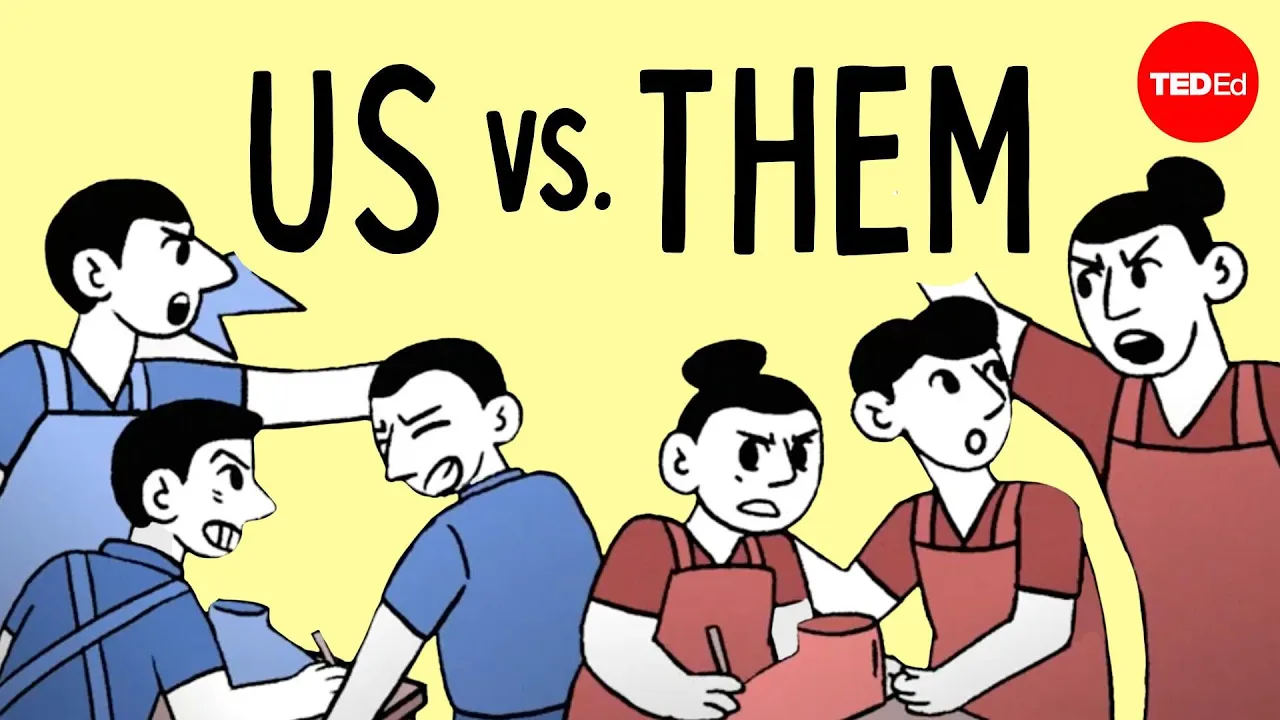
Human persuasion works most effectively by addressing the 'elephant' (our automatic emotional responses) before the 'rider' (our conscious reasoning), as the elephant is far stronger than the rider; moral psychology reveals that humans possess six foundational moral tastes—care, fairness, loyalty, authority, sanctity, and liberty—that shape our political and ethical perspectives, and effective discourse requires adopting modes of curiosity and relationship rather than combat, combined with moral/epistemological humility recognizing that individuals are not as wise as they believe but collective systems can produce remarkable outcomes.
The Rider and the Elephant: Persuasion and Moral Humility Explained
Added:Daniel Kahneman's Dual-Process Theory (System 1 and System 2 thinking) regarding intuitive versus rational cognitive processing.
The concept of cognitive biases, specifically confirmation bias and motivated reasoning, which influence how individuals justify their beliefs.
Jonathan Haidt's Social Intuitionist Model, which posits that moral judgments are primarily driven by instant intuitions rather than post-hoc rationalizations.
An introductory understanding of Moral Foundations Theory and how different evolutionary values shape human ethical outlooks.
Advanced communication strategies such as 'Deep Canvassing' and 'Street Epistemology', which actively apply the 'Rider and Elephant' dynamic to de-escalate ideological conflicts.
The study of Affective Polarization to understand how modern political campaigns and social media algorithms exploit emotional, 'Elephant-first' reactions.
Practical methods for cultivating intellectual and moral humility in leadership, academic debate, and personal relationships.
A deep-dive reading of Jonathan Haidt's book 'The Righteous Mind: Why Good People Are Divided by Politics and Religion' to explore these concepts in greater sociological depth.
The psychological mechanisms of groupishness and tribalism, examining how the 'Elephant' behaves when aligned with a collective identity.
52.2K views717likes10:48Original Release: 2016-12-16
so can we start off by having you explain maybe the difference between how the average person thinks about how persuasion takes place and you know the the dark truth about how it really takes place okay so um when I die and I think about what I've left behind uh eventually it'll probably just be one metaphor and that metaphor is that the mind is divided uh like a rider on an elephant and the rider represents your conscious verbal reasoning the stuff you're aware of the stuff that uses logic and everything else is the elephant it's the automatic processes it's the 99% of what's going on in your mind that you're not aware of and um I developed this metaphor in my book the happiness hypothesis and then it was made famous not by me but by chip and Dan Heath in their wonderful book switch um and what the advice boils down to is most of us spend a lot of our time trying to persuade other people's Riders we give them all these reasons here are the seven reasons why you're wrong or why you should see it my way when in fact the way to persuade people is to speak to the elephant first uh the elephant is a lot stronger than the rider if you get somebody feeling the truth of what you're saying or feeling that they like you or like what you're saying and the Elephant kind of wants to go in your direction then it's effortless to persuade the rider to go along but if the elephant is digging in its heels the elephant doesn't want to go does doesn't want to be dragged Along by you to the conclusion that you're trying to get them to uh then there's really nothing you can say that will persuade the writer political discourse can work once you recognize that we're all mostly elephants I don't mean Republicans I mean we're all mostly emotional social creatures um it can work but it can't work if you're psychologically unsophisticated and this is the problem that plagued the Democrats for so long they just kept thinking about messaging as though if they could just get the right configuration of words and put it up into message space it will somehow persuade people and it doesn't work that way one thing I drew from reading your work is that you yourself in the course of doing this work and coming to these conclusions maybe began to have a little bit more understanding for people who disagree with you than you might have had before and you seem to be suggesting that instead of just writing off half the population as being irrational idiots we ought to think about them maybe a bit more sympathetically absolutely that's what happened to me um I was always on the left uh when I was growing up I was raised Jewish in New York I went to Yale I you know I don't know if I ever met a conservative I guess there were three or four conservative students at Yale when I was there um but I never spoke to them because they were so yucky and we all hated them I mean it was a really partisan time in the 80s and it's just gotten worse since then so I actually started studying uh political psychology um I had been just looking at how morality varies across Nations and I started studying how it varies across the Left Right divide in part because I was so frustrated with the Democrat RS you know since Alor failed campaign I was so frustrated that they didn't know how to talk about morality um but as I dug into it and as I really made a commitment to understanding conservatives and I didn't even think about Libertarians at the time I just saw left right um I began to see that when you if you listen to people who differ from you they actually know things that you don't know whereas when you only talk to people that agree with you you don't learn very much from them um so in the course of doing this work I actually kind of dropped I I'm no longer a liberal I'm just kind of nothing now I'm a professor I study this stuff I find it incredibly interesting everyone's got insight into problems um so yeah it helped me step out of the Matrix as it were in in your work you you go ahead and list a series of categories and you say these are the ways these are the different ingredients in how we come to be who we are can you talk about some of those sure so um my my research since graduate school has always been on morality moral psychology um what it is where it comes from and in Reading ethnographies in reading a lot of anthropology uh in doing some field work in India uh and in Brazil um I came to see that morality varies a lot around the world and it's as though there are these sort of issues that seem to just tweak our minds they just you know if you see a a child being harmed it just it it's it's awful it just it's like it having a drop of lemon juice on your tongue it just activates a taste bud that says no this is wrong or if somebody is shirking or not not pulling their fair share of the weight or if somebody is disloyal uh or if somebody is disobedient or if somebody behaves in a way that's degrading or disgusting now I just named five foundations um care uh fairness loyalty Authority and sanctity uh and some of your listeners might have thought that the last couple aren't really morality with this you know Disobedience uh sanctity um one thing we know about Libertarians my colleagues and I have done what I think is the largest study of libertarian psychology um is that uh Libertarians focus on primarily on Liberty I'm so that's the sixth Foundation is is is Liberty um uh Libertarians have the strongest sense of personal Liberty and they want to extend it to others and they have the weakest sense of group loyalty respect for authority or a sense of personal sanctity or Purity um so Libertarians are are quite unique in their morality I they're diverse of course as well but Libertarians in some ways are more different from liberals and conservatives than liberals and conservatives are from each other uh so my Approach has been to identify the taste buds of the moral sense and then the three major families of moral Cuisines uh what you might call Progressive social conservative and libertarian uh here's the simplest way to summarize what's unique about Libertarians there are these two personality Dimensions uh empathizing and systemizing um and both of them are strengths people who can think systemically uh boy you know in academics I know you have a PhD um uh in academics in engineering and you know being able to think systematically is an Incredible strength Libertarians are the best of any group at thinking systemically and systematically that's why so they're attracted to economics uh then there's this other trait empathizing it's the degree to which you feel others pain I don't mean that you care about what happens to them I mean that that you know if somebody if somebody pokes themselves in the eye accidentally you Flinch because boy do you feel it or if they tell a sad story you cry Libertarians are much lower no I shouldn't say much Libertarians are statistically significantly lower than liberals or conservatives on those traits so it's not a coincidence that Libertarians are overwhelmingly male because these are exactly the traits on which men and women differ what we found in our paper so I'd urge your listeners if you just Google understanding libertarian morality and then you put in my name H A DT you'll find our paper it's free online it has all the graphs all the tables and what we find is that um Libertarians whether they're male or female have the most masculine cognitive style um and so even female Libertarians are more masculine and I don't mean Macho I mean higher systemizing lower empathizing more rational and so when I present this these results what I generally find is that Libertarians generally say yep that's us yep that's right a point that Charles Murray has made is that when the government takes over certain functions C then certain aspects of of society of of natural Society just tend to atrophy if if if the state is going to take care of this or that function then Ordinary People are not going to volunteer to do that thing and then the result is that the natural uh sympathy that people might have for each other is is interfered with because this voluntary aspect disappears so so anyway I mean I realize that's not the central thesis no no but that but that is a perfect example of how that is a really subtle point point which you can't really grasp unless you're good at thinking systemically and so it's a it's a kind of a meta point it's it's a an understanding of how systems can Crush personal caring and responsibility and relationships but the average person the more typical person just says oh but if people are suffering the government has to care for them we can't just abandon them so what I'm saying is Libertarians are the clearest thinkers they are the best thinkers about complex social questions and problems all right in that case I'll let you go okay well there you go and back to your earli question about how do you persuade people um acknowledgement the key is acknowledgement the so either we're in combat mode and you use the phrase Battle Stations or bat down the hatches or we're in discovery mode or in relationship mode there's three different modes and often our discussions are in combat mode and when that happens when people have a sense that you're in combat mode they just look for why you're wrong and they just want to argue against you but if you're in curiosity mode you're really trying to figure something out and you're you're looking to someone to help you do it or if you're in relationship mode where you you you value a person and you want to get closer to them it's you know it's like people suddenly they they open up the their defenses melt down and you can have really great conversations with people the most important message to take from that and one that I would love to leave listeners with um on your show is ultimately um You can call it moral humility or you can call it epistemological humility it's the realization that as individuals we're actually not all that smart on our own we're certainly not as smart as we think we are as individuals but when you put us together in a system in the right way amazing stuff happens and I think actually Libertarians are are quite receptive to this way of thinking they're they're the main people who understand the Brilliance of a market when there's no Central mind um so if you realize that we're all basically neurons and neurons aren't really all that smart and that our genius comes from getting the system right um and you and then you got to kind of realize boy the American system right now is just not working very well it's not working very you know it's markets work brilliantly but men our political system is just not doing a good job um of either aggregating preferences or uh aggregating information from research whatever it is there's something really wrong and um it's getting worse because we're getting more emotionally polarized we hate each other more a moment ago you talked about what you know why we do voting why we vote and I forgot there's some new research increasingly Americans are voting in order to vote against something the role of anger and hatred is getting much stronger in our democracy and these are all worrisome signs so um uh a little more epistemological humility from all of us uh um I think would make our democracy work a little better
Up Next

68:34
The Moral Psychology of Political Polarization | Jonathan Haidt
@StrefaWiedzyUniwersytetuSWPS
70.1K views•2015-03-31

12:54
Triumph of Orthodoxy Icon: Byzantine Art & History Explained
@BenCallan
2.1K views•2024-08-06

9:49
FastAPI vs Flask vs Django: Choosing the Right Python Web Framework
@TechWithTim
302.5K views•2024-05-26

1:42
Game of Thrones Opening Credits: A Cinematic Analysis
@gameofthrones
46.3M views•2011-04-18
Related Study Plans & Knowledge Roadmaps
Structured learning paths in General & Interdisciplinary Studies
general-studies
Elevator Engineering: History, Physics & Cities
01From Hoists to Safety Brakes: The Dawn of Vertical Lift
02Hydraulic vs. Traction: The Engineering Physics of Elevators
03Modern Speed, Safety, and Algorithms
+ 2 more learning modules
12h5 modules
Explore Roadmap
general-studies
Rubber: Material Science, History & Geopolitics
01Origins of Natural Rubber & Mesoamerican History
02The Chemistry of Natural Rubber & Vulcanization
03The Geopolitics of the Rubber Boom & Colonization
+ 2 more learning modules
12h5 modules
Explore Roadmap
general-studies
Containerization: Evolution, Logistics & Trade
01Ancient Trade & Bulk Cargo: Amphorae to Barrels
02The Industrial Revolution & Cardboard Packaging
03The Containerization Revolution: Malcom McLean
+ 2 more learning modules
12h5 modules
Explore Roadmap
general-studies
Textile Tech: Evolution, Labor & Global Impact
01Pre-Industrial Textiles: Handloom & Cottage Industry
02Mechanization: The Spinning Jenny to the Power Loom
03The Factory System & Global Labor Transformation
+ 2 more learning modules
10h5 modules
Explore Roadmap