![(오디오 종합 추가) 사회평론 - 화법교육을 위한 의사소통이론 [토의,협상,면담,발표]](https://i.ytimg.com/vi/WDchio-j10I/hqdefault.jpg)








![Jak przekonać każdego do wszystkiego? Naukowa perswazja. dr Robert Cialdini [Expert w Bentleyu]](https://i.ytimg.com/vi_webp/ndTuBEQz5w0/maxresdefault.webp)



![Everything You [PROBABLY] Don't Know About Negotiation | Chris Voss](https://i.ytimg.com/vi/B-VKIn_C41I/maxresdefault.jpg)






The secret to winning negotiations lies in understanding the other person better than they understand themselves, achieved through three rules: (1) leave your ego at the door to remain open-minded, (2) figure out what the person wants and identify where it intersects with your goals, and (3) guide them to that intersection so they willingly move toward mutually beneficial outcomes. This principle applies across martial arts competitions, business deals, product development, job interviews, and even political conversations, enabling win-win solutions where both parties achieve their objectives.
Negotiation Strategy and Ethical Influence: Lessons from Jiu-Jitsu and Business
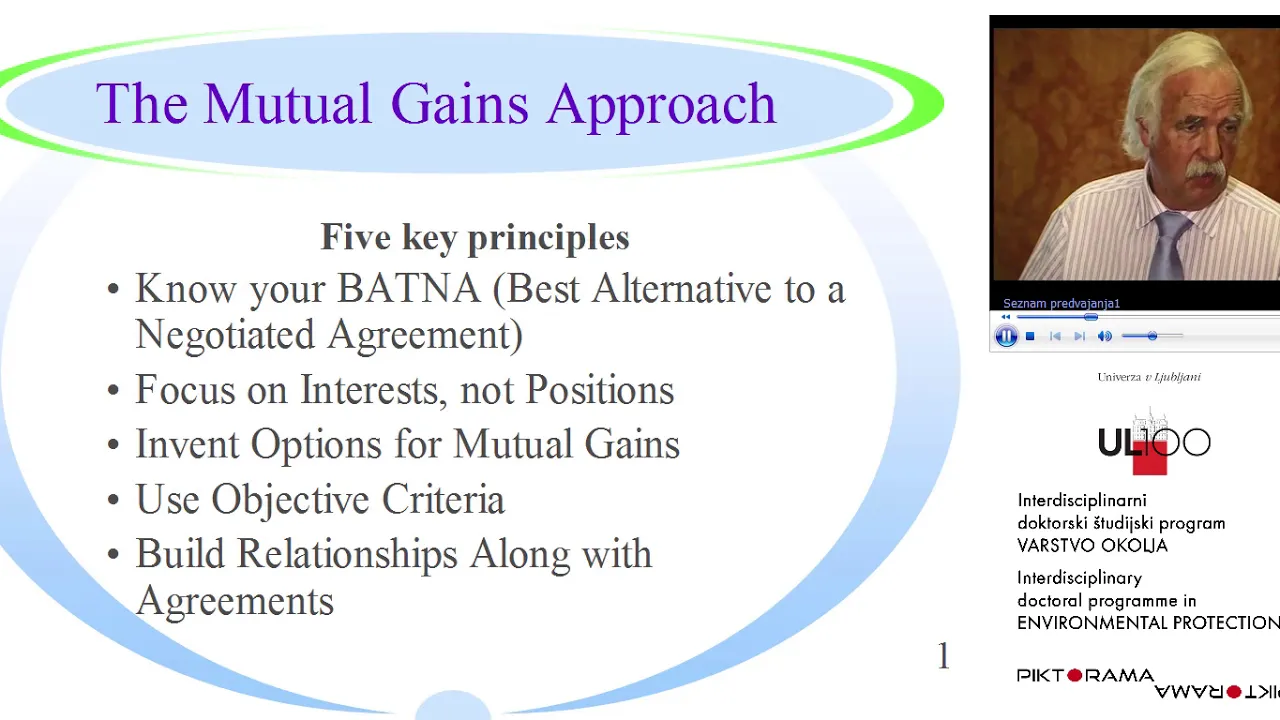
Added:Foundational negotiation concepts, such as win-win (integrative) bargaining, BATNA (Best Alternative to a Negotiated Agreement), and mutual-gains theory.
Basic principles of emotional intelligence, particularly self-regulation, empathy, and ego-management in professional environments.
The core philosophy of Brazilian Jiu-Jitsu (BJJ), specifically the concepts of leverage, redirection of force, and yielding to overcome physical opposition.
Fundamental business ethics and the distinction between manipulative persuasion and ethical influence.
Advanced tactical empathy techniques and crisis negotiation frameworks, such as the Behavioral Change Stairway Model.
Conflict de-escalation strategies and non-violent communication (NVC) in organizational management.
The application of martial arts strategic principles, such as conserving energy and strategic positioning, to competitive corporate strategy.
Designing and implementing ethical leadership frameworks that foster high-trust, collaborative organizational cultures.
1.2M views364likes21:49Original Release: 2025-09-23
[Music] Welcome to the Ageless Warrior Lab. I'm BJJ Black Belt and Dirty Dozen member Dave Meyer. Here to draw wisdom from Brazilian jiu-jitsu and the martial arts and explore how it applies to success in business, relationships, your long-term health, and making the most out of your life.
[Music] I want to share with you one of the most important principles I've ever gotten from Brazilian jiu-jitsu. It has helped me in many areas of my life and it's been perhaps the key thing to what success I've had in business. It's how to get someone to give you the outcome you want. I wish I could tell you I learned this skill through some big victory, but I didn't. I learned it in a loss. It was the quarterfinals of the BJJ World Championships in 1998 in Rio de Janeiro, Brazil. Months earlier, I'd won an exciting back andforth super fight in California against Fabio Santos, a well-known Hicks and Gracie black belt. That night of fights was sponsored by Korean Airlines. And for my win, I got a free ticket to the World Championships in Brazil. And now there I was.
I stepped onto the mat facing a fighter named Nino Elvis Shamry. He was the reigning world champion in my division.
I knew he was completely out of my league, but I had nothing to lose, so I stepped onto the mat. I actually scored a very early advantage, but within about 30 seconds, Nino put the heat on me. His attacks were precise and relentless. I'm proud to say I lasted six minutes before he caught me in an armbar. But those six minutes were an endless chain of bad situations, escaping the frying pan only to land in the next fire.
What was happening was Nino through his attacks had narrowed my options, letting him see where I was trying to run, and he was always one step ahead. He didn't beat me with strength or luck. He beat me because he was better than me and he knew what I wanted in each moment and he used it to lead me where he wanted me to go.
That day, I got a frustrating hands-on lesson in one of the most powerful skills in life. Know what the person you're dealing with wants better than they know themselves. See the world from their point of view. Once I truly understood how to make use of that and I started applying it, it led me to winning BJJ world championships and multi-million dollar business deals and partnerships I never would have landed otherwise. So, in today's wisdom from the lab, I'm going to show you exactly how it works, breaking it down into three rules you can use on the mat, at the negotiating table, or even just talking with someone who sees the world completely different than you.
Number one, leave your ego at the door.
That's a theme you're going to hear from me a lot in these podcasts. Number two, figure out what the person in front of you wants and where it intersects with what you want. And then number three, guide them to that intersection. This way, there's no fight or resistance to overcome. The person willingly goes where you want them to go. It sounds simple, right? But here's the question.
How often do we actually do it? And if we're honest, not very often. That can be why people lose matches, lose sales, and lose opportunities they didn't even know were in front of them. So, let's start with rule number one. Leave your ego at the door. This allows you to get out of your own way and empathize with the person you're dealing with. Now, let's be clear. If you have no ego about winning or getting what you want, you wouldn't even be trying. And normally in life, having a clear intent usually makes it more likely you'll succeed at something, right? It's a good thing generally to know your goal and to focus your attention on achieving it. But here's the problem. When ego is in charge, you can't see things clearly.
So, you can't let yourself be so wedded to what you want that you can't see other things in a fight. That focus can be used against you. Besides making it obvious to the opponent what you want, you're being predictable. Being too focused on what you want can give you tunnel vision. So, you miss noticing other paths that can arise that could more easily get you to your goal. Your ego says, "I'm forcing my plan no matter what." I tell both my fighter students and people who work at my nonprofit, "Know your goal, but be open to how you get there." There's a balance between intent and adaptability. It's like water flowing downhill. It's going to get where it's going, but it will just take a different path if there's something in the way. When you let go of that rigid my way or the highway approach, you free yourself to step into their perspective.
And once you can see things the way the other person sees them, now use rule number two. Figure out what they want.
Back to that world championship match in 1998. Within seconds, Nina had put me in position threatening me with a move he was famous in the BJ world for. It's called Plata, and it's a shoulder lock.
I was able to escape that lock and several other finishing attacks. But his understanding of where I wanted to go gave him the ability to keep knowing what I was about to do. He then let me go there again and again because it was leading to the intersection of what was good for him. And that's rule number three. Guide them to the intersection.
Intersections are the places where the other person actually wants to go, but that meets with where you want them to go. In a competition, that means letting them take a step they're dying to take if you know it will lead to where you will have an advantage. For example, in judo, you might let them step with their foot exactly where they want so you can sweep it out right from under them at the last second as it lands. Back in my earlier days in Brazilian jiu-jitsu in Los Angeles, my coach Higin Mashado and I were introduced by former judo world champion and infamous Hollywood stuntman Gene Leabel to someone named Gokar Chvichian, a fantastic judo player and instructor from Armenia who had a school in LA. We went to train at his school and rather than trying to pull go-kart onto the ground where I could try to apply my BJJ, Hagen told me to stay standing and feel what good judo feels like. And feel it, I did. It seemed like every time I took a step, I went flying.
Honestly, it wasn't even violent. I was just airborne again and again. Wherever I chose to move led to another throw.
When I stayed on my feet toe-to-toe with Gokor, anywhere I went became an intersection of where he had something waiting for me. Now, this skill works in two very different arenas. One is where only one side can win, like a competition, and one is where both sides can win, like a potential partnership.
And the way you apply it changes depending upon which situation you're in. In a competition, understanding them helps you use their plan against them and find the intersection that ultimately works for you. In a partnership, understanding them helps you find a winning plan with them and find an intersection that works for everyone. But either way, it all starts with getting out of your own head with curiosity.
Around 2002, I was searching for someone to help with marketing for adoptet.com.
I met a guy named Chris Levy who answered an ad I put out for a director of marketing. He came to meet with me and he was great, but he told me I could never afford to hire him, but he'd be happy to consult for free and he even made a donation on the spot.
Chris became my sponsorship mentor and he served on the board of my nonprofit, Humaneame America Animal Foundation, for many years for adopt.com.
We wanted big sponsorship from big companies. I kept trying to talk pet food companies into that and kept failing. It was frustrating because I had what I thought was a great presentation, told what I thought was a great story, and I just couldn't understand why I couldn't get the deal I wanted. When Chris started coming with me to meetings with potential sponsors, I noticed how he listened intently to everything they said and then sincerely asked tons of questions to better understand their needs. He kept reminding me that big sponsorship is what we want, but he would ask me, "What does the person you're talking to at the company want?" He said to focus on what they wanted to buy and not what I wanted to sell. I realized this was just like BJJ and setting my ego aside to understand what the opponent wants. In fact, negotiation research such as a paper called Why It Pays to Get Inside the Head of Your Opponent, published in the journal Psychological Science, finds that taking the other person's perspective helps uncover hidden agreements and boosts outcomes for both sides. So, I set my ego aside and started learning what the companies wanted and started looking for those intersections. Chris also reminded me that often initial deals aren't the swing for the fences home run you want.
Initially, the intersection might be a small first deal that's easier for a company to agree to with you knowing it could in the future lead to the bigger deal that you really want. He used to say, "Try to get a date before you propose getting married." Classic studies back this up. For example, a study called compliance without pressure, the foot in the door technique, published in the journal of personality in social psychology shows that starting with a small ask significantly increases chances of larger agreements later on. Once I started doing that, I learned that generally what the person at the company wanted was more engagement for the people on their website. So instead of pushing for a big deal to sponsor our adoptet.com website, we created what we called a syndicated pet search where we would embed our pet search on their website. People would only come to our website once they found a pet they actually wanted to learn about.
Companies would pay for this because it added engagement for their users and allowed the company to capture user data they wanted. But it also increased our own website traffic. And by getting homeless pets from our website database seen on other hightraic websites, it increased pet adoptions. This got more animal shelters to want to get their pets onto our database. And it was all a virtuous cycle where everyone and most importantly the homeless pets won. We did this with brands like overstock.com, martha Stewart.com, pedigree.com, and many others. And this allowed us to grow until we could eventually close bigger multi-million dollar sponsorship deals with Pyina, Bayer, Petco, Chewy, and others. Chris taught me that closing a deal or getting someone to buy your service or product, isn't about persuasion, just like in a BJJ match.
It's about getting out of your own shoes, finding where someone wants to go that intersects with what you want and then taking them by the hand figuratively in business and walking them there to that intersection. In this way, there's no conflict at all. They take the step they want to take and you make sure it leads to where you want to be.
Now, when I negotiate, whether it's as I did with Pyina and Bayer and Petco or anywhere I'm looking now to get an agreement from a partner, I listen first and then ask one question early on. I say, "What can I do that will help you get a promotion?" That question floors people because it shows them I'm thinking about their success, not just mine. And often their answer reveals what really matters to them, which might be totally different from what I came there to discuss. and that reveals a whole new way to work together. People like it when you ask about what's important to them. Doing that early will help you figure out the best path to that intersection of what you both want.
If such an intersection exists, then if no obvious intersection emerges where the person's needs or goals intersects with what you want, well, maybe there isn't one and it's just going to be a head-to-head fight if you're in a competition or there won't end up being a deal or a sale in business. But it might also be that you're just not able to see the intersection yet. In BJJ, when you're in a particular position, you see certain options, but often you can't get what you want. But if you could just change your position, new options open up. I like to say that everything you see is a function of where you are. Change your position and you'll see something new. And everything you think is a function of what you know. Change something you know and you'll come up with a new idea.
To change what you see or know in life or business, it means asking questions or doing research to get information you didn't have. Sometimes a fresh perspective reveals an intersection you couldn't see before. Here's another example from adoptet.com.
Initially, people would find our website, run a search for the type of pet they wanted within some distance of their zip code, and then they'd directly send an email to or call the animal shelter that had the pet. Lots of people were using our website, but we never knew who they were. So, we could never follow up with them to see if they adopted a pet and how that was going. We couldn't continue to send them useful pet care information unless they specifically signed up for our newsletter. And of course, we couldn't then offer to our sponsors continued relationship with the new pet adopter.
And that was the relationship the sponsors really wanted. So Abby, our head of product development at the time, put herself in the shoes of the pet seekers on our site. And she realized what they wanted was to find a pet on our site, but also to be able to get the info they needed about the pet from the animal shelter to see if the pet would be a good fit for their family. So setting aside our own ego and understanding what our users wanted, we created a contact form for each pet on our website. If someone wanted more information, all they had to do was fill out the form that would then be sent to the shelter. The form gathered information about the potential adopter, their living situation, other pets in the home, and anything useful that would allow the shelter to tell them if the pet would be a good match for their family. Then the pet seeker had to add their email address to the form so the shelter could respond. All this information was the intersection of what our user who was a pet seeker needed and what we needed. Now we suddenly were gathering lots of information about people using our website and we could follow up with them to hear if the adoption happened. We could also provide them with all kinds of supportive information. Then all we needed to do was add an opt-in checkbox for hearing from our sponsors. And suddenly our sponsors were also getting all the valuable information they wanted about the pet adopter. It was a win-win for everybody.
This skill we're talking about also directly applies to any kind of product marketing. Have you ever seen an ad on a billboard that had way too much text on it for you to be able to read before you drove by? What likely happened is whoever created the ad was more focused on what they wanted to say, for example, buy this product or try this service, than what you needed to hear or see. If the ad creator would have left their ego at the door and would have considered who it is they're talking to and what their audience needs to hear and what will be happening when the audience encounters their ad, they would have produced an ad that would have been engaging and easy to understand when you encountered it. And it would have drawn you in because it would have been speaking to you about a problem you need to solve or something you might already want in your life. So any good marketing communication should be following these same principles. Forget about what you want to sell and understand what your target market needs or wants. Figure out where that intersects with what you want to sell and guide them to that intersection. Then communicating with them in a way that makes sense for how they'll interact with your ad. For example, not having too much text on a highway billboard is just part of leaving your ego at the door and getting into the shoes of your target audience.
This skill is also useful in individual negotiations like getting hired for a job. You'll have better success in a job interview if you don't walk in saying why you're the best candidate. As someone who's hired a lot of people, when someone says that to me, it just annoys me because they have no idea who else I'm considering. You'll have more success if you do your research before you walk in. And then in the interview, ask what success looks like for the company and the person interviewing you.
Ask what they need from this new hire and why. then see where that intersects with your skills and guide them to that intersection. These skills also apply to creating a product or a program or service. You'll hear me talk now and again about the lean startup methodology for product or program creation and it matches perfectly with what we're talking about today. Most products or programs start with a solution that someone thinks they have, and they put effort into producing exactly what they think someone needs before their customers or users ever get to interact with the product or service. This kind of product creation in the tech world is called waterfall. It's a linear sequential approach to product development where each phase of the product is completed before moving on to the next. The requirements and design are set from the start and they don't usually change. That might work for building a building, but where software or a customer product is involved, it can lead to a lot of time and money being spent to discover what you built isn't actually what people want to use.
And by the time you learn that, your funding runway may be gone. Lean startup, on the other hand, takes almost the opposite approach. It's iterative and experimental. Instead of spending months or years perfecting a product before launch, the goal is to get a minimum viable product an MVP out the door into users hands quickly and then learn from realworld feedback and keep redesigning the product to make it better and better. The key thing here is to focus on the users and not what you think is needed. Give them something to interact with and let them through their actions show you what they need. Then as you keep iterating based upon their actions, basically they're building the product for you. Can you see that this is the same thing we've been discussing?
If you're a product or program developer, you know what you want, but you need to set your ego aside and put yourself in the shoes of your customer.
You then find out what they want through how they interact with your MVP and find where that intersects with what you want, which is likely getting them to pay you some money. Then you build the product or program or service that takes them to that intersection. This way the customer ends up with some great product or program and you end up making money or solving some problem your program set out to solve. So I hope you can see this skill we're discussing today isn't just for winning matches or closing deals.
And it's not even just for creating products or programs. It can also be used for keeping relationships alive in a politically divided world that we have today. And while a political discussion might feel nothing like a business negotiation or a BJJ match, the truth is it's a similar game. Two people each with their own goals and maybe some intersection you can find if you look for it. I have friends all across the political spectrum. If we talk about anything political that's going on, I always try to set my ego aside and focus on the little intersections I already know exist. Points of agreement. For example, I might say, I know we agree everyone wants to live a happy life and keep their family safe. Everyone wants to live in a safe and prosperous country. So, I always start with where we agree. This is important because even where we legitimately disagree, we need to be able to communicate. And that also reminds me that the person I'm talking to is not so different from me. In psychology, this is called moral reframing. Saying something in a way that aligns with what the person you're talking to believes already makes it much more likely you can understand each other and have a meaningful conversation. You can get a lot more done in this way rather than just arguing back and forth. Points of agreement lead to points of familiarity which leads to trust. And with trust you can explore disagreements without becoming a fight. You might discover there's an intersection between what they want or think and what you want or think. and then maybe you can lead them there. Or maybe you never win an argument, but you can win the relationship. And that's usually worth a lot more.
So whether it's in martial arts competition, a negotiation, creating a product or program, or just trying to talk to someone who sees the world a bit differently, know them better than they know themselves. See the world from their point of view. The way to do that is number one, leave your ego at the door. Number two, figure out what they want and where that might intersect with what you want. And number three, guide them to that intersection. It's one of the most powerful lessons I've ever learned. Do that and you'll be much more successful on the mat and a much more successful negotiator in any of your relationships and maybe even a little more at peace with your friends and family in our crazy world today.
If you enjoyed this podcast, please remember to subscribe, comment, like, and share. If you're listening on Apple or Spotify, a review would really help us get the message out. I'll be back next week with more wisdom from the lab.
In the meantime, keep developing your strengths and your wisdom, and go out and do good in the world.
Up Next

121:33
Choosing Your First Telescope: Refractors, Reflectors, and More
@KalamazooAstronomicalSociety
3.6K views•2022-03-01

12:54
Triumph of Orthodoxy Icon: Byzantine Art & History Explained
@BenCallan
2.1K views•2024-08-06

9:49
FastAPI vs Flask vs Django: Choosing the Right Python Web Framework
@TechWithTim
302.5K views•2024-05-26

1:42
Game of Thrones Opening Credits: A Cinematic Analysis
@gameofthrones
46.3M views•2011-04-18
Related Study Plans & Knowledge Roadmaps
Structured learning paths in General & Interdisciplinary Studies
general-studies
Elevator Engineering: History, Physics & Cities
01From Hoists to Safety Brakes: The Dawn of Vertical Lift
02Hydraulic vs. Traction: The Engineering Physics of Elevators
03Modern Speed, Safety, and Algorithms
+ 2 more learning modules
12h5 modules
Explore Roadmap
general-studies
Rubber: Material Science, History & Geopolitics
01Origins of Natural Rubber & Mesoamerican History
02The Chemistry of Natural Rubber & Vulcanization
03The Geopolitics of the Rubber Boom & Colonization
+ 2 more learning modules
12h5 modules
Explore Roadmap
general-studies
Containerization: Evolution, Logistics & Trade
01Ancient Trade & Bulk Cargo: Amphorae to Barrels
02The Industrial Revolution & Cardboard Packaging
03The Containerization Revolution: Malcom McLean
+ 2 more learning modules
12h5 modules
Explore Roadmap
general-studies
Textile Tech: Evolution, Labor & Global Impact
01Pre-Industrial Textiles: Handloom & Cottage Industry
02Mechanization: The Spinning Jenny to the Power Loom
03The Factory System & Global Labor Transformation
+ 2 more learning modules
10h5 modules
Explore Roadmap