






























Cognitive therapy helps individuals challenge and change unhelpful thinking patterns by encouraging them to test their thoughts against reality, solve practical problems, and take action rather than simply thinking positively; this involves techniques like tracking pleasure levels, identifying negative thinking patterns (such as catastrophizing or personalizing), evaluating evidence for and against beliefs, and implementing behavioral experiments to demonstrate that changing one's actions can lead to improved emotional well-being.
Cognitive Therapy Techniques: Realistic Thinking and Coping Strategies
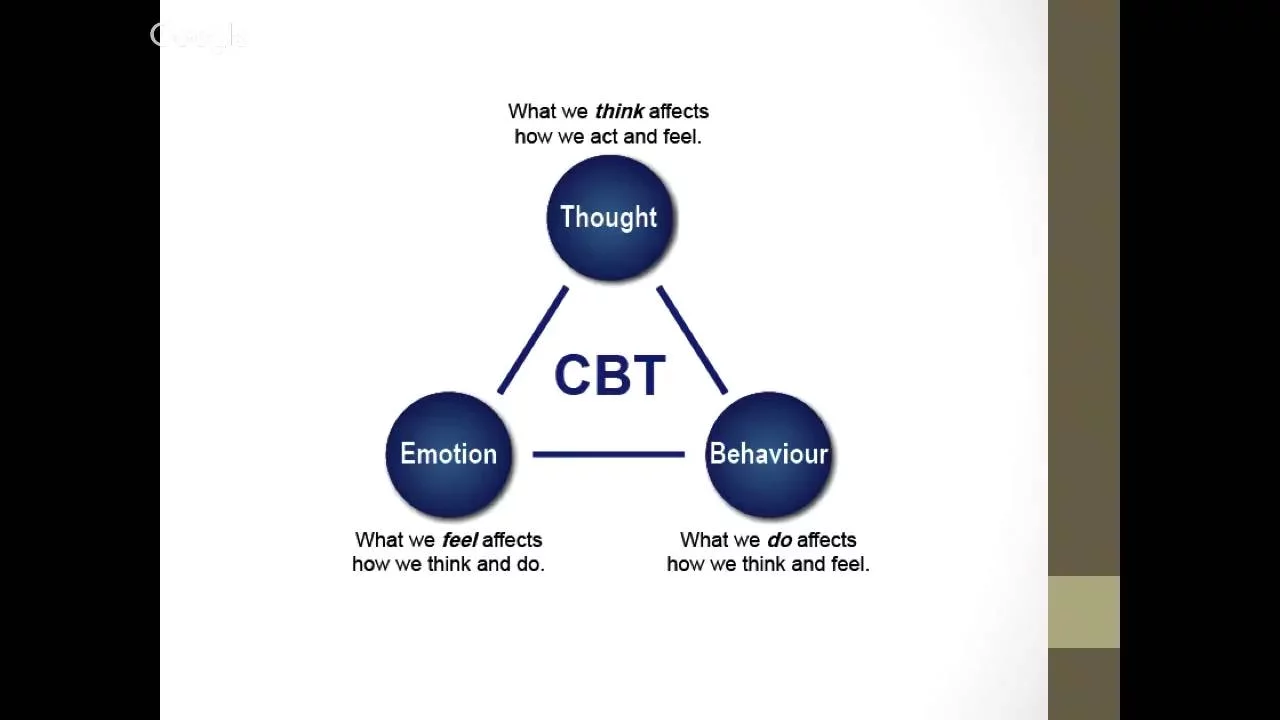
Added:The basic premise of Cognitive Behavioral Therapy (CBT), specifically the bidirectional relationship between thoughts, feelings, and behaviors.
The concept of 'automatic thoughts' and how they differ from core beliefs or deeply held schemas.
Common types of cognitive distortions (e.g., catastrophizing, black-and-white thinking, emotional reasoning) that bias human perception.
The fundamental role of self-monitoring, such as keeping a basic thought record or mood journal.
Designing and executing 'behavioral experiments' to actively test and gather empirical evidence against dysfunctional beliefs.
Identifying and restructuring underlying core beliefs and schemas that drive chronic negative thinking patterns.
Integrating Cognitive Therapy with Acceptance and Commitment Therapy (ACT) to balance change strategies with psychological acceptance.
Applying cognitive restructuring techniques to specific clinical presentations, such as social anxiety, panic disorder, or depression.
Developing long-term relapse prevention plans to maintain cognitive flexibility during times of high stress.
78.1K views425likes5:42Original Release: 2009-11-24
and that's where cognitive therapy comes in cognitive therapy helps you do this it helps you look at things more realistically for example what if you have a thought I can't be happy I can't have any pleasure how do you test out this thought but one way of testing this out is to keep track of your pleasure for every hour of the week rating your pleasure on a scale from zero to ten keep track of what you're doing every single hour get up in the morning and write down what you do each hour throughout the day and rate that hour for pleasure from zero to ten at the end of the day look at your record and ask yourself does my pleasure change during the day does it depend on what I'm doing for example one woman found that her pleasure was actually higher when she was working or when she was talking with her friends and when she was exercising so her pleasure depended on what she was doing this is important because you can change her behavior to do things that are pleasurable this can change your negative thinking the way you feel you can always change what you do if you do something different you might actually feel better some people say isn't this simply think positively this in cognitive therapy the power of positive thinking well no actually it's not cognitive therapy is not the power of positive thinking it's not simply think positively now we ask you in fact look at the facts and think realistically and sometimes when you think realistically you might actually have some problems that you really need to solve for example you might have the thought I'll probably fail this exam now this lock could actually turn out to be true if you don't do something about it one of the things that can help you is to consider how you can solve real problems for example if you're thinking that you might fail the exam you might solve this problem by studying more or getting some help from friends or even getting an extension if that's possible or you might think how can I handle things if I did fail the exam for example you might have to take the core so over again I wouldn't be a catastrophe but it might be somewhat unpleasant for you won't be the end of the world bad things do happen but they don't have to be a catastrophe if you're feeling lonely think about how you can solve this problem for example if I consider a range of alternatives these could include joining organizations or taking classes or becoming more outgoing when you're around other people or you might volunteer to help other people or you might get involved in community activities you might call up some people and make plans you might go out to events such as music performances sporting events dances and other events just act friendly toward other people you might think of how you can improve your time when you are alone for example you might develop hobbies or plan activities that you can do on your own in other words when you're thinking about a negative outcome think about what solutions you can actually carry out and then carry them out now what if you want to see a cognitive therapist if you do decide to go to a cognitive therapist you can expect your therapist to help you identify your negative thinking this might involve writing down negative thoughts every day and learning how to categorize them like we did before are you personalizing are you catastrophizing are you fortune-telling are you labeling yourself are you engaging in all-or-nothing thinking your therapist going to also help you learn some self-help techniques these could involve looking at the advantages and disadvantages of your thoughts for example sometimes we think our negative thinking will motivate us so you might be motivated to hold on to your negative thoughts but your negative thoughts have bad consequences as well they make you miserable you can learn to look at the evidence for and against your thinking you can test out the evidence does the evidence support your thinking or is it argue against it you can set up experiments to test out your thoughts for example if you think that no one will talk to you you can go to a party and ask people to talk about themselves what you'll probably find is that other people love talking to you because you're willing to listen now one piece of advice that works by well is to ask yourself what advice would I give a friend who had these problems you know sometimes we're a lot better at giving other people advice so think about the advice you'd give a friend who has your problems and take the advice yourself finally you might take a look at my book the worry cure which can give you a number of ideas about how cognitive therapy can help you the great thing about cognitive therapy is that you can learn how to help yourself it's a great way of feeling better by learning how to rely on yourself learn more about cognitive therapy depression and anxiety go to our website aqua therapy NYC calm thank you [Music] you
Up Next

114:53
Deb Dana on Polyvagal Theory for Treating Trauma
@TheWeekendUniversity
212.4K views•2020-11-28

68:32
Cognitive Skills for Differentiated Instruction | Teacher PD
@BrainWareLearning
631 views•2017-12-17

9:55
Thinking, Fast and Slow: Daniel Kahneman Animated Book Summary
@FightMediocrity
2.3M views•2015-06-05

6:40
The Nocebo Effect: How Beliefs Can Cause Real Harm
@CGPGrey
10.4M views•2013-12-23
Related Study Plans & Knowledge Roadmaps
Structured learning paths in Psychology
psychology
Neuroscience of Creativity: Networks & Training
01Foundations of Creative Cognition
02The Cognitive Neuroscience of Insight & Fixation
03The Triple Network Model of Creativity
+ 1 more learning modules
15h4 modules
Explore Roadmap
psychology
Imposter Syndrome: Etiology & CBT Framework
01Defining the Imposter Phenomenon
02Socio-Developmental Etiologies
03CBT Fundamentals & Thought Distortions
+ 2 more learning modules
15h5 modules
Explore Roadmap
psychology
Adult ADHD: Executive Dysfunction & Scaffolding
01Neurobiology of the ADHD Brain
02The Core Triad of Executive Deficits
03Executive Dysfunction and Emotional Regulation
+ 2 more learning modules
12h5 modules
Explore Roadmap
psychology
Loneliness: Evolution, Neurobiology & CBT
01Evolutionary Origins of Human Connection and Loneliness
02The Neurobiology and Physiology of Chronic Loneliness
03Maladaptive Social Cognition: The Psychological Loop
+ 2 more learning modules
12h5 modules
Explore Roadmap