





















Core beliefs are deeply held, absolute truths about oneself, other people, and the world that form the foundation of the CBT model, sitting beneath the surface level of automatic thoughts, feelings, and behaviors; they can be identified using the laddering technique by repeatedly asking 'What if this thought is true?' to trace back from surface thoughts to fundamental beliefs, and can be challenged through behavioral experiments that test whether these beliefs hold true across different situations.
CBT Core Beliefs: Identify & Transform Negative Thinking Patterns
Added:Fundamental principles of Cognitive Behavioral Therapy (CBT), specifically the cognitive model linking thoughts, emotions, and behaviors.
The concept of automatic thoughts and how they represent the surface level of our daily cognition.
An understanding of common cognitive distortions, such as catastrophizing, emotional reasoning, and personalization.
Basic self-monitoring skills, including the ability to identify and document immediate emotional triggers and reactions.
Techniques for restructuring core beliefs, such as keeping positive data logs and historical tests of schema.
Designing and executing behavioral experiments to actively challenge old beliefs and gather evidence for new, adaptive ones.
Analyzing the role of 'intermediate beliefs' (the conditional rules, attitudes, and assumptions that bridge automatic thoughts and core beliefs).
An introduction to Schema Therapy, an integration of CBT with other therapeutic modalities to address deeply entrenched, lifelong emotional patterns.
470K views9.6Klikes54:46Original Release: 2020-09-05
[Music] Welcome to this week's Med Circle live event with one of my favorite people, Dr. Judy Hoe. For those of you just meeting Dr. Judy for the first time, you got a lot to catch up on. She's a triple board certified forensic and neurossychologist, the author of Stop Self-Sabotage.
And if I kept going through her credentials, we would take up the entire time. Dr. Judy, thank you for being here and uh giving us access to your incredible brain on this very important topic of CBT.
Oh, thank you so much. I'm so happy to be here and nice to see everybody joining.
Dr. Judy, let's start with just defining what CBT is and how that cognitive model can help people.
Cognitive behavioral therapy is an evidencebased form of treatment. And there are some really notable things about this model. One is the philosophy of CBT is that you learn these skills and that you're able to implement them yourself. And so the CBT's therapist relationship with their patient is all about educating them about the CBT model, which we're going to go into, and then being able to teach them in such a way that they feel empowered to provide these strategies for themselves when they are in distress. The cognitive behavioral therapy model is very simple.
It's all about the fact that our thoughts and our feelings and our behaviors are all connected.
And so when we're not feeling well, the theory then would state that if you're able to change your thought processes or if you're able to change your behaviors, you're going to be able to also get your feelings to move in a more positive direction. And so, um, in many ways it's very empowering because when we're not feeling well, oftentimes we feel helpless, like there isn't a lot that we can do to change that emotion. But CBT says if you're able to change your actions in the moment or change your thought process or framing it differently, then you're going to get that response on the feeling side which includes not only your emotions but also physiological reactions like if you're feeling like you're in a panic or you feel like your heart's beating super fast, you can't settle down, you're agitated, all of those frameworks will help to change that feeling whether it's an emotion or a physiological response.
Excellent. And as we've discussed on Med Circle in the past, CBT can be used to uncover some of our core beliefs. And these are things that we find true about ourselves regardless if they are actually true in reality. You and I sat down a while ago and did a mock CBT uh therapy session and I actually rewatched it last night uh to prepare for today's discussion. And the concept of lading was absolutely phenomenal and I can't wait to get into that. But before we do, can you talk about what core beliefs are and how they impact us?
Absolutely. So core beliefs is a really important part of the CBT model. And what core beliefs state is that this is sort of the basic belief you have about yourself. other people and the world that we live in. So they are things we hold to be absolute truths deep down underneath all of our surface thoughts.
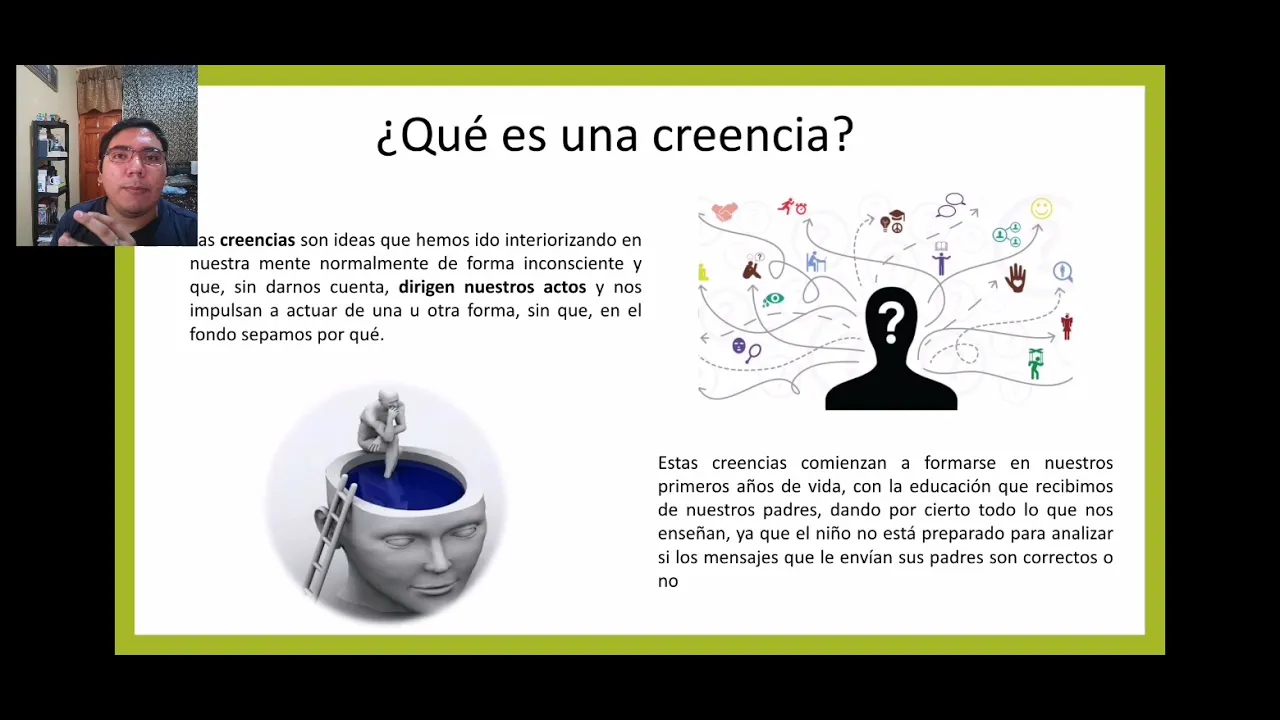
And the fact that we believe them as absolute truths doesn't actually mean that we've gotten evidence in our environment for that. It just means that it's those deeply held beliefs that after a while, whether or not you're checking them, they feel real to you. So essentially the core beliefs determine how you perceive and interpret the world. So if you imagine an iceberg, the tip of the iceberg is above the water and that's what people see on the surface. And so those might be your conscious thoughts, what you choose to talk to other people about and maybe even the things that you recognize yourself when you're thinking about, hey, what's on my mind today? But the core beliefs would be the bottom of that iceberg. They're really deepseated. They hardly ever come to the surface. Yet, just like an iceberg, the bottom of the iceberg is the base. It is the foundation. It keeps the iceberg floating. And so, it's basically that type of an analogy. It determines how you perceive and interpret the world, even if you're not cognizant of it at every single moment of the day.
Excellent. Well, Dr. Judy, I know that you have um prepared uh some slides for today's event. Would you like to go into those now or would you like us to have a discussion? Uh before we do that, let's go ahead and start with some of the slides now because I think that will help our illustration. So I'm going to go ahead and share my screen and show you guys this model of CBT that we've been discussing and how core beliefs fit into all of that. So let me know if you can see this. I'm going to try to go into presentation mode so you guys can just see the slide. Let me know if you don't see it in presentation mode, Kyle.
Um, and then I'll try to adjust.
I can see it. I think we're good.
Perfect. Okay. So, this is the CBT model. As I mentioned, thoughts, behaviors, and feelings are all related to one another. And so, as you look at this model, you can see that thoughts can impact feelings, but feelings can also impact thoughts. That's why you have these birectional models and birectional arrows. But inside all of that, if you think of thoughts, behaviors, and feelings as things that people more so perceive on the surface, um the core belief is underneath all that. It's deeper embedded almost in some ways like part of your personality structure. And core beliefs consist of these fixed ideas about yourself, about other people and how they might perceive you, and about your own future and whether or not you feel hopeful about your future. And so those are the three basic kinds of core beliefs. And the way that core beliefs operate is that they tend to permeate all areas of life. So, your core beliefs will come into play whether you're dating or experiencing a romantic relationship or whether you're at work or how you deal with friends, how you achieve goals, how you cultivate habits. Basically, in any area of your life, core beliefs can definitely come into play in terms of what you believe about yourself, what you're able to achieve, and how other people might treat you.
I'm like I'm so fascinated with this because I have seen the CBT model before but never with the core beliefs as the center foundation and I think that's a missing element when people start learning about CBT is they focus on that tip of the iceberg stuff because that's the stuff we're seeing but in actuality all of that's coming from that deeper place.
Exactly. And so I think we can also think about a different way if we want to take this analogy a bit further in terms of how the CBT model operates. And so even though in this model I'm starting with core beliefs written at the top, you can see that each one feeds into the next level. So core beliefs as we've talked about is these fundamental ideas you have about yourself, other people and how they treat you, the world around you and your future. That leads to certain assumptions. So assumptions are also what we call conditional rules that you create based on the core belief. So let me give you an example.
Let's say a core belief that you have is that I am unworthy. You know, you basically just feel like you're unworthy of good things happening, unworthy of positive attention, unworthy of reaching your goals, whatever it may be. And so if you feel that way deep down, what are some of the conditional rules that you would use to operate in life? Well, if I was somebody who felt like I was unworthy of things, then maybe what I would do, for example, is overcompensate. So maybe one of my assumptions is if I try my best to be of service to people, then they won't discover that I'm unworthy or they'll think I'm worthy, right? So that would be like one possible rule or assumption based on that core belief. Let's say you have another core belief. Um let's use a different one. Sometimes people have a core belief that they're incapable that you know really they're not that effective at life whether it's career or anything else or they just don't feel like they can take care of themselves.
So then maybe a conditional rule or an assumption for that would be, you know, um try your best to act as independently as possible so that nobody realizes you're actually incapable. Like don't ever tell anybody when you've made a mistake. You know, just always try to operate as if you don't need anyone else, right? And so these are just examples. But if as you can see if we follow that idea if you have a certain assumption it's going to lead to certain coping strategies or compensatory mechanisms. So for example if you have that core belief that you're incapable and let's say you get some constructive criticism about a project you did. They didn't insult you. They just said hey there's this area you need to improve on. The compensatory quoting strategy might be to like really get in their face and say no I did everything right.
Like this is not me. that's somebody else's fault, right? Almost like not taking responsibility, right? And so you can see that the core beliefs can affect the rules that you make in life and then how you respond to situations. And then we're starting to move into the more surface area of things, things that happen to us every day. So when a situation occurs, that leads to certain automatic thoughts, which can also come in the form of images because they're very shorthand and fast. and then they lead to reactions on the feelings and behavioral front. So let's go ahead and utilize that example of core belief again that you are incapable that you just feel ineffective at life.
Okay, we talked about the possible assumptions that you never want anybody find that out and so maybe when bad things happen um when you when a mistake is being pointed out you almost like either you don't want to talk about it or you deflect and you say that it might be somebody else's fault but it's certainly not your fault. So let's say the situation is that then you get laid off from work. If that happens to somebody with this type of core belief, their first automatic thought might be, "Oh my gosh, I can't do anything right." You know, like even though being laid off is not their fault. You know, the company might just be downsizing, but the first thought they have is I like I just can't, you know, I just can't do anything right no matter how hard I c Can I ask a clarifying question for the situation?
Is that a consequence of the maladaptive coping strategies or is the situation just any situation and this is how your core belief is going to affect situations?
It's a very good question. So yeah, not always does a situation happen because of your coping strategies.
Okay, sometimes that arrow is non-existent and the situation just happens to you, right?
But other times it can be related. So, if we took that example of what I talked about, let's say you talk back to your boss and you say, "I don't I don't agree. I didn't make this mistake." And your boss says, "Okay, I guess you're not ready for a promotion." That could be the situation that is caused by that compensatory strategy. But that's a clarifying uh question. So then if you're at the level of the automatic thought of I just can't do anything right, imagine how you might feel and behave if that's how you truly thought.
So, if you think I can't do anything right, what are some possible feelings?
You might feel dejected, hopeless, angry, sad. Um, and some behaviors might be you try to hide the fact that you were laid off from your family for a few days. You're like, I don't even want to tell them because then I'm going to have to confront my core belief that I am incapable. I don't want to explain myself. So, when you like hide that from them, um, maybe you kind of go more inward and become more isolative because you don't want to call your friends and family. They're going to ask you, "Hey, what's new?" And you're going to have to say, "I just got laid off today." And so, actually, you might actually become more isolative as a um as a result. And you can see how everything then impacts one another, right? Because the more isolative you become, the less able you are going to be able to get opportunities to basically um refute your core belief, right? Because if you told your family, your family would say, "Well, don't worry about it. That's obviously not your fault. you'll find another job, everything's going to be fine. But if you're not getting that positive support, then you're just left with your own thoughts about how incapable you truly are. Therefore, strengthening the core belief. And so, you can see how core beliefs again can permeate all the different levels of your actions, your feelings, and your thoughts.
Th this is wonderful. I want to get uh some feedback from our live audience.
And if you're watching this on replay, please leave comments below as well.
When if this is the first time you've heard of CBT, what does your initial reaction to seeing the relationship between core beliefs and how it permeates throughout different scenarios in our life? And if you are a CBT, if you're familiar with CBT, like I thought I was familiar with CBT. I have never heard this though. This is brand new to me. This is like the layer behind CBT.
So, this is I'm just so so happy that you're doing this, Dr. Judy. Thank you.
Of course.
So, I think, you know, if we're ready to proceed, we're going to talk a little bit about how to identify your core beliefs because, Kyle, we all have them.
You know, no matter how developed we think we are, we all have core beliefs.
And a common question I get from people is, "Are all core beliefs negative?" And and of course, they're not. Sometimes we do have positive core beliefs as well.
The reason why we're focusing on the ones that are more negative is because the positive ones are not the ones that cause us to be in distress. You know, those are not the ones that we need to solve problems for. Those are our strengths, right? And so for CBT, we're trying to identify what the problem is and we're going to solve it. And so we're talking more about the negative core beliefs.
So the idea of the lading technique and perhaps Kyle, you and I can go through an example of this and we can do a role play is that you start with an automatic thought which is the stuff that's more conscious, right? The stuff that you kind of do know that you're having these thoughts and thought processes throughout the day. It's that tip of the iceberg that everybody can see above the water. You start with an automatic thought that you had in response to a stressful situation.
And then we're going to pretty much proceed with each thought. So like what does this thought mean if it was true?
And then you'll have a new thought and then we ask the same question of that new thought. What if this thought is true? What will it mean? And in this way we actually get to the bottom of the belief system. And at that point you will arrive at the core belief.
And when we do the demonstration this will make a lot more sense. But basically the overview of the lading technique is to identify a conscious automatic thought that you had to a stressful situation and after each thought you ask yourself so what if this is thought is true what will it mean then you take that second thought and you ask the same questions I've also provided here some alternate questions that you can ask yourself if that first one doesn't jog enough for you you can ask questions like what does this thought tell me or say about how I view the world friends and family what is the worst thing that this thought may say, "Why is this so bad? And what thoughts do I have about myself that would make this thought so terrible if it was true?" So any constellation of these questions should get you to like get to another thought. And then eventually after maybe like five to six iterations of it, you'll get to a core belief that feels more fundamental and basic and permeates all of your life. So Kyle, if you are up for it, do you want to do a role play where maybe you can role play a patient who is coming in um with a stressful situation they're dealing with?
Absolutely. Um I will volley it back to you though to to ask what would be a common uh core belief that um we should work on or should I not have that going into it?
Have to have that in mind at all. We can just start with any any stressful situation that we can use as a role play whether it has to do with relationships or health or career and then from there we're going to just work our way down and then at the end of it we can talk about some common core beliefs that people have.
Cool. So I I think the biggest feedback I get from members is uh it's relationships and they feel that they are doomed to have um an unhappy relationship whether it's with this person or somebody else. They just can't find a relationship that works for them.
Okay, that's great. So let's go ahead and start with that. So let's key in on a specific situation. So Kyle, if you were playing the role of this patient, tell me a relationship problem that maybe you're dealing with.
My relationship problem is that I don't think my partner uh truly loves me and I don't think um we'll ever be happy yet.
We're married and we're in this agreement and I feel stuck and I don't see a way out.
Got it.
Okay. So, a situation is I don't think my partner truly loves me. they are never going to be happy and we're married and I feel stuck and I can't see a way out. And so I think, you know, um this is a good situation. Um this is very timely because I feel like a lot of people are saying that they're having relationship issues right now even, you know, as the pandemic wears on because it's causing them to basically look at their relationship under a microscope and people are thinking a lot more about these types of issues. So if that's the situation and maybe there's certain things that for example happened that led you to have you know this particular thing at the top of your mind as you're roleplaying this patient. Um it could be that for example you know you checked in with your partner this morning and they just seem dismissive of you. It's like they're not really paying attention to you and you're like do you even care about me? Do you even love me? So what would be like a conscious thought you might have to that response? So again, imagine that the problem here was that your partner um dismissed you. Like you were trying to have some quality time with them and they're like, "I'm too busy. I don't have time." But they just acted like they weren't listening, like you didn't matter.
So what's an automatic thought that you could have had in response to that?
My Well, the two that come to mind are uh this person's mad at me or I I am not worthy of that person.
Got it. Okay, so let's start with this person is mad at me because that's a very quick and primal thought and I'm going to ask you that question. You know, as we talked about, go back one slide. You know, after each automatic thought, ask one of these questions. So, what is what if this thought was true?
What would what would that mean if your partner was mad at you? Like, what would that signify for you?
Oh my gosh. Well, it it it would signify that I had unknowingly done something to upset him.
Got it.
Okay. So then that's the second automatic thought. Again, we're kind of going through the laddery thing to produce thoughts based on these questions that we're asking. So what would be so bad if you did something to upset him? What what thought do you have about yourself that would make this particular idea so terrible?
that I am not aware of my actions. I'm not self-aware.
Got it. And what would that mean about you if you weren't self-aware? What would be so bad about that if you weren't self-aware?
H that I'm that I'm floating through life. I'm I'm not mindful.
Got it. And What would this mean about you if you were just kind of floating through life like really like not really even sure what is happening when like what would that mean about your life and how you feel about yourself and your ability to enact positive outcomes I'm a failure I am failing and failures fail so I am a failure got it all right so we have actually arrived at a very common core belief which is I am a failure. And the way that we can check if something is indeed a core belief is we can ask oursel that question again, you know. So again, going back to one of these questions, um what if this thought is true? What will it mean? What what does this thought tell me about me? And realize that basically there's nothing beneath that that maybe you're going to be saying different permutations of the same thing.
That would mean that you arrived at a core belief. Another way that you can assess whether or not it's a core belief is core beliefs are very shorthand and very universal. Meaning it's just kind of like a very flippant short statement that isn't situational. So if you look up at these thoughts here, automatic thought one, the partner is mad at me.
Well, if a partner is mad at you, that's situational to your partner, right? I must have done something to upset him. That's still also pretty situational. I'm not aware of my actions. Well, that feels more general, but it isn't a core belief because what's the consequence of that? We haven't gotten to the consequence, right? So, once we get to automatic thought five and you're saying, "I'm a failure." It feels like this is something a statement that could apply to you across situations. Like, you make a mistake at work. I'm a failure. Uh you get into a fight with your partner. I can't even I can't even succeed at my relationship. you know, uh, your kid gets mad at you. I'm a terrible parent.
I'm a failure. You can see how something like this can apply throughout and it's not situational. Plus, it's written in such a way that it's like three to four words. Pretty much all core beliefs are like this. It's like it's not long form.
It's like I'm a failure. I'm unlovable.
I'm unworthy. And you can see how all of those things can actually play a role.
One other core belief that I was entertaining as you were going through these automatic thoughts, Kyle, in this role play is that another possible core belief is that I'm not in control. You know, this idea of not being in control only because as you were talking about automatic three and four, you're talking about how you're kind of floating through life. Maybe you just don't know, you know, whether or not you can actually enact positive outcomes, for example. And I was thinking about the situation that you're married but you feel stuffy. You can't see a way out.
That also elicits feelings of not being in control. And so people obviously have more than one core belief sometimes, you know. So it could be possible that you as you're roleplaying this patient, I'm a failure is one core belief and I feel out of control is a second one. That could be possible. But the way that we would test the core belief is, as I mentioned, really checking to see if there's anything underneath that would be conjured up if you ask those lists of questions that we've been looking at.
And also asking yourself, could this idea permeate multiple areas of my life?
Whether I'm talking about friendships or family or romantic relationships or career or even starting a healthy habit.
I mean, imagine if this person, this patient that you're playing right now, Kyle, um, starts a new healthy regimen and then in a week they mess up and they like, you know, whatever. Um, skip the workout, which by the way, everyone does no matter how successful you are. And this is the kind of person though that would go immediately to I'm a failure and maybe give up and like not even try for a very long time, right? So, you can see how this is the kind of idea that somebody could have if they're not um able to believe in themselves and truly believe that they're a failure. Here's just another example of lading um just so that you guys can see a a slightly different example. Um and and by the way, I did not see these slides before today, so that was a coincidence.
Yeah, that's crazy. I mean, this is actually really good. I had no idea that like you would also come up with this one. I I literally and I know that Halen see these slides. I literally wrote them like two hours ago. Um so this is another example of lattering. Okay, imagine uh you know you're cooking and it's like a terrible soup. It's not doesn't taste good. Whatever happens to all of us. Um I I love cooking and there are still times where I'm like wow this is a real lemon. Like this is not a good dish. But um the person says, "Oh, the soup is awful." And then they ask Moel the question. If that were true, what would that mean? Well, I'm a terrible cook. Okay. And if that were the case, what would that mean? Oh my gosh, I guess I'm a bad mother or wife. Fill in the blank. Okay. And if that was so, what would that mean? Well, I just fail at everything. And again, that's the core belief. And so, just another example at um how we can distinguish between something that is more situational, right? The automatic thought, the soup is awful. It's just about the soup. But look, if you ask this question and go down this lading technique, how quickly you discover that there is something that's more pervasive underneath operating um basically to produce this thought that comes up at the top of the water on the surface. And and I want to go back to the example of of of me of me as a in a marriage that I'm unhappy in because when you said something else that kind of you you kind of got a wind of as a core belief is I'm not in control. And although this was a you know this is not a therapy session and I'm not married or anything, I'm still answering as me in this scenario.
And it's interesting you brought up control because control is something that has been brought up to me before in relationships um even by co-workers. My need to feel like I have control of the scenario. And the reason I bring this up for our audience is because I've been in a lot of therapy, okay? I started when I was nine years old. And when I'm working with a new therapist or a new psychologist or even my psychiatrist who also does therapy and they kind of tune in to me the way Dr. Judy did just then, it makes me go, "Okay, they're really seeing it. They're really, this is somebody who knows what they're doing.
They're really good." And I think sometimes people in therapy experience that and then run away from it because they go, "Ah, they found me out. How did she know that I have control problems?" But that's what we're there for. It's like pretend we're a car and they're a mechanic. Their job is to help us figure out the truth. And they can only work based on the information we give them. So, if you're new to therapy or you're just starting with a therapist and you run into that where they go, "Now, has anyone ever told you this or blah blah blah?" And it's true, that's a good sign, I think. Take a deep breath, lean into that because you're about to discover gold. And so, the fact that Dr. Judy said that, I don't I'm going to watch go back and watch my reaction because I was like, "H, you're on to something because that's a conversation I've had before, even in this hypothetical mock scenario."
I love that you're talking about this because it's so funny even when we like roleplay patients um we obviously are drawing somewhat from our own experiences still you know.
Exactly.
And that and I'm glad that you said that because you know I also I mean I I lovingly um uh call people in my life type A individuals because I believe I'm a type A individual. Like some of the people I love the most are a bit typically a negative thing. There's a lot of positive traits associated with type A too. But what is one of the problems of a type A type of individual who's extra motivated, you know, they are go-getters like ah like control and when they feel like they don't have control, they they do not like that. Like it is a tough thing for them. But you and I have talked about this a lot and you know self-development if you're doing it well is not supposed to be a picnic. like you're gonna feel some things, you know, like like that's why it's so funny when sometimes I look at self-development stuff or I look at like self-help books and people are just like I feel fabulous. It's like you might feel fabulous a little later, but like there are certain points of that that you can't be feeling fabulous all the time.
Like and if you do then you're not doing the work and it's not meant to criticize anybody who maybe like has done that type of work and it's like every day I read this book and it's making me feel so happy about myself. That's still a form of self-development, but that's much more like that's much more like um mantras or like you know positive thinking versus like actually digging in to find out the root of some of your problems.
Yeah. I tell people that there is a difference between motivation and self-improvement and they both have a place and maybe the day before a big presentation you just need the motivation but the week prior to the motivation or the your presentation maybe that's when you need the self-improvement or self-development. So making sure you know what you're doing is really critical. But I also want to take this time um to promote Dr. Judy's book, Stop Self-Sabotage. I actually just um bought it for somebody on Amazon and it was on sale. So, hey, uh because it is a uh I was talking to a friend and he says, "Look, I I know I'm 30 years old. I have been sabotaging my life." And I I said, "Okay, stop right there. Do you want help on this or do you just want to talk about it?" They said, "No, I would like help." I go, "Great. You You've got to go read Dr. Judy's book." So, I sent it to him. It's six steps to unlock your true motivation, harness your willpower, and get out of your own way. It's something we all do on some level. If you go to Dr. Judy's uh Med Circle page, you can see a link to her book there and also uh her podcast um which uh is just that it is the perfect mix of motivation and self-improvement. You'll feel good after listening to it, but you'll also walk away with some things that you want to work on. So, Dr. Judy not only understands this, she practices it.
Okay? And and that's key. That's that those are the types of people I want to learn from and listen to. Um all right.
Well, Dr. Judy, let's go back to your presentation.
Awesome. So, um thank you so much, Kyle, for um mentioning the book. It is based in therapy and and we do talk about core beliefs in the book as well. And Kyle is actually going to be a guest on my podcast.
Yes.
So, definitely look out for that. will definitely make sure that the MedCircle uh viewers know when that episode is coming out, but it'll be sometime in the next couple weeks. And I'm so excited to actually get to interview Kyle for a change.
I know. I'm so excited, too.
A very fun role reheversal. Um but, uh you know, just so that we can kind of talk a little bit about solutions, uh you know, to as we're kind of coming up with the sort of second half of our hour here. And you know, tomorrow we're going to have even more time to actually really dig in for some of these tools and and tips and and also your questions. I do want to leave you with a couple of ideas on how to challenge core beliefs.
And the way that we challenge core beliefs, my favorite way is to enact a behavioral experiment. So, the problem with poor beliefs, as we've been covering, is that it's something that feels like it permeates a lot of your life, particularly when you're stressed and encountering stressful situations, because that's when your beliefs are tried. You know, if you're everything's going well, these negative core beliefs don't even come up. Like, you know, think about if you had a core belief that you're a failure. Well, if you're just killing it at work and your relationship's going perfectly, that's not going to surface at all. Like, it's just going to sit dormant and do nothing. But it's the minute that you have that fight with your partner or the minute that you get passed up for a promotion. Like that's when these negative core beliefs come up. And so the behavioral experiment is very important because what we're trying to do is basically shake that foundation loose. So if you think about this iceberg analogy we've been utilizing this entire time, um when when you buy into a core belief, it's really strong.
The foundation is super solid. And as human beings, this is the thing with our brains. We're looking for confirmatory evidence unless we try to do the contrary. Our brains are cognitive misers.
They're kind of lazy by default and they're going to just look for things in the environment and explain it in accordance with your existing schema.
So it's not going to take new information. For example, let's say somebody tells you, "I love you no matter what, even if you make mistakes."
You're going to take that if you have a core belief of, "I'm a failure." And instead of just like taking and saying, "Wow, that's new information." Like, can I really be loved even though I make mistakes, maybe I'm not a failure after all. Instead, if you have that very firm core belief of, I'm a failure. You're going to take that thought that somebody says to you and you're going to say, "Yeah, but you haven't really seen how many mistakes I can really make." Like, you'll argue against it in a way that actually confirms your poor belief.
Like, you're only saying that because you haven't really seen me at my worst, you know, blah blah blah. And so the whole idea about behavioral experiments is basically chipping away at that foundation, starting to really consciously look for concrete evidence in your environment and in all of your interactions that would dispel the core belief. And then just allowing yourself to say, "Okay, there's at least a few situations in which my core belief does not apply." So that your core belief instead of being pervasive becomes more conditional like okay that's the first step like okay well my core belief doesn't apply to my husband my core belief doesn't apply to my mom my core belief doesn't really apply to my work being able to start chipping away at it so that you can start to see it more conditional as opposed to absolute is really the first step so the behavioral experiments are kind of fun you know I think that they're fun because I'm a researcher I like getting data and you know when all else fails data is what's going to help me to understand a situation a bit better. And so the idea is to think about a a situation where it could provoke your core belief.
Um and then as you consider that situation, um think about a way that you can behave or act that would get you some data that would give you some uh indication of whether or not this core belief is true one way or another. at least with that person or that situation.
Yes.
I'll give you an example and then Kyle, I would love for you to come up with one as the patient in this instance. Um, one example, if somebody has a I'm a failure type of core belief is to make a mistake on purpose with somebody, right? And you start with something that's relatively low stake. So maybe you make a mistake that doesn't have a lot of bearing on an outcome and it's just with like a distant friend. It's not with somebody who like you care that much about but you care a little bit, right? So basically, you know, come up with this experiment like, okay, I'm going to make a phone date with one of my friends. I'm not that close to her. And then I'm going to like on purpose like call her 25 minutes late.
And so then you do it. You like commit to it, but you also have to predict what's going to happen before you do it. So you predict like how you might feel or how you might think or how you might behave.
So you're like, "Okay, um probably if I was to actually do this, I would apologize up and down like, "Oh my god, I'm so so so sorry." like over over apologize, try to overcompensate, be like extra nice to her, like you know, basically fall all over yourself and ingratiate yourself because obviously you're thinking, I don't want her to think that I'm just a complete f up, you know, right?
But you go into the situation, you make this blunder on purpose, and then you basically see what happens.
So, you you call your friend and after you make this prediction of how you might think or feel, you call them and you say, "I'm so sorry that I was 25 minutes late." And you make a pack with yourself to not overexlain, but obviously you apologize and be gracious about it. And then you observe their reaction to you.
And very likely, if they were actually a friend of yours, they're not going to blow up at you and tell you that you're a horrible human being. They'll be like, "It's all right. It happens." like we have like a few minutes left. You want to just chat now or you want to reschedule, right? I mean, that's the most common thing that most anybody would say and then after that you basically go back and you think about, well, this is what I thought was going to happen and this is what actually happened. So now, what does that mean about me now that I see how this actually operates in the real world? So, it's almost like going back to these questions once the situation has occurred and basically asking yourself now that I've actually gotten the concrete evidence like what does this really mean about this core belief, right? And at the very least, I think one possible idea you might come to is well certainly this person doesn't seem to think I'm a failure. Like even if it's conditional, like okay, I have proof on one person.
one person doesn't believe that I'm a total failure and forgives me easily and it's fine. Like that's how we start to shape the foundation. So then you like maybe do another experiment that might have to do with work or another experiment that eventually has to do with people who are closer to you and mean more to you. But it's really about building these layers. And the most important things is that you predict what you think will happen beforehand because that's going to get at your core beliefs and what those conditional rules are. and then you observe what actually happens and then try to make sense of it.
I I understand that. What how do these core beliefs though tie into cognitive distortions? Because when you were mentioning, oh my gosh, if if I was 25 minutes late for a call, I would be apologizing da da da. And you would be I'm assuming catastrophizing this situation before it even happens. So I guess now I'm saying this out loud. Can these cognitive distortions be our core beliefs?
So cognitive distortions are generally relating to the automatic thoughts uh level of the CBT model. So this is the part that is visible um above the water but we don't know them as cognitive distortions until we actually really think about it you know.
Yes. Yes. Okay.
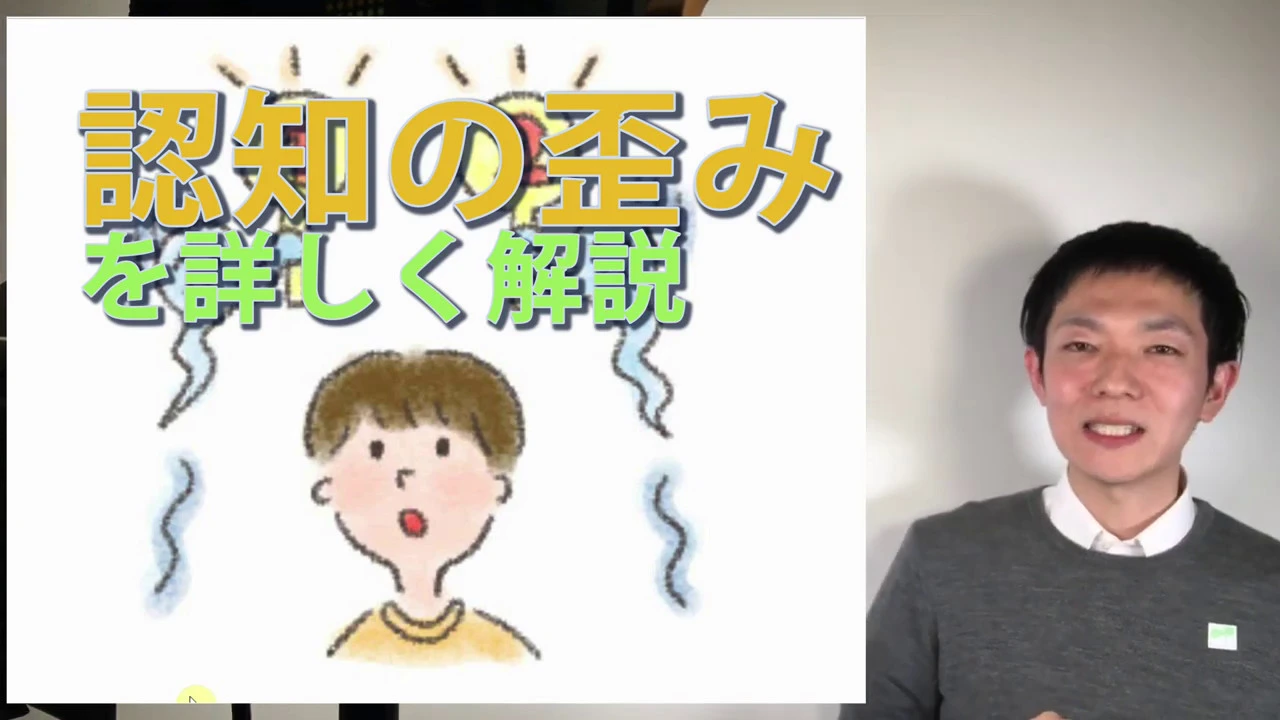
Yeah. But but mostly we have patterns right to our thinking like whether you're a catastrophizer like you said like oh my god this person is gonna never forgive me and not be friends with me anymore whatever or um very black and white thinking um automatic thoughts is how we usually talk about um the cognitive distortions and that your automatic thoughts will kind of fall under these themes and some common cognitive distortions are things like catastrophizing ignoring or discounting the positive shoulds, which is a lot of rules like I should have done more yesterday. I should have been nicer. I should have, I should have, I should have. Right?
There's also black and white thinking, which means that everything is all good or all bad. There's no in between. It's very hard to be kind of sitting with that gray. Another common um uh cognitive distortion is mind reading, where you think that you know what other people think about you before you check it out.
I do that once. That's a good Yeah, that's a really common one. And then another type of cognitive distortion is personalization where you compare yourself to everything and usually you come up short.
And to your question, Kyle, core beliefs can also be cognitive distortions. I mean most of them are you know like so even though we talk about cognitive distortions more at the automatic thought level technically every single core belief is a cognitive distortion because it's very absolute so it's very black and white I mean really I think the the the most common type of cotton distortion when we talk about core beliefs is that it's black and white thinking it's like I'm a failure period you know it's not like I'm a failure at crocheting I mean like that'd be fine I don't think that's a core belief like that's just that's just real like I don't know how to crochet Right? But if you say I'm a failure, period, it's a black and white type of thought pattern where it's like there's no in between.
You can't just like have failed today or like failed at this relationship, but you'll do better on the next one, you know? Um, and that I think is what we're trying to combat. And that's why the behavioral experiments are so important because basically you're shaking loose this idea of something that is uh absolute, that is black and white.
you're starting to create these conditional experiences where it's like, okay, I still pretty much think I'm a failure, but I have to say after this experiment, I guess I'm not really a failure to this particular friend. You know what I mean? And and the more you do these experiments, the more you get to loosen that type of thinking.
Yes. Um, tomorrow we're going to be back with Dr. Judy and she'll uh be able to answer more of your questions.
Tomorrow's uh live event is for Med Circle all access members only. If you're not a MedCircle All Access member, you can always start with a free trial. If you're a student or a teacher or in the military or a professional or a healthcare worker, um send me an email. We have discounts for you guys as well on monthly uh memberships and I'd be happy to give you a code. So, just shoot me an email kylemed.com.
We'll also put it in the descriptions below this video. Um, I do want to ask this question because it's it's it's a great one. Asks, "I'm 52. Is it really possible to retrain my thinking at this age? How long uh would you do this before you know if it's going to work?"
You can absolutely retrain your thinking at any age. And I will say that I just recently worked with a patient who was 65 years old and has gone through extreme chronic trauma for at least 18 years of her life. and she was able to retrain her thinking. So please don't give up hope. It's always possible. The work is difficult at times because you have to encounter some difficult feelings and experiences and the beliefs about yourself. But the idea about CBT is that it's empowering you. You feel like I can do something about this today. And even if you still continue to have those thoughts from time to time, the the the difference is once you've been exposed to CBT is that you have a plan. you know, okay, I had this thought again, but no big deal. I'll just apply these skills, right? That's what I really love about CBT because it is very active and it makes you feel like, okay, even if the thoughts come up, even if I get depressed again, I know what to do now. I have a plan. And that is that is what I want to say to as um just, you know, don't give up and and keep trying and you can truly change your thoughts at any age.
Dr. Dr. Judy also has a complete series um in our MedCircle video library on cognitive behavioral therapy and she also has another series on trauma focused CBT. So although today we talked about the general uh formulas and outlines of CBT, they can be applied to specific scenarios. And Dr. Judy honestly is our resident therapy uh doctor at MedCircle. She has series on somatic experiencing, acceptance and commitment therapy, dialectical behavior therapy. I mean, she has that all. So, if you were interested in this, motivated by this, enlightened by this, then I really encourage you to look at Dr. Judy's other MedCircle series on different types of treatments because some is this true, Dr. Judy that some people do CBT and ACT or they start with one therapy and then move to another therapy.
Absolutely. I think you know most therapists out there would call themselves mixed modality therapists in that they bring in whatever is helpful for the patient and sometimes that happens all at the same time where you're doing ACT and DBT, you know, because those are a little bit more closely related um in terms of theory.
CBT, ACT, and DBT are all kind of in the same family of treatments and those are my specialties. Um, or they kind of go through them in sequence. You know, you start the first few sessions with CBT and then you move into ACT. And so, I think all of those things are possible.
And it's really about finding your individual toolkit. I mean, that's what I really get excited to talk about. And thank you Kyle for just talking about you know my experience with interventions because that is what really motivates me is like teaching people as many skills as possible so that eventually they don't need me.
Yes.
Um I would like people to not need me with Absolutely. Yeah. And and what I found with our find with our members is that they come to Med Circle and get a membership because they want to watch our series on depression or anxiety or OCD or ADHD. Okay. They watch all of those and then they come to me and they say, "Well, Kyle, I watched all those.
Now what?" I said, "You got to watch the treatment stuff." That is those to me are the most um for me they're the most useful series we have to learn how these things work in actual applications to watch mock sessions to actually see how it works. I mean, imagine being a parent and you're sending your kid off to CBT therapy, but do you even know what's going on in there? Wouldn't you like to see that face to face? wouldn't you like to pop on and ask Dr. Judy a question so that you as our as a parent are informed in your child's therapy? Um we do have a few more minutes and uh I do want to make an announcement but before I do that Dr. Judy uh your presentation phenomenal. Is there more to it?
Yeah, you know I think tomorrow we can talk more about you know the specific tools of CBT. So, I'm really excited to talk about that because today we gave you this primer on core beliefs, but there's a lot of other ways to challenge core beliefs as well. The behavioral experiments is my absolute favorite one, but tomorrow we'll talk a bit more in detail about visualization as an alternate way or even simultaneously.
You can do that at the same time as behavioral exper experiments and also creating a new narrative, you know, building a new story for yourself which I think is very very powerful as well.
and narrative therapy has gained a lot of acceptance lately has shown a lot more u data that it works and I think it's a beautiful conjunction technique to work in uh in concert with CBT techniques but I know that there was a couple of people who had questions about you know how to do a visualization properly or what's the best way to do a visualization and we're going to get to those details tomorrow I think you know visualization is such a powerful tool I can't wait to talk more about it tomorrow as part of the CBT toolkit because visualization is like a mental rehearsal and re research has shown that when you visualize something and you visualize an outcome, it's almost the same as if you were actually doing the activity, the practice to get to that outcome. And I'll just name one quick study, but there are many others where athletes when they're unable to train in the water. So, for example, you think about a um a speed swimmer. They're not able to always train in the water. It's just not practical. They can only get access to the pool for certain days of the week and certain hours. So, a big part of their training is actually mental. It's about imagining yourself swimming, you know, doing the brush stroke, like whatever it is, like hitting that finish line, you know, passing the baton to your teammate.
You're visualizing it in as much detail as possible. And what they have shown is that they've been there's been studies where they'll have a team practice 20 times and then they'll have another team mentally rehearse 20 times and the outcome in terms of what they actually are able to achieve is the same.
Wow.
So that's the power behind visualization. It really does create uh changes in your brain and it creates these bridges and these connections between your neurotransmitters that also when you finally do get to that situation for that team that was just mentally rehearsing like your muscles are participating as if they already recall exactly doing actual practice.
I I was a swimmer and they would uh have us visualize all the time uh before big meets. We'd all lay down and we would visualize these races and we would use um I I even still use this today. They go, "When you breathe in, I want you to visualize breathing in pure, beautiful, clean oxygen." Like, and I think they even use colors like breathe in the color blue. And it just fuels you and keeps you energized. And when you exhale, you're releasing all of your um your agony and your pain and your stress and you're getting that out of your body. And imagine the thinking of that for 40 minutes. At the end, you just I mean, you're not even exhaling anything bad anymore. Your body is just filled with this good high oxygenation and you feel it. Like I even have goosebumps right now. You really do feel it in the in the true sense of the word. And uh I know I know we're coming up on the end here, but Dr. duty years ago, somebody I don't know who it was, maybe it was Oprah, maybe I read it, I don't remember, but somewhere I was told that at the end of the day when you're laying in bed and and you're thinking about your day, if there were parts of your day, perhaps a meeting or an interaction with somebody that you didn't like how it went, as you're drifting off to sleep, replay that part of your day, but in the scenario you wish uh it had happened. So if you had gotten in fight with your kid, you replay that and it was actually a nice outcome. Is that keeping us from the truth or is that a healthy visualization technique?
I think that it can be a useful visualization technique because it's really about, you know, being able to reconstruct something that will actually move you towards a positive outcome. And I think that in some ways it relates to creating a new narrative, writing a different story. is like this idea of like doing the replay in such a way that you're highlighting the things that are more helpful rather than harmful. So I can see value in that particular technique and really there's many many techniques and for some people that's going to work better than another type of technique and I think that we should be open to all of the different ways in which um you know those types of visualizations can add value to our life. And so you know visualization has very little risk right so it's like one of those techniques that you can definitely practice and do different ways and you know just kind of check it out and see what works for you. You know, we know what works in research, but all that matters really ultimately is that end of one. It's you. It's what works for you. And that's why we encourage everybody. You know, both Kyle and I talk about this all the time. It's like just try it. Like just try it. You know what? What do you have to lose?
Yes. Excellent. Well, and a very unofficial but recent poll of our MedCircle members and people who are on our free newsletter, which you can sign up for at medcircle.com. Uh, y'all didn't know we have an app and it's 45 days old today. Hey, we have done a very poor job at letting you guys know that we have a Med Circle app. It is a great tool and a much better viewing experience. If you're watching on your phone or tablet, you can sign up um on the app for a free trial. If you're already a member, you can sign in using your same credentials and access videos that way. You can adjust uh you can download videos. You can save to your library. It keeps your watch history. Uh it's it has a lot of features. It's wonderful. It's one of my favorite things we put out and it's gotten great great reviews. Uh so if you've not downloaded the app, it's available for Android and iOS. Uh let me know if you have any questions. Kylemed.com. Dr. Judy, we will be back tomorrow. I encourage you to register if you have not already for tomorrow's event. Um as it is for MedCircle all access members only, we will be focusing more on uh how to challenge these core beliefs and Dr. Judy will be taking your questions live and that replay will be made available for our all access members in the MedCircle video library. Dr. Judy, always great to see you. Thank you for being here and I'll see you tomorrow.
See you tomorrow and thanks for joining us everybody. Bye.
Remember, whatever you're going through, you got this.
[Music]
Up Next

11:00
Carl Rogers' Hidden Therapeutic Conditions in Person-Centered Therapy
@Counsellingtutor1
37.4K views•2011-08-16

68:32
Cognitive Skills for Differentiated Instruction | Teacher PD
@BrainWareLearning
631 views•2017-12-17
12:43
EMDR Therapy Explained: How to Process Trauma Effectively
@MedCircle
373.4K views•2020-05-12

6:40
The Nocebo Effect: How Beliefs Can Cause Real Harm
@CGPGrey
10.4M views•2013-12-23
Related Study Plans & Knowledge Roadmaps
Structured learning paths in Psychology
psychology
Neuroscience of Creativity: Networks & Training
01Foundations of Creative Cognition
02The Cognitive Neuroscience of Insight & Fixation
03The Triple Network Model of Creativity
+ 1 more learning modules
15h4 modules
Explore Roadmap
psychology
Imposter Syndrome: Etiology & CBT Framework
01Defining the Imposter Phenomenon
02Socio-Developmental Etiologies
03CBT Fundamentals & Thought Distortions
+ 2 more learning modules
15h5 modules
Explore Roadmap
psychology
Adult ADHD: Executive Dysfunction & Scaffolding
01Neurobiology of the ADHD Brain
02The Core Triad of Executive Deficits
03Executive Dysfunction and Emotional Regulation
+ 2 more learning modules
12h5 modules
Explore Roadmap
psychology
Loneliness: Evolution, Neurobiology & CBT
01Evolutionary Origins of Human Connection and Loneliness
02The Neurobiology and Physiology of Chronic Loneliness
03Maladaptive Social Cognition: The Psychological Loop
+ 2 more learning modules
12h5 modules
Explore Roadmap