



























Carl Rogers identified six necessary and sufficient conditions for therapeutic change in his 1957 work, which include three core conditions (empathy, congruence, unconditional positive regard) and three hidden conditions (psychological contact between therapist and client, client being in a state of incongruence/vulnerability, and the client understanding that the therapist is trying to help them). While the core conditions focus on the counselor's qualities, the hidden conditions emphasize the client's state and the therapeutic alliance, making them essential for effective person-centered therapy.
Carl Rogers' Hidden Therapeutic Conditions in Person-Centered Therapy
Added:Introduction to Humanistic Psychology and the foundational belief in human self-actualization.
The standard three core conditions of Carl Rogers' Person-Centered Therapy: Congruence (genuineness), Unconditional Positive Regard, and Empathic Understanding.
Familiarity with Rogers' seminal 1957 paper outlining the 'six necessary and sufficient' conditions for therapeutic personality change.
The basic dynamics of the therapeutic alliance and client-therapist relationship.
The concept of 'Presence' and 'Relational Depth' in Rogers' later, more mystical work.
How to practically apply these nuanced, overlooked conditions in clinical practice and challenging counselor-client scenarios.
Integration of Person-Centered Therapy with contemporary modalities, such as Emotion-Focused Therapy (EFT) and Motivational Interviewing (MI).
Current empirical research and psychotherapy outcome studies validating the effectiveness of Rogerian relationship factors.
37.4K views230likes11:00Original Release: 2011-08-16
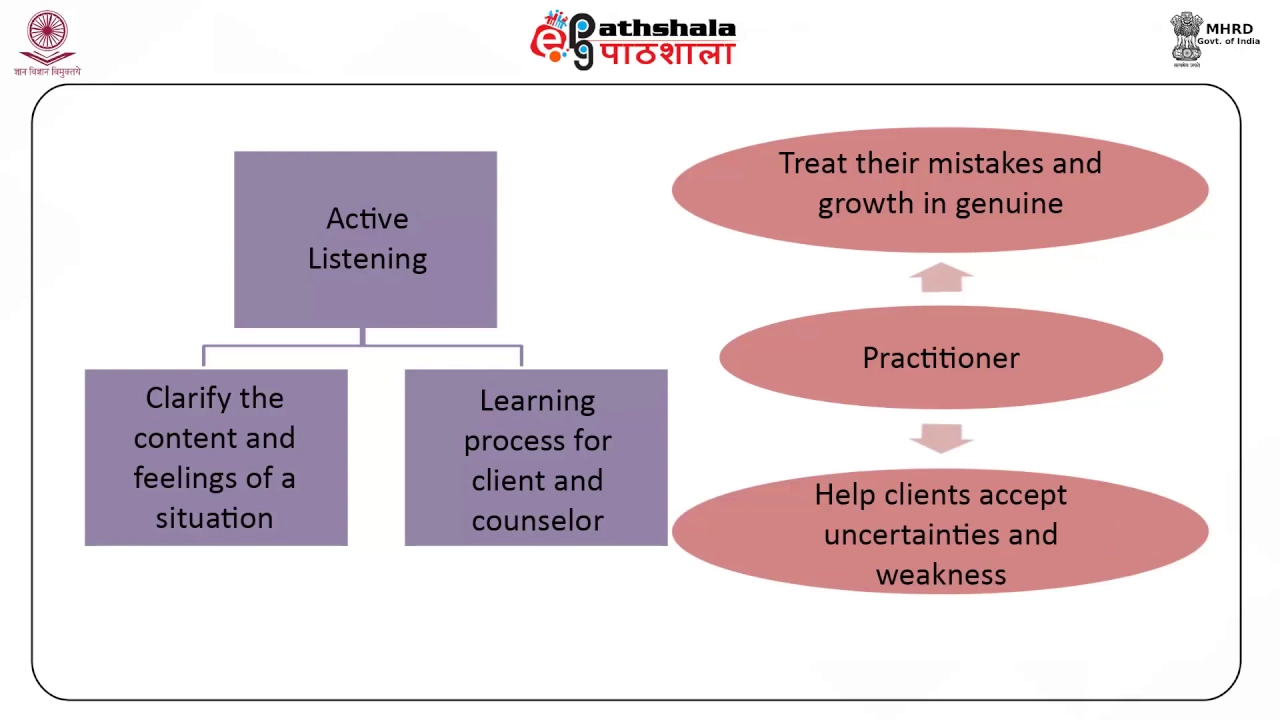
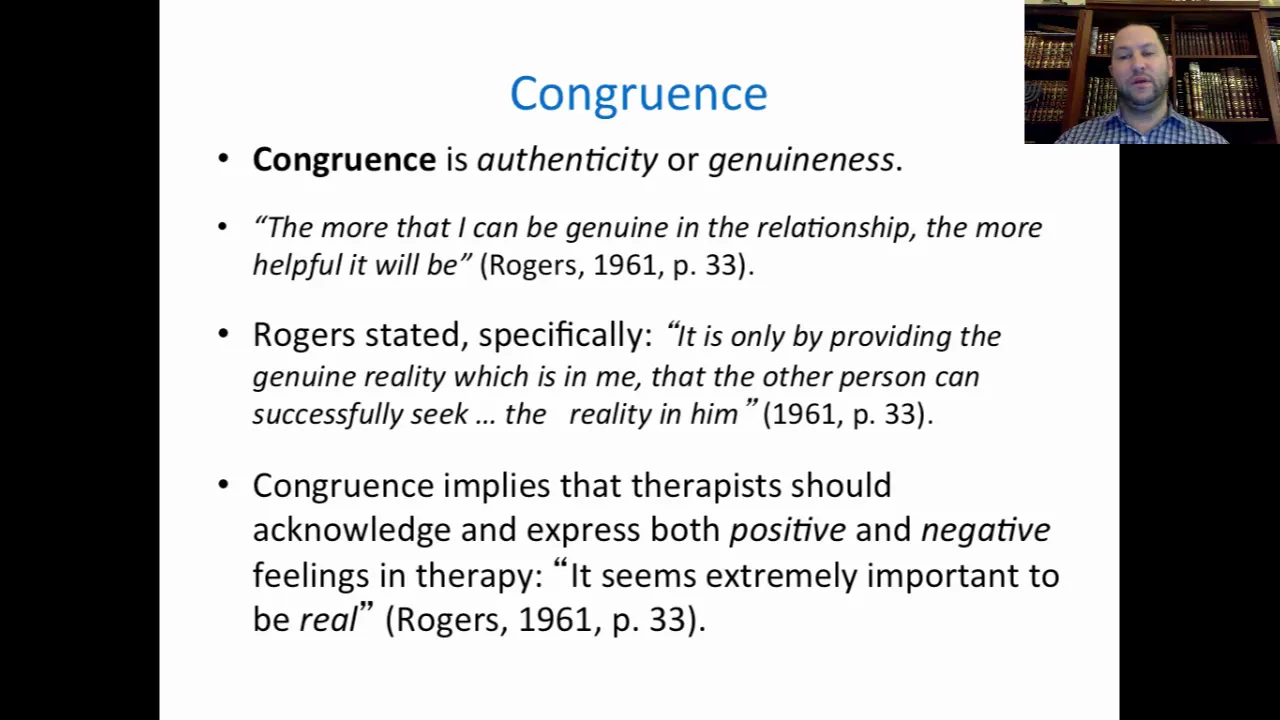
if you're watching this on the vle or you're Floy by on YouTube a very warm welcome my name is Rory Le Oaks and the a of this presentation is to form a supplemental study guide for students undertaking level four diploma in counseling today we're going to look at the case of the Lost conditions and we're going to start off with Carl Rogers and have a discussion about what he described as the necessary and sufficient conditions for Therapeutics change he wrote in 1957 in the Journal of Consulting psychology is it possible to state in terms which are clearly definable and measurable the psychological conditions which are both necessary and sufficient to bring about constructive personality change do we in other words know with any Precision those Elements which are essential if psychotherapeutic changes to ensue and I guess this was the first that Rogers had brought his ideas of person sensor therapy or as he called it client sensor therapy to a wider audience and they did it through the Journal of Consulting psychology so we're going to talk today about the necessary insufficient conditions for therapeutic change the sometimes known as the core conditions but as we'll see there are conditions that were are hidden and the aim of the presentation is to look at those hidden conditions so let's have a look look at what's called The Core conditions okay well the core conditions are empathy congruence and unconditional positive regard empathy in person sense of therap therapy is uh the ability to listen what the client's saying try and enter their perceptual world try and see the world through the client's eyes and reflect back to them their thoughts and feelings about their situation congruence is about being genuine um a genuine person in the relationship from the point of the counselor and finally unconditional positive regard the counselor's non-judgmental attitude and it said that if these three conditions are shown to clients then therapy will start to take place the theory tells us that now I just like to come on to this notion of the core conditions actually Rogers never used the term the core conditions it's probably attributed to the British person Center movement and it probably is a quirk of training when counselors are being trained there's an emphasis especially on person sensor therapy on what's called a core conditions but actually Rogers had six necessary and sufficient conditions for therapeutic change and I'll list them here the first of his six necessary and sufficient conditions with the two people have psychological contact more on that later the client is a state of in congruence being vulnerable or anxious the therapist is congruent or integrated in the relationship the client therapist experiences unconditional positive regard and indeed the client experiences that for the clients the therapist experiences an empathic understanding of the clients in internal frame of reference and Endeavors to communicate this experience I decode that effectively the therapist is trying to understand the client's world as they see it and reflect back to them the thoughts and feelings that goes with that understanding and finally the communication to the clients of the therapist empathic understanding and unconditional positive regard is to a minimal degree achieved so those are the six necessary sufficient conditions or therapeutic conditions and what I propose to do is remove the ones that we know as the core conditions so watch those disappear there we go and you're left with three conditions um two people have psychological contact the client is anxious or in congruent in the relationship and the client understands the therapist is trying to trying to help them so we split them really into client's conditions and the therapist conditions we'll have a quick look at the client's conditions well these are the ones we know as the core conditions congruence posit unconditional positive regard and empathy these are the three of the client's conditions if the client receives those from the counselor then the theory tells us that therapy starts to begin and the person's natural self-healing abilities will start to actualize so let's move on to the hidden ones and they're also known as the core conditions I'll put that up there the counselor's conditions well the counselor's [Music] conditions um I've just put them up here just if you want to make a note of them we'll look at them individually these are really useful for the counselor to assess where the client is in therapy cuz we all do that you know that's part of being a therapist is that you try to kind of work out not analyze but try and work out where the client is and sometimes you you bring that up in supervision so we'll have a look at these hidden conditions in a bit more detail and why are they called the counselor's conditions well first of all the first hidden conditions is the two people have psychological contact well ethically a counselor should be assessing if their clients are psychologically present clients may not be psychological in psychological contact if they're intoxicating maybe could be substance misuse or alcohol or drugs sometimes even prescription medication sometimes clients have severe mental health issues and they can have psychotic episodes that may also limit the client's ability for psychological contact now you know you may work for years and never come across a cers Who turns up under the influence or has become mentally unwell but as counselors we have to make an assessment whether where or if the therapy is consensual whether the the client understands they're having therapy and there's always a bit of an ethical thought there if the client doesn't understand why they there or what they there for then possibly ethically almost certainly ethically you you may be wanting to think about well actually if they don't understand why they're there they don't understand that they're there for therapy then actually can you really continue because a they may not understand why they're there and B they're probably not going to get any benefit from it and in that case you may want to rec contract and see them again um you know when they present differently and and sometimes um that you know that does happen the client needs the second of the Hidden conditions is the client needs to be in a state of in congruence being vulnerable or anxious um I'd ask this is it ethical to council client who does not have issues or difficulties they wish to explore certainly if you're a paid therapist if you're Mak your money out of therapy is it eal to take money off somebody when clearly they haven't got anything to talk about that for this part of their lives they're pretty much sorted out so again we have an ethical obligation to consider if if that clients or art clients are using therapy therapy appropriately and it's possible occasionally get you get clients who are turning up and they just want a bit of a chat uh maybe they're lonely um maybe they want to talk about something else they might want to talk about something not related to counseling what leadle advice or housing advice or Myriad of other things and if they're not um having difficulties at the counsil can work with then they need to consider can can the can the relationship continue and finally and I think this is an important one the communication decline of the therapist empathic understanding and unconditional positive regard is to a minimal degree achieved at some level the client needs to understand the therapist is trying to help them and we use the term Therapeutic Alliance um and it's to signify the clients and the counsil are working productively in other words the material is being brought and the client is looking at themselves thinking about how they can change what they can do to change Rogers talked about Client Center therapy as a growth model so this is what it was about it's about looking at personal growth looking at what you want to stay the same what you might want to change in life and how that feels to go through those changes um maybe with other people maybe with yourself how you act and behave if that really works if a Therapeutic Alliance is struck then you can work at relational depth where the client and the counselor become very kind of emotionally close not attached but they become to a point where the counselor is really entering the client's perceptual World almost as if they walking into the client's mind to want of a better phrase I suppose actually really seeing the client's world including the thoughts and the feelings that the client is having but I would say this you have to have a minimal degree of trust between client and the therapist sometimes that doesn't happen not every client will like every therapist and vice versa there may be well lots of reasons why people don't strike a relationship up but if it's if there's no minimal kind of trust there the therapy isn't really going to continue if you want any further information if you're watching on the vle just click the resource tab above the red arrow or if you're watching on YouTube if you click the box below you see the red arrow just pointing in there I'll put the hyperlinks on so you can go to some other re interesting resources including a really interesting article by Keith chudder who termed who coined the phrase or termed um The Lost conditions and finally thank you for watching
Up Next

6:51
Carl Rogers: Person-Centered Approach and Conditions for Therapeutic Change
@homemblindado_sigma
7K views•2016-01-01

68:32
Cognitive Skills for Differentiated Instruction | Teacher PD
@BrainWareLearning
631 views•2017-12-17
10:59
Attachment Theory Explained: Bowlby & Ainsworth Overview
@Counsellingtutor1
328.7K views•2011-10-27

6:40
The Nocebo Effect: How Beliefs Can Cause Real Harm
@CGPGrey
10.4M views•2013-12-23
Related Study Plans & Knowledge Roadmaps
Structured learning paths in Psychology
psychology
Neuroscience of Creativity: Networks & Training
01Foundations of Creative Cognition
02The Cognitive Neuroscience of Insight & Fixation
03The Triple Network Model of Creativity
+ 1 more learning modules
15h4 modules
Explore Roadmap
psychology
Imposter Syndrome: Etiology & CBT Framework
01Defining the Imposter Phenomenon
02Socio-Developmental Etiologies
03CBT Fundamentals & Thought Distortions
+ 2 more learning modules
15h5 modules
Explore Roadmap
psychology
Adult ADHD: Executive Dysfunction & Scaffolding
01Neurobiology of the ADHD Brain
02The Core Triad of Executive Deficits
03Executive Dysfunction and Emotional Regulation
+ 2 more learning modules
12h5 modules
Explore Roadmap
psychology
Loneliness: Evolution, Neurobiology & CBT
01Evolutionary Origins of Human Connection and Loneliness
02The Neurobiology and Physiology of Chronic Loneliness
03Maladaptive Social Cognition: The Psychological Loop
+ 2 more learning modules
12h5 modules
Explore Roadmap