








![My Persona 5 Royal Fiasco: 3rd Semester [Part 2/3]](https://i.ytimg.com/vi/Ogw_IZYcvuU/maxresdefault.jpg)








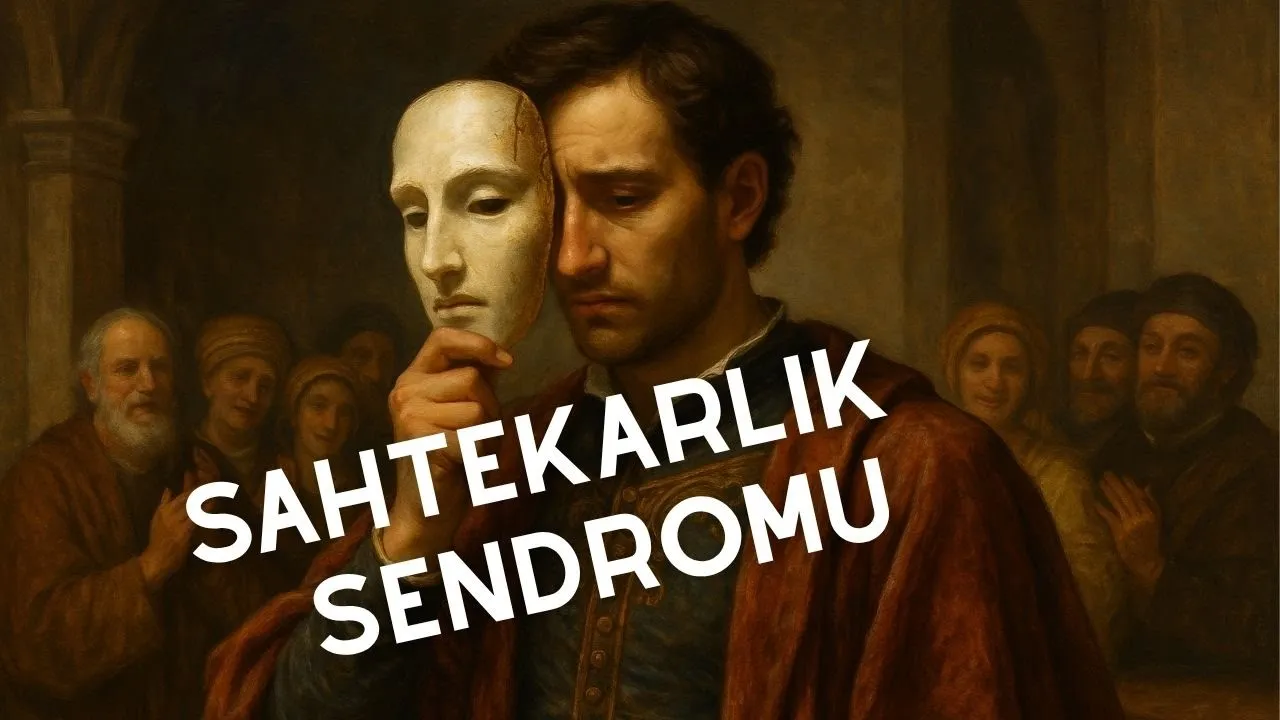













Imposters are individuals who fabricate aspects of their identity to gain advantages, and this phenomenon reveals fundamental aspects of human psychology including our tendency toward 'imposter blindness' (failing to detect obvious deceptions), the complex motives behind such behavior (escaping persecution, seeking belonging, or pursuing adventure), and the universal experience of 'imposter syndrome'—a widespread anxiety where successful people doubt their own competence and attribute achievements to external factors rather than their true abilities.
The Psychology of Impostors: Identity, Deception & Society | TEDx Talk
Added:An understanding of Social Identity Theory, specifically how individuals define their self-concept based on group membership.
The basic psychological concept of Cognitive Dissonance and how self-deception serves as a defense mechanism to resolve internal conflict.
An introductory familiarity with 'Impostor Syndrome' (the Clance Impostor Phenomenon) and its common symptoms in academic and professional settings.
The evolutionary psychology of social belonging, particularly the human drive for group acceptance and the fear of social exclusion.
Exploring clinical interventions and Cognitive Behavioral Therapy (CBT) strategies used to address chronic self-doubt and impostorism.
Analyzing how systemic factors, such as organizational culture and marginalized social identities, exacerbate feelings of being an impostor.
Studying the psychology of digital self-presentation and how curated social media identities contribute to modern self-deception.
Investigating the spectrum of deception, contrasting adaptive social white lies with pathological deception and personality traits like Machiavellianism.
290.8K views2.8Klikes17:28Original Release: 2013-05-23
Translator: Ivana Krivokuća Reviewer: Denise RQ This photo is of someone that I went to university with here at UQ.
Her name is Helen Demidenko, and she became famous for writing this novel, "The hand that signed the paper," which went on to win Australia's number one literary award.
Helen said that novel was based on conversations she'd had with her Ukrainian militants about their experiences in World War II.
Helen made quite a big deal about her Ukrainian heritage.
She'd go to multicultural festivals in traditional dress, do Ukrainian dances. and sing Ukrainian songs. etc. What was extraordinary about this story was that a couple of years after the book got released, it became apparent that Helen Demidenko was in fact Helen Darville.
She wasn't Ukrainian at all, and in fact she just completely fabricated her entire ethnic heritage.
When that news broke, she became the latest in a long and scandalous list of imposters, people who have faked who they are in order to get some kind of advantage.
History is full of these people: women who've tried to pass as men, paupers who have tried to pass as members of the royal family, and also people who have tried to fake their race.
It could be that you're old enough now to be able to reflect on a time in your life where maybe you've just stretched the truth a little bit about your past, where you've allowed someone to think that you're someone that you're not.
If that has happened to you, you might want to just think about that moment for a while, while I make three very quick points about imposters.
The first thing that I want to mention was that a lot of imposters seem to be able to get away with their lie for an extraordinary period of time, despite what seems at times to be a smoking gun evidence that there's something wrong.
So Helen Darville was 21 before she started faking her Ukrainian heritage.
Among people who knew of her, including myself, it was the cause of quite a bit of puzzlement and discussion that this person suddenly had a different name and suddenly had this never before detected Ukrainian heritage.
There must have been literally hundreds of people who suspected her secret.
All personally knew her very British parents, and yet it took two years before that lie got exposed.
This one is called "imposter blindness."
An extraordinary example of imposter blindness relates to the strange case of Billy Tipton.
Billy Tipton was a very talented and successful jazz musician for many decades.
It was only after he died that people found out that he was in fact a she.
This is despite the fact, mind you, that she had four wives, None of whom suspected that they're in fact married to a woman.
Billy went to extraordinary lengths to protect her secret.
She said that she had this terrible accident when she was younger, and that helped to explain the need for the bandages around the chest all the time, and it helped to explain the need for a prosthetic penis.
But all the same, this is an incredibly exposable secret.
How could you get away with a lie of that magnitude for your entire life?
Probably my favorite example of imposter blindness relates to this woman, Hannah Snell.
Hannah was a sailor and a soldier in the British Navy in the 19th century.
For most of her time, for about four or five years, she masqueraded as a man, James Gray.
And there was this dramatic anecdote where at one point she'd been caught drinking and rabble-rousing with mates on this naval ship, and as punishment, she got sentenced to the lash.
And of course, the lash is delivered to a bare back.
Afterwards, the captain of the ship wrote in his log about the strange breast-like shapes on this man's chest, and yet, still the paint didn't drop, right?
(Laughter) Presumably, it just lays so far outside the realm of this guy's imagination that a soldier in the British Navy could possibly be a woman, that he couldn't trust what he was seeing with his own eyes.
In some ways, I think imposter blindness speaks to a rather charming aspect of modern society.
Despite our self-image just being really quite cynical and skeptical, people are incredibly trusting that other people are who they say they are.
As one author wrote, "It doesn't occur to us to ask whether that masked figure poised over our naked unconscious body with a knife is in fact a doctor."
Just says that probably hasn't occurred to you to question that I am in fact an academic at the University of Queensland.
We tend to trust these things implicitly.
I've spoken about imposter blindness.
Now I want to talk about the motives for impostorism.
Not all imposters are motivated for fame or fortune, like Helen Demidenko.
Some imposters are escapologists - they're running away from a flawed past, and they're trying to rehabilitate their image and atone context of a great shame.
Some imposters are just rampant adventurers.
They're really just getting off on the thrill of living in the world where there's literally no obstacles to being whoever you want to be.
Some imposters, I think, are attracted to the idea of being part of a close-knit community that offers solidarity and offers support, and perhaps gives you a touch of sympathy from the outside world.
So that might help to explain the vast number of people who lay false claims to being Vietnam War veterans, for example, or World War II veterans.
But some imposters are running away from persecution.
Sometimes, that really requires very dramatic and inventive forms of impostorism.
There are examples, for example, of Jewish people in World War II who would disguise or literally change their physiology to be able to escape detection from the Nazis.
But quite often in life, if you want to run away from persecution, you don't have to do anything quite as dramatic as that.
If you're gay, for example, to not reveal your sexuality is frequently enough to pass as being straight.
So the gay person who is closeted can find themselves living the life of an imposter not because of what they've said, not because of what they've done, but because of what they haven't said and what they haven't done.
This can have a peculiar set of psychological consequences.
There was a great study done by Deborrah Frable and others where she tracked all these undergraduate students at Harvard University for a couple of weeks.
Some of these students had mild stigmas that were visible.
They're conspicuous, so maybe they're physically disabled or they're stutterers, or they're very obese, or they're members of racial minorities like African-Americans.
Others had mild stigmas that were concealable, invisible: people with eating disorders, people who are gay, people who came from very poor backgrounds.
You might expect that people who have concealable stigmas, who can pass quite easily to the mainstream, should fare better in this new context, but in fact, the reverse was true.
It was the people who had the invisible stigmas, who had the opportunity of living a double life, who did significantly worse in terms of well-being, in terms of self-esteem, etc. This dovetails with a whole lot of research that suggested to live the double life is a long, lonely, and difficult path.
To be forced to be out and proud about your situation presents its own challenges, but what it does give you is the opportunity to live an integrated life, and also it gives other people who are like you the opportunity to find you; and those people who are like you become this incredibly important source of self-esteem, social support, and well-being.
Another point I want to make is that even when imposters are rogues, even when they're scoundrels or criminals, society often holds a degree of admiration for them.
This is fond fascination for the imposter.
There are dozens of films that have been built around real life imposter stories, and in many of these films, the imposter is portrayed as the hero or as a semi-hero.
And in some ways, that's not entirely surprising.
We live in a world where often there are obstacles to social mobility, and then you see these people who take this crazy risk to catapult themselves into the social world that they'd otherwise be denied.
That's a romantic, attractive notion.
Imposters can also be attractive in the way that they highlight the vanities, the pretensions, and the prejudices of the society in which we live.
We do live in a world which is overly impressed by superficial characteristics like your title or your uniform.
Sometimes it's really quite thrilling to see someone take rampant advantage of that.
My favorite example of this is the so-called Captain of Köpenick.
The Captain of Köpenick was in fact this man, Wilhelm Voigt.
He was a very poor cobbler in Berlin, and he was a petty thief who has spent half of his life in jail.
But his life turned around when he found in a second hand store the discarded uniform of a captain in the Prussian Guards.
Of course, he discovered that once he wore this uniform, people in the street would snap to attention, and that automatically, offer him the kind of respect that typically he was denied.
Emboldened by this, he hatched what probably remains, I think, one of the ballsiest criminal conspiracies of all time, where he put on this uniform, he went to a local army barracks, he barked orders at these soldiers in the barracks, and formed a little squad of about a dozen soldiers who he led to believe, "We're going to go on this very important mission."
He marched the soldiers down to the local railway station, and they traveled all the way to Köpenick, which is a town just outside Berlin.
Once they were there, they dramatically confronted the mayor of the town and the treasurer and arrested them on completely fabricated charges of embezzlement; and these two people who, were presumably completely bewildered, were then taken on the train back to Berlin to face interrogation.
Wilhelm Voigt was able to go home, presumably laughing his head off.
What he'd done is eventually confiscated 4,000 marks as part of the trial, as evidence in the trial, and then he was able to enjoy his newfound wealth.
Unfortunately, Wilhelm was arrested, and he was thrown in jail, but he was released quite early, and he ended up becoming a German folk hero, quite deservingly, I think.
But I don't want to give the impression that imposters are always seen to be romantic or attractive.
Research by Jolanda Jetten and myself her at UQ suggest that if you are member of the group that somebody is making a false claim to belong to, then you typically don't find these kinds of acts particularly romantic, or attractive, or funny.
The more you care about your group, the less likely you are to find the positive side of impostorism.
The reason genuine members of the group are highly threatened by imposters is really rooted very deeply in the psychology of group membership.
People want their groups to be tight, cohesive, and well-defined, and to have clear boundaries; these are the good things for us.
Imposters trample all over that.
They make a mockery over the criterion for acceptance, and they completely dilute the boundaries of the group and dilute what it means to be a member of that group.
So, if you're a genuine member of a group, an imposter is like an irritant or a contaminant that's entered the skin of the group, and you're desperate to get rid of it.
Sometimes, that desperation can reach a fever pitch, and it can border on being something like a witch hunt, as people have these debates about who's a real group member and who is a fake.
So, can you call yourself a Christian if you don't go to church a hell of a lot?
Can you call yourself a vegetarian if you occasionally eat seafood?
Some people would say yes, and some people would say no.
Of course, there are no objective answers to these questions.
But there is a debate, and that debate is wrapped in emotion, politics, and ideology.
If it comes to this tense struggle to work out what the non-negotiable norms of the group are, and sometimes, the accusation of impostorism really becomes a way of slapping people into line when you feel as if they are straying from the path.
We have a whole bunch of terms in the English language to describe people who have what you see to be a superficial claim to a particular identity, but deep down, you suspect they're not the real deal.
Most of these terms are incredibly high charged and derogatory, so here, we're talking about impostorism as an accusation, impostorism as a political weapon, impostorism as an instrument of control or even as a form of bullying.
I've spoken about extraordinary people who've acted as imposters, we've spoken about impostorism as an accusation.
I just want to spend a few minutes at the end talking about impostorism as an anxiety.
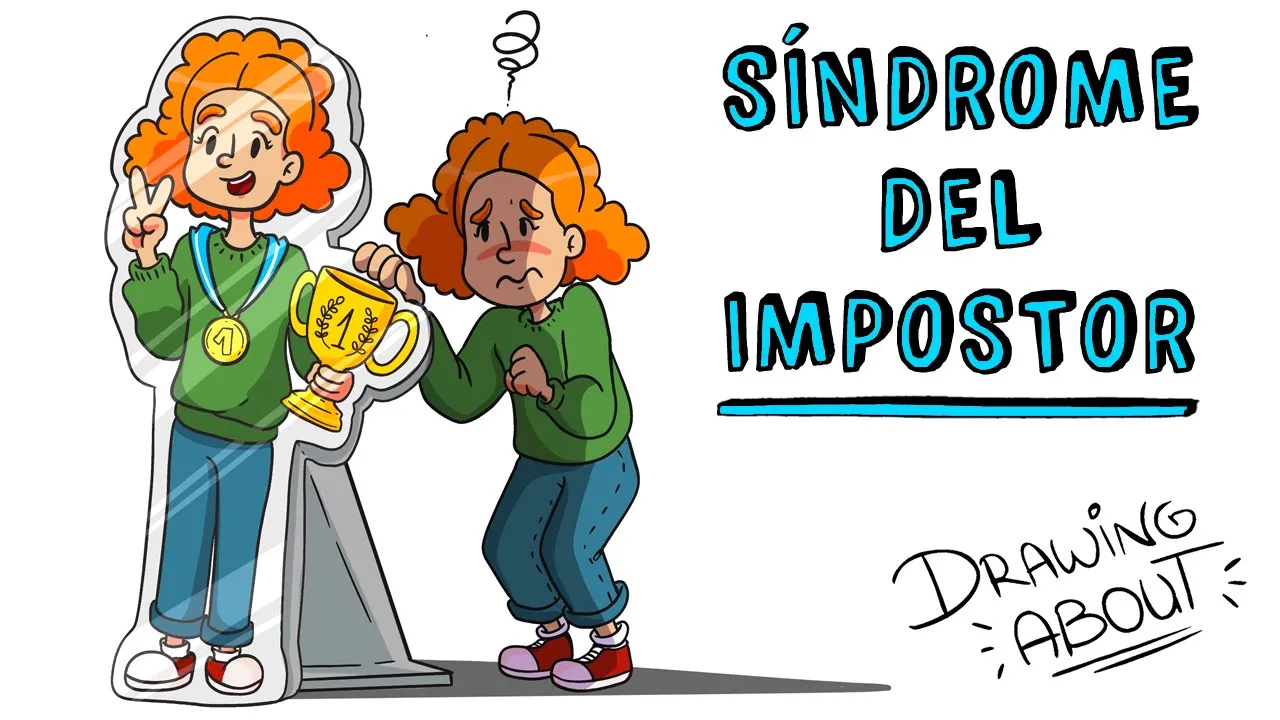
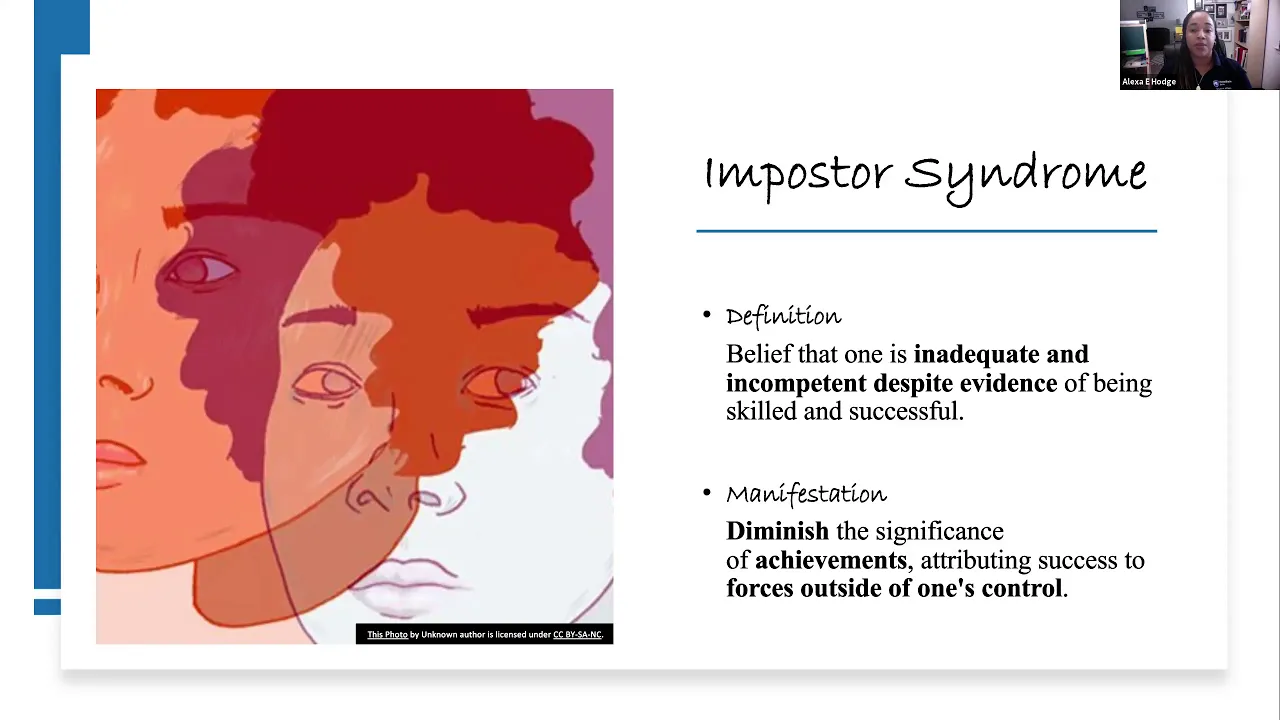
These two psychologists back in the 1970s detected what they termed the imposter phenomenon.
They found out that there was a hell of a lot of people in the workplace who wrestle with this anxiety that their public reputations far exceeded what they believed their true talents to be.
These psychologists originally thought this is something quite specific to the psychology of that first generation of women who went into professional life in the 60s and 70s.
But we now know that it's equally true of men, and it's completely rife in universities, both among students and staff.
Many of these people who suffer from the imposter syndrome are very successful people, but they can't internalize this success.
They attribute their success to things other than their talents - to contacts, to perseverance, to timing, to luck.
It's a very stressful experience.
These people live lives that are constantly on a brink of a great shame.
They feel as any day now they're going to get tapped on the shoulder by someone, and someone will pull back the curtain - Wizard of Oz style - and expose them as the flawed little human being they know themselves to be.
This is very difficult to overcome.
You can't overcome this anxiety by just doing good work.
Because, remember, your anxiety is that the world thinks that you're better than you know yourself to be.
So every time you get an award or a promotion, or a pat on the back, or praise, it's just deepening that gulf between the messages that you're getting from the world and what your self-image is.
So it deepens the anxiety.
I think, in some ways, this can help explain why sometimes, signs of self-doubt and anxiety actually go up after we're praised, and sometimes, they go up even more so than after we're criticized.
Because we spend a hell of a lot of time trying to impress other people, but when we do impress them, then we worry that maybe essentially what we've done is just tricked people into thinking we're something we're not.
In some ways, I think, this reinforces one of the ironies of impostorism.
We're not all the kind of people who're going to make dramatic leaps, and fake our sex, or fake our religion, or fake our race, but all of us strive to put a positive face to the world.
All of us strive to disguise our flaws in the eyes of other people.
We get very good at this.
As you get older, you get more and more sophisticated at being up to do this.
The idea of a true self or an authentic self becomes harder and harder to find.
Maybe this is one of the reasons why we're so intrigued by imposters: it's not because we want to be like them but because we worry that deep down we are like them.
After her secret got exposed, Helen Darville got a job with The Courier-Mail as a columnist, but only lasted a couple of weeks.
Her second column, as it turned out, was rampantly plagiarized from the Internet.
(Laughter) So she was sacked, and at that point, she gave up writing.
She then enrolled in a law degree at UQ and graduated, and the last I heard she was working as a judge's assistant.
She's now faded out of public life, so I guess, she lives on really as a memory or as a representation of something, a symbol of something.
Which raises the question of what does she represent.
What lessons are learned?
I think there's two ways to spin this.
On the downside, you could say, "Here's someone who's a destroyer.
This person bulldozed through the collective faith of society in order to further her own ambitions."
But I think there's another way of spinning this.
On the upside, you could say, "What Helen represents is a reminder that the world is mysterious, that the world is full of surfaces, that many of these surfaces are illusions and fundamentally, life is a performance with all the sense of drama, anarchy, and possibility that this implies.
Thank you very much.
(Applause)
Up Next

53:52
Overcoming Impostor Syndrome: Strategies for Professional Growth
@Patrick.Casale
1.1K views•2020-08-24

68:32
Cognitive Skills for Differentiated Instruction | Teacher PD
@BrainWareLearning
631 views•2017-12-17
18:21
The Power of Mindset on Health and Reality | Dr. Alia Crum
@TEDx
7.2M views•2014-10-15

6:40
The Nocebo Effect: How Beliefs Can Cause Real Harm
@CGPGrey
10.4M views•2013-12-23
Related Study Plans & Knowledge Roadmaps
Structured learning paths in Psychology
psychology
Neuroscience of Creativity: Networks & Training
01Foundations of Creative Cognition
02The Cognitive Neuroscience of Insight & Fixation
03The Triple Network Model of Creativity
+ 1 more learning modules
15h4 modules
Explore Roadmap
psychology
Imposter Syndrome: Etiology & CBT Framework
01Defining the Imposter Phenomenon
02Socio-Developmental Etiologies
03CBT Fundamentals & Thought Distortions
+ 2 more learning modules
15h5 modules
Explore Roadmap
psychology
Adult ADHD: Executive Dysfunction & Scaffolding
01Neurobiology of the ADHD Brain
02The Core Triad of Executive Deficits
03Executive Dysfunction and Emotional Regulation
+ 2 more learning modules
12h5 modules
Explore Roadmap
psychology
Loneliness: Evolution, Neurobiology & CBT
01Evolutionary Origins of Human Connection and Loneliness
02The Neurobiology and Physiology of Chronic Loneliness
03Maladaptive Social Cognition: The Psychological Loop
+ 2 more learning modules
12h5 modules
Explore Roadmap