






![Dialectical Behavior Therapy (DBT) Vs Cognitive Behavior Therapy (CBT) [CBT vs DBT]](https://i.ytimg.com/vi_webp/17A_eL8h-Hk/maxresdefault.webp)















ADHD involves difficulties with emotional regulation due to impaired executive functioning in the prefrontal cortex, leading to heightened emotional reactivity, low frustration tolerance, and challenges with emotional awareness; however, emotional dysregulation is a neurological trait, not a character flaw, and can be managed through evidence-based treatments like CBT and DBT, along with practical strategies such as emotional labeling and physiological regulation techniques.
ADHD Emotional Dysregulation: Strategies for Women
Added:Understanding the core diagnostic criteria of ADHD, particularly how symptoms present differently (often internalized or masked) in women versus men.
The concept of executive dysfunction and how it impairs emotional self-regulation and impulse control in the brain.
Basic principles of Cognitive Behavioral Therapy (CBT) and Dialectical Behavior Therapy (DBT), specifically the relationship between thoughts, emotions, and behaviors.
The fundamental theory of mindfulness and its cognitive role in self-awareness and emotional grounding.
Exploring the intersection of hormonal fluctuations (e.g., menstrual cycles, pregnancy, menopause) and ADHD symptom severity in women.
Understanding Rejection Sensitive Dysphoria (RSD) as a specific, highly intense manifestation of emotional dysregulation in ADHD.
Developing a personalized emotional regulation toolkit incorporating specific DBT distress tolerance skills (e.g., TIPP, STOP) for acute episodes.
Applying self-advocacy and boundary-setting strategies in workplace and interpersonal relationships to manage sensory and emotional overload.
13K views702likes16:26Original Release: 2025-07-29
Meltdowns, mood swings, and the guilt that follows. Sound familiar? For many women, and really anyone who struggles with ADHD, emotional dysregulation is the struggle that no one talks about.
This is ADHD and, where we talk about everyday life and ADHD. I'm your host, Dr. Jay. I'm a licensed psychologist who works with those with ADHD. Today, we're talking about ADHD and emotional dysregulation.
[Music] When your brain struggles to filter distractions, it also struggles to filter feelings, making little things feel very, very big and not in the cute Tom Hanks dancing on a piano rug kind of way. ADHD is a disorder in many ways of self-regulation and that includes not just attention and behavior but also emotions. The parts of the brain responsible for managing executive function like the prefrontal cortex are also key in regulating emotions. If your brain is a team, ADHD means that the manager is conveniently unavailable when everything goes sideways. For women, the stakes are different. Society doesn't just tell us to behave. It tells us to perform emotional control 24/7. Be calm.
Be pleasant. Be agreeable. Meanwhile, internally, your nervous system is on the roller coaster of doom. Listen, as a black woman walking around in the world, I understand. Let's be real.
Emotionality in women is policed like it's a national security threat. The number of times I've caught astray simply because I raised my hand and said I have an opinion. Well, at least it's my lived experience and my proof of this. We get labeled too sensitive when we react, irrational when we express anger, hysterical when we cry, and unstable when we experience mood swings.
If a man slams a door, he's passionate.
If a woman with ADHD cries because she's overstimulated, she's considered to be unstable. Do you see the double standard? And we're called quote unquote crazy when we call out any of the above.
To be clear, men have their own struggles that shouldn't be discounted, but this struggle that I'm mentioning is specific to certain marginalized identities. With women, nearly every emotion can be skewed as negative. I have a female friend who was bullied because she was quote unquote too cheerful. Men primarily get backlash when they show emotions that are deemed feminine. So, if they're emotionally vulnerable, they receive rejection, which sucks because seriously, we're rejecting someone because they're having a full emotional experience. However, even that is a slap in the face of women because it means that there's a negative connotation to anything deemed feminine.
It's time that we stop gaslighting women and really anyone of any gender out of their own nervous systems and start recognizing that emotional dysregulation and ADHD isn't a character flaw. It's a neurological trait that deserves support, compassion, and a heck of a lot more awareness. And outside of having a neurological, psychological, or physical health condition, under certain circumstances like, I don't know, war and economic instability, it totally fits the facts to have big emotions sometimes. So, the next time that someone says you're too sensitive, you tell them, "No, I'm emotionally allergic to BS. Mind your business and have a blessed day." Is that just the chaos demon coming out of me? Probably. Don't start any unnecessary conflicts. I just know that I was born and raised in the deep south and sometimes I feel like people should pay more attention to their side of the street and if they're going to jaywalk over to someone else's, at least visit with the intention of being kind. However, the point remains that having emotions, even big ones, isn't inherently bad. We can learn how to express and cope with big emotions in an appropriate manner. And when mistakes happen, we can also learn how to repair with others. Let's go deeper into some of the connections between emotional dysregulation and ADHD.
[Music] Number one is impairments and executive functioning. Emotion regulation requires a set of cognitive processes known as executive functions. This includes working memory, inhibition, and cognitive flexibility, which are consistently impaired in ADHD. Working memory allows people to hold emotional experiences in mind and reflect on them rather than reacting impulsively.
Inhibitory control helps to suppress immediate emotional reactions in favor of more appropriate responses. Cognitive flexibility enables individuals to reframe situations and shift emotional responses. When these functions are compromised, as they often are in ADHD, people struggle to pause, reflect, or adapt to emotional experiences effectively. Number two is heightened emotional reactivity. People with ADHD often experience more intense emotional responses to stimuli. This is true for both positive or negative experiences.
This is partly due to differences in neural sensitivity in areas such as the amydala and prefrontal cortex which are central to emotional arousal and regulation. These folks may overreact to mild criticism, struggle to let go of frustrations, and feel emotions more quickly and more intensely than neurotypical individuals. This heightened reactivity coupled with impulsivity creates a recipe for emotional outbursts, mood swings, and interpersonal conflict. Number three is low frustration tolerance and rejection sensitivity. Many individuals with ADHD exhibit low frustration tolerance, meaning they struggle with delays, mistakes, or perceived failures. This intolerance can lead to meltdowns or emotional shutdowns, particularly in challenging environments like school or work. Additionally, rejection sensitive dysphoria or RSD is a term used to describe the extreme emotional sensitivity to perceived criticism or rejection that is found in many with ADHD. To be clear, this is not an official clinical term or diagnosis.
What we are calling rejection sensitivity is common in basically all humans, but it is certainly heightened in those that struggle with ADHD and other mental health issues like depression and anxiety. Number four is deficits in self-awareness. I'm about to reveal a very clinical term. Some individuals with ADHD struggle with something called alexathyia or difficulty identifying and describing their own emotions without accurate awareness of what you're feeling. What happens is you're not able to regulate those feelings effectively. Research shows that adults with ADHD report more alexathyia traits compared to neurotypical controls. This can contribute to interpersonal difficulties and a greater risk of anxiety or depression. Number five is hormonal fluctuations. Estrogen and progesterone interact with dopamine and other neurotransmitters implicated in ADHD.
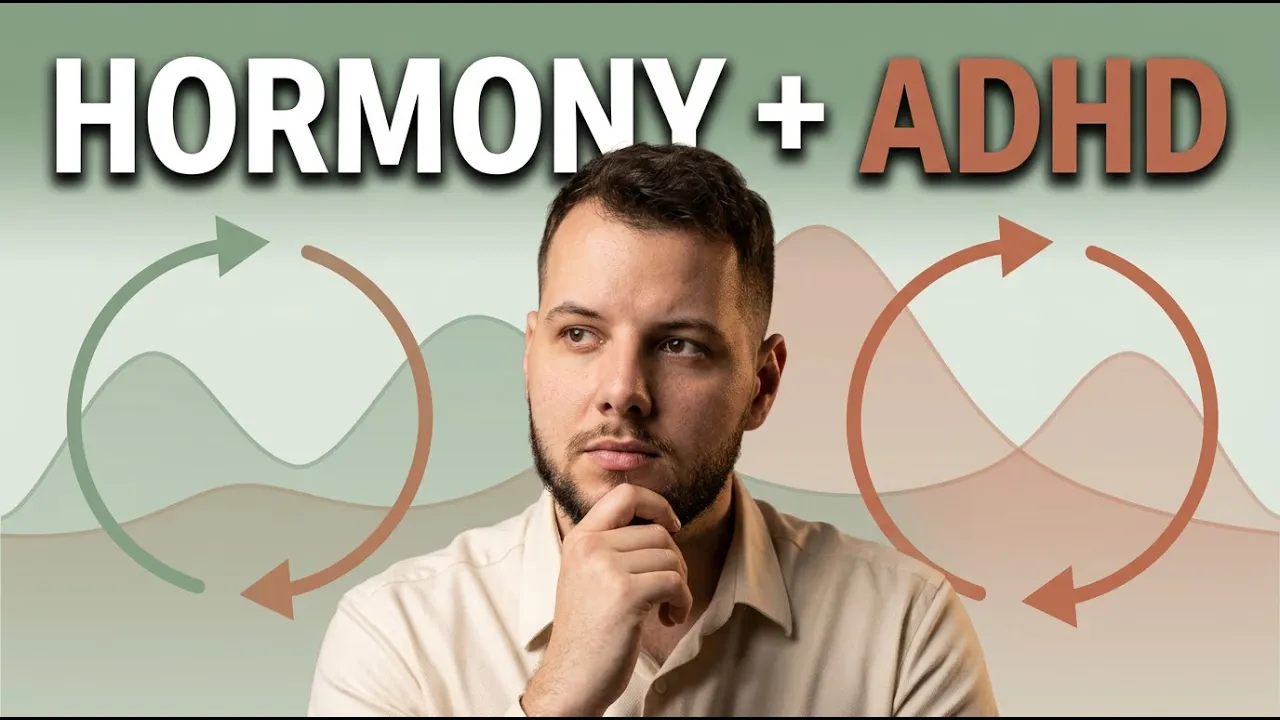
Hormonal shifts across menstrual cycles, pregnancy and menopause can worsen ADHD symptoms, particularly emotional lability. Many women report greater ADHD related emotional challenges during PMS, postpartum, and parameopause. Again, much of this is true even for women without ADHD. Hormones can be a real drag sometimes. You can't stop the emotions from coming, but you can learn to ride the wave. I'm going to make a lot of broad statements about the types of treatments that are effective here and leave you with a couple of strategies that you can use on your own.
[Music] When we look at research and what treatments have broad evidence support for helping with ADHD and emotional regulation, the number one is cognitive behavioral therapy or CBT. CBT is one of the most wellestablished treatments for emotional dysregulation in ADHD. It helps individuals to identify and challenge unhelpful thought patterns that often drive emotional overreactions. CBT improves both ADHD's core symptoms and emotional regulation, especially in adults. Number two is dialectical behavior therapy or DBT.
Though originally developed for borderline personality disorder, DBT has been adapted for ADHD, especially for managing intense emotions. There are lots of core DBT skills that help. The first is distress tolerance, which is basically how to cope when you're in a crisis or you're triggered. Also in DBT, there's an entire module called emotional regulation, which is all about learning how to identify emotions, increase positive emotions, and reduce unwanted emotions. There's also a module on mindfulness, and I'll say more about the benefits of mindfulness in a second.
And lastly, interpersonal effectiveness.
So, there are skills around assertiveness, boundary setting, ways to communicate to improve relationships or also resolve conflict. DBT-based interventions have been shown to significantly reduce emotional dysregulation in adolescence and adults with ADHD. At my practice, we have a full-fidelity comprehensive DBT program and provide a variety of CBT treatments, all virtual. Our DBT classes are available in 43 states. We take some insuranceances and we have a sliding scale as low as $25. You can visit our website at kindmmindsite.com to reach out or for more information. Number three are mindfulness-based interventions. Some of the known benefits of mindfulness are improved attention to internal states, decreased emotional reactivity, and increased psychological flexibility. Now, let's talk about strategies for identifying emotions and managing emotions.
[Music] Number one is name it to tame it. This refers to emotional labeling. Putting words to your feelings activates the prefrontal cortex which helps to downregulate the amygdala. So, let's talk about how do you do that. What you want to do is use a simple emotion word list or even a feelings wheel to help you identify a label that matches your experience. You really want to go beyond mad, sad, or fine and look for nuanced descriptions. So, for example, disappointed versus despondent or annoyed versus enraged. You notice how when Banner goes into the Hulk, he goes from this thoughtful, dynamic scientist to basically Hulk smash. Well, when you don't have words for your experience, that's essentially you. Research shows that simply by labeling your emotions, it reduces the emotional intensity. This isn't something that comes natural to many, so you have to practice. And there's really no shame in that. The second suggestion for identifying emotions is to use body cues as emotional clues. People with ADHD or alexathyia often struggle to think their feelings, but the body typically gives hints. So, let's talk about how to do it. What you want to do is ask yourself, what's happening in my body right now?
Is my jaw clenched? Are my shoulders tense? Did my ears turn red? Practice body scans to bring awareness to physical sensations before labeling the emotion. For example, if my neck is hot and my nostrils are flared, I am angry.
If I have a flutter in my stomach and my mouth is dry, it means that I'm nervous.
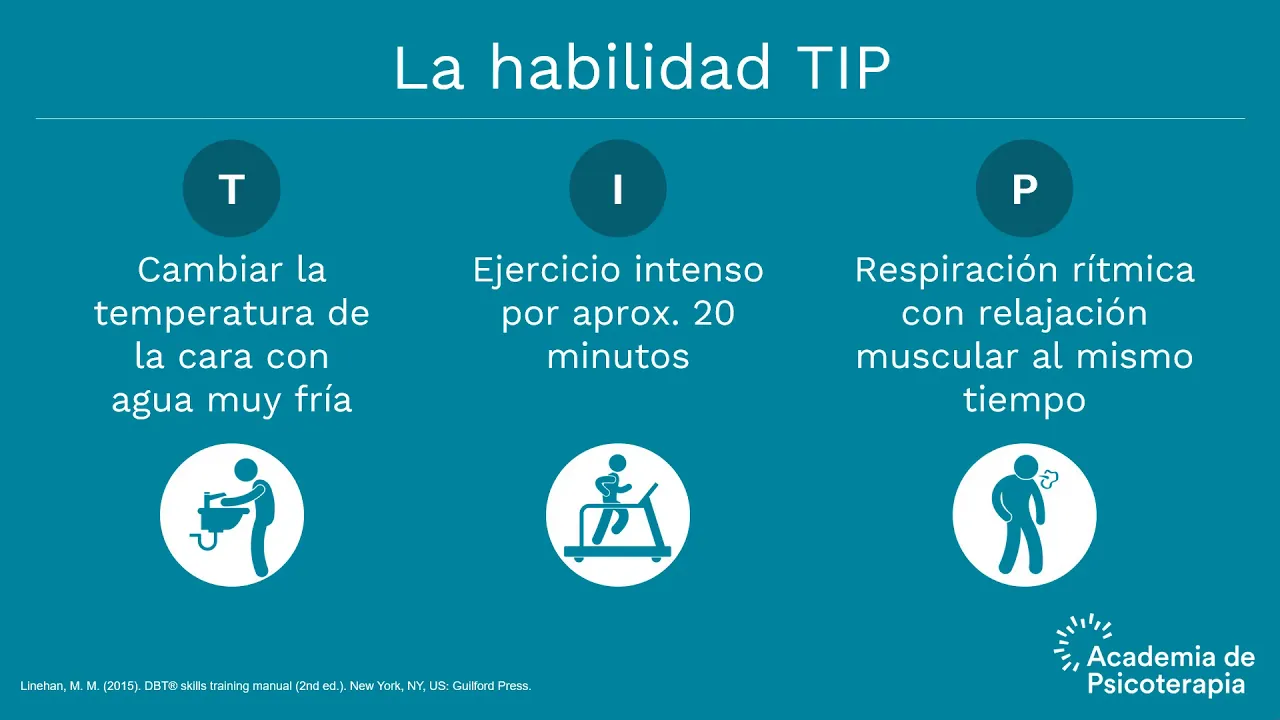
Let me tell you a little bit about why this works. Emotions are sematic. They show up as an increased heart rate, shallow breathing, or tension in the body, etc. This can be a backdoor into emotional awareness. Now, let's switch to managing emotions. This is straight from DBT's distress tolerance and it's called the TIP skill. TIP is a DBT acronym for fast acting physiological regulation. Ideal for moments of emotional flooding. The T stands for temperature. Temperature is a great way for bringing down emotionality quickly.
One of the main ways that we do this is by filling our sink or bowl with cold water, bending over, and placing your face in the water for 30 seconds. This works because we're mammals and we have a mamalian diving complex. So, anytime we dive into deep cold water, our body automatically brings down our heart rate and respiration rate. Guess what's shooting through the roof when you're emotionally disregulated? Both of those things. So for people, this action lowers blood pressure drastically and rapidly. So if you have any heart conditions, you may want to speak with a medical professional before trying this.
The I is for intense exercise. This could be 20 jumping jacks, a brisk walk, or running up a few flights of stairs.
It all works. I had a patient who struggled with anger, and one of the strategies that we used is that they would walk briskly up the six flights of stairs in their building. And this typically took the edge off of any intense anger that they felt. After using the strategy, they had enough space to utilize other strategies to work through their feelings based on the catalyst for their anger in that moment.
The first P, and yes, there's two of them and tip is paste breathing. So, this is where you basically breathe out longer than you breathe in. There's lots of strategies for this. I personally use straw breathing on a regular basis. This is basically where you breathe in, fill up your lungs, purse your lips, and blow out like you're blowing through a straw.
I find it really helpful and soothing for my nervous system. The second P is for progressive muscle relaxation or PMR. This is essentially where you tense and release various muscle groups to help regulate your emotions. You can find a lot of breathing and PMR meditations online. If you've been navigating the emotional roller coaster of ADHD, feeling things deeply, reacting before you mean to, or struggling to explain what's happening inside of you, you're not alone in this. And your emotions, no matter how intense, are not a flaw. They're signals asking for care, understanding, and support. Listen to the signal. Be curious about it. The greatest mystery in the universe is inside of you. Seek out those answers and use what you find to help you live a more grounded and connected life.
Emotion regulation is a skill, not a personality trait. It's something that can be learned, strengthened, and improved with the right tools, compassion, and guidance. With patience, practice, and reclaiming your own narrative, you're going to be just fine.
That's it for this episode of ADHD. And as always, thank you so much for tuning in. I love seeing your comments and I appreciate you all so much. If you love today's episode, be sure to check out our episode on ADHD and the anxiety spiral where I explain common ways anxiety can show up in women and give helpful strategies on how to manage.
This show is brought to you by understood.org, or a nonprofit organization dedicated to empowering people with learning and thinking differences like ADHD and dyslexia.
Learn more at understood.org.
[Music]
Up Next

62:44
DBT for ADHD: Emotional Regulation & Mindfulness Skills
@additudemag
5K views•2025-04-11

68:32
Cognitive Skills for Differentiated Instruction | Teacher PD
@BrainWareLearning
631 views•2017-12-17

9:55
Thinking, Fast and Slow: Daniel Kahneman Animated Book Summary
@FightMediocrity
2.3M views•2015-06-05

6:40
The Nocebo Effect: How Beliefs Can Cause Real Harm
@CGPGrey
10.4M views•2013-12-23
Related Study Plans & Knowledge Roadmaps
Structured learning paths in Psychology
psychology
Neuroscience of Creativity: Networks & Training
01Foundations of Creative Cognition
02The Cognitive Neuroscience of Insight & Fixation
03The Triple Network Model of Creativity
+ 1 more learning modules
15h4 modules
Explore Roadmap
psychology
Imposter Syndrome: Etiology & CBT Framework
01Defining the Imposter Phenomenon
02Socio-Developmental Etiologies
03CBT Fundamentals & Thought Distortions
+ 2 more learning modules
15h5 modules
Explore Roadmap
psychology
Adult ADHD: Executive Dysfunction & Scaffolding
01Neurobiology of the ADHD Brain
02The Core Triad of Executive Deficits
03Executive Dysfunction and Emotional Regulation
+ 2 more learning modules
12h5 modules
Explore Roadmap
psychology
Loneliness: Evolution, Neurobiology & CBT
01Evolutionary Origins of Human Connection and Loneliness
02The Neurobiology and Physiology of Chronic Loneliness
03Maladaptive Social Cognition: The Psychological Loop
+ 2 more learning modules
12h5 modules
Explore Roadmap