






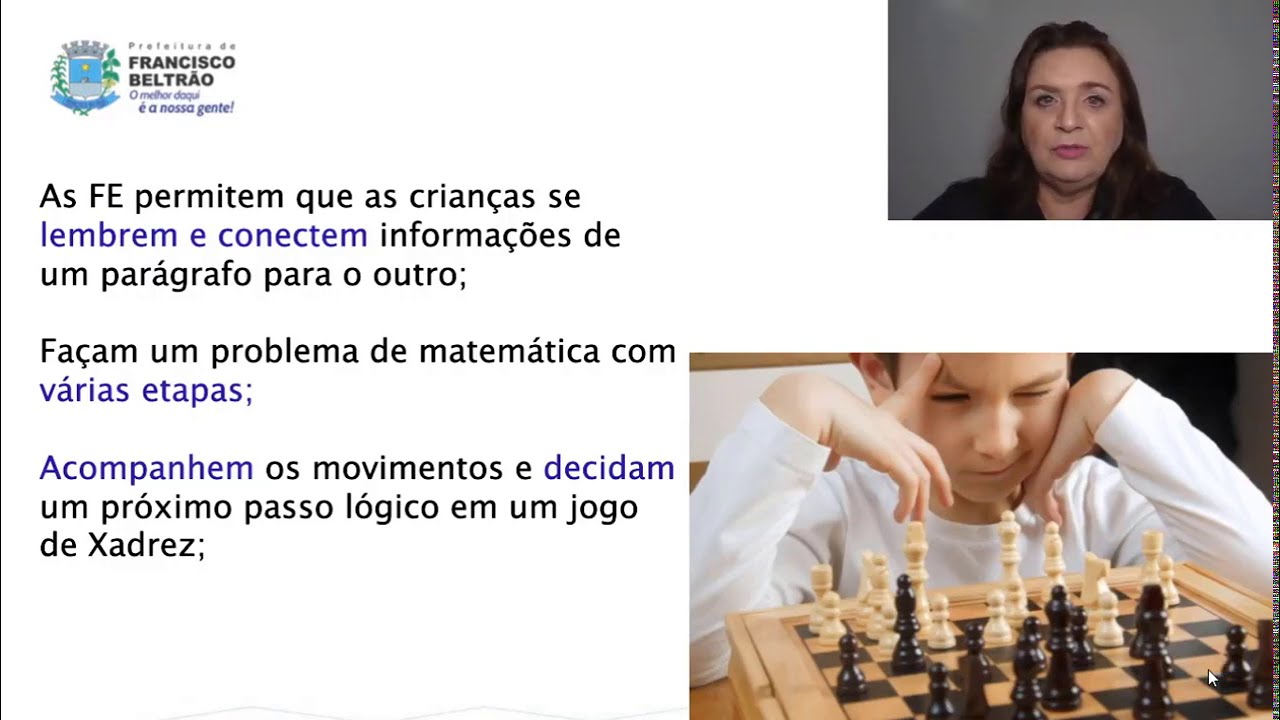




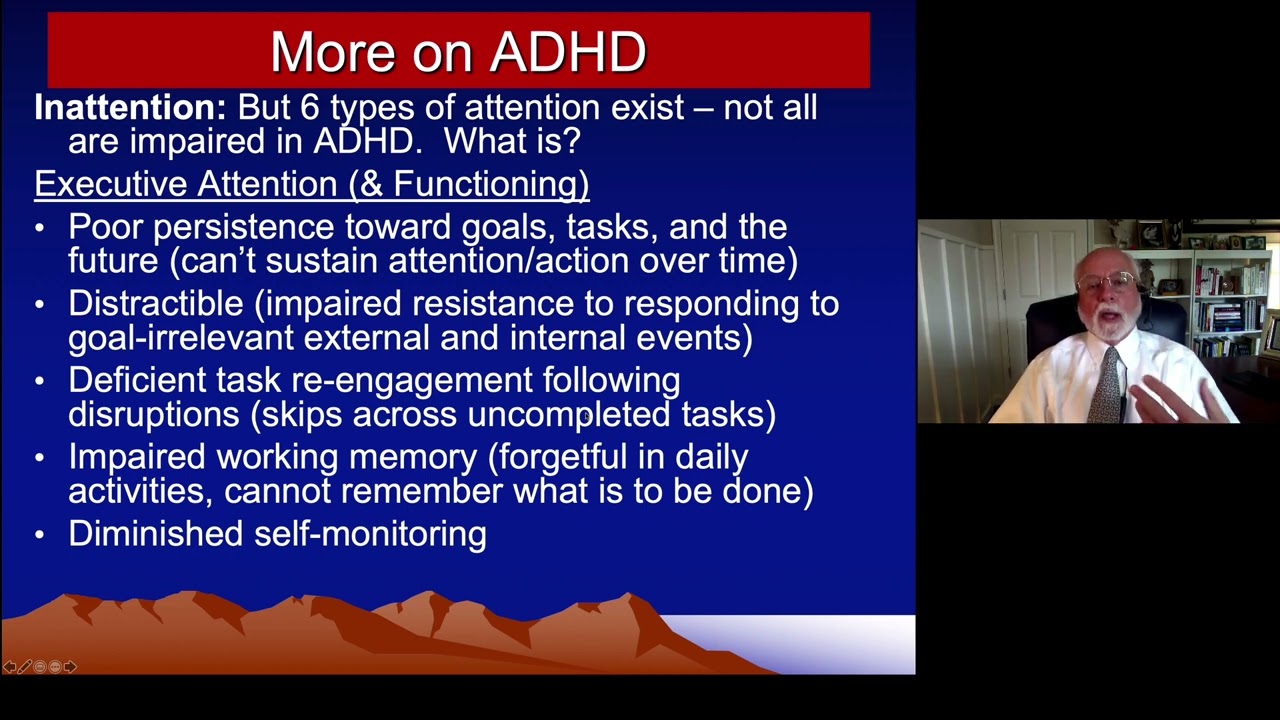






ADHD is fundamentally a disorder of executive functioning, where the inhibition system serves as the foundation of the entire executive system; when inhibition is disrupted, it creates a cascading effect that impairs multiple executive functions including working memory, emotional regulation, and planning, resulting in a temporal neglect syndrome where individuals cannot anticipate or prepare for the future, making them unable to pursue their long-term welfare effectively.
ADHD & Executive Functions: Barkley's Theory Explained
Added:Basic diagnostic criteria for ADHD (inattention, hyperactivity, and impulsivity) as defined in the DSM-5.
The fundamental role of the prefrontal cortex in cognitive control, decision-making, and goal-directed behavior.
The introductory concept of 'executive functions' (e.g., working memory, cognitive flexibility, and inhibitory control).
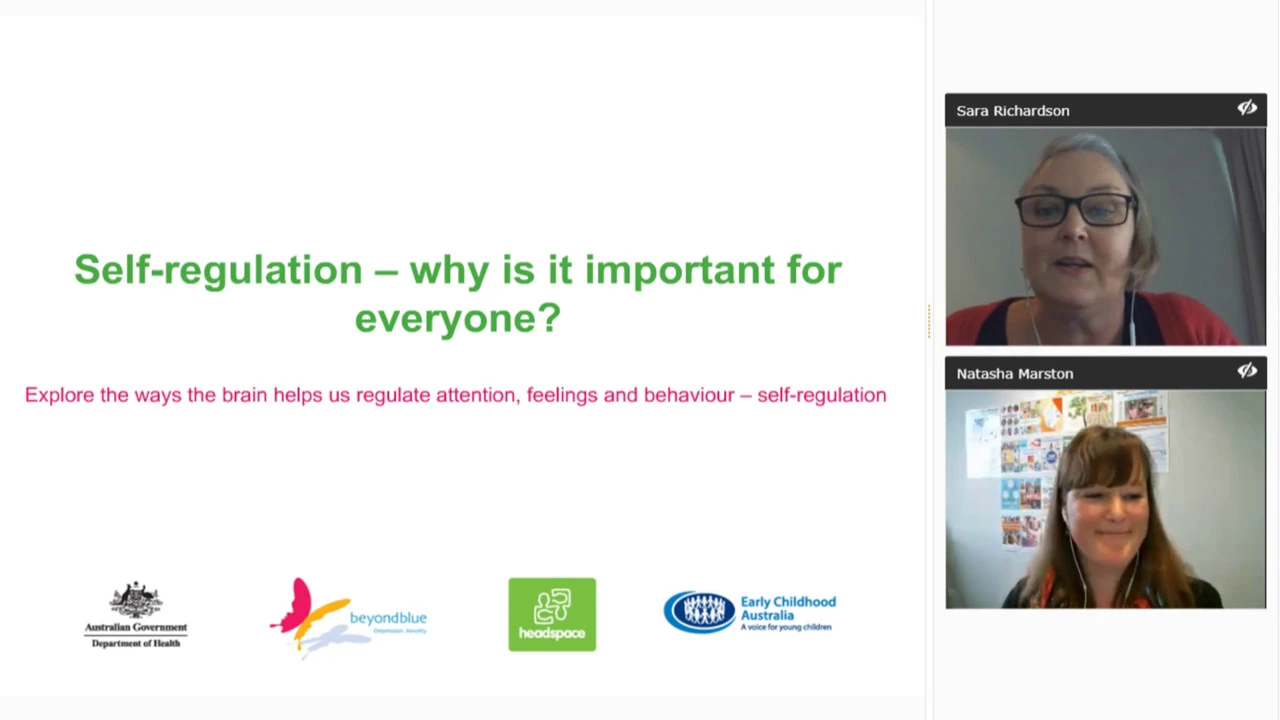
The psychological definition of self-regulation and how individuals typically monitor and manage their energy states, emotions, thoughts, and behaviors.
Barkley's specific model of four developmental executive functions: non-verbal working memory, internalization of speech, self-regulation of affect, and reconstitution.
Practical application of 'externalizing' executive functions, such as restructuring environments to provide point-of-performance supports.
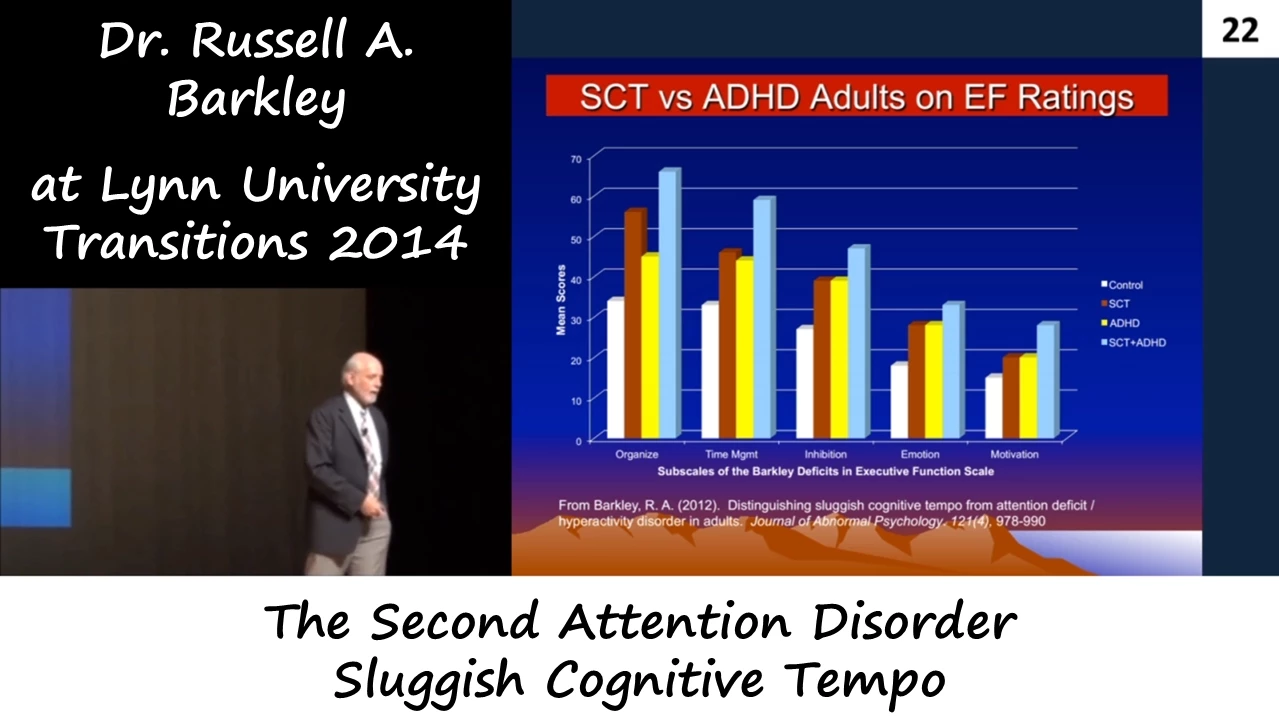
The relationship between executive dysfunction and comorbid conditions like Oppositional Defiant Disorder (ODD) or Sluggish Cognitive Tempo (SCT).
How pharmacological treatments (such as stimulants) specifically target and alter the neurobiology underlying executive functioning deficits.
32.1K views505likes1:55:21Original Release: 2014-08-30
hello I'm Dr Russell Barkley I'm a clinical professor of Psychiatry at the Medical University of South Carolina welcome to this internet course before we begin let me show you my sources of support uh so that you can evaluate any potential conflicts of financial interests that might exist in this presentation I'm retired from the state of Massachusetts although I'm clearly not retired and I was director of psychology and professor of Psychiatry there for 18 years before uh retiring from that medical school for the past year I've spoken in a number of places for which I've been paid and you can see a list of these sites and locations uh on this slide I also received product royalties from several different companies for various books newsletters videos and other products that I have created for the ADHD Marketplace and finally I do speak for and consult with many of the major pharmaceutical companies that have ADHD products in the current Marketplace this course is going to be about the nature of ADHD and whether or not ADHD is a disorder of executive functioning and self-regulation the course occurs in two parts this is part one and it will deal with the nature of executive functioning uh as a set of neuropsychological abilities the second part of the course which is a separate course is going to be about the extension of this view or theory of executive functioning into executive functioning in everyday life known as the extended phenotype view of executive functioning and as presented in my new book on this subject that is to appear this fall by Guilford Publications the question this course is going to answer is whether ADHD is a disorder of executive functioning or not this is a very controversial Topic at the moment largely because studies that have used psychometric tests to evaluate executive functioning often find that only 30 to 50% of individuals with ADHD are impaired on any particular executive function test this has led investigators to conclude that ADHD may not be a disorder of executive functioning or at least if it is only a subset of such patients qualify as having such executive deficits as we will see in the second part of this course this reasoning can be questioned because it is founded on an assumption that often goes uncriticizable executive function tests that is psychometric tests are the best means or gold standard for the evaluation of executive functioning a number of studies to be discussed in that second course question this assumption and show that executive function tests may not necessarily be the best means for assessing how people deploy their executive functioning in everyday life but for now in part one of the course we're simply going to ask whether ADHD is executive function deficit disorder and if so how might this change our clinical perspective on this disorder now to answer this more general question I'm going to have to address at least seven more specific questions what is ADHD what is self-regulation what then is executive functioning and the reason we have to explain self-regulation is because executive functioning is often said to be the basis for human self-regulation how are these Concepts linked to each other what is the evidence that ADHD is efdd or executive function deficit disorder if it is what does this mean for understanding ADHD and of course what does it mean for the clinical management of the disorder we begin with the first question what is ADHD now I have a separate course on this website on the nature diagnosis and subtyping of ADHD that you may wish to take but for now let me just briefly review some of the material that was presented in that course on the nature of ADHD itself ADHD is defined as a disorder of age inappropriate behavior that is manifested in two domains of neuroschistosomiasis I ities the first of these is in the domain of inhibition this is where the hyperactivity and the impulsivity first arise the disinhibition or problems with inhibition is the first set of symptoms to develop in the life course of ADHD and it will be followed within 2 to four years by the development of serious problems with attention but for now let's just take a look at the inhibition problems the difficulties with inhibition can be seen both in impaired verbal and impaired motor impulse control but there is also evidence of cognitive impulsiveness in that the individual makes impulsive decisions and cannot defer gratification or wait for events to occur this causes the individual to steeply discount or disregard the value of future consequences in favor of valuing more immediate consequences and although all people show such a discounting of future consequences as a function of the delay to that consequence people with ADHD show a much steeper slope of discounting of the future consequences in favor of immediate ones now this is also the area or the set of symptoms that is related to the hyperactivity the hyperactivity arises because of impaired inhibition of the motor control in the brain and it leads to excessive task irrelevant movement and excessive verbal behavior that are unnecessary for or the task or the goal being accomplished at hand also related to this dimension of symptoms though not mentioned in the DSM 4 is the fact that ADHD is associated with impulsive emotion as well as with poor emotional self-regulation now I have a separate course on this website that deals with the importance of emotion in ADHD so I won't go into this in any detail here other than to point out that people with ADHD both children and adults are often quite impulsive in expressing their emotions and are often impatient easily frustrated quick to anger prone to hostility easily excitable and overly aroused by particular situations they also have difficulty with the self-control or downregulation of these emotions once they have been elicited by surrounding environmental events so the emotional control problems are part of the inhibition dimension of ADHD now it's worth noting that the hyperactivity decreases steeply with age such that by adulthood it is no longer a significant set of symptoms for most adults many adults with ADHD report an internal sense of restlessness a subjective sense that is or a feeling as if they need to be busy but they are not overtly necessarily more active than other individuals now the second area that is not developing on schedule in ADHD is the domain of inattention and this is characterized by problems in particular domains of attention now the term inattention is actually not very helpful and is non-specific with regard to psychiatric disorders that is it doesn't help us with differential diagnosis because many disorders interfere with attention we also know that there are at least six kinds of attention mediated by the human brain and not all of them are interrupted or disrupted by ADHD so it's very helpful in trying to identify the nature of ADHD to begin to identify more specifically the kind of inattentiveness that ADHD produces research over the past decade or more has shown that it is primarily in the domain of persistence toward goals or tasks that ADHD most affects in the domain of attention that is individuals with ADHD cannot sustain their actions toward goals or tasks for as long a period as are other people of the same developmental level now the ability to sustain action toward the future or persistence toward goals is also accompanied by the ability to resist distractions that is to resist responding to events that interfere with task performance and are irrelevant to the goal at hand people with ADHD not only manifest poor persistence but also have great difficulties resisting responding to distracting events hence the concept of distractability as a symptom of ADHD in addition when they are distracted they have great difficulty re-engaging the previously incompleted goal or task the ability to re-engage a goal following disruption is actually not a function of attention is actually a manifestation of a capacity for working memory working memory is one of the seven major executive functions we'll talk about in this course and it is here that we begin to see evidence that ADHD may be an execu function disorder because ADHD does result in substantial interference with working memory working memory is the capacity to hold in mind information about behavior that is guiding Behavior over time toward goals and tasks the information being held in mind is not simply the end point or the goal one wishes to achieve but also the means by which the individual hopes to achieve that goal and the sequence through which the individual is going to have to act in order to attain the goal so it is information about the goal about the plan and about the sequence of the actions that will be needed to successfully enact that plan and attain that goal now this is a function of working memory as I've said and when ADHD individuals are distracted because this interferes with their working memory the goal is lost the sequence to the goal is no longer retained and the individual then is off pursuing tangents or irrelevant events with regard to that goal so we see evidence here that ADHD involves a working memory problem and indeed many of the symptoms on the DS sm4 symptom list are in fact symptoms of poor working memory so ADHD May therefore be at least a working memory disorder but because as I've said ADHD interferes with inhibition and inhibition is also an EXA utive function we see here instantly that there is evidence that ADHD interferes with at least two executive functions inhibition and working memory so that does raise the question does ADHD interfere with the others is ADHD a pervasive disorder of executive functioning or a more specific disorder that focuses primarily on disruption of these two executive functions we'll try to answer that in this course next we turn to the question of what then is executive functioning there's no way that we can examine whether ADHD is efd if we haven't defined this term properly that raises a particular problem in the field of neuros pychology because as many writers have mentioned there is no consensus definition of executive functioning even though EF is a frequently used term in many research papers and books and articles on ADHD as well as on the concept of executive function more generally there is no agreed upon definition of executive functioning there also is no operational definition of executive functioning that is specific enough that we could go down a list of psychological abilities and immediately be able to discern which of them are executive and which are non-executive in nature so neuros pychology has a problem on its hands at the moment and that is that it does not have a good definition of executive functioning indeed in preparing my book that will be out later this fall on Executive functioning I identified more than 30 such definitions and although they have some commonalities across the definitions they are certainly not identical and most of them are not operational also surveys have shown that neuropsychologists list up to 33 different constructs as belonging under this umbrella or metac construct term known as executive functioning which means that the concept becomes relatively useless if it contains so many different constructs now on this slide you see three of the more popular definitions of executive functioning that have been offered up in the literature the one most often used in research on attention deficit hyperactivity disorder and executive functioning is the first one and this is the definition by Welsh and Pennington that declares that EF is those mental processes that we use for sustaining problem solving toward a goal now this is a nice definition though it isn't particularly specific or operational but it certainly doesn't originate with Welsh and Pennington they note that they derive the definition from Laura and Lura certainly was not studying executive functioning because the term hadn't even been used at the time he was writing Lura was studying the functions of the prefrontal CeX in humans and he attributes this definition of the functions of the prefontal cortex back to an earlier Russian scientist and that is beev who writing in 1902 is one of the first to have declared that one of the principal functions of the prefrontal cortex is the ability to sustain and direct problem solving toward goals so what we really have here is a statement of one of the functions of the prefrontal cortex and not necessarily a definition of executive functioning though Welsh and Pennington certainly have made it so another definition is that offered up by leac in her series of books on the assessment in neuropsychology and here we see Lisac's definition as executive functioning being those capacities that enable a person to engage successfully and independent propos of self-serving Behavior it consists more specifically of valtion which is another term for free will planning propose of action which is simply action directed toward the future or toward a goal and effective performance which includes the ability to monitor your performance and adjust it accordingly if necessary to attain the goal leac contends that all of these are necessary for appropriate socially responsible and self-serving adult conduct now one of the beauties of leak's definition is that it begins to identify the importance of social functions in understanding the nature of executive functioning in humans I will return to this concept later in this course and especially in the second part of this course on viewing executive functioning as an extended phenotype but for now let's just leave it as is now another definition that has been offered up for executive functioning is my own and it comes from my new book the one I've mentioned that I expect to be out by this fall on Executive functioning as an extended phenotype this definition says that EF is the use of self-directed action that is self-regulation to identify goals and to choose and act and sustain actions over time toward those goals usually in the context of others and often relying on social and cultural means to do so these actions are being done for the maximization of one's long-term welfare as the person defines that welfare to be there'll be more on this definition in my second course but for now this slide simp illustrates the diversity of definitions of executive functioning and the lack of a consensus definition but let's for the moment use the Welsh and Pennington and Lura definition that executive functioning consists of various mental processes needed to sustain problem solving toward a goal these are the seven most common executive functions that are mentioned in the literature what makes them executive functions is not made clear but these are certainly the most common out of the 33 constructs that have been listed the first is inhibition and with inhibition comes interference control or resistance to distraction the second executive ability which may not be a separate executive ability at all but it is self-awareness and self-monitoring the third is non-verbal working memory and it is here where self-awareness may be located if we were to collapse self-awareness and non-verbal working memory together and we'll see why that might be the case in the moment or in a moment but for now let's just list these as separate executive abilities there's also verbal working memory planning and problem solving anticipation and preparation to act self-regulation and emotional self-control so these are among the more common executive abilities that we see in research papers on the subject but we still need to find find out a definition of executive functioning that tells us why these are executive functions and other mental or neuropsychological abilities such as visual spatial memory or language or even sense of smell or walking or other motor coordination acts why those are not considered executive abilities after all those may also be necessary for problem solving toward our goals now as these executive functions develop they're going to change the nature of what is controlling human behavior and there will be four such changes that appear to take place over the 30 years that the executive system of the brain matures the first transition in what is regulating human behavior is going to go from external to internal or mental when we examine young children such as two and threeyear olds their behavior is pretty much controlled by events that play out around them in the external environment but over the next 30 Years particularly as working memory abilities develop the individual is going to become increasingly regulated by their thoughts that is by the contents of working memory by mentally held information so there's a transition here from external to internal or mental representation of behavior over time toward goals this ability to regulate our Behavior using mental representations to do so then leads to a change in what is controlling behavior and that is a shift from others to self-regulation this is a social change we go from being regulated by others around us particularly our parents when we're in our preschool years to having an increasing capacity for regulating our own behavior again using mental representations to achieve that self-regulation both of these transitions lead to a third transition in what is controlling behavior and that is is the future this is a temporal Dimension we go from young childhood to being regulated by the now to increasingly anticipating what lies ahead in time that is the future becomes increasingly important to us and it increasingly regulates our Behavior to put it in another way there is a window on time opening and an expansion of our time Horizon and as this window on time opens we begin to contemplate or think about the future and we begin to think further ahead in time as we develop so that our time Horizon if you will is pushed further and further into the future think of the time Horizon as that threshold across which when future events begin to pass that is as they begin to come closer to us in time we begin to enact behavior in order to prepare for the arrival of that future event or to make it more likely so there's a temporal window or temporal Dimension that is changing the nature of what is controlling Behavior to put it frankly as we get older the future becomes more important to us and anticipated future events become more powerful in regulating our Behavior than do events that are necessarily taking place around us we become very goaled and future oriented people the final shift in what is regulating Behavior occurs as a result of the first three and that is that humans go from preferring immediate consequences to showing an increasing preference for delayed consequences that is they are less likely to Discount future consequences as a function of the delay as they get older relative to the discounting that took place when they were younger individuals come to prefer delayed gratification so we see then a change in Behavior or in what is regulating Behavior over the first 30 years of life as the executive system of the prefrontal cortex matures now another reason that ADHD may be a disorder of executive functioning is that the circuits that are responsible for the executive system are also the circuits that have been implicated in neuroimaging studies of ADHD and you can hear more about this in my internet course course on this website on the ideologies of ADHD but suffice to say here that the five brain regions that have been implicated in ADHD can be organized into three neural or neuropsychological networks the first of these networks is the connection from the dorsal lateral frontal cortex back through the striatum and this is known as the what network this is where what we hold in mind or in working memory which is occurring in the dorsal lateral frontal lobe is going to control what we do our motor actions and that is why it is called the what network or the cool executive function the second Network goes from the dorsal lateral frontal cortex back through the Statum and into the cerebellum at the back part of the brain this neural network is known as the when executive Network because it is principally involved in the timing and sequencing of both our thoughts and our actions remember it is just as important to do something when it is important to occur than it is to know exactly what to do the timing and timeliness of our behavior is just as important to attaining our goals as is the behavior we wish to enact so this is a very important circuit the third circuit in the executive system is from the dorsal lateral frontal lobe back into the midline of the frontal lobe a structure known as the anterior singulate and from the anterior singulate there are networks that project back to the amydala and from the amydala into the larger lyic system more generally now the amydala and lyic system as you'll recall from your introductory psychology classes is the Primitive emotion generating brain and it is this part of the brain that responds with emotion to events that occur around us and that is why this is often referred to as the hot exective itive circuit or the emotional circuit but it can also be called the Y executive circuit because it is here that we decide why we're going to do what we're about to do here is where the brain evaluates or appraises our future plans for whether or not they're worthwhile doing if this part of the brain is disconnected from the working memory systems an individual is certainly able to hold things in mind and is able to think about the future but it carries no emotional weight they can't evaluate or appraise the future event or the goal for its meaning for them or its worth for them and therefore they cannot make decisions about whether or not to pursue the goal so this circuit is actually very important because it provides the motivational basis for why we choose goals and why we choose the actions to attain those goals and that is why I call it the why or the appraisal Network so we can see that these brain regions are involved in the executive system but these are precisely the same neural circuits that have been identified as being responsible for producing ADHD so for this reason alone the neuroanatomy of executive functioning proves that ADHD has to be a disorder of EF because ADHD involves the very same networks that are involved in EF but let's continue our discussion of executive functioning and we'll see why ADHD is efdd as we go about elaborating upon the executive functions now on this slide I'll show you how I believe that ADHD fits into executive functioning and then we're going to discuss each of the executive functions in more detail we'll then show what this means for understanding and managing ADHD now when we analyze measures of executive functioning whether it's rating scales or whether it's psychometric tests we often identify a single large executive function construct or factor this is like the italics letter G for the name of the large factor that is found in studies of intelligence so that whenever we Factor analyze batteries of specific intelligence tests we often find a large single Factor known as G for this general intelligence factor and we see the very same thing when we analyze measures of executive functioning there is a large single executive function factor that leads us to believe that executive functioning is one thing but we can also go further and see that this General Factor can be broken down into two smaller band factors these are known as inhibition and metacognition and it is under metacognition where we see the more specific executive functions that we've already talked about such as verbal and non-verbal working memory now we can begin to see where ADHD might fit into our understanding of executive functioning because the symptoms of ADHD such as hyperactivity impulsivity can be viewed simply as a subset of symptoms of the larger Broadband dimension of inhibition in executive functioning in other words hyperactive and impulsive behavior isn't something distinct from executive functioning it's simply a set of symptoms that are part of the larger domain of inhibition and we can also see that the inattention symptoms of ADHD are simply a subset of symptoms of metacognitive deficits specifically problems with non-verbal and verbal working memory with planning and problem solving and with emotional self-regulation so the two dimension of ADHD can actually be redefined as fitting into the two dimensions of executive functioning and this is another reason why I believe that ADHD is efdd the symptoms of one are virtually the symptoms of the other when we conceptualize them properly now we can see how ADHD is an executive function disorder by building a theory of executive functioning and in order to build that theory we have to explain three different constructs or at least Define them more properly the first construct is going to be that of inhibition and we're going to use inhibition as the foundation of the executive system so like a house if the foundation isn't built properly the house is in Jeopardy and may collapse and we're going to make inhibition the foundation for the executive functions because it's also the foundation for self-control as your mother once told you stop and think think before you act the stopping comes first because through inhibition we decouple an event from our automatic responses to that event and it is during that pause or that delay that the executive system is going to have a chance to influence our choices of actions what we decide to do and how we will respond to this particular event now it's going to be helpful to build a theory of normal executive functioning and self-control and then show how ADHD interferes with this Theory but let's come back to the point for a moment and that is let's explain inhibition more specifically inhibition actually comprises three separate but related processes the first is the most important and that is the ability to inhibit the initial dominant or prepotent response it is here that the decoupling of the event from the response to it that is the automatic response to it is going to occur and so it's very important to suppress or inhibit this initial automatic response individuals with ADHD have profound problems in regulating these impulses or inhibiting these dominant responses the second problem with inhibition or the second type of inhibition that is that becomes a problem for those with ADHD is the ability to interrupt goal directed Behavior if it is proving ineffective so if you're pursuing a goal and you're beginning to get feedback that your plan is not working that your behavior is in fact ineffective that errors are occurring can you stop what you're doing evaluate the pattern of errors and shift to a different strategy this ability to be flexible and to shift Behavior as needed in order to accomplish goals as a function of the feedback we're getting toward our goals is very important and if it's impaired what you will see is cation the individual is unable to interrupt their behavior as they are making mistakes they continue to persist in old outdated or ineffective Behavior patterns they perseverate even though the information they're receiving from the environment would have encouraged them to stop what they're doing and shift to a different pattern of behavior so this inability to interrupt our behavior and shift flexibly as the need arises to do so is a problem in ADHD but it's also a major part of inhibition now the Third Kind of inhibition is the ability to resist responding to distractions known as interference control and we've already discussed that this is a major problem for people with ADHD their High rate of distractability they can't protect their executive functions from interference by irrelevant events that are playing out around them now all three of these are problems with inhibition that we see in ADHD and all three of them can be considered part of the construct of impulse control or inhibition so we begin with this definition of inhibition or this elaboration of the construct and we're going to make it the foundation of the House of executive functioning now before we go on and build the house let's also Define self-regulation because it's often said that the executive functions Prov divide for self-regulation and perhaps if we Define this term we can begin to see the link among these three constructs that is the linkage between inhibition self-regulation and executive functioning now since the 1950s we've had a very useful operational definition of self-regulation available it's usually attributed to BF Skinner this definition says that self-regulation is a set of three interrelated Steps step one is that the individual ual directs an action at themselves so self-regulation is any action A person directs toward themselves rather than toward the environment it is in a sense a behavior to the self why are we doing this we are directing an action at ourselves so as to change our subsequent behavior from what it otherwise would have been had we not engaged in this self-directed activity so we're trying to modify our own behavior now why would one want to change their behavior and the answer to that is part three of our definition of self-regulation in order to change the future that is to make a future consequence or goal more or less likely to occur so again self-regulation is any action directed at the self that is being used to change our subsequent Behavior so as to make a future consequence more or less likely to occur self-regulation is always future directed rather than directed at the now or the moment and self-regulation is always self modification the individual is directing an action at themselves to change what they plan to do and as I've said they're doing that to change their future now you can see how self-regulation is linked to inhibition because you can't direct an action at yourself if you don't stop what you're doing that is if you don't stop responding to events that are playing out around you you can't redirect your behavior or your actions back at yourself they are mutually exclusive either you're responding to the environment or you're responding to yourself but you can't do both at the same time so again your mother was right stop and think before you act and the stopping again comes first you must stop what you're doing before you can think about what you're doing and thinking is just a term in the vernacular or a lay person's term for executive functioning and for self-regulation now perhaps we can get a definition of executive functioning as I said earlier there's no consensus definition of this construct even though the construct is discussed repeatedly in various places and in a substantial amount of literature but now that we know what it what self-regulation is we can use it to Define executive functioning because you see an executive fun fun is the action you're doing to yourself it is a type of self-regulation a specific set of actions you're using to change your behavior so as to change your future and each self-directed activity or type of activity can be considered an executive function to put it another way executive functioning is a specific form of self-regulation a specific action to the self and since there are at least seven or more executive functions there are likely at least seven or more different kinds of actions that humans direct at themselves in order to regulate their own behavior and each can be considered an executive function that means that self-regulation isn't one thing but several things that humans use a variety of self-directed actions to manage their behavior to get to the future we said that there were at least seven executive functions or at least six or seven anyway and possibly eight depending upon how you want to separate them or combine them now we said that there is self-awareness or metacognition there's inhibition and interference control non-verbal and verbal working memory emotional self-control along which with which comes motivational self-regulation more on that in a moment and then finally planning and problem solving in these are the terms that are often found in papers in neuropsychology about the kinds of executive functions but we can now take them and redefine them as specific actions toward the self in other words we can ask what are you doing to yourself when you engage in these executive functions what is the specific class of self-regulation we know that each of these self-directed actions is going to develop one at a time time and each of them is a form of behavior turned on the self and then made private or internal in form and I'll explain this in just a moment and we know that each of these self-directed actions or executive functions develops one in a time in a stepwise sequence over the first 30 years of human development each executive function needs the one before it to develop before it can develop effectively but by adulthood Ood adults are going to have a set of Mind tools like a Swiss army knife of self-directed executive abilities that they are using to manage their behavior over time toward the future now what I've done in developing this model of executive functioning is to borrow an idea from vigotsky as to how humans develop private speech the voice in the head this self-directed speech is well tood in its developmental sequence and I have argued in my 1997 book on self-control and executive functioning that we can take this sequence described by vigotsky of how language comes to be self-directed and eventually forms the mind's voice we can take the sequence and use it to illustrate how all the other executive functions develop because all of the others are also actions turned on the self and made private or internal inform so let's take a quick look at vot's idea of how language becomes self-directed and eventually private to form mental thought that is verbal thinking or the mind's voice we know that between zero and 3 years of age as young children develop language it is speech to others the individual is not talking to themselves they do not have a voice in the head nor does this speech regulate their own behavior it's simply language to others but between 3 and 5 years of age the young human child is going to turn their language back on themselves they're now not simply talking to others or just verbalizing freely they are in fact talking back to thems and they will talk to themselves out loud whether anyone is in the room or not indeed much of the conversation that takes place among three and four year olds for instance is not really conversation but it's parallel self- speech in any case this speech to the self is observable it can be recorded uh and it can be studied as it has been by many individuals and specifically by Rafael Diaz and Laura Burke in their book on it's going to get quieter so that you can't always hear the words that are being said indeed all you may witness are simply oral movements of the face second even if you do hear words you're not going to get to hear the entire utterance so it's going to appear as if it's sort of telegraphic in nature finally and most importantly the individual is going to go from describing the environment to directing instructions at themselves we're finally going to hear instructions being given to the self now between 7 and 9 years of age this speech to the self is going to become progressively quieter the face is going to become increasingly suppressed or inhibited as is the lynx or voice box and the individual is now going to be able to speak without moving their lips or face tongue or larynx they now have a voice in their head but this voice in the head is simply selfs speech it's using the same speech centers in the brain but it's not releasing those signals down the spinal cord in order to activate the face the signals are being hibited the individual now has a private form of speech that other people can't see or hear now we know that this is still speech to the self and we know that it uses the same speech centers because neuroim studies show that when you talk to yourself in your mind you're activating the same speech centers you're using when you talk to other people this is why you can't talk to others and to yourself at the same time the difference between the public and the private speech is that the motor strip is being suppressed in the private speech so that the signals from the speech center don't leave the brain and it gives the individual a feeling as if they can talk to themselves even though other people people can't hear them now we also know that this is still self- speech because Studies have placed very sensitive electrical equipment that is electrodes all over the face and when individuals are asked to recite say the Pledge of Allegiance for instance privately in their mind their face moves the movements are very subtle and it takes very special and sensitive equipment to detect them but the muscles are changing they're moving so that at any point when we talk privately in our mind we're actually moving our face but no one can see it the movements are very very slight basically just changes and muscle potential but they're there and they show the origin of private speech and that origin is in public speech with the face being suppressed so instead of referring to this as the internalization of speech which is the phrase voty use for this sequence a better term might be the privatization of speech because we are keeping our facial movements private so that we can talk to ourselves without others hearing what we have to say now I am going to take this entire sequence and apply it to all of the other executive functions because in my theory this is how you get executive functioning you take an action that's directed at the environment you turn it back on yourself and you gradually make this self-directed Behavior private and it creates a form of mental self-directed behavior and each of the executive functions can be thought of as a privatized action to the self now let's take a look at what each of the executive functions might be when we rephrase them in this botski and view as an action to the self in other words what are you doing to yourself when you use each of these executive functions a look the first executive function that I believe develops very early in life and it begins its developmental trajectory in the first few months of life is that humans turn their attention system back on themselves so that they're no longer just attending to the environment as other species are doing they're also attending to themselves and what they're doing they're self-monitoring this self-directed attention becomes self-awareness now right alongside the self-direction of attention is going to become the self-direction of inhibition the individual begins to develop a very prototypical and primitive form of self-restraint it will take about 10 years or more for this to fully develop and humans reach their adult potential of inhibition sometime during their middle adolescent years but what the individual is doing is directing their inhibition system back on their own behavior they're restraining their actions from becoming public so that this inhibitory Network now takes over the motor system and turns it off and it is here that we see the decoupling of human behavior from the events that may have provoked it the individual is buying time creating a delay pausing and in other words deferring the decision to act for a while while they contemplate what they're going to do so the inhibition system is suppressing the motor system now during this period of inhibition this delay or decoupling the other executive functions are going to begin to develop and take over the guidance of the motor system of controlling what we do the first to develop of these self-directed actions after the self-direction of attention and the self-direction of inhibition is the nonverbal working memory system but we can rephrase this non-verbal system as an action to the self what is a human doing when they use their non-verbal working memory system and we know from many research studies that what they're doing is using visual imagery this is the visual spatial sketch pad in bad's model of working memory but I think it is best defined as an action and that action is visualization humans are able to mentally visualize their past and they hold these visualizations in mind as a form of self-guidance as William James once said more than a hundred years ago the secret of the human will is to hold an image fast before the mind all else is a consequence of this ability and here we see this ability now the individuals are able to redirect all of their senses back at themselves they can see to themselves but they can also smell to themselves taste to themselves touch to themselves and otherwise hear and sense to themselves all of the senses can be reactivated and redirected back at the self and it is this entirety of self-directed sensing that we call the non-verbal working memory system but of all of the senses research shows that for humans anyway vision is the most important for our survival and so it's no surprise that the visual imagery system is one of the first to develop in the first few months of life and while it will take more than 10 years to reach its full capacity it begins its course very early young children are able to hold images in mind and these images will eventually come to guide their behavior over time what are they holding in mind relevant past information what are they seeing their past what oay people call this hindsight Looking Backward reactivating the relevant past that may be informative about what is happening now or what may be coming next but let's remember that while vision is the most important all of the other senses can be redirected we can rehear to ourselves past sounds or conversations we can resell previous odors retaste previous gustatory Sensations and other self-directed senses so the individual at a very early age gets this Triad or these three executive abilities and they begin to develop them simultaneously I believe self-awareness self-restraint and sensing to the self particularly visual imagery now beginning at around 3 years of age as I've said the individual starts to talk to themselves and so the fourth executive ability begins to emerge and we've already described this because it's quite well understood the individual is now using language to themselves as a form of self-regulation this too will take more than a decade to reach its full maturity to get the voice in the head and for that voice in our mind to actually develop an influence over our behavior and be able to guide the motor system now these four executive abilities eventually create the next one and that is the ability to control our own emotions think about it in all other species emotions are provoked by environmental events and they are automatic but humans not only have this kind of environmentally provoked emotion they are able to provoke their own emotions and they do it very much through the same process that is used to teach the method acting school of acting in drama that is if an act needs to be able to create an emotion on a Sound Stage or in a theater what they can do is to activate an image of a past in which that emotion occurred and by describing that image to themselves using selfs speech they can further enhance the image and the emotion comes with it because you see emotions are welded to everything we think say and do and so if we recall a past in which a strong emotion occurred we will re experience the emotion automatically it's a fate AC compete we can't help it for instance if I wish to grieve right now if that were necessary I could provoke a grief reaction by recalling the death of my twin brother four years ago which was a very emotionally traumatic event for me and if I hold the image of that event in mind I will begin to sense the autonomic nervous system aspects of a grief response my heart rate will change my rest respiration changes my eyes may begin to well up with tears and I will begin to experience the sadness that I had at that time and we can do this to create any emotion we wish humans can self-proving a past event in which that emotion took place now why would we want to do this well as we said this is a means of regulating our own emotions so let's say that we're in a situation that is very emotionally upsetting but if we show those emotions it may interfere with our goals our plans or our long-term welfare for instance suppose someone says something in a meeting at work and it makes you angry but you shouldn't show that anger because it could be very destructive to your welfare it could interfere with your ability to keep your job and so what humans do is they use another emotion they create a second emotion that then counterbalance es or countermands the first and it begins to dampen down the first emotion we engage in Acts of self-calming and self soothing or to put it very bluntly we count to 10 and go to our happy place and by doing that we can quell the initial strong emotion and then we have a chance to craft a new emotion in its place that is more consistent with our goals and with our long-term welfare and is more socially appropriate so it is here by using the other executive abilities that humans appear to have a capacity for the fifth executive ability emotional self-regulation let's not forget though that an emotion is a motivational State and so if we can self-manage our emotions this way we automatically can self-manage our motivation and now we have discovered the fuel tank necessary for all future directed Behavior self motivation the ability to motivate ourselves and the absence of consequences we don't need rewards for everything that we do humans are able to reward themselves to motivate themselves and to create the motivational fuel that will be needed to drive Behavior over long periods of time to get to the Future and the eventual goal and those eventual future consequences no other species can do this no other species is able to sustain action over as long a period of time as humans are able to do in the absence of consequences what other species do is quit they habituate if there's no immediate consequences they shift their behavior and go on and do something else that generates an an immediate consequence but humans don't they sustain actions toward goals and they are able to drive those actions over time using self motivation lay people refer to this this as willpower or self-discipline or persistence or drive and determination but by whatever term it is it is self-motivation finally in late childhood humans get the last executive ability it's often referred to as problem solving planning Innovation or goal-directed creativity I've Ed the term reconstitution in some of my earlier writing but by this what I mean is is a self-directed activity that is play to the self remember all of the executive functions can be redefined as an action to the self and planning and problem solving are based on play humans self-direct their playfulness and begin to internalize it or privatize it and make it mental in form now play is a two-part process analysis or taking things apart and synthesis recombining those parts to see what happens we start out in young childhood using manual Play We Touch the environment we play with it we take it apart and eventually we recombine those pieces just to see what happens to see if we can come up with new ways of recombining the world eventually this play moves from being manual to being mental we no longer have to touch the world we can manipulate images of that world that we are holding in mind and this is where we get mental play or mental problem solving but as KS and others have written in their essays on the subject adult problem solving is very much based upon children's play and the development of play is crucial to the development of adult planning and problem solving and we can make that connection explicit here by defining planning and problem solving is simply play to the self yet another self-directed action by 30 years of age when this executive system has reached its full maturity humans are using at least six or seven self-directed actions as a Swiss army knife a set of Mind tools for self-regulation over time to the Future and they are able to guide Behavior to get to their goals now specifically let's take a look at each of these executive abilities and see what they might give us the development of sensing to the self which occurs alongside of self-directed attention or self-awareness as well as self-restraint or inhibition but this non-verbal working memory system this visual imagery system gives us a number of faculties we've already mentioned several of them self-awareness hindsight foresight and anticipation because you see to get foresight the ability to anticipate the future we actually have to use hindsight we have to look back at the relevant past for a pattern of events and we then use the pattern or the sequence of past events as our best guess as to what's coming next we flip the past forward and we get foresight and that foresight leads to anticipation and a preparation to act to prepare for the arrival of the anticipated future event now looking back in time in order to look ahead in time hindsight and foresight eventually give rise to a sense of time itself the internal sense of time that humans have the awareness of the subjective sense of time so the sense of time that we have comes out of this mental module as well now since this is the visual imagery system we can begin to see another ability that it gives us if we can hold images in mind we can hold images of what other people do and by holding those images in mind we can copy them and this is the basis for imitation and eventually for vicarious learning now imitation is doing what others do vicarious learning broadens that to an ability to do the opposite of what others have done suppose you witness something that someone has done that results in them being harmed or injured or punished this automatically serves to suppress that behavior in your own repertoire you don't have to do it you don't have to learn from that mistake by witnessing another you suppress that behavior and you don't do it again so we not only copy other people we also learn from their mistakes vicarious learning allows us to learn from the learning of others and it's a great timesaver because we don't have to experience the Hard Knocks of Life ourselves through trial and error learning we let other people learn it and then we copy it in a sense we steal it it's a form of plagiarism we are able to take their experience as our own and use it to change ourselves this is an extraordinarily important human ability because it allows us to learn from the mistakes of others it is also by the way the basis of culture because without imitation and vicarious learning ideas would not spread through a population this is where protoculture begins now why would we have these abilities self-awareness hindsight and foresight a sense of time and the ability to copy other people's behavior I believe it is because this is the basis of reciprocity in human Affairs and I'll explain this more thoroughly in the second part of this course on Executive functioning but suffice to say here that I have argued previously that the reason that this mechanism evolved in humans is to support reciprocity trade sharing and group living more generally humans engaged in a very special form of behavior that very few other species use and that is they reciprocate they share goods and services with each other now while this does occur in other organisms it usually occurs only among closely genetically related members of the same family and that kind of reciprocity or altruism can arise through genetic Evolution it is automatic it is unconscious and it has evolved at the biological level of genetics but for reciprocity or altruism to occur in unrelated individuals a very special mental mechanism a psychological ability needs to exist to support that kind of reciprocity we are sharing with people with whom we are not necessarily genetically related and I believe that this non-verbal working memory system is the mechanism that allows us to track previous exchanges with others to anticipate their repayment to share and to trade and to reciprocate so this non-verbal working memory system in a sense is a spreadsheet it's a bookkeeping system we use visual imagery to track the exchanges that we have had with others and to remember them and this is how we keep track of who we owe and who owes us in our social lives this then leads not only to reciproc but eventually as I'll explain in the next course reciprocity leads on to cooperation cooperation is the ability to achieve a goal using other people as we all pursue a common goal it's people acting in unison to attain a goal they cannot do alone so cooperation is a higher form of reciprocity people acting in concert to attain a goal that no individual could accomplish by themselves and it serves to build up over time coalitions of Cooperators that is groups of friends and co-workers and colleagues as well so I believe that the non-verbal working system achieves the functions now the verbal working memory system which is the vigotsky and system of selfs speech gives us the ability to talk to ourselves and as we've said this leads to the ability to give ourselves self- instructions we can give ourselves rules we can develop sets of rules or meta rules we can also use our self-con conversation to organize ourselves and to guide our own behavior over time by simply talking to ourselves and telling ourselves what to do we can even write this down and create a do list for instance of what we want to do today and then this list of words is used to guide ourselves over time to get work done so we organize ourselves using selfs speech but this internal voice is also the basis for for listening viewing and reading comprehension because you have to hold in mind what you're hearing what you're viewing or what you're reading and we do this by Talking to Ourselves by rehearsing it in our head and we keep track of it that way and so we see that this gives us the capacity for comprehension especially comprehension of what we hear others say to us of what we View and especially of what we read now since this is the part of the executive system that allows us to internalize rules the internalization of rules of the group is the basis for the moral regulation of behavior or morality ethics ethics are the rules that we use to get along with each other to attain our own long-term welfare in the context of other people who are pursuing their long-term welfare it's the social grease if you will it's the smoothness of our social interactions or if you want to compare to driving it's the rules of the road rules that we have to have in order for all of us to go about our goal directed actions with as little conflict as possible and we internalize these rules and that is the basis of morality now we've already mentioned the component known as emotions to the self that gives us our emotional self-control and I've already described this is also giving us our motivation our self motivation over time toward goals so it is here that we are able to inhibit strong emotions modify those emotions distract and reappraise our emotional states replace them with new emotions that are more consistent with our goals and Welfare and also to create the internal drive or persistence or willpower needed to get to our goals so this is a very important executive function in its own right and finally as I've said the last executive ability to emerge is the ability to play to ourselves in our mind to manipulate the environment images of the environment as well as our own language in order to plan and problem solve and innovate toward our goals the ability to take apart and recombine or synthesize new combinations new strategies new ways of doing things this is the basis of human planning and problem solving or goal- directed Innovation and with it comes the ability to rapidly assemble complex sequences of our actions over time to create the sequence or the plan to get to the goal so humans have a set of tools the Swiss army knife of self-regulation of executive functioning and I think it's very fruitful for us to use a vagian view and examine executive functioning as actions to ourself and to Define what those actions are so humans direct their attention on themselves to get self-awareness they direct their inhibition at themselves to get self-restraint they turn their senses on themselves to create a theater in the mind mainly of visual imagery and private hearing but also the other senses they are also able to talk to themselves in their mind for self-regulation and they're able to use all of these previous executive functions in order to control their emotions and generate motivation toward their goal and finally they're able to manipulate what they're holding in mind in their working memory systems and this self manipulation is self-play the ability to take apart and recombine our ideas and images to create new ideas and new ways of accomplishing our goals now let's take this sequence that you see before you this is an automatic sequence of skinnerian learning this is how other species respond to things and this is how humans respond respond when they engage in sort of automatic or overlearn behavior there's a situation we pay attention to it we appraise it and we respond to it and often this four-step sequence occurs very rapidly sometimes even within millisecs but it's fruitful to break it down into its four component stages so this is the automatic stage of human action of human emotion of human behavior now let's see how the executive level might be imposed on this automatic level the executive level contains self-awareness so that we're monitoring this automatic level we're attending to ourselves and we become aware of what we typically automatically do and at some point after we come we're aware we become aware of what we're doing we are able to then suppress the automatic level we are able to inhibit it once we inhibit it we are then able to hold in mind what we were doing and also to recall past sequences of behavior that may be relevant to this event so we're able to use our working memory systems visual imagery and selfs speech to think about the past and then to use that to take control of the automatic level of behavior or also able to use the emotion regulation system and the selfplay and planning and problem solving system and we take all of these executive abilities and we inject them into the automatic sequence we rest control of our automatic behavior from the more typical stimulus response scan learning to one in which where we have decoupled the event from the eventual response and we defer the response upward to the executive system for contemplation for planning and then for inaction so there's kind of a reciprocal or reciprocity between these two levels there's a reciprocal interaction between the automatic level and the executive level which then feeds back onto the automatic level to change what we are doing that's a very nice view of what's taking place in the mind the executive system is a top-down system that regulates the automatic level of human behavior and can interrupt it adjust it fine-tune it or change it as a function of our goals and anticipating our future now that's what take place inside the head but research using reading scills of executive functioning show that their uh these executive abilities can be organized into five executive behaviors so the best way to think about this I believe is let's think of executive functioning as being comprised of executive cognitions these are the things we're doing in our mind the self-directed actions that we're using to control oursel the self- speech the visual imagery the self-emotion the self-awareness we can't see those that's what's going on inside of our heads but as these executive cognitions are used they generate executive Behavior or executive actions these are the things we can see people do these are the actions in everyday life that we are using to get to our goals so let's think of executive functioning as being comprised of executive cognitions those are the things we just talked about and executive actions or behavior the things that we do now research such as my own shows that executive actions or executive behavior in daily life is organized along about five different components they're all highly related to to each other indeed there's only one large executive Factor but it can be broken into five dimensions of executive behavior and research on my new rating scale of executive functioning that you see mentioned at the bottom of this slide shows the five Dimensions to be the following the first is self-restraint inhibition to the self the individual is able to stop their actions defer their actions subordinate their actions to the interests of others or to their own future interests so self-restraint is a good name for this inhibitory dimension I the second thing we see is time management the individual is able to organize their actions over time to accomplish a goal and to do so in a very timely fashion in order to meet deadlines the future is coming at us and we are preparing for it and we need to be ready when it gets here this is the dimension of human activity that people call time management it's very important the third is the ability to organize and problem solve on the way to our goal and this is the component that includes as we've already said the executive cognitions of private play of innovation of planning and problem solving but this is where we acted out we literally organize the environment around us we organize our desks we organize our offices we organize our homes and our cars and so on humans are Exquisite at rearranging the physical structural environment around themselves in order to accomplish their goals so we don't just engage in organization and problem solving mentally we actually engage in it physically by reorganizing our environment to suit our goals and to make them more likely to occur the fourth executive action in daily life is self- motivation we can see people's ability to sustain their actions over time and accomplish their goals and then finally we see them self-regulate their emotional states we know this as emotional maturity the ability to inhibit strong emotion self-regulate it and replace it with more appropriate emotions that is emotions that are appropriate both to the situation and to the goals we have in mind and our long-term welfare so here are the five executive actions in daily life self-restraint time management organization self-motivation and self-regulation of tion now when we think about the brain and how this executive system matures how the prefrontal cortex matures we can identify a number of capacities that are going to emerge out of this executive system and we can take a look at each of these because over 30 years humans are going to show an expansion of each of these capacities so as the frontal loobe matures which is as you see here the colored section all of this is the prefrontal cortex and as as it matures from the primary motor strip forward through the premotor and the tertiary motor zones and then forward into the prefrontal cortical area we are going to see a number of capacities develop the first of these with neurologic maturation is an expansion on our window on time as we've said this is the ability to contemplate our future and with maturity that time Horizon is going to open or widen and we're going to th think across a wider period of time and a wider Horizon in space a greater distance over which we are able to accomplish our goals and a greater time over which we are able to anticipate the future as I've already said this expanding window on time and space is also going to increase our capacity for valuing delayed over immediate consequences and as those capacities develop we will also see using the verbal working memory system or selfs speech the ability to use more and more abstract rules to anticipate and prepare for the future and to get to longer term goals humans use methods and strategies and tactics and principles and higher level abstract forms of rules to guide their behavior over time all of these capacities then lead to this capacity which is the ability to build increasingly complex behavioral structures to bridge these longer and longer gaps in time toward ever more distant goals that we are pursuing so we will see human behavior become more complex more hierarchically organized as the prefrontal cortex matures and that is because our goals are further out in time and they require longer sequences and more complex structures of sequences to attain those goals along with these capacities we are going to increasingly use other people as a means to attaining our own goals we are going to reciprocate and share and as I've said eventually build up Cooperative groups and networks of such groups or friendships so that each of us is using others in order to attain goals that we could not attain on our own and while some of these interactions are parasitic that is we are using others for our own selfish ends most of these interactions are in fact symbiotic they are mutually beneficial to all parties when a group of individuals join together to accomplish a common goal that none could do alone that is a symbiotic form of using others for all of our own purposes group cooperation so humans are going to show an increasingly complex set of interactions and networks of other people that they come to rely on to help them in accomplishing their long-term goals this is a social aspect of the executive system that is often overlooked in the more cold cognitive sort of computer metaphor views of executive functioning I believe it's one that leac and eslinger and diamond and others identified as very important for the evolution of the executive system and the prefrontal cortex the frontal lobe is a social brain it is the seat of our social intelligence it is where Cooperative living arises and we need to put it back into our theories of the executive system finally something completely neglected by the vast majority of Prior theories of executive functioning is that all of these capacities I've just described lead to a final capacity the capacity for culture the capacity to develop cultural means that we share with each other and to use those cultural means to get to our goals so we're not just using others we're using the inventions that previously were developed by others and that we have inherited from prior Generations as well as inherited from others around us who develop new ways of solving problems humans use a variety of cultural tools tools methods means processes products in the marketplace that we use to attain our goals the very computer that you may be viewing this course on is a cultural means to an end it's a very powerful tool and we use it so we need to understand that it's the executive brain that creates culture that creates Innovations and new means to new ends and is able to adopt it from the culture around us to use the culture means that others have created as well so this use of culture is reciprocal the executive system creates culture and the executive system adopts culture and you need to think of it as a two-directional or biral process okay this is a good way then of looking at our executive system it generates these capacities to aim Behavior across time at the future to accomplish our goals now what is all of this mean for ADHD it means that ADHD is a disorder that's going to disrupt the inhibitory system and as we said inhibition is the foundation of the executive system and by disturbing and disrupting that Foundation it's going to interfere with all of the other self-directed executive functions it's going to cause the house to collapse and this is going to produce a disorder of self-regulation because after all the executive function are forms of self-regulation and therefore the individual can't engage in self-directed actions that they are using to self-regulate across time to get to their goals now all of this is going to interfere then with their capacity to choose to enact and to sustain actions over time to attain their goals this means that ADHD is a very serious disorder it's not just a disorder of attention indeed the very term attention deficit disorder trivializes this very profound fundamental and uniquely human ability to engage in actions over time to see to one's long-term welfare and to use social and cultural means to attain that welfare that is what individuals with ADHD are losing as a function of having this disorder so let's see specifically what this all means here's our brain again here are those capacities those cognitive abilities that the executive functions are giving us and now what we see is that ADHD is going to truncate them it's going to disrupt them pervert them distort them their growth and is going to delay their development by about 30 to 40% so that the individual with ADHD has about 30 to 40% less capacity in each of these areas and now we can begin to understand why there're so impaired and why ADHD is one of the most impairing outpatient disorders we know of you'll learn more about that if you'll take my internet course on the life course outcomes of ADHD children adolescents and adults but for now this helps us to understand why the impairments are so pervasive ADHD is interfering with the development of these executive capacities and leaving the individual with less capacity than other people have to get to the Future this is a very nice way of summarizing ADHD isn't it always now if the executive system is what we use to self-regulate Across Time To The Future and that system is impaired well then we just live in the now and find it very difficult to anticipate and prepare so in order to understand ADHD what this all means is that ADHD disrupts all of those executive abilities those five 5 to seven executive functions creating a top- down disruption in the regulation of behavior so that the behavior reverts back to the more automatic level that we talked about the executive system gets very little traction over the automatic system and finds it difficult to regulate it in a top- down fashion so that the individual can pursue their long-term welfare not their short-term but their long-term welfare as they decide that to be to put it another way ADHD creates a temporal neglect syndrome a nearsightedness to the Future a form of time blindness the individual is unable to see anticipate contemplate and prepare for the future that is coming at them they are stuck in the now and they must wait for events to enter their truncated window on time before they respond to it they wait for events to become imminent before they prepare for that future and until it becomes imminent they can't prepare for it it's not a choice it's not willful Disobedience it's an executive deficit they will await the arrival of the future and only when it gets here will they then start to prepare for it this of course is a life of Crisis to crisis to crisis for which other people have no patience other people saw the future coming in and got ready the individual with ADHD does not and we have no sympathy for them because we think that they could see the future too they could have prepared for it but they didn't and as a result like the first of The Three Little Pigs in the nursery rhyme they deserve the wolf that gets them but of course now we know better we know that this is a neuroschistosomiasis our assistance to do it so ADHD is going to disrupt the capacity to create complex hierarch hierarchically organized sets of actions toward the future to attain our long-term goals and Welfare so ADHD is not attention deficit it's intention deficit because future directed behavior is intentional behavior and that is what ADHD is interfering with future directed Behavior so ADHD is really ID intention disorder this helps us to see that ADHD is a disorder of performance not a disorder of skill because you see we can simply look at the brain as an information processing device information comes in that's input that's knowledge and then Behavior comes out that's performance so there's a knowledge brain that's the back part of the brain and a performance performance brain that's the front part of the brain the executive system is a performance system it's where we take what we know and apply it in our daily lives for more effective personal and social functioning that means that executive disorders like ADHD are disorders of Performing what we know not disorders of knowing what to do teaching skills will not address this problem because teaching skills is simply a way of giving more information and information is not what these people need they have the same knowledge that other people have they can't use it it is the ability to apply what we know in daily life for Effective social functioning that the executive system is all about and that's what they can't do they know but they can't perform and they can't sustain that performance over time so ADHD is a disorder of the when and the where of our knowledge and how to use it not a disorder of what we can therefore think of this problem as a problem at the point of performance the point of performance is that place in your life where you should use what you know but you're not doing so how can we get you to use what you know at these crucial junctures in the natural setting where you're not using the knowledge you have that crucial juncture is known as the point of performance and what we've now learned is that unless a treatment is at that point of performance it will not work in other words the more a treatment is removed from that place in time the less effective it will be dealing with executive disorders like ADHD is a matter of managing points of performance and if the treatment isn't there if the point of performance isn't changed to help them show what they know then the intervention will fail so what does this mean for treatment of ADHD well first of all it means as I've said teaching skills is not enough it's inadequate people with ADHD for the most part know what other people know they can't do what other people do they can't use that skill at that point of performance so if you just keep teaching them skills in your office each week during your 1hour weekly therapy sessions you're really not doing any good for these individuals because instead you must go out and find the situations where they're having their problems and help them to restructure those situations so that they use what they know so that doesn't mean that you may not teach skills but I'd suggest that you follow the 8020 rule 80% changing ports of performance that is structurally altering the environment around them and then 20% of skill rehearsal and training to make sure that they do in fact have the skills cuz sometimes because of educational in opportunity poverty adoption um impoverished neighborhoods and so on the individual may not have acquired the skill so it doesn't hurt to at least quickly refresh their memory of the skill and teach it but then spend the majority of time on restructuring the environment building scaffolding around them to help them use the skills they have where they're necessary to use them so the key to dealing with an executive disorder is designing a prosthetic environment now you know the term prosthesis it means an artificial means of overcoming a disability like a wheelchair like ramps coming into buildings like hearing aids and like mechanical limbs these are all artificial devices that help to lessen the impairment of a disability well for ADHD restructuring the environment around them to help them show what they know and use what they know is a prosthesis and there are various prosthetic devic that we can use to change the environment and we'll talk about those in other courses as well but for now just understand that we have to build scaffolding around the individual you call it uh restructuring the environment or just structure but we have to increase the structure around them to create a prosthetic environment to lessen the the the disabling or the impairing features of their ADHD and one of the best ways to do that as I said is to find those those points of performance where they're failing now and to change the structure of the situation to make it more effective that is to make them more effective now we know these executive deficits are neurogenetic and origin please take my course on the ideologies of ADHD to learn more about this but ADHD is one of the most neurogenetic psychiatric disorders yet identified so this is not a result of some social problem or bad parenting or watching too much TV this is a hardwired in neurological problem largely the result of inheritance or genetics so given that the executive problems are neurogenetic and origin it makes perfect sense that medications would be useful medications for ADHD literally can be redefined as neurogenetic therapies because we know how the ADHD medications enter the brain and alter the brain and alter genes that are active in the brain in order to change nerve cells and to change neurotransmitters in order to help temporarily improve the symptoms of ADHD so the psychiatric medications used for ADHD aren't simply covering up a problem but like insulin for diabetes they literally are correcting the underlying problem in the brain for many people unfortunately the corrective influence just like insulin is temporary it works only as long as the the medication as in the brain and once the medication is metabolized and excreted out of the body the deficits will return very much like once the insulin of a diabetic is used up more insulin has to be consumed so I like to think of ADHD as the diabetes of the mind of Psychiatry and I like to think of the ADHD medications as the insulin of the ADHD of this diabetes of the mind that temporarily corrects for the underlying neurogenetic problems in the brain now there is some evidence of crewing although it's uh still rather uh poultry but some evidence is of crewing that we might be able to directly train some of these executive abilities particularly working memory uh it's kind of like thinking of an athlete that practices a particular maneuver or a weightlifter that lifts weights over time they increase their capacity their muscle or motor capacity to engage in that athletic event well it now looks like that if you practice working memory every day for 45 minutes or more you can expand working memory capacity so in other words you could be practicing uh verbal working memory such as digit span backward and forward spatial working memory such as holding images of spatial arrays backward and forward and you might be able to expand your working memory capacity and this might result in Improvement and ADHD symptoms certainly there have been a few studies that suggest that this might be possible but even those studies show that it doesn't help everyone and that this is a limited capacity system that if the individual does not continue to practice it then just as the athlete who stops working out loses muscle capacity the individual who stops practicing working memory will see a loss of their working memory capacity over time so they will have to retrain their working memory capacity once again so I don't know that we can directly train these executive functions that answer is not definitive but there is some promising evidence of various working memory training programs that may be of benefit here now you could use this executive view of ADHD uh as an argument for diminished capacity for not holding people with ADHD responsible for their actions but you would be wrong because you see it's not the consequences that people with ADHD have trouble with it's the delay to the consequences remember that the executive system is a system that helps to bind our actions over time as we anticipate Futures and their consequences and to get ready for them so that it's time that's the problem in ADHD not the consequences the executive view of ADHD in fact would argue for the opposite of excusing accountability you need need to tighten up accountability people with ADHD need to be held more accountable more often to others over time in order to deal with their difficulties they don't need to be held less accountable but more accountable you need to arrange artificial consequences and artificial forms of accountability across the day so that they don't fall through the cracks in time and fail to perform effectively so we're going to do the opposite of what these people are asking we will not excuse the account ability of people with ADHD we will tighten it up we will increase it that is how we help them to cope with their ADHD now the executive view of ADHD the point of performance view of ADHD tells us that we can use behavioral Technologies to rearrange the environment artificially in order to help individuals show what they know and isn't that what behavior modification is after all it's using artificial consequences and artificial cues and artificial signs and information to help the individual to change their behavior so behavior modification is really a form of prosthesis it's a way of restructuring the environment it's a form of scaffolding around the individual that injects artificial devices into the environment where they don't normally occur in order to bridge these gaps in time between actions and their consequences and to make people more accountable for those consequences token syst systems are just artificial motivational devices cues cards lists signs sticky notes and do lists are all simply artificial devices for poor working memory so I want you to think of behavior modification as an artificial means of correcting for these executive deficits now because we are emphasizing point of performance intervention interventions that are out there in the real world at crucial junctures in the environment then then obviously there is a crucial role to be played by caregivers because the parents and teachers of the children or the spouses and partners and loved ones of the adults with ADHD they're the ones who are at these points of performance and they're the ones we're going to have to call upon to become stakeholders in creating the scaffolding and structure around people with ADHD and that means that the key to success is going to be the willingness of these people to help out The Compassion that they have for the disabled individual and therefore the willingness to change these points of performance to improve the effectiveness of people with ADHD we also need to make these people understand that ADHD is like diabetes a chronic disabling condition that requires daily accommodations for dealing with it it isn't simply something that you're going to talk them out of or get them over with quickly so that one needs to adopt a chronic disability perspective of ADHD just like we adopt a chronic disability now the executive view of ADHD tells us a number of things we can do to change the point of performance it tells us what structural changes we can make at the point of performance in order to change that point of performance to make them more socially effective and among these things is the ability to externalize information put the information around them at key points of performance in the environment to help remind them of what they're supposed to do there you can do this with cards and sticky notes and do lists and signs and Timol it's the principle not the method you must get rid of working memory you must compensate for it and the best way to do that is to externalize key pieces of information and that's what I mean externalize when I say put the information outside of them in the visual field in the physical envir enironment to help them show what they know the second thing is that time must be made physical because the internal clock is distorted in people with ADHD and because of their poor time management time itself must be made external so they can see the time interval they have how much is left before the deadline is due there are various devices for doing this and we'll talk about a few of them in a moment but the important thing is to make time real and physical so that the passage of time can be viewed in the visual Fields the third thing is to break tasks down into smaller steps in other words break the future into pieces and do a step a day and that's how we bridge the gap across time and help individuals to get across time to the Future to cross the river of time and get to the other side we're going to break the future we're going to break the bridge into bricks and do a brick a day and there for get across time to the Future you can do this for instance take a book report instead of telling them to do a book report over the next four weeks have them read three to five pages with you every day have them write down two to three sentences every day have them organize those sentences as well and then give them say 10 or 15 tokens if this is a child that they can spend for extra privileges that day and you've broken the book report down into small steps and then when the month is over the book report is done now the next thing we have to do is to externalize the sources of motivation because there is no internal motivation as we've said they're not able to create motivation in themselves using visual imagery thinking about the future discussing their goals with themselves and so on they're not able to do this as effectively as as others and therefore they can't generate that drive that's needed to get to the Future so we're going to have to sprinkle or inject artificial consequences into the environment to make up for the lack of internal motivation and of course behavior modification methods are ideal for doing this sort of thing token systems Point systems self-reward programs and so on are simply artificial devices prosthesis if you will artificial consequences that we drop into the environment in the gaps in the environment to help motivate people this means that people with ADH D are going to be more dependent on the environment for their drive and motivation and we're going to have to put consequences into the now there's going to have to be something in it for them if you expect them to sustain their actions over time and to get the work done also you're going to need to make mental problem solving physical manual externalize it put the pieces of the problem in their hands so that they can manipulate it and not have to do it all in their mind take mental arithmetic for instance instead of ask asking them to just do mental problem solving with arithmetic instead you could give them a stack of marbles and a bacus a number line and other devices that they can touch and manipulate and count and sort and group in various ways in order to do the math problem if it's a verbal problem they can write down different thoughts on different cards and now they've made their thoughts physical and real they've externalized them and now we can organize these Cards into a sequence even type them into a computer and create the beginnings a rough draft of an essay and then we can even uh cut and paste and spell check and so on the essay itself but you've got to get their ideas out on paper make them physical so however you do it manualized problem solving now you need to understand that self-regulation executive functioning is a limited pool of resources their effort is limited their willpower has only a certain size fuel tank if you will and that fuel tank is going to need to be replenish periodically and we'll talk about how to do that in just a moment and finally we're going to need to practice the strategies for emotional self-regulation in daily life that we'll talk about later all of these are the things we need to do to change points of performance and create scaffolding around the individual to compensate for their executive function deficits and create a prosthetic environment that is going to lessen the Imp that they experience now as I've said let's take each of these one at a time and quickly go through some strategies how can we improve working memory externalize it externalize it using lists cards sticky notes cues posters signs symbols anything you can think of that you can put on their desk or in front of them at points in time where they're having trouble and you can help them to make their working memory physical they can use journals and write things down in it that they're told to do or that they agree to do uh or write down critical pieces of information and keep the journal with them all the time they can use digital recording devices and dictate into them there are watchminder watches that you can program for reminders across the week you can get these at the add warehouse.com there are day planners and Outlook in your personal computer and personal organizers there all kinds of things we can use to organize information in the environment to help cue the individual as to when they need to do something we also as I said need to make time physical and you can do this with timers clocks counters go to the add warehouse and you'll see a variety a variety of these timing devices now as I said we need to take future projects break them into small pieces and do a piece a day or more frequently and that way when the deadline gets here the project is done what I mean by this is that we need to bring events responses and outcomes closer together life comes at us in three parts they are the events coming at us the responses we prepare and the outcomes that will happen to us now if these events are very close in time you don't need a frontal l or executive system it's like a video game it's like stimulus response kerian learning these events and responses and consequences are playing out in a matter of second seconds but if there are gaps between the events and responses between the E and the RS and the RS and the O then you do need a frontal lobe you do need an executive system because it's the executive system that binds events over time in order to effectively deal with the future so basically what I want you to do is to take situations in which these events and responses and outcomes are scattered across time like the book report that I've mentioned and break them into little mini EOS little small steps so that they can get to the Future over time now we've talked about using behavior modification to make motivation external using chips and points and tokens and prizes and Privileges and money and any other uh rewarding or motivating activity that we can put into the situation that might help to sustain motivation over time one way of doing this with older children and adults is to make them account able several times a day to others across the day for the work that they've agreed to do and they have to check in with these people frequently across the day on whether or not they're getting to their goals they're accomplishing what they agree to do and as I've said we need to make problem solving manual or physical by putting physical things around them that they can use and manipulate in solving the problem and we've discussed many of those things that you already see here on this slide besides making problem solving manual I've said that you have to replenish the executive function fuel tank the resource pool of self-regulation so I want you to think of self-regulation as a fuel tank and you see that fuel tank on the left how can we help to refuel that tank when it has been depleted by an extended use of executive functioning such as during studying or during school or during work and so on all of these are strenuous effortful activities that tax the executive system how can we replenish the pool well one way of doing so is by adding in more rewards as we've already talked about and increasing positive emotions this has been shown to increase the self-regulatory willpower of the individual having individual talk about the future about themselves about how they are able to get to their goals positive statements of self-efficacy and encouragement sort of like the locker room pep talk that the coach gives for going on the field for the football game these also can increase self-regulatory strength and motivational willpower a third thing that you can do is to follow what I call the 10 and three Rule and that is to work for 10 minutes take 3 minute breaks or even longer and then work for 10 minutes take a 3 minute break and by using these kinds of frequent breaks uh with let's say exercising or stretching or meditation or just getting up and walking walking around but by breaking work down into small chunks and taking frequent braks we allow the fuel tank to replenish itself during these 3 minute pauses you can relax or stretch or meditate or think about something positive or something else you're going to do later but these kind of short-term breaks have been shown to replenish the fuel tank as well another thing an individual can do is to visualize the goal the end point what are they hoping to accomplish see themselves getting there feel the success of attaining the goal talk about that success and arrange future rewards across these gaps in time all of these have a way of replenishing our willpower or strength it has been shown that routine physical exercise also increases self-regulatory strength and capacity so encourage your patients to work out routinely aerobically daily in order to keep this fuel tank recharged it's also been shown that this fuel tank is based on blood glucose in the brain so the amount of brain glucose is directly related to the amount of persistence and willpower we have that means we need to keep our strength up and individuals may want to use glucose containing substances in order to push up their brain glucose from time to time particularly during periods of long strenuous effortful executive activity like taking examinations working work on projects at work they might want to keep a sports drink nearby and consume it frequently in order to keep blood sugar up all of these are various ways that we can in fact practice and expand the fuel tank for self-regulation so in conclusion I want you to understand that the executive functioning system is a multi-part multi-leveled system and it emerges over time in a hierarchy from selfawareness to inhibition to non-verbal working memory which is visual imagery to verbal working memory which is private speech to emotional self-regulation on up to mental play and so on these develop in a multi-leveled hierarchy over 30 years of time and what ADHD does is it causes the system to collapse so that there's a retraction in the system of about 30 to 40% so that the individual is like someone about 30% younger than they are in their capacity for executive functioning and self-regulation the disruption ADHD produces in the inhibition system then creates a Rippling or cascading of deficits throughout the entire executive system making it harder for them to self-regulate over time and get to the Future and so this disruption of executive cognition then plays out in executive actions or behavior over time less ability to show self-restraint R less ability to show time management and anticipate and prepare for the future less ability to organize themselves and their environments over time and to problem solve when necessary to overcome obstacles on the way to their goals less ability to self-motivate Across Time and less ability to self-regulate their emotions people with ADHD and the behavior of people with the disorder uh cannot be hierarchically organized over time people with ADHD we say have a short attention span but what we really mean is that they can only organize short-term chunks of behavior to get to near-term goals and they can't um uh organize this uh Behavior into larger chunks into nested sets of goals and subg goals in order to get to longer term outcomes or goals and therefore SE to their long-term welfare so that their behavior is very short chained behavior and we need to help them create longer chains of behavior using the artificial structural means I've talked about here this means as I've said that ADHD results in a serious and pervasive disorder of self-regulation over time to get to the Future and since the executive system is a social system it arose for social purposes as you will learn in the second course on Executive functioning it's also going to interfere seriously with an individual's social functioning and their ability to participate in culture and to use culture as a means of organizing themselves and getting to their goals so it prevents people with ADHD from dealing effectively with the Futures that lie before them and in pursuing their own long-term goals and Welfare and therefore the best way to deal with this neurogenetic disorder of the executive system is to design prosthetic devices around them to create artificial environments to build structures and Scaffolding around them in order to boost the executive system and compensate for it in order to reduce their impairments and help to normalize where we can their executive functioning I hope you've learned something about executive functioning and ADHD in this course I want to thank you for taking this course I invite you to take other courses that I have prepared on this website at your convenience I also invite you to visit my Publishers website gord.com where you can learn more about some of the latest products that I have created for ADHD for assessing executive functioning and assessing impairment I have three new rating scales out now for doing so as well as my other books and videos that you'll find under my name at gilford.nh
Up Next
60:57
Time Blindness and ADHD: Strategies for Better Time Management
@additudemag
25.4K views•2023-05-25

68:32
Cognitive Skills for Differentiated Instruction | Teacher PD
@BrainWareLearning
631 views•2017-12-17

9:55
Thinking, Fast and Slow: Daniel Kahneman Animated Book Summary
@FightMediocrity
2.3M views•2015-06-05

6:40
The Nocebo Effect: How Beliefs Can Cause Real Harm
@CGPGrey
10.4M views•2013-12-23
Related Study Plans & Knowledge Roadmaps
Structured learning paths in Psychology
psychology
Neuroscience of Creativity: Networks & Training
01Foundations of Creative Cognition
02The Cognitive Neuroscience of Insight & Fixation
03The Triple Network Model of Creativity
+ 1 more learning modules
15h4 modules
Explore Roadmap
psychology
Imposter Syndrome: Etiology & CBT Framework
01Defining the Imposter Phenomenon
02Socio-Developmental Etiologies
03CBT Fundamentals & Thought Distortions
+ 2 more learning modules
15h5 modules
Explore Roadmap
psychology
Adult ADHD: Executive Dysfunction & Scaffolding
01Neurobiology of the ADHD Brain
02The Core Triad of Executive Deficits
03Executive Dysfunction and Emotional Regulation
+ 2 more learning modules
12h5 modules
Explore Roadmap
psychology
Loneliness: Evolution, Neurobiology & CBT
01Evolutionary Origins of Human Connection and Loneliness
02The Neurobiology and Physiology of Chronic Loneliness
03Maladaptive Social Cognition: The Psychological Loop
+ 2 more learning modules
12h5 modules
Explore Roadmap