








![Депрессия и Антидепрессанты - [История Медицины]](https://i.ytimg.com/vi_webp/S5fNPvQ_0A8/maxresdefault.webp)


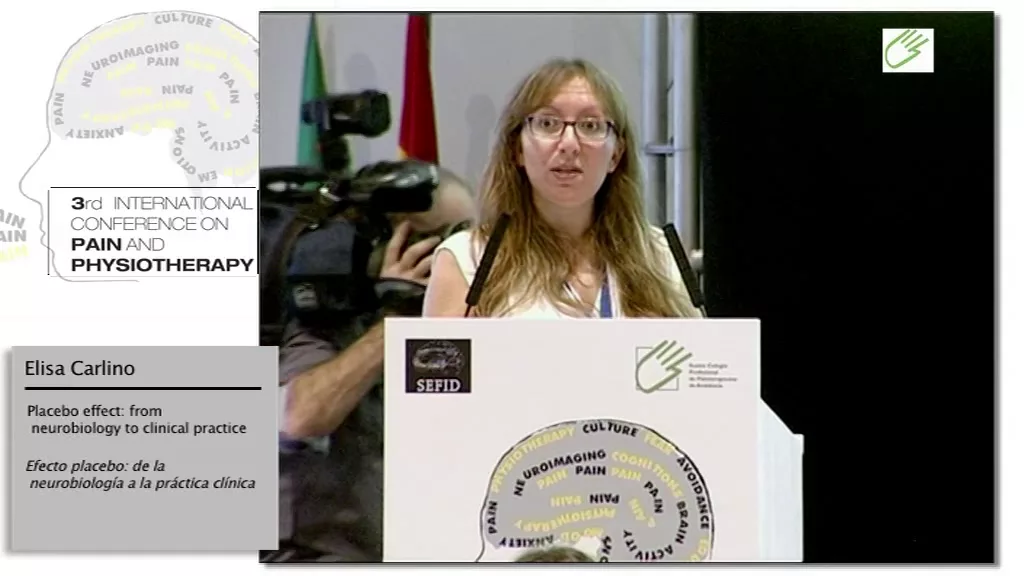


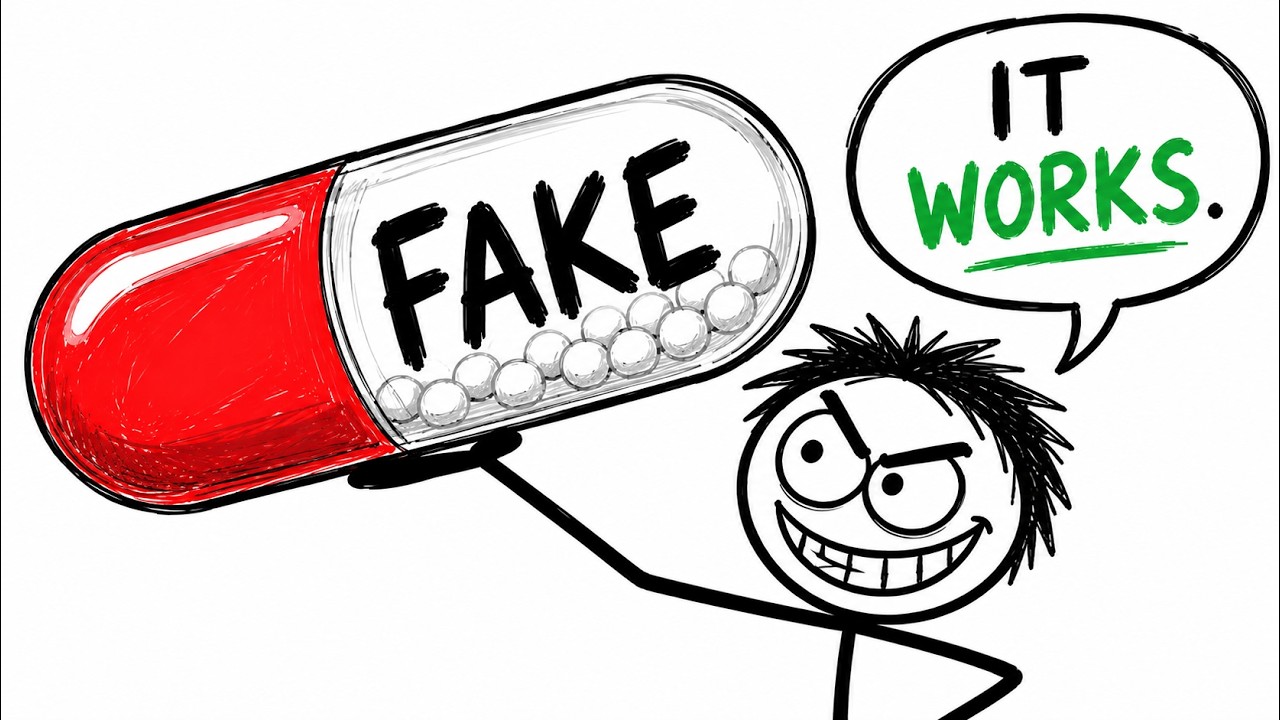







Placebo and nocebo effects are primarily driven by treatment expectancies rather than stimulus expectancies, with hope (defined as desire) and expectation working together to produce therapeutic or adverse effects; research demonstrates that manipulating treatment expectancies produces stronger placebo responses than manipulating stimulus expectancies, and that measuring expectancies prospectively rather than retroactively yields more accurate results, while avoiding dichotomization of continuous data improves research validity.
Hope & Expectancy in Placebo and Nocebo Effects | Irving Kirsch
Added:Understanding the fundamental definitions of the placebo effect (beneficial responses to inert treatments) and the nocebo effect (adverse reactions to inert treatments).
Familiarity with classical conditioning and cognitive expectancy theory, specifically how psychological anticipation influences physiological responses.
Basic knowledge of clinical trial methodology, including the purpose of control groups, blinding, and randomized controlled trials (RCTs).
An introductory understanding of the psychology and neurobiology of pain perception, particularly how subjective experiences of pain can be modulated by cognitive states.
Exploring Irving Kirsch's influential and controversial meta-analyses on the efficacy of antidepressants and the high placebo response rate in depression treatment.
Investigating the neurobiological pathways of expectancy, such as the release of endogenous opioids and dopamine during placebo analgesia.
Examining the concept and clinical efficacy of 'open-label placebos'—where patients knowingly take a placebo but still experience therapeutic benefits.
Analyzing the ethical and practical implications for medical practice, including how clinician communication and patient-provider relationships can minimize nocebo effects and maximize healing.
209 views1likes32:30Original Release: 2023-02-11
foreign [Music] [Music] progress and got it and that we should be okay so thank you very much for inviting me to speak it's a great pleasure to speak especially in Oregon uh Bengals lab I have great great admiration uh for ulrika and her work and have since I first met her at a small meeting organized by the National Institute of Health as I recall in besides the Maryland and the U.S and heard her speak and was super impressed and I remained so at any rate um I have to confess that I love the sibos I've been addicted to Placebo research for my whole academic um I even had to go to a treatment for the addiction where the first step was to admit that I really didn't have a problem and the treatment didn't work and I remain a civil research I just can't stop doing it why am I addicted to it I'm addicted to it because of something that happened to me much much earlier that led me to um be fascinated by the phenomenon of expectancy the purpose of the brain is to anticipate events said Kenneth Craig and I read about that some years later and I also read some years later Dan Dennis suggestion that the pain is an expectancy machine and he illustrates that with a story about the c squared that's a picture of the sea squirt and the squeeze C squirt swims around the ocean looking for a when it's young it swims around the ocean looking for a piece of coral or a rock to which it can attach itself and for the purpose of doing that it's got a rudimentary brain finds a suitable rocker or a piece of coral it attaches itself and now since it can't move since it can't do anything being attached to this rock or Coral it has no need for a brain and what does it do it eats its own brain so there are adaptive functions to expectancies and one of them is illustrated by the story of the sea squirt and that is it allows us to adjust our Behavior to optimize outcomes we decide whether to take a particular medication or not for example the other thing it does is disambiguous disambiguate an ambiguous world I want to try and do one thing here and see if I can because I have the you know it's all right I'll manage with that there we go so one purpose is disambiguating an ambiguous world and here's an ambiguous figure some of you may first see a rat some of you may see a human face prior exposure expectancies of what you might see influence what you see so you show someone a series of faces like this one at a time and then show them the ambiguous figure 88 of them see a man's face If instead you should first show them pictures of animals and then show them the ambiguous figure 97 of them percent of the people then see rap now see this this phenomenon um has uh adaptive functions so for example if you take a look at this picture you might see a bunch of twigs but you also might see that there's a snake in the picture and if you're walking in the woods and you're anticipating seeing space snakes that you know that there are snakes in this in in this area you're more likely to see a snake hidden among the Twigs than you are if you're not and that's obviously has survival benefits but then you can say well Placebo effects occur in animals we know that from an early study that harrenstein did on Placebo effects in rats back in 1962.
um but rat animals don't think do they as it turns out it expectancies are not confined to humans and we know that from the work of Edward Chase Tolman early early learning theorists who is what whose work influenced me and led me to become fascinated by expectancies while I was still an undergraduate some 55 years ago or more um he did most of his studies on rats or is he just looking at himself in a mirror here I'm not sure he did studies rat studies on cognitive maps and expectancies so one kind of study he did was Place Learning studies where you teach the animal to navigate a maze and usually use a simple y maze for that particular one or at least one of the studies on Place Learning um and what he goes through in our operant conditioning procedure the animal learns to take the turn to the right or the left where the food is going to be um and what he then does is flood the maze with water so now that the maze is flooded with water the rat cannot do what it did before it can't walk to where it goes what does it do does it have to learn all over again no it just swims to the correct place in the maze that argued uh Tolman indicates that what the rat has learned is to develop a cognitive map of the environment in this case of the Maze and an expectancy as to where the food will be found he also did studies using latent learning as a phenomenon to examine where he would allow rats to just explore a maze without any reward at all and that made it possible for them to learn much more efficiently and quickly once the food was placed the reinforcement was placed in the gold box and I want to describe in a little detail what may be one of my favorite studies of uh Pullman and that's his study on insight rats so he used a maze that looks like this um with a start with a food being placed in the gold box and the rat being placed in the start box and important to understand this was an elevated maze so the rat could look around and see things and this lets the rat go and the first the rat goes straight up like this number of learning trials it winds up just doing that immediately and just runs down the maze straight away after some trials being reinforced in this Opera conditioning procedure then Tolman placed a barrier on the first half so now when the rat tries to run oops wrong when the rat tries to run it hits the barrier it can't go it learns to go up past two avoiding the barrier and they do enough trials the rats doing that consistently every time it's been reinforced for doing that then Tolman moved the barrier now the question is on the very first trial what is the rat going to do it's been reinforced for taking PATH one and extinguished for that and reinforced for taking PATH to and now all of a sudden It's Pat both of those paths are blocked with the rat hasn't had any direct experience what does it do on the very first trial it does this and that Coleman calls insight the rat was able to look at the Maze and somehow figure out that uh the uh food was at the end our expectancy can be a conscious process or it can also be a very fast automatic process without conscious deliberation this baseball player is trying to catch the ball he has to reap and put his glove out not where the ball is but where it's going to be when it reaches him and that involves an expectation where is that ball going to be it clearly not something that a human being can do just sitting there okay where's that wall by that time it's too late it has to be quick and there's no time for uh conscious deliberation um what atonement have to say about that he wrote and the ellipses are just shortening it a bit in spite of the conclusion that practically all behaviors are cognitive many of these behaviors are automatic and unconscious for Abate Behavior to be cognitive it is not necessary that it also be conscious hence the distinction between expectations which is a subset of expectancies they are expectancies that are held that are consciously accessible before we leave Tolman who was the greatest inspiration on my very early work and led me to be interested in expectancies and expectancies led me to be interested in placebos I have to tell you something he wrote in 1945 which I thought was actually and still think is lovely he wrote rats live in cages they do not go out on venges the night before one has planned an experiment they don't kill each other off in Wars they do not invent engines of Destruction and if they did they would not be so inept about controlling such engines they do not go in for either class conflicts or race conflicts they avoid politics economics and papers on psychology they are pure and delightful and as soon as I possibly can I'm going to climb back out on that good old phylogenetic limb and sit there this time right side up and unashamed wiggling my whiskers at all the silly yet at the same time far too complicated specimens of homo sapiens whom I shall see strutting and fighting and messing things up down there on the ground below me now Pullman studies were all on operant conditioning what about classical conditioning and its relationship to expectancy now of course uh this is the conditioning model of placebo effects I assume actually you're all familiar with it so I'll go through it very quickly you have a active treatment leads to an improvement you pair it with the vehicle a pill the capsule or so on that comes to elicit the treatment and or by itself even when you take the unconditional stimulus away the first studies that I know of looking at condition conditioned enhancement of placebo effects in this case Placebo analgesia was done by Nick vodorus and his colleagues in Australia starting in 1985 and again you all know this I'm sure too because that's what we now do in so many conditioning studies you have a pain stimulus which produces pain you use have a placebo cream you pair it with surreptitious and reduction of the pain stimulus so the person doesn't know you're reducing it and thinks they're feeling less pain and then by doing that you get even less pain and when you take away the surreptitious pairing of the reduction of the stimulus and bring it back up to normal levels the placebo cream now produces even less pain more pain reduction than it would have did before the classical the theory of classical conditioning the original Theory coming out of Pavlov in his lab is what we call a stimulus substitution model you have conditioning trials that automatically lead to a conditioned response there's no cognition involved in that but learning theorists since then have rejected that model by and large those who are working in the field of classical conditioning like Robert lascorlo is one of the preeminent conditioning researchers wrote a paper that was published in 1988 in American psychologist in conditioning it's not what you think it is was the title of a scoreless paper and he suggested that instead of the stimulus substitution model conditioning trials produce a representation or expectancy of the unconditional stimulus and it's that expectation of the unconditional stimulus that produces the response which means also that other sources of information that affect expectancies can affect the response here's a test of that that uh this that specifically with respect to classical conditioning a placebo enhancing Placebo effects producing Placebo responses that guy Montgomery and I published in 1997 we had three groups um experimental pain we have a control group where nothing is done we have a surreptitious pairing standard classical condition conditioning Paradigm where the stimulus is lowered during conditional conditioning trials without the person knowing that the stimulus intensity is the pain intensity is being lowered and then we have an informed pairing condition in which we do the same thing as doing any other conditioning procedure the same thing we did in the surreptitious pairing except we informed people that during the pairing trials we are going to lower the intense we're lowering the intensity of the stimulus then we have the test trials with stimulation put up to normal levels what happens and here's what happens the conditioned fact conditioning effect was obliterated completely as you can see furthermore the correlation between pain and expectancy in that setting was a nice high robust 0.7 very very large correlation um we also looked at what happened in these groups uh when we added expectancy ratings as a covariate in the analysis control when that's controlled the differences between the control condition and both surreptitious and informed conditioning uh conditions disappeared completely in fact uh the control group did a little better but not although not significantly so now there are two types of expectancy that I have identified in the literature for many many years one is stimulus expectancies and the other is response expectancies stimulus expectancies our anticipations of external events response expectancies and so it's like for example the pain stimulus will be less intense response expectancies are predictions of whether one's own non-volutional responses to events for example I will feel less pain why is this distinction important well here's an example of its importance from a study uh published by shank and his colleagues in 2017 and what they did was conditioning to color cues so that one color cue meant that uh well what it meant depended on which condition they were in in one condition it was a stimulus expectancy they were told that the color cues would indicate whether a high or low stimulus would be high intensity pain stimulus or a low intensity pain stimulus will be administered said they were the subjects were told the temperature will be reduced with one or the other light without being told which light it would be until the conditioning procedure informs them of that the response expectancy Edition the person was told attends treatment will be applied and will reduce your pain during some of the trials and color will indicate whether the pens treatment is on or not and of course they're not told which color is going to indicate that or not and then they go through the conditioning experience pain reduction after being given a stimuli inducing a stimulus expectancy and that following a response expectancy conditioning procedure and that's a significant difference and here's what how that happens what you see is with the response expectancy during the conditioning trials uh which in this case is shown with the green line during the conditioning trials the person rapidly develops an expectancy for less pain and during the extinction trials with the pain level within density levels are brought up to the same level there's um very slow Extinction as you can see a little bit of increased pain but it remains much lower than um in with it with the other color what about what stimulus expectancies with the stimulus expectancies you'll see there's the same initial lowering of the pain intensity that's because you've lowered actually lowered the pain intensity and so they developed the expectancy there's for that but it very rapidly extinguishes and becomes a non-significant difference when what they are taught is that what the colors are are communicating is a difference in the um intensity level of the stimulus itself so that indicates a methodological problem studies of conditioned stimulus expectancies are not Placebo studies I am arguing if they were then all conditioning studies would be Placebo studies and that would be the first Placebo study the study of uh teaching dogs to salivate through uh conditioning procedure and in that case there are thousands upon thousands of what we would have to call Placebo studies starting all the way back with Pavlov that don't mention placebos and that are ignored by us when we look for the literature and describe the literature on uh Placebo effects one example of a classical conditioning and pain conditioned analgesia and Hyper analgesia back in 1914 no mention of placebo at all so we would call classify that as a placebo study if these are Placebo studies then when we're doing our reviews of conditioning and placebos why are we ignoring the vast majority of these studies my left the methodologic methodological recommendation that comes from this concern is that when we want to uh study placebos we can be informed by conditioning studies that don't involve placebos that involve anything at all um but if we want to do a study that most directly relates to what happens when you give someone a placebo that is a treatment to uh sham treatment is that we should do so manipulating treatment expectancies and not stimulus expectancies let's talk for a little bit about hope a number of researchers have suggested that hope is also an important component of what we call the placebo effect and one of the important determinants of it problem is that hope is a somewhat ambiguous term there are two definitions for it in the Oxford English Dictionary one is as a noun which is an expectation and desire for something to happen and what you'll notice is that we can't if when we use that definition which is very very common um for for Hope is I am hopeful I have hope um it involves both the expectation and the desire and so it's confounded already with expectation we can't say expectation versus hope because hope includes expectation by that definition as a verb on the other hand it's defined hope is defined as to want something to happen independently of uh uh what will happen I want it to happen but I don't expect it will a non-ambiguous alternative is to use the term desire instead of Hope and there is historical um precedent for that as well Don price uh way early on back starting back in 1984 talked about Placebo effects as being driven by expectancy the expectancy that something will occur and the desire that's something we'll occur and so he is the term desire which is much less ambiguous in the same way that more recently we talk about hope so what happens when expectancy and hope I can see and desire are in opposite directions what happens is we get the nocebo effect I don't want it to happen but I think it will and the Very existence of the nocebo effect suggests that expectancy can override desire I don't can't think that many of the subjects in our experiments want the nocebo effect to occur once the negative outcome to occur and yet it does now if expectancy and desire are both um uh part of what predicts Placebo and nocebo effects then nocebo effects should be weaker than Placebo effects don't have enough studies of it but here's one that we do have was a within subject study in which people we are at one point given a placebo which was labeled lidocaine capsaicin capsaicin or a neutral stimulus which was described as a moisturizing cream in all cases it was in fact the same moisturizing cream and here's what happened with the lidocaine label you get this big reduction in pain with a capsaicin you get a increase in pain the neutral condition you get basically nothing what you'll notice is that the lidocaine effect on reduce pain is larger than the Placebo capsaicin effect of increasing pain So based on that methodological recommendation is manipulate treatment expectancies rather than stimulus expectancies to get the most accurate information about the placebo effect here's another methodological recommendation and that is to measure desires and expectations respectively rather than retroactively or at least in addition to measuring them retroactively um rosenshire at all uh wrote a very recent uh article referring back and getting more data from an earlier study that this had been done in the same lab hmm and uh Lena vases lab Denmark what they included both three measures of expectancy prospective expectations measure the way we usually do the correlation with uh chronic pain uh was uh the placebo effect in chronic pain pain reduction was big healthy 0.62 they also asked people to report on their experience at the end of the study interestingly only expectations were all mentioned spontaneously six times so we should mention them uh prospectively to get the most accurate results you can get very very different results and use a a measure where we ask about it specifically here's one more methodological recommendation and it's independent of the um things I've talked about right now because it applies not only to um Placebo studies but to actually all research studies and that is do not categorize continuous data we do it all the time everyone does it for example we look at people's response how much pain reduction was there and if it's more than a certain amount they're called responders and if it's less than a certain amount they're called non-responders and we look for the difference between responders and non-responders we should not do that and this was first pointed out by calling the same cone from which we get cones d as a measure of effect size back in 1983 and he pointed out that dichotomizing at the mean I mean yes or no when you have a continuous variable that's tantamount to it's equivalent to discarding between 38 and 60 percent of the data and that's when you dichotomize that the mean if you dichotomize at a different cutout cut out you're discarding even more of the data no one would want to do that indeed there have been many editorials and articles published on it every article I've seen is that saying don't do it it's a bad idea uh an editorial was published in the British medical journal saying don't dichotomize a continuous variables and yet same Journal still publishes articles based on dichotomized data to get the most accurate results don't dicotalize and that's my talk and I'm open for question
Up Next
18:21
The Power of Mindset on Health and Reality | Dr. Alia Crum
@TEDx
7.2M views•2014-10-15

68:32
Cognitive Skills for Differentiated Instruction | Teacher PD
@BrainWareLearning
631 views•2017-12-17

9:55
Thinking, Fast and Slow: Daniel Kahneman Animated Book Summary
@FightMediocrity
2.3M views•2015-06-05

6:40
The Nocebo Effect: How Beliefs Can Cause Real Harm
@CGPGrey
10.4M views•2013-12-23
Related Study Plans & Knowledge Roadmaps
Structured learning paths in Psychology
psychology
Neuroscience of Creativity: Networks & Training
01Foundations of Creative Cognition
02The Cognitive Neuroscience of Insight & Fixation
03The Triple Network Model of Creativity
+ 1 more learning modules
15h4 modules
Explore Roadmap
psychology
Imposter Syndrome: Etiology & CBT Framework
01Defining the Imposter Phenomenon
02Socio-Developmental Etiologies
03CBT Fundamentals & Thought Distortions
+ 2 more learning modules
15h5 modules
Explore Roadmap
psychology
Adult ADHD: Executive Dysfunction & Scaffolding
01Neurobiology of the ADHD Brain
02The Core Triad of Executive Deficits
03Executive Dysfunction and Emotional Regulation
+ 2 more learning modules
12h5 modules
Explore Roadmap
psychology
Loneliness: Evolution, Neurobiology & CBT
01Evolutionary Origins of Human Connection and Loneliness
02The Neurobiology and Physiology of Chronic Loneliness
03Maladaptive Social Cognition: The Psychological Loop
+ 2 more learning modules
12h5 modules
Explore Roadmap