![[New] BEST OF DR. JOE DISPENZA | Compilation of best teachings from Dr. Joe Dispenza](https://i.ytimg.com/vi/Tw7TxtrVLxc/maxresdefault.jpg)










![Qué Es La Psiconeuroinmunología [ PNI ] 🧠](https://i.ytimg.com/vi_webp/9rFvPeV_JTg/maxresdefault.webp)












Mindsets—our mental frameworks for interpreting experiences—significantly influence both psychological and physiological responses, as demonstrated by research showing that identical treatments produce different outcomes depending on whether individuals are aware of them and expect benefits; for example, patients receiving morphine reported greater pain relief when administered by a doctor versus an IV pump, hotel housekeepers who were told their work counted as exercise experienced health improvements without changing their behavior, and participants who believed they consumed indulgent milkshakes showed steeper ghrelin drops than those who thought they drank healthy versions, all illustrating that our beliefs and expectations can directly impact our body's responses and overall well-being.
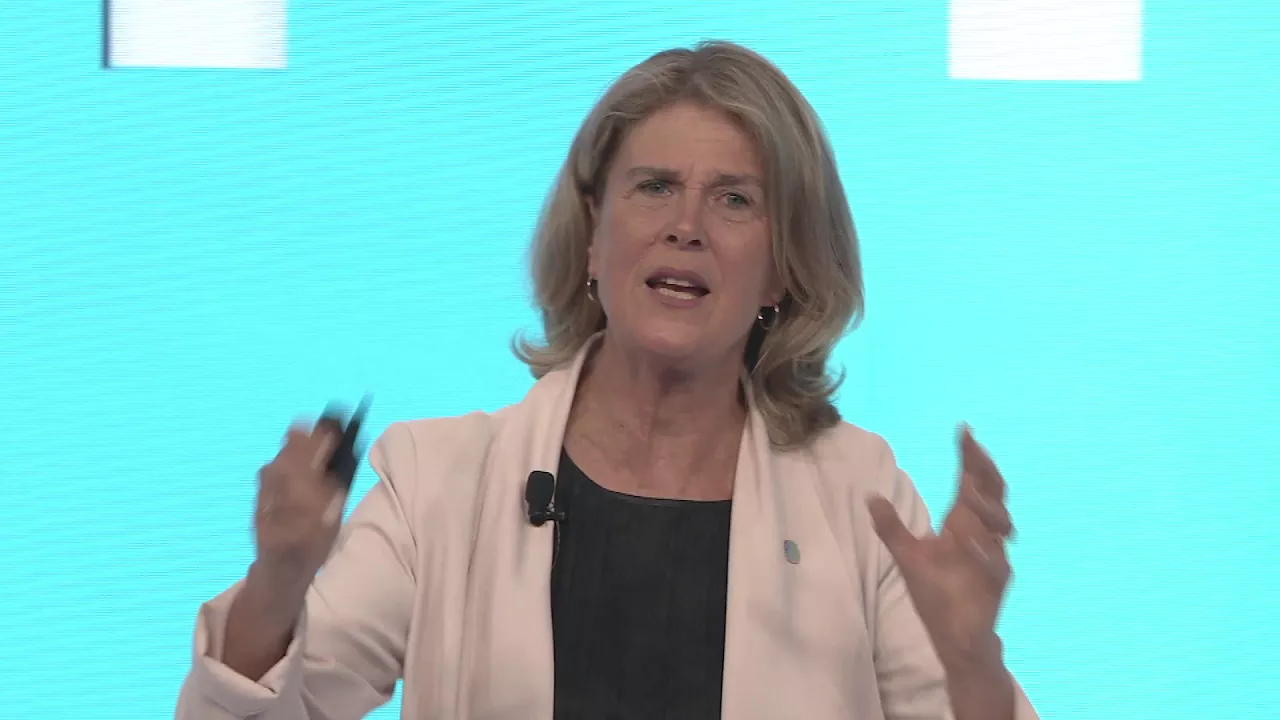
The Power of Mindset on Health and Reality | Dr. Alia Crum
Added:Transcriber: Queenie Lee Reviewer: Peter van de Ven So today, I'm going to talk about how our mindsets matter in virtually every facet of our lives.
But I want to begin by telling a story about a group of researchers in Italy.
Dr. Fabrizio Benedetti and his colleagues studied a group of patients undergoing thoracic surgery.
What you should know about thoracic surgery is that it's a very invasive procedure.
Patients are put under anesthesia while the surgeons make major incisions into the muscles of the sides and the back in order to gain access to their hearts and to their lungs.
Now, about an hour after the anesthesia fades away, the pain starts to set in.
Fortunately, patients are given strong doses of morphine sulfate, a powerful painkiller.
This is routine treatment for thoracic surgery, but Dr. Benedetti and his colleagues made a few subtle tweaks: half of the patients were given the dose of morphine by a doctor at their bedside; the other half was given the exact same dose of morphine, but it was administered into their IV by a pre-programmed pump.
You would think that both of these groups of patients would experience the same relief, but this was not the case.
The group that received the morphine by the doctor reported significant reductions in their pain levels.
The other group - the group who received the same exact amount of morphine but wasn't aware of it - they didn't seem to experience the same benefit.
So Dr. Benedetti and his colleagues didn't stop there.
They used the same procedure to test the effectiveness of other treatments - treatments for anxiety, treatments for Parkinson's disease, treatments for hypertension.
What they found was remarkable and consistent.
When the patients were aware of the treatment and expected to receive the benefit, the treatment was highly effective.
But when they weren't, that same drug, that same pill, and that same procedure was blunted, and in some cases not even effective at all.
So I read about these studies when I was a student at Harvard University, and at the time, I was heavily immersed into the literature on the placebo effect.
And the more I read, the more I started thinking about the true nature of placebos.
So what is the placebo effect really?
Well, most people discount the placebo effect as just some magical response to some fake pill or some faux procedure, but that's not what the placebo effect is.
The placebo effect is not about the faux pill, or the sugar pill, or the fake procedure.
What the placebo effect really is, is a powerful, robust and consistent demonstration of the ability of our mindsets - in this case, the expectation to heal, to recruit healing properties in the body.
So what is a mindset?
A mindset is quite literally a setting of the mind, it's a lens or a frame of mind through which we view the world, we simplify the infinite number of potential interpretations at any given moment.
Now, the ability to simplify our world through our mindsets is a natural part of being human.
But what I want to suggest to you today is that these mindsets are not inconsequential, and instead, they play a dramatic role in determining our health and our well-being.
So while I was at Harvard, I had the opportunity to work with Professor Ellen Langer.
She is a professor of psychology and when she heard that I was also a division one athlete, laughed at me.
She said, "You know, exercise is just a placebo, right?"
(Laughter) Now, I was kind of offended because at the time I had been spending up to four hours a day training my body to be in optimal shape.
But she did get me thinking about mindsets and how they might matter outside of medical laws.
Was I getting fitter and stronger because of the time and the energy that I was putting into my training?
Or was I getting fitter and stronger because I believed that I would?
What about the other extreme?
What if people were getting an extraordinary amount of exercise but weren't aware of it, would they not receive the same benefit?
We decided to test this, and to test this we found a really unique group of women - a group of 84 hotel housekeepers working in seven different hotels across the US.
These women are on their feet all day long.
They're using a variety of muscles, and they're burning an extraordinary amount of calories, just doing their job.
But what's interesting is that these women don't seem to view their work in this light.
We asked them; we said, "Do you exercise regularly?"
And two-thirds said "No."
(Laughter) So we said, "Okay. Well, so, on a scale of zero to ten, how much exercise you get?"
And a third of them said, "Zero. I get no exercise at all."
So we wondered what would happen if we could change their mindset.
So we took these women, we split them into two groups.
We measured them on a variety of things, including their weight, their blood pressure, their body fat, their satisfaction with their job.
And then we took half of them and we gave them a simple 15-minute presentation.
We gave them this poster and we said, "Your work is good exercise.
It satisfies the Surgeon General's requirements, which are quite simply to accumulate about 30 minutes of moderate physical activity.
You should expect to receive those benefits.
15 minutes.
We came back four weeks later and we measured them again.
Not surprisingly, the groups that didn't receive this information didn't change, but those that did looked different.
They dropped weight, they had a significant reduction in systolic blood pressure, they dropped body fat, and they were reported liking their job more.
(Laughter) So what does this tell us?
To me, it was fascinating that just as a result of a simple 15-minute presentation, the whole game changed, producing a cascade of effects on both their health and their well-being.
Presumably without even changing behavior.
Now some of you might be thinking, "How do you know they didn't change their behavior, because that must have been what produced the effects?
We know they didn't work any more, and the room attendants themselves assured us that they didn't join the sports club down the street.
But of course, we can't know for sure if they weren't putting a little more oomph into making their beds.
So this question really plagued me.
Is there a direct, immediate connection between our mindsets and our bodies?
So to test this, I worked with my colleagues at Yale, Kelly Brownell, Will Corbin and Peter Salovey, and we did so by making a big batch of milkshakes.
So we made this big batch of milkshakes, and then we invited people to come to our lab to try the milkshakes, and in exchange we would give them 75 dollars.
Sounds great, right?
The less appealing aspect of the agreement was that while they were drinking the shakes, we had them hooked up to an IV so we could get their blood samples.
We are out to measure ghrelin.
Ghrelin is a peptide secreted in the gut, the medical experts call this the hunger hormone.
So when we haven't eaten in a while, our ghrelin levels start to rise, signaling to the brain, "It's time to seek out food," and slowing our metabolism, just in case we don't find that food.
Now say we go out, we find and we devour a milkshake, a hamburger, some french fries, our ghrelin levels drop, signaling to our brain, "Time to stop eating," and revving up the metabolism so we can burn the food that was just consumed.
So the participants came in, we hooked them up to an IV, and then we gave them a milkshake, Sensi-Shake.
This is zero percent fat, 140 calories, zero added sugar, this is guilt free satisfaction.
So they drank their shake, and in response their ghrelin levels dropped but only very slightly, signaling to the brain that some food had been consumed but not a whole lot.
So a week later, they came back to our lab, we hooked them up to an IV again, and we gave them this shake.
(Laughter) 620 calories, 30 grams of fat, 56 grams of sugar: now this, this is decadence you deserve.
(Laughter) And in response to this shake, their ghrelin levels dropped again, but this time at a significantly steeper rate, about three times more than the shake they had before.
Now, this would make good sense to any metabolic nutritionist who understands that the drop in ghrelin is proportional to the amounts of calories consumed.
But there was a catch: in this study, even though the participants thought they had consumed the sensible shake, and the indulgent shake, in reality, we gave them the exact same shake at both time points.
So what does this tell us?
Just as in the case when the same amount of morphine produced more or less of an effect depending on our awareness, and just as in the case when the same amount of exercise produced more or less of a benefit depending on how it was construed, here again our mindsets proved to matter.
In this case suggesting it might not be just calories in and calories out, or the precise makeup of fats, nutrients, but what we believe, what we expect, what we think about the foods we eat that determines our body's response.
So in light of this, it behooves us to consider our own lives: what are our mindsets?
And how might we begin to shift them, to alter them, to have them be more beneficial?
So take the stress, for example.
What's your mindset about stress?
If you're like most people, you have the mindset that stress is bad: bad stress.
Now, this is not surprising considering that everywhere we look there's warnings, labels yelling at us, reminding us about the negative effects of stress.
But the truth of stress is not so clear-cut, and in fact, there's a robust and growing body of research showing that stress can have positive effects, enhancing effects on our health, our well-being and our performance.
Now I'm not here to try to persuade you that the effects of stress are enhancing, but rather to point out that the truth of stress is like most things in life, and that is, it is uncertain.
And therefore to raise the question: do our mindsets about stress determine our response?
So to test this question, I worked with Shawn Achor and Peter Salovey, and we worked with a group of 300 employees.
This was after 2008 financial collapse, and we decided - they were stressed, they had just heard that ten percent of their workforce was going to be laid off, and they were overworked.
We decided to see if we could change their mindset.
And we did so by having them watch simple video clips.
So I'm going to show them to you here simultaneously, but half of the participants saw the one on the left, half saw the one on the right.
(Video starts) ["Stress is debilitating"] vs ["Stress is enhancing"] (Video ends) So you get the point, yes?
So here we are... in the dark.
(Laughter) So here we are - they're watching facts, research, anecdotes, all true, but oriented towards one view or the other.
What we found was interesting: those who watched these simple three-minute video clips before the bell rang, before their job began, over the course of the next few weeks reported fewer negative health symptoms, fewer backaches, less muscle tension, less insomnia.
And they also reported a higher level of engagement and performance at work.
So at this point I've presented four studies - four studies that demonstrate the power of mindsets in medicine, in exercise, in diet, and in stress.
There are many other very talented scholars tackling this phenomenon as we speak.
Carol Dweck's research demonstrates us that if we can shift our mindset about intelligence and talent as something that's fixed to something that's changeable over time, it can dramatically alter our academic and professional success.
Yale epidemiologist Becca Levy's research shows us that if we can change our mindsets about aging, from viewing aging as an inevitable process of deterioration to a process of gaining wisdom, gaining growth, not only shapes the course of how we grow old but even extends longevity.
Ted Kaptchuk and his group at Harvard's program for placebo studies is doing cutting-edge work understanding how we can begin to harness and ethically utilize the placebo effect in clinical practice.
So though the context is different, the message is the same.
Our mindsets matter.
Don't get me wrong, I'm not saying that medicine doesn't work, or that there are no benefits of exercise, and that what we eat doesn't matter; it does.
But the psychological and physiological effect of anything in our lives can and is influenced by our mindset.
So is the power of mindset limitless?
Probably not, but what I hope I've done for you today is inspire you to reconsider where those limits really are.
Because the true task ahead is to begin reclaiming this power for ourselves, to acknowledge the power of mindset and know that just like this, (Snaps her fingers) in just the blink of an eye, we can change the game of any facet of our life quite simply by changing our mindset.
Thank you.
(Applause)
Up Next
The Placebo Effect: Mechanisms, Evidence, and Ethics in Medicine
@MedlifeCrisis
289.8K views•2023-05-25

Cognitive Skills for Differentiated Instruction | Teacher PD
@BrainWareLearning
631 views•2017-12-17

The Psychology of Impostors: Identity, Deception & Society | TEDx Talk
@TEDx
290.8K views•2013-05-23

The Nocebo Effect: How Beliefs Can Cause Real Harm
@CGPGrey
10.4M views•2013-12-23
Related Study Plans & Knowledge Roadmaps
Structured learning paths in Psychology