

















![[FREE] Clinical Applications of Internal Family Systems Therapy](https://i.ytimg.com/vi/foTFIKzv570/maxresdefault.jpg)




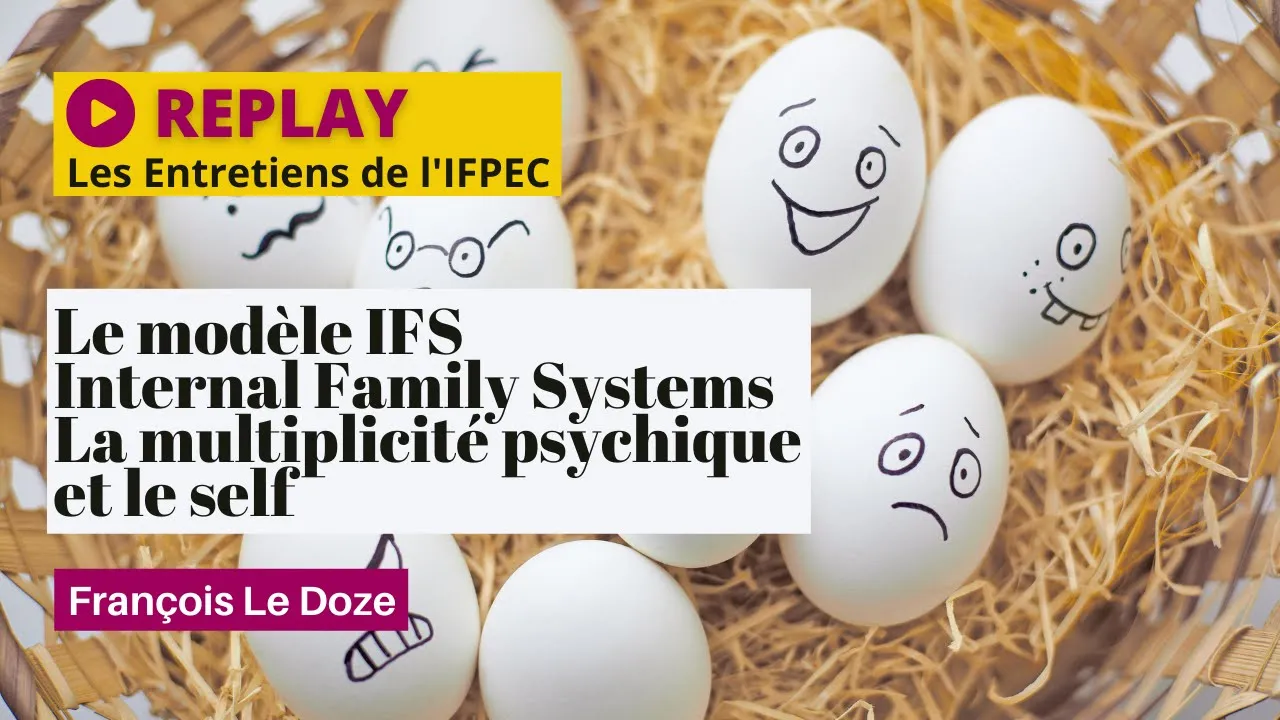
Internal Family Systems (IFS) is a psychotherapy model developed by Dr. Richard Schwartz that views the human mind as inherently multiple, containing distinct parts or subpersonalities that interact with each other. The model identifies three main types of parts: Exiles (vulnerable parts carrying burdens from childhood trauma), Managers (protectors that control behavior to prevent re-injury), and Firefighters (protectors that respond to crises with extreme measures). Beneath these parts lies an inherent Self with qualities of calm, confidence, clarity, curiosity, compassion, and courage that can access and heal all parts through curiosity and appreciation rather than control or confrontation. This approach has been shown to be effective for trauma recovery and personal growth across diverse populations.
Introduction to IFS Therapy by Dr. Richard Schwartz: Core Principles
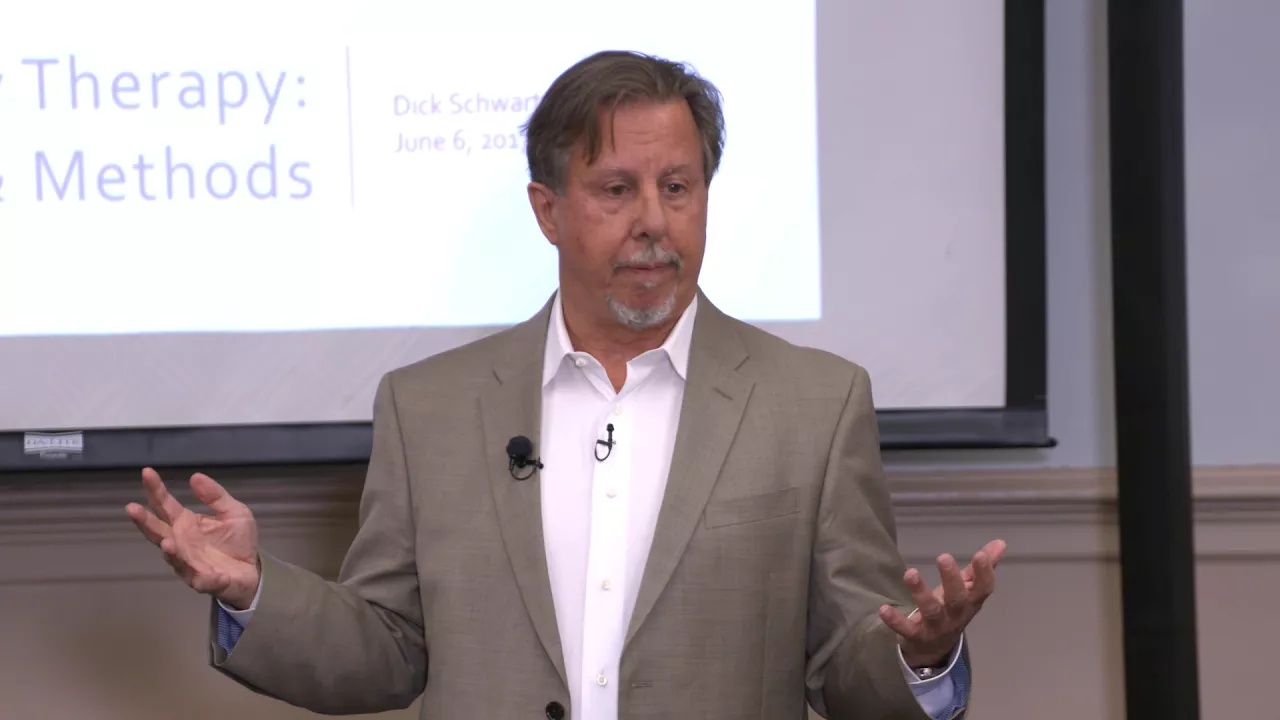
Added:I've been around a long time had my 75th birthday this year and back when I was uh really about 32 32 or 33 I ran into this phenomena and back then I was I have a PhD in marital and family therapy so I was one of these obnoxious family therapists that thought we'd found the holy grail and that people who mucked around in the inner world were wasting their time because we could change all that by just reorganizing these external families and decided to prove that I was at a place called The is juvenal research which was part of this University of Illinois Chicago Psychiatry department and so with a colleague or uh did a outcome study with bulimia which was uh kind of fresh uh diagnosis at the time and uh found that didn't work that uh we could reorganize the family just right and still bu bunch of my kids kept going kept binging and purging to my out of my much to my frustration and out of that frustration I began asking why and they started talking what to me at the time was a strange language of parts and they would talk about how when something bad happened in their life it would trigger this critic who would call them all kinds of mean names and then that would go right to the heart of another part of them that felt empty and worthless and lonely and and that feeling was so Dreadful that the Bene would come in to rescue them from that but the act of the binge would bring back the critic who's calling him a pig on top of the other names now and that would go right to that heart of that empty worthless feeling and so the binge would have to come back and they would be caught up in that vicious cycle for days and and at first I got nervous because I thought maybe these kids are sicker than I thought maybe they have multiple what was called at the time multiple personality disorder now called did uh until I started listening inside myself and oh my god I've got a big critic and I've got part that can binge not on food necessarily but and then I calmed down about them and got intrigued and I had a big advantage in that family therapy was polarized with psychoanalysis and in-depth psychology so I hadn't studied any of that and so I I was forced to actually listen to what my clients were teaching me or were saying about their parts and and then I also had what's called systems thinking from family therapy so I could I wasn't so I wasn't interested in each part separately but how do they work as a system so those were two big advantages that I brought to the phenomena and uh initially uh I I made the mistake that most of the fields still makes which is to try and get my client to stand up for herself to the critic or to try and control the binge and I was encouraging all that and in those days I'd heard about galed empty chair technique and so I was having my clients in one chair and talk to a part in another chair across from her and then shift chair and be the part and then because I was hearing about five and six parts I'd have a bunch of chairs in my room and my clients hopping all over and then one client said I could just sit here and do it so we tried that and ever since most people just sit there and do it but I was you know trying to to change these interactions and uh and so I'm going to skip a a story of how I stumbled onto this awareness but at some point I realized the futility in trying to either control or fight with these parts because it was making it worse and got curious about why they did what they did rather than trying to push them around and was amazed at how as I could get curious or I could get my client curious and and just ask why they did what they did these would talk about how they were trying to protect my client either trying to protect uh very vulnerable Parts other parts of her that were very vulnerable or trying to protect her from having some some scary parts take over or or just trying to protect her from the outside world but protecting her vulnerability in that way and that blew my mind because they were very extreme some of these parts and doing a lot of damage but seemed like they didn't have that intention their intention was always positive and protective and so as I tried that with more and more clients and and found over and over that was the case uh I got excited and and maybe maybe the field and the culture has really made a mistake about who these things are and and so that's true actually that that uh these parts even the parts that have done heinous things aren't what they seem to be and that it is a mistake to try and get rid of them or try to uh control them and that they actually do respond very well to Pure curiosity so taking a step back 41 years later we can safely say that it's the nature of the mind to be multiple and that people with that diagnosis of did are no different from anybody in this Workshop except that their system got blown apart more by the horic trauma they suffered every day so there these amnesic barriers between their parts but what are called Alters in did are just what I'm calling Parts it's no different really and the sort of radical appro the radical position I've taken it's been a tough cell both in the culture and in Psychotherapy is that it's the nature of the mind to be multiple that it isn't the product of trauma that and that was the mistake that the did world made was to say nature of the mind is to be unitary and that these parts are pathological because they got they're sort of shards of the broken vase or they're fragments of of the whole cell off and the goal is to put them all back together into one and I was hearing from these parts that that wasn't true that they actually had their own existence and they wanted to they didn't want to be Blended all back together and that they they uh liked uh being separate and that they all had qualities and resources to give to my client to help them so that's the basic assumpt one basic assumption is that we're all multiple personalities and that's a good thing and all these parts have valuable resources and qualities to help us in our life and we're born with them either manifest or in potential but trauma or it's called attachment injuries or humiliations or bullying at school or all the things that happen to us as kids force them out of their naturally valuable States into roles that can be destructive and and are roles that most of them don't like and and and hate in many cases but feel like are necessary to protect you so they're for they're like kids in a family because you work with a family and you'll notice there are these roles that kids get forced into the scapegoat and the I forget all the names of them but you think I know with my pH H and family therapy but but they aren't the essence of the kid it's the role that the family dynamics of the family force them into and it's the same with his inner system these are good parts forced into sometimes destructive roles create symptoms or create Mayhem uh and yeah that's not who they are and so as I got hip to that it really shifted how I related to them and has ever since and the other thing that happens to them is that they take in what we call burdens that are the definition of which is an extreme belief or emotion that came into your system during the trauma during the the event or the series of events that that uh you experienced in usually as a child but not always and attached to these parts these extreme beliefs and emotions and then drive them like almost like a virus so Parts good parts valuable Parts get traumatized they get they take in these these extreme beliefs and emotions and they get Frozen in time so that they don't live knowing that you're as old as you are and that you're not in any danger not in the same kind of danger right now that you were back when they got stuck and when they started taking on their roles so such that if I you know if I were to have if I was working with one of you and I had you ask your part how old it thought you were most of the time you'll get a single digit and and that's where it's stuck in time that's where it got forced into the role that's in usually and so so that's parts and again with my systems background and being a family therapist I wanted to create a map of what I was learning and so uh what I learned early on was that a lot of these parts who other systems would call Inner children maybe are quite young and and sensitive and before they're hurt uh we love them because they give us lots of playfulness and creativity and open night n and uh desire to connect and uh so before they're hurt there are most precious Parts in many cases but because they're so sensitive they're the ones that are hurt the most by the betrayals and abandonments and all the rejections and all the crazy things that happen in our families and and out of our families and so now they carry the burden of worthlessness maybe from being shamed or the burden of emotional pain or the burden of excuse me Terror from some trauma and once they carry those burdens and they're frozen in those scenes they have the power to overwhelm us with those feelings and bring us back into those scenes we never wanted to go back to again and so we have a kind of natural impulse to get away from them and to lock them away in an inner basement or abyss and thinking we're just moving on from the trauma and the memories and the emotions not realizing that in doing what our culture tells us to do which is to just move on and don't look back and and just keep going we're locking away our most precious qualities simply because they got hurt or terrified or Etc and so this these we call Exiles so most all of us have a bunch of Exiles it's really hard to grow up in this culture or in in the kind of families that uh are influenced by our culture without having a bunch of Exiles and when you have a bunch of Exiles you feel more delicate and the world seems more dangerous because so many things could trigger them and when they get triggered it's like these raw flames of emotion come bursting out and and overwhelming you and pull you back into those TS and makes it hard to function and and uh you just don't want to feel that again and and some people don't get out of bed for a week when that happens and so so then a bunch of other parts are forced out of their naturally valuable States to become protectors and some of them try to protect by managing your life so that nothing happens again like what happened before and so some of them are trying to only let people get a certain closeness to you and keep a certain distance all the time and then others are trying to make you look perfect so no one rejects you and others are make you achieve at a high level so that you get accolades to counter the worthlessness and others are are trying to take have you take care of everybody else so that they depend on you and don't leave you but they don't let you take care of yourself and so on and so on there's a whole bunch of what we call manager protectors common roles and um they're you know what other systems call the defenses and many of them become these inner critics because they don't know what else to do but to yell at you to try and motivate you to look better or to work harder or especially with trauma clients there'll be a Critic that's determined to keep you small so you don't shine and then you don't get hurt and so those are some of the common sources of these inner critics and they're again all these protectors are just trying to keep you safe uh and so these we call managers and again their goal is to control you control the world and often to please everybody so you don't get hurt again and and there are those kinds of Parts too that are just just trying to please everybody doesn't work sometimes the world has a way of breaking through those defenses triggering your Exiles and as I said that's a big emergency because these raw flames of emotion are bursting out and could take you out and so there's another set of parts of protectors who stand by waiting for that alarm to go off and immediately go into action to get you higher than the Flames or douse them with some substance or distract you until they burn themselves out and so we call these firefighters there's fighting those flames and uh in contrast to the managers who are into control control and all that firefighters take you out of control piss off everybody except for some of them and uh don't care about the collateral damage to your body to your relationships they just got to do this job of getting you away from those emotions right now so that's the map it's pretty simple really again uh exiles and and there are Exiles that aren't all just young and vulnerable there are also parts that if you grew up in a family that for example didn't like or hated anger then you're going to have to Exile the part of you that wants to stand up wants to protect you and stand up for you so there are exiled protectors as well uh which we call protectors in Exile in contrast to Exiles which are these young vulnerable ones so that's the map and uh it's held up well over these 40 some years and but the big deal about ifs in addition to all that is that in addition to these parts there is this Essence that is in everybody and that can be accessed pretty quickly so I'll tell you how I stumbled onto that being a family therapist I was interested Ed in having these parts get along better and once I got hip to the fact that they deserve to be listened to rather than fought with I would set that up and I would have maybe my client trying to listen to her critic and she is and it's going pretty well for a while and then suddenly she's furious with the critic and it reminded me of family sessions where I'm working with uh I'm working with two family members having face each other who are polarized and trying to get them to listen to each other and suddenly a third member jumps in and is siding with one against the other and everything goes south and I thought maybe the same thing's happening in this inner system maybe as I'm trying to get my client to listen to the critic a part who hates the critic is jumped in is doing the talking so I began asking clients could you find that one who's angry at the critic and could you get it to just step out or just relax back back or just chill for a while and let us continue this conversation it was going well for a while and to my amazement clients could do that and when they did it seemed to release this this other person entirely who Not only was curious toward the critic but also had uh confidence relative to it uh was calm relative to it and also was even compassion had compassion for it and in that state the critic would really drop its guard and would reveal its secret history of how it got forced into the role and we could do a lot to help it and when I tried the same process with other clients sometimes it was the parts that were afraid of the one that we had to get to step back but as I got clients to separate from these other polarized Parts it was like the same person would pop out with those same c-word qualities of calm confidence Clarity well those are some NY words uh curiosity and compassion and also would be have courage to to work with scary parts or would have uh want to connect just this natural impulse to connect inside and also uh be very creative and how they would relate to the part so I just mentioned what we call the eight Seas of self qualities of self what I call self and I call it self because when I got people in that state by getting these parts to open space I was started to say what part of you is that that's great let's keep that around and people would say some version of that's not a part like these others that's me that's myself so I came to call that the self with a capital S because to distinguish it from the common use of the word self and it turns out again 40 years later thousands of people working with this model both as therapists and clients we can safely say that that self is in everybody can't be damaged knows how to heal and is just beneath the surface of these parts such that when they open space uh it pops out and that's quite amazing because as I was observing this in different clients it flew in the face of what I've been taught in graduate school which many of you have been which is attachment theory that says you know I love attachment Theory many aspects of it but they got one thing wrong and that is the assumption that to have any of those c-words at your essence you had to have had a certain kind of good parenting at a critical point in your childhood and if you didn't get that you had to get it from a therapist or you had to get it from a spouse it's something that came from a relationship it wasn't inherent in you and I was finding it that same self in clients who'd had horrible horrible childhoods tortured on a daily basis there was no way you could account for them having that the same self that we found in people that were a lot healthier but through attachment Theory and so I had to actually look around and some students actually steered me towards spiritual traditions and it turns out most every spiritual tradition knows about it and almost no other psychotherapies do so the self is the big deal not only that it's there and and there are like young had a term self and others did too but for many of them it was a kind of witness state to try and get to like to meditate to get to rather than an active leader but what I was Finding was when people access that place they really took over the session and they would start to interact spontaneously with these parts in ways that was quite healing so they became what you might call Inner good parents or inner uh good attachment figures or inner leaders in in uh in accepting all of their parts and going to them and helping them so it turns out that that's who we really are and that that that is something that can be fairly quickly accessed you don't have to meditate 20 years to get to it so uh so anyway that's a big deal and and that's the model it's pretty simple again protectors exiles two kinds of protectors managers firefighters all uh until you get them to separate often blended with self so self is kind of obscured and many of them like in Family Therapy we would call them parentified children they they're young but they think they have to run your life because they did when they were young they had to take over and they don't know about self and so uh it's kind of a shock when you say no I'm not five years old I'm actually my case 75 it's shocking to me to just say that period but uh yeah they're they're stunned to know that that you've grown up and that you you're more you have more resources now so uh so that's the model and then I'll describe how it can work so one of the things I learned the hard way was because in the early days clients would talk about this this sadness in their gut or this fear somewhere else and uh and I think okay that sounds like a key part to to help and so I would try to get them to it really quickly and they would uh do it in in a session and they'd be very vulnerable and crying a lot and I thought oh great you know finally getting to where we need to go and then after the session I I would notice they'd have these sometimes pretty scary what we call backlash reactions uh and uh you know I had clients walk out of my office and get into a car accident for example or uh spike a big fever or or just have this horrible shame attack afterwards or and then getting curious about that I learned what I was doing wrong I was bypassing the protectors who'd spent their spent decades trying to contain these Exiles uh and I was just kind of barging in and opening the door to all that and they they were punishing my client for having allowed that and so I learned the hard way to be more respectful of these systems and to work with protectors first so when someone comes in and they've got some kind of uh symptom and it sounds like it might be related to an exile I'll say we'll get to that but before we do I want to work with the parts that don't want us anywhere near that and let me let me speak to those parts first and in general um there are lots of symptoms that are caused by the by the protectors or problems and so I'll start I when I'm pretty sure it's a protector I'll just go ahead and start there and the process is um also not terribly complicated so I would have you focus on whatever the manifestation of the part is well even before that I would say tell me about your problem and I learned like you did as a as a therapist to feedback what I was hearing but to add add phrase oh so one part of you says this to you and another part makes you feel this and then there's this other part so you just kind of bring in the parts language which people say yeah that's right they don't say what are you talking about Parts because everybody already use uses that word so like part of me is happy to be here and part of me so I've got the language going and then at some point I've said I've been talking about all these parts and there a process by which I can help you change them and and help them heal if you're interested most people are and I'll say a little bit about it and then I'll say okay we can get started because let's start with that that critic for example and and the way you start is I would have you focus on it the critical Voice or whatever the impulse find it in your body around your body which uh sort of shifts people out of their their heads into their bodies so you don't get answers from that thinking part you get answers right from the the part itself and how do you feel toward this part of you and answering that they're telling me how much self is present versus parts that they're blended with so if they say I don't like it I want to get rid of it I'm I uh fight with it you know whatever like that that wouldn't be so it's not one of those seword biting or not liking and so on so I'll say okay that makes sense but let's see if that one would give us a little space for a few minutes to just get curious about this part or or they say I'm I'm afraid of it okay could we ask that one to just give us a break and we'll talk to it later but right now we just want to open our minds to this part to this critic and I do that until in answering that question how do you feel toward it you get some version of I'm just curious about why it does this to me but without you know an agenda to change it just purely curious and now I know I've got at least what we call a critical mass of self to get started now if some of these other parts won't step out then they become the target part and for a while and we find out what they're afraid would happen if they did and and work with them but let's say they did they stepped out and then okay ask this critic that place in your body what it wants you to know about itself a very non-threatening open-ended question and they wait and don't think just wait and see what comes from that place and something comes and okay uh and then another kind of magic question is ask it what it's afraid would happen if it wasn't so hard on you if it didn't do this job all the time and answering that question usually you'll learn about how it's trying to protect so it'll say if I didn't do this you would get out there and you would get hurt and so I'm trying to keep you down so you don't get hurt so with that now we know more of its positive intention so I'll say to the person could you extend some appreciation for toward it for at least trying to keep you safe even if it backfires or even if you hate it but it does it you can you let it know you get that it's really trying to keep you safe and these protectors love being appreciated because they've been hated so much and uh and then I would say ask it if we could heal or change what it's been protecting so that wasn't such a issue and it was freed up what might it like to do instead inside and you'll be amazed at the answers that it's often the opposite of the role it's been in the critic wants to be your cheerleader for example and I'll say could we get permission ask the part if it'll give us permission to go to the one at protects so we can heal it and that's where the rubber hits the road because um there often is a lot a lot of fear of opening that door for good reasons a lot of the time I mean for many people they did open the door and then they were flooded and they couldn't function and all hell broke loose and so the protectors have sworn they'll never do it again so you have to become what I call a good hope Merchant you have to sort of sell that there is some purpose to do this we're not just doing it to to rummage around and all that stuff we're doing it to it it'll be you know it might be painful for a while But ultimately we'll be able to heal the part and then they won't have to be so protective and so a lot of the art of ifs is learning to be a good hope Merchant and we now know what all the common protector fears are and how to address them and and it's it's also key for you to do it from this place of s so that uh so that they trust you more so uh so we do that and we do get and we don't go without permission so and we let the protectors know that they like that they like being the boss so but you know usually we'll get permission so then we go to this client might see an image of themselves as a child how do you feel toward that part and we form a a bond a connection with the little girl or little boy uh and that's great and I used to think that was enough but it turns out again these parts are frozen in these bad places and they carry these burdens so we learned that they need to feel witnessed like you get what happened and how bad it was because often we've just trying to minimize what happened or even forget and we do that until the part says yeah now you get it now you get what happened and how bad it was and with that that's what we call witnessing then once the part feels witness I would say I want you to go into that scene and be with that part that little one in the way they needed at the time and tell me when you're there and we do some stuff back there and then we bring that one back into the present or into a fantasy place and once they've been retrieved that way from where they were stuck now they're ready to unload the feelings and beliefs they got from those times and so we set that up and ask the part where it carries those beliefs and emotions in its body or on its body and what it might like to unload that to to give it up to light water fire wind Earth we part of that from Shamanism and people parts will pick what they want to give it to we set that up and and they let it out of their system and gets transformed and now the part is feeling much better and uh and then we can have qualities come in and fill it up and and then we introduce it now in its healed state to the protector and all the other protectors and they they now are open to taking on new roles where they would never have thought of doing that before so um so that's a very condensed version of the process and I think with the time we have what do we have a little less than an hour I think I better go to the video uh which is an example of what I've been talking about um and this is a guy named aan who is a leader in the psychedelics world and I lately I've been doing a lot of work with leaders of various kinds to try and help them bring their what they're bringing their social activism from a place of self rather than from their parts and so I had done a couple sessions with him before this video and uh and I think you'll see because we've done those sessions uh he we didn't have to work much with his protectors he he'd already done that and so we we can go right to an exile so that's what I'm going to show here okay so hopefully you see this so um it's interesting I'm watching like my parts kind of come online again um and but my ability to work with them is is really way way better um and I've been doing it like when I run I do a lot of like working with my parts I run every morning and I and I like so like this morning I so briefly I'm working with a guy who's dating um a really famous actress and I met her for the first time over like a phone call yesterday and she her fear she complimented me in my work and she was very hurt that I didn't compliment her work which I was kind of surprised because I was like I think I thought you were supposed to like not mention them being celebrities I thought you're supposed to act like they're not celebrities but anyway she was like really heard about that and then my and then it like derailed the work that I was doing with the friend and like it just turned into like drama out of nowhere and so this morning when I was running there was this kind of like voice of like well this is their fault this is her fault and his fault and it was very like blame and fault and I was like okay so part of me that is blaming and finding fault can you step aside for a minute so I can kind of like be with the part of me that's hurt and while just like running and um and so I was like you know hey what's going on it's like oh I'm up again like I'm in trouble people don't like me and and um I wanted to share that with you because I feel like that's kind of one of like the core ones for me is like whether it's around my sexuality or it's around my work or whatever there's a part of me and it's kind of the same part that was like the kid at the soccer field is like I did something wrong and now I'm alone I'm abandoned because I did something wrong now I'm not going to do my I'm not going to be able to work with this guy because I said the wrong thing to his girlfriend and there's this like feeling this part of me has of like I did bad I'm I'm wrong I'm bad and then some other parts come in to say no they're bad they're bad they're bad and those parts are very much like looping thinking um and so I want to move them out of the way so that I can be with the little boy who's like I'm bad I did wrong and so I feel like that's like a place that I need to sort of work so yeah yeah but just in general it's uh it's great to hear all this and I'll explore that uh that toad medicine okay so um this is what we're shooting for that ifs becomes a kind of Life practice where you get triggered you you blend with the protector who wants to blame her and then you realize it and you separate and you look at what it's protecting which is this little boy who uh feels kind of bad and worthless and and then you get curious about him and then then you bring him to someone like me and so you can see that uh it does become a kind of Life practice and you know many people can do that much on on their own and then they might need some help to actually heal the Exile which is what we're going to do uh so I'm going to move up a little bit because he and I compare notes on psychedelics for a while shoot through the ifs l it's a helpful L yeah it's been really helpful and it's I really like the ability to do the ifs work when I notice one of my parts activated and to be able to go deeper what I haven't been able to do yet um so I looked at I I looked around at the video from last week one of the things that's hard for me is like when I watch myself I find it like super embarrassing um and I don't know if that's a common experience for people but I just I feel like I'm like Faking It it's not real and I know that that's like a part yeah um but I kind of feel like I want to like go like to the place I feel like I'm kind of like there's different parts and I'm working and there's sexuality stuff that's hard and there's this but I feel like there's like a place that's like right here middle and I want to like go there um and uh so yeah maybe we can do that we will but you got to go at the pace your protectors are okay with so uh yeah that's that's fair yeah okay so you wna work with the shame you're talking about okay let's work with [Music] [Laughter] shame is he ready yeah all right so find that feeling in your body around your body okay where do you find it just right in the core of my belly right like behind my solar plexus how do you feel toward it I've really worked on loving so I do feel a lot of love towards it I think of I think of the sensations I get at that part of my body as a kind of gift um I spent a lot of my time wanting to remove it um and make it go away but now the way I feel towards it is I want to bring love to it and be tender with it and touch it tenderly and just be tender it's it's very it's it's a it's a it's a physical pain that's pretty consistent for me and it gets really flared up when I feel like I've done something wrong okay so let's do that let's bring some tenderness to it and see what it wants you to know as you do that I sense that I got from it this weekend um and I'm kind of getting now although it's taking me a little while to really connect is that it's always going to be tender and that having an attitude that I'm going to heal it is actually like my desire to get rid of it and it doesn't want to be gotten rid of um it's like I feel like it like gives me important messages through the pain that I feel there like it it trying to help me um and that it just like the essence of it is just a pain like a tender painfulness okay so let it know we're getting that and we're not going to try and change it at all we're just trying to get to know it better okay I feel like it is a version of some of the things we've already talked about like the little witch girl like the meatball that was holding um like the fat monster well maybe not the fat the fat monster as much but like the witch that's like that's like part of it feel like it has a lot of different faces and aspects all kind of comes down to the same thing ask it about that what does it come down to all that it just says that I'm I'm wrong and bad okay and why does it feel the need to say that um because it learned that it learned that that it needs to not be wrong and bad so he tries to help me by trying to make sure that I'm not wrong and bad by alerting me to when I'm wrong or bad does that make sense yeah amen so let it know you get it's trying to protect you that way it feels like when I talked about the meatball the meatball was like a holding and this is actually deeper than the holding it's not a holding um it's just this really really tender place that's like kind of like an alarm um and it's like a wound and it's not it's not holding it's not it doesn't it's not part of me trying to control myself it's more just like an alarm to let me know if I've done something wrong yeah let it know we're getting there it likes when I kind of like massage it like this it's great and is it wanting you to listen to it more or what's it what does it need from you oh that's kind of surprising from what it said earlier but it it says it does want to heal I thought so okay so that's we can do that so um see if it wants to show you where it got these beliefs about itself in the past so we're starting the witnessing uh my dad poking me uhuh my dad poking me in the chest like that yeah oh literally doing that yeah literally like poking me in the chest and making scary faces okay so tell them to really let you get how scary that was and how bad it made him feel as much as he wants you to feel and see and sense it all I can feel him kind of flinching and trying to make himself small so that he doesn't make my dad angry yeah and I feel like he's a place in my body that could become a black hole that my whole body could hide in so it would be so it wouldn't be in the way and um it's SC it's a scared part but it's less scared in the it's not cerebrally scared it's like flinching scared yeah it's like um like animal scared and very on edge very worried so just stay with it I can feel my heartbeat in in it right now I can feel my heartbeat through this point and I feel like it's communicating with me less verbally and less narratively and more like somatically and like it's about sensation and physical not about ideas and it's not [Music] saying oh my daddy didn't like me kind of is saying that but not with words it's more like how do I become how do I get away from him how do I get small so he doesn't notice me yeah yes just stay with it until he feels like you really get how batt all that was for him so wanting to make sure the witnessing is complete I think that he's so conditioned to not want to be in the way that he sort of doesn't want to burden me with his pain and loneliness but I'm telling him that I I want him to share that perfect that's what I was going to ask is what do you want to say to him about you can see tell him you know it's not fair it wasn't right yeah you can see his self is starting to take over now and uh relating to the part in a healing way and I I can kind of D drift back he's really scared and lonely and and I know all of this but what's new for me is the flinching the kind of like reactive trying to be small yeah and trying to like pull away and be H hidden and then how that led to being so alone you know like the the loneliness of trying to be small because he what he wants is to dance and and sing and be and be and rough house and be Rowdy but he's very afraid to do that well let him know we're going to free him up and get him out of there but ask him if he does feel like you're getting everything now he says that what I'm not getting is how heavy the air was even when Dad wasn't there okay and how the whole the whole house was heavy and thick the air in the house was thick and heavy can you get that am yeah well let him know you get that piece too and how oppressive that was and his mom didn't help him she just was looking out for herself she just couldn't she just didn't know what to do yeah but it's yeah that the whole house is heavy and it's hard to it's hard to just grow yeah and there wasn't any relief from it it sounds like yeah yeah it was always like even even when dad was gone there was the fear of him that was always there that's right and the fear of him poking or grabbing or like or like being scary like coming in like with his face with his hand or like on on the arm like that and also just like feeling like he just hated me like he was just so angry at me and me especially like not my brother and it he the stuff that he the stuff that bugged him the most was stuff that my body wanted to do you know like my body wanted to dance my body wanted to jump and sing and yell and I think that part of the heaviness in the house is not being able to express my body not being like the energy in my body not getting to move having to hold yeah he it's just there's so much there's like little boy energy like rough house energy like play energy you know that got kind of shouted down and shouted into being quiet and then just you know a exuberant little boy just always trying to be quiet always trying to not get in the way and then not being able to and getting in trouble oh yeah and the feeling of being in trouble he hates to be in trouble he just wants to not be in trouble that's right that's what it is is he just more than anything he's just trying so hard not to be in trouble it's unpredictable too yeah yeah you can never know when you're going to be in trouble yeah and I just just the feeling that like what was natural for him was wrong you know like for Ian Ian it was natural for him to be quiet like he was naturally the way that was good but my way was bad to sing and shout and jump that was bad so trying to control my body can really feel it in my actual in this point in my stomach it's really great really feel it and I'm massaging it you know loving lovingly massaging and just saying you know your body's good it's interesting it doesn't make me want to cry it doesn't even feel emotional really it feels like so physical and ask if he does feel like you get everything now so there's one more thing his belly hurts all the time how to worry well I had colic when I was really really little and I yelled a lot because I I was like I like screamed for the first like nine months of my life because I had really bad collar MH and I I think that there's something part of why stuff goes to the belt length the belly place is like a a place of pain I feel like I think it's all just really the essence of it is just like like this really really deep sense that the core of me is bad that's right and that the best I could ever do is pretend to be good that's right and if I can pretend to be good then I can feel what it's like to be loved but you can never feel love when you're pretending that's really when I when I press in deeply right in the middle MH you know I don't I don't trust myself right there right that's in that really deep place I don't trust myself because I feel like I'm bad that's right and I feel like a lot of the things that come out in my sexuality and in my life are just like there's this idea of just Badness right in the middle that's right and then I've got to try to prove that I'm not bad all the time you know that's why I do you know that I think that's the fuel of all this like personal growth and healing is just like I have to change but the middle part of me always feels yeah it just feels bad not evil it's not evil and it's not independent of him really it's like he's the one who decides what's bad and good and then later school kids became who decided what's bad and good okay and I was bad and then it's like girls in society but it started with him he was the one who decided who was bad and good and he decided that my brother was good and I was bad so see if he feels like you get it now do you feel like I get it now he says that he knows that I understand it but that he doesn't know how I could possibly feel it does he need you to feel it or does he just need you to understand it he doesn't want either of us to feel it there's no need to feel it if he doesn't need that yeah well he says that he says that I do feel it because he feels it and I feel him yeah that and that that I didn't feel him for many years and that it's really good that I do feel him now yeah okay and so I'd like you to go to him in that time period and be with him in the way he needed somebody and just tell me when you're in there with him I'm with him how are you being with him I'm cuddling him how's he react he he likes it and I'm stroking his chest and his belly great and I'm telling him that he's good great and that he's not doing anything wrong yeah and that little boys are supposed to be wild that's right little boys are supposed to be wild right exactly it's beautiful it's really great you can tell him that and he can hear you little boys are supposed to be wild it's it's not just that you're not bad you're good you're supposed to you're supposed to jump and play and yell that's what you're supposed to do everything that you're doing is right and it's good and you can and you can trust yourself really beautiful just keep going that's what it is is you know you can trust yourself that what your body does What It Wants What It what comes out of it is good you don't have to hold it and control it that's right it's okay to be Rowdy it's okay to Rough House it's okay to fight it's okay to hurt yourself it's you don't have to be afraid and hold it all can you believe you yeah that's why I'm crying it's [Music] great I mean this is really it this is really it's it's not about it's not about one thing that happened or one kind of like hurt that was done it was the constant message that you can't trust yourself that your body is doing the wrong thing and you have to control yourself and then do something different that's the wound it's not even the poking or the yelling or the scary stuff it's the way that like that like programmed me to not trust myself that's why I'm so confused about sexuality and about what my body wants that's right and then I get anxious and instead when something happens that's not okay instead of saying no that's not okay I immediately without even thinking about it I go in to holding and this anxious feeling happens because what my body wants to do is say no that's not okay I don't allow that right but instead I immediately go like hold and then figure out the right way to say it so you're nice and not bad that's right so when Leo's stupid girlfriend got on the phone and was acting all awkward and weird and then Leo acted like it was my fault I should have said no you're working for me and your girlfriend shouldn't have gotten on the phone and what you're doing is wrong and I don't feel comfortable with this and I'm not happy yeah it's all tied together but are you still back there with them in that time yes and see if there's anything he wants you to do for him back there before we take him to a good place doesn't want me to leave he hates being left alone in his bed and he likes it when people sing to him it's great go ahead and do that if he wants there's a song My the nicest that my dad was to me when I was a little boy the thing that was the nicest thing was when he'd sing to me at night like sometimes he would sing speed Bonnie boat to me and it was like always made me feel special because the words are it's speed Bonnie boat like a like a boat on the wing Over the Sea to Sky carrye the lad who was born to be king and it always made me feel like I would be a king I was a prince so I'm singing and I'm petting his hair nice and he's happy and you can see if he needs you to do anything with the father or if that's not important at this point I think it's important [Music] okay just be sure he he says that just check with him oh no wait I was wrong he wants me to tell him he's wrong he wants me to go he wants me to go to dad and say Aon isn't wrong you're wrong you can't drink anymore and you can't be mean because that's wrong perfect okay I'm G yeah he wants me to tell both of my parents that that I have to let him be and let him be free and that if they if if I'm too loud then I'll go outside okay that good anything else or is he ready to leave with you now he trusts me that's right so he's ready to go good all right so let's take him anywhere he'd like to go could be a fantasy place it could be you with you in the present whatever he wants he wants to be he is very clear on wanting to be with me he wants to be in my heart on a swing perfect go Ahad and set that [Music] up okay so he's in my heart but it's also like an adventure place so he can like around climb on trees and yell a lot and dance and get angry if he wants to and just like it's a place where he can do whatever he wants let him know you're gonna stay with him and keep him in there and he never has to go back and see if with that if he's ready to unload the feelings and beliefs he got back there had a weird little bit of a protector from up top who just like interfered for a minute that's that's a little strange shame wizard just was like hey he's not ready to unburden but that's not him that's just shame wizard tell the shame wizard we're gonna leave that to him it's not the shame Wizard's business the shame wizard is now ashamed he he can throw his shame out yeah why don't you unburden your shame with it okay now that's good actually okay you can come and we're gonna unburden together you can unburden the shame you can unburden sexual shame while little aan unburdens his feeling that he's wrong perfect and it's a fire it's a campfire great it's like a it's like a single along campfire so it's not like a dramatic unburdening it's not like it's not like it's like singing and like throwing things in the fire and actually all my my little boy wants all of the parts to come good good and and so all the parts are sitting around the campfire God my my parts always just want to like sing and dance that's just what they like it's always singing and dancing um yeah and the little blue guy who never stops dancing hanging out and um and the little girl Witch is there although she's not a witch anymore and that's my girl self and my my girl self and my boy self are like little best friends that's great and they're all just letting it go and putting it in the and roasting marshmallows and the big belief is that I'm not good that's right that's the big belief that that needs to go in the fire that's right is that I'm not good because it's not true I'm really good I'm very I'm a very special good loving kind person and I don't have to prove it I just am it that's right all that's true yeah oh he's happy he's like he's like all cute oh he wants he wants he wants he wants dad and mom to come to the fire now too okay he wants he wants grownup dad because my dad and I are friends now he wants like my old man Dad to come okay good oh okay I'm having a whole moment so he's got old man dad which is dad today who's very sweet and he and he's telling him that he forgives him and he's holding on to his arm that's really [Music] great that's really sweet and he wants my brothers there okay now he wants everyone in the world there that's getting a crowded he wants he wants all the people that he's that he's felt blamed towards to be at the fire so that they can unburden to and so he can forgive all of them fantastic he's really going with all of this he's really just like get okay so now he's like try like trotting around the fire and like he's like like a like a military commander and he's like telling people that they can unburden their problems and he's like and he's like you it's okay just unburden your problems and he's like he's like really taking taking a big leadership role oh that's so cute oh he is really good he's like really wants to share he wants to share with everybody it's really neat yeah that's so sweet nice job little me and if he wants to he can invite qualities into his body whatever he'd like and just see what comes in so I think we have to stop and take questions and reactions but it goes on another 10 minutes or so and he brings in new qualities and we bring in other parts that uh had been uh upset with them and and check to see how everybody's doing so uh I just want to say how grateful I am to aan for letting me use this and uh I was looking at the chat as we did and it I could see it was very moving for a lot of you so I'm really happy about that and I'll let Amon know how many of you he affected so but we have uh some time for Q&A so Cindy yes we do there's quite a lot of questions in here um let's see let me start with uh how do you engage a client who is completely disconnected from their body I have a client who struggles with getting connected to their body yeah yeah so uh that's a part so we we would start with that dissociative part and find it and usually it's out of their body and then we just get to know it and why it's afraid to let them connect with their body and and it becomes the target part for a while gotcha okay and how would you do something like this with a client who dislikes or struggles with visualization or someone who doesn't resonate with the idea of personifying parts and resonates more with the concept of aspects of oneself I'll use whatever word the client uses so if they want to do it with aspects and I'm one of those people who can't visualize I have what's called a Fantasia so I don't see a thing when I go inside and at first I thought how ironic I'm the one who develop this and I'm the only one who can't do it but it turns out the four or five perc of us that have this can do it we just do it differently it's all uh through sensation and and some of the emotion and and I can dialogue with my parts I just don't see anything okay all right that's that's a great so we don't have to worry whether you can visualize or not uh do new parts develop through treatment or is simply wrong word but can't think of another better word the the self uh well yeah Parts don't develop like I said you come into the world with them and there are lots of parts we never run into because they they aren't burdened and they're just doing their jobs but um as you do the work you run into more and more parts and I'm I'm doing this 40 years and I'm still running into new parts that need attention got it okay uh what would you recommend a beginner what book would you recommend for a beginner to learn more about this so there are number of books um the sort of handbook the manual for therapists is called internal family systems therapy second edition I co-authored uh for the public this book no bad parts people seem to love that uh came out a few years ago that I wrote um yeah okay thank you and there uh anybody interested in ifs training can go on to the ifs D Institute and learn more about the training there right yeah ifs institute.com okay our website I think I saw that in the chat somewhere um okay I have a client who rejects her body being a part of who she is she sees it as a separate from her mental self it has really let her down uh physical health ailments obesity chronic pain Etc and believes her body is not representative of who she is I've struggled with how to work with this again that's a part so and with some people like her it it's good to shift to what we call direct access where I would a lot of times that part is so upset with her that getting her to separate getting it to separate from her and allow her to talk to it takes a long time so sometimes I'll just say let me talk to that part directly and I'll have a conversation with it and get to know it and it'll start to trust me and then I can hand the Baton to her to work with it okay okay great and let's see how do you handle when your own Parts interfere in a relationship with a client during a session great great question because you can only do what I did if you've done a lot of work with parts that might get triggered by various emotions that come up with with your client or might get triggered by the resistance or so the ability of the therapist to stay in self self leaders ship is crucial to getting to these places and to do that you do have to do a lot of work on yourself which I have and but in back in the day when I hadn't and parts would get triggered uh I was fortunate that I had a lot of clients would call me out say you're not really here right now are you and I used to pretend and say oh yeah no I'm here with what do you mean and then I learned that that just made him trust me less so so I I've learned if some if a client does call me out to just say let me check and then I'll say yeah there was a part that was make thinking about lunch or whatever and I'm really really sorry and I'm going to work with it so it doesn't keep happening and and make a repair like that so yeah all this stuff about parts of the therapist and self of the therapist is crucial and is a lot of what our trainings are about our level ones and level two trainings yeah great great that was a great question uh how about does a client have to have a certain level of insight and awareness in order to engage in this type of work not at all I mean we work with kids down to about age four who are amazing at doing this they do it a bit differently uh we we work with uh DD clients we work with all kinds of clients and you know people can do it the only only population I've had some trouble with is people with severe brain damage um I you had pretty good luck with mild brain damage but not with severe severe okay okay and would it be brain Dam severe brain damage from an injury or birth yeah from an injury injury or birth too um can you speak about perpetrator introject yeah um so what's called a perpetrator inject is mistakenly thought of as uh this nasty thing inside and what you find because I you know when I initially wondered if all all parts are good I deliberately consulted to a treatment center for sex offenders and worked with parts that had done horrible things and they they had what you would call perpetrator interjects and when we went to those and got curious about them it turned out they were Parts they were protectors and back in the day when the the kid was being abused by his perpetrator this part said who has power in this room it's this guy doing this to me I'm going to take in his energy to protect my person from him and so now yes it does have that perpetrator energy that burden but it isn't that it's a part that's carrying that burden that can unburden just like every other part so I'm really against the idea that there are these perpetrator interjects and that's all they are because they're always just these parts that are desperate to protect and got stuck with this stuff okay okay that makes sense let's see do we ever externalize parts for example a person who has a general distrust for their own goodness and insights but does trust the wisdom of a higher power as they feel they hear it could that be a part you know we we do uh sometimes it's a part but more often it's what we call a guide and there are uh guides that will come particularly in sort of crucial points in the work and always are valuable and always have a lot of wisdom to lend and uh if you ask if they're Parts they'll say no and if you ask what they are they'll kind of hedge but they they seem to be kind of spiritual uh helpers so and and uh more and more uh when I ran into the phenomena a couple decades ago it freaked me out but now we we call them in often yeah great thank you thank you for that couple more questions we have three minutes left um what is a tip for working with a resistant or very resistant or stubborn part like an anxious part that helped the client to be successful and doesn't want to step aside yeah so again if it if it won't step out I'll shift to direct access and I'll talk to it directly for a while and you know I'll just go over all of its fears you know and and give it a lot of appreciation for getting the client that far and ask how how tired it is or uh how old it thinks the client is which again is always very young and you know just smoing that way often these parts will relax and and they don't usually even know about s so helping them see there is this other person they don't have to carry the ball the whole way themselves uh really really helps them that's great thank you okay one final one how does neurodivergence impact Parts work if at all it does and I don't I can't tell you in two minutes but there's a woman named Sarah bergenfeld um who specializes an ifs and and neurod Divergence and people on the Spectrum and is herself and is great uh at describing all that and [Music] um I think she might have videos do you know Amanda uh I would just Google Sarah bergenfeld she's presented our conference several times I'm gonna drop the link uh to her website in the chat in just a fantastic thank you Amanda Amanda well Dr Schwarz we certainly appreciate everything you've done today and all the time and there's clearly a huge interest in this and people find it valuable so we appreciate all of our attendees for coming and
Up Next

IFS Model: Trauma Healing and Self Strengthening | Richard Schwartz
@ForrestHanson
88.2K views•2024-01-15

Cognitive Skills for Differentiated Instruction | Teacher PD
@BrainWareLearning
631 views•2017-12-17

Thinking, Fast and Slow: Daniel Kahneman Animated Book Summary
@FightMediocrity
2.3M views•2015-06-05

The Nocebo Effect: How Beliefs Can Cause Real Harm
@CGPGrey
10.4M views•2013-12-23
Related Study Plans & Knowledge Roadmaps
Structured learning paths in Psychology