












![유조선에 돛 달았다…대항해 시대가 다시 온다? [경제콘서트] / KBS 2026.01.13.](https://i.ytimg.com/vi/dne1IdFF9Is/sddefault.jpg)
![[통합본] "세계 1위 韓에 中·日 무릎꿇었다“신기술은 모두 한국에 있습니다”미국도 경악하게 만든 한국의 능력](https://i.ytimg.com/vi_webp/KFjVePPkqFM/maxresdefault.webp)
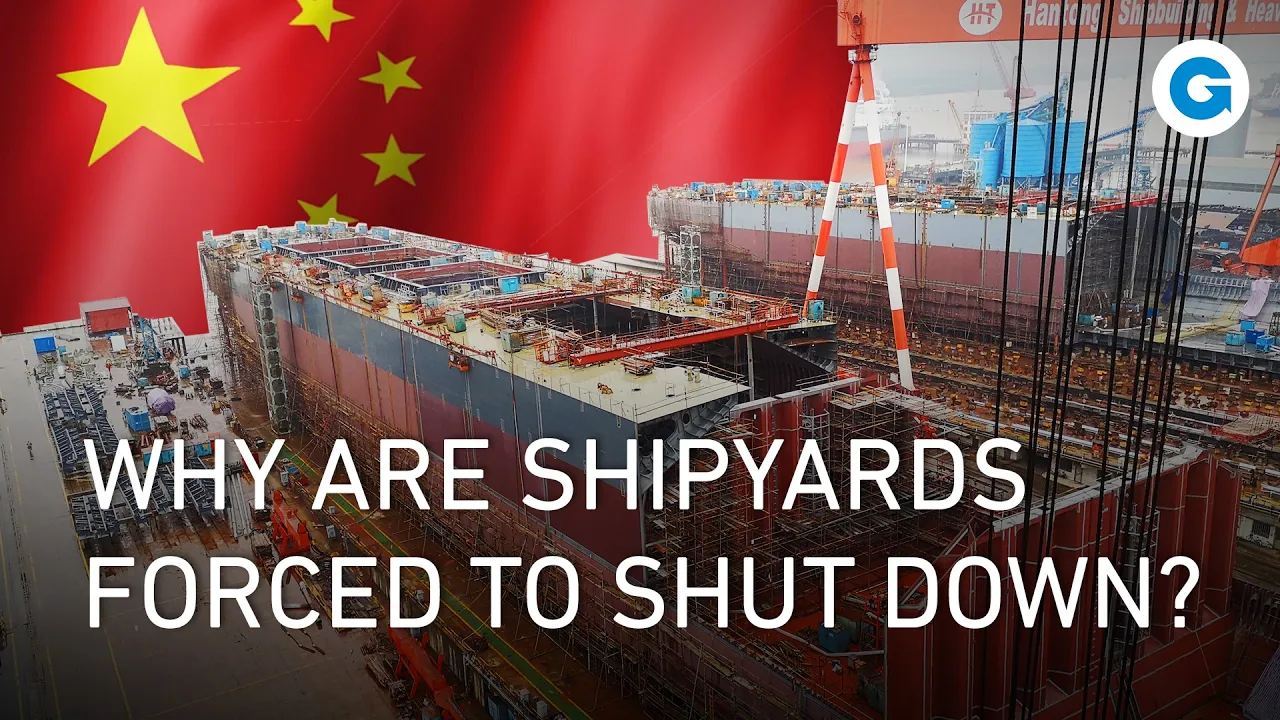





The shipping industry, responsible for 3% of global CO2 emissions, is undergoing a transformative shift toward sustainability through alternative fuels like methanol (reducing emissions by 25%), LNG, and ammonia, alongside efficiency technologies such as robotic hull cleaning (saving 18% fuel) and air lubrication systems (saving 5-10% fuel), with major shipbuilders like Hyundai Heavy Industries leading the development of specialized engines and infrastructure to achieve the International Maritime Organization's net-zero target by 2050.
Decarbonizing Shipping: New Marine Technologies Explained
Added:The environmental impact of the global shipping industry, particularly its reliance on Heavy Fuel Oil (HFO) and its contribution to global greenhouse gas emissions.
Basic principles of marine propulsion and how internal combustion engines power large transoceanic cargo vessels.
Fundamentals of fluid dynamics, specifically how friction, biofouling, and hydrodynamic drag affect vessel efficiency and fuel consumption.
An introductory understanding of alternative fuel chemistry, including the difference between fossil-derived fuels and biofuels or synthetic fuels like methanol.
International maritime regulatory frameworks, such as the International Maritime Organization (IMO) decarbonization targets and carbon pricing mechanisms.
Life Cycle Assessment (LCA) methodology applied to marine fuels, analyzing 'well-to-wake' emissions versus 'tank-to-wake' emissions.
Advanced zero-emission propulsion technologies, including green hydrogen, ammonia fuel cells, and modern wind-assisted ship propulsion (WASP) like rotor sails.
The economic and logistical challenges of global port infrastructure transition, specifically bunkering logistics for alternative fuels and fleet retrofitting costs.
138.8K views2.8Klikes24:02Original Release: 2024-11-08
Your everyday groceries.
Your refrigerator.
Your coffee maker.
Your laptop.
What do these ordinary items have in common?
Well, they were most likely shipped to you no matter where you are in the world.
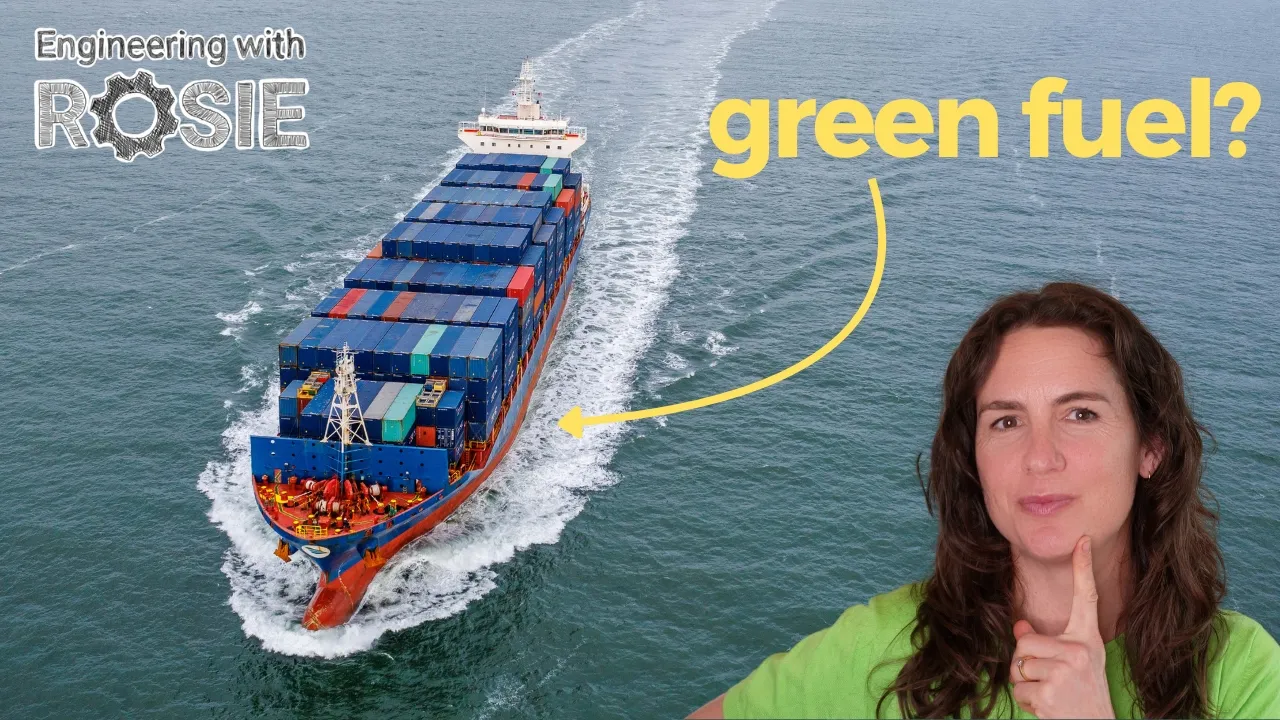
Shipping is central to the global economy, accounting for more than 80% of world trade.
It’s also a major polluter, emitting over a billion tons of CO2 in 2018 alone.
But international regulations are being tightened.
And new technologies are helping to prompt the industry to sail towards a cleaner, greener future.
I’m Haslinda Amin and this is Momentum.
In this day and age, the world is at our fingertips.
Any goods you desire can most likely be shipped in a matter of days.
But behind this convenience lies a daunting reality.
Shipping is responsible for roughly 3% of all the world’s human-made carbon dioxide emissions.
In fact, if shipping was a country, then it would be one of the top 10 emitters.
The International Maritime Organization, shipping’s regulator, is set to create the world’s first global carbon tax.
And it’s pushing the industry to achieve net-zero carbon emissions by 2050.
Asia, with its bustling ports and vital shipping lanes is emerging as a critical player.
To attain net zero, getting rid of oil-based fuel is a must.
Today, more than 93% of the world fleet are still running on conventional fuel.
So there is a pressing need for cleaner, sustainable alternatives.
The big question is: can we smoothly transition all shipping vessels to alternative fuels?
And how realistic is it to do so before 2050?
Our first stop is South Korea, home to Hyundai Heavy Industries, one of the first in the world to champion the use of alternative fuels, proving to the industry that the green transition is possible.
HD Hyundai is the world’s largest shipbuilder.
In January, it built the world’s biggest methanol-powered container ship, for shipping giant Maersk.
Methanol is considered a promising alternative fuel for shipping.
Now Hyundai is working on dozens more methanol-powered container ships in Ulsan for Maersk and other clients.
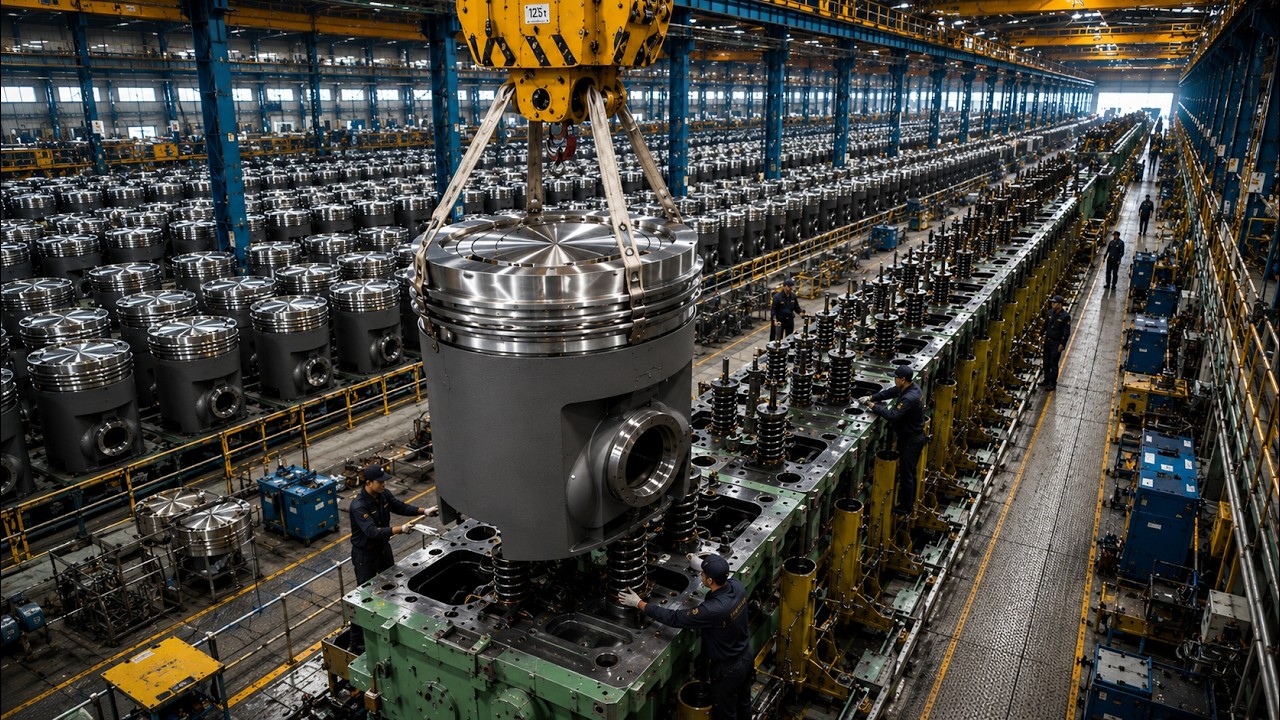
This ship is one of them, with a five story-tall engine.
What are the benefits of methanol?
We can reduce the carbon emission by 25%.
Also, the methanol is in liquid condition, so it is simple to handle, and also easy to store.
So liquid form makes it easier to store.
But it is expensive.
Yeah, right. That is correct.
This is different from what we expect, because the methanol price is still high and the supply chain is not sufficient.
So most shipowners, they change their mind.
Apart from high prices and limited supplies, the clean version of methanol is also less energy-dense than oil-derived fuel, which means you need more of it to fuel your ship.
The other promising alternative fuel is ammonia.
It can be made using green hydrogen and atmospheric nitrogen, but it’s highly toxic for people and marine life.
Liquified natural gas or LNG is considered as another alternative fuel.
But it’s controversial.
It cuts CO2 emissions by 20% compared with oil-based fuel.
However, it’s still a fossil fuel and creates methane, a super pollutant.
A study shows that methane leaks can make LNG-powered ships dirtier than ships using oil.
So given that there are pros and cons to each and every one of that alternative fuel, is there a frontrunner?
Is there one that is better than the other?
There are no frontrunners at this moment.
Two fuels are available at this moment, LNG and methanol.
Ammonia, LNG, methanol, does it matter which alternative fuel is being used?
Ammonia is just at an initial stage.
The problem is that the main engine for ammonia-fuel burning is under development.
That means that there is no main engine for ammonia going.
LNG is very costly at this moment, but it is very simple and easy for securing their fuel for their fleet.
That means there are good enough infrastructures there in the world, everywhere, every day, if they want to bunker their fleet, it is possible for LNG.
But for methanol, ammonia, it is not easy.
But why is LNG considered an alternative fuel when it’s still fossil fuel?
Yeah, you are right, LNG is also fossil fuel.
They also contain the carbon atom.
But please think about the real situation in real shipping and the shipbuilding industry.
We have to consider the infrastructure to supply, also think about the supply chain.
How they are bunkering fuel for the fleet.
Nowadays, LNG is a major trend at this moment for our clients.
For methanol, it is about scalability.
How do you get there?
Yeah, the first thing is investment for the money to their infrastructure to increase.
But the problem is that we need more time and more consensus in our markets.
Jeon says ships first switching to a mix of fuels is a more realistic strategy to achieve net zero.
IMO [International Maritime Organization] already announced their ambition to achieve net zero in 2050, but frankly speaking, it is not easy to achieve that requirement.
Not easy. But is it possible?
Yeah, possible. We have to try to get that result.
But clean fuel and cleaner fuel are very different concepts.
Clean fuel is a real clean fuel.
That means there is no carbon.
Mixing is a bridge technology to reduce their carbon footprint and increase their efficiency.
Besides alternative fuels, advances in shipbuilding technology are also needed for a carbon-neutral future.
To build methanol-powered ships, Hyundai developed a special engine.
Fuel is very important, but the other one is the engine and equipment.
Methanol is very corrosive.
So we got a different design in the engine area that route to the supply we need.
We chose the dual fuel pipe for methanol to the engine area in case of the failure with the inner diameter.
We adapted the methanol fuel tank to prevent corrosion.
The adoption of alternative fuels might not be a straightforward path, but for sure it’s a costly one.
Fuels are a significant expense for vessels.
An extra $8 to $28 billion is needed each year to make ships greener by 2050, according to a UN Trade and Development report.
Swapping out heavy oil fuels may not be the only way forward.
If the question is how to reduce carbon emissions, then the answer may lie in an unusual place: the ship’s hull.
Since the earliest days of sea voyages, shipowners have been troubled by grasses, barnacles and other organisms that grow on hulls, known as biofouling.
Biofouling starts to occur within the first few hours of a ship’s immersion in water and this increases drag for ships, making them use more fuel to move through water.
If half a ship’s hull is covered by biofouling even as thin as a human fingernail, it could increase carbon emissions by as much as 30%.
Enter Neptune Robotics, which has created an underwater robot that cleans hulls.
So Elizabeth, Neptune’s robots are not the only robots out there cleaning hulls.
We have robots in Norway, in Australia.
What makes your robots different?
What’s cutting edge about it?
Neptune is the first robotic hull clean that works in extreme environments 24/7 in the sea.
So in Panamax to Capesize bulk carrier berths.
These are the biggest ships out there.
Yes, bigger than aircrafts.
They are bigger than skyscrapers.
And in those berths, they have very strong currents.
And these are the vessels that carry the most biofouling and burn the most fuel and consume the most emissions.
And we counter four knots of currents, our robots.
While, as a comparison, divers counter one knot and other robots counter 1.5 knots.
So the difference is, we are able to provide service in these ports.
Secondly, we cover a lot of ports in China with murky waters.
The water visibility is below one centimeter.
So what is one centimeter?
It’s basically impossible to see, right?
So the only way is to use robots.
And it’s after more than 200 sea trials, we developed, finally, a mechanical software plus hardware solution.
And we deliver 4K videos and photos in zero-visibility waters.
Hull cleaning, or robotic hull cleaning, is a fundamental.
So whatever fuel you use, biofuel, alternative fuel or dirty fuels, you would still need to save the cost of that fuel.
So hull cleaning is saving your fuel cost.
So what Neptune is doing is we are saving 18% of fuel consumption worldwide, for any vessel, any year.
The Hong Kong-based Neptune said its robots have cleaned more than 1,000 vessels, helping the industry prevent up to 5 million tons of CO2 emissions.
Its robots are magnetic and use vibration to remove biofouling, making it suitable for use with anti-fouling coating.
So these are some types of coating that owners would paint on the hull trying to prevent the growth of biofouling.
There are also concerns about some of those coatings.
We talk about copper, arsenic, which eventually will be leached into the ocean, the same ocean where we fish.
What we can do is really to develop technology that when we conduct hull clean, do not release those paints, right?
And that is a very important part of Neptune Robotics.
Right now, the way we conduct cleaning is using a technology, something called cavitational water jet cleaning.
So cavitational water jet is using cavitation bubbles.
When cavitation bubbles implode, it creates a shockwave that vibrates off biofouling.
So we are using vibration to remove fouling.
While most of the others in the industry, they are using brushes or high pressure water.
And those are mechanical forces.
So those are scratching away the biofouling together with the paint.
But if you use a cavitational cleaning, you are just removing the fouling, not the coating.
How do you see your robots evolving?
What would be potentially the final version?
So right now is semi-autonomous, meaning that while it’s underwater, it’s autonomous, and we have a pilot that basically monitors the condition.
The final version of the robot would be completely autonomous, ranging the operation from deploying to the hull, from starting the operation, ending the operation, delivering the final report and analysis to the owners.
So this whole process would not require any human touch.
Expanding to more ports is very key, and I think the future is very clear, while we expand to more ports, which creates more flexibility and convenience for our clients.
And economies of scale is amazing because we have 30 robots right now and it’s very different from the cost of building two robots.
And we expect to have 100 robots in two to three years.
What keeps you going?
It’s a crazy journey.
Not to say that it’s a stressful journey.
Yes, in the first two to three years, I think the whole team actually thought we were so close to delivering the product but we were never there.
At the end, we finally developed something that we thought it was good enough to go to a client and get paid.
And when we know that we have completed a task that’s very difficult, and then we deliver fuel saving and emission saving, and then the client come back, it’s super rewarding.
And this is what keeps me going.
What’s your vision of the shipping industry when all is said and done, the technology is there.
Paint a picture for us.
Five years down the road, how would the shipping industry look like?
I think in five years’ time it would be emissions efficiency.
So every decision made would be towards whether this saves additional emissions.
On the other side of the world, London-based company Silverstream has developed another way to improve fuel efficiency.
It’s well known that automakers fine-tune the aerodynamics of their vehicles for better gas mileage.
The same is true for shipbuilders with hydrodynamics.
Companies like Silverstream Technologies have developed a technology that seems rather magical, using bubbles to reduce friction and ramp up fuel efficiency.
Noah, who would have thought that bubbles could help the shipping industry become green?
Talk to us about the technology.
So Silverstream’s air lubrication is the technology where we blow out microbubbles under the hull of a commercial ship.
The microbubbles go into the boundary layer.
Basically it has the effect that the ship is sliding, gliding more easily through the water.
That perhaps doesn’t seem like a big deal but it actually saves shipowners 5% to 10% of fuel on a net basis.
You talk about microbubbles, drawing a distinction to perhaps just normal bubbles.
I mean, why would a microbubble work and not the normal bubble?
Microbubbles are defined by, first of all, being very small, but also the surface tension of the bubbles is very high.
So that means that when they bounce, they actually bounce off each other.
They don’t become bigger and bigger and bigger.
So when you see microbubbles in a laboratory, it almost looks like, sort of like a foam, and that’s what we are then creating under the vessel.
So a magic carpet of bubbles, you can say.
You can call it a magic carpet.
How did you come up with this technology?
Why didn’t someone else do it?
So I started as a young boy, 10 years old, competing a lot in regattas.
Spent a lot of time at sea.
So in my whole youth, windsurfing and competing in windsurfing was a big part of my life.
And then at some stage I had the idea of developing air lubrication for commercial shipping.
It probably was born out of my interest in the sea and also my liking for numbers and calculations.
And initially I thought it would be something I would be occupied with for a couple of years, It took a good 10 years to be able to create the right patterns and actually commercialize this technology.
Shipping is an old industry.
Has it been difficult to convince shipowners, companies, to use your technology?
And how did you sell that technology to them?
Shipowners’ operating expense about 60% to 80% of that is pure fuel cost.
So if we can help with also saving the fuel cost for their current ships, but also future ships, and going into alternative fuels that are going to become much more expensive.
It’s going to be a technology that’s helping with regulation, but also saving costs.
But our estimate is that currently, owners will save $5 billion of what we have already installed.
Going forward, having a much bigger order book, it’ll be a very significant saving in dollar amount for the shipowners, but also in emission savings.
I went to a shipyard in Singapore to see how Silverstream’s technology works in reality, It’s air lubrication system was installed in a vessel owned by Chevron, a major American oil and gas company.
Over a dozen air release units can be seen under the ship’s hull where microbubbles will blow out.
We’re talking about how many ships, vessels equipped with your technology now and how many orders do you have?
We have 200 systems on order.
We have produced just under 100 systems In the bigger scheme of things, that’s peanuts.
That’s a very small number because I know there are more than 100,000 vessels about the size of this one out there at sea.
So you’re quite correct.
So what we do is work with some of the major clients in shipping to discuss with them their decarbonization strategy for their ships.
This ship that you see behind us, the Chevron ship, we have installed our system in less than two and a half weeks.
And it will take another week to commission.
The ship will then be in the water where we can fully commission and then we intend to do performance trials of the ship.
So Chevron is on board.
How do you get the other big shipping companies on board as well?
What will it take? You think?
Well, it will take collaboration, similar to what we’ve done with Chevron.
It will take deep involvement and engagement again to understand their portfolio of ships, how suitable they are for it.
It’s not always one size fits all.
We can tailor our system to suit.
Silverstream’s next goal is installing the system in 500 ships by 2025.
The company is also working on better integrating their technology into ships’ main engines and propulsion systems to boost fuel efficiency even more.
The shipping industry, along with the rest of the world, stands at a critical juncture where innovation is no longer an option.
It is a moral imperative.
These innovations are not just engineering feats.
They’re proof of the momentum achieved from countless hours of commitment, research and experimentation by scientists, and businesses working together.
For the shipping industry to achieve the hefty goal of zero emission by mid-century, we will need many more innovations like these.
Check out our next Momentum episode.
Up Next
28:16
PCB Design for Micromouse: Sourcing Parts & Layout
@UCLAIEEE
1.1K views•2024-01-10

30:32
Ultrasonic Transducers: Resonant Frequency Measurement and Horn Design
@imajeenyus42
229.9K views•2017-02-22

54:16
Polymer Environmental Degradation: Mechanisms & Stabilization
@iit
1.8K views•2012-07-10

33:39
How a Student's Question Saved a NYC Skyscraper from Collapse
@veritasium
22.8M views•2025-04-26
Related Study Plans & Knowledge Roadmaps
Structured learning paths in Engineering
engineering
Building Acoustic Levitators: Physics & Arduino
01The Physics of Sound and Standing Waves
02Piezoelectric Transducers and H-Bridge Drivers
03Arduino Programming: Generating 40 kHz Signals
+ 2 more learning modules
14h5 modules
Explore Roadmap
engineering
Building Peltier Cloud Chambers: Particle Tracks
01Cosmic Rays & Cloud Chamber Physics
02Thermoelectric Cooling (TEC) Fundamentals
03Custom Liquid-Cooling Loop Design
+ 2 more learning modules
18h5 modules
Explore Roadmap
engineering
Yagi-Uda Antennas: Modeling, Build & VNA Test
01Introduction to RF and Antenna Fundamentals
02Yagi-Uda Antenna Design Principles
03Antenna Modeling and Simulation in 4NEC2
+ 2 more learning modules
18h5 modules
Explore Roadmap
engineering
ECG Monitor Design: Op-Amps, Filters & Noise
01Electronics & Breadboard Basics
02Op-Amps and Instrumentation Amplifiers
03Bioelectricity and ECG Fundamentals
+ 2 more learning modules
18h5 modules
Explore Roadmap