


![НАЙНЕБЕЗПЕЧНІША БУДІВЛЯ НА МАНГЕТТЕНІ [VERITASIUM]](https://i.ytimg.com/vi_webp/chYXN5L-QTE/maxresdefault.webp)
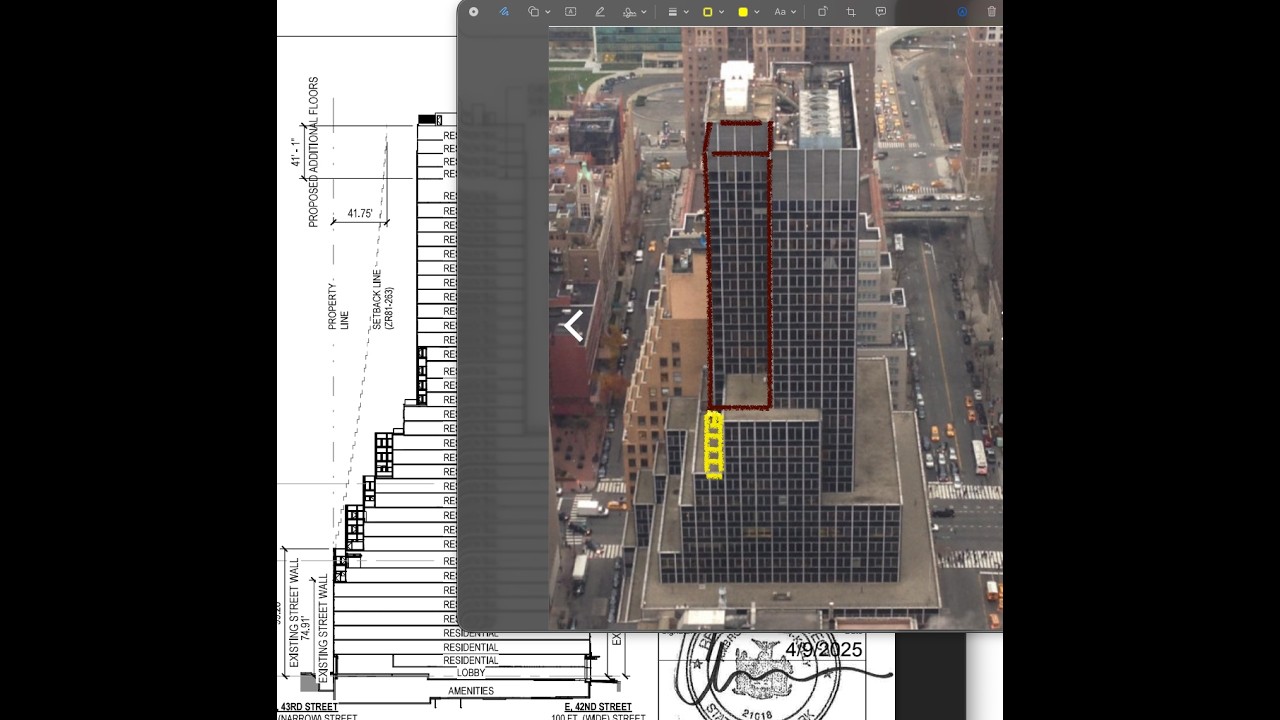


In 1978, structural engineer Bill LeMessurier discovered a fatal flaw in the Citicorp Center skyscraper in New York City, where winds of just 110 km/h could cause collapse due to an engineering oversight in the chevron bracing system; a phone call from an undergraduate student questioning the column placement prompted LeMessurier to re-analyze the design, revealing that quartering winds (diagonal winds hitting building corners) created 40% higher stresses than originally calculated, leading to a dramatic repair operation that saved thousands of lives.
How a Student's Question Saved a NYC Skyscraper from Collapse
Added:Basic structural engineering concepts, including the difference between static loads (gravity) and dynamic loads (wind and seismic forces).
Understanding of load-bearing structures and structural bracing systems, specifically chevron (K-bracing) frames used in high-rise buildings.
The fundamental difference in strength and behavior between welded joints and bolted joints in steel construction.
An introductory understanding of how wind forces act on rectangular structures, including perpendicular versus diagonal (quartering) wind directions.
Professional engineering ethics and the responsibility of public safety, using the Citicorp crisis as a landmark case study.
The mechanics and application of Tuned Mass Dampers (TMDs) in mitigating lateral sway in supertall skyscrapers.
Advanced retrofitting techniques and structural health monitoring used to secure vulnerable or aging urban infrastructure.
The evolution of building codes and the mandatory implementation of wind tunnel testing for complex architectural designs.
22.8M views398.8Klikes33:39Original Release: 2025-04-26
This is Citicorp Center.
In the summer of 1978, it had been open for less than a year when its structural engineer, Bill LeMessurier, made a terrifying discovery.
His cutting edge skyscraper, an engineering marvel had a fatal flaw.
Winds of just 110 kilometers per hour could cause it to collapse in the middle of Manhattan, potentially killing thousands.
Over 200,000 people lived and worked in the surrounding area, and hurricane season was only weeks away.
Here I am, the only man in the world who knew this.
This thing is in real trouble.
LeMessurier faced a stark choice.
He could stay silent and hope for the best, or he could try to fix it and risk professional ruin and mass panic.
But Citicorp Center had a 100% probability of total collapse by the end of the century.
How could he save New York from a near certain disaster?
And how was this allowed in the first place?
Veritasium producer and engineer, Henry van Dyck, traveled to New York to investigate further.
So in the 1960s, the financial giant, Citicorp, was trying to build a new headquarters in Manhattan.
So just down the street from their original headquarters was this entire city block, which was up for sale.
Well, everything except for this church, Saint Peter's.
So Citicorp came to the pastor, Ralph Peterson, and asked, "What's it gonna take for you guys to leave?"
And he came back and said, "We're not leaving.
Anything that Citicorp builds has to involve the church as part of it."
What the pastor wanted was for the church to have its own separate identity.
So eventually they agreed on two things.
One was to replace this old crumbling gothic church with a brand new one, which you see in front of you.
And the second thing was that the church had to be physically distinct from the new tower.
In other words, it had to be completely independent.
And again, most importantly, two thirds of the space above the church had to be free and clear, had to be open.
Citicorp then hired architect Hugh Stubbins to design the tower and the church and Bill LeMessurier as the structural engineer, Stubbins explained the constraints they faced.
The church needed to be in the exact same spot and they needed to build the tower around it.
If they were to maximize the floor area, they would have to notch out one corner of the tower for the church.
LeMessurier agreed that could work, but why not notch two, three, or even all four corners, essentially constructing the skyscraper on stilts.
So it's probably the first time in history that an engineer has come to an architect and said, "Let's make our job harder for us."
The stilts would serve two main purposes.
First, they would need to support at least half of the building's gravity load.
The rest would be held up by a larger central column.
Second, they would need to withstand the load due to high winds.
But unlike an ordinary structure, the stilts wouldn't be at the corners.
They would be at the center of each face.
Imagine a chair, and instead of the columns or the supports on each corner of the chair, it's at the midpoint of each side.
Obviously, it's not an ideal situation.
It doesn't seem very stable.
Exactly. So it created an engineering problem.
As LeMessurier considered the problem, he suddenly had a flash of inspiration.
He grabbed a napkin and sketched out an idea.
He drew six layers of diagonal braces up each face of the tower.
These chevrons would transfer the forces to the middle of each face and down to the stilts.
Now we have to see the gravity loads, right?
But now here's the trick.
The gravity loads are coming down the column.
When they get to the brace, they need to find their way into the brace.
Okay. So what you do is you take out that column right there.
There is no way that load can jump over and go to that column.
And now they're coming down into the braces.
They get down to the bottom here, and now they continue to go down.
You take that column out, it has nowhere to go except into the brace.
By removing the columns at the top and middle of each chevron, every tier acted as a separate unit.
They were only connected to the braces and through the central core.
So every eight stories, half of the gravity load would be forced through the chevrons to the midface columns, leading down to the stilts.
Can you tell me how big of a new idea was this?
Yeah, well, this particular system was entirely unique, driven by the placement of the columns, driven by the conditions of the building.
As satisfied the chevrons could transfer the gravity load, LeMessurier turned his attention to the second problem, the wind.
When wind hits the left side of a normal building with corner columns, the entire frame deforms like this.
So to reduce this deformation, we could strengthen these joints, but there's a better way because beams and columns are much stronger in compression or tension than they are with bending loads.
So if we add diagonal bracing, they can carry this horizontal load.
The beams sort of act like springs, and when they're compressed, they push on the joints.
When they're stretched, they pull inwards.
With braces like these, the wind load compresses this diagonal and stretches this one.
The left column pulls down in tension and the right column pushes up in compression.
Where the braces meet, they both push the bottom beam to the right.
This stretches the left side and compresses the right one.
But this floor is the top of the next chevron, so this lower section is carrying the force from the layer above it and the normal wind load from the side.
And this keeps happening at every chevron so the wind load builds up as you go down the building.
But Citicorp can't have corner columns like this because of the gravity load.
So in the wind, this entire triangle wants to rotate like this and to prevent that from happening, this chevron pulls down going into tension and the far chevron pushes up in compression.
The top and bottom beams are again forced into compression and tension.
The wind load ends up wrapping around the entire building.
So every chevron works to transfer the wind load to the section below.
When we think about skyscrapers, like how big of a deal is wind?
If we made a skyscraper here, you know, out of all these different things, you push with your phone, you get a certain amount of force, but then you push on my phone as well with a certain amount of force, but your phone is also pushing on my phone.
And so that's the shear in the building, what we call the building shear.
It increases as you go down the building.
You know, at the 10th floor, you may have a smaller force than at the 60th floor, but the total force of the 10th floor is like carrying everything above it.
So it's much bigger than what's going on on the 60th floor.
So these chevrons were key to LeMessurier's design, but the braces were massive, almost 40 meters long end to end.
So even if you could fabricate a steel brace that long, there would be no way to get it through Manhattan.
So instead it was sent in pieces to be welded together on site.
The chevron bracing solved the wind and gravity load issues, but it also created a different problem.
Because of the chevron bracing system, they were able to save a lot of money and weight.
It was a lighter construct than most other buildings in New York, I think it was 22 pounds a square foot, which is very light.
Unfortunately, that made the building swayable, it could move in the wind.
That wasn't necessarily a structural problem, it was just, it could have been uncomfortable for the patrons.
The way they could solve this was just let's add more structural steel and make it a lot stiffer.
But the solution that LeMessurier came up with was far more elegant.
He adopted something that had been regularly used in bridges, power lines and ships, but never before in a building: a tuned mass damper or TMD.
So we're here at Stark Laboratories, and I'm not with Iron Man, but instead the Columbia Space Initiative, the student team here on campus who has helped us build this incredible tuned mass damper kind of system.
We'll use this cart to represent a building.
By pulling it back and releasing it, we can excite its resonant frequency, And then we'll put on a little pendulum, aluminum rod, and a mass at the bottom.
As the building sways, it transfers some of its kinetic energy to the pendulum, which starts to swing.
Then some of its energy is dissipated through friction at the hinge.
The pendulum and the building oscillate out of phase from each other.
So every time the building pulls the pendulum in a different direction, more energy is lost, significantly damping the sway of the tower.
But this system needs to be carefully tuned so it has the same frequency as the building itself and the right amount of friction.
So first, the mass needs to be at least one to 5% of the building's weight to be effective.
And we tune the frequency of the TMD by adjusting the length of the pendulum.
I assume engineers do math around this thing, but we're just doing it by feel.
(both laugh) Second, by loosening or tightening the bolt, we can tune the amount of damping.
We need to dissipate more energy from friction at the hinge to stop the swaying faster.
We just tighten the top bolt, make the whole system a little bit, you know, add a little bit more resistance, and we'll see if we can dampen it now further.
Woohoo. Much different. Yeah.
Yeah, that looked great. That was so quick.
Yeah, that was.
It is cool when an experiment works.
Does not always happen.
There are many different types of TMDs, like pendulums, liquid columns, and a large mass on springs.
LeMessurier used this last one in Citicorp.
What you see is a mass of concrete, which is 29 feet square and about eight feet thick and weighs 400 tons.
It was installed on the top floor and it's affectionately known as that great block of cheese.
As Citicorp sways to one side, the block starts to move in the same direction.
Some energy is dissipated through separate viscous dampers.
Citicorp's oscillations are damped through those energy losses as the block oscillates out of phase to the building's motion.
LeMessurier expected the damper to reduce the amplitude of swaying by roughly 50%, and he saved around $4 million by not needing an additional 2,800 tons of structural steel.
With both the chevron bracing to channel forces to the stilts and the tuned mass damper to reduce sway, LeMessurier was convinced the building was structurally sound.
On Citicorp Center's opening day in 1977, it was the 11th tallest building in the world.
It was described by the press as an acrobatic act of architecture.
Later, the American Institute of Architects even gave it an honor award, calling it a tour de force as a stylish silhouette in the skyline, and, for the pedestrian, a hovering cantilevered hulk.
So then, it's going swimmingly for years, right?
Well, it's going swimmingly for about a year.
The first hint of trouble came in May, 1978.
LeMessurier was talking with another client about welding similar chevron braces.
The architect and the steel fabricator said, "Tell me, how did those welded braces work out?"
Seems like overkill, they thought.
And LeMessurier says, "Yeah, they were fine.
Let me call my guys in New York and I'll check."
So he put the call into his office in New York and they say, "Oh, Bill, didn't you know?
We bolted those connections."
The contractor had suggested saving a quarter of a million dollars by using bolts to attach the braces instead of welds.
And LeMessurier's firm had agreed.
There is nothing that says a bolt is inherently worse or better than a weld.
You use them in different circumstances for different reasons, but it's a little surprising to find out, I thought the connections in this tour de force, one of a kind skyscraper, you know, that's on the cutting edge of structural engineering, was connected one way, but apparently it's connected another way.
But if the braces are going like this, where are they gonna go?
You know, you only need the weld when the braces are going like this.
Since the gravity load was always compressing the braces, some of the chevrons only went into tension under very high winds.
And even then, it wasn't a lot of tension.
LeMessurier trusted that his team did the right calculations, and the substitution was fine, logical, even.
(phone ringing) But around a month later, LeMessurier got a phone call from a student who wanted to ask some questions about the Citicorp Center.
And his teacher said to him, "That engineer didn't know what he's doing and nobody should put the columns in the middle.
They should put 'em in the corners. That's silly."
And I told the student, I said, "Well, you're a professor's full of it.
He doesn't understand the problem we had to solve."
LeMessurier went through the calculations with the student to reassure him the stilts were in the right place.
But the interesting thing is, is in that moment, he's thinking about wind loads from all directions.
You know, late spring, early summer of 1978, Bill LeMessurier is working on the back of a Hilton Hotel that, in plan, forms a triangle, not a rectangle.
Now you got a triangle. What's your orthogonal direction?
You just have to give up and say, "We're gonna analyze it from every direction."
That's going on the moment that Bill LeMessurier gets this phone call.
Then I called him back and pointed it out to him that there's some peculiar things about this building.
The worst loading case was not the diagonal, but it was the ordinary wind that everybody thinks about.
The wind pushes straight on the building.
That was the critical case.
He said, you know what, I've been getting all these calls from all these people.
I'm gonna sit down and explain this thing.
He decided to double check what happens to the building if wind is hitting a corner of the building, not straight on one of the faces.
These are also known as quartering winds.
So he split the wind into its perpendicular components.
So the west side and north side are hit by the force divided by the square root of two.
He computed the forces for each, as we did before, and summed up the result, but then he noticed something strange.
Then now we look at the diagonals, the stresses in half of them vanish, and in the other half, double.
Since the force on each side was F over the square root of two, these beams get double that.
Compared to LeMessurier calculations for the perpendicular wind load, the forces here were 40% higher.
So 1.4 by itself is not enough to wreck havoc.
Okay? It may be, but it may not be.
Okay. So then the question is, well, what happens?
This increase in forces wouldn't have mattered in the original design since the chevrons were fully welded together.
But that wasn't the case anymore.
LeMessurier remembered his earlier phone call.
The welds holding the chevrons together were swapped for bolts.
How did his team calculate the number of bolts per joint?
Did they consider quartering winds?
It would be a miracle if they ever thought that through, to think about the diagonal wind.
It just wasn't in the nature of anybody.
So I had a bit of a worry.
I didn't panic right away, but I decided to go down to New York to my office.
LeMessurier requested the building diagrams and poured over all of the connections.
He looked at how his firm calculated the number of bolts.
There was no question, they had taken straight on wind, not the diagonal wind.
Although wind speed is highest at the top of the tower, the wind shear builds up as you go lower.
Looking at this brace around halfway down the tower, the perpendicular wind load is 454 tons.
Because of the skipped columns, all of these braces carry the same gravity load, just 340 tons, from the eight stories above.
The gravity load builds up in the center column, not in the braces, which means there are 114 tons of tension in this brace.
If each bolt can withstand around 28 tons, that would require four bolts.
The original calculations said just four bolts were enough.
So that was all they used.
But when he added quartering winds, LeMessurier's calculations showed there were some braces that needed far more bolts.
At this particular part of the building, which I can show you on my calculations is right about here, and Bill LeMessurier talked about the 30th floor, and I always wondered why was it the 30th floor?
The 40% increase from quartering winds means that this brace has a wind load of 635 tons.
The tension in the brace is now 295 tons, over double the original calculation.
So these braces actually need around 10 bolts, not four.
But then it turned out they had done something else.
LeMessurier's firm considered the braces to be minor structural elements.
They didn't use the right factor of safety to calculate the number of bolts.
They should have overestimated the tension in the brace by underestimating the gravity load.
With only 75% of the gravity load, the tension in the beam is now 380 tons.
So they really needed 14 bolts, but they used only four.
I thought this thing is in real trouble.
Imagine, you know, what Bill LeMessurier was thinking at that moment.
You see that number and you're like, "Oh my God, this is serious. It's really serious."
LeMessurier was starting to panic.
He didn't wanna rush to conclusions, so he flew to Canada to check his calculations with Alan Davenport at the Boundary Layer Wind Tunnel.
After running more tests, they found that it was even worse than LeMessurier thought.
The estimated 40% increase in stress was technically correct, but LeMessurier made his calculations assuming the building wasn't moving.
This is called static conditions.
But the wind tunnel gave LeMessurier a dynamic analysis, how the forces change when the building is moving around.
To LeMessurier's horror, the wind tunnel analysis showed that the stresses could increase up to 60% more than originally anticipated.
LeMessurier squirreled himself away in Maine and worked through the data from the wind tunnel again, joint by joint on every floor.
The weakest joints were at the building's 30th floor.
If those failed, the entire building would fall.
But what were the chances that a storm strong enough to topple the building would pass through New York City?
LeMessurier dug through the historical weather reports.
On average, a storm strong enough to tear the building apart occurred every 67 years.
But only if the tuned mass damper was working.
If a storm knocked out power, then even 110 kilometer per hour winds blowing for just five minutes would collapse the building.
In any given year, the chance of a storm that size happening was one in 16.
Just one year before Citicorp was completed, wind gusts of 110 kilometers per hour roared through New York City as Hurricane Belle passed through.
What do you think this moment was like for LeMessurier, when he ran these calculations, like- Oh, it must have been devastating.
I mean, it just must have been, I can't imagine the fear.
I can't imagine the feelings.
I mean, like, it just must have been truly a moment he never thought he would live through.
That storm was gonna fall down in my lifetime.
And since this was July, it could fall down the summer of 1978.
LeMessurier needed to decide and decide fast.
But revealing this mistake could mean lawsuits, bankruptcy and professional ruin.
He could stay silent, only Davenport knew and he wouldn't reveal anything, or he could entirely disappear.
In a later interview he admitted, "I did say to myself, I could drive down the Maine Turnpike at a hundred miles an hour and deliberately drive into a bridge abutment.
That would be the end and all of this would go away.
I thought about that."
But there was a 1 in 16 chance of collapse that very fall.
With thousands of lives at risk, there was never any other choice but to act.
After speaking to a few lawyers and other engineering experts, LeMessurier told the architect, Stubbins, and together they informed Citicorp's chairman, Walter Wriston.
Within hours of that meeting, LeMessurier acquired emergency generators for the tuned mass damper.
The TMD was originally designed to stabilize any swaying for comfort, but now it became the crutch that the tower leaned on.
LeMessurier pinned all his hopes on it.
He called the confidential repair plan Project Pandora, but that sounded ominous, so he came up with the Special Engineering Review of Events Nobody Envisioned, or Project Serene for short.
Each night, welders would enter the building after everyone left, rip off the sheet rock around the chevron beams, and then weld two five-centimeter thick, two-meter long steel plates on each joint.
Like Band-Aids, literally Band-Aids, on both sides of these joints.
After, they'd replaced the wall and clean everything up before the office workers came back the next morning, They needed to weld over 200 joints and LeMessurier ranked them by importance, starting with the ones on the 30th floor.
But the repairs wouldn't be completed before hurricane season.
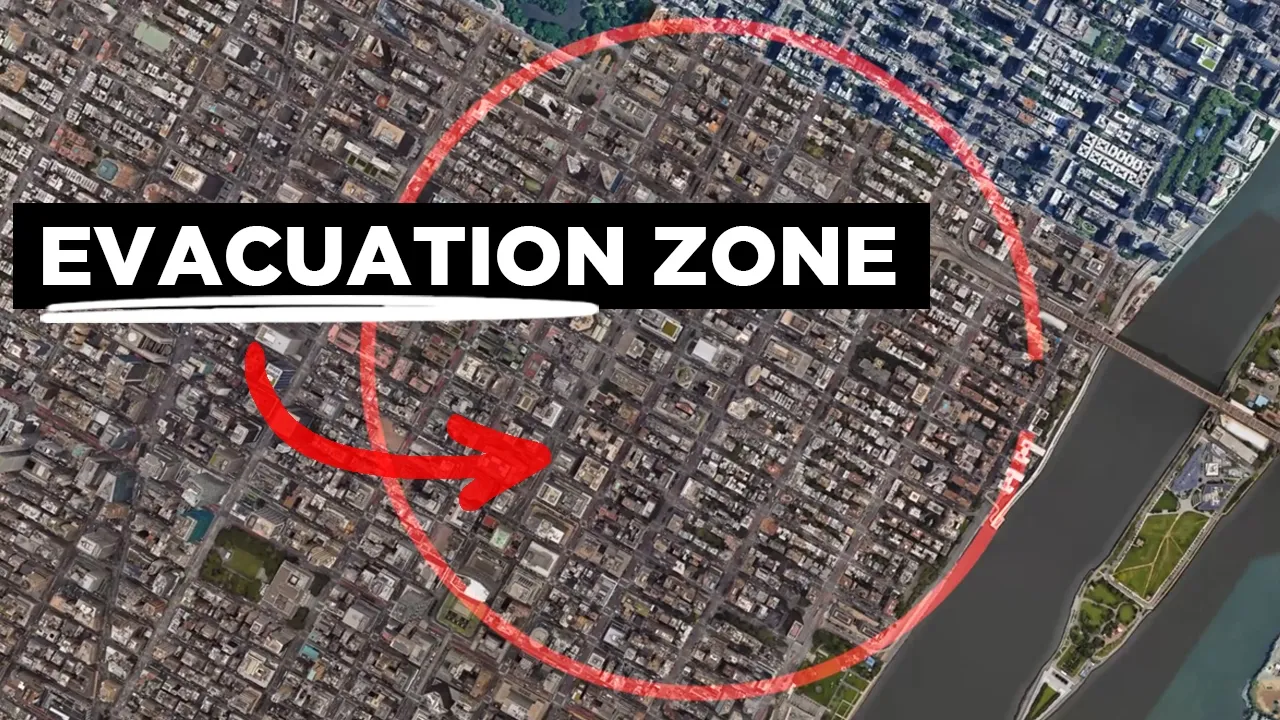
So Citicorp worked with the Red Cross to develop a 10 block evacuation plan.
Like, how many people were at risk in the building and if it fell, would it affect other buildings?
Like, were there chances of it leading to something more disastrous?
Absolutely, this would have toppled and it would've toppled into another building, which would've toppled into another building, which would've continued a horrific process.
So it was untold what the ultimate effects could have been.
I mean, like, just the evacuation plans were how many people?
Thousands, the building itself housed thousands and then the residents and the businesses surrounding the building, it was into the thousands.
Despite the risk, they decided not to tell the public or even the office workers in the building.
No one wanted a mass panic.
Instead, they fitted strain gauges on important structural members.
The gauges monitored the skyscrapers every bend and twist from a comm center eight blocks away.
At least that would give them a little bit of warning.
But this plan required new telephone lines, and the phone company wouldn't get around to doing this for months.
So Citicorp's chairman immediately called AT&T's president and the lines were installed the next morning.
Now you might not be able to install emergency telephone lines at a whim, but you can still stay connected no matter what.
(phone ringing) It's probably not that important.
Henry, can you hear me? Hello!
Team Veritasium travels all over the globe for our videos We traveled here to New York to visit the Citicorp Center, and there's one really annoying problem.
It's hard to stay connected with the rest of the team while we're on site.
We either have to pay ridiculous roaming charges, find a local SIM card and hope it actually works, or search around for public Wi-Fi that might not be the most secure.
That's not something we wanna be dealing with while making a video.
So Saily makes it incredibly easy and affordable to stay connected while abroad.
Download it once and use it in over 180 countries.
You choose how much data you want and for how long.
It's much cheaper than roaming and super quick to set up.
I just select the country and plan, then activate the e-SIM before I take off and I'm done.
Then when I land, I'll automatically connect to a local network with no hidden charges and be able to do the important things, like access maps, book a car or call your boss.
So if you've got travel plans coming up, scan this QR code to download the app.
Choose a plan in the country you're going to and, here's the important thing, use our code, Veritasium, at checkout to get an exclusive 15% off your first purchase.
Again, check out with code, Veritasium, and get connected no matter where you are.
Thank you Saily for sponsoring this video.
And now back to Project Serene.
(phone ringing) (sighs) I mean, should probably take this.
(phone beeps) But even though LeMessurier tried to keep Project Serene under wraps, people started asking questions.
On August 8th, Citicorp released a statement about the repairs.
Now, we had to cook up a line of bull, I'll tell you.
And white lies at this point are entirely moral.
(class laughs) You don't wanna spread terror in the community to people that don't need to be terrorized.
We were terrorized, no question about that.
Several newspapers reported on it, but they didn't have the details.
Then LeMessurier got a message.
The New York Times was trying to reach him.
If he didn't respond, they would know something was up.
So I mixed a martini for myself and it's one minute past six.
I dialed The New York Times.
I pick it up the phone, they pick up the phone, it's a tape recorder saying, The New York Times has gone on strike as of six o'clock.
(class laughs) Not only did The New York Times go on strike, but all the newspapers in New York went on strike until October.
So we had a press blackout and that was the greatest thing that ever happened.
(class laughs) The press was off their back and the weather was beautiful.
The repair work continued smoothly.
But late August brought the news everyone had been dreading.
Hurricane Ella starts brewing in the Caribbean.
And this is the one storm that they're nervous about.
The repairs were halfway done by now.
I think it was a one in 200 year storm that it could withstand, but LeMessurier wasn't taking chances 'cause he didn't know the intensity of the storm.
And this was a strong storm.
So there was, there was a chance.
There was absolutely a chance and they had to prepare for that chance.
By Friday, September 1st, Ella was making her way toward New York, with winds reaching 200 kilometers per hour.
City officials braced to start the evacuation.
Police would go door to door to get everyone out within a 10 block radius.
For 24 tense hours, Ella stalled around North Carolina.
Like LeMessurier said, we were sweating blood.
But sometime in the night, Hurricane Ella veered off into the sea at the last minute.
It intensified and hit Canada with peak winds of 225 kilometers per hour.
But Citicorp was safe.
LeMessurier described that next morning in New York as the most beautiful day that the world's ever seen.
They completed the repairs in October, just six weeks after LeMessurier told Citicorp.
Now the building, according to LeMessurier, can withstand a one in 1000 storm.
The repairs cost between $4 and $5 million, but LeMessurier argued that Citicorp approved an earlier building design that cost $5 to $6 million more, so they were willing to spend that much on the skyscraper anyway.
And for almost two decades, the secret was confined to a small inner circle.
But in 1995, "The New Yorker" finally brought Project Serene into the light.
Far from being vilified, LeMessurier was praised for owning up to his mistake and fixing the issue as soon as possible.
After the article, New York updated the building code to require quartering wind calculations.
And since that first damper in Citicorp, TMDs have spread across the globe.
allowing architects to push skyscrapers taller and slimmer.
It's in the first tall building in the world ever built with mechanical help to make the structure work.
That's remarkable.
Incidentally, that has been now copied a hundred times in Japan, this is ubiquitous, and when I go to Japan, I'm treated like a tin god 'cause I'm the father of the tuned mass damper.
I said, "Really?"
Of the 20 tallest buildings in the world, six include the tuned mass damper, and they're especially critical in typhoon or earthquake-prone regions.
For example, Taipei 101 has a massive 660 ton pendulum that stabilizes the building. It can withstand up to 200 kilometer per hour winds and earthquakes with magnitudes over 6.8.
But the legacy of this building is still steeped in controversy.
First, who was the mysterious student that started it all?
I think it was spring of 1978. There's a student at Princeton, an undergraduate student by the name of Diane Hartley, and she's studying structural engineering.
It was time for her to consider a senior thesis, and then they decided that a study of the new Citicorp Tower would be wonderful.
It's a remarkable thesis.
It contains a lot of the original engineering calculations by the engineers.
She's looking through the documentation, where did they consider quartering winds?
And she's not seeing it "I must be wrong," she says.
She's just an undergraduate student and you guys are award-winning structural engineers.
The engineer explains to Diane Hartley, quartering winds are not a factor in this building.
So she's satisfied. She graduates, that's it.
Doesn't think about it again.
But a year after "The New Yorker" article, the BBC released a documentary on the crisis.
And so she, she was holding her baby and she turned on the television, and lo and behold, she heard them reference a conversation with a student, an engineering student from New Jersey reaching out to LeMessurier.
And she said, "I almost dropped my baby."
And then so she just assumed for years afterwards, she assumed that it wasn't me because I didn't speak to LeMessurier.
But then in 2003, her thesis advisor told Diane that he checked all the other New Jersey engineering and architecture programs, and no one else was working on a project about Citicorp in 1978.
She was the only one.
She never spoke to LeMessurier personally.
She never claimed to speak to LeMessurier personally.
The assumption was that either LeMessurier was mistaken and that it was Diane Hartley who made the call, it was a female, or more likely that LeMessurier was basically tipped off by his New York engineers.
Then, in 2011, a man named Lee DeCarolis came forward.
And the phone call, as we understand it, came from a student at the New Jersey Institute of Technology.
His name is Lee DeCarolis.
He's not asking for money, he's not asking for fame or glory.
He's just saying, "This is interesting.
And I'm the guy who made this call."
And he said, "Yeah, I had a conversation with Bill LeMessurier."
And he pretty much lined up with what LeMessurier himself said.
Sadly, LeMessurier passed away in 2007 before he could confirm the student's identity.
Believe it or not, 40 years later, there's still, I learned, a lot of raw feeling still on this.
People aren't anxious to talk about this, especially people that were involved in it, even people that weren't involved in it but were tangentially involved in it.
We reached out to a LeMessurier Associates and they refused to respond to our request.
You think that the namesake for their company stood up and did the right thing, but I don't think they wanna be associated with mistakes.
Their project description for Citicorp doesn't even mention the repairs.
The building was sold to Boston Properties in 2001, who renamed it 601 Lexington.
They also didn't respond to our request for comment and refused to let us film inside the building.
Further questions arose in 2021, with a new study from the National Institute of Standards and Technology.
They wanted to see if quartering winds were more demanding for a building like Citicorp, Although they did conclude that the pressure from perpendicular winds was greater, their analysis didn't include any internal structure specific to Citicorp.
As for LeMessurier, the engineering field still regards his actions as upstanding.
And the Citicorp case is taught all over the world as a case of good engineering ethics.
In fact, in my own engineering ethics course, I learned about the Citicorp building.
And every structural engineer experiences this.
When you actually feel the weight of the responsibility, you're saying, "Based on my engineering, that building is gonna stand up."
Nobody else worries about it.
And so if you think about the emotional pressure that Bill LeMessurier was under and then needing to come back and do something about it and to mobilize and to hold that during this entire process, it's truly a remarkable story.
I mean, I can't imagine it. I can't imagine it.
I said, look, if you got a license from the state and a certification from university first, then now you're gonna use that license to hold yourself out as a professional, you have a responsibility beyond yourself.
If you see something that is a social risk, good heavens, this thing would kill thousands, you must do something, you must do something.
Up Next
16:41
Scotch Yoke Mechanism: Converting Rotary to Linear Motion
@kalebBi
177 views•2025-11-21
30:32
Ultrasonic Transducers: Resonant Frequency Measurement and Horn Design
@imajeenyus42
229.9K views•2017-02-22
22:22
How Glass Revolutionized Science and Technology
@veritasium
8.6M views•2024-11-13

55:00
The Advanced Engineering Behind ASML's EUV Lithography Machines
@veritasium
18.2M views•2025-12-31
Related Study Plans & Knowledge Roadmaps
Structured learning paths in Engineering
engineering
Building Acoustic Levitators: Physics & Arduino
01The Physics of Sound and Standing Waves
02Piezoelectric Transducers and H-Bridge Drivers
03Arduino Programming: Generating 40 kHz Signals
+ 2 more learning modules
14h5 modules
Explore Roadmap
engineering
Building Peltier Cloud Chambers: Particle Tracks
01Cosmic Rays & Cloud Chamber Physics
02Thermoelectric Cooling (TEC) Fundamentals
03Custom Liquid-Cooling Loop Design
+ 2 more learning modules
18h5 modules
Explore Roadmap
engineering
Yagi-Uda Antennas: Modeling, Build & VNA Test
01Introduction to RF and Antenna Fundamentals
02Yagi-Uda Antenna Design Principles
03Antenna Modeling and Simulation in 4NEC2
+ 2 more learning modules
18h5 modules
Explore Roadmap
engineering
ECG Monitor Design: Op-Amps, Filters & Noise
01Electronics & Breadboard Basics
02Op-Amps and Instrumentation Amplifiers
03Bioelectricity and ECG Fundamentals
+ 2 more learning modules
18h5 modules
Explore Roadmap