





![고급지구과학 I-1-04. 광물의 화학적 광학적 성질 [7차시]](https://i.ytimg.com/vi_webp/V8d766LCAoo/sddefault.webp)



















Glass is an amorphous solid formed by rapidly cooling molten silica, which gives it unique properties like transparency and brittleness; through innovations like adding alkali oxides to lower melting points, developing borosilicate glass for thermal stability, and creating ion-exchanged aluminosilicate glass for durability, scientists have transformed this ancient material into essential components for modern technology, from transparent windows that revolutionized science and architecture to unbreakable smartphone screens that protect our digital lives.
How Glass Revolutionized Science and Technology
Added:Understanding the atomic differences between crystalline structures and amorphous solids.
Basic principles of optics, particularly how light behaves when passing through different media (refraction and reflection).
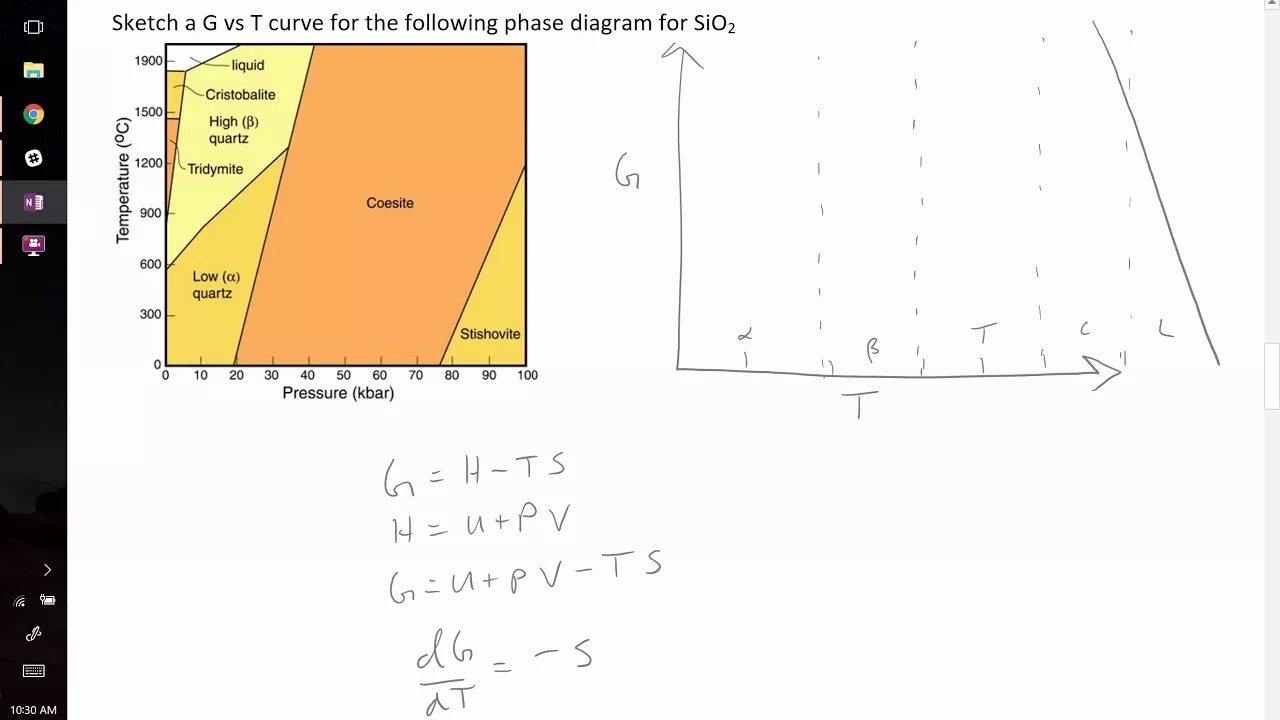
The chemical composition of silica (silicon dioxide) and how temperature transitions affect phase states.
A general historical awareness of the Scientific Revolution and the emergence of empirical observational tools.
The physics of fiber optics and how total internal reflection enables global high-speed telecommunications.
The engineering behind specialized glass variants, such as borosilicate glass, chemically strengthened glass (e.g., Gorilla Glass), and bioactive glasses used in medicine.
The critical role of high-purity quartz and glass optics in photolithography and semiconductor manufacturing.
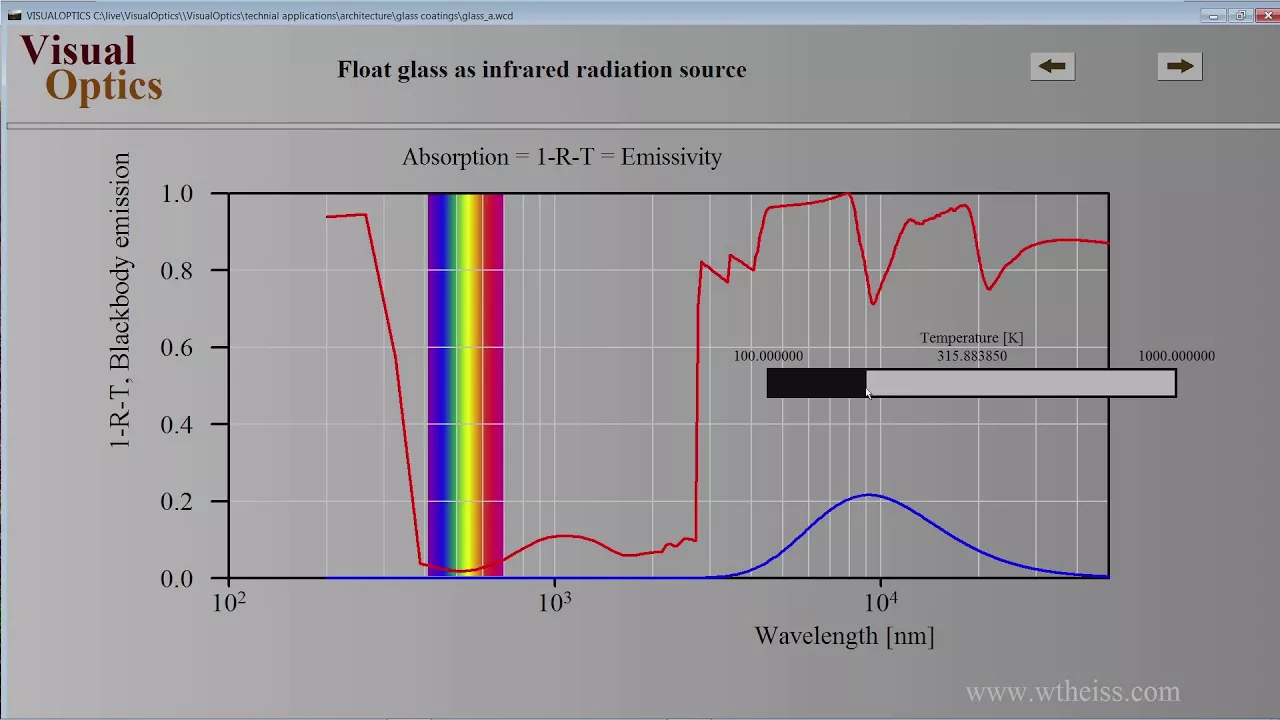
Modern applications in green energy, specifically the physics of glass coatings in photovoltaic solar panels and thermal insulation.
8.6M views213.9Klikes22:22Original Release: 2024-11-13
- Glass is inherently brittle.
(glass smashing) It is the very symbol we use for fragility.
But these days, we expect so much from this material.
We want it to be perfectly transparent, scratch resistant, thin, and even flexible.
But most of all, we want it not to break.
So is it possible to make unbreakable glass?
Well, in this video, I will make the case that glass is one of the most important materials humans have ever made.
It has transformed how we live, launched numerous scientific revolutions, and forever altered how we think about our place in the universe.
Part of this video was sponsored by Saily.
In mid 2006, Steve Jobs had a problem.
Apple was working on the first iPhone, set to be released in January 2007.
But Jobs wasn't satisfied with the screen.
The prototypes he was testing had plastic screens, which scratched easily.
So Jobs wanted glass, but regular glass wouldn't work.
It too would get scratched up and it would also shatter.
Plus, he wanted the phone to be slick, so the glass had to be really thin.
So he called up the CEO of Corning, Wendell Weeks, to ask him to make the glass for Apple.
And six months later, it was on the first iPhone.
This was Gorilla Glass.
Gorilla Glass has been used in phones, computers, and wearable devices for the last 17 years.
Now it's used on billions of devices, and over the years it's become a lot more durable.
So we sent Veritasium producer, Petr, to Corning's headquarters, to see for ourselves how Gorilla Glass is made and how it works.
- We'll need a volunteer.
- [Petr] Yeah, guess that's me.
- [Demonstrator] All right, so this is what we call our key scratch demo.
In here we have a polycarbonate, which is basically a plastic, and then we have the Gorilla Glass.
And what you can do is scratch this side first, the polycarbonate, see how it goes.
- [Petr] Yep, definitely scratches.
- Yep. - Try to scratch in our logo.
Not quite. - There you go.
- [Petr] Are we getting it?
Veritasium.
- [Camera Operator] Yes.
- [Petr] All right.
- [Demonstrator] So now try the same thing on the other side.
So this is Gorilla Glass.
- [Petr] Yeah, definitely does not scratch.
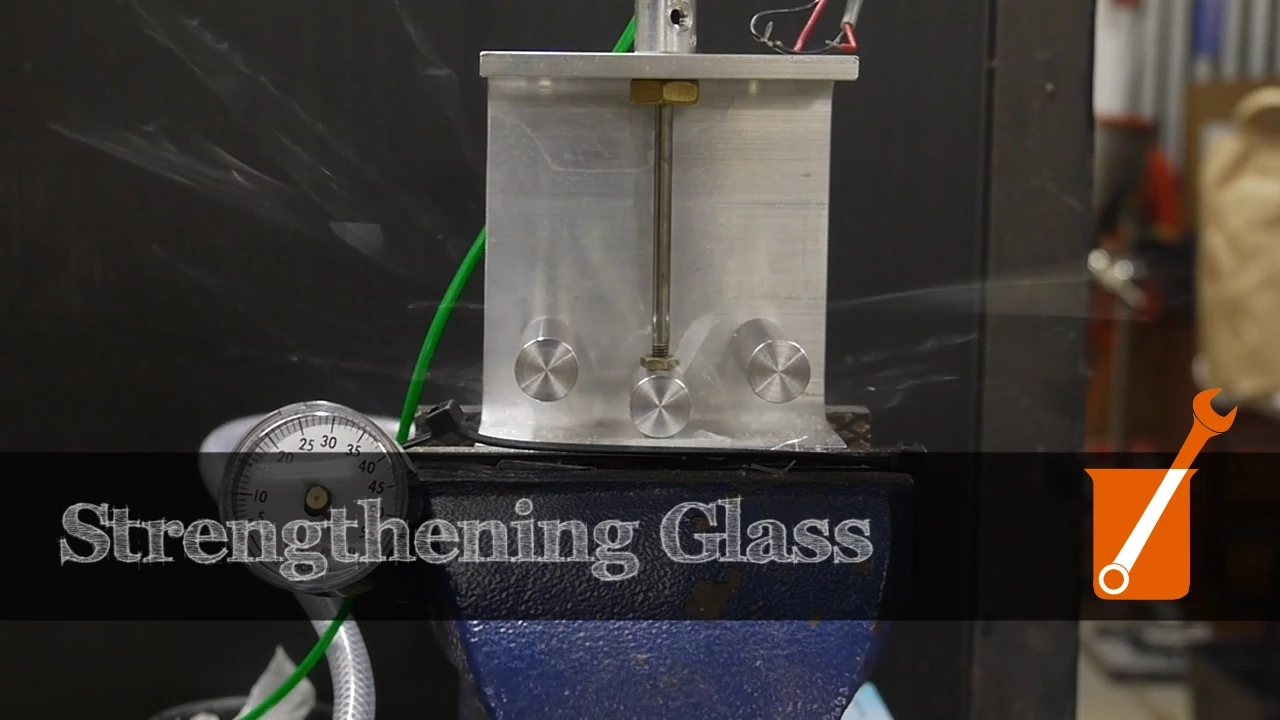
- [Narrator] To break glass requires two things, a flaw and stress.
To introduce the flaw, they sandblasted a spot in the middle of the glass to roughen up its surface.
And Petr will apply the stress.
- [Demonstrator] Take that tip and put it inside that circle and push down.
See if you can break it apart.
Not too hard, right?
- [Petr] No.
- [Demonstrator] All right, so next we have strengthened soda lime.
Strengthened as much as you can for soda lime.
So, all right.
(glass cracking) - [Petr] Harder, for sure.
- Harder, a little bit?
Next we have Gorilla Glass.
- [Petr] I'm kind of terrified.
Oh, Man.
(laughing) I know like we don't actually want to do this, but I want to do this.
So.
(Petr grunting) Are you kidding me?
- There's two responses.
The first response is either, "This is a really great demo, I completely understand what you're showing me."
The second response is, 'I'm taking this personally, and I need to try to break this glass."
- Okay.
It is a very good demo.
I'm like genuinely really impressed at this point.
I still want to break the glass.
Right, last one.
No.
Like, I'm bending the stylus.
Okay, amazing - Glass has existed in nature for billions of years.
It's formed by meteorite impacts, lightning strikes and volcanic eruptions.
But when humans came along, they found ways to use glass.
Obsidian is volcanic glass.
It forms when lava cools quickly.
It's extremely brittle, so when you hit it with another rock, you can chip off sections of it to make a sharper and sharper edge.
There's evidence of obsidian being used for cutting implements, arrowheads and tips of spears, as early as 1.2 million years ago.
And it hasn't gone out of fashion.
Today, some surgical scalpels have their tips sharpened to just three nanometers across, and the best material for this purpose is obsidian.
Compared to the million plus years we've been using glass, we only started making it very recently, around 5,600 years ago.
Most common glass is composed mainly of oxygen and silicon.
The two most abundant elements in Earth's crust.
In nature, you find them in the form of quartz, crystalline silicon dioxide.
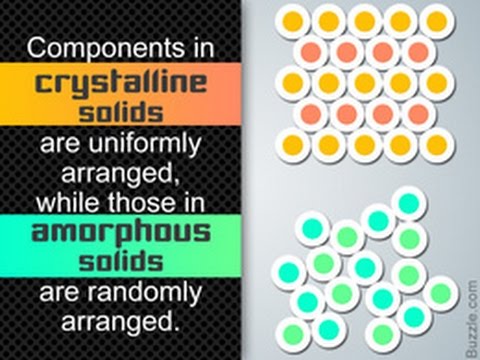
Crystalline means that the atoms are arranged in a regular repeating structure, and quartz is the primary constituent of sand.
So if you take some sand, heat it up to about 1700 degrees Celsius until it melts, and then rapidly cool it, it forms glass.
During the rapid cooling process, the atoms don't have enough time to return to their periodically arranged crystal structure.
So instead they are stuck where they are, like a liquid that's been flash frozen in place.
That is why glass is considered an amorphous solid.
Amorphous just means disorganized, not in any regular arrangement.
But perhaps this is where the misconception about glass being a liquid comes from.
It isn't a liquid at room temperature.
Glass is solid because the atoms are fixed in place.
They can't flow past each other like in a liquid.
I even made a video about this nine years ago.
They are disordered, but they are solid.
This amorphous structure is also what makes glass so brittle because there's no way for the structure to relieve stress.
When stress is applied to the glass a small crack will form at a flaw on the surface.
And as the glass cracks, the stress is applied to atoms with fewer neighbors.
So the crack grows bigger, which eventually leads to the glass fracturing.
- [Demonstrator] So next we'll move to what we call the slapper demos.
What we're using is sandpaper.
This represents like an asphalt type surface.
- Sure.
- So if you were to get outta your car and you accidentally drop your phone in the parking lot.
And what we're using is this fixture.
It's bending it.
- Mm hm. - So it's pre-stressing it.
You have our rough surface to introduce the flaw.
And on here we have an alternative glass.
Similar to some of the competitive stuff, different things on the market.
And when you're ready, you can drop.
- On three, two, one.
(glass clanging) Some sounds.
Okay. - Right.
- So it broke. - Not what you wanna see when you pick up your phone off the parking lot.
- [Petr] No.
Heartbreak.
- And then we have the Gorilla Glass and what we call the mega slap.
All right, very exciting name, right?
Now you can see me dramatically increase the height.
- Shall I do it from here?
- Nope, from... - The very top?
- From the very top. - Okay.
So, we're not just increasing the height, we're also starting from way up here.
- Right. - All right.
Three, two, one.
(metal clanging) No, we're good.
That's pretty cool.
(gentle music) - While, the basic recipe for glass involves silicon dioxide, glass makers have been adding other ingredients to change its properties for thousands of years.
Adding sodium carbonate, also known as soda, and calcium oxide, also known as lime, lowers the temperature at which it becomes liquid from 1700 degrees Celsius to around a thousand degrees Celsius.
And that's why soda lime glass accounts for around 90% of all glass manufactured today.
Another recipe includes adding boron trioxide to the mixture, forming a borosilicate glass.
Glass is usually quite sensitive to changes in temperature.
If you throw boiling water on your car's windshield, it'll likely shatter due to the glass rapidly expanding.
But borosilicate glass has a really low coefficient of thermal expansion.
It doesn't grow or shrink very much, even with drastic temperature changes.
So it's often used for laboratory glass, like beakers.
- [Group Member] Let's go.
(bystander laughing) - If you want to grab a pair of these screen glasses too?
- [Petr] Yeah.
- [Camera Operator] Oh yeah.
- I can't see anything.
- [Narrator] And while this specific recipe for Gorilla Glass is secret, it is based on a combination of silicon, aluminum, magnesium, and sodium.
And the recipe keeps changing.
The scientists are constantly trying different formulations to find more durable and scratch resistant glasses here.
- This is so cool.
Do you ever feel like a pizza chef?
(group indistinct chattering) (Petr laughing) (group indistinct chattering) (light upbeat music) - [Narrator] This facility is actually where that experimentation takes place.
(light music) The earliest human made glass was likely an accident.
People have been working metal for thousands of years before they made glass.
So it's thought that some sand made its way into metal working furnaces, forming small glass beads.
But soon glass making became its own art form, to make decorations, ornaments, statues, tableware and containers.
Unlike clay, glass is impermeable to water, making it an ideal material for bowls and bottles.
But then glass makers noticed that by adding other elements into the mix, they could change the color of the glass.
By adding cobalt oxide, you would get a vivid blue.
Adding cuprite makes red.
But all of the historical glasses we've been talking about have been opaque.
Which is not really what we think of as glass today.
After glass making was invented, thousands of years passed before we invented transparent glass.
That's because making it is actually pretty difficult.
(light bright music) The first step came around a hundred AD, when glass makers in Alexandria added manganese dioxide into the mixture, which led to a semi opaque glass.
It definitely wasn't transparent, but it did let some light through.
This is when glass began being used for windows.
And glass windows were a huge deal.
I mean, they provide a physical barrier that keeps the warm air in and the wind and critters out, while still allowing light to shine into your home.
But the first truly transparent glass was made many centuries later, around the Italian city of Venice.
The art of glass making was thriving and bringing a lot of money into the city.
(cash register dinging) There was just one problem.
To make and manipulate glass you need very hot furnaces.
And at the time, Venice was a city built almost entirely out of wood.
So yeah, glass makers were bringing a lot of money into the city, but they also kept accidentally burning it down.
So in 1291, the government of Venice had had enough, so they moved all the glass makers to the island of Murano.
The island became known as the Isle of Glass, celebrated for making the most beautiful and intricate glassware anywhere on earth.
This is also where the glass maker, Angelo Barovier, invented clear glass.
He took some seaweed rich in potassium oxide and manganese and burned it to create ash.
Then he added this ash into his glass.
And when it cooled, he found that the glass was transparent.
Most materials are opaque because when photons hit them, the photons are absorbed.
The photon excites an electron, pushing it up to a higher energy level.
But this only happens when the photons energy matches the energy of an allowed electron transition.
And different materials have different energy levels.
In transparent glass, the energy required to move an electron from a lower state to a higher state is higher than the amount of energy that a photon of visible light has.
So the photon just passes right through.
Now, while glass is transparent to visible light, it does interact with other parts of the electromagnetic spectrum.
It absorbs much of the ultraviolet spectrum, because UV photons have more energy.
Hence, they can push the electron to the higher energy level and be absorbed.
That makes it opaque to UV.
This is also how colored glass is made.
You add impurities into the glass, which affects the electron energy levels, which then changes the color of the glass.
If you look at a pane of glass side on, you might notice that it looks slightly green, which is because the most common glass used for windows, soda lime, has impurities of iron oxides, which give the glass a green tinge.
The glass absorbs more of the other colors than it does green.
So that's why we see it.
I think the only way we truly appreciate how important transparent glass is would be if all of a sudden it disappeared.
So your windows, glasses, screens all gone.
But there is another element in our daily lives that we take for granted, which is connectivity.
I mean, we are always connected to the internet, and losing that connection, even for a few minutes, can be pretty uncomfortable, especially when you are traveling.
Staying connected abroad requires either paying exorbitant roaming fees, or a continuous hunt for public wifi.
But luckily, you can avoid all of this with today's sponsor, Saily.
Saily makes it incredibly easy to set up a cell plan with data in more than 150 countries.
And it's way cheaper than roaming.
I went to Germany for our recent thermite video, and here's how easy it was to set up an eSIM with Saily.
After downloading the app to my phone, all I had to do was click on the country, select a plan, and activate the eSIM.
Then when I landed, I instantly connected to a local network with no hidden charges.
That was it.
You don't have to use any shady public wifi or worry about scammers selling fake SIM cards in front of the airport.
Download Saily once and you'll always be connected.
And if you find out that your phone isn't eSIM compatible, you'll get a full refund.
To try Saily, you can scan this QR code, or click the link in the description.
Make sure to use code veritasium at checkout to get a special 15% off your first purchase.
So I wanna thank Saily for sponsoring this part of the video.
And now back to transparent glass.
(light upbeat music) Truly transparent glass was a massive deal for three reasons.
Sometime in the early 1300s, in northern Italy, this clear glass was ground, shaped and polished into small discs that were thicker in the center than at the edges.
Due to their resemblance to lentil beans, they became known as lenses.
Glasses to correct farsightedness didn't seem all that important at the time, because literacy rates were so low, they were almost exclusively used by monks.
But after the invention of the printing press, circa 1440, glasses became a vital tool.
The printing press led to a precipitous drop in the cost of producing books, which led to a rapid increase in literacy rates.
Now a large number of people became aware that they were farsighted.
Thankfully, there was a technology available to solve the problem.
150 years later, a father and son, Hans and Zacharias Janssen, put two lenses in line with each other, rather than side by side.
And this was likely the world's first microscope.
It made objects appear about 20 times their original size.
In the 1660s, Antony Van Leeuwenhoek made significant improvements on the microscope, by grinding the lenses himself.
He could magnify things 200 times, allowing him to see human cells.
A few years later, Robert Hook published "Micrographia," a book full of beautiful sketches of the microscopic world.
And all of this was possible because of transparent glass.
And in 1608, Hans Lippershey, an eyeglass maker, applied for a patent for a spy glass.
His idea was for it to be used in warfare to spy on your enemy on the battlefield.
The next year, Galileo Galilei heard about his idea and realized that he could point this device toward the sky to study the stars and planets.
Galileo's telescope magnified objects in the night sky by about 30 times.
In 1610, he was able to see he craters of the moon in detail, the phases of Venus, and four of Jupiter's largest moons.
These observations were the final nail in the coffin for the geocentric model of the universe.
He saw moons that were clearly revolving around Jupiter and not the earth.
And how else could you explain the phases of Venus, other than to say that the planet must go around the sun?
None of this would've been discovered without the invention of transparent glass.
Four centuries later, we can now make glass that is orders of magnitude more transparent than water.
Glass that is so transparent, that if you were able to make a column as deep as the Mariana trench, you'll be able to see all the way to the bottom.
This is the glass inside optical fibers.
- Oh, this is getting real.
I'm stoked.
(camera operator laughing) - [Narrator] But the main thing we all need is durable glass.
So how do you take a substance that is typically delicate and brittle and improve its scratch resistance and drop resistance?
First you start with an aluminosilicate base, and then after the glass is made, you submerge it in a potassium salt solution at 420 degrees Celsius.
- [Petr] It really does look like water.
- [Camera Operator] Doesn't it?
- Yeah.
I don't know if I want to drink it.
- [Narrator] Potassium and sodium are chemically very similar.
I mean, they both have one electron in their outer shell.
So during this process, some of the sodium atoms are replaced by potassium atoms in the glass.
Now, potassium atoms are physically larger than sodium atoms, but the glass is already set.
It's rigid, so it doesn't increase in size.
So now there's the larger potassium atoms all squeezed together, taking up the same amount of space as before.
This increases the compressive strength in the surface of the glass, which makes it more durable.
- [Camera Operator] Can you see any visual difference of size between them?
- Honestly, no.
I have two pieces of glass.
One of them has gone through the ion exchange process.
The other one hasn't.
I don't know which one is which.
And we're gonna figure that out really soon.
You guys ready?
Three, two, one.
(glass shattering) Okay.
(camera operator laughing) That was really cool.
(glass clanging) Shall I hit it harder? - Yeah.
(glass clanging) - Yeah, that was a thunk.
My mind is genuinely blown.
That's really cool.
That's all just like ion exchange, right?
That's all just... There's no other difference, right?
- Yeah. - You put it in a bunch of salt. - Yep, for a few hours, and voila. - For a few hours.
- Yep. - Ah.
- I'm trying to think of a good analogy for this.
You know, I can imagine if there were just a whole bunch of people sort of standing around casually and you try to run through them, you'd probably be able to bounce through a few of them, break through the crowd.
But what if instead, all of those people were squeezed together, shoulder to shoulder, you know, like people trying to get into a subway or something.
If you try to run through them, all of those forces are just gonna add up and prevent you from getting in or from making a dent, making a crack, anything like that.
(light groovy music) But the scientists at Corning are constantly trying to refine the process, to make the glass even more durable.
There is a whole team at the facility that is dedicated to testing and measuring different glass prototypes.
- [Petr] Alright, we're displacing it by one and a half millimeters. - Yep.
- [Petr] Two millimeters.
(glass cracking) Well.
- [Narrator] And they really put glass through its paces.
Conducting bending tests, scratching tests, and dropping heavy steel balls onto the glass.
- [Demonstrator] Three, two, one.
(metal clanging) - [Narrator] They also have replica phones with different glasses for the screen.
And they drop them from ever increasing heights.
- But we can go up a little bit and maybe- - Right.
- We can imagine that I'm taking a selfie.
- [Narrator] All of this is to make the next version of Gorilla Glass even more durable than it already is.
- Like, are we doing this?
- If you want to. - Hell yeah.
(machine whirring) 1.7 meters.
- That's roughly selfie height.
Three, two, one.
(glass clanging) - Amazing. - Go down and pick that up.
- Still good. - Still survived.
- [Petr] Dude, that's pretty wild.
- You know, I think it's rather ironic, that we are making this video right now, while my phone looks like this.
Can you see those?
Yeah.
So, it's still glass, it's still cracks.
It is not perfect yet.
But it is constantly improving, because scientists are working on ways to make this material more and more durable.
And we have come such a long way.
I am just appreciative that I can have this material.
And it is amazing, even if it does still crack sometimes, with people who just refuse to get a case for their phone.
(electronic device whirring)
Up Next

14:40
Fiber Optic Cable Manufacturing Process: Industrial Documentary
@Breamania79
112 views•2026-01-01

30:32
Ultrasonic Transducers: Resonant Frequency Measurement and Horn Design
@imajeenyus42
229.9K views•2017-02-22
33:39
How a Student's Question Saved a NYC Skyscraper from Collapse
@veritasium
22.8M views•2025-04-26
55:00
The Advanced Engineering Behind ASML's EUV Lithography Machines
@veritasium
18.2M views•2025-12-31
Related Study Plans & Knowledge Roadmaps
Structured learning paths in Engineering
engineering
Building Acoustic Levitators: Physics & Arduino
01The Physics of Sound and Standing Waves
02Piezoelectric Transducers and H-Bridge Drivers
03Arduino Programming: Generating 40 kHz Signals
+ 2 more learning modules
14h5 modules
Explore Roadmap
engineering
Building Peltier Cloud Chambers: Particle Tracks
01Cosmic Rays & Cloud Chamber Physics
02Thermoelectric Cooling (TEC) Fundamentals
03Custom Liquid-Cooling Loop Design
+ 2 more learning modules
18h5 modules
Explore Roadmap
engineering
Yagi-Uda Antennas: Modeling, Build & VNA Test
01Introduction to RF and Antenna Fundamentals
02Yagi-Uda Antenna Design Principles
03Antenna Modeling and Simulation in 4NEC2
+ 2 more learning modules
18h5 modules
Explore Roadmap
engineering
ECG Monitor Design: Op-Amps, Filters & Noise
01Electronics & Breadboard Basics
02Op-Amps and Instrumentation Amplifiers
03Bioelectricity and ECG Fundamentals
+ 2 more learning modules
18h5 modules
Explore Roadmap