


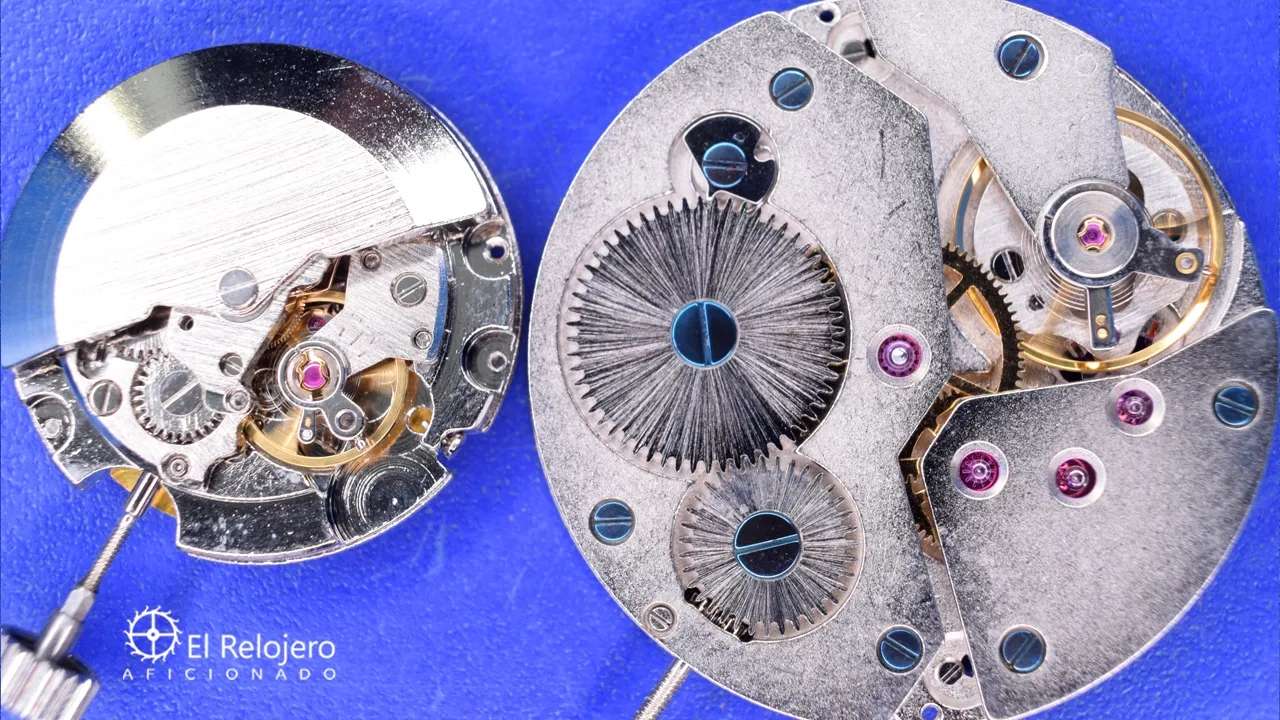
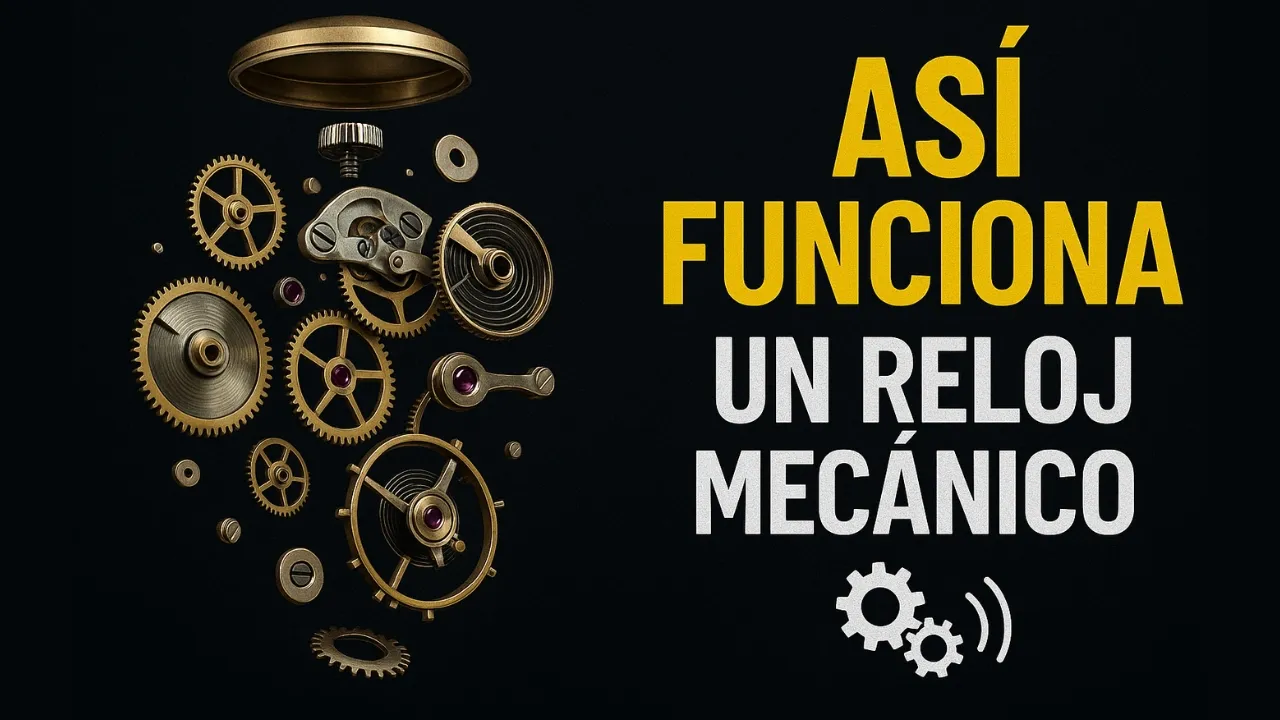
![[PT-BR] Como funciona um relógio mecânico - Parte 1/3: Fonte de energia e órgão regulador](https://i.ytimg.com/vi_webp/W6vaTwcKvt8/maxresdefault.webp)










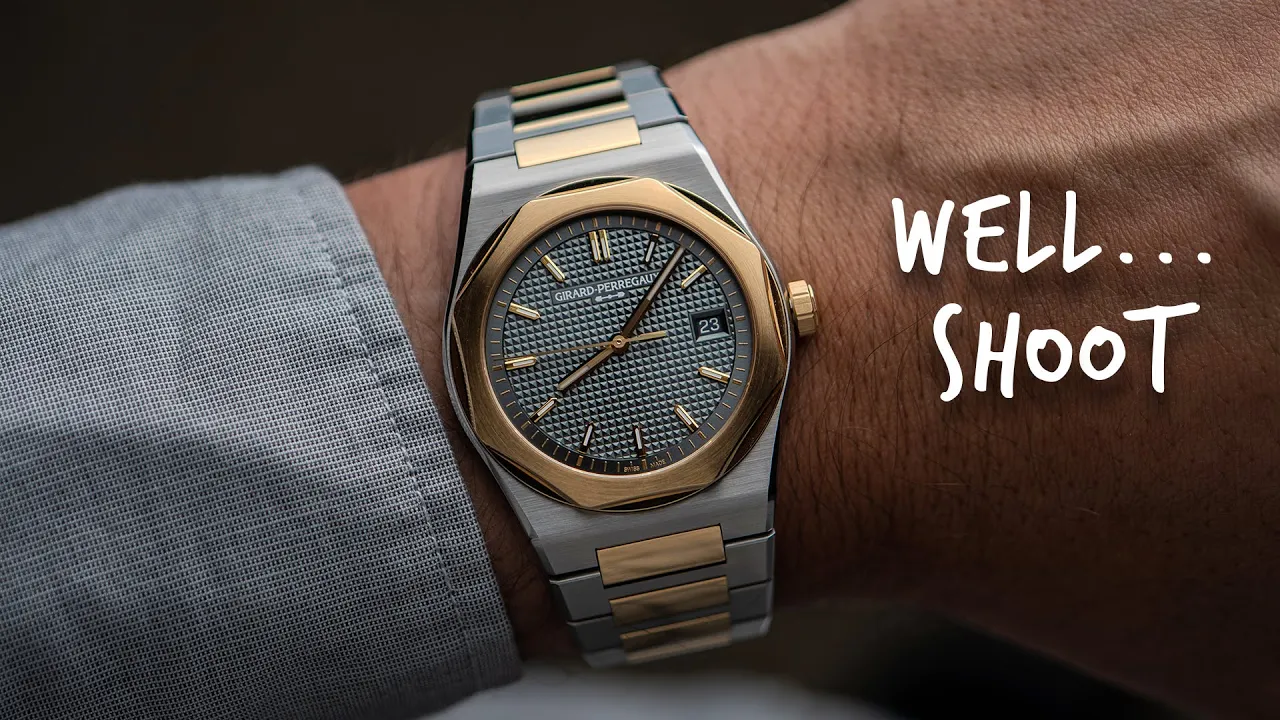

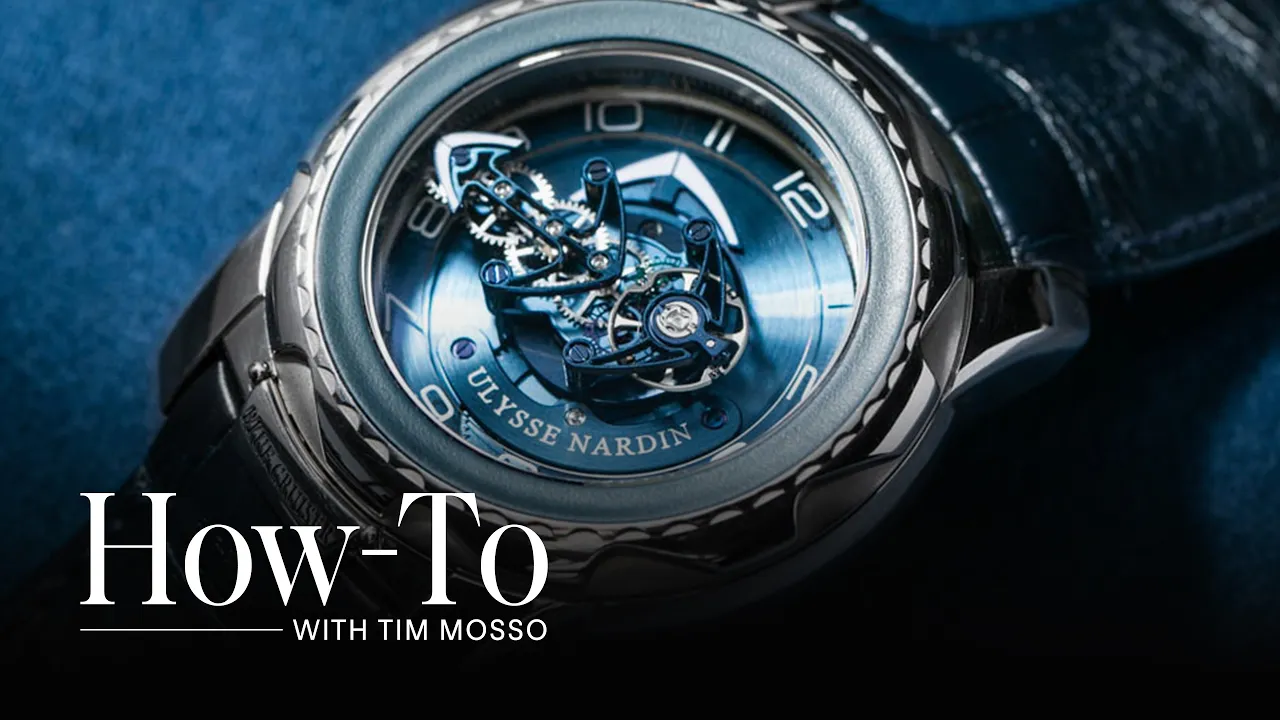





Mechanical watches operate through a sophisticated system where energy stored in a coiled mainspring is released in precise increments by an escapement assembly, driving a gear train that turns wheels at different speeds (center wheel once per hour, fourth wheel once per minute) to move the hands, while the balance wheel oscillates at a regulated rate (typically 21,600 beats per hour) to maintain accuracy within 2-3 seconds per day, with jewel bearings minimizing friction throughout the mechanism.
How a Mechanical Watch Works: Animated Anatomy
Added:The concept of potential and kinetic energy, specifically how a coiled spring stores and releases elastic potential energy.
Fundamentals of gear trains and rotational mechanics, including how gear ratios affect rotational speed and torque transmission.
The physics of simple harmonic motion, which is crucial for understanding how an oscillating balance wheel regulates time.
Basic concepts of friction, wear, and lubrication in mechanical systems to appreciate the role of jewel bearings.
Advanced horological complications, such as automatic (self-winding) mechanisms, chronographs, and perpetual calendars.
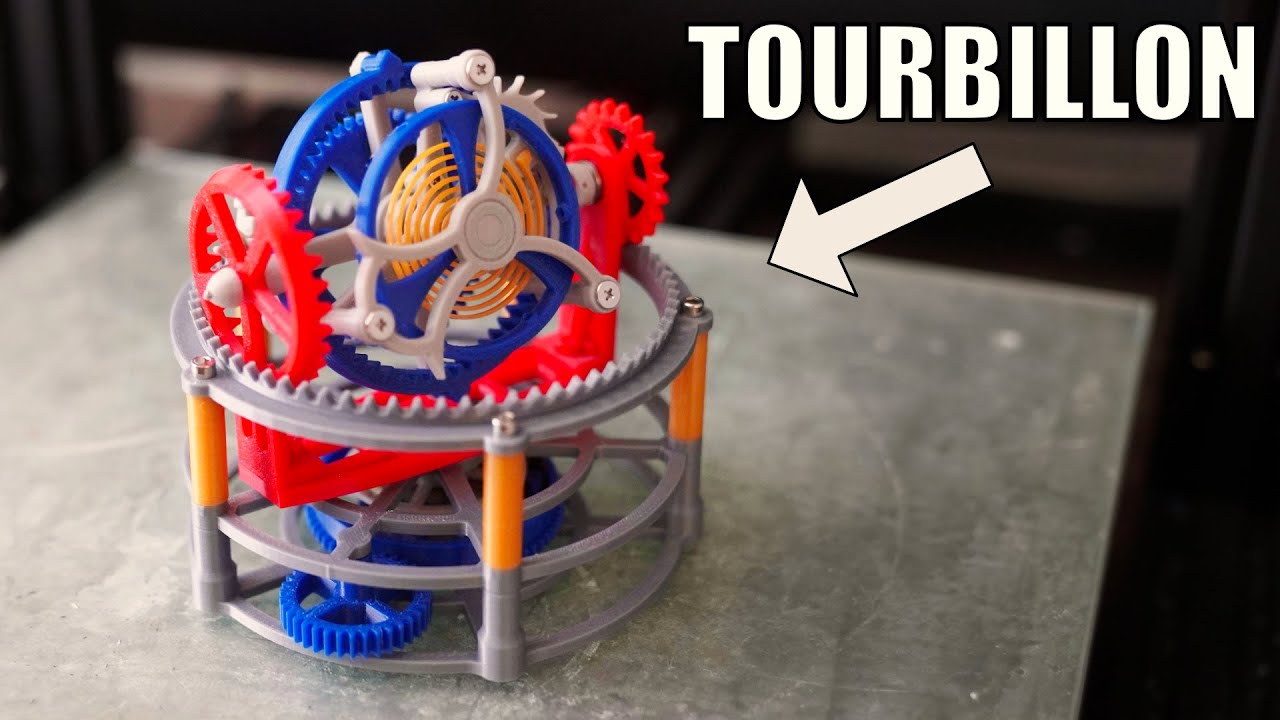
The purpose and mechanics of a tourbillon, designed to counter the effects of gravity on a watch's accuracy.
The materials science behind modern watchmaking, such as anti-magnetic silicon hairsprings and synthetic sapphire components.
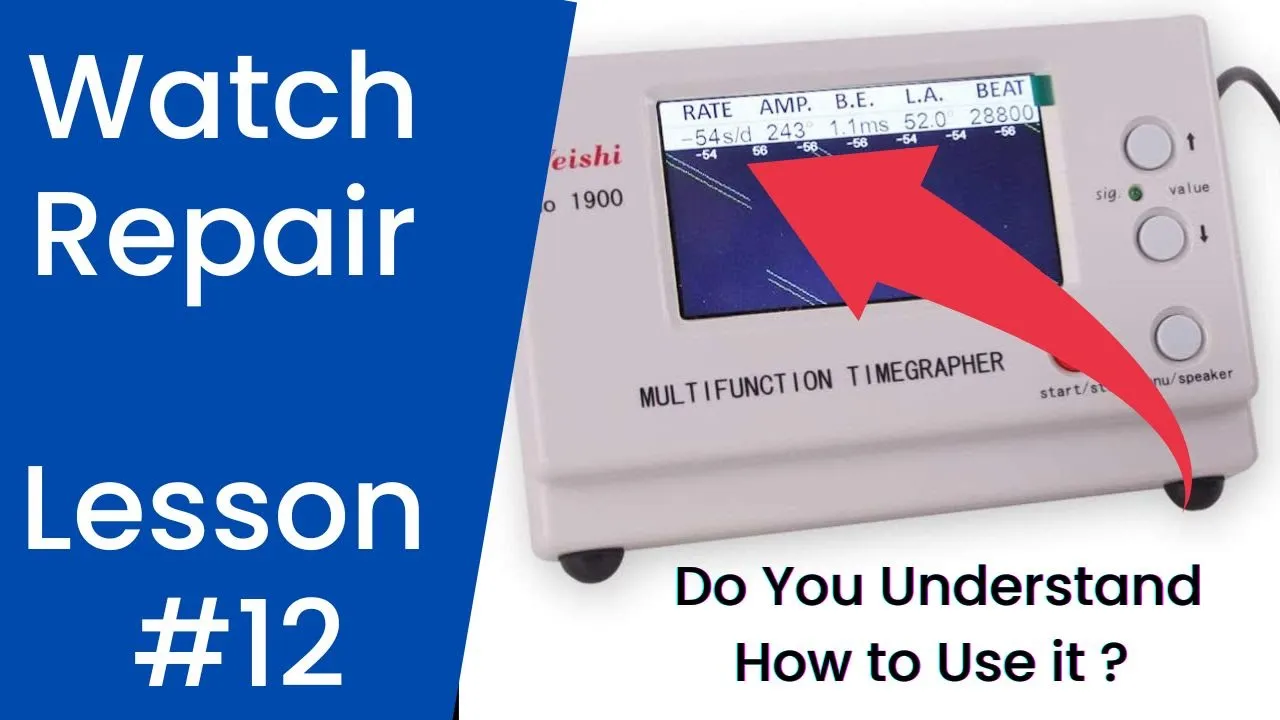
Practical calibration and regulation techniques, including how watchmakers adjust the beat rate and beat error using a timegrapher.
5.6M views132.9Klikes7:20Original Release: 2019-11-20
I'm Jake O'Neal, creator of Animagraffs, and this is how a Mechanical Watch works.
watches have no battery, microchip, or circuitry. Watch parts are machined to near perfection at microscopic sizes and tolerances and can produce accuracy within 2 – 3 seconds per day.
Let's take a high-level view before diving into specific parts: Power is stored in the main spring and released in reliable increments by the escapement assembly.
The gears that connect the main spring and escapement turn at various speeds, allowing the watch to "tell time".
Now let's look at each section in depth.
The crown The crown is pulled out to set the time and pushed in to wind the watch. The setting jumper has indents to keep the crown mechanism locked in place. Each mode engages different gear sets.
When crown is pushed in for winding, the sliding pinion meshes with a set of gears connected to the mainspring.
The crown is pulled out to set the time. When the crown is pulled outwards, the setting lever clicks into the second indent in the rigid setting jumper. At the same time, this setting lever presses against the spring-loaded yoke. The yoke moves the sliding pinion into connection with time-setting gears.
Let's see that transition a few more times.
The mainspring The mainspring is a thin, nearly foot-long strip of hardened metal coiled into a spring, and contained by the mainspring barrel. It's connected to the winding pinion at one end, and the mainspring barrel at the other.
The winding pinion moves independently of the barrel. A connected ratchet wheel and click assembly allows the pinion to rotate in only one direction, keeping the spring from unwinding, and ensuring that spring power can only exit through the barrel.
The wheel train The wheel train drives time-keeping hands and associated wheels.
The center wheel is driven by the mainspring barrel, and rotates once per hour. It holds the minute hand, and its 60 minute journey is often divided up into minute marks on the watch face.
The third wheel flows power through to the fourth wheel.
The fourth wheel rotates once per minute in incremental ticks, and holds the seconds hand.
Again, marks on the watch face can make it easier to see how many seconds have passed within one full minute-long revolution.
The axle of each wheel rests in a synthetic jewel bearing. The near-frictionless jewels can keep internal watch mechanics running smoothly for decades.
The motion works The motions works allows watch hands to be freely rotated for time setting, and also performs a 12 to 1 speed reduction for the hour hand.
Since the center wheel and minute hand rotates once per hour, the hour hand needs to make a much slower journey, completing a full rotation once every 12 hours as it passes by hour marks on the watch face. This speed reduction is achieved as power flows from the cannon pinion through the minute wheel to the hour wheel.
The cannon pinion and hour wheel are press fit to the pinions that support them. This means that with enough force, they can be moved for time setting without disturbing the rigid underlying wheel train that otherwise drives them.
The escapement and balance wheel The balance wheel swings in a precise rhythm, knocking the pallet fork back and forth and allowing the escape wheel to move, which releases mainspring power in small metered increments.
The balance wheel The balance wheel is the most fragile part of the watch. It's supported by a shock-absorbent mounting system complete with a jewel bearing and capstone which protects sensitive parts from impact, for example, if the watch is dropped.
The balance wheel is partly driven by the hairspring.
The escapement The pallet fork and escape wheel form the escapement. A clever exchange of power happens here that forms the heart of mechanical watch operation.
Driven by the hairspring, the balance wheel impulse pin bumps into one side of the pallet fork, releasing the opposing pallet jewel from its locked position against an escape wheel tooth. Just as the pallet jewel slips free, the specially shaped escape wheel tooth delivers a little impulse of power from the mainspring through the pallet fork, which in turn pushes the impulse pin, launching the balance wheel into another swing. And so the process repeats as long as the watch has mainspring power.
The hairspring has regulator pins to adjust the active length of the spring. This alters the balance wheel swing rate, and as such, the speed of the entire watch. This is what is meant by regulating a watch that keeps time too fast or slow.
The characteristic watch "ticking" sound is made by pallet jewels as they catch escape wheel teeth. Each incremental escape wheel rotation is called a beat. A common watch beat rate is 21,600 beats per hour, which is 6 beats per second.
Supporting structure Various specially shaped metal plates support watch internals.
The main plate serves as the base. The barrel bridge holds the mainspring barrel and associated parts. The train wheel bridge supports the wheel train. The pallet bridge holds the pallet fork, and the balance bridge supports the balance wheel and regulator assembly.
Up Next

8:50
The Evolution of Watchmaking: From Sundials to Smartwatches
@europastarmagazine
398.4K views•2024-02-26
30:32
Ultrasonic Transducers: Resonant Frequency Measurement and Horn Design
@imajeenyus42
229.9K views•2017-02-22

54:16
Polymer Environmental Degradation: Mechanisms & Stabilization
@iit
1.8K views•2012-07-10
33:39
How a Student's Question Saved a NYC Skyscraper from Collapse
@veritasium
22.8M views•2025-04-26
Related Study Plans & Knowledge Roadmaps
Structured learning paths in Engineering
engineering
Building Acoustic Levitators: Physics & Arduino
01The Physics of Sound and Standing Waves
02Piezoelectric Transducers and H-Bridge Drivers
03Arduino Programming: Generating 40 kHz Signals
+ 2 more learning modules
14h5 modules
Explore Roadmap
engineering
Building Peltier Cloud Chambers: Particle Tracks
01Cosmic Rays & Cloud Chamber Physics
02Thermoelectric Cooling (TEC) Fundamentals
03Custom Liquid-Cooling Loop Design
+ 2 more learning modules
18h5 modules
Explore Roadmap
engineering
Yagi-Uda Antennas: Modeling, Build & VNA Test
01Introduction to RF and Antenna Fundamentals
02Yagi-Uda Antenna Design Principles
03Antenna Modeling and Simulation in 4NEC2
+ 2 more learning modules
18h5 modules
Explore Roadmap
engineering
ECG Monitor Design: Op-Amps, Filters & Noise
01Electronics & Breadboard Basics
02Op-Amps and Instrumentation Amplifiers
03Bioelectricity and ECG Fundamentals
+ 2 more learning modules
18h5 modules
Explore Roadmap