












Damped free vibration describes how structural vibrations diminish over time due to energy dissipation mechanisms. The damping ratio (ζ), defined as the ratio of actual damping coefficient to critical damping coefficient (C_cr = 2mω_n), determines system behavior: overdamped (ζ > 1) systems decay without oscillation, critically damped (ζ = 1) systems return to equilibrium fastest without oscillation, and underdamped (ζ < 1) systems oscillate with exponentially decaying amplitude at the damped natural frequency ω_d = ω_n√(1-ζ²). The logarithmic decrement (δ ≈ 2πζ for small ζ) quantifies the rate of amplitude decay per cycle and can be measured from free vibration response to determine damping ratio.
Damped Free Vibration of Structures: Viscous Damping Theory
Added:Undamped free vibration of Single Degree of Freedom (SDOF) systems, including concepts of natural frequency, mass, and stiffness.
Fundamental mechanics principles, specifically Newton's Second Law of Motion and the construction of Free-Body Diagrams (FBD).
Mathematical proficiency in solving second-order linear ordinary differential equations (ODEs) with constant coefficients.
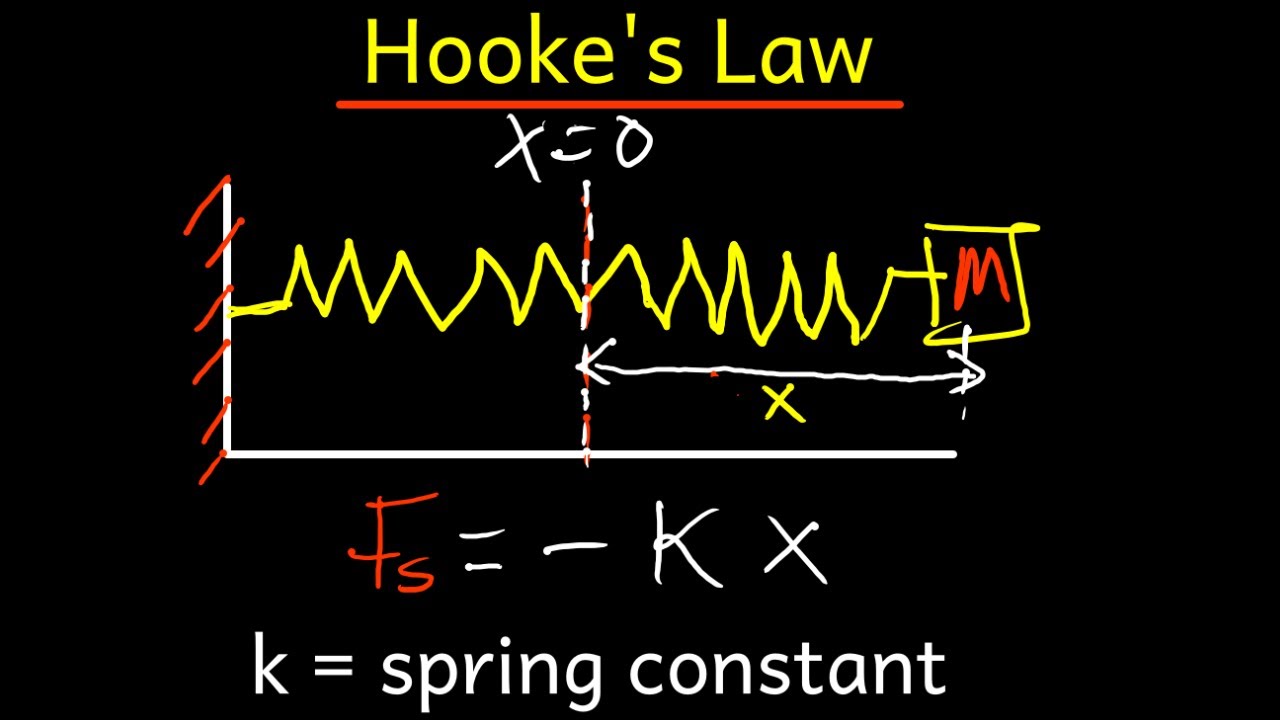
Basic understanding of Hooke's Law and the relationship between structural displacement and restoring force.
Damped forced vibration of SDOF systems subjected to harmonic, periodic, and transient external forces.
The phenomenon of resonance, dynamic magnification factors, and the principles of vibration isolation.
Multi-Degree-of-Freedom (MDOF) system dynamics, classical damping, and modal analysis of complex structures.
Practical engineering applications of damping, such as the design of Tuned Mass Dampers (TMDs) and seismic base isolation systems.
23.4K views170likes30:21Original Release: 2019-08-26
[Music] [Music] in the previous lesson we learned about undamped free vibrations in this lesson we will be learning about damped free vibration so what is damping earlier we have seen that when a structure is under free vibration its amplitude reduces with time and eventually the structure will go to rest and this property of a structure which makes its vibration diminishes in amplitude with time is known as damping and this damping is an energy dissipation mechanism in the structure now let us see some of the sources of damping every material will dissipate some energy when it is under strain so when a structure is under repeated straining it will dissipate some energy then we have friction adjoints which is another form of energy dissipation and when a structure to skating strained some temperature is also developed so that will also cause some energy dissipation and when a structure is vibrating sometimes sound is produced so that will also cause some energy to dissipate so all these mechanisms will take away some energy from the system and in some structures there will be additional damping devices installed so these devices will be designed in order to absorb some energy when that structure is under vibration for example damping devices are installed in structures to save it from earthquake loading it is difficult to model all these damping mechanisms in a structure so often we assume an equivalent viscous damping model to represent the energy dissipation in a structure so in viscous damping it is assumed that the damping force is proportional to the velocity of the structure so the damping force can be calculated as C which is a damping coefficient multiplied by the velocity so the energy dissipation due to the model represented like this is equivalent to the energy dissipated in the actual structure now let's look at viscously damped free vibration these type of vibrating systems can be represented like this the system will have spring with some stiffness and a mass and it will also have a viscous damper with a damping coefficient is equal to C so this is the equation of motion of this system it is like MX double dot plus CX dot plus KX is equal to zero C as we have mentioned is the damping coefficient and this is a measure of energy dissipated here one cycle of free vibration so the energy dissipated when the structure makes one cycle of vibration is represented by C now we can rearrange this equation of motion like this just by dividing it by the mass and we know that K by M is equal to Omega n square that is square of natural frequency now we can define a critical damping coefficient CCR is equal to 2 m Omega L so this quantity is called as critical damping coefficient we will explain the physical meaning of it later since Omega n is equal to root of K by M we can write it like this 2 m Omega M is equal to 2 square root of K m and we can also write it like this 2 K by Omega n so we just defined a quantity called critical damping coefficient now we can define a damping ratio Zeta is equal to C by C critical that means this damping ratio is a ratio of the damping present in the system to the critical damping and as you can see here the critical damping depends only upon the structural properties the mass and stiffness because Omega n depends only upon stiffness and mass so the critical damping coefficient will also depend only upon the system properties so this damping ratio is the ratio of the damping present in the system to the critical damping now we can rewrite this equation of motion in terms of theta so we have X double dot plus 2 Zeta Omega n X dot plus Omega n square X is equal to zero depending upon the value of Zeta the damping in a structure can be classified into three so if the value of Zeta is greater than 1 that means the damping is more than the critical damping value that type of damping is called over damping and when Zeta is equal to 1 the structure is under critical damping that means the damping coefficient is equal to the critical damping which is equal to mass multiplied by natural frequency and when the value of Zeta is less than 1 that type of damping is called under damping so in that case the damping coefficient will be less than 2 m Omega L now we will solve the equation of motion of viscously damped free vibration so this is a free vibration so the force is equal to 0 and we also have initial conditions we know the initial displacement and initial velocity so this equation of motion this is a second-order linear differential equation homogeneous linear differential equation with constant coefficients so as we did in our undamped free vibration solution we know that this equation has a solution of the form X is equal to e to the power s T so that means we can substitute this in this equation and the identity will hold so when we substitute this function in our equation of motion we get this and we can take this characteristic equation and solve for s so we know that for known trivial solutions this part of the equation should be zero so this is the characteristic equation we can solve this so we can solve this for different values of theta when theta is greater than 1 that is if the system is over damped we get two values of s that is s 1 and s 2 which is equal to Omega L multiplied by minus Zeta plus or minus square root of Zeta square minus 1 so these are two real values so we have two real roots for this characteristic equation so we can write her general solution of this equation of motion as X of T is equal to linear combination of e to the power s TS so the linear combination of e to the power s 1 T plus e to the power s 2 T so if you substitute the value of s 1 and s 2 we get this so if you look at this equation closely we can see that this value in the bracket this value this is a positive value because Sita is later than one so this entire value will be positive and same here also the value inside the bracket is positive so since this is positive the exponential function this exponent is negative so these two terms are exponentially decaying terms so that means our response our displacement response of this viscously damped free vibration this sum of two exponentially decaying terms and as we have discussed earlier the constant in this differential equation solution can be calculated using our initial conditions so we have done this use in the free vibration example undamped free vibration example so here also we can substitute the value of initial conditions and solve for a 1 and a 2 so that will complete her solution now let's see how this solution will look like we have already discussed that it will be the sum of two exponentially decay terms so this is how our solution will look like so it's an exponentially decaying function it starts with a high value and it decays faster mathematically this reaches zero at time is equal to infinity so practically that means this response is zero after a long time so what does this behavior signifies it says that an over damped system will not oscillate that means this curve this curve will never cross this x axis so after we give this initial displacement or initial velocity this system will go back to its original equilibrium position slowly and stays there it doesn't oscillate this type of damping is used in door closes automatic door closes now let's see the solution of the critically damped system so here we have damping ratio is equal to 1 that is the system is critically damped so now let's see how the solution will look like so here we can solve this equation and when theta is equal to 1 we get the solution to s s minus Omega n that means we get a single real value solution so for these type of problems the general solution is given by XT is equal to a 1 plus a 2 T multiplied by e to the power s T so here SS minus Omega n so here we know that this is an exponentially decaying term so we will get behavior similar to the previous one the over damped system because of this function now let's look at this part of this solution so this is an equation of a straight line so if your constants which we can find out using our initial conditions if this a 1 and a 2 are in such a way that this equation can be equal to 0 once so if the value of T is equal to this much this can become 0 and the X will have a solution equal to 0 so this will happen only once because it's a straight line and it will cross the x axis only once we can calculate these constants a 1 and a 2 by you make his news of the initial conditions so now let's look at the nature of the solution so this equation can have two types of behaviors depending upon the values of a1 and a2 the first one is similar to the over damped condition so from the initial displacement position it directly goes back to the equilibrium position and stays there that is the behavior we've also seen used in it over damped system the other one is when this part become zero that means this crosses the x-axis once and then comes back to the equilibrium position and stay stay so this critical dam system can oscillate once so these type of systems are used in designing weighing scales where when a weight is put on the scale it deflects and when the weight is removed it goes back to the original position so those two design those systems we consider critically damped conditions now we will look at the solutions of under damped systems that means damping ratio is less than one so in all engineering structures in civil engineering structures this condition applies for all the buildings and other structures we will have damping ratio much less than one so now let's look at the solution of these type of vibrations as we did earlier we can formulate the characteristic equation and then we can solve this characteristic equation so here when the value of Zeta is less than 1 we will get two solutions for s they are called complex conjugates so s 1 and s 2 are equal to Omega L multiplied by minus Zeta plus or minus I square root of 1 minus Zeta square so we know that the general solution of this differential equation is the linear combination of e to the power s xx + e to the bar s - t so we can substitute these values here and here we define that this Omega n square root of 1 minus Zeta square is equal to Omega D so that is the damped natural frequency of this system so our equation will look like this after the substitution here as we did in the undamped system we can write this e to the power I Omega DT terms in sine and cosines so we can make that substitution based on Euler's equation and we can write the complete solution as e to the power minus Zeta Omega NT multiplied by a cos Omega DT plus B sine Omega DT here Omega D as we have defined it is Omega n that is the natural frequency multiplied by square root of 1 minus Zeta Square and so this part of the equation is similar to the undamped vibration except the fact that we have Omega D instead of Omega n but we have an exponentially decaying function multiplied to it so that will depend upon the damping ratio and the natural frequency here also we can calculate the constants a and B from the initial conditions so we can substitute the initial velocity and initial displacement calculation solve for a and B so we can find a is equal to x0 which is the initial displacement and B is equal to this much initial velocity plus CJ damping ratio Omega N and initial displacement divided by Omega D so if we look at it if he can set theta is equal to zero this part will become zero story this part will become 1 and Omega D will become Omega NF theta is equal to 0 so if theta is equal to 0 this will converge to the undamped free vibration response so now let's see how the response will look like this is a sample response so the system will vibrate so this is the x-axis so it will vibrate about its equilibrium position and eventually the vibration amplitude will reduce and eventually it will go to rest this is similar to what we have seen in the case of a cantilever under free vibration the cantilever was vibrating and the amplitude of vibration was reducing at each cycle and eventually the displacement became zero now let's see the response of damped free vibrations at different values of damping so this is the solution so if we take only this part this is similar to the undamped free vibrations but the frequency is different instead of Omega n we have Omega D here so the time period the natural period is also different so this is the period for the damped system so but the behavior is similar to the undamped vibration so this part of the solution this does not decay in time the amplitude is constant throughout the time but when you look at the complete solution a solution looks like this this plot is for a damping ratio of two percent that is Zeta is equal to point zero two so this is how the responses surface so the amplitude value of the peaks decay with time and the equation of this envelope curve is given by Rho e to the power minus Zeta Omega NT so this is similar to the dysfunction and this Rho can be calculated like this this is square root of this constant a square plus B Square so inish this depend upon the initial conditions and the system parameters Omega N and Omega D so this is the solution when Zeta is equal to point zero two that means when we have two percent damping in the system so let's see what happens when the damping is increased so when the damping is increasing when the damping is five percent the decay is more faster earlier it was this it was decaying slow now it is DK faster so when we increase the value of damping this the DK becomes faster still so this is when damping is 10% and when when damping is 20% it decays much more faster so there are only a few cycles remaining before the system comes back to its equilibrium position let's find the period and frequency of an under damped system so this is the displacement response of an under damped system under free vibration so the initial displacement and the slope are corresponding to the initial conditions given to the system the natural period of this damped free vibration will be different from that of the undamped free vibrations so this damped natural period can be calculated like this this will be equal to the natural period divided by square root of 1 minus Zeta square since for undamped systems Sita is less than 1 so we have TD greater than TM that means the period of this damned vibrations will be greater than that of the undamped response the natural frequency of damped vibration can be calculated like this this is the natural frequency multiplied by square root of 1 minus Zeta square so the damped natural frequency will be less than that of the undamped natural frequency so in a way we can say that the effect of damping is making the system a little bit more flexible that is Omega T the natural frequency is decreasing when damping is applied now let's see how the responses decay with time so this is the equation of the displacement response in under damped system the amplitude of this response decays in time because of the active damping so let's calculate how much is the decay in one cycle so we know that the response at time T is this it's we can calculate the response at time T plus TD where TD is the natural period of this damped system so this cos and sine terms are periodic so this part of the equation will be seen at t plus TD also so of course Omega D T will be equal to cos Omega D T plus TD so this part of the equation will be same at t plus TD as well so the only change is here so we can write the ratio XT by XT plus TD is equal to e raised to C Tau Omega n TD we can rewrite this we can expand this value of TD so we will get e to the power 2 pi Zeta by 1 minus Zeta square under root 1 minus Zeta square so now we can take logarithm at the right hand side and left hand side so we say logarithm of this ratio is equal to CT Omega n TD which is equal to 2 pi Zeta by 1 minus Zeta square so if the value of Zeta is very small that means this quantity is equal to 1 in that case we can say that this quantity is approximately equal to 2 pi theta and this quantity is known as logarithmic decrement so logarithmic decrement is the logarithm natural logarithm of the responses at two consecutive weeks so this plot shows the variation of logarithmic decrement with respect to theta the damping ratio so as you can see this blue line shows the exact value of logarithmic decrement which is 2 pi Zeta divided by square root of 1 minus Zeta Square and this straight line is the approximate value of the logarithmic decrement which is 2 pi Zeta as we can see here for lower values of Zeta these are equal so for say if Zeta is less than point 2 we can calculate logarithmic decrement using this approximate value itself because the approximate and the exact values are C for lower values of Zeta now let's see how damping in the system can be measured from it's free vibrations so this is a free vibration response of an under damped system we can measure the value of the displacement at each of these Peaks so now the decay in displacement in a single cycle can be represented like this that is the ratio of the peak at the displacement at one of the peaks divided by the displacement at the next peak so this ratio is equal to e to the power logarithmic decrement we just defined a logarithmic decrement in the previous slide so similarly you can also we can also calculate the decay in a few number of cycles that means you can divide the displacement at one peak by displacement after J cycles so if J is equal to four we can this ratio will become u 1 by u 5 so we can equate that to e to the power J Delta which is logarithmic decrement so you can calculate this ratio from the free vibration response and you can take the logarithm of this and divide it by J and we can calculate the logarithmic decrement and we know that the logarithmic decrement is approximately equal to 2 pi Zeta so using this relation you can calculate theta as 1 by 2 pi J logarithm of the ratio of the peaks so J indicates the number of cycles we are considering if we are just considering one single cycle and you can just divide this displacement by this displacement and use this so this theta or the damping ratio can be calculated using the displacement time history as well as the acceleration time history so in all practical situations measuring acceleration is easier than measuring displacement so for a real structure the acceleration time history will be more available so we can calculate the damping you sing the ax relation time history also the procedure is just the same just calculate the ratio of the peaks take logarithm and divided by 2 pi J you will get the damping ratio so this is how we measure the damping of the system using its three vibrations now let's see how energy dissipation is done in a viscous damping system so energy dissipated in viscous damping is equal to the integral of the damping force DX right so so this gives the energy this dimension is that of energy this integral is equal to if you integrate from 0 to the time T see you dot that is what F D is so if d is equal to Cu dot and DX is equal to u dot DT so if you integrate this we will get how much energy is dissipated by the time T so we've discussed that in free vibration initially we are disturbing the system so when we are disturbing the system we are giving an input energy to the system so that input energy which was received at the beginning is getting dissipated because of damping so as time increases the dissipation also increases and after some time the all energy is being dissipated so that's when the vibration stops so that's when the system comes back to its equilibrium position and stays there [Music] [Music] [Music]
Up Next

83:57
Natural Frequencies & Mode Shapes of an MDOF Frame System
@dr.mohamednoureldin5718
13.6K views•2020-11-25

2:39
Earthquake Resonance: Building Seismic Response Model (Resonance 3)
@IRISEarthquakeScience
17.5K views•2009-11-09

54:16
Polymer Environmental Degradation: Mechanisms & Stabilization
@iit
1.8K views•2012-07-10

33:39
How a Student's Question Saved a NYC Skyscraper from Collapse
@veritasium
22.8M views•2025-04-26
Related Study Plans & Knowledge Roadmaps
Structured learning paths in Engineering
engineering
Structural Dynamics (DIY TMDs & Shake Tables)
01Foundations of Structural Dynamics & Resonance
02Designing and Building a Motorized Shake Table
03Constructing the Scale Building & Tuned Mass Damper
+ 2 more learning modules
35h5 modules
Explore Roadmap
engineering
Building Acoustic Levitators: Physics & Arduino
01The Physics of Sound and Standing Waves
02Piezoelectric Transducers and H-Bridge Drivers
03Arduino Programming: Generating 40 kHz Signals
+ 2 more learning modules
14h5 modules
Explore Roadmap
engineering
Building Peltier Cloud Chambers: Particle Tracks
01Cosmic Rays & Cloud Chamber Physics
02Thermoelectric Cooling (TEC) Fundamentals
03Custom Liquid-Cooling Loop Design
+ 2 more learning modules
18h5 modules
Explore Roadmap
engineering
Yagi-Uda Antennas: Modeling, Build & VNA Test
01Introduction to RF and Antenna Fundamentals
02Yagi-Uda Antenna Design Principles
03Antenna Modeling and Simulation in 4NEC2
+ 2 more learning modules
18h5 modules
Explore Roadmap