













A Tuned Mass Damper (TMD) is an engineering device that reduces building oscillations by absorbing kinetic energy; it works by having a mass-spring system tuned to the building's resonant frequency, where the damper absorbs energy through internal friction (damping), thereby reducing the amplitude of vibrations caused by wind or earthquakes.
Tuned Mass Dampers: Engineering Skyscraper Stability
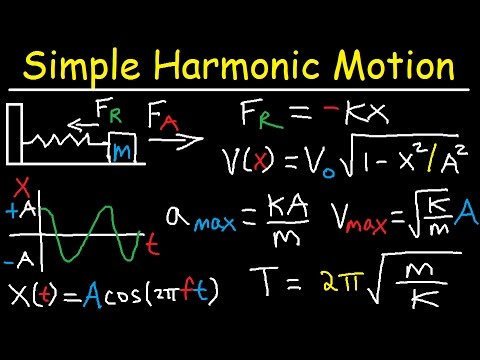
Added:Basic principles of Simple Harmonic Motion (SHM) and resonance in physical systems.
Fundamentals of structural dynamics, including how external forces like wind and seismic waves generate structural vibrations.
The concept of damping in physics and engineering, specifically how energy is dissipated in mechanical systems.
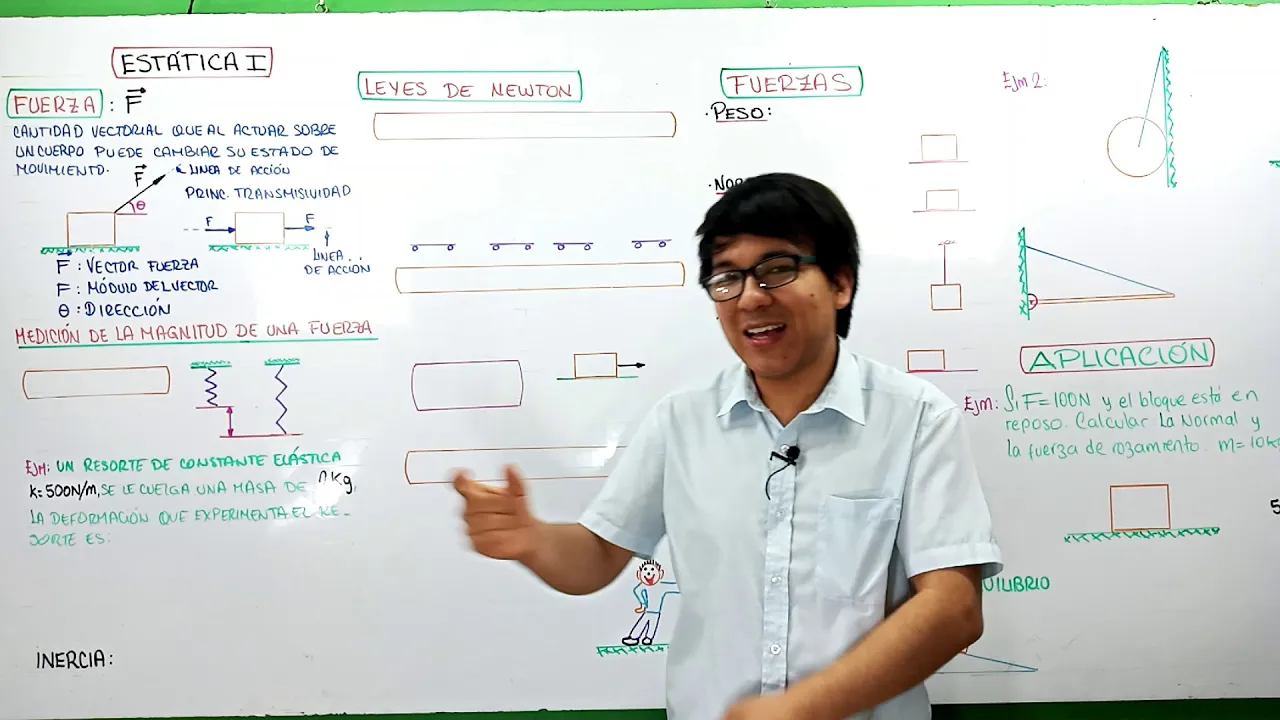
Newton's Laws of Motion, particularly the concepts of inertia, mass, and force propagation.
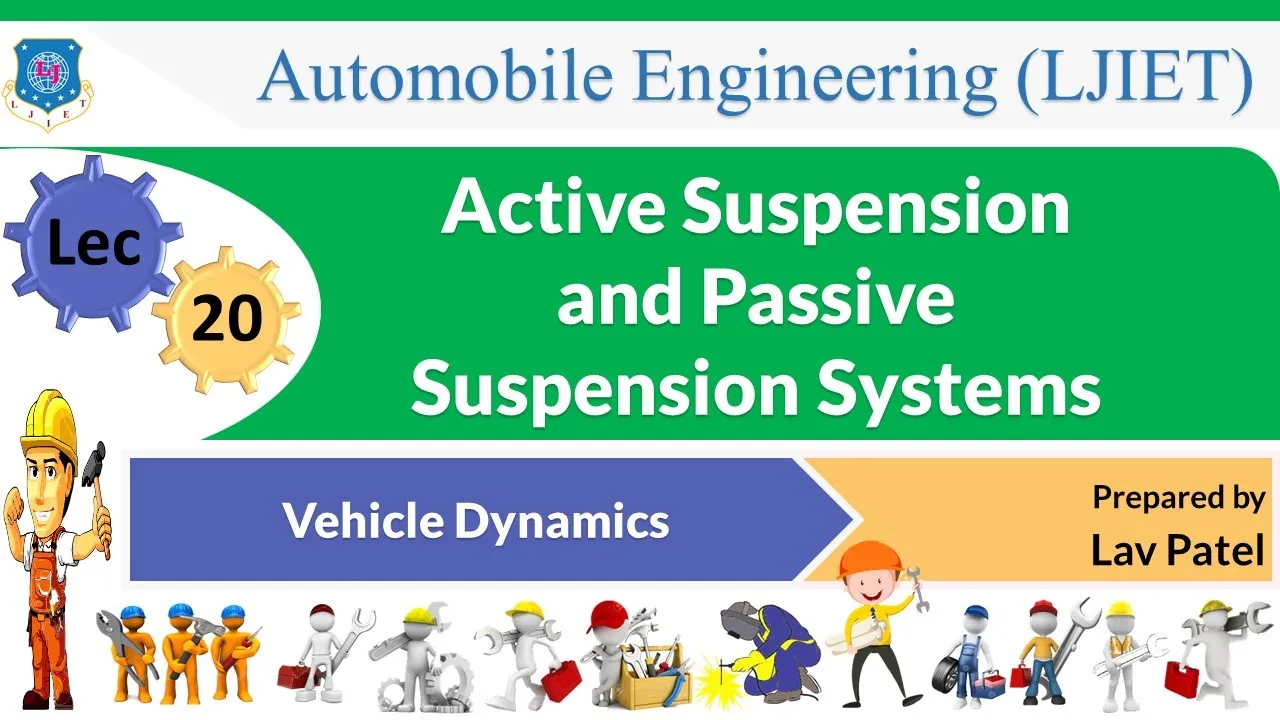
Active and semi-active mass damping systems, which use sensors and actuators for real-time response adjustment.
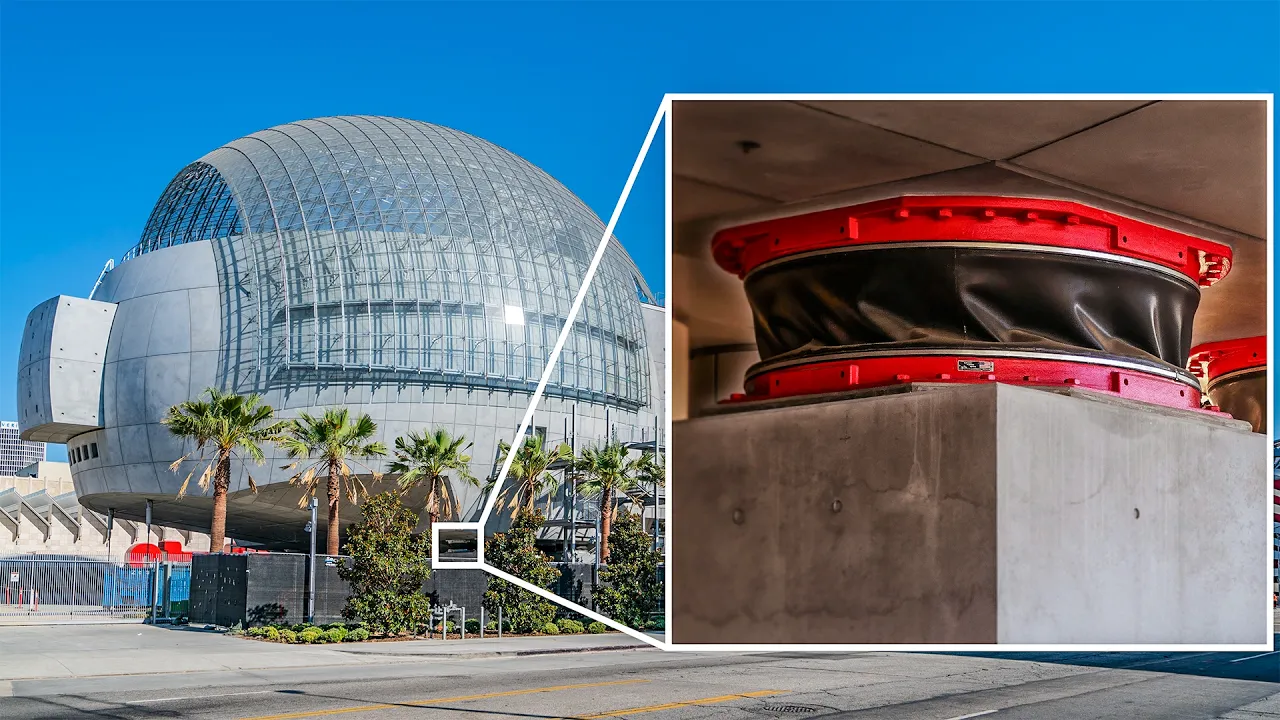
Base isolation techniques and seismic design principles used to decouple a building's structure from ground motion.
Aerodynamic optimization of skyscraper design, such as vortex shedding mitigation through structural shaping.
In-depth case studies of landmark structures utilizing tuned mass dampers, such as Taipei 101 or the Citigroup Center.
Introduction to computational structural analysis and Finite Element Method (FEM) software used to simulate building responses.
2.8M views96.3Klikes9:37Original Release: 2016-02-14
In many of the world's tallest skyscrapers there's a secret device protecting not only the building, but also the people inside from strong motion due to wind and earthquakes.
Did you know you can tune a skyscraper just like a guitar?
Hey I'm Grady today on Practical Engineering we're comparing theory to the real world for tuned mass dampers.
*dubstep music plays* What do a marble in a bowl, a guitar string, and a skyscraper have in common?
Well you're on the wrong YouTube Channel if you think this is a joke. I'm talking about physics.
All three are examples of oscillators.
An oscillator is just a system, that when you displace it from its equilibrium position, it experiences a restoring force.
I move this marble from the center of the bowl. It experiences a force, gravity, pulling it back toward the equilibrium position.
I pull on the guitar string. The tension in the string increases, trying to pull it back to the center.
When the displacing force is released, the system oscillates around the equilibrium point.
What about the skyscraper?
Maybe this sweet montage will help answer that.
*Don't you love that dubstep Music?* *oh this sweet dubstep * * it's nearly over don't worry * Sometimes to the detriment of the hedge fund managers and penthouse denizens on the top floors, a skyscraper can act as an oscillator, just like the marble and the guitar string.
Wind can induce oscillation in a building just like a tie down strap in a vehicle.
A strong earthquake can also excite the buildings resonant frequency just like plucking a guitar string.
In most cases the movement's not enough to threaten the safety of the building itself, but that amount of movement can be profoundly uncomfortable to its occupants.
Most of us hold an intrinsic belief that buildings should not move.
We don't even think about it.
For our entire lives, Wednesdays come after Thursdays, the sun has risen in the East, and our domiciles and dwellings have remained static beneath our feet.
So you can forgive your subconscious for feeling some amount of terror when such a fundamental belief is shaken, especially when the shaking is literal.
It may not be enough to harm the building's structure, but it's certainly enough to cause a one-percenter on the top floor to lose his caviar.
And buildings aren't good for much if people don't want to be inside them.
So engineers have come up with some novel solutions for minimizing this unwelcome vacillation.
And I want to talk about one of those today, the tuned mass damper, or TMD.
A TMD reduces the amplitude of vibration by absorbing kinetic energy from the system.
In this case, the swaying motion of a tall building.
For a long time, TMDs were relegated to areas with the rest of the building's mechanical equipment, hidden from public view.
That changed in 2004 when the Taipei 101 tower finished construction in Taiwan.
Rather than hide the world's largest spherical tuned mass damper, the building's designers chose to open it to the public.
Taipei 101's TMD has become a draw for tourists and even has its own mascot: the damper baby which... looks like it came straight off the island of misfit mascots.
Anyway, the publicity associated with the Taipei 101 has sort of unveiled this really cool bit of engineering that is the tuned mass damper and you can find tons of videos of it in action online.
So how does it work?
I constructed this model of a pendulum-style tuned mass damper in a skyscraper I can pull the cart back and give the building a bump which excites its resonant frequency just like an earthquake or a strong wind event The benefit here is that I can do it in a somewhat repeatable fashion so we can evaluate the effectiveness of the damper.
For the TMD, the damping comes from the tension of the screw which is acting as the hinge.
I can tighten the screw to increase the damping.
The tuning comes from moving this mass up or down on the pendulum shaft.
This changes the frequency of the pendulum just like a metronome which can be tuned to the resonant frequency of the building.
Add an accelerometer on top of the building so we can measure its movements.
And this is hooked to an Arduino which is sending the data to my laptop.
There's more in the description below if you're curious about the data collection.
If I lock the pendulum and set the building swaying, we can get a sense of how it would perform with only the building's own natural damping.
Plotting the acceleration response, we can see that the model experienced a maximum amplitude of about four meters per squared second (13.12 ft/s²), or half a 'G' with a period of 0.6 seconds.
Frequency is the inverse of period, so we can get the building's fundamental frequency: 1.7 hertz.
We can also see that the building has some natural damping just due to the internal friction in its movement.
Otherwise, it would just sway indefinitely.
We can estimate that model's natural damping ratio using the logarithmic decrement.
I get a damping ratio of 0.01.
The damping ratio, denoted by one of the tougher Greek letters to draw: zeta, is a measure of how quickly the amplitude decays in an oscillating system.
Systems with a damping ratio greater than 1 are said to be over damped because the system returns to equilibrium without oscillating.
Systems with a damping ratio less than 1 are said to be under damped since they experience some oscillation.
If the damping ratio is exactly 1 the system is critically damped and returns to equilibrium as quickly as possible.
And if the system is undamped, the oscillation continues indefinitely.
There are lesser known damping situations, but we wont' get into them in this video.
Now that we know an approximate natural frequency of the building we can introduce the pendulum damper.
you may remember from you physics classes that a pendulum's frequency depends on its length for a frequency of around 1.7 Hertz my pendulum needs to be approximately three and a half inches long.
Now let's try the exact same experiment with the pendulum able to swing freely.
The kinetic energy of the building does get transferred to the pendulum at first but because there's no damping the pendulum transfers the energy right back into the building so instead of reducing the amplitude, instead the pendulum just continuously swaps the kinetic energy with the building like a hot potato. You can only imagine that this erratic behavior would be even more alarming to our topmost tenants than the steady but slowly decaying motion of the previous example. Now let's tighten the screw to add some damping to the pendulum and see what happens even without looking at the data you can see a remarkable difference in performance. Looking at the plot of acceleration response we can see that the peak acceleration was about three and a half meters per square second (11.48 ft/s²) so a reduction of only about twelve percent.
But the big difference is how quickly the motion decays. At the beginning when the pendulum is swinging, I calculated a damping ratio of over 0.6. That's about six times more damping than without the TMD. Once the pendulum stops swinging, the rest of the swing follows the approximate natural damping ratio of the building itself as expected, but the majority of the kinetic energy has already been dissipated by the damper,so the amplitude is much lower. Here's a slow-speed side-by-side so you can really compare the two.
*more dubstep* As silly as this little experiment looks, it's actually not that far off from what engineers do in the real world. Usually without the googly eyes. The design phase for just about every major building includes some physical scale model tests.
Of course a tune mass damper doesn't completely eliminate movement, but we saw that it can certainly make a difference. In engineering you have inexpensive, you have effective, and you have innovative, and usually you get to pick one, sometimes two. For solving the problem of oscillation in tall buildings though, the tune mass damper is truly all three a great example of elegance in engineering. I hope you like the first practical engineering video and if you did I would really appreciate it if you would push that like button and subscribe to the channel. That helps motivate me to keep making cool stuff. If you want more details have a question or suggestion for a topic, and especially if you live or work at the top of a skyscraper, I would really love to hear from you in the comments. You can also visit my website practical.engineering to learn more. Thank you for watching and let me know what you think.
Grady Hillhouse 2016
Up Next

12:21
How to Build an Open-Source Camera Slider with 3D Printing and Stepper Motors
@MagmaBow
49.9K views•2025-10-02
30:21
Damped Free Vibration of Structures: Viscous Damping Theory
@IITKanpurNPTEL
23.4K views•2019-08-26

22:21
How Fish Survive Hydro Turbines: Fish Passage at McNary Dam
@PracticalEngineeringChannel
2.6M views•2024-03-05
33:39
How a Student's Question Saved a NYC Skyscraper from Collapse
@veritasium
22.8M views•2025-04-26
Related Study Plans & Knowledge Roadmaps
Structured learning paths in Engineering
engineering
Structural Dynamics (DIY TMDs & Shake Tables)
01Foundations of Structural Dynamics & Resonance
02Designing and Building a Motorized Shake Table
03Constructing the Scale Building & Tuned Mass Damper
+ 2 more learning modules
35h5 modules
Explore Roadmap
engineering
Building Acoustic Levitators: Physics & Arduino
01The Physics of Sound and Standing Waves
02Piezoelectric Transducers and H-Bridge Drivers
03Arduino Programming: Generating 40 kHz Signals
+ 2 more learning modules
14h5 modules
Explore Roadmap
engineering
Building Peltier Cloud Chambers: Particle Tracks
01Cosmic Rays & Cloud Chamber Physics
02Thermoelectric Cooling (TEC) Fundamentals
03Custom Liquid-Cooling Loop Design
+ 2 more learning modules
18h5 modules
Explore Roadmap
engineering
Yagi-Uda Antennas: Modeling, Build & VNA Test
01Introduction to RF and Antenna Fundamentals
02Yagi-Uda Antenna Design Principles
03Antenna Modeling and Simulation in 4NEC2
+ 2 more learning modules
18h5 modules
Explore Roadmap