
























Humanity's pursuit of measuring time has evolved through distinct technological eras: ancient civilizations used sundials and water clocks to track celestial movements; mechanical clocks emerged in medieval Europe using weights and gears; the Industrial Revolution drove miniaturization and mass production; the 1970s quartz crisis disrupted traditional watchmaking with battery-powered quartz technology; and contemporary innovations like the Apple Watch integrate digital functionality with traditional craftsmanship, demonstrating how technological revolutions continuously reshape our relationship with time.
The Evolution of Watchmaking: From Sundials to Smartwatches
Added:Understanding of basic solar astronomy, specifically how the Earth's rotation and shadow-casting were used in ancient sundials for time division.
Fundamental principles of classical mechanics, particularly how gears, springs, and escapement mechanisms store and regulate kinetic energy.
The concept of piezoelectricity, specifically how quartz crystals oscillate under an electric current to keep precise time.
Basic economic principles of industrialization, market disruption, and how mass production can threaten traditional craftsmanship.
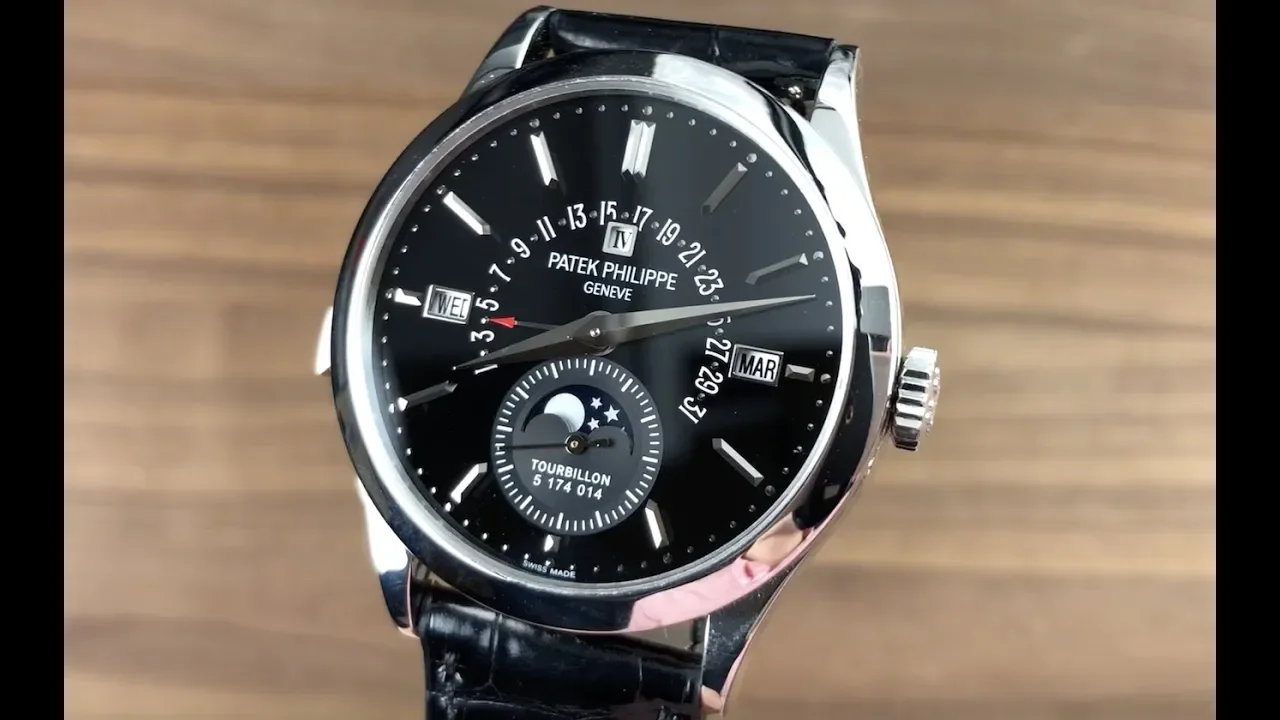
In-depth study of high horology complications, such as tourbillons, perpetual calendars, and minute repeaters.
The engineering of Micro-Electro-Mechanical Systems (MEMS) and sensors that power modern smartwatch health tracking and telemetry.
The psychology and economics of luxury marketing, examining how mechanical watches transitioned from utility tools to status symbols.
The future of wearable technology, including biometric monitoring, ambient computing, and the integration of artificial intelligence in wristwear.
398.4K views7.5Klikes8:50Original Release: 2024-02-26
A watch today is a very complex object that's often made up of hundreds of tiny components.
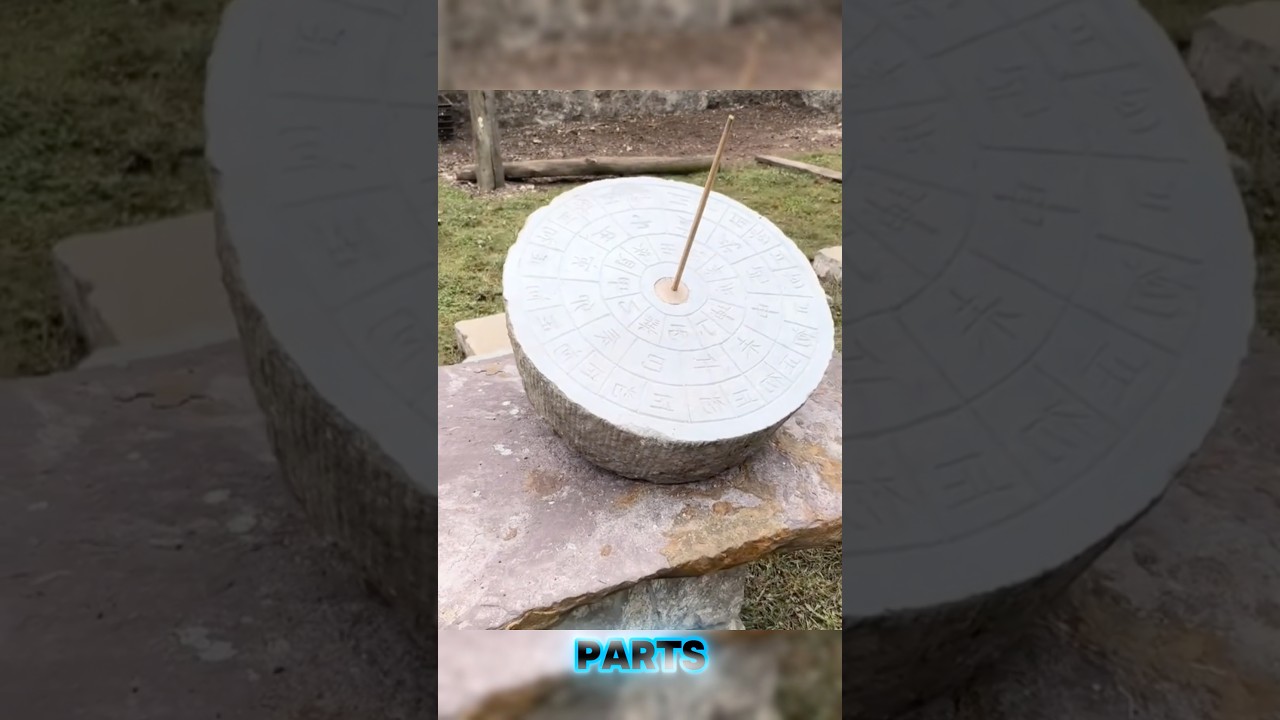
The result of many inventions people have come up with over centuries, because when it all started thousands of years ago, people read time doing this by looking at the shadow of a stick planted in the ground, which followed the movement of the sun.
The simple tool was called a gnomon, and it was often used by shepherds and farmers to organize their days.
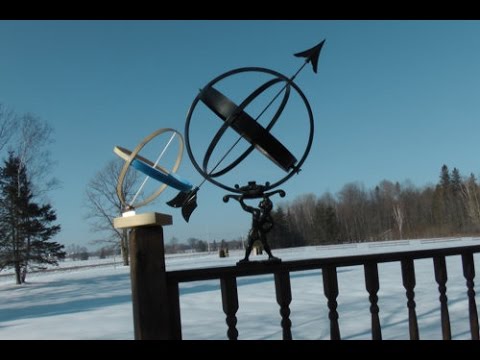
And so for thousands of years, humans have told time by observing celestial movements.
the Romans placed sundials on public squares.
Some historians even say Stonehenge was used to predict when seasons would change, but looking at the stars or the sun had its limitations.
How could you tell the time when the skies were cloudy or when it was raining?
For ancient civilizations, being able to tell time at any point in the day or the night or in any type of weather was necessary to organize religious ceremonies or to predict tides.
The first inventions tried to measure the passage of time by using water.
Some like the clepsydra measured duration simply by looking at the flow of water passing between two vases. Other clocks like the astronomical tower of Su Song in China used water to turn cogs.
The elephant clock of Al-Jazari in Mesopotamia followed the same principle and marked the passage of every half hour.
People often think that the hourglass is the oldest type of clock ever invented, but it actually came much later, only once artisans perfected their mastery of glass melting techniques.
Once humans acquired a wide range of technical skills, craftsmen were able to create the first mechanical clocks.
The first ones didn't have a dial and rang each hour, and they worked thanks to a key invention: weights that powered their mechanisms.
Dials were created soon after. These pieces, like the Strasbourg clock in France or the Salisbury clock in England were gigantic and most of them were placed on churches showing the importance of religion.
Time also became a tool of the mighty and powerful.
The expertise to read time precisely became a key commercial and military asset.
Measuring time allowed the British and French who had formidable navys to measure distances, their speed and know their positions.
This knowledge helped them to reach their targets in Asia and America quickly and without getting lost at sea. This race for time sped up everything.
The mainspring, a small tool that can be wound up to store energy and power watches was key to miniaturizing these huge machines. Using mainsprings, watchmakers in Germany started making egg-shaped watches, smaller watches that people could carry became popular only once another industry came with an invention of its own: the fashion industry and the pocket.
Once people had pockets on their trousers and jackets, they finally had a place where they could easily keep watches.
While the first models had been very simple and originally only displayed one hand, showing the hour, the hand showing minutes, and then the one showing seconds had been created by then, It took much longer for the wristwatch to become popular.
A very special man pioneered the technology: Abraham-Louis Breguet.
He's considered by many historians as the greatest watchmaker in history.
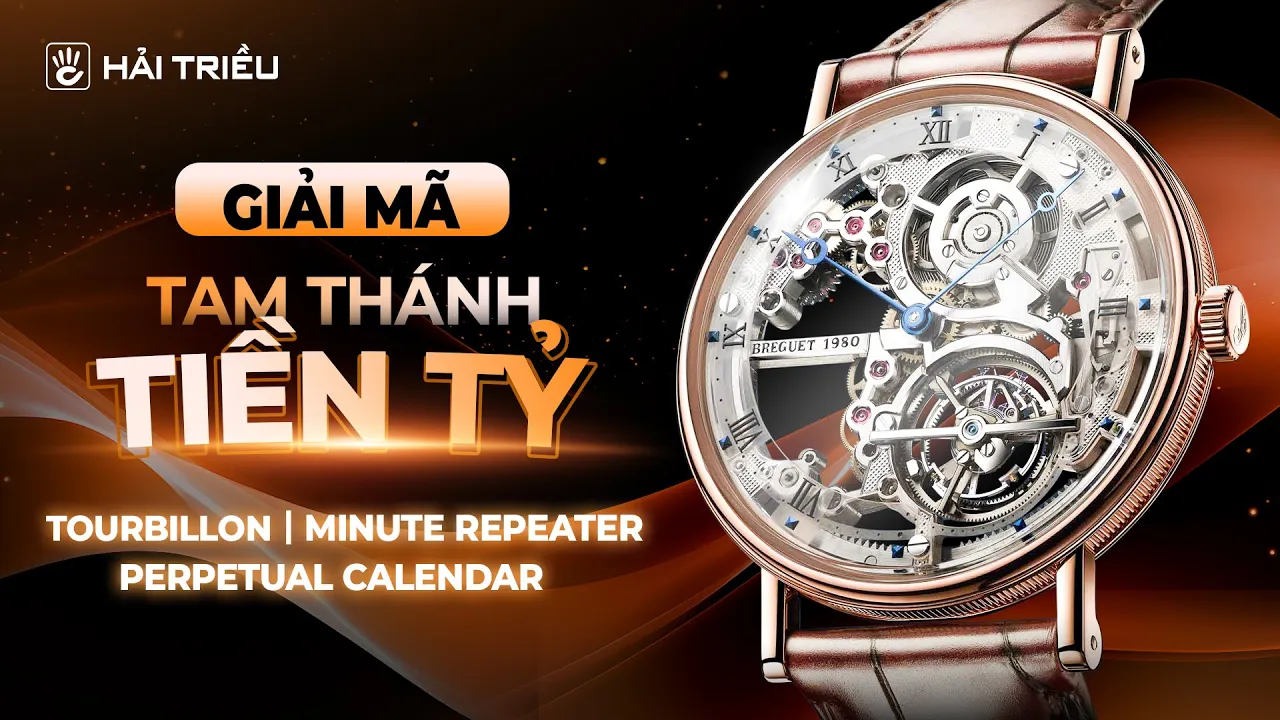
He invented the tourbillon, an anti-gravity mechanism, which makes watches more accurate, perfected the automatic watch and created one of the first wrist watches ever made for the Queen of Naples. For a long time, the very fragile object was perceived first and foremost as jewelry intended for women.
But a historic moment would change that: the first World War. Soldiers who had to coordinate attacks needed to read the time quickly and looking at their wrists was the fastest way of doing this.
From the 19th century onwards, watches started to pace everyone's lives and became a crucial tool for the industrial revolution. In factories, they told workers when they had to start and finish work.
The postal service had to follow a strict delivery schedule.
And trains had to be on time.
This is when people realize that: "time is money."
When every person on the planet could potentially need a watch, watchmaking turn into an exceptional business opportunity. And by then, only a handful of regions in Europe were producing watches.
But one nation quickly sees the potential of this market, the United States, which began producing watches on an industrial scale.
The Swiss discovered how far ahead the Americans were during the World's Fair in Philadelphia, and immediately sent spies inside American factories to try to catch up. The strategy worked. Thanks to the development of larger factories, Switzerland professionalized its production and crushed the competition.
Soon after a legendary watch brand was born Rolex, which became famous thanks to one of the first marketing campaigns in watchmaking history, an athlete swam across the English channel wearing a waterproof watch, the Rolex Oyster.
The athletic and technological feat made the brand famous all over the world.
Switzerland overwhelmingly dominated the watch industry in the following decades. The pinnacle of this domination: 1969, when astronauts Neil Armstrong and Buzz Aldrin landed on the moon with an Omega Speedmaster. But exactly the same year, the Japanese brand Seiko released a new watch that would change the world of watchmaking forever: the Seiko Quartz Astron. The watch cost more than a Toyota Corolla, the most popular Japanese car of the time.
And what made it so special was how it worked.
A battery sent electricity to a piece of quartz, which vibrated and powered the watch.
This was the most precise watch ever invented.
If the best performing mechanical watch of that era gained or lost about two seconds per day, the Seiko Quartz Astron varied by only five seconds per month.
After a few years of research, Japanese and American brands flooded the market with inexpensive and very precise quartz watches.
This new competition plunged the Swiss industry into crisis.
Hundreds of factories shut their doors, and the number of people employed by the industry dropped dramatically.
The Swiss watchmakers had to be creative as ever to reinvent themselves.
Years later, a new brand revived the watch industry in Switzerland.
Swatch simplified the production process as much as possible.
Its quartz movement used almost half as many parts as those of the competition and the watches were made with the same plastic used to make Legos.
Swatches were young, fun, and inexpensive. The product was an immediate success.
In less than 10 years, the company sold more than a hundred million watches.
Roughly around the same time, more traditional Swiss watchmakers reinvented themselves by moving upscale.
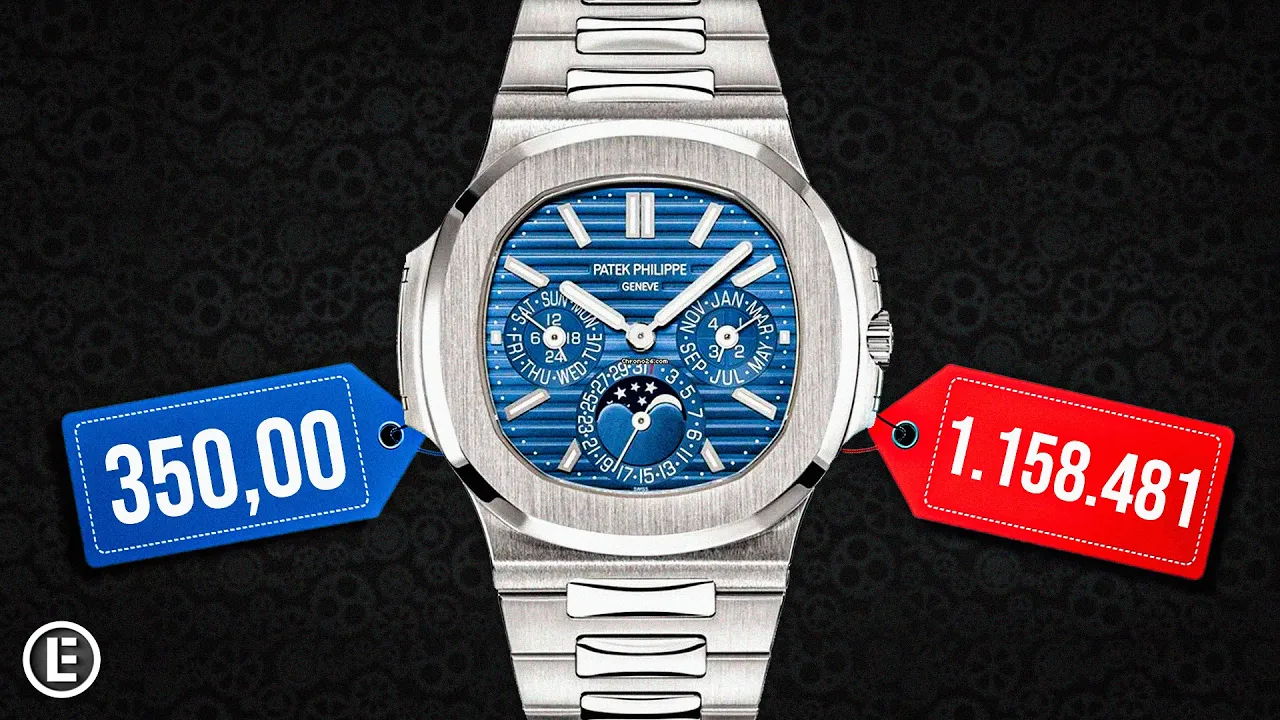
Audemars Piguet released the Royal Oak, a watch produced every year in limited quantity, and which is still iconic nowadays. The luxury brand.
Blancpain was relaunched by star manager Jean-Claude Biver, who swore to never produce quartz watches, and Richard Mille was launched, a brand whose watches cost on average 250,000 euros a piece.
The launches were boosted by ads featuring celebrities, a strategy that's now a key component of Swiss watch brands identities.
But new tech upended the industry: the Apple Watch.
We believe this product will redefine what people expect from its category.
The Silicon Valley giant created highly functional and high-tech watches, which became the most popular health trackers on the planet. Meanwhile, Swiss brands kept pushing the limits of mechanical horology.
Watches became transparent, excessively thin, and dials could show constellations.
Creativity was near limitless and prices never stopped rising.
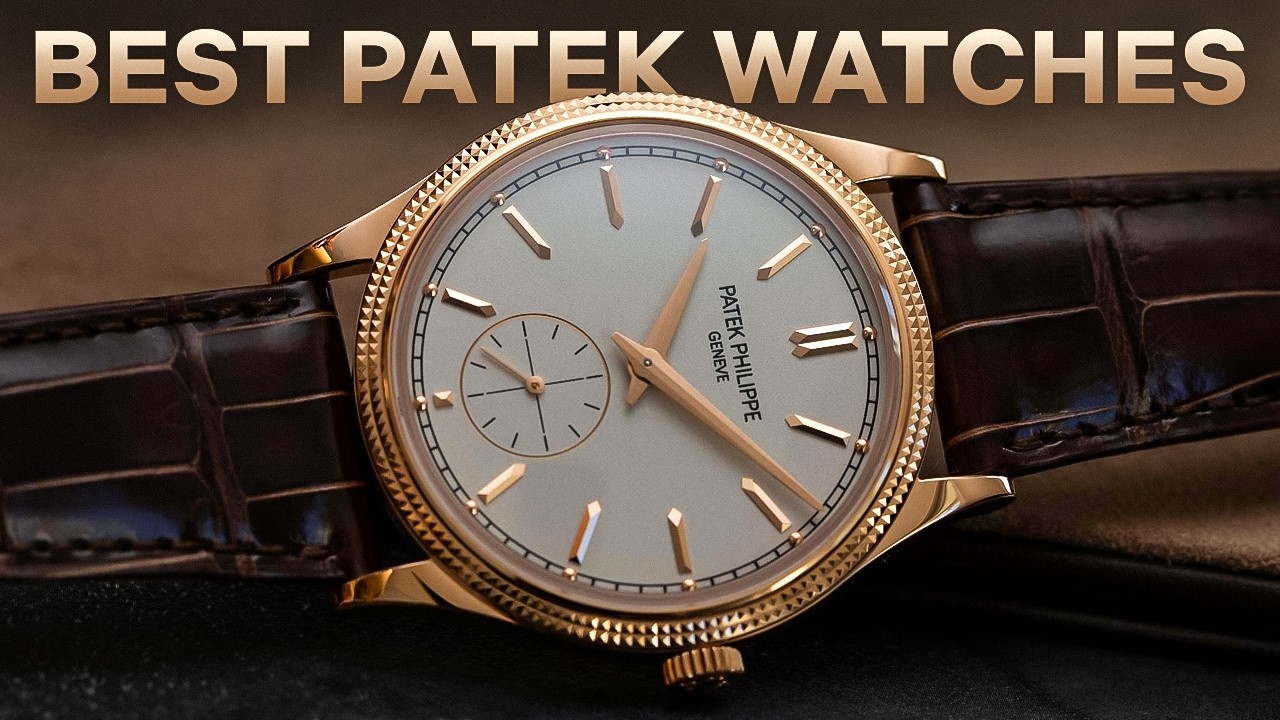
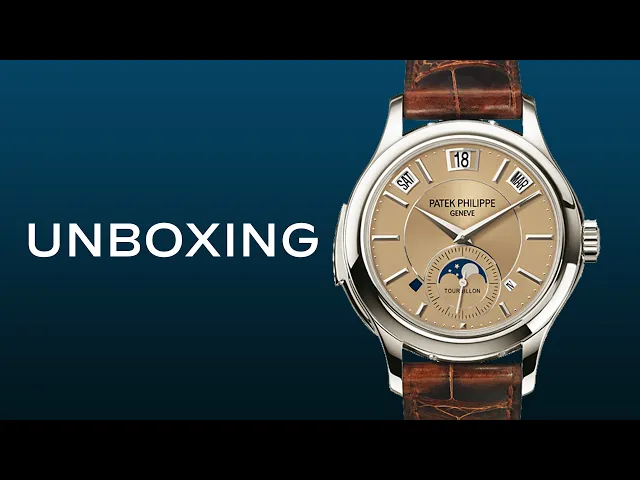
The most expensive watch in the world, the most sophisticated wristwatch ever created by Patek Philippe, was made with more than 1300 pieces and sold for more than 30 million euros in 2019.
From a stick planted in the ground to highly complex Swiss watches, and the Apple Watch, the world of watchmaking hasn't finished marking the passage of time.
Up Next
4:07
Quartz Clock Mechanism Explained | 3D Animation & Components
@knowingfactory
3.2K views•2025-04-16

30:32
Ultrasonic Transducers: Resonant Frequency Measurement and Horn Design
@imajeenyus42
229.9K views•2017-02-22

54:16
Polymer Environmental Degradation: Mechanisms & Stabilization
@iit
1.8K views•2012-07-10
33:39
How a Student's Question Saved a NYC Skyscraper from Collapse
@veritasium
22.8M views•2025-04-26
Related Study Plans & Knowledge Roadmaps
Structured learning paths in Engineering
engineering
Building Acoustic Levitators: Physics & Arduino
01The Physics of Sound and Standing Waves
02Piezoelectric Transducers and H-Bridge Drivers
03Arduino Programming: Generating 40 kHz Signals
+ 2 more learning modules
14h5 modules
Explore Roadmap
engineering
Building Peltier Cloud Chambers: Particle Tracks
01Cosmic Rays & Cloud Chamber Physics
02Thermoelectric Cooling (TEC) Fundamentals
03Custom Liquid-Cooling Loop Design
+ 2 more learning modules
18h5 modules
Explore Roadmap
engineering
Yagi-Uda Antennas: Modeling, Build & VNA Test
01Introduction to RF and Antenna Fundamentals
02Yagi-Uda Antenna Design Principles
03Antenna Modeling and Simulation in 4NEC2
+ 2 more learning modules
18h5 modules
Explore Roadmap
engineering
ECG Monitor Design: Op-Amps, Filters & Noise
01Electronics & Breadboard Basics
02Op-Amps and Instrumentation Amplifiers
03Bioelectricity and ECG Fundamentals
+ 2 more learning modules
18h5 modules
Explore Roadmap