























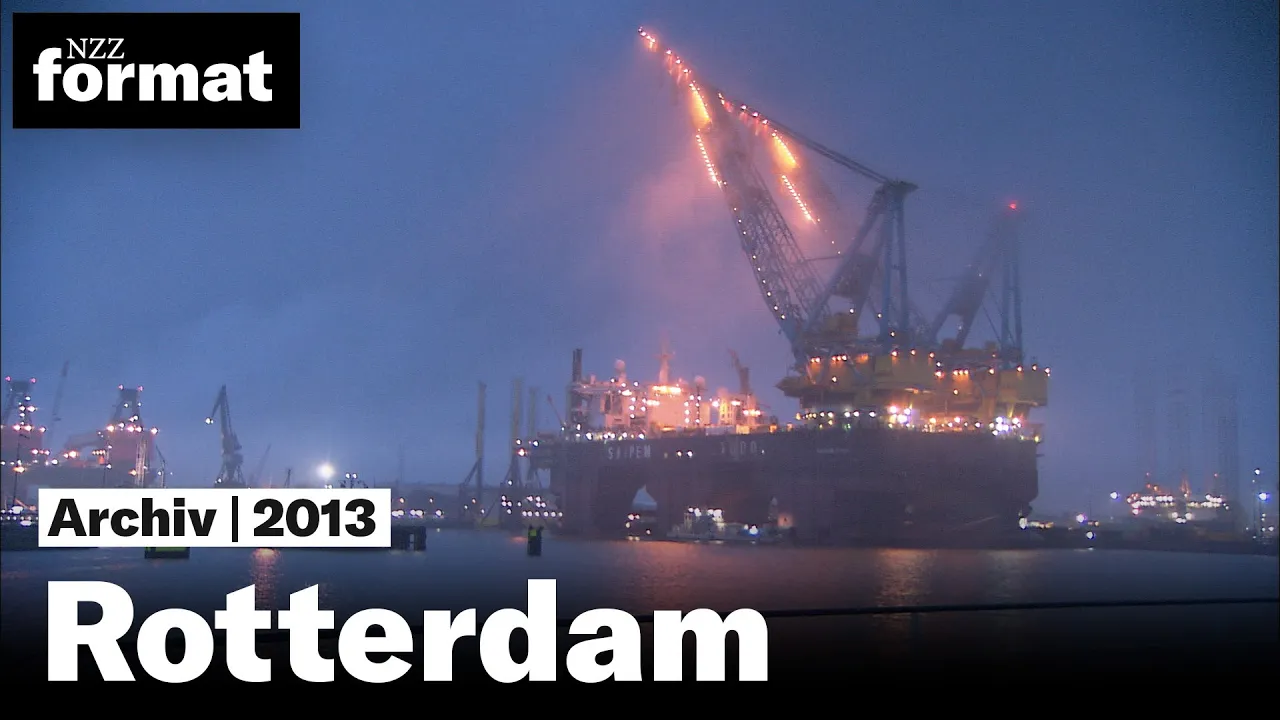
China's Yangshan Deep Water Port, located 32 kilometers offshore in the East China Sea, represents a monumental feat of modern engineering that addresses the critical challenge of accommodating ever-larger post-Panamax container ships. Built on an artificial island using the Sea Dragon dredge to move 3,000 million cubic meters of mud, the port features 50 ship berths, 13 state-of-the-art STS-40 cranes capable of lifting 4 containers at once, and is connected to Shanghai by the world's second-longest ocean bridge (Donghai Bridge). This $8 billion project enables Shanghai to process 25 million containers annually, transforming it from the world's third-largest to second-largest container port and securing China's dominance in global maritime trade.
Yangshan Deep Water Port Engineering: Building China's Offshore Megastructure
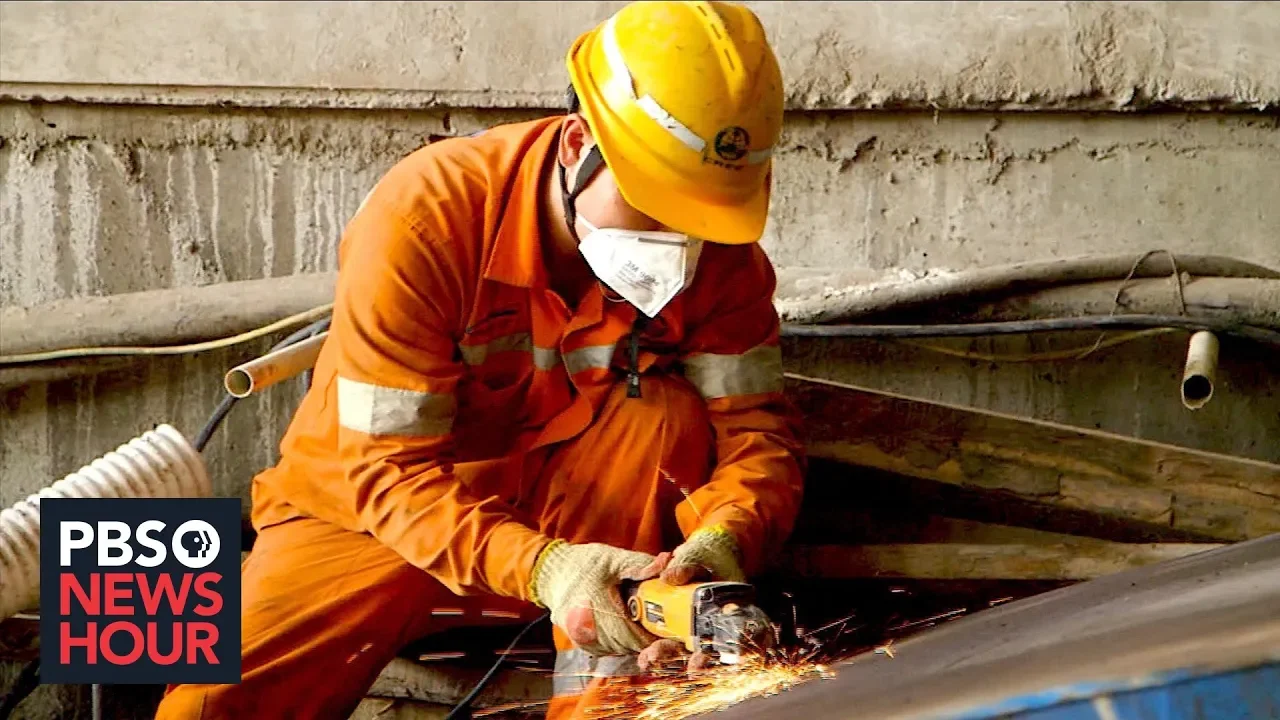
Added:[Music] 220 ad the Great Wall 1420 the Forbidden City 1997 Three Gorges Dam 2002 China does it [Music] again Chinese engineers and workers tackle one of the biggest construction projects on Earth in the middle of the ocean the biggest possible piece of infrastructure that they could possibly build welcome to yangshan on track to become the biggest deep water Port ever built a 20 km key with 50 births over 30 km out to sea link to China by the world's second longest ocean bridge where massive cranes a cutting edge control system and some very very focused Personnel are already shattering records for loading and unloading gigantic container ships battling for Supremacy in the world's biggest import export trade and young Shen not even close to being [Music] finished Spring 2007 the goodan MK one of the largest container ships on Earth sails 32 km off the Chinese East Coast started turning so early but du to the current then I could see it afterwards it was a good idea her deck stacked high with 3,000 shipping containers a multi-million doll [Music] cargo and 32 km out at Sea the crew of the goodan musk is just about to put it all overboard at one of the biggest facilities on [Music] Earth the young Shen deep waterer container Port it'll be years before this Mega Port is finished but young Shen's docks are already over 3 kilm long on those docks some of the world's biggest and browniest cranes high-tech trucks one of the the most advanced control systems at any container [Music] port and some of the best container Port operators in the business are getting ready for the goodin MK they'll have a good day's work ahead of them and they'll have less than a day to do it from the moment this giant ship docks they'll have just 20 hours to unload her 3,000 shipping containers and load her up with 2,000 more then they'll have to move the 3,000 unloaded containers to the mainland over 32 km of Open [Music] Sea and there's no room for error every ship every day young Shan's battling powerful Rivals for Supremacy in a billion dooll business [Music] Shanghai China's biggest city and the world's busiest cargo [Music] port in the 21st century China's export import trade exploding by nearly 30% per year and Shanghai in the right place at the right [Music] time located about halfway down the Chinese Coast right at the point where the yangi the world's third largest river empties into the sea billions of dollars of goods made in China travel down the yangi to be shipped abroad in 2001 that was 300 million tons of cargo by 2005 it was nearly 800 million Shanghai should be sitting pretty but it's got problems big problems problems these two guys deal with every [Music] day Wu Jang Wen and xang w a Shanghai Harbor pilot their job climb on board cargo ships arriving from the Open Sea and steer them to a safe birth at shanghai's docks and that's even harder than you think the color of the sea reveals why muddy brown the color of a river every year millions of tons of silt wash down the Yi River and into the sea where the young sea meets the ocean all that silt piles up in sand bars exactly exactly where hundreds of ships are sailing into Shanghai at low tide the silted up entrance to the world's busiest cargo Port is only 7 m deep and in today's world any ship that can clear 7 m is a mere rowo the biggest ships that come into Shanghai need 12 m water de so they are very dependent on high tide so when we go in or out of port we have to pay very careful attention to the height of the tide today's vessel needs only 8 m depth it cleared the sandbars at high tide but that doesn't mean Wu Jang Wen and Jang way are having a nice day they look relaxed but they know their problems are just beginning because shanghai's aquatic arteries are seriously clogged with more than just silt their ships now entering the hangu a smaller river that runs through Shanghai and they're about to steered through one of the worst Maritime traffic jams on Earth normally we'll have more than 100 Ships coming into the river mouss and another 100 ships going out over 24 hours and that's just the big ships over 5,000 tons I'm not even counting the smaller ones it is not a simple matter of one ship following another there are ports All Along The River ships have to cut across traffic so there is a lot of risk shipping expert Matthew Flynn Compares sailing up the Hang poo to commuting to work in the middle of the Indianapolis 500 it's probably one of the most exciting and memorable uh Journeys that any ship captain can make that doesn't that he's looking forward to it it's probably the most challenging Port entrance there is in Asia and believe it or not there more if you measure the hangu river bank to bank it's 400 m wide but our two pilots know they're working with a lot less the navigable Waterway the Waterway that's deep enough is fewer than 300 M wide in some places is only a bit more than 200 M and that worries Shanghai Pilots because a moving ship needs a distance three to five times its length to turn around to avoid a collision a 100 m long ship will need 300 to to 500 M and on the Hang pu it isn't going to get it for instance the ship we're on today is 145 M long so when it comes into the river it can't turn itself around and ships don't have brakes like cars do if you slow a ship down to avoid a g you can't steer it it would just drift out of control control so if there is an emergency there is nothing I can do I think that's an interesting thing this one piece will make 52 layers watch on mobile devices or the big screen all for free no subscription required that's why everybody's glad when the tugboats finally take over and push the ship into the dark because to these guys a cruise up the Hang poo is about as relaxing as steering a runaway truck through a crowded shopping mall shanghai's navigational challenges make life interesting for Wu Jan Wen and Xiang way but why should they be a big problem for Shanghai after all shanghai's been a world-class port for decades all that time the yangi was choking the silk and the Hang poo was never much wider so what's [Music] changed this has the size of the ships sailing into Shanghai gigantic container ships the most coste effective way to move enormous quantities of freight around the planet if they can't get their caros in and out of Shanghai Shanghai can't give the world what it needs ships will go elsewhere and Shanghai will be left behind after World War II shipping container containers revolutionized the cargo industry unlike loose cargo packed containers could simply be offloaded onto waiting trucks and driven away the first chips carried only a few dozen [Music] containers it didn't take a shipping genius to realize that the more containers one ship could carry per Voyage the more money ship owners would make so container ships got bigger and bigger well if you're making $11,000 per container that you're holding across the ocean and it's a dollar and cense type of equation the bigger ships you can that you can build uh the more cargo that you can carry in the 1990s Shanghai built new container ports at wo cha on the ocean just beyond the mouth of the yangi ships docking at woa didn't have to sail up the Hang pool and the water there was over 12 M deep for a time things seemed fine but then the ships got even [Music] bigger as big as the goodan MK over 40 m wide over 300 M long longer than the Eiffel Tower and needing deeper water than WEAU Chow could offer even at 12.5 M that's not really deep enough for the biggest ships we're talking 9,000 10,000 13,000 Tu container ships so you really want something that's at least 15 M today's Mega ships like the goodan MK are in a class by themselves a class called post panamax because they're too wide to fit through the Panama Canal and they're also too big for Shanghai steering a 350 M long vessel up the traffic choke hang poo isn't the best idea and the hang's 400 wide Channel isn't much wider than the goodan musk is long turning would be a nightmare and in the early 1990s Shanghai gave the world's biggest ships something else to worry about two suspension bridges spanning the Hang poo if a big ship came in it could not pass under the Hang pool Bridge only ships of 48 M tall or under can pass under that bridge in the 21st century 30% of the world shipping containers were traveling on post panamax vessels and Shanghai still wasn't deep enough wide enough or big enough enough to let those ships come in problems competing ports like Hong Kong and Singapore didn't have as China's economy exploded everyone wanted a piece of the action Shanghai couldn't handle the business it would have gone elsewhere 2002 shanghai's leaders roll the dice on a bold solution at a place called Yang Shan 32 kilm offshore where the water was 15 to 20 M [Music] deep today Yang Shan is a large island that can easily accommodate a worldclass container Port but when shanghai's Engineers chose it over 60% of it didn't exist Yang Shan was just what Nature Made it a collection of tiny islands with no room for anything but a fishing Village Engineers considered creating flat land by leveling the hills but decided against destroying Yang Shan's natural topography instead instead they decided to build the world's biggest container Port virtually from scratch Yang Shan Port is this enormous deep water project that was built kind of on a fresh sheet of paper the biggest possible piece of infrastructure that they could possibly build to stamp shanghai's kind of dominance over container shipping The Plan called for a true Mega structure a 20 km key where 50 ships could dock at one time and a port that could process 25 million shipping containers in one year 70,000 in just one day price tag an estimated $8 billion US 2002 construction begins on Yang Shan Phase 1 Engineers begin transforming these lonely isets into the world's biggest container Port it's like trying to to you know tie a butterfly knot in a in the middle of a raging River you've got water that's flowing 2 MERS a second these guys are up against uh typhoon bad weather fog you know they're 35 km offshore there's no power there's no water there's probably more inhospitable locations but there certainly isn't a tougher location to work in for such a big project failure is not an option and neither is delay shanghai's container traffic is growing by 30% every year to build Yang Shan Engineers must create an artificial island with a 10 square kilomet Port bigger than 20,000 basketball courts in ocean 15 M deep and that will take thousands of millions of cubic MERS of soil how do you get it enter the Sea Dragon the mega dredge built in the nether to clear shanghai's Monumental silt this is a dredge like no other when the Sea Dragon swings into action you can see how it got its name its two massive suction arms bear an uncanny resemblance to Monsters of the deep ocean floor mud as deep as 45 M can't escape their jaws and they don't just eat a lot they eat fast thanks to some Mega Power topside in the belly of this Beast two turbocharged 12 cylinder diesel engines generates 9,000 KW of power each with that kind of power the Sea Dragon only needs to pump one hour to fill its Hopper with mud in China eight is a lucky number so the sea dragon's Hopper holds 12,888 cbic M that's over 200,000 kegs of beer once the HPP is full two gigantic pumps drain the water from over 12,000 cubic M of mud and Captain Yan says that when it's time to deliver the payload his dredge leads the pack older ships can only dump sand but the sea dragon blow or spray it that gives it a real advantage over other ships on the construction side the Sea Dragon worked almost a full year just to build Phase 1 dumping 3,000 million cubic M of mud enough to fill over a million Olympic swimming pools growing a man-made Island in Ocean over 15 M deep the sea dragons done its job for now but there is still two more phases of Yang Shan to build and they'll need 13 billion cubic M of mud enough to fill Loch Ness turning Open Sea into 10 square kilm of worldclass container port in under 4 years is pretty impressive but Yang Shan only proves itself when the world's biggest container Ships Come to call now one of the biggest the goodan MK is ready to unload and the port of Yang Shan has to unload her 3,000 containers reload her with 2,000 more and send her on her way in just 20 hours over those 20 hours young Shan's state-of-the-art technology and the people who run and manage it must once again show the shipping world that they're among the best because in this high stakes world no matter how good you are you're only as good as your Last Ship 12:00 noon unloading the goodan MK begins 3,000 shipping containers in less than 20 hours every hour behind schedule costs thousands of dollars [Music] and takes you down a notch in the eyes of the shipping world only the best can pull this off and young Shan deep water Port has 13 of them the STS 40 ship toore crane 50 m High that's as tall as the fabled Godzilla and they're manufactured right in the neighborhood at the xenoa company on Chung Shing Island at the mouth of the Yi only 125 km from yangan the biggest crane Factory in the world a birthing suite for Giants building More than 70% of all the world's container cranes every year genen HOA transforms tens of thousands of tons of raw steel into over 200 cranes bolted and welded together by swarms of orange clad liliputians but even at this Mega Factory where mountains of metal seem to float on air the young Shan cranes were a tall order most container cranes can lift one 40ft container at a time or two 20t once young Shan needed cranes that could lift twice that many and stand tall enough to reach them from a top the world's biggest ships and it needed 13 of them general manager luu Han Jong recalls the excitement of winning the Yang Shang contract and the anxiety of fulfilling it desing and Manufacturing cranes this big was a challenge for us because ships are getting bigger and higher cranes have to be bigger too we couldn't simply make one of our smaller cranes twice as big that crane would have been far too heavy to build we needed to change the design of the whole structure but one of the toughest challenges to giving Yang Shan its super cranes wasn't building them when they arrive at container ports new cranes can need up to six months reassembly before they're ready to operate but not Jen H's cranes they come with no assembly required shipped around the world on gen H's specially modified freighter ctime by cimer workers carefully winch the finished cranes on board while a sailor below decks pumps water ballast from side to side keeping the ship on an even Keel as 10,000 tons of crane presses down on it fully loaded a xenoa crane freighter looks perilously topheavy but its looks are deceiving to Outsiders it seems like the Crane's center of gravity is high and they could topple over at any moment but actually on the contrary the center of gravity is within the range of safety in the lower part of the crane but Jena's ships had never transported cranes as tall and heavy as the ones ordered by Yang Shan the cranes couldn't be any shorter or lighter or Yang Shan wouldn't beat its competition there was only one option solve the problem we successfully designed a bigger crane which doesn't add much to its own weight but can still do the job is designed to do and we designed them so they can lower their height while they're being transported problems solved cranes designed built and delivered now they're putting young Shan ahead of the pack most container Port cranes can handle about 30 containers an hour Yang Shan's cranes can handle more than 50 thanks to Crane drivers like Jang ye who've made a commitment to being the best the difficulty we have to conquer is we work on night and day ships rather than normal working hours so that we have to sacrifice a bit personal LifeWise I mean we cannot just go drinking and have fun as much as we want to we have to make sure we rest well before we come to work driving a containerport crane is like fishing for a prize in a carnival game except the prize weighs 2 and 1/2 tons and that's empty sitting in a cab meet is up the operator has to maneuver the Crane's lifter called a spreader into position over each container then lower it by eye and by [Music] hand when the spreader is in place he triggers the spreader automated locks that grip the container and hoists it up and over the deck onto the dock [Music] below lining it up precisely with the truck that will carry it away and then do it again and again and again and if you think unloading is tough try loading to load a ship a crane operator has to position a 20ft container onto pins on deck and slide it precisely into grooves built into the cargo hole so containers won't move at Sea that's like trying to set an elephant down on a coin from 50 M up and a crane driver doesn't have all day to get it right if containers move too slowly ship owners fall behind schedule and lose money we do have a lot of but if they move too fast they can swing out of control endangering cargos people and cranes and a bumped container could mean damaged goods inside so crane drivers have to develop an instinct for loading in and unloading at exactly the right speed and the discipline to stay very very focused during a very very long work day we work 11 hours on day shift 13 hours on night shift the workload depends on the shipping amount which varies normally it will be around 300 containers that takes about 10 [Music] hours but just working hours like that didn't make Jang Yi one of the world's best container crane operators it was the day his team unloaded 5,812 containers in one day a new world record we were all very excited after breaking the record and we had a big celebration after that we just went back to work as usual we still had a long way to go the cranes put the containers onto trucks which move them from the dock to The Container yard at the yard rubber tire Gantry cranes take the containers off the tractors and put them on the ground but there's a lot more to this process than just heavy [Music] lifting shipping containers look alike and unless you can match their numbers with a list there's no way to tell them apart from the moment they leave the goodan musk 3,000 containers have to be precisely tracked a misro Ted container means unhappy customers and a bad reputation for young Sha a lost container is Unthinkable but it's Unthinkable thoughts like these that keep operations manager Shi Min haa fully focused throughout his shift more than anywhere the burden of success or failure rests squarely on his shoulders for the duration of his shift he'll bear the ultimate responsibility for keeping the operation on time and on track the port runs 24 hours we are under a lot of pressure to work fast but we try our best to fulfill our service promises to our customers if anything does go wrong the buck stops with SH Min H and there's plenty that could go wrong before A Ship Sails the the shipping company's computers analyze the contents and destinations of its several thousand containers and assign every container a specific place on board the first Port containers in one's on top and the last portch containers on the bottom it's a pretty complex mathematical equation if Port operators make a mistake or fall behind schedule they might have to ask permission to load containers in places other than the ones the computer assigned [Music] them and that's not a question a ship's Captain wants to [Music] hear containers loaded in the wrong places will confuse unloading in the next Port badly loaded containers could make the ship unstable on the Open Sea and young Shan's competitors Hong Kong and Singapore each handle over 20 million containers a year with an error rate of less than 1% all good reasons why no one at Yang Shan wants to rock the boat fortunately Yang Shan has a brain to match its Brawn a cutting edge control system developed by the port of Shanghai [Music] the operation control room has a highly developed CCTV supervising system which can help to detect any potential problems we communicate through walkie-talkie there are laptop computers on the wall that receive a detailed operation plan delivered by the computer system cranes trucks and rubber tire Gantry cranes all have cab displays electronically linked to the port control room so crane operators and drivers know exactly which containers they're moving when to move them and where they go the trucks receive Wireless orders from the computer terminal in the operation control room portable mini computers in the trucks display instructions on what to do and where to go the trucks we use here are some of the best they're equipped to transport containers on the left and the right and the driver's cab has Windows on three sides which allows the driver to see a lot more the Yang Shan system maximizes efficiency back sending ship after ship back to Sea on schedule making Crews and owners happy so they're trying to sail at a specific time to meet a a birthing window at another Port down the road delays are just not you know not not acceptable the unloading and loading goes on all [Music] night and pass the break of day 20 hours after she docked the goodan musk departs young Sha leaving behind 3,000 containers filled with imported [Music] goods taking with her 2,000 others filled with exports shimin Hau and the young Shan team can finally relax and call it a day a very long day but Yang Shan's job isn't over yet 3,000 shipping containers have to be delivered customers have waited weeks for the goodan musk to bring them across the ocean and now they're sitting on an island 32 km out to sea to compete with other world-class container ports Yang Shan must move over 20 million shipping containers per year but how do you maintain your Competitive Edge when you're on an island in the middle of the ocean you build another Mega structure the dong High Bridge six Lanes wide and 32 km long more than 12 times longer than the Golden Gate Bridge the second longest ocean spanning bridge in the world the longest is just 80 kilm to the West spanning Hong Xiao Bay building a bridge this long on land would be tough building it over the Open Sea is a logistical nightmare it's not like you're a steel worker building a skyscraper you don't have electricity out there everything that you need to do your job has to be taken in by barge and back and forth in in that fashion just designing the dhai bridge was a mega challenge it had to be wide enough for six Lanes of truck traffic high enough to let some of the world's biggest ships sail underneath and strong enough to withstand all that nature would routinely throw at it typhoons every summer currents ripping past at 2 m/ second 6 M waves and that's just on the surface from the mainland to yangshan Islands the seabed can vary in depth from 10 to 30 m and it's nothing but soft unstable mud mud not a good foundation for six Lanes of concrete Highway vibrating with heavily Laden trucks in cyberspace Engineers tested their Bridge designs every way they could with waves winds truck accidents and colliding Mega ships to discover which design would best survive in the end they chose not one design but two most of dong high is a box girder bridge made of over 600 concrete spans the longest spans are the length of four volleyball courts but in two places it becomes a cable stay suspension bridge with one span Rising high enough to let ships pass underneath and it spans the waters in a graceful S curve so ships passing under it can sail at Angles to strong ocean current by 2002 Engineers had a bridge that worked beautifully on paper and in their computers now they had to build it first challenge anchor kilometers of concrete in water logged mud firmly enough to stand up in a typhoon Engineers drove over 6,000 foundation piles into the sea floor positioning them with GPS and seven satellites within a 3 to 5 mm accuracy 20 plus M of water than another 40 m down below before they actually reached bedrock next problem how to build 600 concrete spans some weighing over 2,000 tons in the middle of a sea so rough construction's Possible only 6 months of the year the solution was not to even try instead the dongis builders pre-built its massive spans on land and towed them out to sea I mean it would be craziness to try to build the bridge you know piece by piece in that in that position and they had to actually in the middle of the process you know actually construct this new barge with 1,600 uh ton lifting capacity to move these Bridge sections into position from start to finish nothing was routine about building dong High Bridge including the workers lives as construction moved further out to sea massive Bridge pilings did double duty as dormitories on 10 December 2005 42 months after construction began the dong High Bridge opened to [Music] traffic since then nearly 3 million containers have crossed its s-shaped [Music] span under the watchful eyes of bridge [Music] operators from this Hightech control room they miss nothing that happens on over and under the world's second longest ocean Bridge their eyes some 80 surveillance cameras placed along its 32 km length electronic eyes that never close and for good reason the dong haai Bridge is a Triumph of engineering over nature but nature isn't giving in that easily typhoons and fog can make driving on the dhai bridge hazardous in 2006 super typhoon chanu battered China with powerful waves and winds the bridge stood its ground and by mid 2007 young Shen had moved moved Shanghai from World's third biggest container port to number two only 1 million containers behind its rival Singapore when it's completed in the year 2020 young Shan Island will be the world's biggest container Port its Wes stretching an awesome 20 km with births for 50 ships capable of handling 25 million shipping containers a year no city has ever achieved what what Shanghai has done with the ychan Deepwater Port it was a tremendously Visionary uh project for the city fathers of Shanghai to actually create this um over such a short time frame was tremendously farsighted it's a very emotional issue I think for everyone from the guy in the street you know the to the city leadership to the to the country leadership um they all know that you know Shanghai is the number one port in China will be the largest container port in the world and you know that's something that you don't see in Europe or the United States for someone you know in Los Angeles versus Oakland saying geez we've got the biggest container point in the United States they don't know and they probably don't care but here it's something that everyone knows about and it's something that they're intentionally proud of [Music] achieving but shipping companies are already designing even bigger container ships Mega ships that will demand even longer docks bigger cranes and deeper [Music] water the biggest cont container Port ever built May someday be just the first phase of an even bigger [Music] one
Up Next

Decarbonizing Shipping: New Marine Technologies Explained
@business
138.8K views•2024-11-08

Ultrasonic Transducers: Resonant Frequency Measurement and Horn Design
@imajeenyus42
229.9K views•2017-02-22

Polymer Environmental Degradation: Mechanisms & Stabilization
@iit
1.8K views•2012-07-10

How a Student's Question Saved a NYC Skyscraper from Collapse
@veritasium
22.8M views•2025-04-26
Related Study Plans & Knowledge Roadmaps
Structured learning paths in Engineering