Offshoring is the practice of moving money, goods, waste, energy, and people across borders to avoid laws, taxes, rules, and regulations, facilitated by secretive networks, digital technologies, and complex legal structures. This practice creates new physical and digital borders, enables tax havens used by big companies and high net worth individuals, depletes local economies, contributes to global poverty, and leads to environmental degradation including air pollution, greenhouse gas emissions, and poor working conditions. Offshoring also facilitates illegal activities such as torture, corruption, and military action while undermining democracy, fairness, and hope for a sustainable future.
Offshoring Explained: How Globalization Hides Costs | John Urry
Added:Deep Dive
Understanding the fundamentals of economic globalization and the structure of global supply chains.

Global Supply Chains and the Evolving Economy (with Joab Corey)
157
Global supply chains are the systems through which products move from raw materials to retail stores. They consist of four main sections: (1) Procurement - obtaining resources for manufacturing; (2) Manufacturing - transforming raw materials into finished products; (3) Operations/Planning - logistics and distribution planning; and (4) Warehousing/Distribution - storing products and delivering them to retail outlets.
Click to watch →

CEIBS Insights | Paris Forum 2022: Chinese Post-COVID Economy: Major Changes
9.3K
Economic globalization is an imperative for productive force development and an irresistible trend. Attempts to break supply chains, create decoupling, or establish parallel markets harm all parties involved. The current global industrial structure resulted from long-term interactions among multiple factors including production costs, industrial installations, and infrastructure. This structure cannot be changed simply by the will of any individual or country.
Click to watch →

Great Decisions Master Class - Global Supply Chains & National Security
7.2K
A global supply chain is the network of production and assembly points that products travel through across international boundaries. Most any object purchased, whether sophisticated like an iPhone or basic like clothing, can be traced back to its point of origin. The supply chain is more complicated than simple graphs suggest because at each production and assembly point, there are subsidiary supply chains, often international as well.
Click to watch →
Globalization from a Christian point of view | Prof. Dr. Philip Booth
150
Modern globalization is characterized by complex global supply chains where products involve multiple countries. For example, a shirt labeled 'Made in China' likely involves sewing machinery from South Korea or Japan, dyes from Germany, cotton from Egypt, manufacturing in China, shipping by Greek firms, and financing by UK banks. This demonstrates how even simple consumer goods require coordinated production across 10-15 different countries.
Click to watch →

Revisão final para o ENEM - Geografia - Prof. Groth
61.6K
Globalization has created complex global supply chains where products are manufactured across multiple countries. A single product may involve components from dozens of countries, assembled in one or more locations, and sold globally. This interconnectedness creates both opportunities (efficiency, access to global markets) and vulnerabilities (disruptions can cascade through the entire system). The 2020 pandemic demonstrated these vulnerabilities when supply chain disruptions affected global production. Understanding global supply chains is essential for comprehending contemporary economic interdependence.
Click to watch →
Deep Dive
The economic concept of 'externalities', specifically how companies externalize social and environmental costs.

TẬP ĐOÀN: CỖ MÁY KHÔNG TÌNH NGƯỜI — THE CORPORATION (2003)
13.9K
In 1920, economist A.C. Pigou introduced the concept of 'externalities' in his book 'The Economics of Welfare.' Externalities refer to the negative impacts of transactions between two parties on third parties who did not consent to or participate in the transaction. This concept explains how corporations can impose costs on society without bearing those costs themselves.
Click to watch →
this is how SHOPPING LESS can save the planet
48.5K
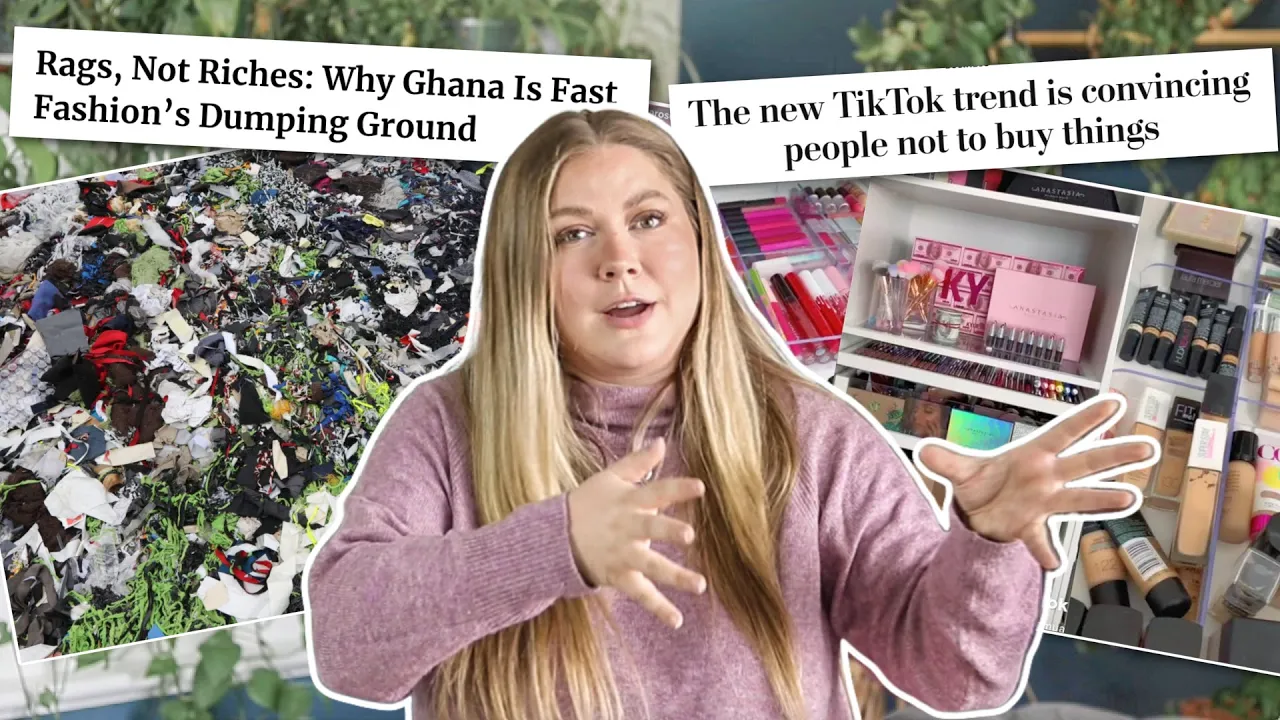
The term 'true cost' refers to how externalities—environmental and social problems—are socialized onto society while profits are privatized. Companies extract value from people and the planet but leave all negative impacts for society to bear. This system is not affordable to the planet itself or to the people who live on it, including workers, communities, and future generations who must deal with the consequences of current consumption patterns.
Click to watch →

EP43: What does the Facebook board care about?
1.1K
Companies can generate profits while externalizing social and environmental costs, creating a false accounting of their true impact. This occurs because companies are not required to account for carbon emissions or social consequences of their operations. These externalized costs eventually return to shareholders because most shareholders hold diversified portfolios, meaning they own stakes in hundreds of companies. When one company externalizes costs that harm other companies in the portfolio, it effectively saps profits from the broader shareholder base.
Click to watch →

What they DON'T tell you about Climate Change! ft.@ShriPrashant
832.6K
Externalities are costs that are not reflected in market prices but are borne by society or the environment. When corporations produce goods, they often don't pay for the environmental damage caused (pollution, resource depletion). These costs are externalized to society. A fair system would require corporations to pay for these environmental costs, which would be reflected in their products and would discourage wasteful production.
Click to watch →

“Economía Ambiental: Teoría y casos prácticos”
133
Environmental economics views the economic process as occurring simultaneously with social costs and adverse marginal costs. Externalities are costs that economic agents (individuals, households, firms, governments) do not assume privately but instead externalize to society, the natural environment, and future generations. Private costs include salaries, taxes, market prices for goods, credit interest rates, and loan conditions. External costs include air pollution, water contamination, noise pollution, and landscape degradation. For example, when driving a car, individuals pay for gasoline, vehicle purchase, and tolls but do not pay for the pollutants emitted, which are externalized to society and the environment.
Click to watch →
Deep Dive
The concept of regulatory arbitrage, where businesses exploit differences in national laws, taxes, and safety standards.

CFATF XLI Plenary Meeting - Open Ceremony 1/2
200
Regulatory arbitrage refers to the exploitation of weak jurisdictions or weak laws in terms of effectiveness. People can exploit these weaknesses and turn them on other countries, creating problems that affect the broader international system. This concept is an important theme in understanding how financial crimes can spread across borders and why international cooperation is essential. Countries with weak regulatory frameworks become targets for exploitation, making it crucial for all nations to strengthen their own regulatory systems.
Click to watch →
![[441] Regulatory Arbitrage](https://i.ytimg.com/vi/55UY6-us6ag/maxresdefault.jpg)
[441] Regulatory Arbitrage
811
Regulatory arbitrage is a business strategy where companies exploit differences in regulatory requirements across jurisdictions to gain competitive advantages. The core concept involves identifying regulatory loopholes and creatively using them to reduce compliance costs or increase operational flexibility. This practice allows businesses to navigate through regulatory hurdles by strategically positioning themselves in more favorable regulatory environments.
Click to watch →

Get Rich Faster by Playing Dirty Smart — Machiavelli
1.5K
Regulatory arbitrage involves structuring business operations to exploit differences between jurisdictions or regulatory regimes. Companies restructure deals to reduce or avoid regulatory costs without changing underlying economics—by moving transactions across countries, reclassifying workers, or restructuring subsidiary chains. Apple used Irish subsidiaries claiming no tax residency to route hundreds of billions in profits, achieving significant savings. While these schemes generate enormous wealth temporarily, they have limited half-lives as regulators eventually close loopholes. Sarbanes-Oxley followed Enron, tax reforms followed Apple's case, and each closure brings reputational costs that increase with media scrutiny.
Click to watch →

ONLY THESE PEOPLE WILL GET RICH FROM RIPPLE/XRP… YOU’RE BEING LIED TO | LONDON IS READY
37.8K
Regulatory arbitrage is a phenomenon where businesses and investors take advantage of different countries having varying levels of hostility toward innovation. Countries with more favorable regulations attract crypto businesses, similar to how the derivatives market allowed other countries to grow exponentially when the US stopped its banks from engaging in certain activities.
Click to watch →

Beto Chair Lecture: Dr. John Braithwaite, 04/07/2011
291
Transnational corporations use transnational coherence against the transnational incoherence of national regulators. A common strategy involves first getting products approved in countries with very low safety standards and integrity requirements, often through bribery of health ministers. Once established in these markets, companies then move to countries with higher standards, using evidence from the easier initial approvals to justify subsequent marketing authorizations. This regulatory arbitrage exploits jurisdictional weaknesses.
Click to watch →
Deep Dive
An overview of neoliberal economic policies that advocate for deregulation and the free movement of capital across borders.

Dr Peter Thompson Part I of IV.m4v
138
In the 1970s, the demise of the Bretton Woods macroeconomic arrangement that underpinned the Keynesian model led to a shift towards monetarism and neoliberal paradigms of social policy. Within this framework, there was great emphasis on allowing free flows of capital across borders, with trillions of dollars moving daily. Freeing up cross-border flows of capital was a key part of neoliberal policy prescriptions, leading to huge increases in the velocity, volume, spatial extension, and intensity of financial market trading.
Click to watch →

Wendy Brown lectures at Holy Cross on "Cultures of Capital Enhancement"
11.8K
Neoliberal economic policy rests on four interconnected pillars: (1) Deregulation—eliminating restrictions on capital including safety regulations, working hour limitations, minimum wage laws, and environmental protections; (2) Privatization—dismantling public ownership and public goods by selling off or outsourcing everything from higher education to national parks, public transportation to prisons and military; (3) Regressive taxation—replacing progressive taxation that finances public goods and redistributes wealth with policies that force states into debt financing; (4) Dismantling the welfare state—attacking public programs and social assistance as impediments to growth and moral development, with the goal of creating self-reliant individuals who take full responsibility for themselves.
Click to watch →

"A Mundialização do Capital", por François Chesnais
3.8K
Economic liberalism, or neoliberalism, developed as practical policies from the 1970s onwards. A key effect was the removal of protectionist barriers that previously prevented capital expansion. Examples include prohibitions on importing certain products and advantages given to domestic production. As neoliberal ideology expanded, these protective barriers fell, leading to greater foreign direct investment and increased penetration into many countries. This policy shift fundamentally altered how capital could move across national boundaries.
Click to watch →

Neoliberalism, Globalism, Open Borders & Path to Citizenship
119
Neoliberalism is an economic policy regime characterized by deregulation, privatization, removal of environmental and labor standards, and toxic free trade agreements, originating from the London School of Economics and University of Chicago School of Economics; it is distinct from 'liberal' or 'identity politics' and has been implemented globally through strategies like open borders and path to citizenship, which serve to bring in cheap labor and exploit workers rather than provide genuine social mobility.
Click to watch →

Bo Burnham & The Neoliberal Performing Self
104K
Neoliberalism is fundamentally the removal of any and all barriers that might limit the free movement of capital, representing a blind faith in the free market where the state acts as protector and enforcer of capitalist class interests. Key neoliberal policies include removing consumer protections from practices like price gouging, privatizing governmental social services, allowing businesses to operate without regulation, giving tax cuts to the wealthy, eliminating protections against monopoly, imposing austerity measures, and removing labor protections. These policies create an inherently contradictory phase of capitalism that advances corporate interests at the cost of citizens.
Click to watch →
Prerequisite Knowledge
- Concept 01Understanding the fundamentals of economic globalization and the structure of global supply chains.
- Concept 02The economic concept of 'externalities', specifically how companies externalize social and environmental costs.
- Concept 03The concept of regulatory arbitrage, where businesses exploit differences in national laws, taxes, and safety standards.
- Concept 04An overview of neoliberal economic policies that advocate for deregulation and the free movement of capital across borders.
Subsequent Learning
- Step 01John Urry's sociological theories on 'mobilities' and how 'offshoring' functions as a systemic spatial fix for modern capitalism.
- Step 02The mechanics of offshore financial centers, tax havens, and transfer pricing used to minimize corporate tax liabilities.
- Step 03The study of 'waste colonialism' and the global trade networks that route hazardous materials and e-waste to developing nations.
- Step 04Analysis of international policy frameworks aiming to curb these practices, such as the OECD global minimum tax agreement and supply chain due diligence laws.
Offshoring Evils
Power Abuse
Offshoring Evils
0:06Playing Section
- 1
Defines offshoring as hidden global activities avoiding laws.
- 2
Highlights impacts: pollution, poor labor, tax evasion.
- 3
Notes offshore energy and waste dumping harm sustainability.
The Theory of Comparative Advantage and Global Economic Convergence
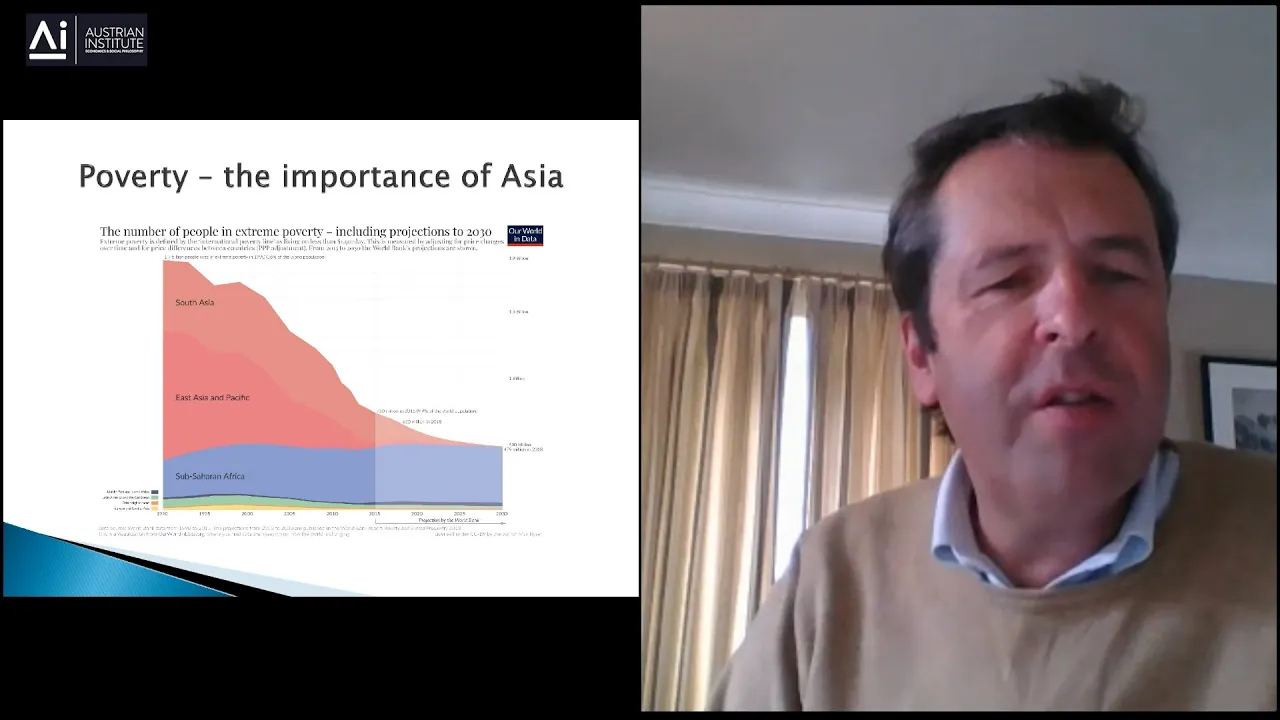
In contrast to the view that offshoring is primarily a mechanism for evading regulations and hiding costs, mainstream economic theory, rooted in David Ricardo's concept of comparative advantage, views offshoring as a powerful driver of global efficiency and poverty reduction. Proponents argue that by relocating production to countries with lower labor costs, multinational corporations can produce goods more cheaply, benefiting consumers worldwide with lower prices. Furthermore, offshoring facilitates significant capital investment, technology transfer, and infrastructure development in developing nations. Rather than merely exploiting these regions, offshoring has historically lifted hundreds of millions of people out of extreme poverty—particularly in East and South Asia—by integrating them into the global value chain. This perspective frames offshoring not as a race to the bottom, but as a mutually beneficial process of economic convergence that fosters global wealth, modernization, and specialization.
Deep Dive
John Urry's sociological theories on 'mobilities' and how 'offshoring' functions as a systemic spatial fix for modern capitalism.

Offshoring is bad for society and planet earth: John Urry at TEDxLancasterU
16.5K
Offshoring—the practice of moving economic activities, resources, and processes beyond the jurisdiction of any single nation—is a systemic feature of contemporary globalization that undermines democratic governance, exacerbates global inequality, and contributes to environmental degradation. While globalization promised borderless connectivity and free flow of goods and ideas, the reality involves complex networks of secrecy, tax avoidance, and regulatory evasion that concentrate wealth among fewer individuals while weakening local economies and increasing carbon emissions. Addressing this requires policies such as country-by-country corporate taxation, proximity principles for waste disposal, whistleblowing protections, localized production through technologies like 3D printing, and ultimately a reattachment to local communities and natural systems to restore democratic accountability over economic processes.
Click to watch →

Виктор Вахштайн*: Социология – это не наука об обществе. Понятия Live! / 13.02.26
21.7K
John Urry, a British sociologist, proposed that in the new global world, national states would die, but 'the social' would remain. He believed that since 'society' was tied to the nation-state, we should abandon 'society' but keep 'social.' However, this project was not successful - Urry became deeply disillusioned by the end of his life. His final book 'Offshoring' was a critique of global capitalism that was not particularly original. The attempt to 'save the social' and 'kill society' failed because it misunderstood what 'social' actually means.
Click to watch →

Perkembangan Busana Elite Keraton Yogyakarta dan Mangkunegaran — Kelompok 5 (Fashion Elite)
194
John Urry's mobility theory (mobilities design) emphasizes that modern social life should be understood through movement and flow, not just static social structures. This theory helps explain how cultural changes occur through the movement of people, ideas, and goods.
Click to watch →

Prof. Rosi Braidotti - Keynote Lecture - Posthumanism and Society Conference, New York 9 May 2015
41.1K
Advanced capitalism functions as a machine producing differences for commodification, saturating social space with commodities while promoting hyper-individualism through personalized mass-produced goods. It operates as a system of controlled mobilities where information and capital circulate freely while humans face borders and security controls. The technoscientific structure built on nanotechnology, biotechnology, and cognitive neurosciences reduces bodies to informational substructures. Life itself becomes capital, displacing human centrality and creating a greedy post-anthropocentrism where the system consumes all living matter for profit.
Click to watch →

What is the mobility turn ? - John Urry
19.9K
The 'mobility turn' is a post-disciplinary analytical framework in social sciences that examines how contemporary economic, social, and political life is organized through time and across complex spaces, recognizing that mobility systems (transportation, communication, tourism) are not neutral backdrops but central forces that shape human experience, social relations, and institutional practices; these systems have evolved from simple technologies like railways and telegraphs to complex, interdependent networks that enable modern life while creating vulnerabilities and new forms of social organization.
Click to watch →
Deep Dive
The mechanics of offshore financial centers, tax havens, and transfer pricing used to minimize corporate tax liabilities.

Вам такого никогда не расскажут об офшоре. Как отмывают деньги через офшоры?
163.4K
Several schemes enable tax minimization: (1) Transfer pricing - companies sell products to offshore entities at below-market prices, reducing reported profits in high-tax jurisdictions; (2) Royalty payments - intellectual property owned by offshore companies allows high-tax entities to pay licensing fees as expenses; (3) High-interest loans - companies borrow from offshore entities and pay interest as deductible expenses; (4) Holding companies - structures in favorable jurisdictions own subsidiaries in high-tax countries, with dividends taxed at preferential rates. These schemes require significant transaction volumes and are typically used by large enterprises engaged in international trade.
Click to watch →

How America Makes Money Without Paying
33.5K
Transfer pricing is fictitious pricing used by multinationals to write down tax obligations. In the oil industry, oil produced in the Middle East was sold to corporations in Liberia or Panama with zero taxation. These offshore banking enclaves then resold oil at very high prices to refineries in the US and Europe. Profits were made in these tax-free jurisdictions, so no income tax was owed to the United States. The treasurer of Standard Oil declared profits were made in his office in Liberia or Panama because there was no tax there. This demonstrates how multinational corporations use transfer pricing to avoid taxation and how balance of payments statistics are manipulated to hide actual money flows.
Click to watch →

Bennfentes kereskedés, adócsalás, offshore cégek – kihez vezetnek a szálak?
25K
Luxembourg has become a major tax haven for multinational corporations, offering extremely low corporate tax rates (around 4%) and minimal regulatory oversight. Companies use transfer pricing to shift profits to Luxembourg, selling goods to Luxembourg subsidiaries at low prices and having them sell to customers at higher prices, keeping profits in low-tax jurisdictions. Beyond Luxembourg, other jurisdictions like Cyprus and Channel Islands serve as offshore financial centers. Switzerland has historically served as a safe haven for wealth, with banking secrecy dating back to 1815. The video explains that Switzerland became a major destination for assets from post-communist transitions, particularly from countries like Hungary, with assets transferred through complex financial arrangements. Switzerland's banking industry has accumulated significant wealth from these transfers, raising questions about the legitimacy of these assets and their impact on countries of origin.
Click to watch →

The Town That Took On The Taxman (Tax Revolt Documentary) | Real Stories
119.2K
This section explains the mechanisms multinationals use to minimize tax through legal loopholes. Tax havens like the Isle of Man offer zero corporation tax, attracting companies seeking to minimize liabilities. The Isle of Man has 30,000 registered companies, one for every three residents. Corporate service providers help set up offshore companies with minimal physical presence—often just a mailbox address. The investigation reveals that HMRC gives no option to wealthy multinationals but provides no such negotiation opportunities to small businesses. The fundamental principle emerges: if legislation exists, someone will find a way around it, though the little guy has a much harder time doing so. This creates an uneven playing field where resource disparities determine tax outcomes.
Click to watch →
Tax Havens Explained: How the Rich Avoid Taxes
105.7K
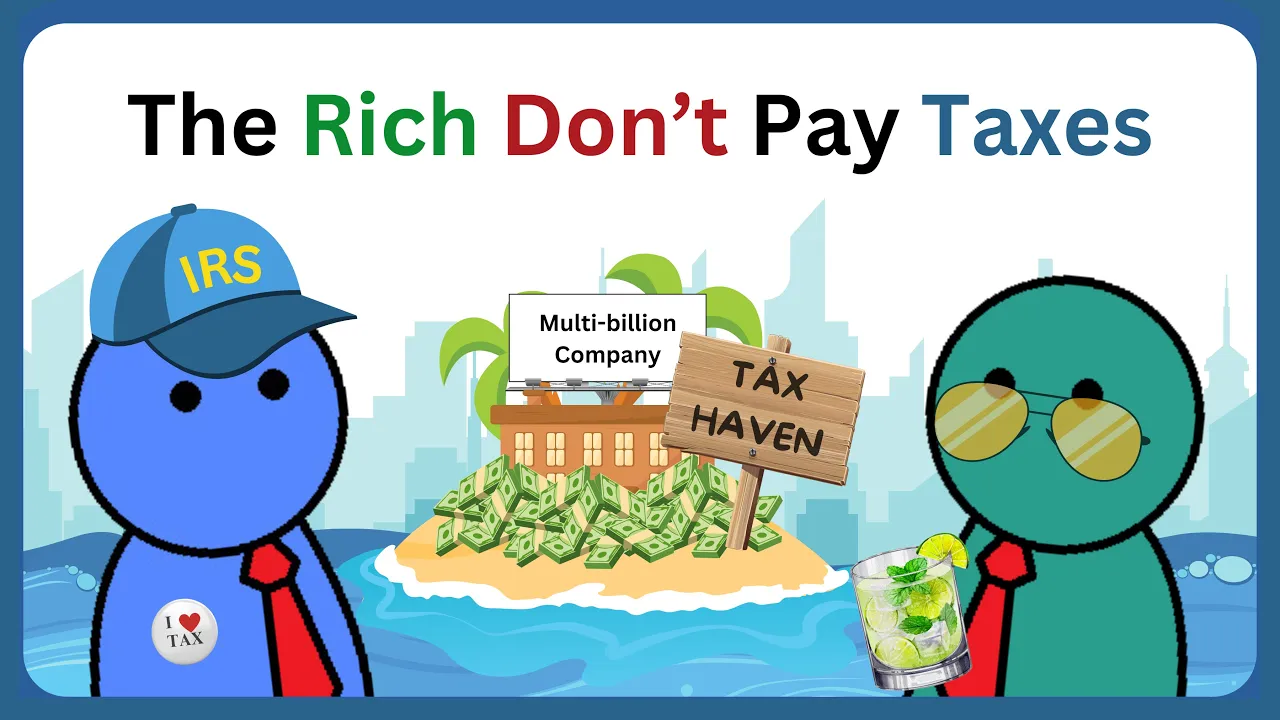
Transfer pricing involves moving profits from high-tax countries to low-tax jurisdictions through internal transactions. A company transfers intellectual property (like trademarks, patents, or copyrights) to a subsidiary in a tax haven. When selling products, the parent company pays royalties to the offshore subsidiary for using this intellectual property. This artificially reduces taxable profit in the home country. For instance, a U.S. company earning $1 million profit could pay $900,000 in royalties to a Cayman Islands subsidiary, leaving only $100,000 subject to U.S. corporate tax.
Click to watch →
Deep Dive
The study of 'waste colonialism' and the global trade networks that route hazardous materials and e-waste to developing nations.

Куда попадает старая техника #погнали
274.6K
Wealthy countries illegally export outdated and toxic electronic waste to developing nations under the guise of humanitarian aid, violating the Basel Convention which prohibits the transfer of hazardous waste between countries; this practice, termed 'waste colonialism,' exploits vulnerable economies and creates environmental and health hazards, prompting some countries like China, Nepal, Malaysia, Indonesia, and the Philippines to refuse such 'aid' shipments.
Click to watch →

Por qué EE.UU. Esconde Toda su Basura en México? | TheMXFam
47.7K
Waste colonialism describes the practice where developed countries export hazardous and toxic waste to developing nations, following the same exploitation pattern as traditional colonialism. Developed countries take advantage of weak regulations and high corruption levels in developing nations to send waste they cannot store or process domestically. This perpetuates economic and political exploitation, with vulnerable countries bearing the environmental and health consequences while developed nations maintain their clean environments. Major corporations like Tesla and Coca-Cola exploit regulatory gaps by investing in Mexican recycling facilities that receive highly toxic materials including Tesla battery liquids and Sherwin Williams paint. In 2022, communities near these plants reported children experiencing headaches and vomiting from toxic gases.
Click to watch →

Мусорный город Агбогблоши - hi-Tech ад.
414.7K
E-waste has become the first waste type in history to migrate across national borders. Starting in the 1970s, developed countries began shipping e-waste to China, India, Pakistan, Latin America, and Africa. Today, hundreds of cities worldwide have become e-waste dump sites. In Agbogbloshie, Ghana, 840 containers of e-waste arrive monthly from industrialized countries. Workers extract valuable metals like copper from discarded electronics, yet many have never seen a functioning computer. This creates a paradox where technological progress benefits are extracted from the poorest communities while they bear environmental and health costs. The e-waste crisis represents a global injustice where waste from wealthy nations is transferred to developing countries.
Click to watch →
La più grande discarica di rifiuti elettronici al mondo si trova in Ghana, ecco come funziona
541.8K
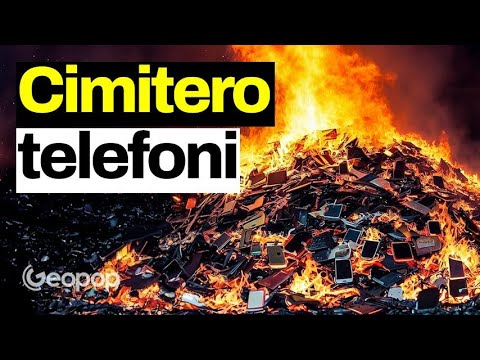
This segment explains how electronic waste flows from developed countries to developing nations. With 53 million tons of e-waste produced annually worldwide (equivalent to 7 pyramids of Cheops), 83% remains unrecycled. Despite the Basel Convention prohibiting hazardous waste transfers to developing countries, intermediaries like Tunisia, South Africa, and Nigeria facilitate smuggling. Ghana imports approximately 500 containers monthly, bypassing environmental regulations. Agbogbloshie, a suburb of Accra, has become the world's largest illegal e-waste dump, covering 31 hectares with 13,000-17,000 tons of waste. The area, once an agricultural market, now houses 40,000 impoverished residents and has earned the nickname 'Sodom and Gomorrah' due to its hazardous conditions.
Click to watch →

ಏನಿದು ಶ್ರೀಮಂತ ದೇಶಗಳ ಕಸದ ಕಲೊನಿಯಲಿಸಂ? ! | Waste Colonialism | US Dumping Business | Amar Prasad
50.1K
Wealthy Western countries export their waste to developing nations like India, Sri Lanka, and Malaysia, treating them as dumping grounds for their garbage. This practice, called 'waste colonialism,' involves shipping thousands of tons of plastic, paper, medical waste, and hazardous materials to countries that lack proper waste management infrastructure. The trade is driven by economic factors including strict environmental regulations and high labor costs in developed nations, making it cheaper to export waste than to recycle domestically. This creates long-term environmental and health problems for receiving countries, as they struggle to manage the imported waste while already facing significant waste management challenges.
Click to watch →
Deep Dive
Analysis of international policy frameworks aiming to curb these practices, such as the OECD global minimum tax agreement and supply chain due diligence laws.

Cobalt in lithium ion batteries. How do we solve the problem?
70.8K
In response to the Amnesty International report and subsequent public pressure, international organizations developed frameworks to address responsible mineral sourcing. In 2016, the OECD published the third edition of its Due Diligence Guidance for Responsible Mineral Supply Chains, containing five core principles to help steer large corporations toward ethical sourcing practices. Major technology companies including Apple and Microsoft adopted these guidelines. Microsoft published an 111-page sustainability report specifically highlighting cobalt as the most significant risk factor material in their products, publishing names and locations of all mines and smelters used in their supply chain. Apple has produced annual supplier responsibility progress reports for 12 years, auditing 756 suppliers in 30 countries and addressing any identified labor violations.
Click to watch →
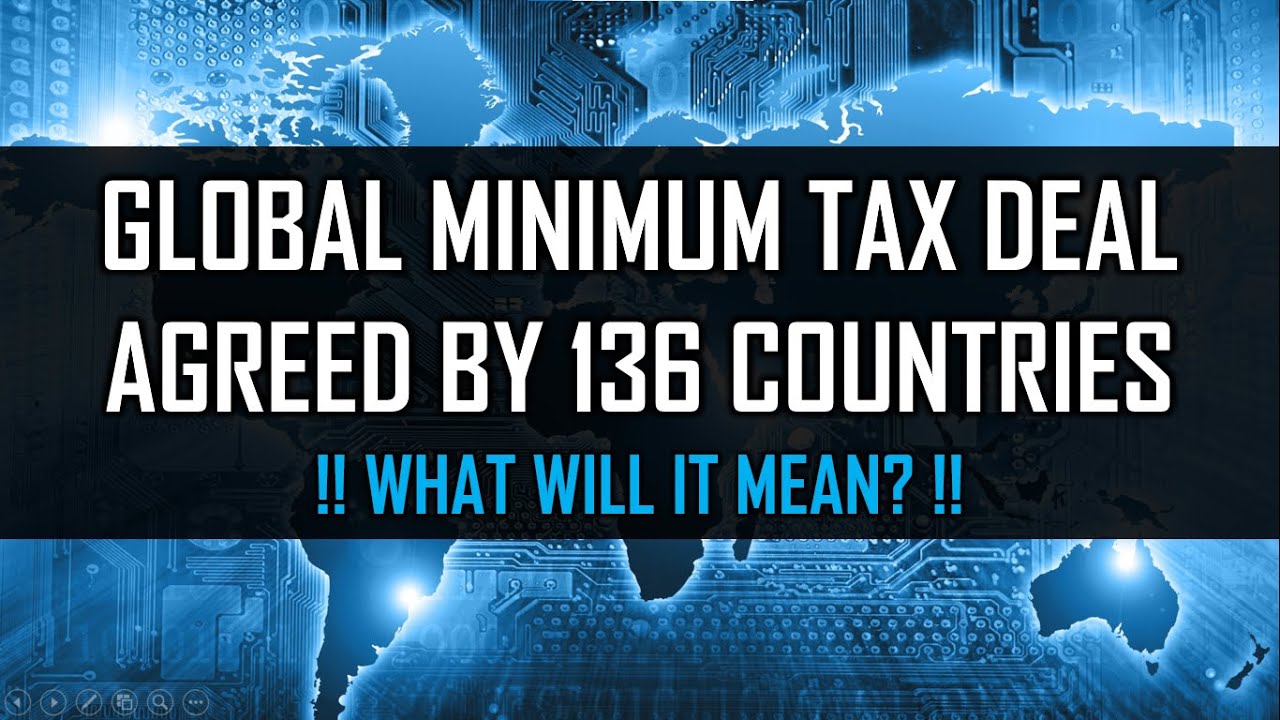
Big Attack on Tax Evasion - Global Minimum Tax Deal agreed by 136 countries, Role of OECD #economy
5.3K
The OECD has proposed a global minimum tax agreement requiring multinational companies to pay at least 15% corporate tax, regardless of the country where they are registered, to prevent tax avoidance through low-tax jurisdictions; 128 out of 140 countries (90% of global economy) have signed this agreement, with Kenya, Nigeria, Pakistan, and Sri Lanka not yet signing, and India, while not an OECD member, maintains strong cooperative relations with the organization.
Click to watch →
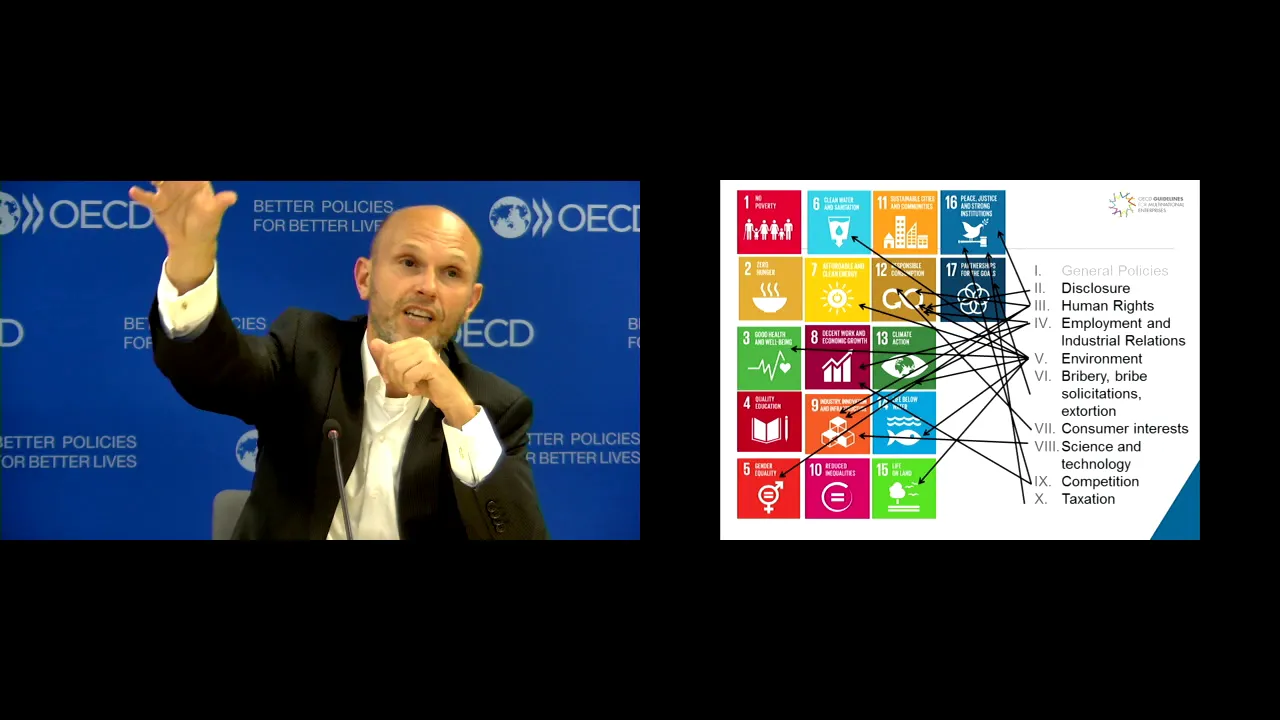
Crash course Nieuwenkamp Responsible Business OECD
4.6K
The OECD Guidelines' due diligence concept has influenced mandatory legislation worldwide. France implemented mandatory due diligence laws requiring companies to assess supply chains for human rights abuses. The UK Modern Slavery Act requires companies to report on efforts to prevent slavery in supply chains. The EU Non-Financial Disclosure Directive mandates transparency on environmental, social, and governance practices. These developments represent a shift from voluntary compliance to legal requirements, building on the OECD Guidelines' framework and creating a level playing field for responsible business conduct globally.
Click to watch →

Oxford POGO Club November 2022: Supply chain due diligence and public procurement
119
The OECD defines due diligence as a process to identify, prevent, and mitigate adverse impacts in company operations and supply chains. Approximately 75% of OECD countries have or are considering responsible business conduct legislation, categorized into three types: disclosure requirements (UK/Australia Modern Slavery Acts, EU CSRD), due diligence conduct requirements (French, German, Swiss, Norwegian laws, EU CSDDD), and product/trade bans (US Uyghur Forced Labor Prevention Act). Public procurement is impacted differently: disclosure laws require public institutions to publish statements, conduct requirements may mandate bidder exclusion, and trade bans prohibit purchase of banned products. Due diligence operates at three levels: institutional/portfolio (risk management integration), individual procurement procedures (mitigating harm in specific purchases), and supplier operations (engagement beyond contract clauses). The OECD pilot on garment and textiles demonstrated good practices across these levels.
Click to watch →
The Economics of Tax Evasion - Sarah Clifford with David Barrett - What Economists Really Do
1.1K
In 2015, the OECD launched the Base Erosion and Profit Shifting (BEPS) initiative to coordinate international efforts against profit shifting. This led to over 130 jurisdictions agreeing in 2021 to a new international tax reform including a global minimum tax of 15% on the profits of the largest multinational firms (those with consolidated turnover above €750 million). The rules include backstops allowing headquarter countries to tax profits at 15% if other countries don't implement the rules. More than 30 countries have introduced draft or final legislation implementing this minimum tax, with the first wave effective January 2024 including EU, UK, Japan, and many other jurisdictions. OECD estimates suggest this could raise up to 8% of global corporate income tax revenue, though critics highlight loopholes and question whether this represents a fundamental solution.
Click to watch →
Offshoring Evils
Power Abuse
Offshoring Evils
0:06- 1
Defines offshoring as hidden global activities avoiding laws.
- 2
Highlights impacts: pollution, poor labor, tax evasion.
- 3
Notes offshore energy and waste dumping harm sustainability.
The Theory of Comparative Advantage and Global Economic Convergence
In contrast to the view that offshoring is primarily a mechanism for evading regulations and hiding costs, mainstream economic theory, rooted in David Ricardo's concept of comparative advantage, views offshoring as a powerful driver of global efficiency and poverty reduction. Proponents argue that by relocating production to countries with lower labor costs, multinational corporations can produce goods more cheaply, benefiting consumers worldwide with lower prices. Furthermore, offshoring facilitates significant capital investment, technology transfer, and infrastructure development in developing nations. Rather than merely exploiting these regions, offshoring has historically lifted hundreds of millions of people out of extreme poverty—particularly in East and South Asia—by integrating them into the global value chain. This perspective frames offshoring not as a race to the bottom, but as a mutually beneficial process of economic convergence that fosters global wealth, modernization, and specialization.
Understanding the fundamentals of economic globalization and the structure of global supply chains.
The economic concept of 'externalities', specifically how companies externalize social and environmental costs.
The concept of regulatory arbitrage, where businesses exploit differences in national laws, taxes, and safety standards.
An overview of neoliberal economic policies that advocate for deregulation and the free movement of capital across borders.
John Urry's sociological theories on 'mobilities' and how 'offshoring' functions as a systemic spatial fix for modern capitalism.
The mechanics of offshore financial centers, tax havens, and transfer pricing used to minimize corporate tax liabilities.
The study of 'waste colonialism' and the global trade networks that route hazardous materials and e-waste to developing nations.
Analysis of international policy frameworks aiming to curb these practices, such as the OECD global minimum tax agreement and supply chain due diligence laws.
24.8K views218likes3:07@channelmorphOriginal Release: 2013-09-16
offshoring is the Dark Side of globalization money Goods waste energy people all offsh to avoid laws taxes rules regulations activities are hidden by secretive new network digital Technologies complex legal and financial structures high security and the vast Lawless oceans States move Powers offshore create new physical and digital borders setup camps military waste pleasure torture Finance offshore tax Haven are used by almost all big companies and high net worth individuals income not spent where it is generated depletes local economies contributes to global poverty big companies manufacture where cost and regulation is low conveniently offshoring air pollution greenhouse gas emissions poor work working conditions 90% of goods are transported in huge container ships 40% fly flags of convenience from toxic sweat shop to shiny showroom returned for the porter scavenge waste is offshor to lowcost locations without regard for local environments high-carbon societies rely on offshore energy supplies oil tankers lurk at Sea waiting for prices to change pleasures disapproved of or illegal at home happen secretly abroad as does torture corruption military action Justified to protect interests political corporate criminal the powerful hide actions to avoid responsibilities offshoring undermines democracy fairness and hope for a sustainable future
Up Next

8:15
ISLM Model Part 3: Deriving the LM Curve Mathematically & Graphically
@funconomics2739
148 views•2021-06-05
5:07
Impact of Yuan in Indo-Russian Trade Amid Sanctions
@WION
261.9K views•2022-07-01
10:33
Behavioral Economics Explained: Rationality, Nudges, and Risk
@crashcourse
1.1M views•2016-03-12

113:18
The Age of Easy Money: Fed & Inflation | Full Documentary
@frontline
21.2M views•2023-03-15
Related Study Plans & Knowledge Roadmaps
Structured learning paths in Economics
economics
Sovereign Debt: Defaults, IMF & Restructuring
01Introduction to Sovereign Debt & Government Bonds
02Debt Sustainability & Credit Ratings
03Anatomy and History of Debt Crises
+ 2 more learning modules
12h5 modules
Explore Roadmap
economics
Market Design: Matching Theory & Gale-Shapley
01Introduction to Market Design and Price-Free Markets
02Two-Sided Matching & The Gale-Shapley Algorithm
03School Choice Systems and Mechanism Design
+ 2 more learning modules
10h5 modules
Explore Roadmap
economics
Impossible Trinity: Forex, Capital & Policy
01Introduction to Monetary Policy and Central Banking
02Exchange Rates and International Capital Flows
03The Mundell-Fleming Model
+ 2 more learning modules
8h5 modules
Explore Roadmap
economics
Healthcare Economics: Market Failures & Systems
01Introduction to Healthcare Markets and Market Failure
02Asymmetric Information and Adverse Selection
03Moral Hazard and Insurance Design
+ 2 more learning modules
12h5 modules
Explore Roadmap