




















![आपकी सस्ती टीशर्ट धरती को बहुत महंगी पड़ती है [Shipping is drastically affecting environment]](https://i.ytimg.com/vi/Sp9Vd-GWaeQ/maxresdefault.jpg)

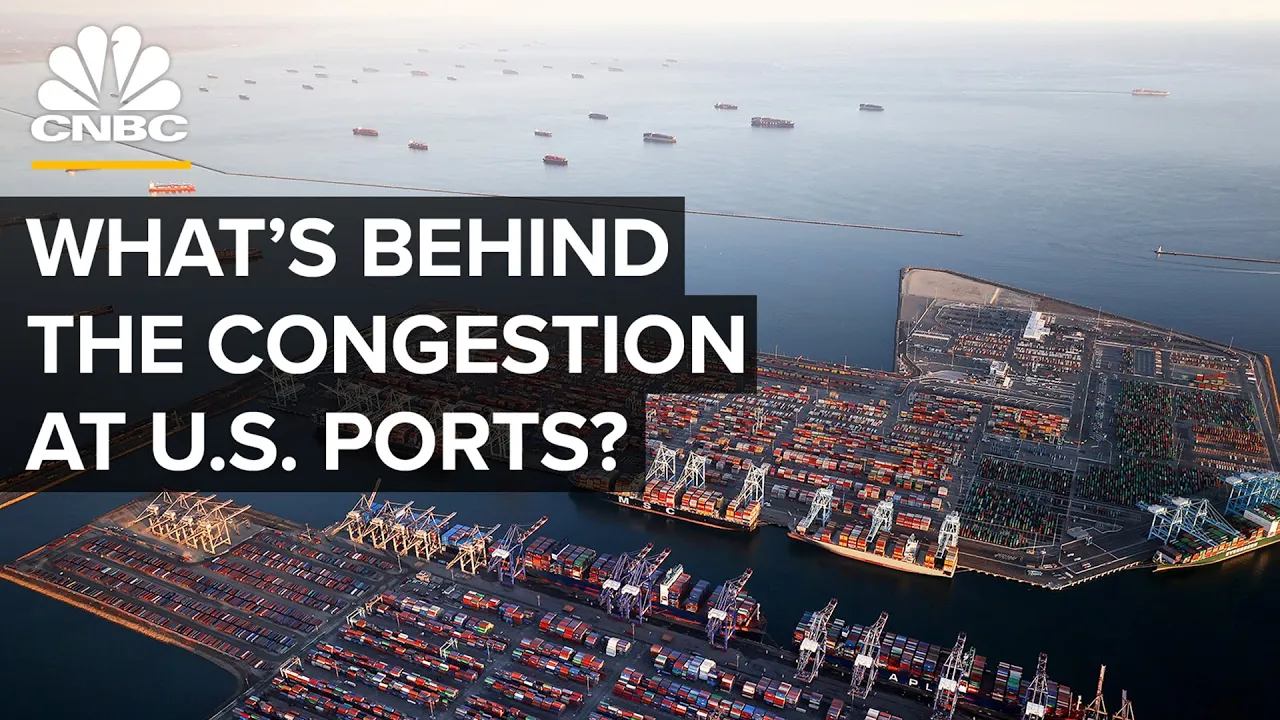





The shipping container, invented in the 1950s by Malcolm McLean, revolutionized global trade by dramatically reducing the cost and time of freight transportation from 20-25% of product value to near-zero, thereby enabling the modern globalized economy; however, this innovation also created winners and losers by making production more mobile and increasing competition across industries.
Containerization's Global Impact | Marc Levinson on Shipping, Trade, and Globalization
Added:Basic principles of international trade, including globalization, trade barriers, and comparative advantage.
The historical 'break-bulk' shipping system and how cargo was loaded and unloaded prior to the mid-20th century.
Fundamental economic concepts of supply and demand, transportation costs, and economies of scale.
The historical role of port cities and maritime trade routes in shaping early global economies.
Advanced supply chain management strategies, such as 'Just-in-Time' (JIT) manufacturing and lean logistics.
The environmental and ecological footprint of maritime shipping, including carbon emissions and ocean pollution.
The modern rise of automation in ports and its ongoing socioeconomic impact on labor unions and dockworkers.
The geopolitical risks of global supply chain concentration and modern trends toward 'nearshoring' or 'friendshoring'.
7.8K views65likes55:30Original Release: 2008-05-28
[Music] [Music] I'm delighted to um to uh reconvene our um our uh uh conference and I do think we have a we have a terrific uh it's true we do have a terrific audience. The audience is the key here. We've got we've got people who are into art and architecture and then we got people in the who are into sort of you know logistics and sort of details and and history. So this is good. So maybe it's like one of those things that shake hands with the with the architect next to you or shake hands with the historian next to you. I think we'll do that. You know, you know when you go to what various uh meetings or services or things of that sort. I think I I think we'll play that game at a certain point.
Shake if you find a sociologist and shake their hand and then uh find a find an a studio artist and and be nice to them, too. Uh uh anyway, I'm I'm I'm delighted to to introduce our second keynote speaker, Mark Levenson. um who um had is a is an economist and a journalist in New York and also also this is important and I don't think is a history graduate student also in New York I think we have to say that okay and yes let's have a hand and and we'll get to that in a second because you may think he's long since he's ameritus already but no he's just beginning um he's held staff positions for many a couple decades at least with the economist with Newsweek and the Journal of Commerce and and he's written I think he's the author of at least uh two books or if not three before his current one.
One is the uh a guide to financial markets which I think was reissued is that correct recently. Uh another one is uh beyond free markets the revival of activist economics I think that first came out in 1988 probably a little bit um hopeful but maybe that'll happen.
Okay. And um uh another book after Reagan uh uh confronting the changing the world economy. So he's been he's he's been a writer. He's been a journalist. He's been act an active uh uh a uh involved in in uh in the world of New York commerce and finance. Um and then um I first met Mark at uh the seminar of a of a labor historian Josh Freeman uh three or four years ago. Uh and you know he was taking a taking a a graduate course at City University of New York.
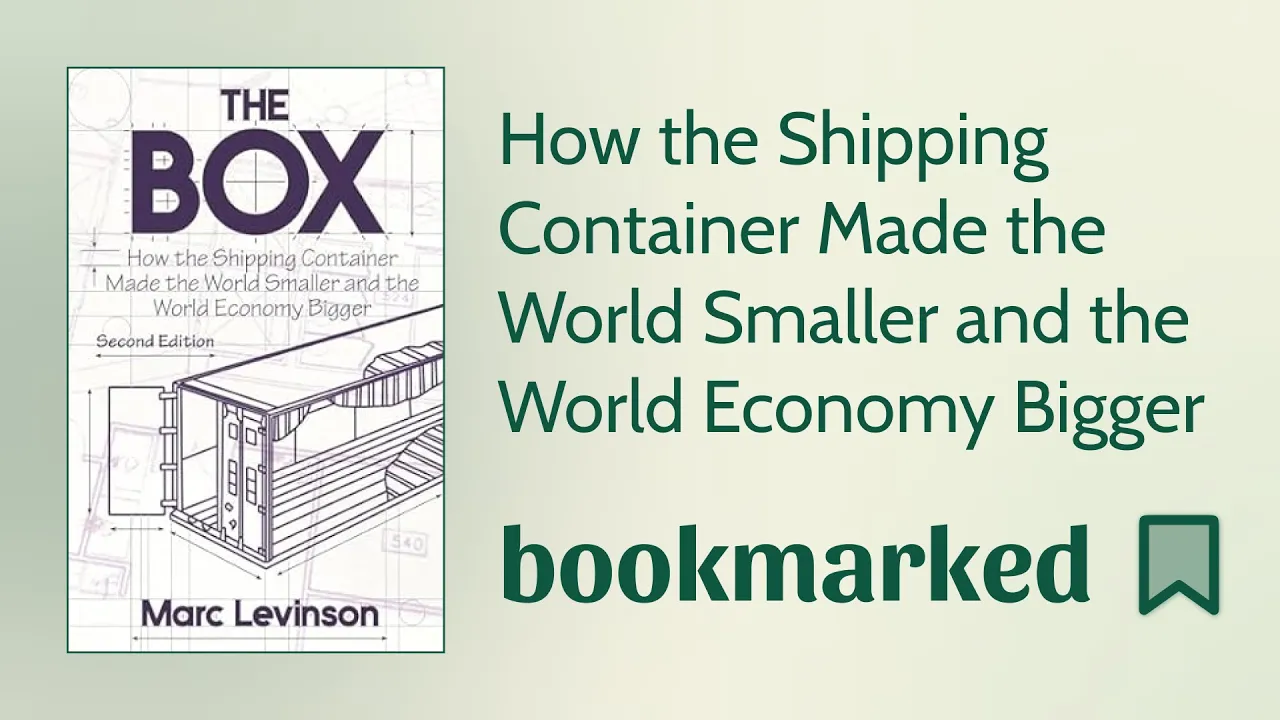
And as I understand it, uh, this book, correct me if I'm wrong, sort of is a kind of came out of a, uh, a, uh, a seminar paper that you were writing or something of that sort, you know, sort of emerged out of the general chaos of grad school. Um, the the box, how the shipping container made the world smaller and the world economy bigger.
And this is a phenomena. This book is a phenomena. It's an event. Uh, I realized uh this book something was going on with this book when I in the hallway I met um uh saw Kim Yasuda who is a a professor of studio art and art here in the IHC and she had this book tucked under her arm and it was dogeared. it was underlined and I said what is going on here if that this book is being used and sort of obviously used by a a a professor of studio art you know uh and uh then of course when it appeared it was reviewed um by everybody I mean everybody's had something could invest in this book I mean the you know the e the uh the economist the business press the New York review of books uh the labor his story history I mean everybody you know wants a wants part of this book uh and I think That's it's just indicative of of a of of of a of a of a of a project, an idea uh that uh that Mark had that really filled uh filled a vacuum that had to be filled and and once it was done everyone said why didn't I think of that you know right when it's a good book you say why I could have written that book you know all right um so uh I'm really delighted to have have Mark here and uh uh you take the take the [Applause] Good afternoon and I'd like to u thank you all for having me here.
Let's see now. Where did this get shipped in from?
Well, I don't know actually. It's uh it may or may not have come from across.
No, it's from California. So, maybe it didn't come in a container.
It it's um quite an honor for me to be uh invited to come here and speak to you today and I've got to say that I am really thrilled by the topic of this conference.
Uh one of the more surprising things that I discovered in the course of several years work on containerization is how little serious research uh has gone on into the container and its many consequences. Conferences such as this, I think, are really important in putting containerization on the agenda for academic research. Uh, and I'd certainly like to record my thanks to the Interdiciplinary Humanities Center here and to to UCSB for organizing this event.
I'm delighted to have the chance to talk about containerization because I rarely did so while I was writing the box.
Um, I'd run into my friends and they'd say, "What are you up to?" and I'd say, "I'm working on a book. Um, what's it on?" They'd say, "It's a history of the shipping container." I would tell them.
Um, that response, uh, invariably led to a rather embarrassed silence, followed by a change in subject.
Um, I was actually appreciative when one of my neighbors asked me flat out, "Who'd want to read a book about that?"
Well, then things changed in in pretty unexpected ways. No sooner did the book appear than a colleague at my office said to me, "You know, I used to live in a container."
Well, no, he was not homeless. Uh, he'd actually been in the British Army, and as it turns out, the British Army uses containers as housing units that can be installed quickly in remote locations.
Uh, an officer gets one to himself, non-commissioned officers share a container, and, uh, privates go for a container.
Um, a few weeks later, I met a couple of architects who are currently in the process of erecting an office building uh made entirely of 40 foot containers.
Then I met a man who' created a containerized art gallery to achieve his ambition of making art accessible to uh people in workingclass neighborhoods. Uh he just moves the container from place to place depending upon where he wants to show the art.
Then I heard from a computer company that was developing a data center prepackaged in a container for quick transport to wherever it was needed. Uh a server in a box they called it. So the uh lowly container is having influence in many different fields and I think that this conference will give us a better sense of its importance.
Shortly after the box was published, I received a phone call from a man who told me he'd taken a graduate class from one of the country's leading economic historians.
The professor, uh, he said, had told his students that the container was one of the more important developments of the 20th century, but that it was so simple there really wasn't much to say about it.
Uh, that may just have been the greatest compliment I've ever received. I mean it it takes a certain sort of talent to write 300 pages on a subject on which there's nothing to say.
But while it's true that the container may be the most boring innovation of all time, the process of creating it was anything but simple.
To understand what was involved and why it was so important, we need to step out of the 21st century for a moment and back into the world of the 1950s.
Back then, you couldn't just run over to your local store and find merchandise from all over the world. If you were operating a business, almost all of your supplies and your components, other than raw materials, were made nearby. Imports and exports were very small relative to the size of the economy and trade in manufactured goods was even smaller.
Most of what crossed the seas was commodities. Who remembers in the 1950s when US manufacturing was growing very rapidly? Who remembers what was America's leading import? Anyone recall?
Was coffee beans in burlet bags.
Obviously, there were many reasons that international trade hardly registered back in the early 1950s.
Countries in Europe and Asia were still suffering the effects of World War II.
They didn't have a lot to sell and they couldn't afford to buy much.
Import tariffs, of course, were high almost everywhere.
In an era of fixed exchange rates, countries with trade deficits literally had to worry about running out of money and trade flows were heavily controlled for that reason. All of these factors are well understood. But there was another type of trade barrier that has received much less attention. I'm referring to the cost of freight transportation.
For many products, the cost of international transport came to 20 or 25% of the value of the goods themselves. In some cases, even more.
Moving goods was so expensive that many goods were just not worth moving.
Most of this cost was incurred on the dock where veritable armies of dock workers required days and even weeks to load a single ship.
There were 50,000 dock workers in New York City in the early 1950s. Another 50,000 in London. That gives you an idea of the magnitudes here. Most of us in this room are too young to remember what freight transportation was like back then.
But an unusual US government study offers us some help. The study concerned a ship called the Warrior, which sailed from Brooklyn to Bremerhav in Germany in March of 1954.
Here's what was on board the Warrior.
74,93 cases, 71,726 cartons, 24,36 bags, 10,761 boxes.
There was also an assortment of drums, cans, barrels, crates, reels, even a few cars.
All told, doc workers in Brooklyn had to remove almost 200,000 separate items from warehouses, assemble them onto wooden pallets, lower the pallets into the hold of the ship, and then remove each of those individual items from the pallet and stow it somewhere in the vessel.
Just getting the ship loaded took six days.
The time required to move the entire load from the date the first goods left a US factory to the date the last goods were delivered in Europe was more than three months.
The Warrior by today's standards was a small ship. It carried about as a tenth as much cargo as fits on the average container ship today.
So here's a thought experiment for you.
Imagine a vessel 10 times the size of the Warrior carrying 10 times as much cargo just the way the Warrior carried cargo.
Imagine loading that ship with 749,000 cases, 717,000 cartons, 240,000 bags.
If you think for a moment about how long it would take dock workers to load two million items by hand on board a ship, you'll understand that international trade on today's scale would simply be impossible without containerization.
Now, everyone in the 1950s was perfectly aware that the need for all this freight handling was a bottleneck.
The solution was obvious. Instead of loading and unloading all of those cases and cartons and bags and bales every time cargo needed to be shifted from a train to a truck or a truck to a ship, why not just put a lot of packages into a container and move the container?
The truth is that the idea of putting cargo into containers was not a new idea in the 1950s.
Various railroads and ship lines had been doing it for the better part of a century in response to the high cost of handling cargo.
You can find photos of intermodal containers in France in the 1890s.
The containers were lifted by a winch from a flatbed rail car onto a horsedrawn cart. intermodalism in its early version.
In America and Britain and Australia, containers were widely used by the 1920s.
European railroads agreed on a standard size for containers. In the 1930s, a variety of companies around the world offered intermodal container services.
Intermodal means going from ship to truck or truck to train. by the early 1950s.
None of those early container ventures made much difference to the world. And there are several reasons why this was so.
One is that regulators often stood in the way. In the US, for example, back in those days, freight rates depended upon the commodity.
Usually, the price was so much per ton for a given commodity.
In the Interstate Commerce Commission, which regulated trucks and railroads, insisted back in the 1930s, that the rates for shipping a ton of a good in a container should be exactly identical to the rates for shipping a ton of the same good as loose freight.
In other words, there was no money to be saved by using a container. Of course, nobody was in a big hurry to use containers.
The early technology wasn't terribly efficient either. Many of the early containers were made of heavy steel. So a quarter of the weight of a loaded container was the container itself. That was not hugely sensible. Other containers were made of wood. Uh they were sometimes liable to break apart during shipment.
Labor unions stood in the way of containerization in the early days. And not just the dock unions in the US. For example, the Teamsters Union negotiated contracts that made it all but impossible for some shippers to send truck trailers on trains.
Another obstacle came from the fact that ships and trucks and rail cars were not designed for containers.
But probably the biggest reason containerization went nowhere in those early days in my view was that transportation companies themselves didn't want it to go anywhere.
By and large, the transport industry saw containerization as a good thing so far as it would reduce costs, but a bad thing if it might increase competition.
That's one reason that by the late 1950s, containers came in many different shapes and sizes.
Sealand, the company created by the US trucking entrepreneur Malcolm Mlan, used a 35- ft container. Matson line, which served California and Hawaii, used a 24 foot container. One early system in Canada had eight- foot containers.
Another system used in the Puerto Rico trade had containers that were 7 ft long.
The New York Central and Missouri Pacific railroads both had container systems, but they were totally incompatible. If you shipped a container from Texas to St. Louis on the Missouri Pacific, you couldn't move it on to New York on the New York Central. and you certainly couldn't move it on board a ship.
These differences allowed each individual company to hold on to its customers to protect its business, but it also meant that most shippers didn't really find containerization very useful. A shipper in Topeka could not fill a container and be confident that it would be delivered in Tokyo or even in Tacoma.
This brief description of the obstacles explains why in my view Malcolm Mlan deserves so much credit in the containerization story. He's often labeled as the inventor of containerization and that's clearly not right. Mlan's real contribution to the story in my view didn't have to do with boxes and chips but with mindset.
His view was that freight is freight.
Customers, he thought, didn't care how their freight moved. They were not interested in the trucks and the ships and the trains. They just wanted their goods delivered cheaply, safely, and on time.
At this point, I want to interject a detail for the benefit of the historians in the room. In his older years, people frequently asked Malcolm Mlan how he came up with the idea of the container.
Mlan recounted that when he was a truck driver, he's he'd started out driving his own truck in the 1930s. And Mlan said that once he'd sat for hours at a pier in New Jersey waiting to unload bales of cotton on board a ship. And while he was sitting there, he thought to himself, "Wouldn't it be easier if we could just load the truck trailer on board the ship?" This brainstorm supposedly developed into containerization 20 years later.
Well, my own judgment is that this epiphany never occurred.
As I've told you already, the idea of shipping goods in containers was around a long time before Malcolm Mlan. But what has fascinated me is that even if this story isn't true, people love it.
This reflects a widespread misconception about technological innovation. Readers really eat up the idea of the inspired genius, the bolt from the blue, the apple falling on Isaac Newton's head.
They really like the idea that Malcolm Mlan was sitting there at the dock one day and bang, he had the idea for the container. Explaining the reality that innovation occurs in erratic steps with one person building upon the work of other people is really a tough cell for the historian.
But back to Malcolm Mlan, as I've indicated, his most important contribution to the development of containerization was the insight that freight is freight.
In 2007, this insight sounds pretty simple.
In 1956, when MLAN's first container ship set sail, this insight was revolutionary because it implied that the transport industry was looking at the world all wrong. Back then, shiplines thought their business was shipping. Railroads thought their business was railroading. Truckers thought their business was trucking. And Mlan said, "Nope, nobody really cares what your business is."
Looking back from the 21st century now helps us understand the mentality that Malcolm Mlan was fighting.
That mentality held that the world is a pretty static place.
In a static world, there's only so much freight to go around.
So any change that means more for you means less for me.
In that world, the smartest strategy is to fight change.
The history of containerization reveals that sort of thinking again and again.
Through the 1960s, US railroads fought containerization tooth and nail because they were convinced that containerization would mean the end of their box car business.
Well, they were right.
But then again, no one in the railroad industry back then foresaw, even remotely imagined, that North America's railroads would one day move 12 million containers in a single year, which is what they're going to do in 2007.
The container is the most profitable freight on the rails today. None of the folks in the railroad industry who fought containerization in the 50s and 60s and 70s thought that far ahead.
The many trucking executives who bitterly opposed US transport deregulation in the 1970s didn't have an inkling of the international cargo that would come their way after deregulation opened the way to lowercost international trade.
They just saw the risks that they might lose some business.
And let's not forget the union folks.
The local union leaders at the Port of Los Angeles in 1960 declined to handle containers because they thought that containers would mean the end of the port of Los Angeles.
As we'll see on Saturday firsthand, that assertion proved just a little bit wide of the mark.
The container has helped change many aspects of the world economy by dramatically altering the economics of freight transportation.
I would argue, as Nelson said earlier, that today's globalized economy could not have come about if long shoremen were still loading vessels one bag and one barrel at a time. This has had some extremely positive consequences for consumers around the world in terms of lowering costs, in terms of increasing the variety of goods in the stores. It's probably made a significant contribution to economic health, to economic growth.
But at a more detailed level, the consequences of containerization are much more nuanced and they continue to unfold.
I would like to highlight three all of which I think offer some opportunities for future research.
One is the changing role of ports.
If you go back and read about what was written about freight transportation in the 30s or the 50s or even the early 1970s, you'll see some startling terminology.
You'll come across the word tributary.
For example, what tributary, what tributary meant was that a certain geographic territory was the captive customer of a particular port city. The port city prospered by exercising a chokeold over the region's economy.
Another word common in this older literature is natural associated with the flow of cargo. Natural implied that there was a correct path for a shipment to follow between two points. A sort of law of physics governing cargo. By this logic, moving cargo over an unaccustomed routing or through a new transfer point might be considered a crime against nature.
This way of thinking has gone the way of break cargo in the container area. There are no natural rooings and there are no more tributaries.
Nelson mentioned earlier the possibility that the paths of distribution may now be the fixed factor of production rather than the location of manufacturing. I'm not sure that's true. No matter how deep a harbor and no matter how easy its rail connections, they cannot guarantee the flow of traffic through a port.
The customer who is most likely a manufacturer or a retailer has a container in Mumbai and wants to move it to Minneapolis.
The customer doesn't much care whether it goes through the Suez Canal or the Panama Canal, whether it's trucked from Port Newark to Minneapolis or whether it's barged up the Mississippi River from New Orleans or whether it goes on a ship to Vancouver and then rides the train to Minneapolis.
All of these routes, all of these ports are in competition.
This has obvious implications for the bargaining power of port and terminal operators, railroads, truck lines, and workers in the longshore rail and trucking industries.
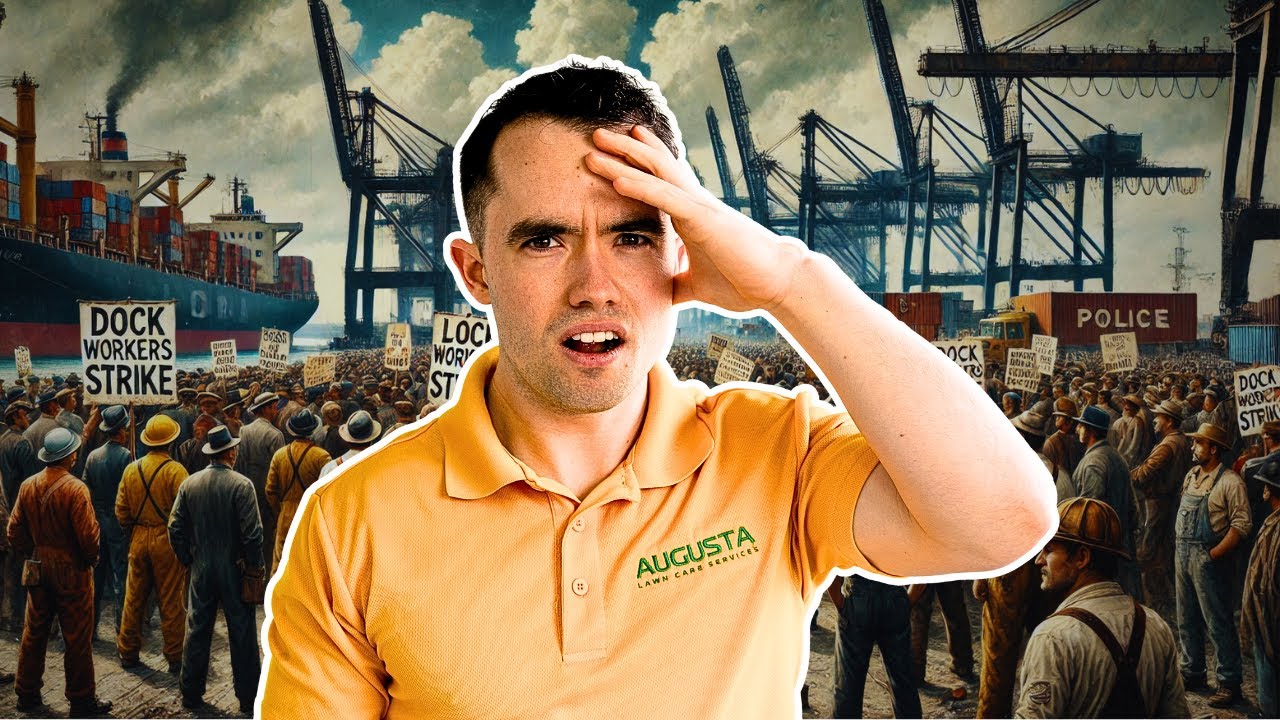
Nelson suggested earlier that we've seen a shift uh of power to groups of workers in some areas. And indeed this is the case with containerization uh because uh port workers in particular have gained bargaining power from the fact that it is very very costly to the ship owner for the ship to be delayed and and so they're willing to pay a great deal of money to keep the port operating. On the other hand, the ship owners and their customers are not wedded to a port and this is going to tend to reduce the bargaining power of all of the factors of labor that are associated with the report with the port. Just to give you one example, the West Coast dock strike in 2002 and you're welcome, excuse me, you're you're you're welcome you're welcome to address that later.
Um, and the congestion in the Western Railroads in 2005 and 2006 has led several major companies to open warehouses in places such as Houston and Savannah, not necessarily to reduce costs, but to reduce risks from disruption.
The literature on port competition doesn't really look at competition among routings largely because it's very difficult to get a handle on all of the costs relevant to corporate decision-making. And I think this is a subject that would really benefit from a micro analysis of individual shippers decisions. The relevant data may be hard to come by. I believe me I've tried but I suspect that some of them may be available.
A second subject that has not been well explored is the connection between transport deregulation and economic concentration.
As I show in the box, containerization was an important source of pressure for the deregulation of freight transport.
Mainly because most of the old regulatory concepts really didn't fit the container. Those old concepts, as I mentioned, are based on a commodity specific price. And that made sense when freight was shipped loose. Some freight took more time to load than other freight. Some freight took up more space in a ship or on a train than other freight. But the commodity-based rates didn't really make any sense at all in a container. Uh it costs just as much to load one container as another. And this really exerted a lot of pressure for the end of the old regulatory regime in which one had to apply to the interstate commerce commission for permission to charge a specific rate.
One result of deregulation is that most freight and certainly most international freight now moves under contract.
Uh this is an aspect of deregulation that really hasn't gotten much attention. Most people talk about rates themselves, but I'd argue that contracting and particularly confidential contracting is probably more important than the freedom to set rates.
The terms of these contracts are undisclosed.
So, we really don't know who pays what to ship goods. My suspicion, however, is that deregulation benefits big shippers over small shippers in two ways.
First, a company that's shipping 10,000 containers a month obviously has a lot more bargaining power with ship lines, truck lines, and railroads than a company that ships 10 containers a month. Second, when rates are secret, a big shipper that's constantly negotiating rates has better information about rates. It knows what current prices are, whereas a small shipper just doesn't go into the market very often.
so the big shipper can bargain more intelligently.
Both of these factors would seem to give big companies a significant competitive advantage against small companies.
This is one of these ideas that makes perfect sense to me. So far I haven't been able to prove it because the data, as I say, are hard to come by, but I hereby invite all of you to try to prove it.
A third subject that's calling for attention in my view is the potential reshaping of supply chains due to changes in costs.
And I'm I'm going to point out several of these things. When environmental laws started coming into force in California in the 1960s and in the rest of the US in the 1970s, ports and shiplines basically got a free pass. So did railroads.
Those days are now over.
The current effort to reduce pollution at the ports of Los Angeles and Long Beach is expected to cost more than 10 billion dollars.
And other ports are undertaking similar initiatives. Those costs will be loaded on every container passing through the ports.
Efforts to address climate change are inevitably going to make freight transportation more expensive.
In the United States, we have a significant history of underinvestment in transport infrastructure, both public infrastructure and private infrastructure, which is serving to make freight transportation less reliable.
And lower reliability means that shippers have to carry more inventory to protect against disruption. That's a cost, too.
So, all of these factors are are raising rates. Anecdotally, I hear a lot of stories now that manufacturers are moving some of their production from Asia to Mexico or even back to the United States in order to reduce supply chain risks and costs. Uh I hope we'll have some research on sourcing strategies to explore this development.
Will these rising costs re reverse the trend to globalization that the container helped bring about? Well, I admit to being an economist and I readily acknowledge that over the last half century, economists have shown themselves to be singularly unskilled at evaluating the potential of containerization.
One need only consider the foresight of the Harvard economists who appined back in 1959 that containerization would aid New York City's garment industry by making it cheaper to send clothing from New York to the south.
Or you can think about the economists for a famous consulting firm who opined in 1967 that five containers ships would suffice to move all of the trade between the United States and Great Britain.
Or you can think about the economic analysts in the mid 1960s who said that container shipping would never work across the Pacific Ocean. The distances were just too great.
With those unfortunate examples in the forefront of my mind, I would suggest that we face some significant questions about whether international trade can continue to grow at the rate that containerization has made possible.
Trade has really thrived on the economies of scale in shipping. But as ships and ports get bigger, these economies may be turning into diseconomies.
Security concerns are likely to raise shippers costs.
Environmental worries are making it harder to expand ports and railards.
Rising wages and strong currencies across Asia are making exports less attractive.
And of course, shipments that made economic sense when oil was $20 a barrel may not be viable at 80 or $100 a barrel. Expanding international trade in the future may not be as easy as it was in the past.
In its first half century, the boring old shipping container has opened the way for economic changes that no one dreamed of in the 1950s.
I think plenty more changes are yet to come, but I really am reluctant to offer a prediction.
If there's one thing that we can learn for sure from the history of containerization, it's that we should be very humble when it comes to making forecasts.
Thank you very much.
[Applause] be happy to take questions.
Thank you, Nelson. I'm David Benman from Rutgers University. Uh, I've really enjoyed the being provoked by Mark Levenson and his book and uh, I had a few thoughts that I was wondering if you could help me to uh, understand better. Um it seems to me that you know one aspect of the container revolution that you described has played itself out to a large extent and I feel like we're stuck now with uh lack of implementation of the the capacities for further improvements in in freight movement the way the world was in the 50s. So it it seems to me that we have the capacity to process information that would make it possible to move freight a lot more quickly than it's moving now, but the that technology, the computer software programs and the way that they could link up different modes of freight transportation aren't being used very effectively. And I'm wondering if you could give us any uh insight into why the logistics industry worldwide is is so slow to take ad uh advantage of the possibilities. Another example that's occurred to me is seems like after the port of New York facilitated the revolution that you wrote about by helping to build the uh container port in in Elizabeth.
uh it's kind of retreated from from that activist model and is now more interested in real estate development and turning the waterfront of New Jersey into a high-end uh real estate location than it is in uh in in keeping the Port of New York a worldleading uh logistics uh station. and I'm I'm wondering if you could explain some of the things that stand in the way of you know economic change.
Okay, a couple of good questions. Um on the first one um you know when when I talk at places where there are um a lot of students around, I uh often offer them great ideas for making money. Um, and here's one.
Uh, we've got containerization.
It's going great guns. It's done truly marvelous things for the world economy in many ways. There's some significant gaps. For example, no one has yet found an efficient way to use railroads for relatively short distance transportation. If you can figure that one out, there's a lot of money to be made. Okay. Right now, containers come into the port of LA and Long Beach and they get put on a train that runs straight through to Chicago and it's a very efficient way to run operations.
However, if the containers are going to Phoenix or Las Vegas, they don't get put on a train because the cost of loading and operating the train over short distances is is really not competitive.
And as a result of that, the highways are really littered with trucks that may not need to be there. Uh this is a an area where there just has been no technological innovation. Uh and uh I I know that some folks at the railroads have basically thought about it and have given up. I'm not convinced that it's an area where there can be no innovation but is really one of the things that is striking that that um uh no one anywhere in the world really uses the rail system very efficiently over short distances and deregulation has not helped that at all. Uh so that that is one partial answer to your question. I want to talk for a sec about the ports. Uh in the early days of containerization uh the port owners who tended to be uh in the public sector, local port agencies, city governments, state governments, county governments put up a lot of the money to build container ports. These days uh that is not happening as as uh was pointed out here.
Uh I would say that in some ways that's a good thing and not a bad thing. the the port operating business is pretty much moved into the private sector, which is to say the port the ports are still owned in most places by a government agency, but they are leased out to a private terminal operator.
The reason that this is happening uh there is twofold. One is that these things are pretty capital intensive.
takes a lot of money to to run a container port and uh there is a question about whether you want public money to be put at risk here. But the second part of this is that a lot of the bargaining power here has shifted to uh the ship lines and um they have the ability to change uh routings as I indicated.
uh they can use that ability to play one port off against another. And so it's really quite dangerous for a public agency to be making an investment in a port. What you see now is that many of the world's leading terminals are being run by private companies often in some form of joint venture with a ship line or in some form of contract with a shipline. And that addresses this risk.
Okay, if the ship line is a joint venture partner in the port, it's not just going to pick up and leave the port with unused facilities. Uh if the ship line is a tenant in a publiclyowned port, it'll say goodbye and the public is going to be stuck with the debts. So that's really why there has been this shift to private terminal operation. And I don't think it's going to go back the other way. Uh the public agencies definitely have a role in overseeing the terminals. They have a role in making sure that the terminals don't get uh turned into condominiums, but uh they probably don't need to be actually operating the terminals and subjecting the public to to this financial risk.
Many mics.
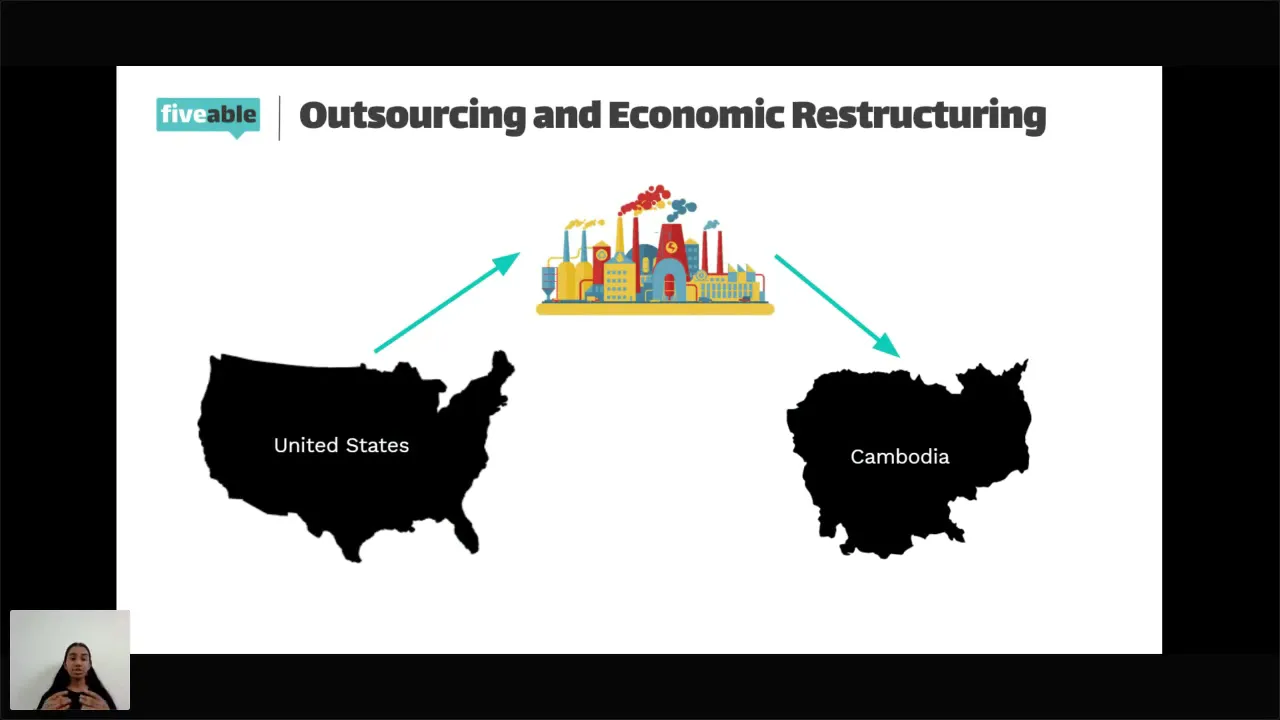
Hi. um you have you I don't um you've t I think at the at toward the end there you were talking about this the container as a good thing because it seemed to neutrally add to more economic growth and more trade which which um I'm not at all convinced about that being a better thing and I'm wondering if you could talk specifically about the role of containerization and maybe you do this in the book but I'd love to hear you spin it out what you think the specific role of containerization in particular is in the global depression of labor standards s and you we laugh at the example of um the garments going why they're not going to be able to go to the south like as if how stupid they were and of course it led to the containerization makes it possible for those garments to come from China or Honduras or Mexico not necessarily Mexico rather than from New Jersey or New York with at union weights that people had fought for for many years.
So, I'm wondering if you could just talk about what you think the specific role is of containerization in that global search for cheaper labor and lower environmental standards and if that sheer volume that it unleashes, how big a fact do you think that is?
Well, I I'm going to take issue with your characterization here of a global depression and labor standards. Okay. Uh I would argue that for most workers in the United States, their labor standards are better now than they were when the container came on the scene.
I would argue that for most workers in China, their labor standards are better now than they were when the container came on the scene.
So, uh, I I would dispute the notion that there has been a global depression in in um in labor standards. I think it's very clear that the container benefited the world in terms of consumption and I think it's very clear that the container uh has imposed costs on some people in the world economy by making production more mobile. It's certainly created some jobs. It's created a lot of jobs in areas that didn't exist so far. I mean there are hundreds of thousands of people in this country who work in an industry known as logistics. many of them work with uh with computers and software. It's a pretty high-tech industry actually. This was an industry that didn't exist before the container. Uh on the other hand, uh it certainly created uh competition that was not there uh previously because of the cost of imports and that has definitely hurt uh the US manufacturing sector. But the economy is full of change. the economy always changes and economic change always creates winners and losers. Uh so I don't think that in that regard uh the container is different from most other forms of economic change. Uh I think that people tend to get sometimes uh a little mistied about how good things were in in the good old days. Okay, those folks for example who worked in the garment industry in New York City uh in the 1950s when or 1960s even before we started getting containerized imports. They had uh they may have been union members. Their jobs paid horribly. They were well below the average for US manufacturing workers.
They had enormous turnover in those jobs because people hated working in that industry. So as soon as they could find a job that paid better somewhere else, they left it and went into a different line of work. Uh those jobs typically lasted a few months and then people were unemployed and then they had to find work again at a different garment plant.
So you know the the the good old days of memory are not necessarily what people actually had on on the job. Uh but you know I I would not dispute at all the idea that containerization like any other economic change created winners and losers by lowering the cost of one aspect of commerce transportation.
It made other aspects other costs more important and that definitely uh made labor costs loom more important. It definitely made environmental costs loom more important in decisions about where to locate production. I would not argue with that at all. That's absolutely correct.
Um Alan Cula, California Institute of the Arts. Just this last exchange makes me want to say one thing. Uh I I I would propose that meatacking would be an industry where the conditions of work have declined precipitously since the 1950s. Uh if you compared, you know, large-scale Iowa City, Armor, these kinds of uh firms of the time with the current immigrant working the kind of bloody tailorist speed up of immigrant worker meat meat labor intensive meat processing, I it's hands down it's worse now. But since my the main reason I wanted to say something is because you this question of the fixity of of of sea routes and the and the uh fluidity of of manufacturing. Um since Nelson was more or less paraphrasing something I said I should clarify and I don't think you're familiar with what I've done on this subject. So even though we've been on the radio together uh which you may not may remember um the uh uh the point I was making is that the historical uh relation between land and sea has been reversed.
uh that the sea always represented the problem of fluidity of a kind of untameable even sublime fluidity and uh that that so if if we if we look back to say the first industrial revolution factories pretty much had fixed sites the sites were invented were found uh in the Midlands in England for example and and sea routes were unpredictable of course steam brought in a level of of predictability with sailing schedules so in the long in in terms of long duration or the long duray I think the one can speak of this inversion I absolutely agree with you that ports compete and of course there you know there all the the fears you know that dock workers in Los Angeles fear that you know uh Sanin might become a kind of meaport uh dispatching feeder vessels it's not clear what the future of Hong Kong will be with this kind of mad competition in China but I think there is an issue here of of the kind of irrationality of and the non-planned character of of of this advanced capitalist system. It's a sort of issue that that Robert Brener talks about in his book the boom and the bubble, you know, which is that the rationality and it's also something that's been understood by Marxist cultural historians like Luc, you know, that that the the the rationality of a profession, say the logistics expert is exercised within a kind of con constrained sphere. But what isn't understood is the larger you know interlockings of the pieces of the puzzle.
So it's not clear in China which has probably the most you know what what remains this most powerful command economy with with some notion of of central planning you know sometimes admirable in a way because of the you know population problems problems of distribution of resources the sense that there is someone in charge which isn't clear at all in the United States in terms of questions of logistics for example you have this sort of mad scramble of of local bureaucrats, as far as I can understand it, to sort of make each port the great port. What happens to Hong Kong? What happens to Hong Kong with this immense capital investment?
What happens when it's no longer necessary for Taiwanese capital to be filtered through Hong Kong in order to be invested in in in in say the new the uh in Shanzong or in you know the South China sort of Guang Guangdong province area. I mean, I've visited former what were former sweat shops in in Hong Kong in the port district that are now empty. They had a stage where they had a tiny office with a fax machine that was basically sending orders that were coming in from sayong or Taipei onto a factory in South China.
And now those those little front offices are closing. So you get a second order of dereliction. So what is the future of Hong Kong in terms of urban policy in China?
Um so I think in the same way when you make the point about the uh the the truck train relation in terms of immediate or sort of near hinterland transport okay it's extremely efficient for the shipping companies to allow a kind of anarchy of organization of local trucking and local delivery to exist with something like 700 of these these little trucking companies that keep changing their names that hire immigrant drivers who buy beat up used freight liners with bald tires, you know, and and hump these things back and forth for what turns out under the the rubric of being owner operators. This this irrationality is profitable, right? So, of course, no one's going to come up with a, you know, with a train solution.
And it's also not clear physically that you can engineer, you know, train lengths in relation to dock sizes uh to distribute local cargo. Of course, the the myth was produced with the production of the al with the building of the Alama corridor in Los Angeles that this was somehow going to take trucks off off the street. It didn't, right? because we know that the local transport is largely truck transport but and local means this huge consumer area that you know that that is southern California and the southwest and the immediate southwest. So I think there's this question of this sort of irrationality of the system that coexists with this highly rationalized uh distribution model. Well, you know, the phrase that you use irrationality um you know, when people talk about rationality um in economics, that usually means that they're trying to protect their profits against somebody else. And so you get a regulatory system that provides rationality and it does it by reducing competition so that people can't enter, so that people can't innovate. When you have uh an increased level of competition, you have irrationality.
There's no question about it. You have more churn. You have people going out of business. You have uh existing enterprises facing new levels of competition that they can't withstand.
Uh and we know that that is a something that brings uh improved productivity and thereby economic growth and b that it has a lot of costs along the way. I don't think that those those things are new. So, uh I think irrationality is is part and parcel of uh of an economy that is growing. Uh I would just point out uh and and I'm going to have to stop here.
Uh that we went in this country through probably 15 to 20 years of trying to figure out how to deregulate the transport industries without hurting anybody.
Okay, Congress really starting in the late 1940s even started discussing deregulation. The phrase wasn't used then, but uh shippers wanted more flexibility to to um uh set get uh get freedom uh to ship with different uh carriers. They wanted more flexibility for their carriers to set rates. And there were great investigations about how this could be done while at the same time not hurting the truck lines and not hurting the railroads and not hurting the workers in those industries. And the result of that was that basically very little happened in deregulation because this problem was not solvable. Okay? If we were going to deregulate, if we were going to have innovation in this area, if we were going to have more competition and reduced prices, people were going to get hurt. There was no question about it. And that's exactly what happened. So I I think that the idea that we can have uh economic growth and and economic change without um what you term irrationality, I think that idea is is not on at all. I think that irrationality is in fact part of economic growth and innovation.
Thank you very much.
[Applause] [Music] Heat. Heat. N.
[Music] [Music]
Up Next
50:42
Yangshan Deep Water Port Engineering: Building China's Offshore Megastructure
@SparkDocs
1M views•2024-02-21

30:32
Ultrasonic Transducers: Resonant Frequency Measurement and Horn Design
@imajeenyus42
229.9K views•2017-02-22

54:16
Polymer Environmental Degradation: Mechanisms & Stabilization
@iit
1.8K views•2012-07-10

33:39
How a Student's Question Saved a NYC Skyscraper from Collapse
@veritasium
22.8M views•2025-04-26
Related Study Plans & Knowledge Roadmaps
Structured learning paths in Engineering
engineering
Building Acoustic Levitators: Physics & Arduino
01The Physics of Sound and Standing Waves
02Piezoelectric Transducers and H-Bridge Drivers
03Arduino Programming: Generating 40 kHz Signals
+ 2 more learning modules
14h5 modules
Explore Roadmap
engineering
Building Peltier Cloud Chambers: Particle Tracks
01Cosmic Rays & Cloud Chamber Physics
02Thermoelectric Cooling (TEC) Fundamentals
03Custom Liquid-Cooling Loop Design
+ 2 more learning modules
18h5 modules
Explore Roadmap
engineering
Yagi-Uda Antennas: Modeling, Build & VNA Test
01Introduction to RF and Antenna Fundamentals
02Yagi-Uda Antenna Design Principles
03Antenna Modeling and Simulation in 4NEC2
+ 2 more learning modules
18h5 modules
Explore Roadmap
engineering
ECG Monitor Design: Op-Amps, Filters & Noise
01Electronics & Breadboard Basics
02Op-Amps and Instrumentation Amplifiers
03Bioelectricity and ECG Fundamentals
+ 2 more learning modules
18h5 modules
Explore Roadmap