















This documentary reveals how a 2,000-year-old Roman shipwreck discovered in the Mediterranean holds approximately 3,000 amphorae (shipping containers) containing wine, olive oil, and fermented fish sauce (garum), demonstrating the extensive trade networks that sustained ancient Rome and how modern ROV technology allows archaeologists to study these underwater time capsules without disturbing the site.
Roman Shipwreck & Amphorae Cargo: An Undersea Archaeological Survey
Added:An understanding of the Roman Mediterranean trade networks and the geopolitical context of the 1st century BC (the late Roman Republic).
The basic definition, design, and function of amphorae as the primary transport vessels for liquid and dry goods in antiquity.
Fundamental concepts of maritime archaeology, particularly how underwater environments preserve organic and inorganic artifacts differently than terrestrial sites.
A general familiarity with modern marine technology, specifically the role of Remotely Operated Vehicles (ROVs) in deep-sea exploration.
The study of Dressel typologies and other classification systems used by archaeologists to date amphorae and trace their geographic origins.
Conservation science methodologies for desalting and preserving waterlogged wooden hulls and terracotta artifacts once retrieved from marine environments.
Analysis of 'tituli picti' (ink-painted trade inscriptions on amphorae) to understand Roman taxation, merchant guilds, and supply chain logistics.
Advanced digital mapping in underwater archaeology, such as 3D photogrammetry and sub-bottom profiling, to reconstruct wreck sites without physical disruption.
470 views6likes20:00Original Release: 2025-12-14
The Mediterranean holds secrets deep beneath her sunlit waves.
For centuries, sailors feared this crossing. Many never returned.
As we descend, the colors of the living world are absorbed.
200 m, the sun is gone. Only the void remains.
Systems active.
We are entering the midnight zone, surrounded by marine snow, the falling debris of the ocean above.
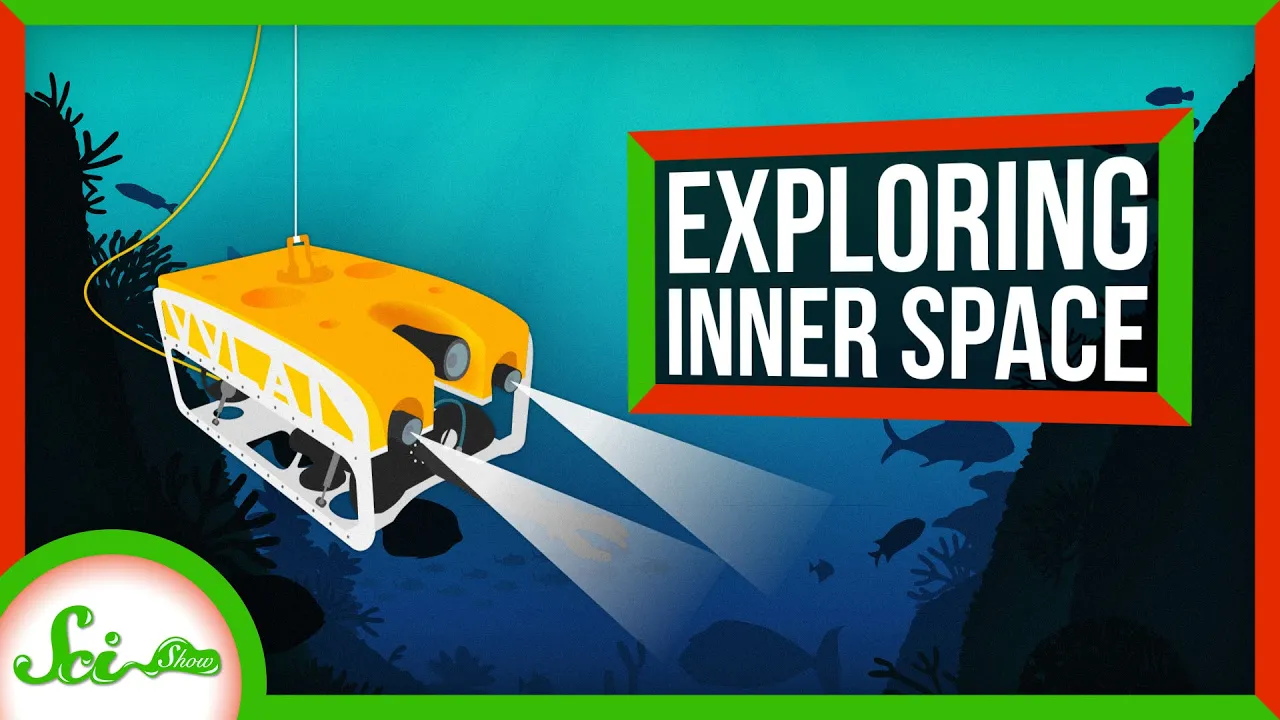
Our only lifeline to the surface is this thin fiber optic tether.
Strange gelatinous drifters are the only witnesses here.
>> 1,000 m.
The pressure is now 100 atmospheres.
Approaching the seafloor. Altimeter reading 200 ft.
>> Contact the abyssal plane.
a desert of gray silt.
We stabilize the ROV. Visibility is good. We begin the search.
Scanning sector 4. The seabed here should be flat, but the sonar is picking up a large anomaly ahead.
there. Rising from the mud, the shape of a ghost ship, it rises 5 m from the seabed, a massive artificial hill.
Sonar reveals an oval shape 30 m long, a perfect geometric anomaly.
We ascend the slope. The mud barely covers the structure beneath.
This is not a geological formation.
It is a time capsule.
The wood is long gone, eaten by the ocean. Only the cargo remains.
Circling the perimeter, we define the boundaries of the tragedy.
Fragments of pottery litter the sediment. The first clues.
Shadows dance in the lights.
The silence is absolute.
A vessel of this size would have been a titan of its era.
Let us move closer. We need to identify the cargo >> there. Clear of the mud. A terra cotta neck and another.
Thousands of them. Aereay.
The shipping containers of the ancient world.
stacked row upon row exactly as they were loaded in Rome.
They lie undisturbed, sleeping in the crushing dark.
Notice the packing efficiency nested together to survive rough seas.
A vertical wall of commerce standing five layers deep.
Two millennia of marine snow have dusted them like sugar.
Here a fracture reveals the thickness of the fired clay.
Nature reclaims all.
A glass sponge anchors itself to the handle.
From above, they form a chaotic mosaic of lost fortune.
3,000 jars, roughly 150 tons of cargo.
But what are they? To know, we must look closer.
Isolating subject alpha 1. Preparing for typology inspection.
Observe the rim. It is tall, cylindrical, and heavy.
Unmistakable. This is a Drestle 1B, the classic Italian wine jar. This shape dates the wreck to the 1st century BC.
The handles are long and parallel, built for heavy lifting.
Weight on the shoulder. A maker stamp.
>> Lasers confirm. Height 1.2 m. Standard capacity.
Nearby, a different shape emerges.
Smaller, rounder.
Lamoglia 2, likely carrying olive oil from Apulia.
This mix suggests a departure from brundisian, bound for gaul, wine for metals, oil for slaves.
the currency of empire.
>> We leave the cargo hold. We must find the bow. The magnetometer spikes. Heavy metal detected ahead.
A dull gray shape immune to the corrosion of time.
Lead. It does not rust. It survives where iron vanishes.
The wooden shank rotted away centuries ago, leaving only this lead stock.
It is huge, over 2 m long, 700 kg.
>> Raised relief, astraggle beads, and a dolphin symbol.
Scanning right. Another stock. They carried spares.
These anchors mark the bow.
The ship points northeast.
They lie stacked. The crew never had time to drop them.
From the bow, we look back at the belly of the beast.
We scan for the hull planking. We find only void.
The bottom layer of jars floats in the mud, outlining a ghost ship.
Terredo Nales, the naval shipworm, the termite of the sea.
Within decades of sinking, the oak ribs were devoured.
Only the metal fasteners survive. Long copper spikes.
This pin once held the planking to the frame.
As the wood dissolved, the cargo lost its support and spilled outward.
These outer jars are broken, crushed by the weight of the collapse.
Yet, the mud that swallowed the hull protected the bottom layers.
Fragments of thin lead sheeting.
They tried to protect the hull.
But even lead armor could not stop the shipworms forever.
Beneath the cargo, smooth riverstones, ballasted from a Roman river.
These stones are foreign here. They speak of the ship's origin.
We leave the emptiness of the hull and move towards the stern.
The stern. Here lay the galley, the living quarters of the crew.
The pottery changes here. Coarse utilitarian bowls.
The crew's dishes.
A mortarium.
a heavy mixing bowl for preparing sauces and herbs.
And amidst the rough clay, black glazed campanian wear, the captain's table, a tiny oil lamp. Once this held a flickering flame, square tiles, the remains of the stove box where they cooked.
A rotary quir.
Volcanic stone used to grind grain into flour.
Scattered bones. Pig ribs. Fish vertebrae. Their last meal.
A small cube of bone.
A gaming die.
Six pips visible. Killing time on the long voyage.
betting on a future they never reached.
A section of lead piping, part of the billagege pump system.
They would have manned this pump until the very end.
We returned to the cargo, the commercial heart of the mission.
Look inside the rim. It is not empty. A cork stopper sealed with Podzelana cement.
Waterproof.
Airtight.
Under special light, red painted letters appear.
Titoy Pikti.
The script reads L. Titius, the name of the merchant.
Another line indicates the vintage consoles of the year 60 BC.
Inside, a black coating pitched from pine trees to waterproof the clay.
This jar held garam, fermented fish sauce, the ketchup of Rome.
Micro scanning reveals thousands of tiny anchovi vertebrae inside.
Others held olive oil, the fuel for food, light, and hygiene.
The oil has long since degraded into a thick black sludge, but the pits remain.
olives from the sunny groves of Biotetica.
This was not luxury. This was caloric survival for a million people.
In Rome, broken jars formed Monte Testio, an artificial mountain of trash.
Here lies a lost hill of Rome, submerged before it ever arrived.
We have cataloged the mundane.
Now we search for the exceptional.
Near the starboard quarter, the pattern of amphyses is broken.
Something reflects the light differently. Not clay, not lead.
bronze, a corroded arm, a statue trapped in the wreckage.
We clear the silt. The face emerges.
A Greek youth frozen in time. The eyes are hollow.
The inlaid gemstones were stolen or lost.
This was not trade goods. This was loot stolen from a conquered temple. A masterpiece of antiquity tossed in the hold like common oil.
A deep dent in the shoulder.
Damage from the ship's final violent moments.
We capture millions of points of data.
The statue is reborn digitally.
We leave the artifacts. We focus now on the living.
Aida squat lobster stands guard on a Roman handle.
Cold water corals use the height of the stack to feed in the current.
In the desert of the abyss, the wreck is an oasis of life.
A conga eel claims a broken wine jar as its fortress.
Sea urchins graze on the bacterial mats coating the pottery.
An octopus glides over the cargo. the intelligent observer of the deep.
For small fish, these jars are not cargo. They are sanctuary.
A ship built to sustain Rome now sustains a hidden ecosystem.
Biological survey complete. Initiating photoggramometry sequence.
Ascending to 10 m, we needed a bird's eyee view of the site.
We project a laser grid to correct for the refraction of the water.
Highintensity strobes fire every 2 seconds, freezing the image. We fly lawnmower lines.
60% overlap for 3D reconstruction.
The computer converts video into a dense point cloud. Millions of vertices.
Textures are draped over the mesh.
The wreck is digitized digitally. We can drain the ocean, seeing the site without the haze.
The oval footprint is 36 m long, 12 m wide.
Calculating volume, 4,000 amphereay, a massive loss of capital.
Archaeologists will dive this wreck for decades without ever getting wet.
We take nothing but data. We leave the grave undisturbed.
>> Scanning complete. Data secured.
Preparing to disengage.
Main flood lights disengaged.
Returning to navigation mode. We back away. The wreck begins to merge with the darkness.
We begin the long ascent. The Roman ghost ship fades into the abyss. The darkness reclaims the sight. It may be centuries before another visits.
Down here, time stands still. 2,000 years is but a blink.
We know the cargo. We know the route.
But the crew remains nameless.
500 m.
The ink black gives way to midnight blue.
Life reappears.
Schooling fish.
The living ocean.
The sun.
The energy that drives the world above.
The hull of our research vessel looms.
The mission is done.
>> The ship remains below, but its story is now safe.
We have forged a link to the past that can never be broken.
>> For the sailors who died here, this is their only monument.
Returning to the world of air, sun, and time.
>> Surface mission complete.
The Mediterranean, a sea of history, a sea of ghosts.
The Mediterranean Mystery, a deep sea factory production.
Up Next

4:33
Containerization: Malcom McLean's 1956 Shipping Revolution | Maersk
@maersk
78.7K views•2018-06-26

33:02
The Great Schism of 1054: Causes and Consequences
@SacredCathedrals
113.5K views•2026-02-19

91:57
The Geopolitics of the Ukraine War and the Rise of Global Autocracy
@JordanHarbingerShow
468K views•2025-04-19

17:05
Understanding the Cold War: Superpower Conflicts and the Road to Détente
@OverSimplified
46.1M views•2019-01-24
Related Study Plans & Knowledge Roadmaps
Structured learning paths in History
history
Byzantine Iconoclasm: Theology, Art & Politics
01Foundations of Byzantium and Early Christian Images
02The First Iconoclasm: Leo III and the Crisis of Images
03Empress Irene, Nicaea II, and the Second Iconoclasm
+ 2 more learning modules
9h5 modules
Explore Roadmap
history
Iranian Revolution (Causes, Events & Legacy)
01The Pahlavi Dynasty and the Roots of Discontent
02The Spark of Rebellion and the Rise of Khomeini
031979: The Fall of the Shah and the Climax of the Revolution
+ 2 more learning modules
8h5 modules
Explore Roadmap
history
Mali Empire: Mansa Musa, Trade & Timbuktu
01Foundations of the Mali Empire
02The Trans-Saharan Gold and Salt Trade
03The Reign and Pilgrimage of Mansa Musa
+ 1 more learning modules
6h4 modules
Explore Roadmap
history
1947 Partition: Politics, Borders & Legacies
01Foundations of British India and the Divide
02The Political Negotiations and the Mountbatten Plan
03Drawing the Boundary: The Radcliffe Line
+ 2 more learning modules
8h5 modules
Explore Roadmap