




![Anéis de Saturno [Como você nunca viu] #astronomia #ciencia #saturno](https://i.ytimg.com/vi/pG8E2pN_Ixo/maxresdefault.jpg)











![Scoping lines on DH1 to DH4 at Tokai MTB trails [22 Dec 24]](https://i.ytimg.com/vi/5klFiYO0wqQ/maxresdefault.jpg)





Small moonlets (approximately 100 meters in size) embedded in Saturn's rings create distinctive propeller-like structures through gravitational interactions with ring particles, where Keplerian shear causes inner ring particles to orbit faster than outer ones, scattering particles into overlapping trajectories that form the characteristic propeller shape; unlike larger moons that carve out complete gaps, these smaller moonlets only produce localized disturbances whose size can be used to determine the moonlet's mass and dimensions.
How Moonlets in Saturn's Rings Create Propeller Structures
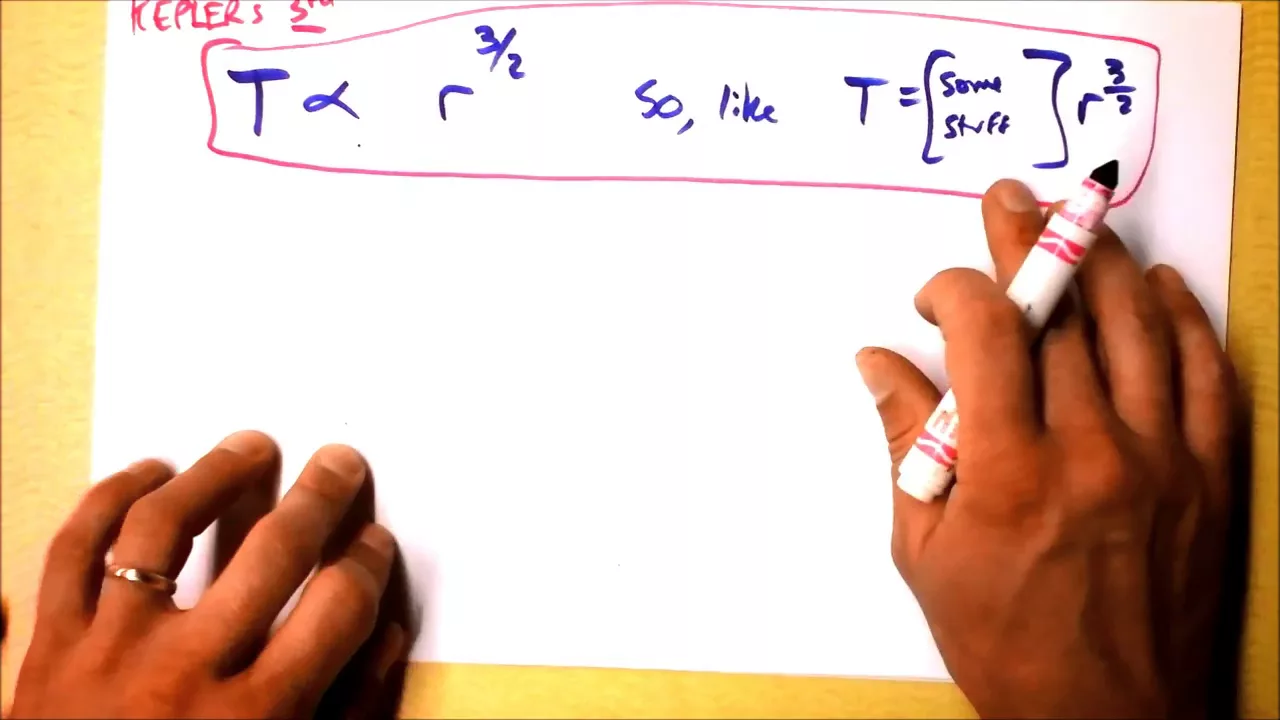
Added:Kepler's Laws of Planetary Motion: Understanding how orbital speed decreases with distance from the central planet, which is the basis for Keplerian shear.
The Composition of Saturn's Rings: Knowing that the rings are made of billions of individual ice and rock particles orbiting independently, rather than being a solid sheet.
Newtonian Gravity and Gravitational Perturbation: Conceptualizing how a relatively larger mass (a moonlet) alters the trajectories of nearby smaller particles.
Definition of Moonlets: Understanding that moonlets are small, embedded bodies within a planetary ring system that are not large enough to clear a complete gap.
Protoplanetary Disk Dynamics: Applying the physics of propeller structures to understand how newly forming planets interact with dust and gas disks around young stars.
Cassini Mission Discoveries: Studying real-world observational data and high-resolution images of named propellers (e.g., Bleriot, Earhart) captured by the Cassini spacecraft.
Gap-Clearing Mechanisms: Exploring the threshold at which an embedded moonlet becomes massive enough to transition from creating a localized propeller to clearing an entire ring gap (like Pan in the Encke Gap).
N-body Simulations of Ring Systems: Learning how computational physicists model particle collisions and gravitational scattering to predict ring structures over astronomical timescales.
720 views8likes8:31Original Release: 2023-08-04
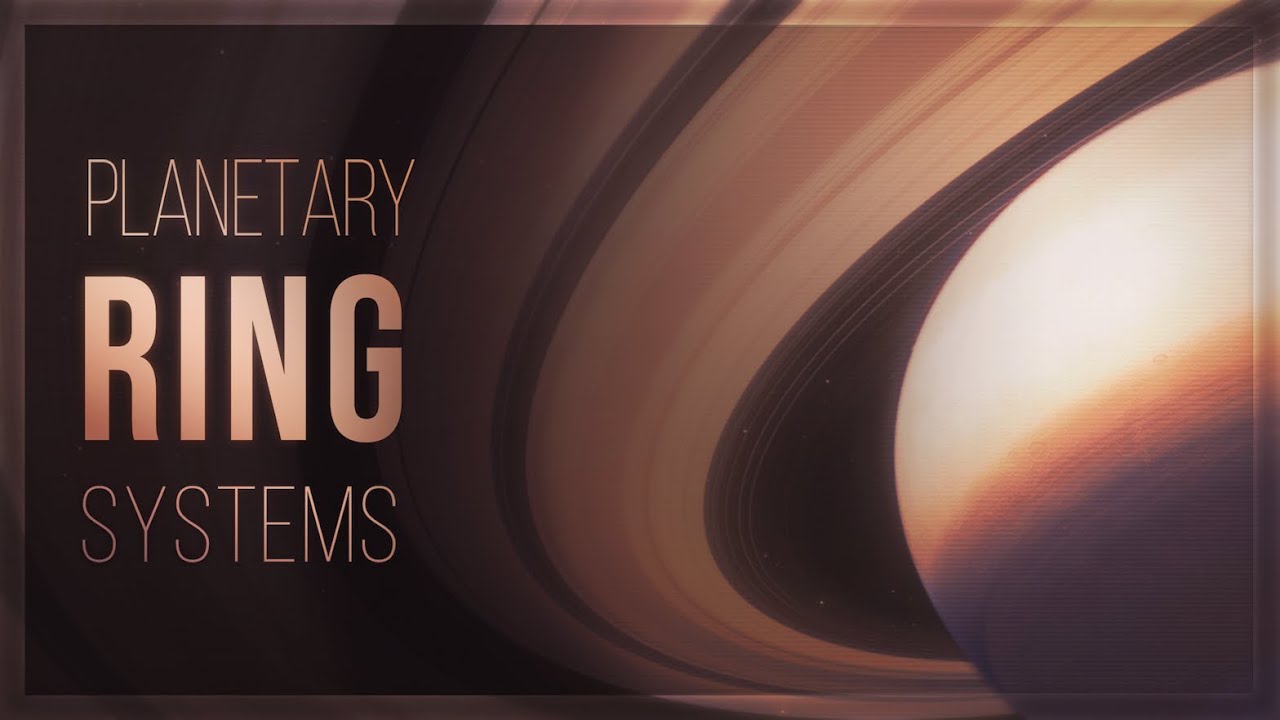
welcome to this video where I want to have a look at propeller-like structures in the Rings and how they relate to small moons which we would call moonlets so firstly moons inside the Rings are not particularly rare there are a few examples of those and the bigger ones like this one here which is Pan actually create a gap that goes all the way around the Rings and we can use the size of that Gap to actually get the mass of it and you can see there's two gaps here one of those actually is a smaller Moon so it's a smaller Gap so these are like sort of kilometer sort of size so the two examples here one is about eight kilometers in size and one is about 30 kilometers in size and the Gap sizes scale with that mass of the Moon so actually you can use the gap size to calculate the mass of the Moon however when you get smaller than that so they're kilometer size when you get to 100 meters or to size they just don't have enough mass or gravitational influence on the ring to carve out a gap and instead they just disturb the area around them locally we would also call these moonless and not necessarily a mood because they're not a true Moon they're quite small 100 meters or size is very very small and they're more like a large particle in the ring so it's probably worth noting at this point that Saturn's rings are comprised of lots of small particles all orbiting around Saturn at the same time it's not a solid structure and the Rings can be thought of as individual Little Moons all orbiting that interact with each other as well so these are fairly large particles in the Rings which we don't call moonlers now instead of you know creating this Gap they just do a localized Distortion around them so if you have a look that propeller-like structure in the center of that is where the Moon is and then you have these kind of propeller arms coming out from that in the direction that it's actually orbiting and you've got a few examples here there's actually quite a few examples really in the Rings but this is quite characteristic of a small object around 100 meter sort size in the Rings and the sort of structures that they actually form so there are kind of hundreds of these been discovered and there's some examples here there's loads in that frame just there and you imagine if you scale up to the entire rings so hundreds have actually been found but it's also expected that there are millions of these in the Rings as well so these are not particularly rare things they're expected to be quite widespread in the Rings and the other interesting thing is that the the size of the propeller can be used to determine the size of the moon or moonlit because if you have a look at these images and the ones we had a look at before you can't actually resolve the moon in the center they're too small and we can only just about resolve the ones that are kilometer sort of size but these ones are much smaller so we can't actually see them so the only way we can really determine what's there is the structure and the disturbance that they make on The Ring so why is it a propeller shape or the first thing we need to mention really is keplero and shear and that probably doesn't mean a lot but the thing we have to think about with Saturn's rings is it's a shearing flow or what that actually means is the inner part of the ring is orbiting faster than the outer part so you can think of it as like a yeah a shearing flow of particles and because of that you get this these characteristic shapes being formed so to give you a bit more of an idea really what keplerian Shear is this is an example of the orbital velocity in Saturn's rings from a computer simulation that I created and it shows you that the inner Edge is orbiting at over 20 kilometers per second involves the outer edge is orbiting considerably slower around about or probably less than 15 kilometers per second the reason why that is the closer you are to Saturn the faster the orbital velocity needs to be in order to put it on a circular orbit so it doesn't actually fall into Saturday if it is closer gravitational force was going to be greater from Saturn so you get this kind of change in the orbital velocity as you change distance from Saturn so that means the inner Edge is then rotating much much faster than the average which is what comes to this is shearing flow so if we go back to the propeller shape in this one here towards the left hand side is towards Saturn that means that anything on the left hand side of the propeller shape is orbiting faster than the ring structure on the opposite side which is towards the outer edge so anything on the left hand side is actually overtaking the moonlit and the propeller shape and anything on the right hand side which is further out is actually going slower so the moonlit or the the propeller is going faster or overtaking particles in the outer part so here to create that Leading Edge so if you've got the moonlit in the middle the bit I've highlighted there and assuming that the orbital rotation in the ring around Saturn is actually upwards here then on the inner part it's traveling faster so it's actually overtaking the moonlit that means that the in front of the moonlet the leading structure we should do her first part of the propeller is ahead of it because it's actually overtaking it and it's been is being formed in front of the Moon whereas if we go to the second half that is in the outer pot so that's traveling slower so that means that's actually on the trailing Edge as opposed to the Leading Edge and it's down to this keplerian shear and if that still doesn't make much sense then hopefully this kind of visualization will so if you were to put a camera on top of the moonlet and watch what happens to the ring particles around it assuming that if you go down on here that's towards Saturn and if you go up that is further away you can see the relative movement of the particles in respect to the moonlight so this is what causes that shearing flow anything closer to Saturn traveling faster anything further away is traveling so see you can see that that Moon would overtake slower particles yet the faster particles closer would overtake the moon alert so what's actually happening why are we getting the propeller shape well one of those ring particles that goes to overtake it or even actually the moon overtakes it it gets closer to that moonlit and the gravitational force essentially scatters it it changes its orbit because it pulls it towards it and it changes its trajectory in that reference frame and that happens to lots of particles all at the same time and because their orbits are changed they kind of overlap onto one another and they in turn all together create half of this propeller shape now if you go to the opposite side so if you go a little bit further in or further out which is out of the opposite one it does exactly the same thing but in the opposite direction and because of that shearing flow it's done in a slightly different way so this time around it does the same thing but you get the other half of the propeller shape occurring on the opposite side and then in turn they all add up together it's all those ring particles doing a similar sort of thing are Disturbed and the overlap and create a higher density part where the propeller shape is so finally really if you've got a bigger Moon looked you get a bigger propeller because they have more mass and their gravitational interaction with the nearby particles is greater so even though we can't see the moonlit in the center we can measure the size of that propeller because actually those are there's a quite straightforward to see or easier to see because they're bigger and then we can determine the size of the Moon that purely from that and that's how we've determined these are around about 100 meter sort of size compared to kilometer plus size for the ones that create the full Gap so thank you for watching and if you enjoy then check out some of the other videos
Up Next
21:43
Feynman's Lost Lecture: Why Planets Orbit in Ellipses | Physics Explained
@MinutePhysics
3.7M views•2018-07-20

12:53
21cm Hyperfine Transition in Neutral Hydrogen: Radio Astronomy Basics
@AaronRobertParsons
12.4K views•2011-10-13

32:32
NMR Spin Physics I: Zeeman Effect, Resonance Condition & Larmor Frequency
@nptel-indianinstituteofsci8064
2.3K views•2024-01-17

27:14
Entropy and the Second Law of Thermodynamics Explained
@veritasium
27.5M views•2023-07-01
Related Study Plans & Knowledge Roadmaps
Structured learning paths in Physics
physics
Nuclear Physics (Decay, Fission & Reactors)
01Atomic Structure and the Binding Force
02Radioactive Decay and Half-Life
03Nuclear Fission Mechanics and Chain Reactions
+ 2 more learning modules
12h5 modules
Explore Roadmap
physics
Soft Matter (Polymers, Colloids & Rheology)
01Foundations of Soft Matter & Thermal Forces
02Polymer Physics and Macromolecules
03Colloids, Surfactants, and Self-Assembly
+ 2 more learning modules
38h5 modules
Explore Roadmap
physics
Analytical Mechanics: Lagrangian & Hamiltonian
01Mathematical Foundations: Calculus of Variations
02From Newtonian Mechanics to Constraint Dynamics
03The Principle of Least Action & Lagrangian Mechanics
+ 3 more learning modules
28h6 modules
Explore Roadmap
physics
General Relativity (Spacetime & Cosmology)
01Foundations of Relativity: Special Relativity
02The Geometry of Spacetime: Equivalence Principle & Curvature
03Einstein's Field Equations: The Mathematics of Gravity
+ 2 more learning modules
55h5 modules
Explore Roadmap