





![[31] Serway Physics CH13 행성과 인공위성의 운동에 관한 에너지, 탈출속력, 블랙홀, 암흑물질](https://i.ytimg.com/vi/mDdFeTsx28E/maxresdefault.jpg)


![Сборник - Экзопланеты. Другие миры за пределами Солнечной системы [Второй сезон. Часть 4]](https://i.ytimg.com/vi/HNhvyuyAr3I/maxresdefault.jpg)









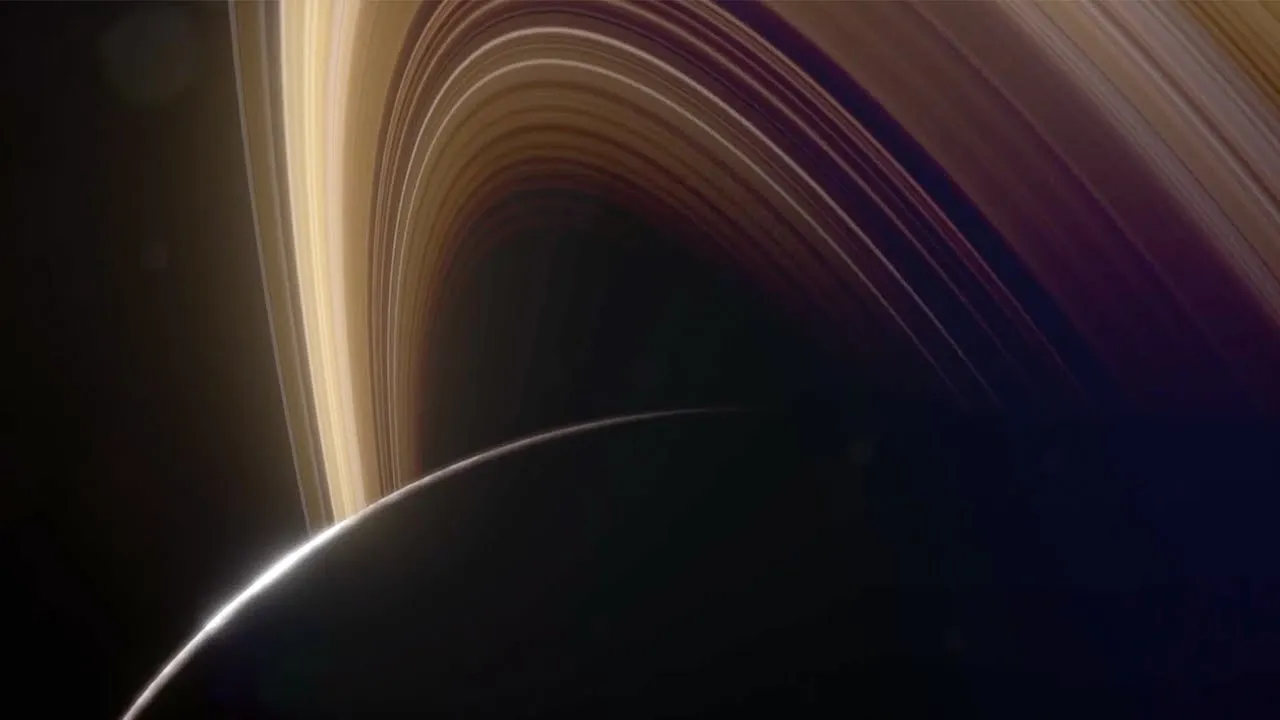

Shepherd moons are small moons that orbit Saturn and maintain the sharp, confined structure of Saturn's rings by gravitationally interacting with ring particles; when a ring particle drifts outward, the inner shepherd moon (moving faster) adds energy to it, causing it to move to a higher orbit and return to the ring, while when a particle drifts inward, the outer shepherd moon (moving slower) removes energy, causing it to move to a lower orbit and return to the ring.
How Saturn's Shepherd Moons Shape Its F Ring | Orbital Mechanics
Added:Newton's Law of Universal Gravitation and how gravitational force scales with mass and distance.
Kepler's Laws of Planetary Motion, particularly how orbital velocity decreases as distance from the central mass increases.
The concept of orbital energy, including the relationship between kinetic energy, potential energy, and semi-major axis.
Basic composition and structure of planetary ring systems, specifically Saturn's main rings.
The concept of the Roche Limit and tidal forces, which dictate where moons can safely exist without being torn apart.
Orbital resonances (such as mean-motion resonance) and their role in creating gaps in rings and asteroid belts.
N-body numerical simulations used by astrophysicists to model complex gravitational interactions in planetary systems.
Planetary migration theories and how gravitational scattering shaped the early architecture of our solar system.
127 views1likes13:02Original Release: 2023-04-14
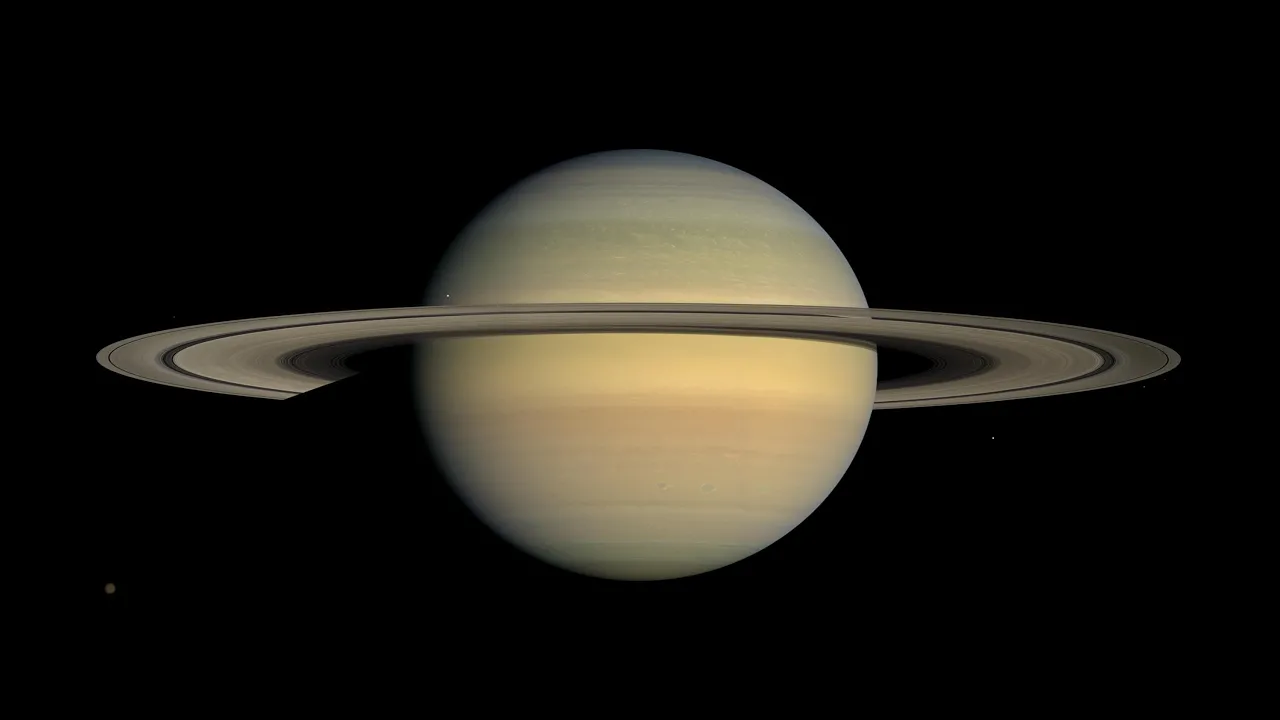
the satellite that gains energy moves to a higher radius and moves slower what if a satellite loses energy its radius will go down so which means that it would move to a a closer radius that's sometimes called a lower orbit and its velocity will increase so if it loses energy its velocity will increase if it gains energy its velocity will go down and if it loses energy it moves to a closer orbit if it gains energy it moves to a higher orbit okay so if you understand this now I can tell you about a very fascinating application like this okay so you can all recognize this planet so this is the planet Saturn here you can see a magnificent picture of Saturn the most striking thing about Saturn is its unbelievable system of rings Saturn extends from about 7000 kilometers above the surface of Saturn to 80 000 kilometers above the surface so if this is Saturn suppose we are looking down on Saturn above the North Pole of Saturn we would see that the lean system starts from somewhere over here and this is about 7000 kilometers and it extends to 80 000 kilometers so this is almost 70 uh seven um 73 000 kilometers or approximately um a good forty five thousand miles or something like that so it's absolutely absolutely vast the ring uh the the width of the Rings ring system and uh compare that with the radius of the Earth the radius of the Earth the diameter of the earth is only 12 000 kilometers so so this is several times the width of the Earth the ring system of Saturn and what is what are these amazing rings made up of they are made up of chunks of ice so they're 99.9 water ice so there are chunks of ice uh orbitings happen so that's what the Rings are made up of like billions and billions of chunks of ice of various sizes orbit orbiting Saturn now we talked about the width of the Ring system it's a stunning 73 000 kilometers something like that what is the thickness of the Ring system the thickness of the Ring system is amazingly 10 meters so something just imagine something 73 000 kilometers wide but only 10 meters thick so the ring system of Saturn is very narrow right so all of these particles that are orbiting Saturn all of these chunks of ice that are orbiting Saturn are confined uh within a thickness of about 10 meters okay now there is amazing structure in the ring system and you can kind of see that in this diagram over here I mean this this is actually a photographic image so it looks like a painting you can see this amazing structure there are gaps in the ring system there are density various density patterns in the ring system it's just amazing but here here you've got a big gap the reason for these gaps are pretty amazing uh but it would I'd be talking all day if I try to explain them all right so the point is that there is a lot of amazing structure in the ring system right it's all because of gravity the way gravity works is because you have all that all right now I just want to point out one thing so one of the Rings of Saturn is called the F ring and you can see that the F ring has a really sharp structure uh you can see that the particles in the F ring are confined to this uh this narrow band so you don't have any ring particles spreading out of the F ring so they're all confined within the F3 why do the particles in the in this particular ring stay within the ring like what why don't they just spread out and diffuse so what forces them to stay within the ring so the question is the following here is Saturn okay I'll just draw I'll just draw maybe Saturn is somewhere at the bottom I'll just draw Saturn over here and let's just focus on one ring of Saturn which is the F ring it is a band of particles that are orbiting Saturn like this so this is the F frame and what I'm claiming is that all the all the chunks of ice that are that make up the F ring for some reason stay within this band why don't they drift away from the band I mean they're they're constantly colliding with one another why don't they just drift away from uh the band and and spread out and diffuse the reason is of the moons of Saturn which are called Shepherd moves so you you have one Moon over here it's called the inner Shepherd Moon and you have another noon over here which is called the outer Shepherd Moon and both of these moons are obviously also orbiting Saturn so how do these two moons make sure that the ring particles in the F ring stay within the ring okay so to understand that we have to uh first think about the velocities of the particles and let's just write down our conclusion from over here when e goes up the energy of a particle in orbit when it goes up what happens to its velocity its velocity goes down and it's uh radius goes up I mean the radius of orbit goes up and if the energy of a particle goes down its velocity goes up and it's radius goes down so this we just computed from the formulas for kinetic and potential energy we are going to use this fact all right now consider what happens if a ring particle um comes out of the screen everything is orbiting this way let's say with sound of clockwise Direction suppose a ring particle drifts out of the ring and it gets over here here is our Divergent Reading particle I'm drawing that as a black uh closed Circle now first of all let's consider the relative speeds which do you think let's call this one to the ring particle is two the particles in the ring let's let's just take a particle that's inside the ring S3 and the outer Shepherd mean as four so I'll make Shepherd moons like this which of these is moving fastest the one two three or four clearly one would be moving fastest because it's closest to Saturn remember our formula for orbital velocity V is equal to square root of GM divided by r so if it's if R is lowest then V is going to be highest and so uh the inner Shepherd moon is moving the fastest uh the Divergent ring particle which strayed out of the ring is next fastest building particles themselves are moving slower and the outer Shepherd moon is moving slowest right all right so the particle that's straight out of the ring which is indicated by two would be moving faster than all the particles inside the ring right however the inner Shepherd Moon would be moving much faster much faster than the ring particle so every now and then the inner Shepherd Moon would pass by particle 2 and it's the the inner Shepherd moon is a large moon right and it's and this particle is just tiny it's like a pebble so the it's going to feel a force as the inner Shepherd Moon passes by it right so that tug due to the inner Shepherd Moon every time it passes by uh ring particle two will give extra energy during particle 2 and what happens to a ring particle when it gets extra energy if it gets extra energy its radius goes up and its velocity goes down so as eventually as it keeps getting more and more extra energy it will go back into the ring the same exact thing happens if a particle um gets out of the ring on the other side so suppose the particle let's call that five gets out of the ring out on the outer part of the Ring right so now five would be moving faster than the ring particles ah sorry slower than the ring particles because it's got a larger radius but uh faster than uh outer Shepherd Moon which is number four right so what's going to happen is that um when 5 passes by the outer Shepherd Moon every time it passes by the outer Shepherd Moon it's going to feel a tug from the outer Shepherd Moon which is going to pull it backwards because the outer Shepherd moon is moving slower than it right so as it passes by it is going to feel a pull to the I mean it's going to feel a backward pull and so that's going to take away energy from it because it's a it's like a drag Force it's going to take away energy from it and so as it loses energy what happens to a particle in orbit as it loses energy it speeds up and moves to a lower orbit and so this will also eventually move back into the ring and so any particle which diverges from The Ring eventually gets back into the ring as a result of these two Shepherd moves and this is absolutely amazing uh the presence of the shepherd moons was first mathematical it was first postulated by scientists because they were Amazed by how sharp this ring looked so it looked like there must be some influence on the ring which maintains its sharpness and so they suggested that it's probably Shepherd wounds and then the shepherd moons were actually seen and photographed okay and uh yeah so here is here's a picture of one of the shepherd moons okay so that was just an application of uh of that exp of the relationship between the total mechanical energy and the velocity and Radial distance of an object in orbit and that concludes our discussion of gravity I must briefly mention here that Newton's law of gravity is not the full picture of gravitation Einstein realized in the early part of 1900s between 1910 and 1920 that there is something wrong with the way we view the gravitational force and he realized that gravity is not really a force at all but a manifestation of the uh of the warping of space and time and so gravity is not really a force it's a fact that uh if an object is sitting in Warped space-time um the way it's going to behave is uh what we interpret as a gravitational force and so that idea is called the general theory of relativity and uh that's obviously Way Beyond the scope of this course um but I just wanted to briefly mention it before concluding this video
Up Next
3:55
Shepherd Moons: How They Forge Planetary Rings
@Lunartic
18.7K views•2017-08-23
61:17
First Billion Years of the Universe with the Square Kilometre Array
@iaaudc
121 views•2022-05-26

6:25
Kepler's Laws of Planetary Motion Explained (Educational Astronomy Video)
@Peekaboo_Kidz
404.9K views•2023-02-17

6:10
Gamma-Ray Bursts: Cosmic Snipers Explained | Astronomy
@kurzgesagt
15M views•2016-07-31
Related Study Plans & Knowledge Roadmaps
Structured learning paths in Astronomy
astronomy
Reionization: Pop III Stars, IGM & 21cm Line
01Foundations of Cosmology & the Early Universe
02Population III Stars & Cosmic Dawn
03Physical Mechanisms of Reionization
+ 2 more learning modules
17h5 modules
Explore Roadmap
astronomy
Planetary Rings: Dynamics, Roche & Resonances
01Foundations of Gravity and Orbital Mechanics
02Tidal Forces and the Roche Limit
03Structure, Composition, and Collisions
+ 2 more learning modules
10h5 modules
Explore Roadmap
astronomy
Asteroseismology: Stellar Waves, Ages & Cores
01Foundations of Stellar Astrophysics & Wave Mechanics
02Stellar Oscillation Modes: P-modes and G-modes
03Mathematical Framework of Asteroseismology
+ 2 more learning modules
35h5 modules
Explore Roadmap
astronomy
Adaptive Optics: Physics, Engineering & Control
01Foundations of Wave Optics and Wavefronts
02Atmospheric Turbulence & Optical Distortion
03Wavefront Sensing Technologies
+ 3 more learning modules
35h6 modules
Explore Roadmap