








![Why Do Some Planets Have Rings? The Secret Science Behind Planetary Rings[ID1204]](https://i.ytimg.com/vi/F0wQa31uQ-0/maxresdefault.jpg)











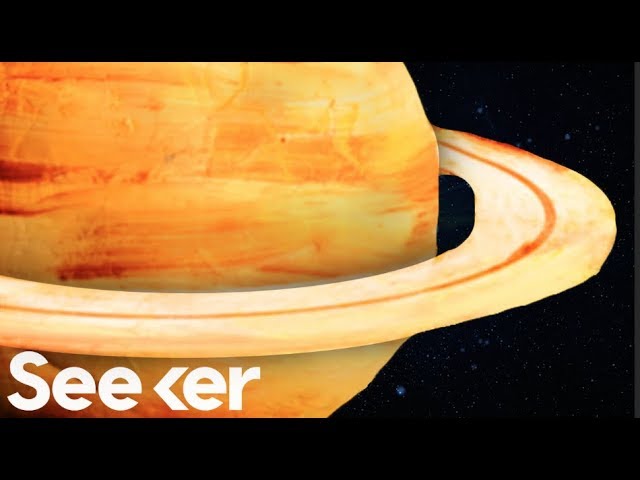
Shepherd moons are small moons that orbit near planetary rings and use gravitational interactions to shape and maintain ring structures by either accelerating dust particles into higher orbits or slowing them into lower orbits, creating the distinct ring patterns observed around gas giants like Saturn, Uranus, and Neptune; the concept was first proposed by astronomers Peter Goldreich and Scott Tremaine in 1979 to explain Uranus's unusually thin rings, and today seven confirmed shepherd moons exist in our solar system, including Prometheus and Pandora for Saturn's F ring, Janus and Epimetheus for Saturn's A ring, Cordelia and Ophelia for Uranus's epsilon ring, and potentially Galatea for Neptune's Adams ring.
Shepherd Moons: How They Forge Planetary Rings
Added:Basic Orbital Mechanics and Kepler's Laws: Understanding how distance from a central body affects orbital velocity and period.
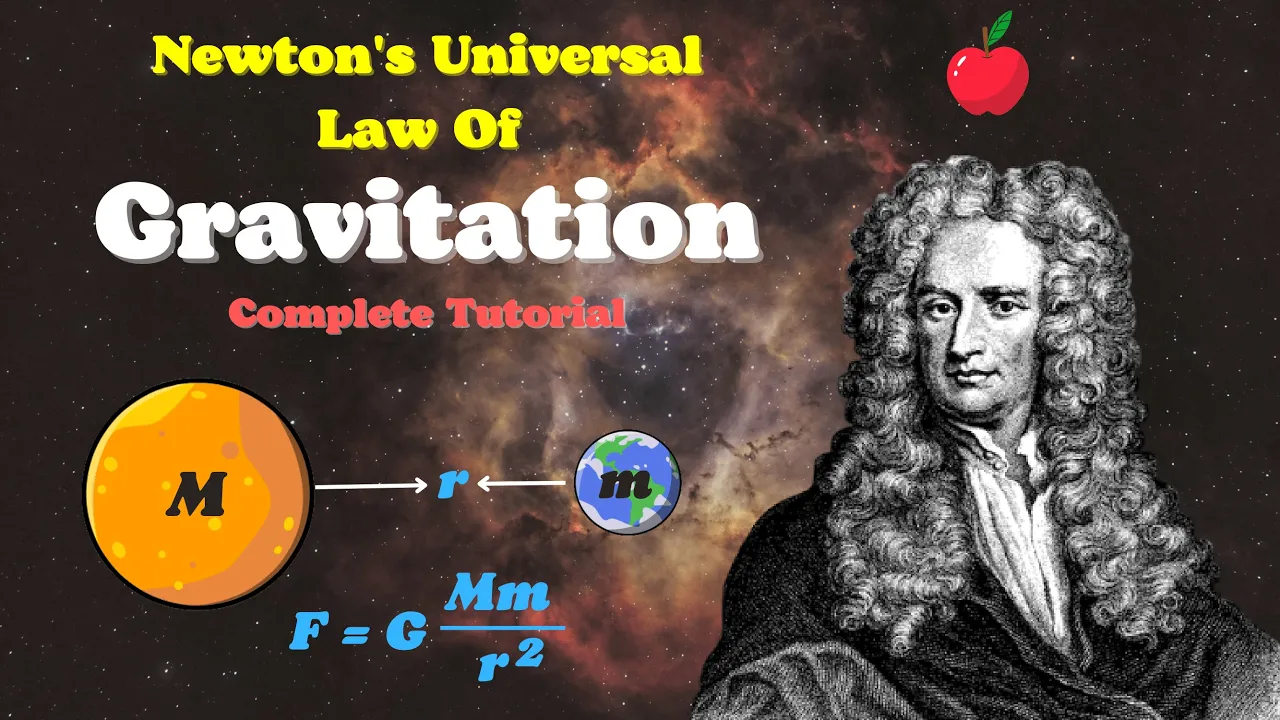
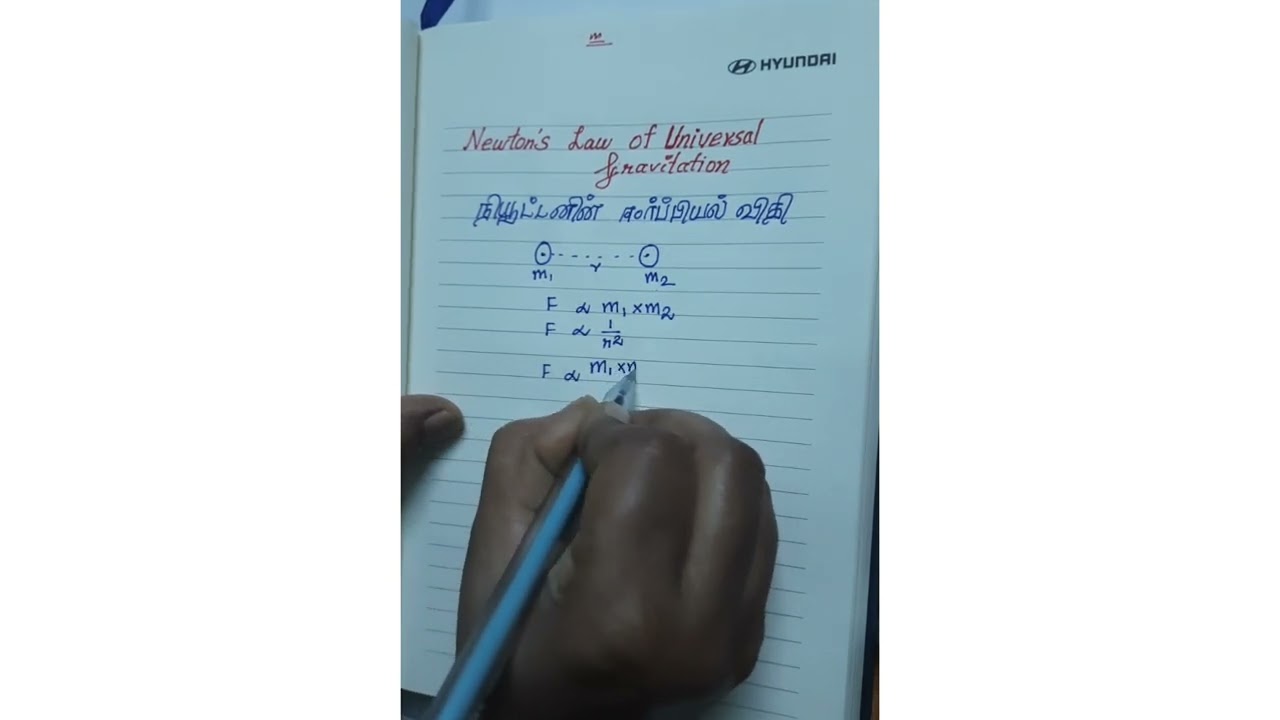
Newton's Law of Universal Gravitation: Comprehending how gravitational force operates between planets, moons, and individual ring particles.
The Roche Limit: Knowing the gravitational boundary within which a celestial body is torn apart by tidal forces, leading to the formation of planetary rings.
Composition and Structure of Planetary Rings: Recognizing that rings are composed of billions of individual ice and rock particles rather than being solid discs.
Orbital Resonance and Wave Dynamics: Exploring how gravitational resonance between moons and ring particles creates complex structures like spiral density waves.
Planetary Ring Evolution and Lifespans: Investigating the origin of rings (e.g., disrupted moons or comets) and the mechanisms leading to their eventual dissipation, such as 'ring rain'.
Analysis of Space Mission Data: Examining specific observational data and imaging from missions like Voyager 1 & 2 and Cassini-Huygens that mapped these ring-moon interactions.
Exoplanetary Ring Systems (Super-Rings): Extending these dynamics to extra-solar systems to study massive ringed exoplanets (like J1407b) and the potential detection of exomoons.
18.7K views323likes3:55Original Release: 2017-08-23
there are many types of moons in our solar system and beyond Galilean moons irregular moons asteroids but today we're going to take a look at Shepherd moons I know this is not going to be an in-depth analysis of any as third studio album Shepherd moons also known as herda moons on wacho moons and their title from the fact they had dust particles into rings the very rings we see around the gas giants of our solar system quite often shepherd moons also helped shape the gaps between these rings a few of which have been spotted rooting through the gaps in the Saturnian ring system so how does Shepherd moons form rings and clear gaps as a limit travel to a cloud of dust that is also orbiting the same parent planet the dust particles will be accelerated towards the moon through gravitational attraction now one of two things can happen to these effective dust particles they are either accelerated towards the moon during which they'll gain more energy and move to the higher orbit of the power ring or the current orbit is slowed down by the presence of the moon meaning the dust particles lose energy and fall into the lower orbit of the inner ring it should be noted that not all gaps between rings are caused by shepherd moons nor does every gap contain one for example the Huygens gap between Saturn's a ring of B ring is distinctly moonless and is caused by the gravitational pull of Mimas what have satin smaller moons and a part-time Death Star the concept of shepherd moons was first proposed in the late 70s following the discovery of Uranus 'as unusually thin rings astronomers Peter goldrock and Scott remain proposed the shepherd moon hypothesis in 1979 to explain the Iranian ring system further what a year had gone by and they were proven correct when Voyager 1 discovered satins Bank which had two moons either side of it however recent studies found that only one of these moons Prometheus actually Shepard's the dust into the F ring and the fact the other one Pandora orbit on the outside of the ring is just a coincidence on some proof look at Pandora and Prometheus as they orbit either side of the F ring those waves and ripples you see are only caused by Prometheus specific passes by the presence of Pandora doesn't disturb the things at all so how many shepherd moons are in our solar system currently there are seven confirmed Shepherd moons in our solar system although there are a few moons out there that could well be on Jupiter for example his two potential Shepherd moons the tiny moon of metres orbits within a 500 kilometer gap known as the meatus not and the even tinier Jovian moon address their Shepherds to as main ring although astronomers are yet to confirm that these two rooms are the sole contributors to the ring of shape thanks to the Cassini mission there are five confirmed Shepherds keeping watching for Saturn's rings we talked about Prometheus forming the F ring a little earlier but a little closer M is the ring which is held in place by not one but two Shepherds called Janus and Epimetheus sidenote these two moons are in what is called a horseshoe or ved a truly incredible phenomenon that I will cover in a future video within the a ring a two gaps occupied by moons most of which have been spotted in these gorgeous photos taken by Cassini the Enka gap is cleared by this ravioli Shabnam called pan and the small Aquila gap is formed by Deafness a moon so small it just about fit in the Micra nation of San Marino from fact both of these moons have named after Greek gods who were amongst many other things shepherds moving out further to Uranus there lies the last two confirmed shepherds of Cordelia and asthenia these are the very moons predicted by goldrush and remain in 1979 and seven years later Voyager 2 photographed both of them on either side of Uranus's epsilon ring but unlike Saturn's every word Fidelia and Ophelia are required to keep the epsilon ring in place hinting there may be more forces at work here that astronomers you get to uncover even more questions are raised by the rings of Neptune many of which feature several bulges and clumps that could be caused by Shepherd moons one of which Galatea is thought to Shepherd Adam's ring but this is just an educated guess at the moment and further exploration of Neptune is needed before we know for sure now Sauron may have been forging rings long before you and I ever came to be but it's the Shepherd moons that are the true ring forges of argue naver's [Music] you
Up Next
61:33
Saturn's Rings: An Astrophysical Disk | SETI Talk
@SETIInstitute
4.8K views•2015-04-03
61:17
First Billion Years of the Universe with the Square Kilometre Array
@iaaudc
121 views•2022-05-26

6:25
Kepler's Laws of Planetary Motion Explained (Educational Astronomy Video)
@Peekaboo_Kidz
404.9K views•2023-02-17
6:10
Gamma-Ray Bursts: Cosmic Snipers Explained | Astronomy
@kurzgesagt
15M views•2016-07-31
Related Study Plans & Knowledge Roadmaps
Structured learning paths in Astronomy
astronomy
Reionization: Pop III Stars, IGM & 21cm Line
01Foundations of Cosmology & the Early Universe
02Population III Stars & Cosmic Dawn
03Physical Mechanisms of Reionization
+ 2 more learning modules
17h5 modules
Explore Roadmap
astronomy
Planetary Rings: Dynamics, Roche & Resonances
01Foundations of Gravity and Orbital Mechanics
02Tidal Forces and the Roche Limit
03Structure, Composition, and Collisions
+ 2 more learning modules
10h5 modules
Explore Roadmap
astronomy
Asteroseismology: Stellar Waves, Ages & Cores
01Foundations of Stellar Astrophysics & Wave Mechanics
02Stellar Oscillation Modes: P-modes and G-modes
03Mathematical Framework of Asteroseismology
+ 2 more learning modules
35h5 modules
Explore Roadmap
astronomy
Adaptive Optics: Physics, Engineering & Control
01Foundations of Wave Optics and Wavefronts
02Atmospheric Turbulence & Optical Distortion
03Wavefront Sensing Technologies
+ 3 more learning modules
35h6 modules
Explore Roadmap