













![ВЛАСТЕЛИН КОЛЕЦ [Экзо-сатурн: 1SWASP j1407 b]](https://i.ytimg.com/vi_webp/T7ko-OBZBNs/maxresdefault.webp)

![[REPLAY#3] Những Loại Thiên Hà Phù Hợp Nhất Cho Sự Sống | Thư Viện Thiên Văn](https://i.ytimg.com/vi/A8h9z2jqNa8/hqdefault.jpg)


Saturn's rings serve as an accessible astrophysical disk that allows scientists to observe and study phenomena that also occur in more distant or inaccessible disc systems, such as spiral density waves (excited by moons and validated against galaxy formation theories), self-gravity wakes (microscopic structures formed by mutual gravity and orbital shear), propeller features (created by embedded moonlets and providing insights into planetary migration), and impact detection (revealing meteoroid populations in the outer solar system); these observations help validate theoretical models of disc physics while revealing unexpected complexity in ring dynamics.
Saturn's Rings: An Astrophysical Disk | SETI Talk
Added:Keplerian Orbit Dynamics: Understanding how individual particles and bodies orbit a central mass at different velocities based on their distance.
The Roche Limit: The theoretical boundary around a celestial body within which tidal forces overcome the self-gravity of an approaching satellite, preventing it from coalescing.
Orbital Resonance: The phenomenon where two orbiting bodies exert regular, periodic gravitational influences on each other, which is crucial for understanding how moons create gaps and waves in rings.
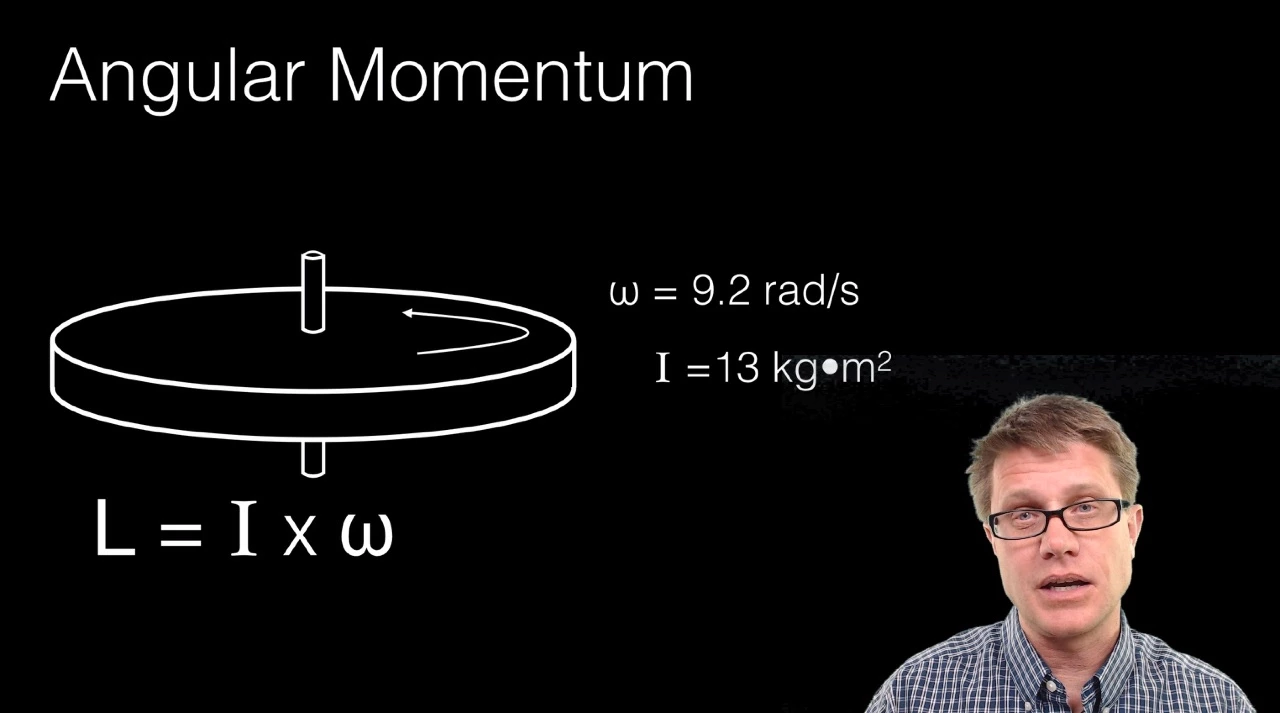
Conservation of Angular Momentum: The physical principle that explains why rotating clouds of dust and gas naturally flatten into disk shapes over time.
Protoplanetary Disk Dynamics: Applying Saturnian ring models to the study of dust and gas disks around young stars where new planets are currently forming.
Accretion Disks in High-Energy Astrophysics: Investigating how matter spirals onto supermassive black holes, active galactic nuclei (AGN), and binary star systems.
Exoplanet Ring System Detection: Exploring how astronomers identify and characterize ring systems around exoplanets (such as J1407b) using transit photometry.
N-body and Hydrodynamic Simulations: Learning how computational models simulate the microphysics of millions of colliding, self-gravitating particles in astrophysical disks.
4.8K views46likes1:01:33Original Release: 2015-04-03
Welcome everybody to the uh SETI Institute colloquium series for today.
It's my uh great pleasure to introduce Matt Tiscarino our speaker. I am Mark Shoalter. I'm an investigator here at the institute. Uh Matt went to uh his Caltech as an undergraduate and he uh he went on to the University of Arizona where he earned his PhD in astronomy. He there he worked with Renu Malhhatra and about 2004 he moved on to Cornell. Uh that's where he worked with Joe Burns who I can also add was my own thesis adviser. So we have a little bit of a connection that way. Uh he uh Matt arrived there to work on the Cassini mission. It was early very early in the just at the beginning of the Cassini tour and he was working with the imaging team as an associate and more recently as a uh as a participating scientist. uh he caught my attention very early on in his career when he uh was the discoverer of a very interesting phenomenon in the rings called propellers and I think he'll maybe even be talking about that today but I've been keeping a close eye on Matt's career ever since then uh and in fact I am very very happy to be able to say that come this August he will be moving to the SETI Institute as one of our new principal investigators um in uh in addition to his work on Saturn he is uh looking forward he's uh part of the uh planning team for a mission that we hope will fly someday called Uranus Pathfinder. We hope it to be a NASA issa joint mission that will be an orbiter around the planet Uranus, a planet we haven't visited with a spacecraft since 1986. So, uh we look forward to that happening someday hopefully uh very soon, but we'll see.
Um he uh Matt is an expert on dynamics of all sorts, dynamics of rings, moons, all solar system bodies. And the title of his talk today is Saturn's rings, an accessible astrophysical disc. So, welcome, [Applause] Matt. Thank you, Mark. I'm very pleased to be here. Thank you all for coming.
I'm particularly pleased to be coming to the SETI Institute and working with Mark uh come this summer. So, hopefully I'll be seeing many of you more often than I have been.
Uh I'm going to be talking about Saturn's rings and uh using it as a way in which not only can we learn about our own neighborhood and what goes on here in the solar system but also uh use uh Saturn's rings as a kind of prototype or a uh a way of learning about other things. There's two primary ways that rings are useful beyond their own intrinsic interest as parts of our solar system. Uh number one is that planetary rings are astrophysical discs. Uh they are the most easily accessible uh disc systems. Uh there are many other types of disc systems. Uh there are uh discs around other stars. Uh there are galaxies. Uh there's our own solar system uh back in its early days was was in the form of of a protolanetary disc.
And we can't go to these other stars uh to investigate their discs. We can't we certainly can't go to these other galaxies. We can't go back in time to understand what our solar system was like in its early days. But we can go to Saturn, to Uranus, uh to these other objects that have rings and we can learn about many of the processes that sculpt these other more remote uh disc systems.
Another reason that planetary rings uh help us to learn about the solar system uh is that they're large and delicate and they respond very sensitively to a number of uh subtle perturbations and they can serve as detectors uh for surrounding planetary processes. Uh the magnetic field uh uh create signatures in the rings and as one of the uh by by investigating these is one of the ways that we uh can learn about the interior of planets like Saturn. uh we can learn about the meteoroid impact as this will be part of my talk. Uh we actually don't know a lot about what uh objects are flying around in the outer solar system but by using Saturn's rings as a detector we can actually get at that better than we've been able to do um just from gravity uh to learn about the interior structure of the planet. Uh actually the most sensitive way that we currently have to do that is by looking at how rings uh precess how they how they uh uh rotate around an eccentric ring rotates around the planet. Um and finally another part of my talk today is by uh using the gravity of uh moons uh the rings detect that gravity can actually um tell us about the moons um have even been ways uh in which moons have been discovered is by first observing their effect on the ring. And this is how uh Mark discovered the moon pan.
Um so I also want to say a little bit by way of introduction about Saturn's rings and what kind of a disc it is. Uh Saturn's rings are made up predominantly of water ice with only minor other uh chemical constituents. Uh the particle sizes are between uh uh centimeters maybe down to millimeters uh on the small end and then up to meter size maybe a few meters in size uh of of these objects and there are countless numbers of them. Each of them is on its own orbit around the planet but they also interact with each other both uh by their mutual gravity and through colliding with each other. Um the optical depth which is uh a measure of of how much of the uh of of the space is being filled. Uh if you are looking at a star shining through the rings, how much of it you can see um is basically it ranges from not very much to a whole lot. Uh the the the densest part of the rings block well over 99% of the light of a star shining through it. whereas uh places like uh the Cassini division or or the C- ring which is in here uh will block more like just a few percent. Um and there's a whole bunch of structure uh a lot of it we don't understand especially here in the B-ring and uh because because we don't understand a lot of it there's not as much to talk about. So it's not going to be a major part of my talk today. I'm going to mostly talk about structure that we can understand. Um, just because that's it's kind of how scientists often work is where you if you're starting to make some progress, you you keep you keep pushing on on that spot. And so uh uh of course the primary uh uh characteristic of of Saturn's rings and uh what distinguishes it from the other ring systems is that we can actually go there. Uh the Cassini Huygens's mission here it is uh while it was still on Earth. Here's some people down here for for scale. It's about the size of a school bus. It's the largest interplanetary probe uh that has been uh sent uh from the earth. Uh it launched from Cape Canaveral, Florida in 1997.
Took this looping trajectory through the solar system. Uh arrived at Saturn uh in 2004. This is an artist rendition of the spacecraft skimming over the rings as it enters into orbit around the planet. Another introductory slide here is I want to review a little bit about which planets have rings. Um, all four of the giant planets have rings, but they're very different from each other.
Uh, Jupiter's rings are uh just a dusty disc which is continuously generated by debris. Uh, very tenuous, very, you know, uh, if if we were in the middle of of Jupiter's rings, the the dust in this room is actually more dense, I believe, than than the dust that's in Jupiter's rings. Um, and if the if the moons that are that are throwing off the debris were to uh disappear, then Jupiter's rings would evaporate in a matter of I think tens of thousands of years. Uh, Uranus has a series of dense but very narrow strands. They're really rings in the plural. Um, these they they uh they have the uh very different dynamics from from Jupiter's rings because they are are dense. They can actually uh interact the particles interact with each other.
Uh, Neptune is much like Uranus. Um, it's dustier than the Uranian rings and it has these funny arcs. Um, but Saturn is the only uh planet that has a true disc that's both dense and broad. Um, one one of my uh kind of pet peeves is when people ask how many rings does Saturn have? Unlike Uranus, which actually has a a a small number of narrow rings, Saturn really has just a broad dense disc. There are very little empty space uh that that where you would call it a division between one ring and another.
Right. So the outline of of my talk is I'm going to talk about four particular aspects of Saturn's rings. First I'm going to talk about spiral density waves. Uh second I'm going to talk about self-gravity wakes. And third I'm going to talk about the propellers that Mark has already mentioned that are out here in the outer part of the A-ring. And fourth I'm going to talk about impact.
So these arrows are showing different parts of the A-ring. This is the outermost section of the rings. Um and the arrows are pointing to different places in the aving where these different features are seen. Okay. Oops, excuse me. So starting with spiral density waves. Uh these spiral waves are excited by moons uh that are orbit or orbiting primarily exterior to the rings. Um this is the same fundamental process that creates spiral arms in galaxies. Um and it's uh one way in which rings uh study of rings has interacted with the study of other discs. uh the theory that describes spiral density waves was actually developed to uh explain the spiral uh arms of galaxies. And it's kind of an irony that today there's still a lot of debate about how the spiral arms of galaxies are are formed and and to what extent the uh the spiral density wave uh process is uh fully relevant to that process in galaxies.
But that theory uh exquisitly explains the uh the very uh tightly wound spiral waves that we see in Saturn's rings. And so we can validate that theory. We can show that it works in a physical system.
And then with that knowledge even then go back and uh understand galaxies a little bit better. Um you can see the the g the spiral arms of galaxies are very are very loose. Uh it doesn't even go all the way around the galaxy before it's already way out here and and and uh kind of peters out. Whereas uh the spiral waves in in Saturn's rings are much tight more tightly wound. Uh this is a five armed spiral. So this one here for example uh or fore armed I think. So this one goes then all the way around the planet and comes around as the fourth wave here and then goes all the way around the planet again. Uh and this is only uh you know hundreds of kilometers uh in the extent of the wave whereas the distance to the center of Saturn is over 100,000 km. Uh so these are very tightly wound spirals. um and what they can do for us uh in addition to uh understanding them and and and the interaction with galaxies. Uh every single one of these waves actually functions as a scientific instrument that's been embedded in the rings for our benefit.
So that that that's a philosophical question and I'm a scientist.
Um so so we can we can describe a theory of how the of how the structure of of these waves should should work. And in the standard theory there are five variables uh that we can then take the actual waves that we observe and fit them to this theory and and we can learn about about the environment of the wave.
Uh so first we have the the wavelength um and uh so so how how far apart each of these wave crests is basically and that tells us uh how the uh how much mass there is in that local area of the rings because uh the restoring force is actually the gravity of the ring of the ring material around uh where where the wave is propagating. So by measuring this wavelength we're actually measuring the surface density uh the local density of the ring.
uh if we didn't already know it because of the moon's orbit, uh we we would know from where the ring of where the wave begins, that would tell us uh something about uh the uh the forcing uh what what object is forcing this wave. Uh how uh often it's orbiting around the planet or in some cases uh we've even found that it's uh some uh structure within the planet that is moving around. And we can we learn about those frequencies from where the wave actually is from just a radial translation back and forth.
Um then we have this damping parameter.
You can see that the the amplitude increases and then it decreases again.
And this turnover point tells us about the friction inside the rings. The viscosity um how much the ring particles are rubbing against each other and damping out the motion. Uh that local ring viscosity is also something that changes uh throughout the disc and that these waves are telling us a lot about.
Uh and then the actual amplitude here tells us about the mass of the of the driver. How big of a thing is driving this wave. if it's more massive, it's going to drive a bigger wave and so forth. So here's what we do. Um we have uh this is a image uh that was taken by Cassini, one of our better images. Uh and we can see a number of uh waves here. Uh some of them are big enough that you can see them quite clearly. And every one of these waves is driven by a resonance uh with a moon. So for example, this one here is the Prometheus 12 to11 density wave. So that means that every time Prometheus goes around Saturn 11 times, a ring particle at this particular location goes around Saturn 12 times. And so every time every 12th time then the that ring particle see gets a kick from Prometheus at the same location and those kicks then add up and end up driving this wave and the wave propagates outward uh because density waves generally do for physical reasons I don't have time to get into. Uh this one here is a a bending wave and it's a five to three. You can see the uh it's actually a second order wave because the difference between five and three is two. That makes it a it's actually a weaker resonance. But because mimis is such an enormous moon um it's actually a stronger wave than this prometheus wave.
And because this is a bending wave that means this is actually a corrugation in the ring. The the density waves are more like sound waves. Uh the motion is all in the plane of the ring. Whereas the bending waves are more like corrugations like uh you know if you if you propagate a wave along a jump rope uh where the you know the motion is vertical but the wave propagates in the other direction um and and the bending waves propagate inward. Uh what you also see here is uh a lot of other structure that's that's kind of hard to interpret. It kind of looks like record grooves a little bit for those of you who remember vinyl records. Um and uh and in the image it's hard to make much out of that. Um but now what we can do so here's that same image. Now you take this image and you collapse it down into one direct in into one dimension uh because in the uh in the azimuthal direction uh the direction going around Saturn uh it's it's pretty constant and so we can take take it all and add it up. And so all we want is the ver is the uh the radial dimension uh the distance moving away from Saturn. Uh and then we just have brightness as a function of radius. And so this curve that's across the top then is just the brightness as a function of radius. And what I do then is I take it and I put it into basically a frequency uh detector.
So uh again the x axis here the horizontal axis is a location along the signal uh where you are in your distance from Saturn and the vertical axis here is now a frequency. So higher frequencies are here lower frequencies are here and where you see a darker shade of gray that means that that particular frequency is uh present in the signal at that location. So you can see then um that for each of these uh dashed lines is the prediction of what that particular resonance ought to be doing in in the frequency domain. And you can see that this matches up pretty well.
And so this tells us then uh the the uh slopes of these lines again uh as I showed you a few slides ago um have to do with the wavelength of the wave. And that uh tells us the this the surface density, the local density, how much ring material there is. And so uh by tuning that I can actually change the slopes of these lines so that they actually match the data. And that then tells me what is the the local uh density of material at this location in Saturn's rings. But you can see that there are a bunch of different resonances. These record grooves have now uh been separated out into a bunch of resonances. Um much of many of them here have to do with pan. Pan is actually closer. It's actually inside the ring. So it has more resonances um in this particular location. And so this is you you have the pan uh 39 to 38, the pan 40 to 39, the pan 41 to 40 resonance. All of these uh are in quick succession, but then you also have uh resonances here from atlas. The green ones are Atlas, the purple ones are mimis. You can see the one that's going backwards that I talked about before. Um and so all of these resonances you can uh select out in the uh in this uh wavelength analysis. Uh that's in a way that is hard to uh see if you're just looking at the image.
Um so many waves are made visible by this method and there are some waves uh that we uh that we aren't expecting. So all of these waves that have different colors we're expecting for various reasons. This black one here uh is clearly present in in our analysis but we don't actually know what causes it.
So we have some new puzzles here as generally happens when you're uh you know taking new data and learning new things. You answer a lot of the questions that you had and then you find new questions that you didn't know you had. Um and so we're learning a lot about this. So what we can then do is at each location where I can do this analysis, I can find out what the density of the ring is at that particular location. So the the filledin circles are the ones to look at here.
And also this solid line. Um and so uh the the the open circles are older data.
Um and I'm not going to go into why there's uh some some discord there. Uh the the filledin circles are are are pretty reliable. So we see then that the A-ring has this uh increase uh in the outer part of the cassini division goes up into the main part of the A-ring that's about 35 grams for every square centimeter of material. So if you took a a square centimeter and went all the way down through the ring you'd have about 35 grams of material. Uh and that's then consistent throughout most of the airing. But then in the outer part where it actually gets brighter um the surface density is going down. And so that's telling us something about the particle properties. And I'll say a little bit about that later.
Um, one of the uh there's actually a a a funny wave here. Uh, this one uh is much bigger than uh than most of the waves uh because it's uh it's actually a um a resonance with aus where apotus is uh aus goes around Saturn very slowly because it's very far from Saturn. Um so every time Apotus goes around Saturn once this ring act uh the ring particles are actually precessing uh because they have inclined orbits and then that uh the the plane of the orbit actually rotates around Saturn and that happens once every time that Apotus uh actually orbits the planet.
And so here we we have a continuous record of the surface density. Uh and so what we do uh because the surface density is now changing uh over the course of the wave, we can no longer assume that we just have a single number that we're getting here. But at every every point along the wave, we can draw a line between uh where we have the the the dominant frequency and draw that back to the source of the wave. This is where the wave is being generated. And so this slope here gives us a number for the surface density that is uh shown by this star here. Then we move over to this line which is a different slope gives us a a higher surface density a little bit farther down and so forth. We have this uh big cut off here where the surface density goes up and then another slope here, another slope here, another slope here and so all these slopes together uh at different places uh give us different slopes that give us different surface densities. So we have this continuous record in this part of the A-ring and it actually fits uh these symbols here are the kind of smaller waves that I was showing you before. uh and they actually fit with this record of uh the continuous surface density that we have in this particular region. But this is a surprising result.
So this is that same curve that I showed you in the last slide, the surface density as a function of the distance from Saturn in this part of the A-ring.
This is what the brightness looks like.
So you have down here it's very low.
This is the Cassini division. Uh the dark gap between the A- ring and the B- ring was first discovered by uh Gavanni Dominico Cassini back in 1675. It was one of the first uh structural things in the solar system that was seen uh with a telescope. Um Cassini only saw it as a gap, just a dark gap between two bright rings. We now know that it actually does have a lot of material in it and and a lot of structure. It's just a lot dimmer uh than the the A- ring and the B- ring on either side of it. But this uh big increase in brightness here which has generally been called the inner edge of the A-ring when we look at it in the surface density curve there is no sharp change in the surface density. That is very surprising uh because why is there a big cliff in the brightness when there's no big cliff in the density?
There's a there is a big cliff in the density here where there's a second big rise in the brightness but not over here.
And we go um what that drives us to is to say that there must be a change in the particle properties. U if you have uh the same amount of stuff but it's uh broken up into much smaller particles.
Those smaller particles will fill up more space. They have more surface area.
They'll reflect more light. That could explain why it's brighter even though there isn't more stuff there. But why would there be a sharp change in the particle properties at that particular location? We don't know. Um but uh this was the first this analysis that I did was the first uh indication that there are some kind of screwy things going on with particle properties in Saturn's rings. Uh but now there are similar conclusions coming from independent Cassini measurements in other some in other parts of the rings. uh some coming from other Cassini instruments uh and that are adding to this puzzle and giving us more information uh as we can start to understand uh what's going on.
Um again, so answering questions that we knew we had to ask and then finding new questions that we didn't know we had to ask and that's the progress of science.
Okay. U the second topic that I'm going to talk about today are the self-gravity wakes uh which are strongest here in the middle part of the A-ring. This is what they look like. Um this uh sadly is is not actual data.
This is a simulation. Uh we wish we could see uh both uh spatially and in terms of time this level of detail. Uh but this is a simulation of what happens at the smallest scales. You can see I have a scale bar here 125 meters uh to a side for this patch. And what's going on here is this patch is going around uh the whole patch you can imagine as as orbiting Saturn. But because of Kepler's third law, and I'm going to mention Kepler's third law a number of times in this talk, uh Kepler back in the early 1600s, uh one of one of the things he noticed is that um if you're closer to the thing you're orbiting, you orbit faster. And so that's exactly what we see here on this side. Uh you know, Saturn is Saturn is way over uh to my right, your left. So uh so the stuff on this side is closer to Saturn, so it's orbiting faster. it's going up uh in this uh in this frame of reference which is also going around Saturn and the stuff on the right which is farther from Saturn is falling behind and so we see it uh as as going down and so there's a shear that goes on um but and there's also the the particles are attracted to each other by their mutual gravity. So what happens this is this is basically why uh the the ro limit is what it is what it is if you know about that that's uh you know the closer you get to an object uh uh you know a planet like Saturn uh things can't hold themselves together they get pulled apart and this is the process by which they get pulled apart is is this is this kind of a shear that Saturn is pulling harder on one side of it than it's pulling on the other so uh the particles are trying to accrete into clumps uh because of their mutual gravity they're, you know, as as things do, um, you know, if they were farther from Saturn, they would actually be able to accrete into a moon. But, but here we're close enough to Saturn that that the shear is too strong. And so, as they're trying to accrete into a clump, the shear pulls those clumps back apart.
And so, you get these structures, these elongated, constantly changing structures uh, that uh, that characterize the uh, the fabric of the ring. Uh, and this this is also like with spiral waves. This is a process that was first described for galaxies and it's well understood in galaxies and we also uh now see it operating uh uh in Saturn's rings. Now I said the what what I just showed you was a simulation. We can't actually observe things at that level of detail. But here's something that we can do. Uh we can watch when Cassini w observes a star pass behind the rings. I already talked about this a little bit. Um this is this is a kind of a time-lapse picture. I like this uh as an illustration. Um from uh this this this red and blue uh image uh as you go from right to left in the image that's time going forward. Uh what this image is, it's a it's a long slit of detectors. It's a it's just a vertical array of detectors that's focused on a star and the star is going behind the ring. And so you can see the brightness of the yellow. The yellow is the star.
And as it goes behind the ring, the the star flickers brighter and dimmer depending on how much ring material is blocking the starlight. And it turns out that when you do this at a range of geometries, uh you can get a 3D CAT scan of the microructure of the ring. So here you have again the the the yellow is the brightness of the star as it goes behind the ring. These are four different cuts.
These are called occultations.
Occultting just means to block. And so the rings are blocking the star. They're occultting the star. So this is called an occultation. Um so this uh you have the four different occultation tracks. And uh over here you see that uh this this region of the ring blocks a lot of starlight. Whereas uh over on the other side it's the same region of the ring as you go around but it's blocking a lot less of the starlight. And so why is that? The reason is that that these uh self-gravity wake structures are being seen in different geometries and because they're kind of long finger type of things. You think about this. So if I'm looking if I have my fingers like this, if I'm if I'm looking along my fingers, you can see a lot of of you can you can see between them pretty well, but if I'm looking across my fingers, the fingers kind of work together to block uh the the view. And so that's exactly what's going on here. And by by putting all of this together um uh Cassini uh uh investigators have actually been able to uh to to show how how strong this uh wake structure is in different parts of the ring. Uh one of my contributions to this is actually to show that uh there is not just uh the bright the the dense structures and the gaps between them. There's actually something in between. Um what we have down uh on the lower left here uh the red dots uh this is another simulation. The red dots are ring particles and this is from an actual simulation. It's actually from this same simulation. And uh what what I did was I used a density estimation method. It's actually not simple to to uh to get a density out of just these particle locations because you have to think about uh how big of a of a uh of a grid do you want to map your density in? If you have uh if you have big uh uh if you divided this into just a few squares, you know, uh you know, say say 10 squares by 10 squares and then took the density in each square, you would be uh smearing out these sharp boundaries between the uh the the the dense clumps and the and the gaps between them. But if you had uh if you had a bunch of bins like 100 by 100 in this uh that would that would resolve the boundaries but then uh the gaps would be so sparse that uh you would have a bunch of bins that that would show no density at all which isn't quite correct. And so uh so I came up with this method for for using an adaptable bin size. And so the gray scale here is actually the density. And then I took the density and mapped it out in a histogram like this. How much of the low density stuff is there? How much of the high density stuff is there?
And I actually found then that there's a third peak of medium density stuff. Uh and in certain geometries where uh you actually want to uh where you're looking at stuff that is scattering forward. If you're looking at the the sun is on the opposite side of the ring and you're looking at the unlit side of the ring.
It turns out that the the dense clumps look dark because they're blocking all of the all of the sunlight. And the gaps look dark because uh there's nothing there to scatter the sunlight into your camera. And it's actually this medium density stuff which turns out to be clumps that are in this in the process of being disrupted that are actually the most phototrically interesting and active. And that's what we're actually seeing in these uh funny geometries. Um yes, a question over there.
No. Okay. Okay. The question is, am I showing the rings orbiting in opposite directions? No. This is so this this whole patch is going around Saturn much faster than any of the velocities that you're seeing here. So, what we're seeing here is the stuff that's a little closer to Saturn is going a little faster and so it's moving ahead. And the stuff that's a little farther from Saturn is going a little slower. So, it's falling behind in this particular frame of reference. Thank you.
Sure.
Yes, it's that same kind of thing as an escalator where you know your feet are going up at one rate and your hands are going up at another rate.
Yeah. Okay. Third topic for this uh talk today is the propellers. Uh so we discovered back in 2006 that there are uh moonlets embedded in the disc. So I said at the beginning of the talk that the uh ring particles range from millimeter to centimeter size on the small end up to meters maybe a few meters on the large end. The self-gravity wake structures that I've just been talking about are larger than that. You know they're tens of meters uh in in size but there are a small number of moonletits that are even larger 100 meters even a kilometer in size. And so when that happens again uh Kepler's uh third law becomes important here. Um the uh so there's a moonlet here at the center of this diagram and then these are all streamlines of how the particles will be interacting with that moonlet.
Again this is just a a theoretical uh drawing. And so in both directions on the inward side um and this one is backwards. I apologize for that. Uh so so in this in this uh streamline figure Saturn is up uh I think unlike every other figure in this talk. Uh so the stuff that's closer to Saturn is moving ahead. And so the disturbance from the moonlight gets carried forward in this direction, whereas the stuff that's farther from Saturn is falling behind us. So the disturbance falls behind. And so you get this kind of two lobe structure where the loes are parallel to each other, but they're offset. And that looks kind of like a propeller. Uh so we call them propellers. Um so it's a propeller-shaped disturbance. And uh we are now tracking these objects. uh we don't see the moonlets themselves, but we do see the propellershaped structure that they uh that they uh create uh in the ring around them that this propellers shaped disturbance. Um so we see several examples of of them here on this slide. This is the first time that we have ever been tracking the orbits of objects that are embedded in a disc.
Everything else in the solar system that we know about where we track the orbits is orbiting in free space. Um uh but here we actually see uh what happens when you're plowing through a disc. And so for those of you who think about protolanetary discs or circumstellar discs, this is obviously very interesting because we are observing up close the same kind of thing that you see in your simulations and theories. Um and uh and we actually are seeing uh changes in the orbits uh as these moonlets are interacting with the disc.
And that's what I'm going to talk to you about next. Okay. So as I just said um this has strong analogs to protolanetary discs um and the prospect of the the better we understand what's going on in Saturn's rings uh we might be able to uh then understand these planetary formation models. So all of these are simulations of planetary formation processes and you can see that these propeller-shaped structures are very similar. So uh we do see the orbits changing.
There's one propeller in particular uh- because because these are propellers uh and the uh we we haven't gotten official IAU names for these things but we've given them nicknames based on aviation pioneers. Uh so the uh the propeller that has turned out to be the most interesting is named Blario named after Louis Blio who flew across the English Channel in 1909. Uh the first person to do so and uh Blario turns out to uh change its orbit. uh this is now uh this this plot goes from 2005 to 2010. So we've got five years of data shown here.
Uh the y ais here uh is plus or minus 0.1 degrees of longitude. So that seems like it's not very much and and in fact it's very significant that that 0.1 degrees is a pretty small angle. So that means over five years and this has gone around Saturn over a thousand times and the deviations are less than 0.1 degrees of longitude.
Um so that means that we do have an object on a Kepleran orbit you know and an orbit that is of the usual kind of of of orbit. Um but these deviations are very significant 0.1 degrees of longitude is a few hundred kilometers uh much larger than uh the size of the object itself much larger than our precision as we as we measure its position. And we can see also that these deviations are uh are are are correlated with each other. You know, it's it's it's fallen behind here at the beginning, then it moves ahead of the average orbit, then it falls behind the average orbit again, and then it seems to be moving ahead again. Um, so what is the cause of these uh of these changes? Um, it is it it is uh probably interacting with the disk. It likely has an implication for uh uh migration processes in particular what's called type one migration which is a particular kind of way that a protolanet uh falls in towards its disc because uh falls in towards its star because of interactions with the protolanetary disc is one uh uh way in which uh the existence of hot jupiters or planet or planets that are very close to their stars is uh is explained. Um there are several explanations uh for this that have been proposed. One is that you have smooth interactions with the disk. One is that you have uh basically statistical interactions with with particles or uh things in the wakes uh in the disc. Um my preferred uh explanation is actually both. You have smooth interactions that are punctuated by catastrophic interactions. Uh there is also a uh a suggestion that this is some kind of resonance with the moons and and not actually an interaction with discs.
Okay, I am going to uh skip some of the technical detail uh and go a little bit faster.
Um I'm going to skip that slide. So type one migration uh which is uh this idea that you have an asymmetry in torqu because of the disc and and so it will the the the moon or the protolanet will inevitably just spiral inward. uh that requires the disc to be homogeneous to to be a flat disc uh in terms of its density. And we know that it's not homogeneous in time. Uh there are these self-gravity wakes, for example, uh and there there could be other interactions with with clumps in the disc that could could push uh a a propeller moon around and cause these kinds of changes. But we also know that the disc is not homogeneous in space. We know that it has radial uh density gradients. uh there is it's denser in some places and then if you go farther out it's it's less dense. And so you would expect these propeller moons to actually look for places where are that are local minima in the density where it's you know it's it's denser on both sides uh of of where the propeller is and that would be a safe place for the propeller to stay and if it gets kicked in either direction then you would expect it to go back to the equilibrium. Um so after since we found these objects in the last few years Cassini has started to look at them more often. So we're actually now seeing uh we actually have more data points here in these last few years than we do earlier. Uh this is one of the propellers called Santos Dumont. Uh we see that it seems to fit a a smooth curve for the first few years and then once we start looking at looking at it more closely it has a uh mostly flat uh evolution. Here's another propeller called Sakorski, which seems to have a smooth curve here, then maybe got kicked and kicked again onto another smooth curve here. Um, again, the the fact that you see curvature, uh, some kind of smoothness, uh, to me that really seems to favor that there's some kind of gradual process going on, a constant, uh, exchange of angular momentum between the moon and the disc and not just a bunch of kicks. Uh but then you do also have at least punctuated uh punctuating that kind of smooth evolution. You have some kind of kicks in order to get to get from this curve over to this curve.
Uh post is another one of uh the propellers we've been watching. We have very little data before we started uh looking more often. But then here we see it really looks like you have a a kick captured with uh unprecedented resolution uh from what we've done before where you see it comes in at this angle and then you see a fairly sharp angle and it comes out like that. Um so something happened here in the middle and uh we're we're continuing to try to figure that out. Uh and then earheart seems to have a a smooth evolution here and then it maybe got kicked into a different smooth evolution and and uh uh moving on in a curve like that.
Now, Blario gave us a big surprise when you started looking at it more closely.
Um, after 2010, uh, you remember what I showed you earlier was, uh, kind of a looked like a a an undulating wave here.
Um, you actually take that and and skew the whole thing. Uh, as you see in this kind of green parallelogram, that's that's the data I was showing you before. Since then, it has rocketed off in this direction. Um and uh I I do have to hand it to the people who are favoring the stochastic model that this is actually something that they predicted. Uh one of the predictions of the stochastic model is that whatever uh kind of uh undulations that you see should be around on the same time scale as the interval of time that you're looking at.
And uh so uh my model uh does have a way of of accounting for these observations.
Maybe it's been knocked into it would have to be knocked into a different uh equilibrium location. Um and uh that's that's still something that uh future data may continue to uh uh to tell us one way or the other. Okay. So my fourth topic uh for today's talk is is impacts uh onto the rings. Um there are really only a small number of places in the solar system where impactors have been caught red-handed. Uh one of them is Earth uh down here at in the lower right. Meteors happen regularly in the earth's atmosphere. Uh in the upper right you see uh on the moon. Uh this is actually in the last few years I think this is becoming more and more common that we have telescopes that are constantly watching and have the sensitivity to see these impact flashes. Um so that's happening more and more often. Of course there was Shoemaker Levy 9, the famous comp uh comet that was observed to impact onto Jupiter uh in 1994. Um but but that's about it really as far as actually seeing impacts uh in process. Um and it's uh particularly interesting in the outer solar system because we actually know very little about what is flying around in the outer solar system as as far as stuff that is too small for us to see individually.
you know, we can see stuff, you know, that's, you know, tens of kilometers, you know, centaurs and and kyper belt objects and protoclts and things like that. Um, but on the scale of of dust and then things that are intermediate in size, we know what it is at Earth. And basically up until a few years ago, uh, all we could do is take the the dust population around Earth and just scale it to what it would probably be in the outer solar system. Um, and so this changed a few years ago when we uh observed impacts uh onto Saturn's rings.
And so what you see for each of these, you see there's a prevailing direction of the radial uh structure in the ring.
And you see a cloud here. And I've got the arrows pointing to the cloud. And the cloud is skewed uh and it's it's at an angle with respect to the rest of the structure in the ring.
Um this one is the best of the images that we have but you can see that the same thing is true in all of these others. So why did we see uh the impact at the time that we saw them for the uh for the large majority of the impacts that we saw happened during the equinox event. Now uh equinox happens here twice a year uh March and in September uh and it's the time when uh the sun shines directly onto the equator uh because uh as the earth is spinning and and the spin is tilted with respect to its orbit uh there only it's only twice a year that the sun shines directly overhead if you're standing on the equator. Um Saturn takes 30 years to go around the sun. So equinox only happens every 15 years and in the lifetime of the Cassini mission it happens exactly once. Uh in terms if you took the Saturn year which is 30 Earth years long uh Cassini arrived at Saturn in what you would call January and uh we're currently something around late May I think and uh in 2017 will be the end of the mission and uh that will be uh right around the solstice so getting into late June. Um so in March of that uh Saturn year was August 2009 and so this was when the sun was shining nearly edge onto the rings and so the rings then became very dark um especially in locations where you actually see the the rings look a little bit brighter over here and that's because the lit face of Saturn is reflecting light and so this is actually Saturn shine illuminating the rings over here where you're away from the Saturn shine the rings are very dark um but also because of the uh of the edge on character of the sunlight, any vertical structure is going to be strongly highlighted. So, here's here's a schematic of what was happening during the equinox event. Um, so the sun is shining edge onto the ring. So, this black line is just meant to represent the ring. And so, you have these these uh these rays of sunlight that are pretty much missing the ring uh because uh except for if you have some kind of dust that's getting thrown up out of the ring plane, that dust is going to catch the sunlight and reflect it towards the spacecraft.
And so that causes these impact clouds to be much much brighter by a factor of uh several orders of magnitude than they would be uh at most times. Now here's a little bit about the geometry. This is the only equation in the talk. You don't have to understand it. Um the uh the the uh the geometry of of the uh of the uh of these impact clouds looks like this. So this is this is the same the the best observed impact cloud that I showed you before. I've now uh kind of rectified it into a into a grid so that uh uh azimuth uh the distance going the direction of going around Saturn is the is the horizontal axis and radial the the distance away from Saturn is is the vertical axis. So you see that it forms a straight line and and it has a straight line that is caned at a particular angle uh from the direction of of from what you would call the horizontal direction. And as the cartoon down here is showing uh again uh Kepler's third law is rearing its head um because the material that is closer to Saturn is going faster and the material that is farther from Saturn is going slower. If you start with a circular impact cloud and then just let it evolve with time, it's going to shear out. And not only is it going to shear out, the angle that it makes with the horizontal tells you how long ago the cloud was formed. And so we actually we didn't see the cloud. We didn't see the impact itself, but we can pinpoint the moment in time when the impact occurred based on the angle that we see this cloud making with the horizontal. And this equation here is just how that angle is theta, t is time, uh, and p is the period of of of one orbit. How long it takes for one orbit to uh to go around the planet. So we can then take that the same curve then is is the black curve here. So the horizontal axis here now is time elapsed since the impact in units of how many orbits around the planet and the horizontal axis here is the cantangle. Now the great thing is and this was something of a fluke. I actually uh did a little calculation of the probabilities and it's actually not very probable uh that this would happen but we actually did see the same impact twice at two different times. Um so the first observation is the is the upper line here uh observation ax1. Um and and that was at an observed angle. So we have observed the angle there and the we actually there's actually a thickness to this line that that indicates our error bars on that on that angle. Then we have a second observation down here ax2. You can see the the line is a little bit thicker because the the cloud was a little bit dimmer because it was a little bit older. Um so it was a little bit harder to pin down the angle. So, our air bar is a little bit thicker, but it's still pretty good. Um, so we know that that these uh there's one point here and there's one point here on these two different angles. And we also know the time elapsed between the two observations. So, that means this whole structure of these two data points connected by this red line can kind of slide back and forth on these two bars as if they were rails.
And darned if it doesn't work out that both of the points fall on the curve at the same time, which indicates that it's very likely that the curve is actually evolving just like this cartoon down here says. So this was my initial uh conclusion as I was as I was starting to to to look into this this impact cloud.
But then one of my collaborators said, "But wait, that's too simple." Um, that's not actually the way we would expect the ejecta from a single impact to evolve. Because if a single object is impacting the ring and throwing material in all directions, that material is all going to have uh different eccentricities to its orbit because it's being thrown in different directions. And so you should actually and without getting into the details of orbits which I love and and and you should stop me I'm going to stop myself. uh but without getting into that detail um you would actually expect uh the it to look like this. Here's here's the movie starting again. So it starts with a large angle and then the angle rocks back and forth once every orbit.
So you can see that this curve looks awful for fitting the data uh in in one way. I mean it's it's way more complicated, right? Uh the dashed line here is the curve from before. Um this curve is is it's it's oscillating back and forth constantly. Um, but it is more complicated, but at the same time it gives us a whole bunch more opportunities to fit the data. You would expect if it if things were just random here that it would be easier to fit this curve because it crosses our two observations like six times. But as it turns out, these are the residuals here and they're way worse. Here's the residual on the earlier slide. I'll go back. Oh, I don't I'm sorry. Sorry, I didn't have the residual. The residuals are way worse.
Uh the they were it actually works better if you have this the the model that seemed too simple. And so how can we make the too simple model work? Um the way the too simple model can work is that the impactor had already broken up before it impacted the rings. So there probably was a first pass. The impactor probably passed through the ring um and got itself broken up into a stream of material and then came back for a second impact and then you had a bunch of surface area from this stream of material impacting the ring and then uh then you had a simpler cloud of the kind I was describing at first and uh and and you can make all the observations work together. So with all of that information then we can get a uh for the first time an empirical measured rate at how uh much stuff is impacting onto Saturn's rings. Uh for this size range centimeter size to meter sizes is probably the the size of the initial impactor before it got broken up. That's way too small for us to see with a telescope. We have no idea how much stuff like that is uh flying around in the outer solar system. But it's way too big for a dust detector. So uh dust detectors can't tell us much about this particular size range. So uh this curve down here at the bottom is actually uh the dust the how much dust there is uh as a function of the size of the dust in the vicinity of Earth and then just scaled up to uh to the Saturn vicinity.
And uh the the limits that we have from our observation actually uh are pretty much confirming that the way that that that scaling had been done before was more or less correct. But again, this is for the first time actually directly measured in the outer solar system using Saturn's rings as our detector. So my conclusion is that Saturn's ring is an accessible astrophysical disc. U it's not light years away and it's not billions of years in the past. We can visit this disc at close range and we can observe a number of different phenomena that also operate in discs of other kind. Rings also function as detectors. They tell us about their environment including uh meteoroids and things that are impacting. There's a lot that we understand here and there's a lot that we don't understand. Uh and so my my final word of caution is don't believe the simplicity of your models of uh particularly people who are studying uh protolanetary discs around other stars.
You know models ought to be as simple as they can possibly be given how much you know. And so by necessity, our models of protolanetary discs are fairly simple.
Uh but always keep in mind that when we look more closely, things are always more complex than you expect. And you always answer the questions that you had and then uncover new questions that you didn't even know that you had to ask.
Thank you very much.
So Matt, we have Matt, we have a tradition at the institute that our speakers get a official SETI Institute SETI talks mug. Awesome. So I'm delighted to give that to you today.
Thank you. I'm sure Matt would take some questions. Uh hold on. So let me can bring the microphone to you.
Concerning the propellers, um can you estimate their mass? Can you estimate how many there are? Can you estimate their mass ratio to the rings? Yes. This is all in my paper. Oh, okay. And and if you do a histogram, is is it obvious?
Oh, there's the lump for the propellers.
Yeah. So, um yeah. So, if you make if you make a if you make a graph of of how many how many particles there are, um there's a big knee uh at about a meter and and then then it dives down. There's a lot less stuff that's meter size or larger. And the propellers then are uh are mostly consistent with that. Um there's only a few of them.
Um the ones that we've been able to track are about a dozen. Um but then there's a smaller class of propellers in one particular part of the A-ring uh where they seem to swarm. Uh the 100 meter size. Uh again it's uh the mass I think is small compared to the mass of the small particles.
Um but there also are changes you know the the the 100 meter class seems to be missing farther out where we see the kilometer sized objects but the kilometer sized objects seem to be missing in the middle part where we see the swarms of 100 meter sized objects.
So there are changes again changes in the particle properties in different parts of the ring.
Why don't the moonletits that are in the rings that are far away from Saturn uh collect up more mass and become a full-fledged moon? Uhhuh. Um Oh, you are tempting me to get into some really fun dynamics. Uh okay. So the ro limit, we think about it as a distance from the planet and if you go inside that distance, you'll get pulled apart. It turns out that that that RO limit actually depends on your density. So if you are more and it makes sense, right?
If you're more dense, you're going to be able to hold on to your material closer to the planet. So you can actually take that equation and turn it inside out.
And at any given distance from the planet, you can calculate the density that an object has to be in order to hold itself together.
So if you start with a dense core, you know, maybe like a a single chunk of ice, um it's going to be more dense than that ro critical density. Um and then it will start because there's abundant material in the ring, it's going to start accreting material and trying to fill up its region of of its uh gravitational influence. But the material that it accretes is going to be fluffy, kind of more like snow. It's going to have a lower density. So the total density of the object is going to go down as it accretes material and so eventually it will reach that ro critical density which is the same thing as saying that it has filled its own gravitational sphere of influence and once it's done that it can't grow any further over here.
Um I'm KRS Morti. Have there any um extra Saturn um mass some whatever mass it is reasonable to make it itself a moon has it entered in the history into the rings and you know created a you know it may not be a full circle but over time it may just because of the friction and all that get become more and more regular if you want to call it. Has there anything in the history or is it all driven by Saturn and material around it? Nothing extra around it. When you say history, do you mean the history that we've been able to see or do you mean what we can infer from infer from? And if it has come there and got trapped into that uh ring. So it's a so there's a there's a current idea that that uh I I I think there are various ways I could answer your question. So, one one thing I could say is that uh one current idea that that dynamicists are currently talking about is that a number of Saturn's moons might actually be more like a 100 million years old and have spun off from the ring more recently because if you take their orbits and how they're changing and rewind that backwards, that's kind of how it works out. And so if the rings were more massive uh and then but they would also spread out because of of the friction within them and then as they spread out they get out beyond the roach limit and then they would start accreting into a moon and then you know uh so that that things like that may be going on but not coming from outside no uh and the reason for that stellar or extra whatever um there's a there's a fundamental uh because of the way that tides work um if you're going if you're if you're orbiting the planet faster than the planet rotates, you will tend to migrate inward. Uh, but if you're orbiting the planet more slowly than the planet rotates, you're going to tend to migrate outward. And just about everything in Saturn is in the latter situation. And so things will tend to migrate outward.
Hi, another propeller question. Sure.
Um, and so have you been observing any that are like likely to run into each other and may or or other dynamic situations that would like push them out towards bigger ro uh earart and post are at almost exactly the same distance from Saturn and they seem to have uh we didn't see them actually pass by each other but we saw them you one on one side and then they and they they seem to they seem to have passed by each other and and not affected one another.
Well, maybe this is a question that's related to his question. Is is there a a general migration of material from uh outer to inner or is it falling into the planet or is there's there or is there kind of a a mixture of of how materials orbit around the planet? Maybe some of it stays in orbit, some of it falls into the planet, some of it migrates outwards. Just kind of a mixture of path. There's a lot of long-term stuff going on and most of it is too slow for us to directly observe. Um, but we can we can kind of construct models and and uh you know plug what we know of physics into it and and see how things would evolve. um moons are mostly migrating outward and I think uh you know after now Cassini has been tracking the orbits closely for uh you know over 10 years um I think that there's there's some new work coming out where that the those those observations are finally good enough that that some of that uh evolution is actually now starting to be observable u but it's very subtle um in the rings themselves u part of the a major part of why the moons do migrate outward. It has to do with the fact that it's a single object at a single longitude because the rings are circumferential. Um you don't have the kind of asymmetry of torqus that would drive migration in the same way. So there's um other than uh kind of friction among themselves ought to cause the rings to spread in all directions, but some material ought to just stay where it is. uh whereas tiny bits of dust have electromagnetic charges and that they're electromagnetic effects that will cause them to spiral inward.
There's all kinds of things going on depending on what kind of thing you're talking about. We've got time for one or two more quick questions.
Actually, I was asking if wondering if there are any need to model electrostatic effects with some of these phenomena. Yeah. Um so if you get down to micronsized particles, yes. um micron sized particle is where uh electromagnetics are an important perturbation on the gravity and then you get even smaller to you know fractions of a micron and down to nanometers and then gravity is a small perturbation on the electromagnetic effects um but I mostly deal with the stuff that is so large that electromagnetic effects are not important I'm wondering if uh your work has shed any light on the question of where the ring things came from. Was there was all this stuff or a lot of it once part of a single large object? Yeah, that's a big question. Um, one of the uh really surprising uh observations about Saturn's rings is that it is so pure in terms of its water ice. Uh that's a surprise because uh you would expect the the original parent body to have a a mixture of of ice and rock. Um there are some recent uh models that might that that that indicate that you could have an object slowly falling in towards Saturn in such a way that it was if it was already differentiated between ice and rock, you could have the the ice mantle, you know, get pulled off first and then the the rocky core falls into the planet before it can join the rings.
Uh but there are also some questions about whether that really works. Um there are there are some indications that uh the rings may be it's it's easiest to make the rings at the beginning of the solar system because you have a lot more stuff flying around chaotically.
Um it's it's hard to make them out of whole cloth 100 million years ago, but it's it seems pretty clear that they are at least changing significantly on 100 million year time scales. So, uh, you know, maybe you have some kind of primordial core, but a lot of the structure that we see is not 4 and a half billion years old. But that that's certainly an a very active field of research right now. Well, thank you very much. It's been a really interesting discussion. Let's thank Matt once again.
Thank you.
Up Next
12:38
10199 Chariklo: The First Asteroid With Rings Discovered
@AccessAstronomy
5.6K views•2023-02-21
61:17
First Billion Years of the Universe with the Square Kilometre Array
@iaaudc
121 views•2022-05-26

73:39
Directly Imaging Habitable Planets at Alpha Centauri | SETI Talk
@SETIInstitute
36.1K views•2015-10-26

6:10
Gamma-Ray Bursts: Cosmic Snipers Explained | Astronomy
@kurzgesagt
15M views•2016-07-31
Related Study Plans & Knowledge Roadmaps
Structured learning paths in Astronomy
astronomy
Reionization: Pop III Stars, IGM & 21cm Line
01Foundations of Cosmology & the Early Universe
02Population III Stars & Cosmic Dawn
03Physical Mechanisms of Reionization
+ 2 more learning modules
17h5 modules
Explore Roadmap
astronomy
Planetary Rings: Dynamics, Roche & Resonances
01Foundations of Gravity and Orbital Mechanics
02Tidal Forces and the Roche Limit
03Structure, Composition, and Collisions
+ 2 more learning modules
10h5 modules
Explore Roadmap
astronomy
Asteroseismology: Stellar Waves, Ages & Cores
01Foundations of Stellar Astrophysics & Wave Mechanics
02Stellar Oscillation Modes: P-modes and G-modes
03Mathematical Framework of Asteroseismology
+ 2 more learning modules
35h5 modules
Explore Roadmap
astronomy
Adaptive Optics: Physics, Engineering & Control
01Foundations of Wave Optics and Wavefronts
02Atmospheric Turbulence & Optical Distortion
03Wavefront Sensing Technologies
+ 3 more learning modules
35h6 modules
Explore Roadmap