












Planetary rings form when objects like moons or asteroids break apart due to tidal forces exceeding their self-gravity; Earth doesn't have rings because our Moon formed outside the Roche limit (approximately 1.5-3 Earth radii), whereas Saturn's rings exist because its moons formed inside this critical distance, and the Roche limit depends on the planet's mass, the moon's mass, and the moon's size.
Why Earth Has No Rings: The Roche Limit Explained
Added:Newton's Law of Universal Gravitation and how gravitational force decreases with the square of the distance.
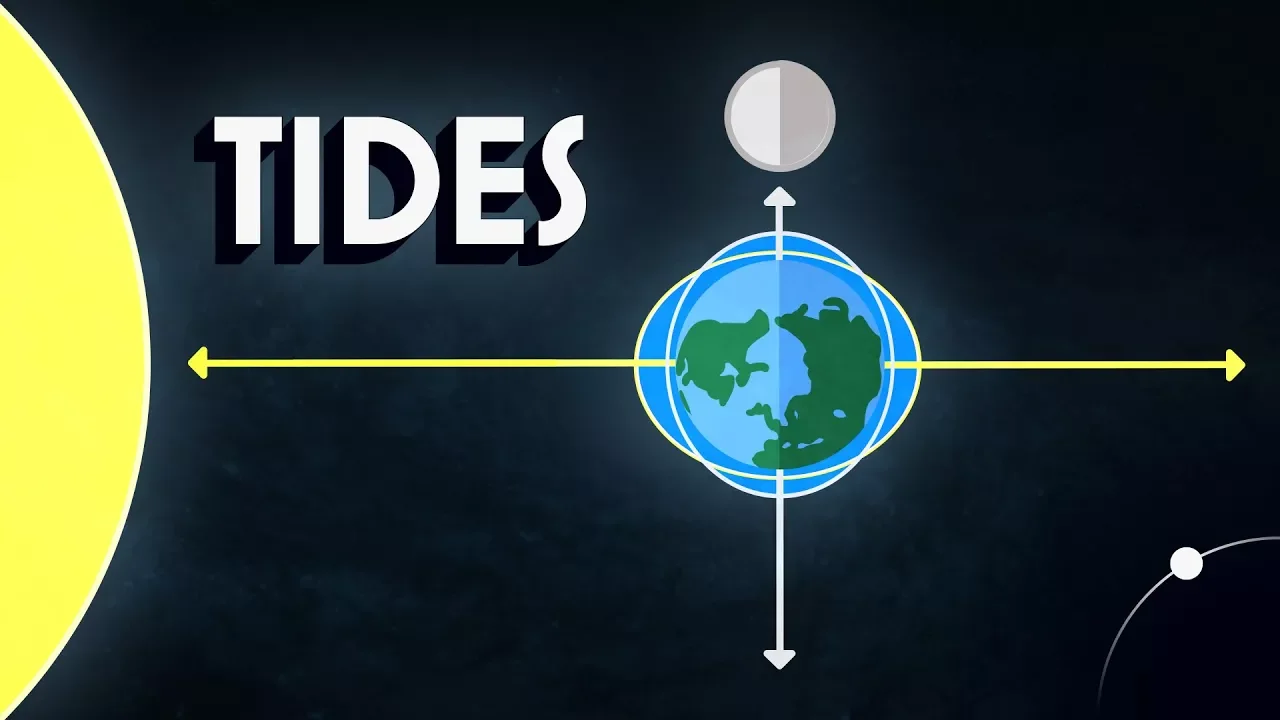
The concept of differential gravity (tidal forces) and how it causes physical stretching of celestial bodies.
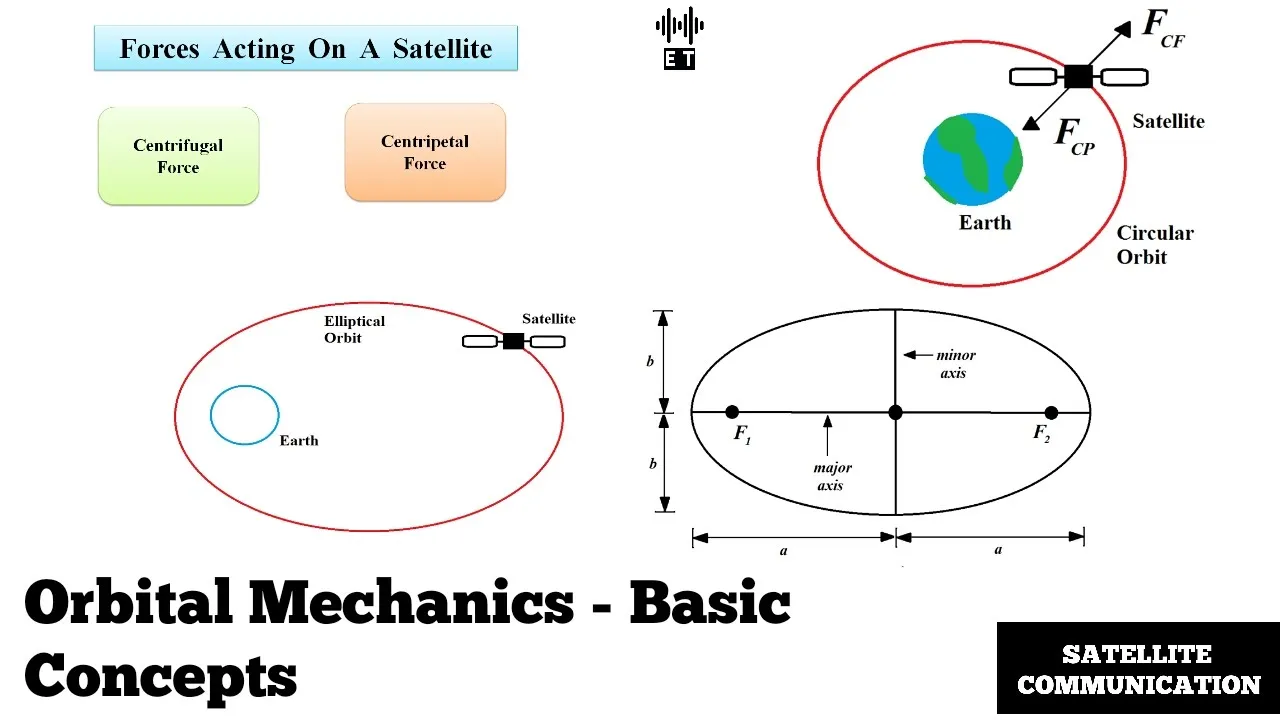
Basic orbital mechanics, including centripetal force and how satellites maintain a stable orbit.
The structural difference between self-gravitating bodies (like large moons held together by gravity) and rigid bodies held together by chemical bonds.
The dynamics of Saturn's rings, focusing on how shepherd moons shape the ring gaps through orbital resonances.
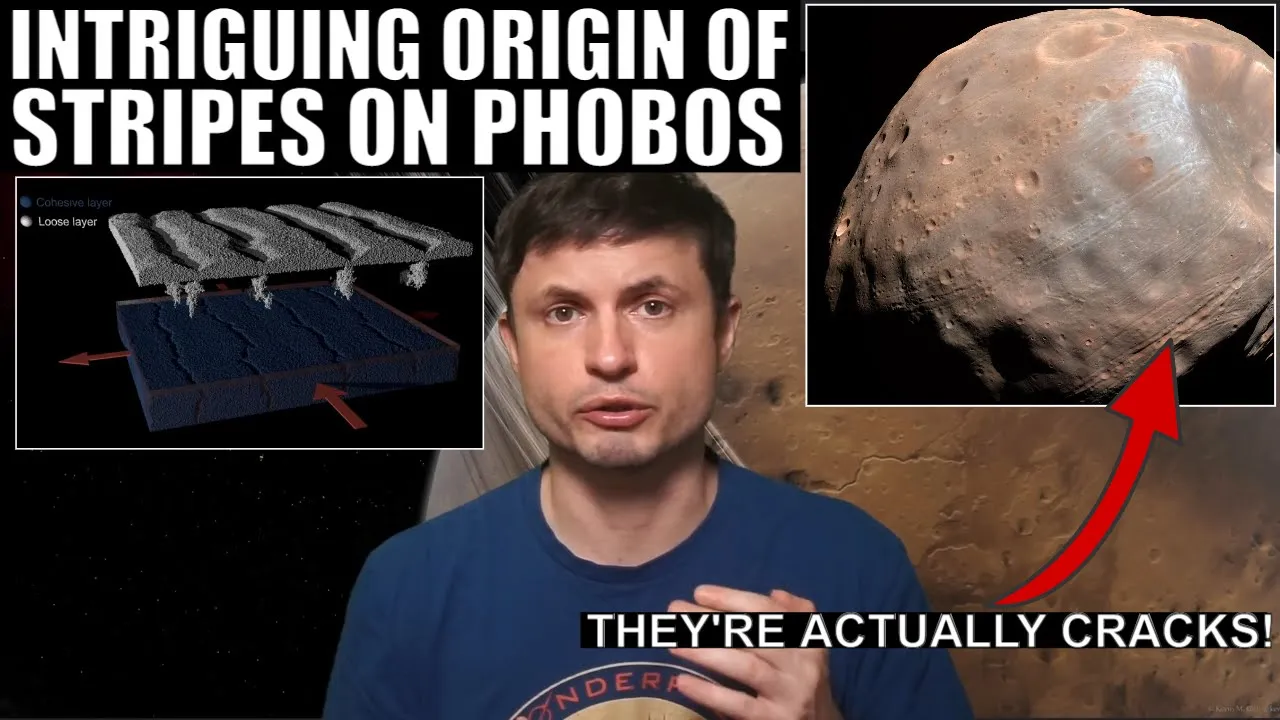
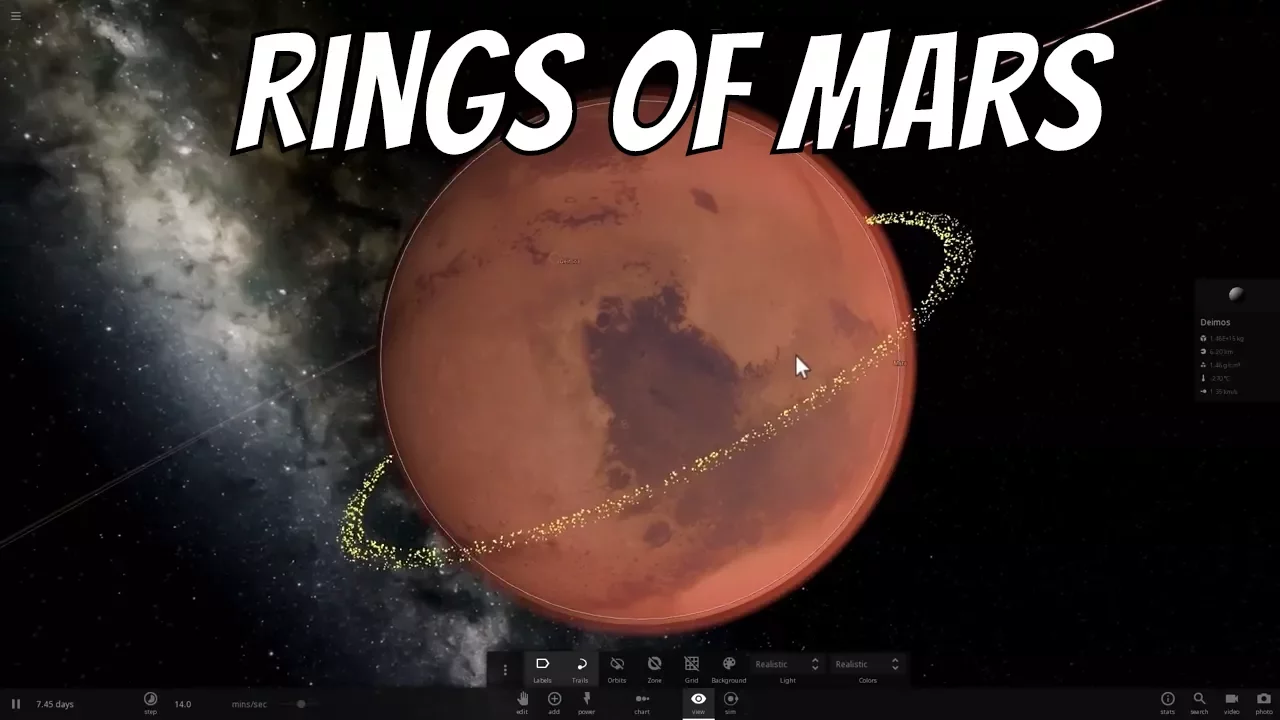
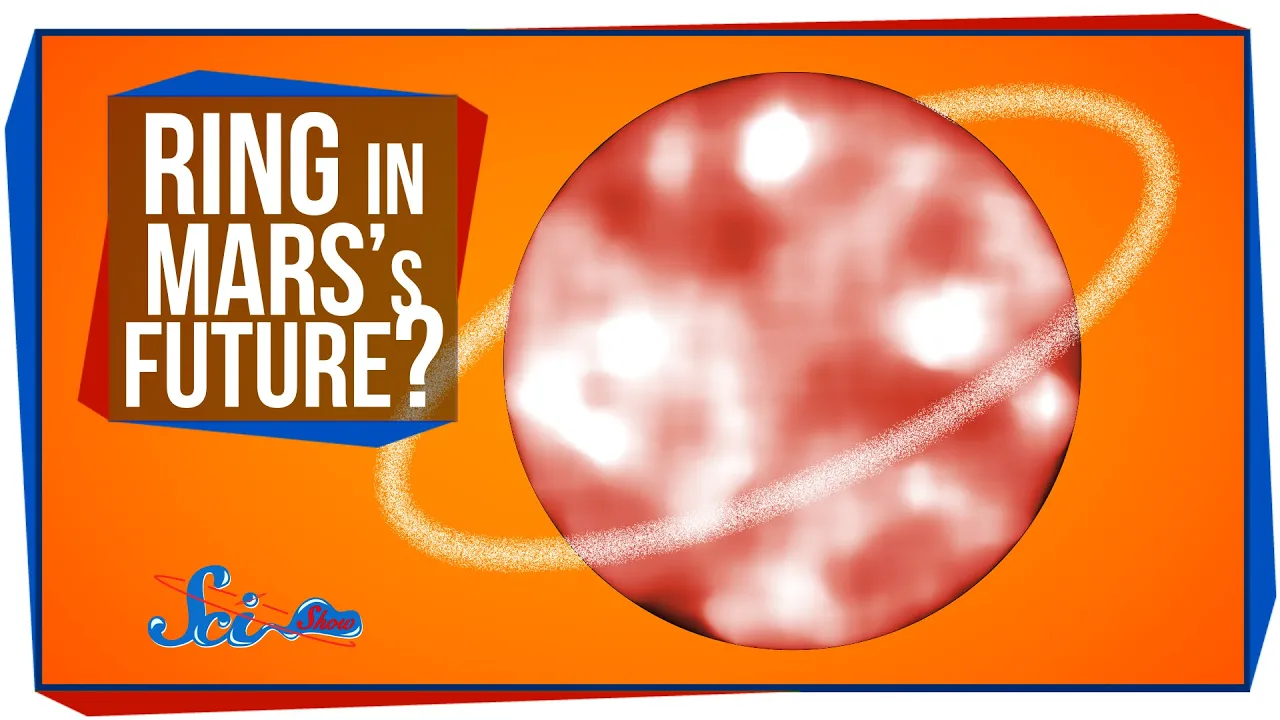
The future orbital decay of Mars' moon Phobos and its projected disintegration into a planetary ring system.
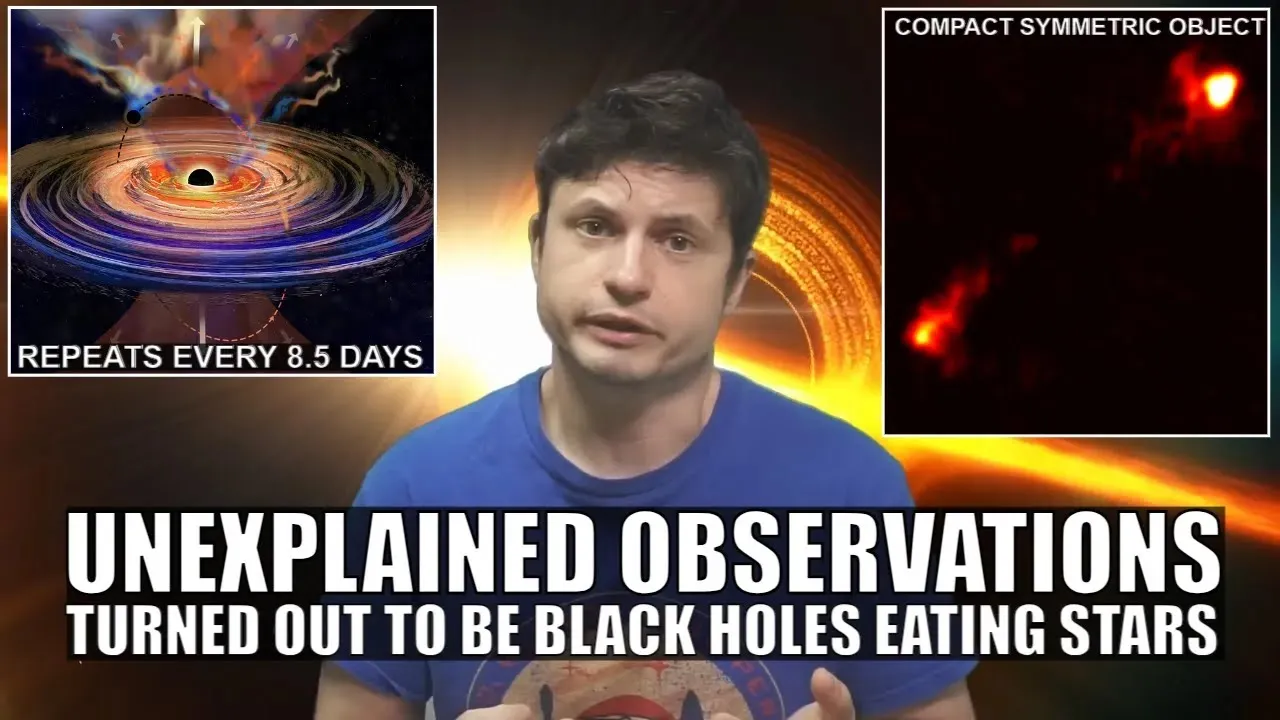
Tidal disruption events (TDEs) in astrophysics, where stars are ripped apart by the immense gravitational forces of supermassive black holes.
The process of planetary accretion, explaining how planetary systems form from dust and gas clouds outside gravitational disruption zones.
97.3K views6.6Klikes10:01Original Release: 2023-06-12
Thanks to Brilliant for helping support this episode.
Hey Crazies. Everybody loves Saturn. Am I right?
Just look at this thing. It's majestic!
But it's not actually the only planet with rings.
Jupiter, Uranus, and Neptune have them too. They're just harder to see.
Where do these planetary rings come from? How long will they last?
And why doesn’t Earth have rings?
Because, frankly, that would be wicked awesome.
[Intro Music] As with most stories, it seems natural to start this at the beginning.
No, no! We talked about this.
That's way too far back!
I mean the beginning of planetary rings.
OMG!
I suppose this is what I get for not being specific enough.
Let's go back to when planetary rings were first discovered.
To the timeline!
The first observations of rings came in 1610, when Galileo pointed his telescope at Saturn.
As you can see from his sketch, he didn't know they were rings.
Galileo thought they were giant moons.
But, like a good scientist, he kept observing.
By 1612, his giant moons had completely disappeared from view.
This wasn't too suspicious though.
Those moons could have easily moved behind Saturn.
In reality, he was looking at the rings edge on, but he didn't know that.
Thankfully, he got a better look a few years later.
In 1616, he drew another sketch that makes Saturn look like it has handles or ears.
We wouldn't actually figure out they were rings until Christiaan Huygens looked at Saturn in 1655.
The faint rings of the other three gas giants are much more recent discoveries: 1977, 79, and 84; respectively.
Jupiter's rings are so faint, we didn't discover them until the Voyager space probe flew by.
Wee!
Does that mean only gas giants have rings?
Oh, no, we've actually found dwarf planets with rings.
Really? Yep.
There's no reason a rocky planet like Earth couldn't have rings. Huh.
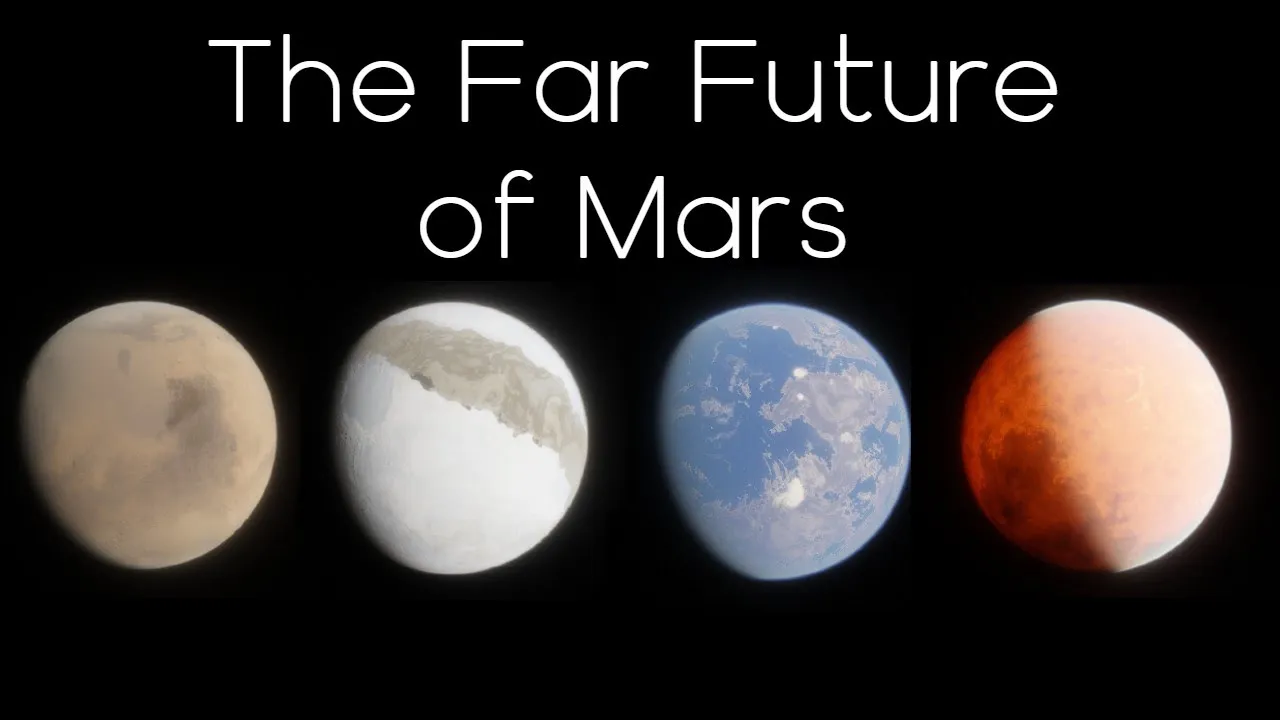
In fact, in the next 30 to 50 million years, we expect Mars's moon Phobos to become rings.
So, rings come from moons?
Yes, and comets and asteroids sometimes.
There's a whole list of ways rings can form.
Ring stability depends more on where they form.
Back to the timeline!
We've been trying to figure out planetary rings since we first discovered them, but progress wouldn't be made until 1848 when Edward Roche published what we now call the Roche limit.
It's a critical distance from a planet inside which other objects break apart and form rings.
Earth's Moon became a moon instead of rings because it formed outside of that limit.
Billions of years ago, a Mars-sized object collided with Earth, launching Earth material out into space.
This material was still gravitationally bound to Earth, but more so to itself, which allowed it to coalesce into the Moon.
If that material hadn't been launched thus far, it would have formed rings instead.
And, we can predict where that limit is? Sure, approximately.
Let's consider a real life example.
I mentioned earlier Mars’ moon Phobos was going to turn into rings soonish.
If this is Phobos, then Mars should be right about here.
Phobos is tiny by comparison, so I'm going to exaggerate sizes for clarity, which is something I've never ever done before.
(Giggle) Anyway, with the size of Phobos exaggerated, we can see the source of its inevitable demise.
According to Newton's laws, gravity depends on distance.
We see here that some of Phobos’ mass is closer to Mars and some of it is farther away.
That means gravity is not uniformly distributed across Phobos.
It's stronger in some places and weaker in others.
The total amount of force doesn't actually matter though.
Only the tidal forces matter.
That's how different each arrow is from the arrow at the center.
We're using the center gravity as a reference for all the others.
So, while all the gravity is point toward Mars, not all the tidal forces do.
It makes sense now why Phobos is going to break apart.
So, then why don’t all moons break apart?
Because tidal forces aren't the only forces involved.
It can be a bit overwhelming to look at all these forces at the same time.
So consider a single tiny rock sitting on the surface of Phobos; let's say, on the side facing Mars.
This rock has a tidal force on it, pulling up toward Mars, but that's not the only force acting on the rock.
If this was the only force, the rock would lift off the surface and drift toward Mars.
We know that's not happening, so there must be some other force overpowering it.
Like, maybe, the gravity from Phobos itself.
That moon has mass, so it has self-gravity.
That's the gravity between its parts.
It's what Phobos and any other large object uses to hold itself together.
For our single rock, that looks like this.
It has a tidal force up, a gravity down, and a push up from the ground to keep things balanced.
At the moment, that downward gravity is bigger than the tidal force, so the rock stays put, but that won't always be the case.
The orbit of Phobos is gradually decaying.
As it gets closer to Mars, the tidal force will increase while itself gravity stays the same.
Eventually, it's going to get close enough that the tidal force overpowers gravity.
That rock is going to lift off the surface.
And, since that rock is just a placeholder for all the rocks that make up Phobos, the entire moon will come apart.
The distance at which that occurs is called the Roche limit and it looks something like this.
It only depends on the mass of the planet, the mass of the moon, and the size of the moon.
Technically though, this version is called the rigid Roche limit because it assumes the moon is perfectly rigid.
Unfortunately, assuming the moon is perfectly rigid is a bit of a stretch.
Pun intended.
So Roche himself went a little further.
He assumed a moon destined to become rings would stretch out a bit before actually breaking.
This only changes the coefficient out front, giving us the fluid Roche limit.
If deformation is allowed, the Roche limit is actually larger.
Wait wait wait, the moon breaks up sooner if it isn’t rigid?
Yeah, it blew my mind too when I first learned it.
As it turns out, the deformation increases the tidal forces, thereby causing more deformation, which increases the tidal forces even more.
It's a positive feedback loop.
Of course, both the rigid and fluid models make one giant assumption: That a moon is just a clump of tiny rocks held together by gravity.
Which might seem kind of silly when you first think about it, but it's actually a decent approximation, most of the time; particularly with some of the more massive moons and asteroids.
You really only need to account for molecular forces in a couple of situations: Artificial satellites and the ISS are well within their own Roche limits, yet they survive because they're too small for gravity to be what holds them together.
Also, some materials like ice are kind of sticky.
That's why Comet Lovejoy was able to survive back in 2011, even though the comet was inside its own Roche limit with the Sun.
But, most of the time, this equation works pretty well.
A realistic object will break apart somewhere between these two limits.
For Earth's Moon, that's between about 1.5 and 3 Earth radii, which is less than 5% of the total distance to the Moon.
That means the Moon is quite safe.
And, if it hadn’t been launched that far?
It would have formed rings instead of a moon, but those rings would have been long gone by now.
Why? Well, planetary rings are temporary.
The orbits are unstable, so those tiny bits of rock and ice gradually fall into the planet.
Data from the Cassini mission shows Saturn's rings are only about 10 to 100 million years old, and our current estimates predict they'll only be around for another 100 million years or so.
Plus, Saturn has a couple of larger moons inside the ring system, keeping the rings in line, so they're especially long lasting.
Earth's rings would have collapsed into Earth long before life even evolved here.
No human would have ever seen views like this.
For Earth to have rings now, we would need a more recent cataclysmic event.
But do you really want a Majora's Mask situation on your hands?
I certainly don't.
Creepy A.F.
Anyway, planetary rings are the result of a larger object getting too close to a planet.
Outside the Roche limit, we get moons.
Inside the Roche limit, we get rings because tidal forces can be a [censored].
And until next time, remember, it's okay to be a little crazy.
If you want to learn more about tidal forces, Brilliant dot org can help.
Their gravitational physics course starts by introducing Newton's law of gravity and then later applying that law to real world situations like ocean tides, for example.
You're not just memorizing formulas and equations though.
Brilliant is designed to build your intuition.
The idea is that when you see a problem, you'll have the tools to solve it yourself.
Brilliant has thousands of interactive lessons on many different topics: Foundational math, advanced math, data science, neural networks, and more; with new lessons added monthly.
Brilliant was built for busy people with bite-sized lessons that break down important concepts into understandable parts.
They have physics puzzles too, if you feel like you've learned enough for a challenge.
To try everything Brilliant has to offer free for 30 days, go to Brilliant dot org slash Science Asylum or click the link in the description below.
The first 200 of you will get 20% off Brilliance annual premium subscription.
It'll also let Brilliant know you heard about them for me, which helps out the channel.
There were a lot of people appreciating our talk on quantum field theory and wanting more.
No worries. There will be more.
I'm finally learning QFT myself, so you'll get a video every time I know enough to make one.
There's a lot to learn though.
Anyway, thanks for watching.
Up Next

62:53
How Space Forces Create Saturn's Rings and Moons
@ExploreScientificOfficial
101 views•2021-06-15
61:17
First Billion Years of the Universe with the Square Kilometre Array
@iaaudc
121 views•2022-05-26

10:16
Supernova Explained: The Final Moments of a Massive Star
@ScienceAsylum
158.8K views•2024-03-07
6:10
Gamma-Ray Bursts: Cosmic Snipers Explained | Astronomy
@kurzgesagt
15M views•2016-07-31
Related Study Plans & Knowledge Roadmaps
Structured learning paths in Astronomy
astronomy
Reionization: Pop III Stars, IGM & 21cm Line
01Foundations of Cosmology & the Early Universe
02Population III Stars & Cosmic Dawn
03Physical Mechanisms of Reionization
+ 2 more learning modules
17h5 modules
Explore Roadmap
astronomy
Planetary Rings: Dynamics, Roche & Resonances
01Foundations of Gravity and Orbital Mechanics
02Tidal Forces and the Roche Limit
03Structure, Composition, and Collisions
+ 2 more learning modules
10h5 modules
Explore Roadmap
astronomy
Asteroseismology: Stellar Waves, Ages & Cores
01Foundations of Stellar Astrophysics & Wave Mechanics
02Stellar Oscillation Modes: P-modes and G-modes
03Mathematical Framework of Asteroseismology
+ 2 more learning modules
35h5 modules
Explore Roadmap
astronomy
Adaptive Optics: Physics, Engineering & Control
01Foundations of Wave Optics and Wavefronts
02Atmospheric Turbulence & Optical Distortion
03Wavefront Sensing Technologies
+ 3 more learning modules
35h6 modules
Explore Roadmap