Astrochemistry: ISM, Spectroscopy & Organics
Learning Goal: Analyzing the chemical evolution of the interstellar medium, including gas-phase and dust-grain reactions in molecular clouds, the spectroscopy of prebiotic molecules, and the chemical pathways that deliver organic matter to protoplanetary disks.
Prerequisites
- Basic Physical Chemistry: Familiarity with gas phase kinetics, activation energy barriers, and basic quantum mechanical descriptions of molecular energy states.
- Basic Physics: Standard wave mechanics, electromagnetism, and classical mechanics (moment of inertia, rotational motion).
Estimated Total Study Time
12 Hours (including video lectures, supplementary notes, independent gap study, and self-assessments).
Module 1: Foundations of the Interstellar Medium
This module establishes the physical and chemical backdrop of our universe. You will explore the multi-phase structure of the interstellar medium (ISM), focusing on how thin gases and sub-micrometer dust particles group into massive, dense molecular clouds. These cold environments are the natural nurseries where stellar systems and complex prebiotic molecules are born.
Recommended Videos
- Why this video: Dr. Christopher McKee provides an exceptional academic overview of the physical phases of the interstellar medium. Understanding the distinct phases (atomic hydrogen, molecular hydrogen, and ionized plasmas) along with their respective temperature and density ranges is fundamental to understanding where astrochemistry actually takes place.
- Knowledge Checkpoint:
- Identify the temperatures and typical densities of the cold atomic, warm atomic, and molecular phases of the ISM.
- Explain how UV radiation from hot stars maintains ionization equilibrium in H II regions.
- Differentiate between the diffuse gas phase and the dense environments where chemistry thrives.

- Why this video: This comprehensive, graduate-level introductory lecture lays down the rigorous mathematical and physical parameters of astrochemistry. It breaks down the 99% gas to 1% dust ratio, explaining how this small solid fraction acts as an essential catalyst for molecular generation.
- Knowledge Checkpoint:
- Explain why the 1% mass contribution of interstellar dust has such a disproportionately large impact on interstellar chemistry.
- Describe the elemental abundances of the ISM, identifying why hydrogen and helium dominate while heavier bio-elements (C, N, O) remain trace species.
- Mathematically relate the collision timescale of molecules in the ISM to their average density.

- Why this video: Dr. Mark Krumholz dives deep into the dynamic lifetimes, scale heights, and collapse mechanics of molecular clouds. It addresses the crucial paradox of star formation: why molecular clouds convert gas to stars at an incredibly low (~1%) efficiency rate.
- Knowledge Checkpoint:
- Define the Jeans mass and explain how thermal pressure balances gravitational collapse in molecular clouds.
- Detail the physical mechanism of turbulence and magnetic fields in preventing rapid free-fall collapse of clouds.
- State the typical lifespan of a giant molecular cloud and how it is observed.
⚠️ Curriculum Note & Independent Study Topic: While these videos cover the thermodynamics and density of molecular clouds excellently, they lack a high-resolution 3D animation visualizing the cloud-scale fragmentation process.
To bridge this gap, independently search YouTube for:
"molecular cloud collapse 3D animation"or"smoothed particle hydrodynamics star formation simulation"to visualize how turbulently-driven filaments fragment into individual stellar cores.
Module 2: Gas-Phase, Dust-Grain, and Ice Chemistry Pathways
In the extreme cold () of dense molecular clouds, standard organic chemistry equations change. This module contrasts gas-phase chemistry—dominated by barrierless ion-molecule reactions—with solid-state surface reactions occurring on the icy mantles of interstellar dust grains. This unique dual-mode chemical engine synthesizes prebiotic Complex Organic Molecules (COMs).
Recommended Videos

- Why this video: Renowned astrochemist Paola Caselli explains the lifecycle of a dust grain's ice mantle. She details how atoms stick, diffuse via thermal hopping or quantum tunneling, react, and ultimately desorb back into the gas phase. This provides a direct structural window into how water () and methanol () form on solid surfaces.
- Knowledge Checkpoint:
- Detail the solid-state hydrogenation sequence that converts atomic oxygen, carbon, and nitrogen into , , and .
- Define the physical steps of the Langmuir-Hinshelwood mechanism on dust grains: accretion, diffusion, reaction, and desorption.
- Contrast thermal diffusion (hopping over energy barriers) with quantum tunneling of light species (like H atoms) at .

- Why this video: This video directly highlights why gas-phase neutral-neutral reactions are highly inefficient at due to activation energy barriers, and contrasts them with barrierless ion-molecule reactions initiated by cosmic rays.
- Knowledge Checkpoint:
- Explain why cosmic rays ( at GeV energies) are crucial for driving gas-phase chemistry in the shielded, UV-dark interior of molecular clouds.
- Outline how ionization of by cosmic rays leads to the formation of the highly reactive ion.
- Describe how ion-neutral electrostatic forces (polarization of the neutral by the approaching ion) bypass the traditional Arrhenius activation energy barriers.

- Why this video: This short, focused video explains how interstellar dust grains act as catalytic templates. It visualizes how the physical structure of silicate and carbonaceous grains provides the "meeting grounds" for otherwise isolated interstellar atoms.
- Knowledge Checkpoint:
- Identify the physical composition of an interstellar dust grain (silicate core, carbonaceous outer layer, and icy volatile mantle).
- Describe how chemical energy released during molecule formation can lead to non-thermal "reactive desorption" of the product into the gas phase.
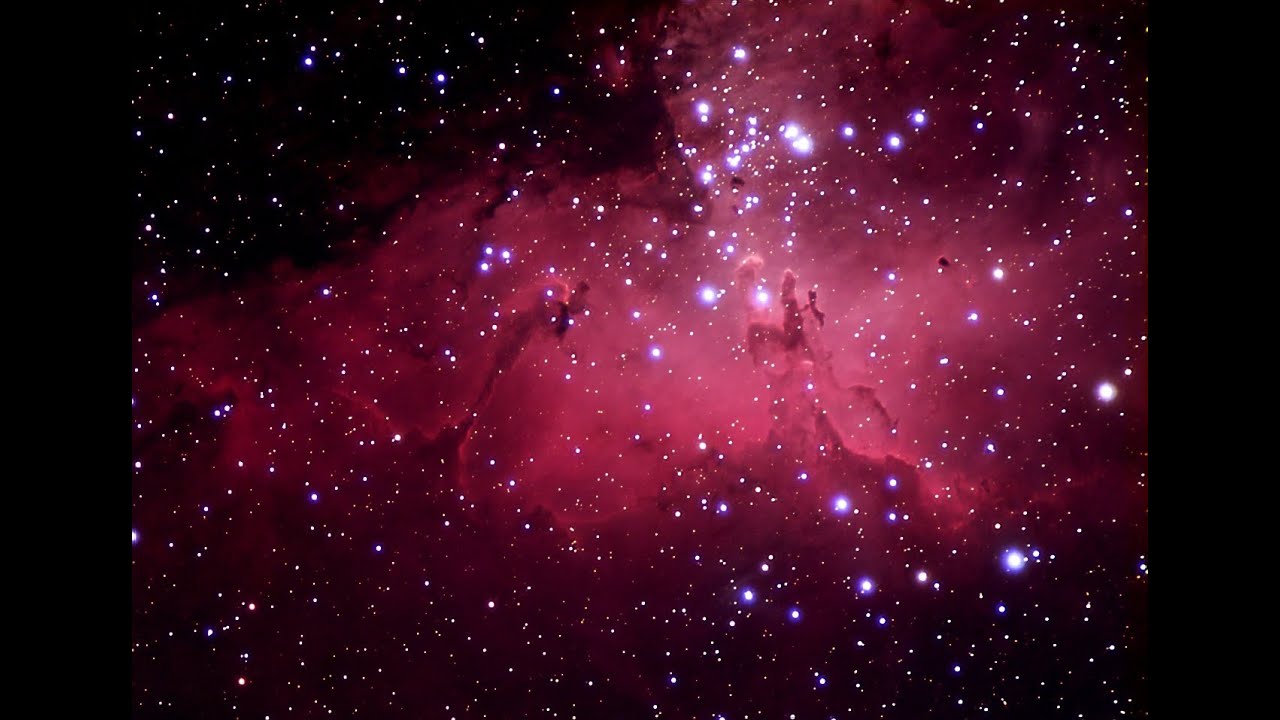
- Why this video: Jean Chiar introduces the observational aspect of interstellar ice. By using infrared absorption spectroscopy toward embedded stars, scientists can identify the key components of the icy mantles (such as , , and ices) without relying on pure modeling.
- Knowledge Checkpoint:
- Explain how infrared spectroscopy reveals the solid-state phases (ice) versus the gas-phase components of a molecular cloud.
- Identify the primary chemical constituent of interstellar ice mantles.

- Why this video: A brief but profound statement by pioneer Ewine van Dishoeck on how dust particles act as natural "freezers" in space. She contextualizes how these microscopic icy surfaces act as the primary nurseries for building up complex organic molecules that are ultimately delivered to planets.
- Knowledge Checkpoint:
- Describe the conceptual progression from simple atoms to prebiotic matter in icy interstellar conditions.
⚠️ Curriculum Note & Independent Study Topic: High-level mathematical kinetics of ion-molecule reactions (such as Langevin collision theory) and precise quantum mechanical modeling of surface reactions are mathematically dense and briefly covered in general videos.
To master these gaps, independently study or search for academic literature on:
"Langevin rate constant ion-molecule reactions"and"Eley-Rideal vs Langmuir-Hinshelwood kinetics in astrochemistry"to understand how reaction cross-sections are modeled at low temperatures.
Module 3: Spectroscopy and Detecting Prebiotic Molecules
How do we prove these complex organic molecules actually exist in interstellar space? We observe their spectral "fingerprints" using radio telescopes. This module covers the foundational quantum mechanics of rotational and vibrational spectroscopy, and highlights how astronomical observatories like the Atacama Large Millimeter/submillimeter Array (ALMA) utilize these quantum transitions to map chemistry across light-years.
Recommended Videos
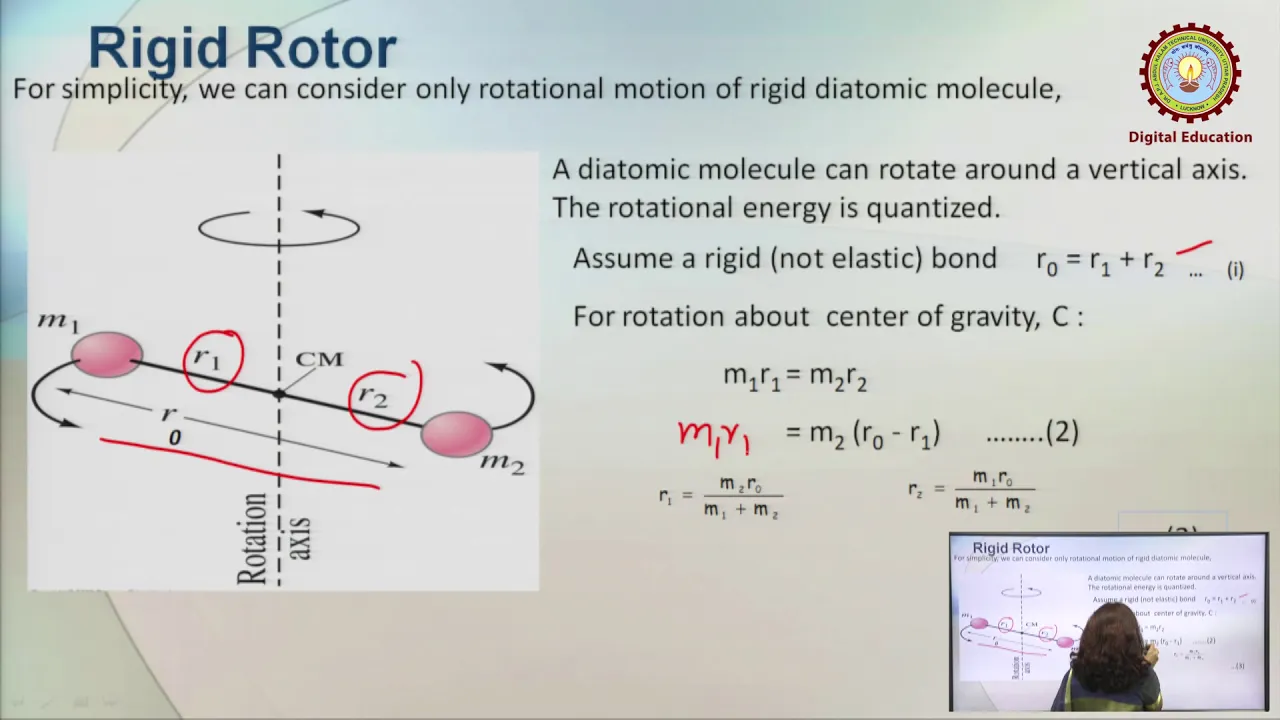
- Why this video: Dr. Smriti Dwivedi delivers a rigorous, mathematical lecture detailing the rotational energy states of molecules. She works through the rigid rotor approximation, explaining the quantization of rotational energy levels and the fundamental selection rules.
- Knowledge Checkpoint:
- Write down the energy equation for a rigid diatomic rotor: (where is the rotational constant) and define the units (Joules or ).
- Explain why a molecule must possess a permanent dipole moment to produce a rotational spectrum (microwave active).
- Define the rigid rotor selection rule in terms of angular momentum conservation during photon absorption or emission.

- Why this video: This video reinforces the mathematical relationship between a molecule's physical bond length, its moment of inertia (), and its rotational constant . It shows how changing isotopes (e.g., substituting Hydrogen with Deuterium) alters the spectrum, which is a major tool for studying deuterium fractionation in astrochemistry.
- Knowledge Checkpoint:
- Calculate the reduced mass () and moment of inertia () for a simple heteronuclear diatomic molecule.
- Describe how isotopic substitution (H to D) shifts the rotational spectral lines, and how this is used to identify deuterated species in molecular clouds.
- Identify the physical spacing between consecutive lines in a pure rotational absorption spectrum (equal to ).

- Why this video: Brett McGuire, a leading figure in modern astrochemistry, presents how rotational spectroscopy is utilized in practice to detect Polycyclic Aromatic Hydrocarbons (PAHs) and other prebiotic molecules in cold molecular clouds. It bridges laboratory physical chemistry with observational radio astronomy.
- Knowledge Checkpoint:
- Explain why a molecule's rotational spectrum acts as a completely unique, highly-specific "fingerprint" compared to vibrational or electronic spectroscopy.
- Describe the challenge of identifying asymmetric top molecules (which have three distinct moments of inertia: ) in stellar nurseries.
- Why this video: Dr. Karin Öberg discusses how the Atacama Large Millimeter/submillimeter Array (ALMA) works. By combining the signals from 66 individual radio dishes, ALMA can resolve the emission lines of organic molecules within the incredibly small spatial scales of distant protoplanetary disks.
- Knowledge Checkpoint:
- Explain the concept of interferometry: why combining multiple radio dishes enables high-angular-resolution imaging of planetary-scale environments.
- Describe why millimetre and submillimetre wavelengths are ideal for probing the cold, dust-shielded zones of space where molecules emit rotational photons.
Module 4: Chemical Transport to Protoplanetary Disks
As dense molecular clouds collapse under gravity, they form rotating protostellar cores surrounded by pancake-like protoplanetary disks. This module traces how complex organic matter survives or undergoes transformation as it is transported into these disks, mapping the radial chemical zones created by "snowlines" (condensation fronts) which ultimately establish the chemical makeup of emerging exoplanets.
Recommended Videos

- Why this video: This masterclass by Karin Öberg offers a complete framework linking protoplanetary disk chemistry to planet diversity. It explains the physical structure of the disk, how temperature and UV radiation gradients from the young host star drive a highly active chemical envelope, and how volatile organic compounds are distributed.
- Knowledge Checkpoint:
- Draw a cross-section of a protoplanetary disk, highlighting the highly ionized surface layer, the warm molecular layer, and the cold midplane "freeze-out" zone.
- Discuss the concept of a "snowline" and explain why different volatile species (e.g., , , ) freeze out at different distances from the central protostar.
- Explain how gas-to-dust ratios and chemical abundances in the disk midplane dictate the final compositions of rocky and gaseous planets.

- Why this video: This video details the exact physical and chemical mechanics of snowlines. It explains how ice-coated dust grains drift inward and cross condensation fronts, releasing volatile organics and gases. This mechanism establishes radial variations in the local elemental ratios (specifically the Carbon-to-Oxygen ratio, ), which determines the chemical signature of planets forming in those zones.
- Knowledge Checkpoint:
- Define the sublimation temperature of water under disk pressures) and Carbon Monoxide , and describe where their respective snowlines lie.
- Explain why the gaseous ratio in a disk increases outside the water snowline but drops significantly past the carbon monoxide snowline.
- Describe the process of "radial drift" and how migrating icy pebbles deliver volatiles to the inner planetary system.
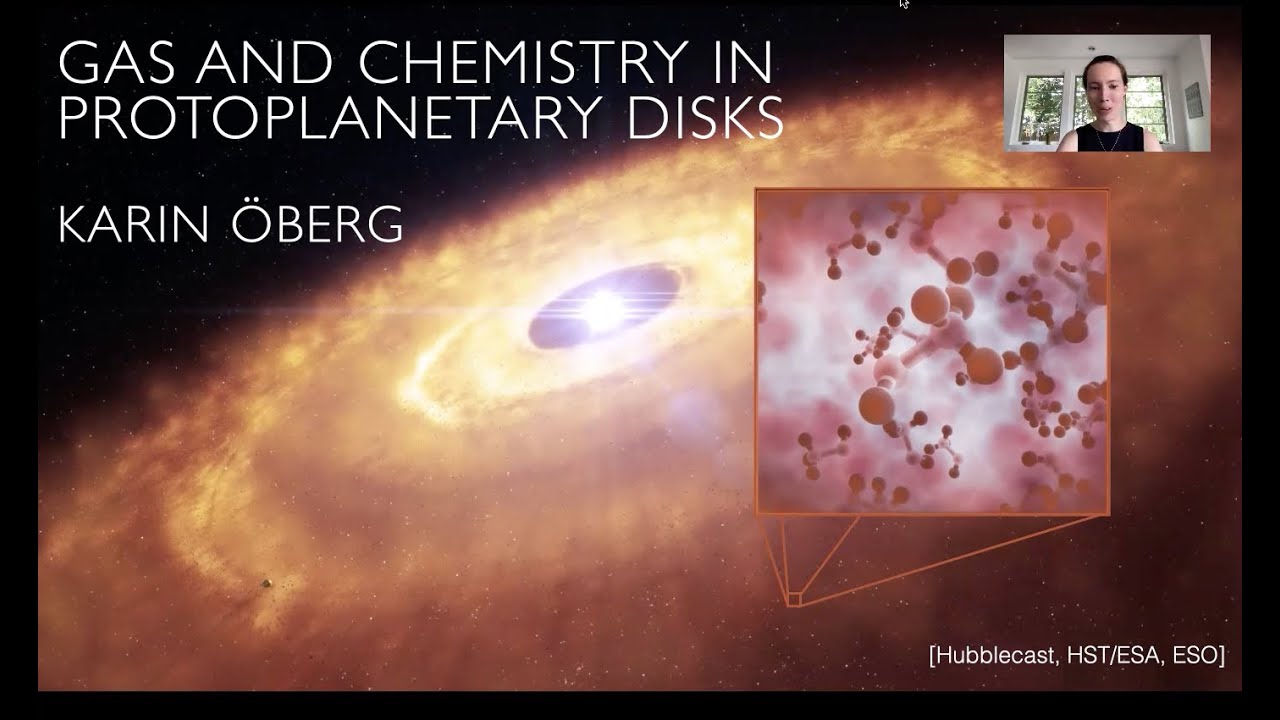
- Why this video: This lecture covers how molecular line emissions are used to observe disk structures and trace dynamic physical properties such as ionization levels, Keplerian rotation, and wind profiles. This is crucial for verifying our chemical models of protoplanetary disks.
- Knowledge Checkpoint:
- Identify which molecules act as effective tracers for specific regions of the disk (e.g., for tracing ionization, for gas mass and temperature).
- Explain how Keplerian shear impacts the line profile shape of a molecular emission spectrum.
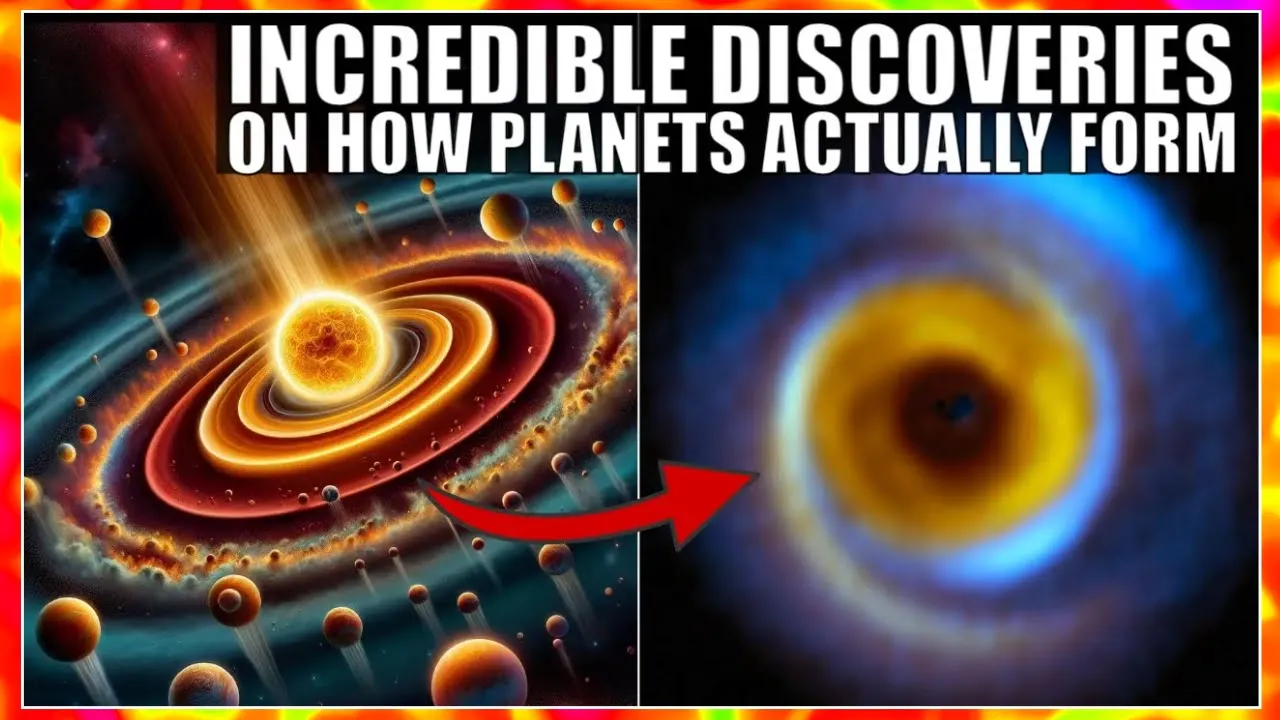
- Why this video: This video details recent, groundbreaking observations from the James Webb Space Telescope (JWST) and ALMA. It highlights the detection of small, highly reactive hydrocarbons (such as acetylene and benzene) in the inner regions of protoplanetary disks, challenging previous chemical evolutionary models and showing how rapidly prebiotic chemistry develops.
- Knowledge Checkpoint:
- Name the prebiotic organic molecules recently identified by JWST in the warm, inner zones of disks (e.g., , ).
- Discuss how stellar properties (e.g., low-mass M-dwarf stars versus high-mass stars) impact the chemical environment and inventory of their protoplanetary disks.
Course Map
Key People Index
- Dr. Christopher McKee (UC Berkeley): A pioneering astrophysicist who established the foundational models of the multi-phase interstellar medium, demonstrating how magnetic fields and stellar feedback regulate star formation rates within molecular clouds.
- Dr. Paola Caselli (Max Planck Institute for Extraterrestrial Physics): A leading expert in low-temperature astrochemistry and observational star formation. Her research groups mathematically model and observe the deuteration of molecules and chemical processes on dust grains.
- Dr. Ewine van Dishoeck (Leiden Observatory): A world-renowned pioneer in molecular astrophysics. Her laboratory work, observational campaigns, and theoretical models have shaped our understanding of how gas and dust transform into stellar and planetary systems.
- Dr. Karin Öberg (Harvard University): A leading astrochemist whose research focuses on the chemical evolution of protoplanetary disks. Her breakthrough observations using ALMA mapped snowlines and determined how carbon-to-oxygen ratios influence the prebiotic environments of nascent planets.
- Dr. Brett McGuire (MIT): A prominent molecular spectroscopist who uses laboratory experiments and astronomical observations to detect brand-new, complex organic molecules (including PAHs) in the cold interstellar medium.
Final Self-Assessment
Test your synthesis of the material by verifying you can thoroughly explain, derive, or identify each of the following points:
- 1. State the temperature and particle density conditions of cold molecular clouds, and explain why these parameters dictate a non-equilibrium chemical environment.
- 2. Explain how cosmic rays trigger the formation of from molecular hydrogen, and write out the multi-step pathway by which transfers a proton to build basic interstellar ions.
- 3. Compare the Langmuir-Hinshelwood mechanism with the Eley-Rideal mechanism, explaining how diffusion rates of H, O, C, and N atoms on interstellar ice mantles alter the final yield of solid-state prebiotic compounds.
- 4. State why neutral-neutral reactions (such as ) are effectively turned off in a dark molecular cloud, while ion-molecule reactions (such as ) proceed rapidly.
- 5. Derive the physical moment of inertia () of a carbon monoxide () molecule and show how its rotational energy states are quantized using the rigid rotor quantum number .
- 6. Explain why homonuclear diatomic molecules like or do not show pure rotational spectra, and discuss how astrochemists overcome this to map molecular hydrogen in the universe.
- 7. Describe how a radio interferometer like ALMA utilizes phase-coherent combination of signals across kilometers to achieve the angular resolution required to see chemical gradients inside protoplanetary disks.
- 8. Map the dynamic physical structure of a protoplanetary disk: explain the difference in temperature, radiation exposure, and chemical composition between the disk midplane and the surface envelope.
- 9. Explain the concept of a "snowline" and show how the sequential condensation of water, carbon dioxide, and carbon monoxide at different radial distances from a protostar fractionates gaseous and solid-state carbon-to-oxygen ratios.
- 10. Explain "radial drift" in protoplanetary disks, and detail how the inward migration of ice-coated pebbles can enrich the planet-forming zones of the inner disk with volatile prebiotic ingredients.