













![[강연] 외계행성: 태양계 너머의 세상 _ by권우진ㅣ 2021 봄 카오스강연 'SPACE OPERA' 3강](https://i.ytimg.com/vi/4IrJvANAC_0/maxresdefault.jpg)





Protoplanetary disks contain complex chemical environments shaped by molecular cloud inheritance, protostellar processing, and disk chemistry, where molecules like nitriles (e.g., hydrogen cyanide) are abundant and may play crucial roles in prebiotic chemistry; however, measuring gas masses remains challenging due to CO depletion issues, requiring multiple observational probes and theoretical models to understand how these chemical compositions influence planet formation and the potential for life-supporting planets.
Gas and Chemistry in Protoplanetary Disks: A Lecture by Karin Öberg
Added:Basic understanding of stellar and planetary system formation, particularly the transition from molecular clouds to protoplanetary disks.
Fundamental chemistry principles, including molecular bonds, gas-phase reactions, and phase changes (sublimation and condensation) in low-pressure environments.
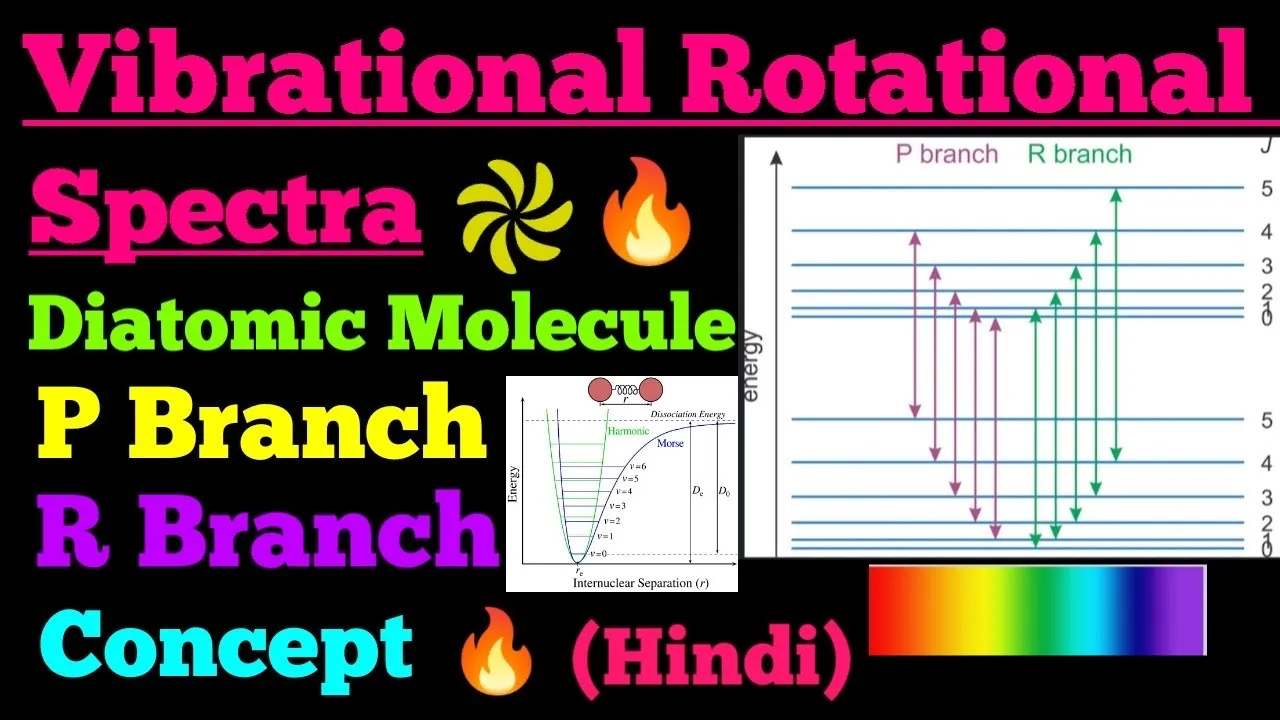
Introduction to astronomical spectroscopy, specifically how rotational and vibrational transitions of molecules are used to identify chemical species in space.
The concept of the 'snowline' or 'frost line' in astrophysics, which determines where volatile gases freeze into solid dust grains.
Prebiotic chemistry and astrobiology, exploring how organic molecules found in disks are delivered to planets to potentially seed life.
Exoplanet atmospheric characterization, linking the chemical composition of exoplanetary atmospheres to the chemistry of their birth disks.
Advanced observational astrochemistry, focusing on data from high-resolution interferometers like the Atacama Large Millimeter/submillimeter Array (ALMA) and the James Webb Space Telescope (JWST).
Astrophysical chemical modeling, which simulates the complex reaction networks influenced by stellar UV and X-ray radiation in disk environments.
795 views17likes52:07Original Release: 2021-07-01
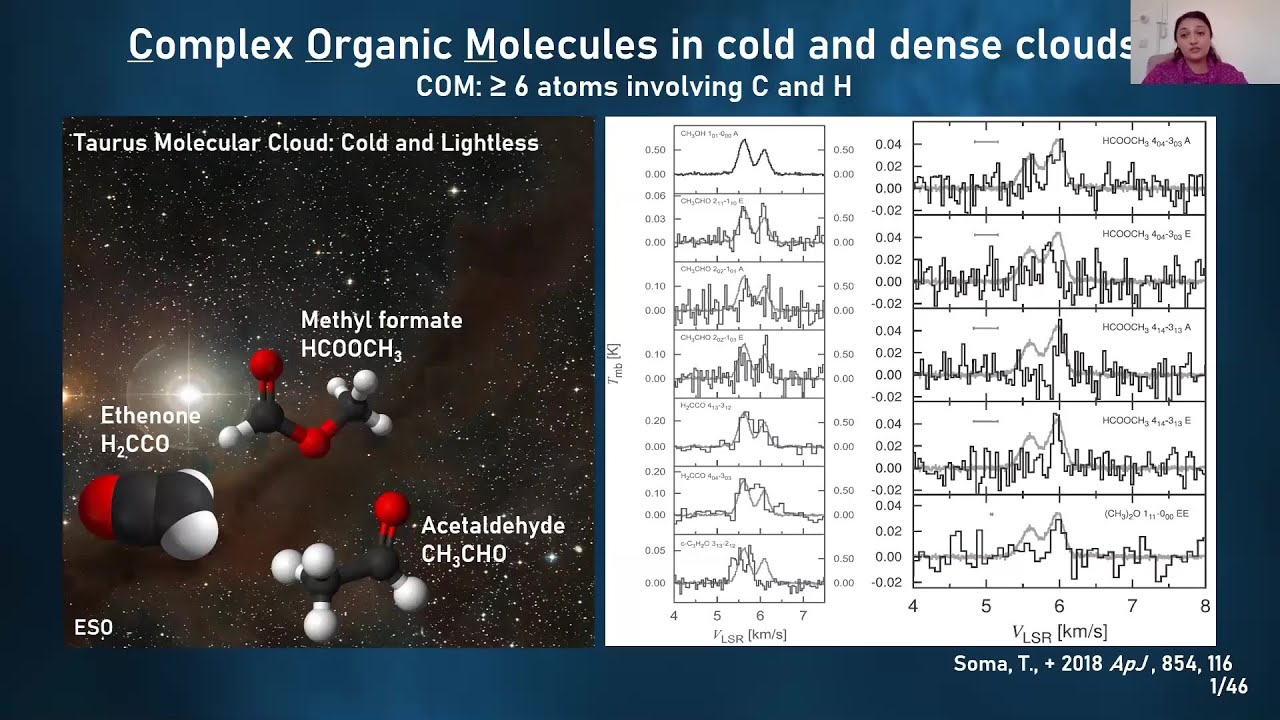
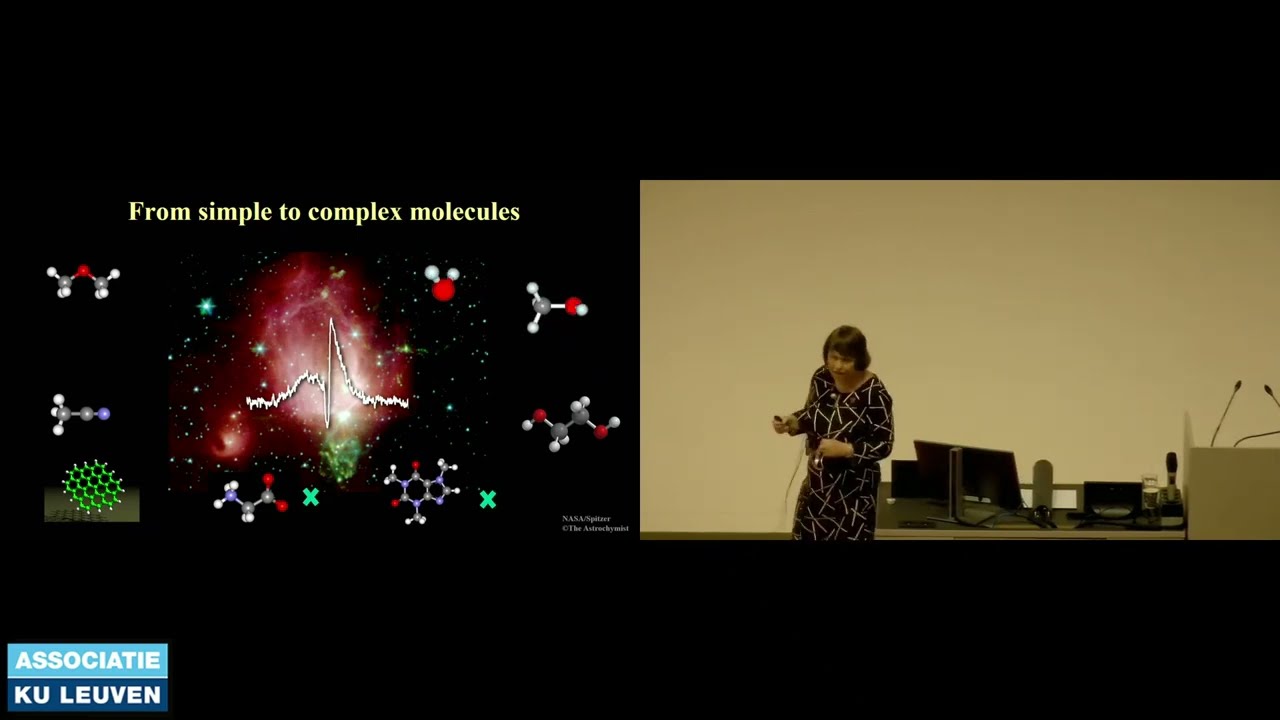
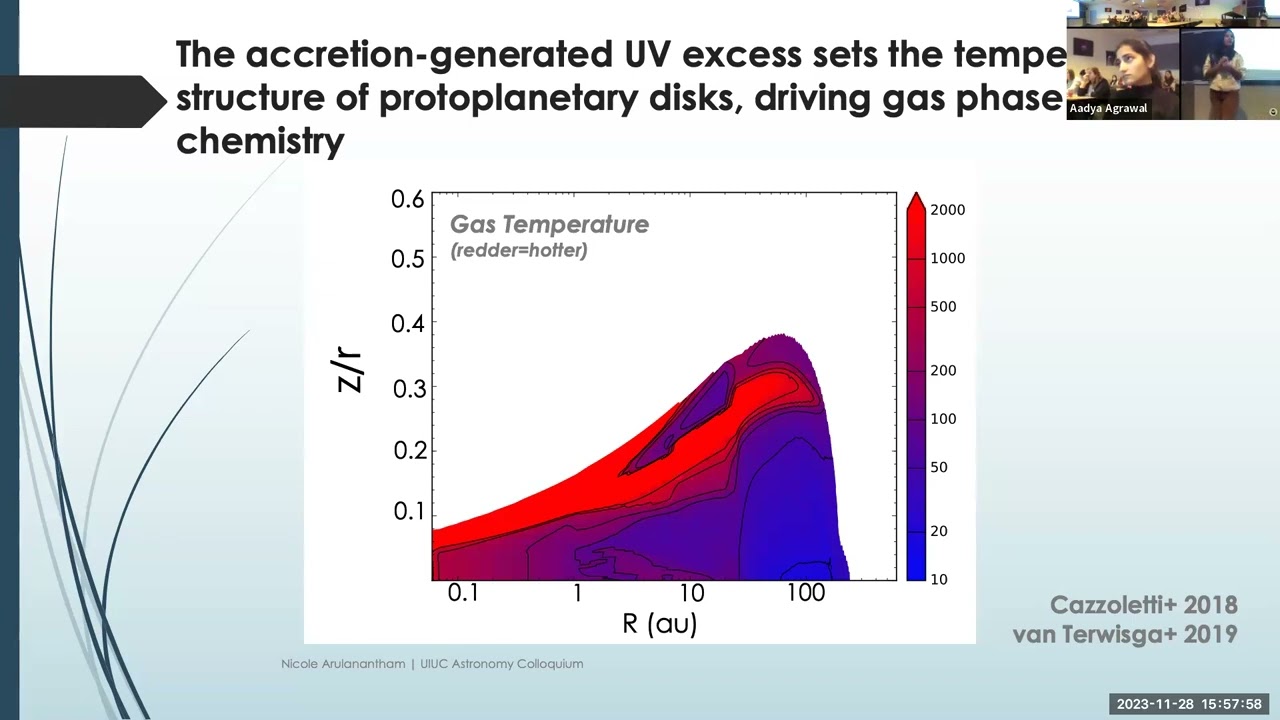
well uh thank you for tuning in to listening to this lecture my name is karen oberg and as the title suggests i will be talking about gas and chemistry in protoplanetary disks but for those of you who know my background you will not be surprised that i will be spending more time on the second part of that on the chemistry but we will also be going over what we know observationally about gas in disks and extreme mostly why we don't know more than we do so protoplanetary disks the birthplace of planets are complicated because there's so many things that are interacting with one another the structure the dynamics uh and that's both the gas and the dust and their structures and dynamics are decoupled and the chemistry all are all linked and act and interact with one another in different ways and we'll be going through that we'll be coming back to this uh cartoon a couple of times in this talk but just to guide you so as we go closer to the star it gets hotter as you as you would probably guess as you get towards the surface of these discs it gets hotter which means that the mid plane of the disc is the coldest part the mid plane is where planets form so if we care about the composition for example the gas and the dust we're gonna care about it in the mid plane uh dust as it grows settles down to the mid plains you'll get some vertical segregation between dust and gas uh also pebbles they drift inwards you'll get some radial segregation between what the gas and the dust is doing uh there are a couple of things that's going on that's going to change the gas and dust composition one is just sublimation and condensation and this happens because there are places in the disc it's too warm for let's say water to remain icy so you get the sublimation front or snow line or ice line and the same is true for other volatiles as well um there's also turbulence we think in this to how much is contested which can mix what's going on at different disk layers and also uh in the radial dimension so there are multiple ways to transport the composition of both the grains and the gas from one part of the disk to to another which which is important uh and these discs are also uh where a lot of chemistry happens that changes the composition of both the gas and the grains perhaps the most important one is that mediated by uv photons which is going to be the most active closer to the surface of the disk and then the question is how much of that surface layer and how deep into the disc that surface layer uh sort of goes and then how much you can mix what's going on with the different vertical layers and discs that's all going to be important for when we try to to estimate the the chemical composition on planets but i want to leave the chemistry to to the side for a moment and just think about the gas as such so observationally uh we have pretty clear evidence for that the gas and the dust are doing different things when it comes to dust we have a very good probe of that so the thermal emission from dust is quite readily detected at millimeter wavelengths uh and for the gas we can't actually trace the main uh components of the gas which is molecular hydrogen but instead co uh is typically used to to figure out what the gas is up to and what you see here are millimeter wavelength um observations of the dust in the lower panel and then of co in the upper panel and there are a few things to this should immediately stand out to you one is that the dust is much more structured than the gases so it seems like we have some sharper features in the dust than we do in the gas the second is that the gas is much more widely distributed so the the dust um observations really fit into a very small part of where we where we see and see the gas so this is part of this radial segregation that i already talked about so this is all really interesting um but there is this big question mark if co is actually a good probe of what the gas is doing and this uh comes down to very gives um this leads to very fundamental questions of actually how much gas there there even is uh in these disks uh if we feel any kind of uncertainty of using in this case 12 co to probe the total uh gas mass so there's been multiple ideas of how you could weigh this i can measure the gas mass one of them is to simply use the dust images which uh as you see we can get pretty readily uh we know how to convert uh these thermal emission figures observations uh into dust masses and in the interstellar medium there is a rather constant conversion fracture factor between the gas and the and the dust so you have about 100 times more gas than you have dust so one way to get to this gas masses is just to multiply the inferred dust mass and you get your gas mass there are some issues with this approach though uh one is that we're these are planet-forming disks which means that potentially quite a lot of the solids have been incorporated into boulders and planets already by the time we're in these disks and furthermore we don't know if all the gas that was originally there is is there now we might have had quite a lot of gas evaporation which removes removes the gas another way that people are trying to get to the gas masks of this discs is using an isotopolog of molecular hydrogen that is hd and this builds an assumption that the hd to molecular hydrogen ratio is constant there are potentially some issues with this just from an observational point of view we know that hd this emits from a small part of the disc so you need to convert from that mass to the whole disc mass the deterioration fractionation chemistry will change the hd to molecular hydrogen ratio in disks potentially but the biggest actual issue with this is that it's really difficult to observe hd you need to have a space telescope that operates in the far infrared to do that and currently we don't which makes it difficult to get more of these measurements a third approach is to look at the disk structure uh to infer gas mass so the disk structure depends on this dynamics which depends on the total density structure of the disk include which is dominated by the gas stance the gas surface tends to be uh the the potential issues with this though is it's not really fully figured out how the substructure that you saw in the previous slide how that um how to take that into account when using sort of overall global disk structure to infer gas masses but this is definitely very um what what i think might one of the two most promising avenues towards getting towards gas masses the final one and this is by far the most common one is to use the cl the kind of observations that we just looked at use co observations to get the cms and then from the cms get the gas mass this then has the assumption that the co2 molecular hydrogen abundance is constant here there are multiple issues um co can be destroyed and removed from the gas through multiple processes that we'll go through and the only reason that we continue to use it is that it is observationally very accessible and most of the other other ones are either not or have as many issues with them but that sincere is the most common tracer of gas and gas mass and discs it is important to understand its limitations the first limitation is just an optical depth uh issue so this the co lines that are easy to observe the strong seal lines uh they tend to get optically thick pretty high up in the disc atmosphere which means that if you want to actually probe the full gas mass of the disc you're going to need to combine different sea isotopology so to come optically thick at different different heights in the disk this is something we can do it's just just a complication the second limitation is that i said there are multiple processes that can change the cl to molecular hydrogen ratio in the disk in interstellar medium there's relative simple ceo formation chemistry you see is not destroyed very readily and you end up with a co2 molecular hydrogen ratio that's around 10-4 in theory this ratio should persist and as an intermediate layer in the disk uh they will see that this actually it turns out to not be completely true uh but assuming that for the moment uh there's only going to be like in the best case scenario there's only going to be this intermediate layer where you can maintain this 10 to the minus 4 ratio because at higher disc heights you're exposed to uv photons which destroys co and at lower disc height it gets too cold and c or freezes out but still you can take this into account you can take the optical depth of different c traces into account uh into account and start building a grid of models that you can then compare with observations to measure their masses so one example of that is uh is shown here so what you're seeing is a grid of uh calculated of our theoretical gas this gas masses that have been run through ready to transfer kind of grid to estimate what their co should should look like sorry sorry about that whenever i need to talk for more than 10 minutes i seem to always get some dust stuck in my throat but i am back and we'll just take up where we left off uh so we can run this grid of uh disk models with different masses see what uh see isotopology mission they should have it turns out that there's a pretty tight correlation that you should be able to use to in to then back out disc masses if you have observations of multiple sea isotopologs but if you do this you get something that's quite puzzling first of all you get total disc gas masses that are fairly low compared to what you would expect from the solar system tend to be below one jupiter mass second you get a gas to dust ratio that is considerably lower than what's seen in interstellar medium so instead of a gas to dust ratio around 100 you often get one that's 10 or even even one so this this is puzzling but i mean there are processes that could um could make this be true you could be dispersing the gas and this this it could be that quite few discs actually have enough gas to to form a jupiter but another uh another option is that the co is not even in this intermediate layer actually constant or 10-4 and there are recent theoretical reasons to suspect that this might be what's going on there are ways to destroy co also in this intermediate layer using either x-rays which you can use to convert co into hydrocarbons and we do see quite a lot of hydrocarbons in these disks but also if you can have co not so much free south on the grain which only happens in the middle plane but just spend a little bit of time on the surface of the grain you can start converting cl into molecules like co2 which are much less volatile and can stay in the ice phase also in this intermediate layer we also have observational data that suggests that it is when we see these low gas masses inferred from co what we're seeing is actually not gas depletion but co depletion and one of our most compelling ones are coming from hd observations of tw hydra so hd also all those other probes of the gas mask and that when you use hd in this case you get a gas mass estimate that's or at least order a magnitude higher than you get from cl and that really suggests that we're seeing when we see this no inferred gas masses is depletion depletion of co this means it's very difficult to to get gas masses from our existing observations i would say there at least three paths forward to try to get around this uh one is to build another far infrared telescope in space and have a lot of observations of hd towards many disks uh a second one is to work on the theory of how the structure and distribution uh of the dust in the disks uh how that depends on the on the gas and therefore i uh used to you know the where the pebbles are in the discs as an indicator of how much gas mass you have this was the idea by dana powell and the third one is to use a combination of molecules that allow you to simultaneously determine how much of the co has been converted into other species as well as than the co itself to get an idea what the gas mask is really like and these are all um like any one of these um might give us uh a big part of the answer but i think you're really going to need a combination of a couple of these to get us to a satisfactory place where we can say that we feel confident about what the gas masses of these discs are really like um so gasps is still something we're figuring out how about gas structure is cos a reliable tracer of what the structure of the gas is like maybe uh it depends on whether we think that you will have a different let's say sea of uh chemistry in rings and in gaps in disks if you do not and i think it's a reasonable assumption uh to to think that um the co chemistry doesn't change that much locally you could at least use a co and substructure and see your mission to say something about the depth and width of gas gaps compared to dust gaps as this is work by koko zhang showing exactly this towards five discs this is all commando maps which i'll be talking more about shortly but one of the things that you can see is that it looks like the gas gaps are generally wider and shallower compared to to the dust gaps this is actually expected from models of plant formation where these gaps are carved out by plant formation but there are also cases where it seems like we have uh too little like the the gas gap is really too shallow to match up with what's coming out of plant formation models so this is work that's just i'll say getting started and there's also the need for theoretical work to back up uh the current assumption which is that the co depletion it might um change from this to disc or it might change over large distances in the disc but it's not going to change from sort of gap to ring in disks finally uh we we do need to just keep in mind that the gas is going to be dispersed it can be dispersed it will get probably get dispersed before we we uh stop seeing the dust uh there are multiple sort of possibilities of how you can get rid of gas and disks uh one is of course that you created onto the stars and the planets uh so these are accretion disks where the accretion flows in towards the central star uh these are also platforming lists which means that you do expect to to sweep up some of the disk gas into planetary envelopes but overall this seems to to be too slow processes compared to the observed lifetimes of disks and instead what we think is the main dispersion mechanism of gas in the discs is that once the accretion rate becomes similar to the rate of that you can photo evaporate gas in the disks you get a very fast outward moving photo-evaporative wind that disperses the gas in these disks that is all that i want to say about the gas and instead i want to switch over and talk about the composition uh of these planets the chemical uh composition and how that sort why we're interested in it and how that interacts in different way also with the dynamics and the structure of the disk there are several reasons that one should care about the chemistry and the composition of these disks one of them is that molecules of different kinds already seen that are key to trace the structure the gas structure of this disk so and there are other gas properties you can only get through understanding chemistry as well these include things like ionization a very important factor in implant formation um but the chemistry is also important uh if you just want to understand the compositions of forming planets if you are interested in planets uh like earth and why it became a living planet and perhaps how many other ones like this there might exist out there well then we need to think about what is the organic and uh what it comes to how much organics do you have in these discs how much water do you have in this discs the kind of molecules that we think are important for organs of life and it turns out that an earth-like planet can actually um sort of source these kind of molecules uh from quite a large uh part of these disks so plants like earth they form pretty close to the star interior of the water snow line but that doesn't mean they form complete from completely dry material so we've already talked about how pebbles can drift inward uh in the disk and some of these pebbles might be able to store some water and organics from further out in the disk and therefore be somewhat wet they can also absorb some water from the gas space to form uh basically mineralized uh water uh and so in the building blocks itself uh you can incorporate the sort of solid building blocks itself you can incorporate it some volatiles some organics also if you're inside of the water is snowing a second place where a plant like earth gets volatiles including organics is from the gas space so whatever is in the gas around one au a planet like earth can start to sweep up forming a primary atmosphere in the case of earth we lost most of this atmosphere but that's not necessarily true for exoplanets and then there is a final way to get volatiles including organic organics which is through impacts of different kinds and these um impactors can come from anywhere in the disk uh in our case probably most of them came from to the inner part of the disk let's say actually three a year or so but we comets formed considerably further out and we think we had quite a few of those as well and maybe those are actually responsible for bringing more organics to the earth than um meteor like asteroid-like impactors did also if you want to understand overall composition of the solar system or exoplanetary system uh that is also a case where you need to understand the chemical composition of a disk uh one of the tools that uh we have been thinking about for some time to understand planet the compositions of nascent planets is that our sequence of snow lines uh in disks uh so what you if you're thinking about the disc not just in sort of one dimension going from the inner hot gradient to the outer cold uh you will sort of step through multiple transition medians where certain volatile goes from being primarily in the gas to being primarily frozen out close to the star you'll have things like water and methanol freezing out further out you'll get things like co2 methane co and n2 and and so on this means that you get a different molecular composition in any planet that's forming as you form a different radii you'll also have a different elemental composition and you get a different elemental composition in the solids than the gas because at each time you cross the snow line you end up moving in this case carbon oxygen and nitrogen from the from the gas into into the solids and if you're looking at the the solid composition as you step outward uh you will you will have a pretty uh if you in this case normalized with respect to sulfur which is fairly refractory element you'll have a low oxygen carbon and nitrogen to sulfur ratio as you are far in in the solar system and then this ratio will increase in the stepwise fashion as you go outward as you can see it doesn't um the steps are not the same for nitrogen carbon and oxygen so you will also have an increase in carbon oxygen ratio as you go outward and an increasing nitrogen to carbon to oxygen ratio as you go outward and you can use these elemental ratios both in the in the solids and in the gas to try to figure out what your planet or comet composition is and we'll come back to this later but here i just want to mention what i think is one as a fun application of this how and how these uh elemental ratios interact with dynamics which is recent work by by ellen price who thought about what will be the composition of grains if you combine if you just think about water and seals or two of these species and just think about their sublimation and their freeze out on one hand and then the fact that grains and pebbles can drift inward in in disks what you get is it as the as you let this disc sit and and more and more pebbles deplete is that you deplete the outer disk are large pebbles and therefore the pebbles they carry most of the of the mass in these discs so they would basically take all the water eyes and just transport it inward which means that you uh you lose all your water eyes from the outermost part uh of of the disc uh and that's what's uh because you're losing you're you're losing uh the pebbles now when these pebbles uh drift inward they will also carry with them to see your eyes but this co will pretty soon hit a sublimation front where all that eyes before it gets drifted too far in towards the interstate star it will sublimate and then it can diffuse back out and just freeze out on whatever solids are left and these are typically like these tiny solids that do not drift and because of that you don't get the kind of depletion of co as you get for water but you actually manage to maintain quite a lot of solid water in the outer part of the disk and this can give you very high co to water ice ratio in bodies that form in the furthest part of the solar system uh perhaps explaining some of the weird comets that we've been seeing both from inside of our solar system but also interstellar comets that have this very high co to water ratio snow lines do more than just affect the composition uh compositions of planets they also can affect how efficiently planets form and therefore whether you end up getting a terrestrial type planet which we in in our solar system only see inside of the water snow line uh or uh jupiter-sized planets which we see seems to be happening only outside of the water snow line in our case so established that it's important to understand the chemical composition of protoplanetary disks uh now i'm going to add one more complication to this interlinkage inter like yeah the links between uh chemistry structure and dynamics which instead of history so the chemistry that we see in disks is not set by disk processes but this chemical process is alone uh but something that starts order when it's when a star begins to form in molecular clouds so to understand the chemical composition of disks we actually need to back up and look at how a solar type star forms and then how the chemistry evolves through these different steps so solar type star forms through the collapse of a molecular cloud into a protostar disperse you accrete and disperse a gas and dust and you're left with a protoplanetary disk let's start with the cloud phase and what kind of chemistry goes on there that can become uh important for the chemical composition that's present during plant formation uh in clouds some of the typical things we see that we see there is ice formation this is where things like water forms co forms co2 and two basically all the major carriers of carbon oxygen and nitrogen uh that's already set uh in molecular clouds within molecular clouds themselves we see a sequence of ice formation if we look at ice spectra taken at different distances from the densest parts of the course in particular we see water forming pretty early on and then we see a lot of c on co2 eyes forming as you get closer in towards the the central uh core uh this um we think we can explain by um looking at so-called uh pdr or photo dissociation or photon dominated medians so if you look at the sorry if you look at the the edge of a cloud what you have is really competitional processes between photodissociation from uv photons coming in on that on from the left on the one hand and then gas phase and great green surface formation on molecules on the others there's competition between these two as and what sets the which become the main carriers of carbon oxygen and nitrogen is the relative efficiency of different chemical processes and it turns out that in the conversion of carbon into cl is very efficient that's where most of the carbon itself conversion of oxygen into water and greens very efficient that's where most of the oxygen ends up that is in the co and the conversion of nitrogen into n2 we think is very uh efficient that one turns out to be very difficult to study directly but by the end of the cloud stage we think we know at least some of where the carbon oxygen and nitrogen is and that's what's shown here so oxygen silicates cl and water this gray region that's shown might also be water but it's difficult to observe for different reasons this the carbon is basically in co and in refractories and then nitrogen well we don't see about three quarters of the nitrogen but we think that it's mostly mostly m2 this um these reservoirs are carbon nitrogen and oxygen we think generally survives from their formation in the cloud stage all the way into planet to plant formation one of the ways that we know that is by looking at the d2h ratio in water in solar system objects it is too high generally to for this water to have formed through this chemistry from which we infer that they come all the way from this molecular cloud phase so if we're thinking about the major reservoirs of carbon oxygen and nitrogen here symbolized by water uh we need to think back all that all the way to this these clouds there's also very recent evidence that we inherit not just this major reservoirs but also simple organics all the way from from this phase there's a recent observation on methanol that's found in a discussion on two different disks that are too warm for in-situ methanol production methanol forms mainly from co ice and based on this we think that we're seeing is really inherited methanol from this cloud stage so we can add that also things like methanol must come from very early on in the star formation process once we get to the protostellar phase we access some new formation channels because these are warmer so if we think about especially the grains if we're far away from the protostar uh the only thing that can really happen to the ice and mantle since we built up in the cloud stage is that they get dissociated by different kinds of radiation but as we start getting closer to the protostar and our 30 kelvin or so things start to move in the eyes and can start to recombine to larger molecules and we see the effects of this chemistry when the these icy grains get very close to the protostar and when there are different ways that they can uh sublimate these ices can supplement and the ways that we see it is that we see this incredibly complex spectra so this is adapted from yes jurgensen survey of one of these protostars and this is tons of these very complex organic molecules floating around many of them like most of them are oxygen rich so they're things like ethanol methanol those kind of molecules would be typical for for this stage uh some of these molecules probably survive as well which means that by the time we get to the disk phase we have this reservoir of all these more complex organic molecules that are already embedded in the starting conditions of these protoplanetary pro-planetary disks and then we get to the disk and here we already looked at this cartoon uh once but now uh just take everything that i said before about this these links between the chemistry the structure and the uh and the dynamics and then that add on that we already start with this rather complex composition uh of oxygen nitrogen and carbon-bearing species as well as you know sulfur and phosphorous spring ones as well but we know less less of those so how do you try to how do you start to disentangle all these different processes figure out how much is inherited how much additional chemistry we actually have in disks well the main way that we have been doing that and therefore what i want to focus on is using alma so almost amazing and it allows us to map out what the chemistry is like in this disks we already saw some observations of cl but here i just want to emphasize what it is that we actually do with alamo to make the kind of images that i'll be showing you so if you want to make a map of dust and disk you want to know what the thermal emission is like so you want you know broadband kind of observations of these disks at millimeter and this means you also have a lot of photons so you can go in at very high resolution and get these beautiful beautiful structures if you want to observe the chemistry in these disks well then you need to isolate the photos that come from some particular spectral line and make an image that's just those photons and that's what's shown here for one molecule formaldehyde on the same scales uh as the dust that's that's to the to the left so we recently uh undertook a project with alma to to try to dig into this problem of imaging the chemistry in in disks at high resolutions down to 0.1 arc seconds and that's what i want to spend the rest of this lecture just going over so many things we're learning about the chemistry of this based on on this program the first is and this is not from this program alone by any means is that we don't actually see we see some organic molecules in disks but not that many but among the ones we see uh they tend to be oxygen pore so in these images oxygen is red uh carbon is grain nitrogen this yellow and sulfur so nitrogen is blue and sulfur is yellow they tend to be oxygen poor and these nitrogen bearing molecules are all nitriles or isonitrols this is very interesting if we're going back to our first sort of motivation uh why we might care about chemical composition of these disks is to understand the organic chemistry within which plants form because these are called nitriles are heavily implicated in at least one ordinance of life scenario for life here on earth where if you combine nitriles with uv light uh it's actually you quite readily get all the building blocks of the molecules of life that all life is using here on earth so we are particularly interested in these nitriles and one of the things that we got at our maps was um maps of hydrocyanide as well as other nitriles in these discs and what you can see is that these are very structured we see a lot of wiggles if you look at the radial profiles you know each uh wheel up is a ring and each downward wiggle here is a gap because these aren't logarithmic skills um so that means that as you go across a disc you are going to get have different kinds of access to these nitriles but perhaps the most interesting part is that when you look at the inner 50 au of these discs which are the ones that should be most relevant for plant formation we have overall a pretty high nitrile abundance this is showing the the estimated hydrogen cyanide abundance compared to water in percent and what you see that in four out of five discs we have somewhere between you know a few tenths of a percent two percent in these these disks this is exactly where comets are in our solar system they're suggesting that the the kind of organic composition we have these discs is actually not too different to what we saw uh in what was present in our our solar system we also do see and this has been known from before that there are more complex organic molecules around especially nitriles complex nitriles we think these form in situ in the disks we have pretty good evidence that they do which means that we're now adding another sort of layer of chemistry on top of the inherited one we also see that some of these complex nia nitriles especially this acetonitrile or methyl cyanide has two names emits from rather close to the midplane which suggests that whatever of this molecule is being formed is accessible to the any forming planet so if we're to sort of finish our story of how the chemistry develops uh from the molecular cloud to the to this case it is that in addition to all this inherited chemistry the disk is active and it adds on this layer of nitrile or complex nitrile chemistry or oxygen poor or reduced whatever you want to call it chemistry that might be very important for for feeding young planets with the building blocks of life but this is not the only thing we can use uh chemistry for like our chemical understanding and maps of um or molecules in this disks for so in the final few minutes uh i want to just go through some of the other things we can do when you do have these these maps of of molecules so the first one is to try to understand uh what is the relationship between substructuring dust and substructure in molecules or in chemistry so these are all dust maps and you see this beautiful rings rings and gaps we also see rings and gaps when we look at specific molecules which is what's uh shown here but not a larger scale and one of the things we would like to understand is what is the organ of these rings and gaps we see if we look within a single disk and we look at different molecules we seem to see a different disk or different set of substructures in in each molecule which which is curious so this is one disk five molecules you see anything from sort of rather continuous smooth profile to four different rings if we look between discs in a single molecule and this is again hydrogen cyanide we see again five different kinds of structures this suggests that the structure of individual molecules is tied is tied in some particular way to the local environment of each disk uh this is maybe seen so on the one hand we see this like create uh diversity of structures both within and between uh within disks and between disks but we are also seeing some patterns emerging so i'm just going to show you for a single a single disk this is hd16296 and the background is a dust structure and then you see the chemical gaps are rings and the chemical rings are our squares and we do see some lining up right of the structure of different of different molecules but what is peculiar is that sometimes we get a chemical ring that's lined up with dust gap sometimes we get uh chemical rings that are lined up with dust strings uh sometimes we get chemical gaps they're lined up with dust gaps basically have all permutations are possible and we're still trying to figure out what is causing these different structural alignments but i think we can say for sure that the that all dust gaps are not the same in terms of their gas because if they were then we should not see uh these different kinds of alignments that sometimes you have a dust gap that coincides with the chemical gap sometimes with a chemical ring perhaps um this can be used to um to better constrain whether a gap is carved out by a plant or not or if the gap is carried out with a plant what kind of planet which i think is one very interesting uh direction a second thing that we can start to to address is what the elemental ratios are in this distance this is something we already mentioned when talking about the ordinance of the compositions the different kinds of solar system uh objects and now i just want to add some observational constraints to what these uh these are i want to start with showing you just a theoretical framework and this is similar to what i showed you before we talked about the different elemental ratios but now instead of showing everything with respect to sulfur i'm just showing the c over o ratio and the n over o ratio in in the disk model and what do you see and but here in both of the gas and the solid so the thicker line solid thinner line is the gas uh and what you see if you now focus on the gas and in the c over o ratio is that as you go out from the disk your c over o ratio in the gas increases and it increases as you cross the water slowly because you're moving oxygen into into the solids uh it increases again as you cross the the co2 snow line when the only thing that's left in the gas phase pretty much is co which gives you a zero ratio of one but you can't really get above a zero ratio of one with this kind of snow line model of what sets the elemental ratio it is then very curious uh what i'm going to show you next which comes from analyzing the relative abundances of co and of c2h this hydrocarbon in the disk you can think about that the cth only has carbon co has both carbon oxygen so the ratio should be sensitive to the zero ratio if we analyze what their relative abundances are what we infer is that you in large swaths of disks you have a c over o ratio that is higher than unity so as shown in this figure is on the one hand you have the observations of the this molecule c2h in gray and then you have the model predictions for different c over o ratios um and in particular the red reddish orange line does receive overall ratio of one you see that does not in most of the disks allow you to reproduce observations instead what you need uh is something like a carbon toxin ratio of two which you cannot get if co is your main carrier of carbon in in the in these disks so there's there's something going on here where we have an additional source of carbon in the gas phase that is strongly affecting the gas composition which we can see here observationally um and that's gonna affect potentially the gas composition of whatever gas is being accreted by planets as well so this is i think a very interesting uh result the final thing i want to talk about is how you can contain the vertical structure uh in in disks and here's this vertical chemical structure but i'm actually going to mostly talk about the vertical gas structure again assuming that cl is a decent probe of what the gas is doing so so far i've been showing you these sort of maps of molecules but the actual data product is a bit more complicated it looks like this so-called channel maps where at each velocity you get you get an image because these disks are caplarian you get a very particular image where if you're in the far from the line center you get this very uh concentrated uh emission that and it's close to the star and if you are close to the line set center while you're now you're seeing emission that has basically zero relative velocity uh to the if you have subtracted the velocity of the star itself and you see a lot of material that's further out in the disk as well as things that are close to the center that is neither from our point of view rotating away or towards us but the main thing i want to focus on is that at this high resolution you can start seeing a mission that's coming both from the front and from the from the back of the disc you can see that there is a gap in between but there is a vertical a vertical structure um excuse me this is maybe seen here a little bit better where we have five disks and we have three uh c isotope logs and just looking at the single channel you can really start seeing that there there is this uh projection you can see two different sides of the disks and if you look at the single disc we can look at how the different sea isotopologs uh how they are um distributed uh height twice here you can already see it looks like they are sort of collapsing as you go from the more abundant to the less abundant isotopology and we can use this to start mapping out what the structure of the the vertical structure of these disks are uh the 12cl uh extends far and is emitting from high up in the disc 13cl from deeper in and c8 now from very close to the mid plane just because of their different abundances and therefore different optical depth if we assume that these are optically thick lines and this is generally a good assumption we can then use the brightness of these lines to say something about the temperature of the disk at different heights and radii uh this is something we have done for for all the discs and as you ex would expect the discs are warmer higher up and towards the center they're also warmer towards the brighter stars which are the two that are shown in the bottom row but the main thing i want to describe home is that we are now at the point where we can really get empirical constraints of um what the temperature structure are discs what the density structures are and also we can do this for different molecules to get constraints on where different molecules are in disks and that's where i want to wrap up the things that we have talked about is that gas structures and masses are really important for plant formation and unfortunately quite difficult to get to observationally and the development of more reliable probes of these is one of the main i'll say goals of of my community the chemical environments within which planets form uh are shaped by a combination of interstellar medium processes protostellar processes and disk processes you need to understand all three if you want to be able to predict what are the major carriers or different elements and therefore which snow lines matter what's the organic chemistry and so on we do excitingly enough we do find that the organic molecules that are currently sort of the hottest one in origins of life chemistry things like hydrogen cyanide they're abundant uh in in disks uh when we look at them in in detail around other stars but where i want to end this where i ended with the last slide which is that whether or not you care about the details of the chemistry i think if you you care about the compositions of planets you probably do but if you're instead interested in things like plant formation efficiencies uh well for most kind of gas properties you are going to have to have some chemical understanding to be able to derive those observationally so whether you're interested in this structures dynamics ionization or elemental ratios this this information observationally is all encoded in the abundances and distributions of molecules and uh because of the links that exist between chemistry structure and dynamics you kind of need to understand all three to be able to fully use that information and with that i'm gonna wrap up i look forward to to seeing you at the conference and until then take care
Up Next
14:59
JWST & ALMA Reveal New Planet Formation Secrets
@whatdamath
82.3K views•2024-03-13
61:17
First Billion Years of the Universe with the Square Kilometre Array
@iaaudc
121 views•2022-05-26

6:25
Kepler's Laws of Planetary Motion Explained (Educational Astronomy Video)
@Peekaboo_Kidz
404.9K views•2023-02-17

6:10
Gamma-Ray Bursts: Cosmic Snipers Explained | Astronomy
@kurzgesagt
15M views•2016-07-31
Related Study Plans & Knowledge Roadmaps
Structured learning paths in Astronomy
astronomy
Reionization: Pop III Stars, IGM & 21cm Line
01Foundations of Cosmology & the Early Universe
02Population III Stars & Cosmic Dawn
03Physical Mechanisms of Reionization
+ 2 more learning modules
17h5 modules
Explore Roadmap
astronomy
Planetary Rings: Dynamics, Roche & Resonances
01Foundations of Gravity and Orbital Mechanics
02Tidal Forces and the Roche Limit
03Structure, Composition, and Collisions
+ 2 more learning modules
10h5 modules
Explore Roadmap
astronomy
Asteroseismology: Stellar Waves, Ages & Cores
01Foundations of Stellar Astrophysics & Wave Mechanics
02Stellar Oscillation Modes: P-modes and G-modes
03Mathematical Framework of Asteroseismology
+ 2 more learning modules
35h5 modules
Explore Roadmap
astronomy
Adaptive Optics: Physics, Engineering & Control
01Foundations of Wave Optics and Wavefronts
02Atmospheric Turbulence & Optical Distortion
03Wavefront Sensing Technologies
+ 3 more learning modules
35h6 modules
Explore Roadmap