























Recent observations from the James Webb Space Telescope (JWST) and ALMA have revealed that while planetary disks exhibit remarkable diversity in their structures and compositions, they share fundamental universal processes: giant planets form early through gravitational collapse into egg-shaped configurations before becoming spherical, water and organic molecules migrate inward from the cold outer regions of disks toward the star, and star outbursts play a crucial role in creating the silicate crystals and complex organic chemistry necessary for planetary development.
JWST & ALMA Reveal New Planet Formation Secrets
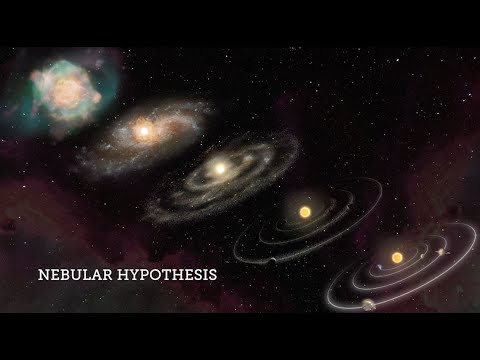
Added:The Nebular Hypothesis: Understanding the basic stages of stellar and planetary system formation from a collapsing molecular cloud into a protostar and a surrounding protoplanetary disk.
Electromagnetic Spectrum and Spectroscopy: Knowing how astronomers use different wavelengths of light—specifically infrared and submillimeter—to identify chemical compounds and analyze physical conditions in space.
Observational Tools (JWST and ALMA): Understanding the respective strengths of the James Webb Space Telescope (space-based infrared astronomy) and the Atacama Large Millimeter/submillimeter Array (ground-based radio interferometry).
Fundamentals of Astrochemistry: Familiarity with organic molecules, ice lines (snowlines) in young solar systems, and the significance of volatile elements like water and carbon dioxide.
Astrobiology and Prebiotic Pathways: Investigating how the organic molecules found in young star systems chemically evolve into complex building blocks of life, such as amino acids and RNA.
Exoplanetary Atmospheric Characterization: Exploring how astronomers use transmission spectroscopy to detect water vapor, carbon dioxide, and potential biosignatures in the atmospheres of fully formed exoplanets.
Disk Dynamics and Planetary Migration: Studying the gravitational and hydrodynamic forces that cause newborn planets to migrate from their original formation sites within the protoplanetary disk.
Comparative Planetology and Earth's Water Origin: Analyzing the scientific debate over whether Earth's oceans were delivered by late-stage volatile-rich asteroid/comet impacts or inherited directly from the local protoplanetary disk nebular gas.
82.3K views6.9Klikes14:59Original Release: 2024-03-13
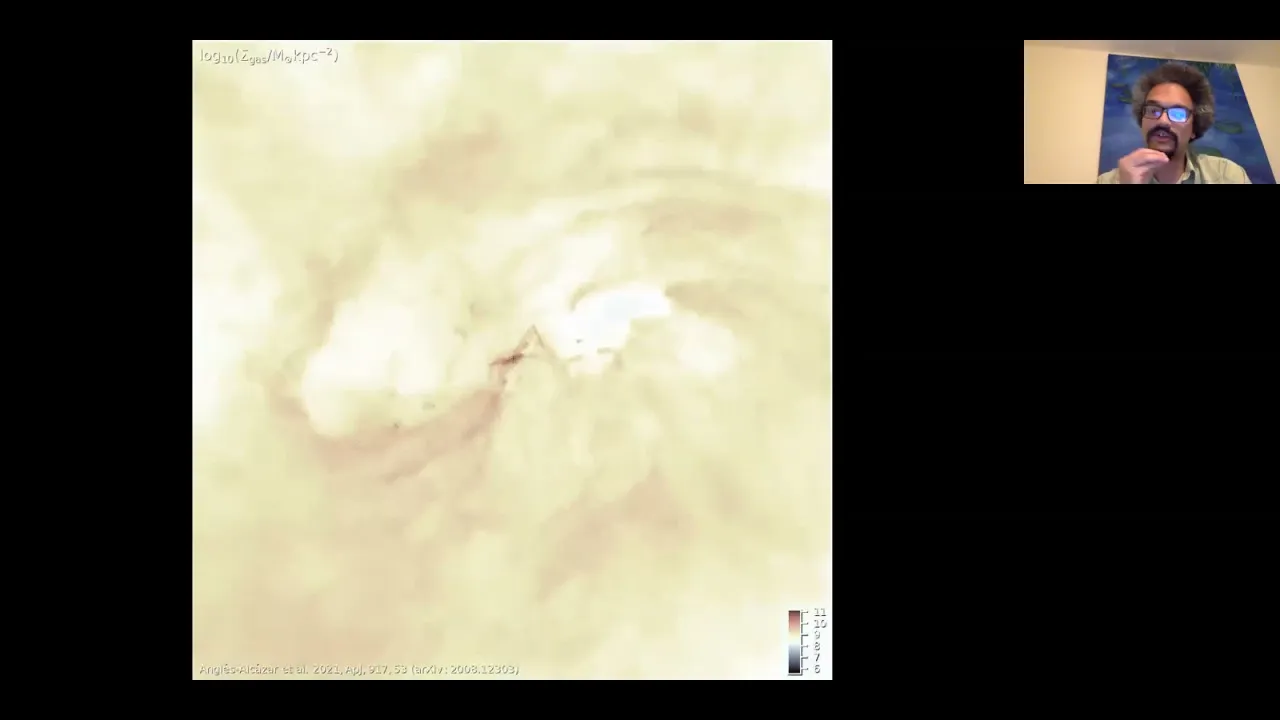
in the last few months a lot of different studies based on the James web Space Telescope have actually discovered a lot of exciting things about planetary formation and although some of these discoveries provided evidence for a lot of modern theories quite a few of these discoveries were actually really surprising and so hello wonderful person this is Anton today we're going to discuss some of these new discoveries based on jwst observations combined with a few more observations from a few other telescopes such as Alma and let's actually start with the study that just came out a few hours ago from when I'm making this video a study based on the observation of a l of different systems where new stars are being formed and new planets are being formed with them as well most of this based on observations from three separate regions in the Galaxy with three major molecular clouds responsible for a lot of star formation where a lot of different baby planets only a few thousand years old are actively forming right now and inside of these three clouds researchers focused on 86 separate Stars young stars all with signs of planetary formation and all possessing different types of planetary discs that you can sort of see in these images and here the focus was on the Orion Cloud but also Taurus and chameleon 1 all approximately 600 to 1,600 light years away from planet Earth and one of the first surprises was actually in regards to how extremely different everything was there was no Universal I guess face for any of these baby stars for example stars in the Orion seem to mostly have planets if they did not have a partner or basically they were singular stars like our son but stars that had a partner binary systems or even systems with more stars were less likely to have a large planet forming disc and since we know that most stars in the galaxy seem to actually have a partner this is of course a pretty significant result showing us that generally it's probably better to have just one star than two or more not at least when it's when it comes to planetary formation but on top of this the biggest Discovery or I guess the biggest surprise was how diverse everything was even in the same Cloud for example some of these discs seem to possess relatively large spiral arms possibly created by different planets whereas others seem to have rings with different cavities forming by other planets yet others seem to be entirely smooth then some Stars seem to be relatively active affecting the disc quite dramatically whereas others seem to be more or less quiet and so these results show us an incredible diversity in a lot of these baby Stars pretty much none of them look the same which potentially answers the question of why so many of the exoplanets discovered in the last decade have pretty much been so different as well for example none of them seem to be like our own planet planet Earth and so this diversity might actually arise from how these early planets form around these very early protoplanetary discs in other words this diversity seems to start in childhood and every single one of these Stars seems to be entirely unique but despite their uniqueness the researchers behind other Studies have still been able to discover a lot of similarities and a lot of universal processes that seem to affect most stars for example one of these similarities seems to be in a way giant planets form early on and here we're talking about giant planets like Jupiter and Saturn unlike smaller planets researchers today believe that larger planets very likely form as a result of a dis in stability where a lot of gas suddenly collapses into a single spot but the researchers don't actually know much about this process except for some of the simpler simulations showing us how this most likely happens and so in order to understand this better a team behind this recent study decided to create a much more complex simulation using the super computer known as dra or distributed research using Advanced Computing in order to understand what physically happens inside these systems and how these early planets form and these new simulations involve things like gas density but also temperature and the velocity of the disc with the results from the simulation actually showing us that before the planets assume these spherical shapes and become large enough to start attracting even more gas they seem to First assume a kind of a oade spheroid shape basically resembling a tiny flat disc and inside of this flatten shape which becomes flat because of an extremely fast spin or because of centrifical forces a lot of material starts to accumulate really fast but mostly accumulates through the accretion at the poles and not at the equator and so in other words these early planets seem to basically grow following this very very common Universal process that happens in a lot of other objects such as stars black holes and even galaxies the gas here is fed into the planet by being deposited right at the poles and this is of course important to understand because for a lot of these BB planets we're looking at sound these disc could be actually at a slightly different viewing angle and so we might be seeing something from from a different perspective and though previously it was assumed that they are spherical here the simulation tell us otherwise but then a lot more discoveries came from the James Webb Space Telescope specifically observing different types of molecules such as water and here James Webb was able to confirm a very important physical process that involves various types of water particles usually as Tiny ice particles traveling from the outskirts of the disc into the rocky planetary Zone and here this was actually a really important confirmation of know Theory the theory that suggests that a lot of water and a lot of other ices very likely come from the outskirts from the much colder regions and eventually make their way closer and closer being deposited on planets like Earth this is known as the icy Pebble drift with the drift itself being a result of a kind of a friction due to the interaction with a lot of other gas particles making things on the outskirts come closer and closer to the star but at some point all of this water is going to cross the so-called Snow Line basically where Things become really hot and where ice transitions into vapor and intriguingly this is exactly what web was able to observe from a few star systems out there it was able to see signs of this cold water vapor in a lot of different locations in inner discs of different baby stars and so this actually shows us evidence for the location of these specific zones where water transitions from Ice to vapor and once again confirms something we've always expected about the solar system as well but here the study was actually focused on sunle stars but with slightly different discs two were compact and two were extended and all four stars were very young 2 to 3 million years old and so according to this current research a lot of large planets present inside these discs May sort of increase pressure where a lot of Pebbles including ises tend to collect very often stopping the drift itself and preventing certain particles from reaching the inner star system and so what this means for the solar system is that Jupiter might have inhibited a of these Pebbles and of course water delivery in the solar system as well in essence preventing planets like planet Earth and other terrestrial planets from becoming massive water worlds that we seem to observe in a lot of other star systems as well and so I guess thanks Jupiter but this was just the first observation we did have other observations from extremely sunlike Stars including a famous star system known as HL Tori a system 450 light years away from the Sun and here once again they found he huge amounts of water inside the inner region of the disc even able to measure its total mass approximately 3.7 times as much water as in all of the Earth's oceans in this case presenting us with the first ever case of water being mapped in another star system around a planet forming disc with a star very similar to our sun but once again much much younger so in some sense it maybe shows us what the sun was like as well 4 and A2 billion years ago and so the researchers here believe that a lot of this water is currently being incorporated into a lot of planets being formed and that actually relates to a lot of other ideas of how our planet acquired water as well some it might have come from asteroids but scientists believe that most of it must have been Incorporated from the early times as the planet was forming it very likely collected some water just like we see in this particular disc as well and so basically Earth was very likely born with water already but there's even more evidence about this from another star system and from a different study once again using James web this is a famous star system PDS 70 that sort of looks like this if you look at this using very large telescope and we have a lot of evidence of actual planets being formed here as well but once again researchers found evidence of water even inside the inner part of the star system where it was always believed that there was too much UV light and too many Stellar winds for any Isis or for any water-like particles to exist and so even though this part was expected to be dry jeans we Space Telescope revealed that it wasn't there were definitely signs of water inside the inner disc even though at the moment it's not clear how exactly it came there with one explanation being dust because this is such a Dusty disc it potentially Shields a lot of other particles including water from powerful radiation coming from the Star and because this dust grows in size and becomes larger and larger eventually turning into tiny Pebbles which then become planets this is potentially how a lot of planets including planet earth started as well and how they acquired all of this water but obviously it wasn't just water scientists were interested in additional studies focused on organic molecules as well with one of the studies focusing on the lobster nebula and this nebula is really interesting because it mostly contains massive very powerful very bright stars actually some of the most massive stars in the galaxy and here researchers focused on 15 separate discs interestingly discovering an abundance of a lot of different carbon-based molecules carbon monoxide hydrogen cyanide acetylene and a lot of other molecules that would be actually impossible to discover if it wasn't James web but intriguingly all of these molecules were in the inner region in the location where we expect terrestrial planets and that's actually surprising because these are high mass stars very powerful stars and so they also seem to have conditions for terrestrial planets to form even though it was kind of unexpected and one of the star systems g160 532 turned out to be even more exciting because a lot of complex molecules including things like acetylene and Benzene were discovered all over the place with this actually being the first time ever these molecules were discovered inside a growing protoplanetary disc and so this whole star system seems to be very chemically diverse and rich in molecules that would generally associate with early life yet additional discoveries from another star system X lupai showed us the importance of star outbursts it turns out that repeated outbursts might be essential for providing certain building blocks to planetary systems specifically various silicate crystals that can be found in various comets and various asteroids can be created by powerful outbursts from a growing star and here the Outburst seem to raise the temperatures around the disc basically melting a lot of different silicate particles eventually transforming them into different minerals including various crystals but also encouraging different types of organic chemistry to suddenly happen inside a dis as well and so repeated outbursts inside these early Stars seem to be really important for developing complexity of organic molecules with all of these crystals and all of these complex molecules eventually combining with planets and thus creating complexity on the planetary surface and that's most likely exactly what happened with the early solar system as well a lot of complex crystals and a lot of complex organic molecules potentially had similar Origins they came from the the outskirts possibly delivered by comets and asteroids and as the early sun went through its Outburst changed in composition combined with other molecules and eventually ended up on the surface of the planet which then created the planet as we know it today but that's of course just some of the preliminary observations based on the first year of observations from the James web there are actually still a lot of other studies we haven't covered yet but I'm sure in the next couple of years we'll have a lot more discoveries and a lot more studies that are going to teach us even more about star formation planetary formation but more importantly take us a little bit closer to answering the question about our own Planet how exactly planet Earth formed how it created conditions for early life and how life here formed after all but if you'd like to learn more about the potential origin of life on the planet check out some of the videos in the description with one of them focusing on a very recent study that found something really intriguing but anyway once we learn something else I'll come back and talk more about this in some of the future videos thank you for watching subscribe share this with someone who have learn about space and Sciences come back tomorrow to learn something else support this show on patreon by Jan Channel membership or by buying the wonderful person t-shirt you can find in description and it does have James web as one of the designs stay wonderful I'll see you tomorrow and as always [Music] bye-bye [Music]
Up Next
75:36
The ELT: 100 Million Eyes for Stargazing | Prof. Thatte
@skproduction7090
403 views•2020-11-22
61:17
First Billion Years of the Universe with the Square Kilometre Array
@iaaudc
121 views•2022-05-26
10:56
Cepheid Variable Stars: How Astronomers Measure Cosmic Distances
@whatdamath
30.6K views•2016-06-17
6:10
Gamma-Ray Bursts: Cosmic Snipers Explained | Astronomy
@kurzgesagt
15M views•2016-07-31
Related Study Plans & Knowledge Roadmaps
Structured learning paths in Astronomy
astronomy
Reionization: Pop III Stars, IGM & 21cm Line
01Foundations of Cosmology & the Early Universe
02Population III Stars & Cosmic Dawn
03Physical Mechanisms of Reionization
+ 2 more learning modules
17h5 modules
Explore Roadmap
astronomy
Planetary Rings: Dynamics, Roche & Resonances
01Foundations of Gravity and Orbital Mechanics
02Tidal Forces and the Roche Limit
03Structure, Composition, and Collisions
+ 2 more learning modules
10h5 modules
Explore Roadmap
astronomy
Asteroseismology: Stellar Waves, Ages & Cores
01Foundations of Stellar Astrophysics & Wave Mechanics
02Stellar Oscillation Modes: P-modes and G-modes
03Mathematical Framework of Asteroseismology
+ 2 more learning modules
35h5 modules
Explore Roadmap
astronomy
Adaptive Optics: Physics, Engineering & Control
01Foundations of Wave Optics and Wavefronts
02Atmospheric Turbulence & Optical Distortion
03Wavefront Sensing Technologies
+ 3 more learning modules
35h6 modules
Explore Roadmap