

















![[수면다큐] 135분 우주 특집🪐|137억년 전, 우주의 탄생부터 시작해, 숨겨진 우주의 비밀을 파헤치다|당신은.. 곧 잠에 듭니다|다큐프라임|#골라듄다큐](https://i.ytimg.com/vi_webp/lumM4x1vImA/maxresdefault.webp)







![SACANI RESPONDE [TUDO SOBRE COSMOLOGIA] - Ciência Sem Fim #273](https://i.ytimg.com/vi/CoDF65uzm88/maxresdefault.jpg)


Cepheid variable stars are massive, bright stars whose luminosity changes periodically, and Henrietta Leavitt discovered that there is a direct linear relationship between their pulsation period and intrinsic luminosity; by measuring the period of a Cepheid star and comparing its apparent brightness to its calculated true luminosity, astronomers can determine the distance to that star using the inverse square law, making Cepheids essential 'standard candles' for measuring distances to nearby galaxies.
Cepheid Variable Stars: How Astronomers Measure Cosmic Distances
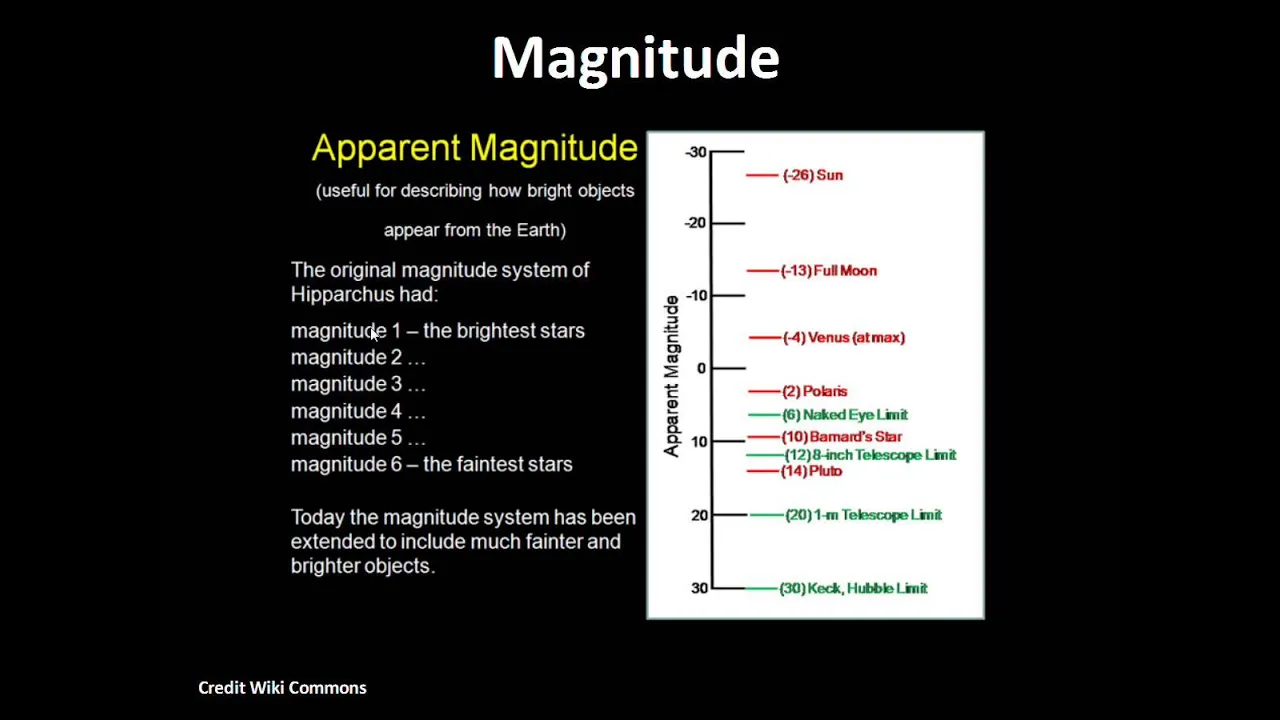
Added:The distinction between apparent magnitude (how bright a star appears from Earth) and absolute magnitude (a star's intrinsic luminosity).
The inverse-square law of light, which dictates how the observed brightness of an object decreases predictably with distance.
The concept of stellar parallax, the fundamental geometric method used to measure distances to the nearest stars.
Basic stellar anatomy and lifecycle, specifically how stars can undergo phases of instability and pulsation.
The Cosmic Distance Ladder, exploring how Cepheids serve as a vital stepping stone to calibrate farther distance indicators.
Hubble's Law and the expansion of the universe, analyzing how Edwin Hubble used Cepheids to determine that distant galaxies are moving away from us.
Type Ia Supernovae as 'standard candles' for measuring cosmological distances across billions of light-years.
The 'Hubble Tension,' representing the modern astrophysical debate over conflicting measurements of the universe's expansion rate.
30.6K views690likes10:56Original Release: 2016-06-17
hello everyone this is Anton and welcome to what the math now I don't know about you but when I was younger I always wondered how did scientists actually know how far away all of these beautiful galaxies and even the Stars within our galaxy are like how do we actually know how far things are because if things are really really far away you can really measure them so today I'm going to tell you about one of the methods we use to measure the distance to some of these galaxies and also Stars very close to us and you're going to find out what seed variable actually is welcome to what the [Music] math and let's actually start with the original prototype of seade variables which is this star right here it's actually a star by the name of and I'm going to zoom in here you can see the name right there on top here um sephi a or hip 11991 or also known as HD 21336 so this se8 star which you can kind of see moving around really really fast right now especially as zoom in because of accelerate time is what's known as a variable star I'm going to show you the orbit here and it actually has a partner star that orbits around it but that's not why it's a variable star what a variable star implies is that this is a star that actually changes its Luminosity with time now unfortunately in space engine it is not really simulat very well but what happens to the star if I were to actually move closer to it and show it to you again every few days this is what this star does it actually gets a little bit dimmer and then it gets brighter again then it gets a little bit dimmer and it gets a little bit brighter again and it does this very regularly with a very sort of a repeating pattern all right so that's first explanation so we have these stars and usually these are actually very very massive stars um and very very bright so this particular star is about 1,450 times brighter than our sun and actually the one of the more famous se8 stars is the infamous Polaris Polaris is also known as the Northern Star it's basically used in almost every culture around the world to do um tracking it's a star that's known for being almost exactly um at the North Pole so you can use the star and here we're talking about actually several stars because it's a multiple star system H you can use the star to kind of track yourself and to show yourself where North is but in this system the brightest object is Polaris AA this is a star that is about 2500 times the Luminosity of our sun and this is also um a seate variable star in other words it's a star that every four days does this and then this it changes every four days its Luminosity changes every 4 days and so so we actually discovered these Stars completely by accident as a matter of fact the discovery behind this is worth talking about so back in I believe 1800s late 1800s and early 1900s there was a scientist by the name of Edward Charles Pickering this is a um a guy that I'm not going to talk much about because he wasn't I personally don't think he was a very nice guy but he had these basically women working for him who he didn't actually pay at all initially and he hired them as human calculators because he didn't want to do all of the work himself and so he chose these women to work for him and specifically there was this one lady by the name of Henrietta Swan levit who uh he kind of gave these um astronomical plates and basically these are plates that he took photographs of by using his um telescope and he G gave her the plates to analyze to calculate things to basically look at these various Stars around the universe and to then analyze certain uh Luminosity parameters because I guess he was just too lazy or too busy to do him himself but the the worst part about him is that not only did he not pay her but apparently back then women were not allowed to use telescopes and so he wouldn't even let her touch the telescope so she just had to do all of the hard work and then he got very she got very little recognition for that now she actually wasn't recognized even until after her death for a while and it was not until a scientist by the name Hubble which we all probably know by now that she was actually finally recognized because she discovered something amazing she discovered a pattern a lot of these uh seate stars um are very very very very similar in a sense so many of these very massive stars and we're actually going to go back to the original seate prototype here um many of these Stars seem to have a pattern and she found this pattern by analyzing these plates and she put it on a graph as a linear relationship and the relationship that she's discovered is actually really simple it can be plotted on the graph and you can see the relationship right here so what this shows is that um The Brighter the star the more likely it's going to have a higher uh period or basically if it star is very very bright it's going to change Luminosity um with a higher period if a star is not very bright it's going to change Luminosity a lot faster so with a much smaller period And there's a very very very linear relationship between the Luminosity of a seate variable star and its period so basically if you look at the star and you know that the period is about 4 days in other words it's changing Luminosity every 4 days it gets brighter dimmer brighter dimmer every four days you can use this graph that she's discovered almost uh or actually over 100 years ago uh you can use this graph to determine what its original Luminosity is and that is actually brilliant it is absolutely brilliant that she was able to find this pattern just by analyzing things using nothing but mathematics and manual calculations now why is this important well because we know that there's this pattern now we can now go to a different G Galaxy and actually this is what she was doing she was using um I believe it was this galaxy right here small melanic Cloud um she looked at the seed variable Stars she basically looked at these stars in this other Galaxy and what she's discovered is that well okay so I have this let's actually find some kind of a really really bright object here so let's let's go to this star right here we're going to move to it and hopefully this is a star that has a very high Luminosity let's take a look at it and the Luminosity here okay it's not as high as I was hoping for but that's that's good enough 130 times um more than the Sun and it's actually I think it's a binary star yeah this is a binary star with several planets around it and so okay we have this star and it's changing it's a sa variable so it's changing its Luminosity let's just say every seven days now we can use this graph to find out what its actual real Luminosity is supposed to be and then because we're looking at it from a very very very very very very far away distance we can measure the Luminosity that we see from from uh from where we are right now and since we now know the Luminosity that we've calculated and the Luminosity that it supposed to have we can use this really really simple formula you see on the screen to determine the distance to the star and it's really that simple and so as long as we can actually detect these bright stars and usually these are the brightest and the biggest stars in the galaxy um so as long as we can see them and as long as we can detect how many days or or you know how many months it takes for them to change their Luminosity we can then determine their original luminosity and use the formula to find the distance to these stars and it's actually a very very simple and very brilliant way of looking for distances in our universe now of course this doesn't work for the galaxies that are really really far away and for this we use something else we actually use Luminosity of supernova that I've talked about previously but we'll discuss this in more detail later on but for now what you need to know is that first of all women were responsible for some incredible findings and unfortunately were not recognized until later on when uh scientists actually started to realize that most of the hard work was done by women that were underpaid that were actually um almost mistreated I would say because not only were they underpaid but they weren't even allowed to use telescopes and of course the most important woman in this particular case is Henrietta one levit who discovered that a lot of these stars have this amazing relationship and if wasn't for her Hubble would have never discovered his constant and we have never actually discovered the idea of the Big Bang as well so she was super super important but the other thing that you hopefully took away from this video is that Polaris which you may know as a northern star is also a very important star because it is a variable star and we can technically use it if we were in another galaxy to try to estimate the distance to our galaxy so if you actually look at Polaris which is very very bright and you look at from a a different Galaxy which unfortunately you don't see here anymore but you could definitely see it from some of these galaxies right here like for example with this one so if I'm located somewhere in this galaxy and then I try to find Polaris in our galaxy and it's actually located right there you can kind of barely see it but if you zoom in you'll definitely see it a lot more um and then if you can actually detect its Luminosity changes and find the period you can then estimate the distance to the Milky Way from where you're currently located because as we now know Polaris changes its Luminosity every 4 days so This brilliant observation and This brilliant discovery changed the way we measure distances in our universe and of course changed the way we perceive the universe because this discovery helped us realize that our universe is actually expanding and it does so at an ever expanding rate so all of this goes to Henrietta Swan levit she was an amazing woman and she was definitely under appreci appreciate it anyway thank you so much for watching this video and I hope you learned something from it and I hope now you know a little bit more about se8 variable Stars why they're important and also how we actually measure distances in some of the closer galaxies to us in one of the future videos we're going to talk about how we measure distances in the farther galaxies and of course how we actually know how far away things are even in some extreme cases like for example the end of the universe that we're about to reach very very very soon anyway thank you so much for watching guys I appreciate all of your support I'll see you in the next video game you later please subscribe share this video like it if you've enjoyed watching it and as always bye-bye and here comes the end of the universe we're about to reach the end of the observable universe as we know it and Escape into the unknown
Up Next

60:20
Decoding the Milky Way: From Star Counts to Gravitational Waves
@NASANightSkyNetwork
623 views•2026-02-18
61:17
First Billion Years of the Universe with the Square Kilometre Array
@iaaudc
121 views•2022-05-26
14:59
JWST & ALMA Reveal New Planet Formation Secrets
@whatdamath
82.3K views•2024-03-13

6:10
Gamma-Ray Bursts: Cosmic Snipers Explained | Astronomy
@kurzgesagt
15M views•2016-07-31
Related Study Plans & Knowledge Roadmaps
Structured learning paths in Astronomy
astronomy
Reionization: Pop III Stars, IGM & 21cm Line
01Foundations of Cosmology & the Early Universe
02Population III Stars & Cosmic Dawn
03Physical Mechanisms of Reionization
+ 2 more learning modules
17h5 modules
Explore Roadmap
astronomy
Planetary Rings: Dynamics, Roche & Resonances
01Foundations of Gravity and Orbital Mechanics
02Tidal Forces and the Roche Limit
03Structure, Composition, and Collisions
+ 2 more learning modules
10h5 modules
Explore Roadmap
astronomy
Asteroseismology: Stellar Waves, Ages & Cores
01Foundations of Stellar Astrophysics & Wave Mechanics
02Stellar Oscillation Modes: P-modes and G-modes
03Mathematical Framework of Asteroseismology
+ 2 more learning modules
35h5 modules
Explore Roadmap
astronomy
Adaptive Optics: Physics, Engineering & Control
01Foundations of Wave Optics and Wavefronts
02Atmospheric Turbulence & Optical Distortion
03Wavefront Sensing Technologies
+ 3 more learning modules
35h6 modules
Explore Roadmap